Most national park trips get built around the longest hike on the map, and that is the wrong way round for a lot of people. Your first assumption is probably that the signature sight costs a long, steep climb, so an over-60 traveler settles for a roadside pullout. It does not hold. These 12 walks land their views between 0.3 and 1.3 miles, with 0 to 100 ft of gain: Lower Yosemite Fall at 1.2 paved miles and about 50 ft in 30 to 45 minutes, Balanced Rock at 0.3 paved miles in 15, Anhinga at 0.8 flat boardwalk miles in 30.
Choose by what the view costs you in distance, gain, surface and time. Then let benches, shade, exposure and shuttle rules settle it between two close options.
By the end you can pick one walk for the day in front of you, whether that is a waterfall, a lake, a canyon rim, a rock icon, a geyser or wildlife, and check current conditions, closures and shuttle rules at NPS.gov before you commit. What matters most is picking the trail that fits today's legs, not the park's reputation.
Quick Tips Before You Start
Wear real shoes
Pavement still punishes thin soles. Trail shoes or sturdy walking shoes with tread beat sandals on every walk here.
Carry water always
Even a 20-minute loop at 8,000 ft dehydrates you. One liter per person for short walks, two for half-day outings.
Start before nine
Parking fills and the light gets harsh. Most of these trailheads are full by mid-morning in summer.
Check the surface
Pavement is easiest; gravel and slickrock need more care. Know whether your trail is paved, packed gravel or boardwalk before you commit.
Pack sun cover
Meadow and rim walks are exposed. A hat and sunscreen matter more than a jacket on these routes.
1. Lower Yosemite Fall Paved Loop
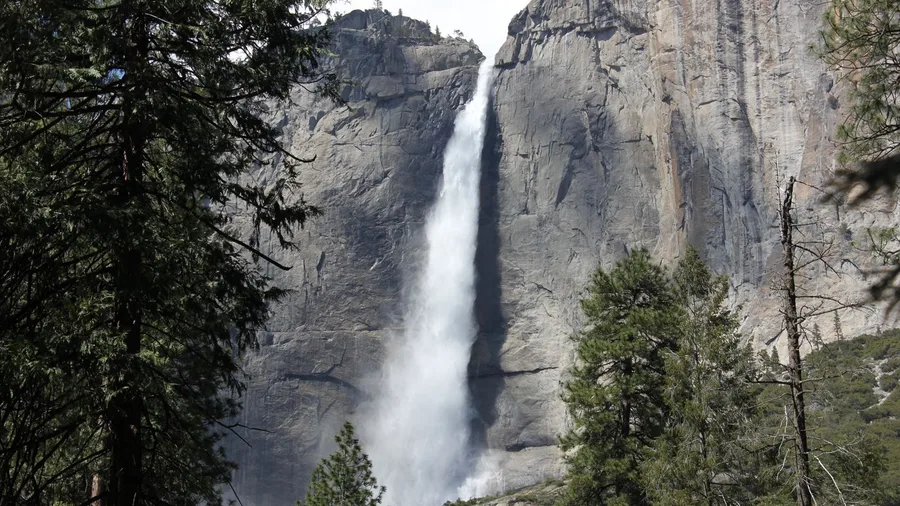
Lower Yosemite Fall, and the whole loop is paved, 1.2 miles round, with about 50 ft of gain.
The view of the fall arrives early, and the path stays gentle the whole way, so you never spend the payoff on a climb. Benches sit along the route; stop at one, let your breathing settle, and the waterfall still sounds across the whole basin. Allow 30 to 45 minutes at an unhurried pace. Call it the benchmark every other walk on this list gets measured against: a major Yosemite waterfall inside an hour, on a grade your knees will forgive.
💡 Tip: Park at the Yosemite Valley Lodge lot and walk in; the trailhead shuttle stop is often faster than circling for a space.
| Trail | Park | Distance | Elevation gain | Surface | Time |
|---|---|---|---|---|---|
| Lower Yosemite Fall Loop | Yosemite | 1.2 mi loop | 50 ft | Paved | 30–45 min |
| Cook's Meadow Loop | Yosemite | 1.0 mi loop | Flat | Paved/boardwalk | 30 min |
| Trail of the Cedars | Glacier | 0.9 mi loop | 60 ft | Boardwalk | 30 min |
| Bear Lake Nature Trail | Rocky Mountain | 0.5 mi loop | 20 ft | Packed gravel | 20 min |
| Sprague Lake Loop | Rocky Mountain | 0.8 mi loop | 10 ft | Gravel | 25 min |
| Sunrise Point Trail | Bryce Canyon | 0.5 mi out-and-back | 50 ft | Paved | 20 min |
| Rim Trail Sunrise to Sunset | Bryce Canyon | 1.0 mi one-way | 100 ft | Paved | 40 min |
| Grand View Point Trail | Canyonlands | 1.0 mi out-and-back | 50 ft | Gravel | 30 min |
| Mesa Arch Trail | Canyonlands | 0.5 mi loop | 80 ft | Gravel/slickrock | 30 min |
| Balanced Rock Trail | Arches | 0.3 mi loop | 30 ft | Paved | 15 min |
| Old Faithful Geyser Loop | Yellowstone | 1.3 mi loop | 20 ft | Boardwalk | 45 min |
| Anhinga Trail | Everglades | 0.8 mi round trip | Flat | Boardwalk | 30 min |
2. Cook's Meadow Flat Boardwalk Loop
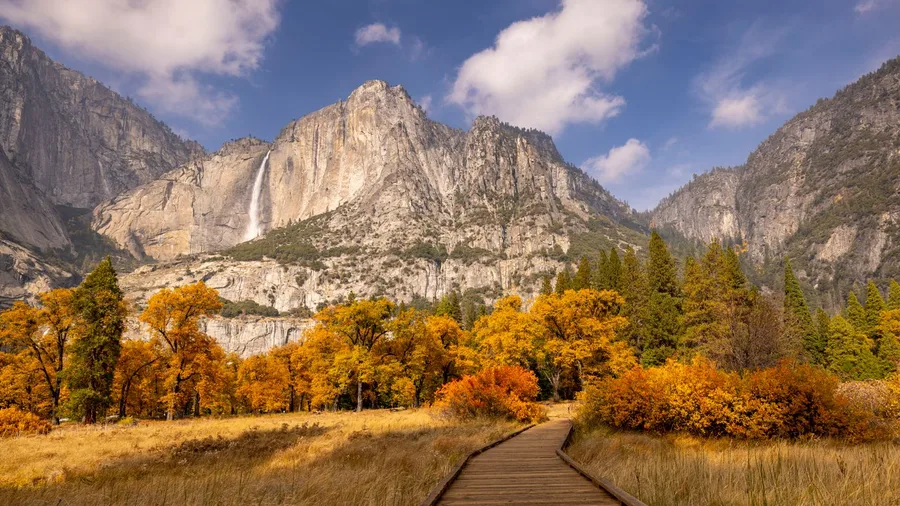
Know this before you go: Cook's Meadow has almost no shade, and on a warm afternoon the open grass holds the heat. Go early, when the light is soft and the meadow is still cool.
The reward is a 1.0-mile loop, flat, paved and boardwalk, no stairs, no gain to manage, about 30 minutes. Yosemite Falls fills one side of the view and Half Dome the other, both framed across open grass in a way the trees along a waterfall path never allow. It is the no-climb answer to a waterfall walk: a waterfall loop asks a small climb, while this one asks nothing at all and gives you more sky.
💡 Tip: Go at sunrise for still air and the falls catching first light; the loop is usually empty then.
💡 PRO TIP
Match the walk to the hour
Exposed meadow and rim trails are best before 10 a.m. or after 5 p.m. Shaded boardwalks like Trail of the Cedars handle midday heat better. Plan the day around shade, not just distance.
3. Trail of the Cedars Boardwalk
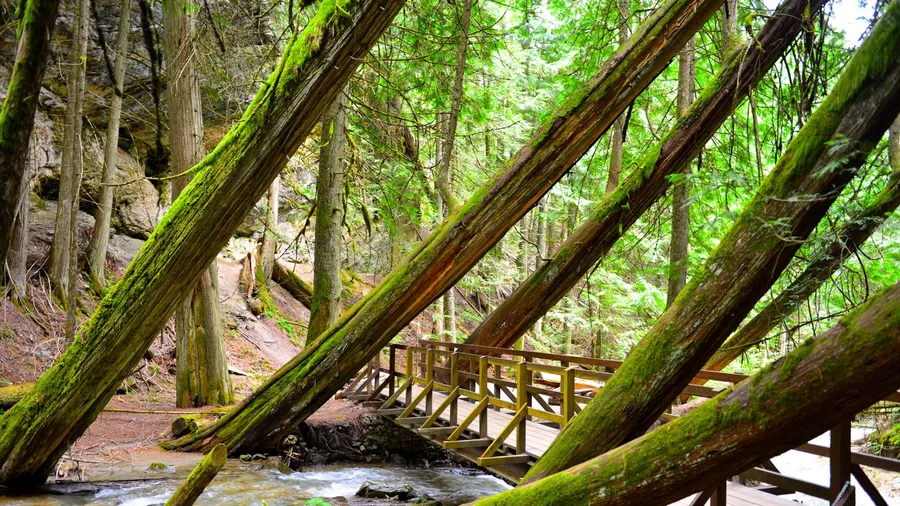
Nine-tenths of a mile, 60 ft of gain, 30 minutes. That is the full cost of Trail of the Cedars in Glacier, and the shade is the reason to spend it.
Old-growth cedar and hemlock close overhead into a canopy so dense the boardwalk stays cool while the rest of the park bakes, and the rock walls of Glacier show through the gaps between trunks. The story here is age: these trees have stood through winters that took everything around them, and the boardwalk is laid to let you walk among them without trampling the roots. On a hot day or a low-energy afternoon, the modest grade and even surface keep heat and footing strain down.
A flat meadow walk gives you width of view and full sun. This gives you cover. Sixty feet of climbing over 0.9 shaded miles is the trade, and shade, not the climb, is what decides it.
🗺️ How to build a day around easy trails
Pick your park and season
Choose the park first, then check which trails are open and what the weather will do.
Match the walk to your energy
Use the table above: pick one short paved walk and one longer loop.
Check current conditions
Look up closures, shuttle rules and trail surfaces on NPS.gov before you drive.
Arrive early
Aim for the trailhead before nine to beat the parking crunch and the heat.
Walk, sit, repeat
Take the benches seriously; the point is the view, not the pace.
4. Bear Lake Gentle Mountain Loop
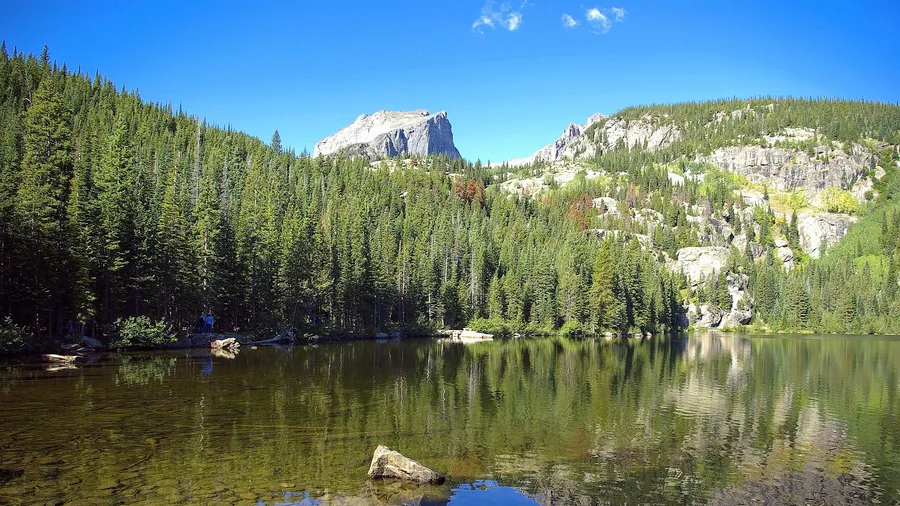
Compare the effort sheets side by side and this one wins on time, not drama: five tenths of a mile on packed gravel, twenty feet of gain, twenty minutes.
Bear Lake is the small sample of Rocky Mountain scenery, a shoreline loop where the peaks across the water stack up and drop straight into their own reflection. You get the reflection, the pines, the gray rock walls, and you get them before your knees have anything to say about it. The trail is the Bear Lake Nature Trail, a loop, so you end where you started with no retracing and no decisions to make at a junction.
Treat it as a roadside stop rather than a destination hike. It sits at the end of the Bear Lake Road, which is where the scenic drive is going anyway, so you pull in, walk twenty minutes around the water, take the photograph, and get back in the car with the day still in front of you. That is the whole point of it. On a mountain trip where every other stop seems to demand an hour and a climb, a stop that costs twenty flat-ish minutes and hands you a postcard is the useful oddity of the day.
The packed gravel is the surface to know about. It is not pavement, so a cane or a walker will roll or strike with a little more drag and a little more give, and a stroller works but takes some push. Twenty feet of gain is a curb or two, not a hill. Parking fills fast in summer because this is a popular trailhead, and the lot is small, so an early arrival is the practical move rather than a strict rule.
Twenty minutes and a fifth of a mile buys you the lake. Budget it as the quick stop, not the day.
💡 Tip: The loop is short enough to walk twice; the second pass often has clearer water and fewer people.
Pick your walk by what you have today
5. Sprague Lake Bench-Filled Loop
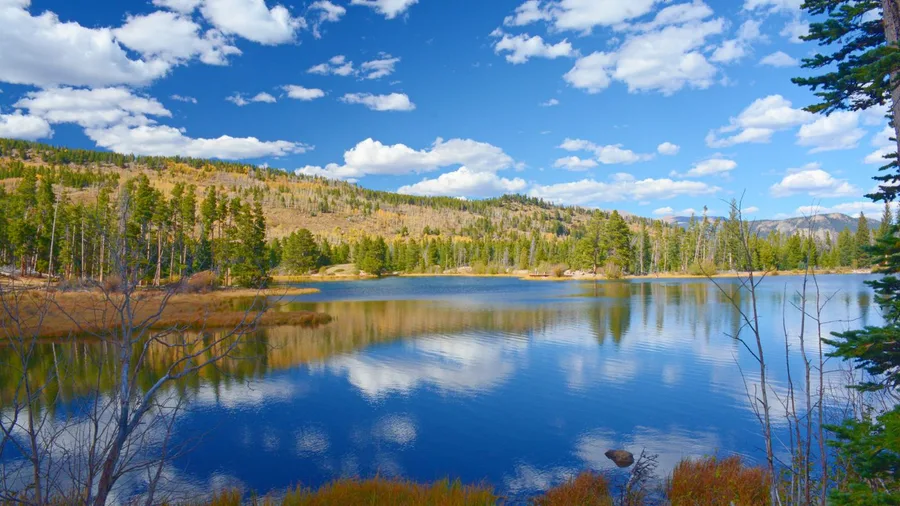
The first thing you notice at Sprague Lake is how quiet the water sits and how the Continental Divide stands up hard along the far edge in the morning light, one long ragged skyline above the treeline.
The loop here is longer than a quick sample, and it is the one to walk if resting is part of the plan. It runs 0.8 miles on gravel with about 10 feet of gain and takes 25 minutes if you do not stop. You will stop. Benches line the shoreline, spaced along the water, and each one faces the peaks, so the circuit becomes a series of sit-and-look breaks instead of a single march to a viewpoint. Lake and mountain stay in the frame almost the whole way round, which means no stretch of the walk is wasted.
That is what makes it the best pick for a mixed-age group. Grandparents settle on a bench with the view, younger legs keep circling, everyone meets at the same place. Photographers get morning reflections off the flat water and a nearly level gravel path to work from. Ten feet of gain is the least climbing among any of these lake walks, and the benches, not the distance, are the reason to choose it over the shorter shoreline nearby. Check current conditions and any trailhead access rules at NPS.gov before you go.
What the easiest walks ask of you
Ranked from the smallest commitment at the top to the biggest at the base
Distances and gains are approximate; check current conditions before you go.
6. Sunrise Point Paved Canyon Overlook
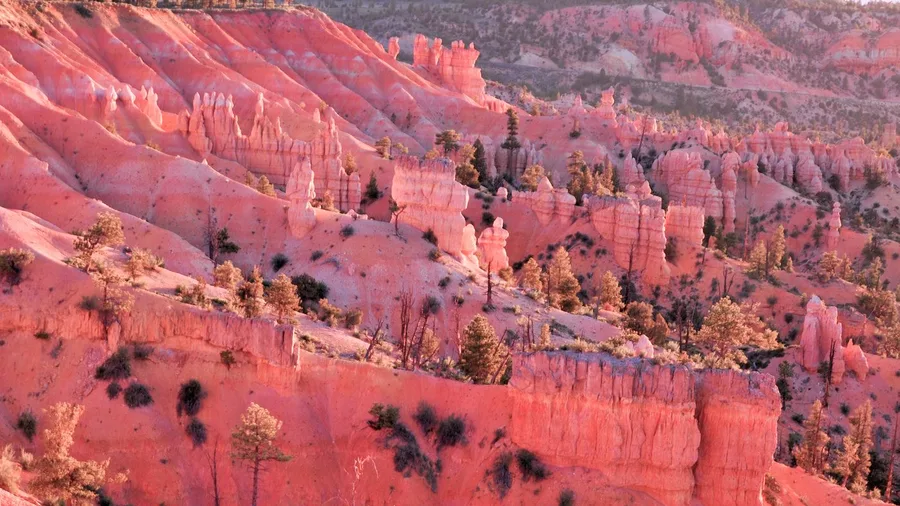
this is the hoodoo view you came to Bryce for, and you can have it without setting a foot on the switchbacks.
Sunrise Point Trail is a 0.5-mile paved out-and-back with about 50 feet of gain, twenty minutes round trip. You walk to the rim, and the amphitheater opens below you in rows of orange and pink spires packed shoulder to shoulder. Stand at the rail on the north side for the widest spread of hoodoos, go at sunrise if you can manage the early alarm, and stay on the rim. The descent into the amphitheater is steeper and looser than anything you need for the photograph.
💡 Tip: Stay on the rim trail; the descent into the amphitheater is steep and not necessary for the view.
7. Bryce Rim Trail to Sunset Point
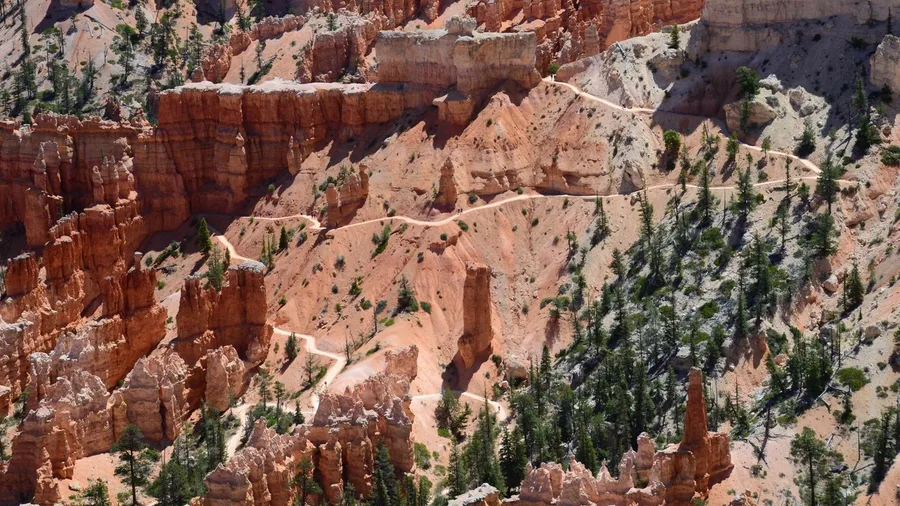
You stop at the second bench past Sunrise Point and the amphitheater simply stays with you, tier on tier of orange hoodoos holding the same light for a full minute.
The Rim Trail from Sunrise to Sunset Point is a 1.0-mile paved one-way with about 100 ft of gain, roughly 40 minutes at an unhurried pace, and the hoodoo view never leaves you. It is the natural next step from the rim sampler at Sunrise Point: same canyon, same edge, more of it, and no descent into the amphitheater at any point. Walk it one way and you face a real decision at the far end. Arrange a shuttle back, or plan to walk the same mile in reverse. Check park shuttle operations before you commit, because the one-way route only works if the return is sorted. The walking itself is the easy part. The logistics are the actual cost.
One-way rim walk vs. out-and-back
Walk it one-way
- Shuttle waits cost 15-30 min at peak
- Last shuttle often before sunset
- Skipped if shuttle not running
Walk it out-and-back
- Turn around at any bench you like
- Full 2.0 miles, 100 ft gain each way
- No timetable, no wait, no gamble
8. Grand View Point Flat Gravel Walk
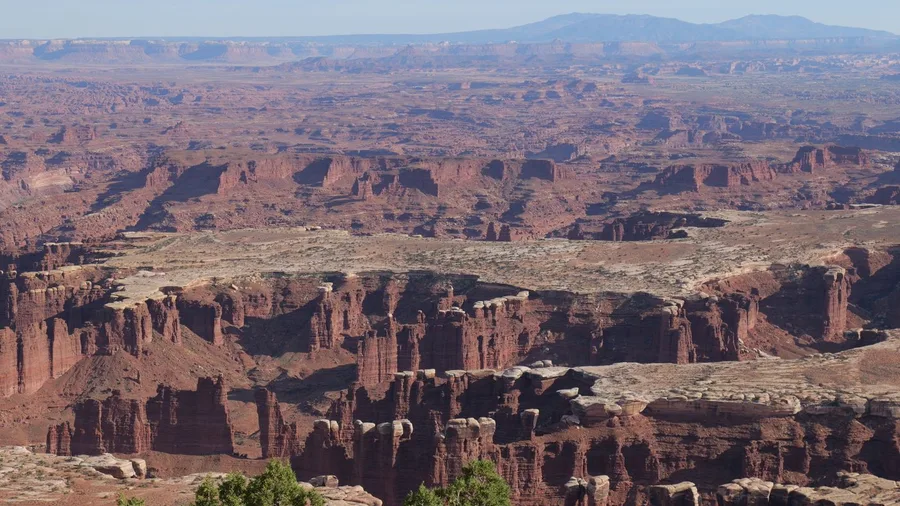
Grand View Point is a flat gravel out-and-back on the Island in the Sky rim of Canyonlands.
It runs 1.0 mile round trip with roughly 50 ft of gain and takes about 30 minutes, and the panorama of the Colorado River far below opens up early, well before your legs have done any real work. After the Bryce rim walk with its one-way shuttle question, this one asks nothing of you but a short there-and-back on gravel, and it trades hoodoo tiers for a wider, emptier horizon.
Go early in the morning. The rim is fully exposed and the gravel throws heat by midday, so the hour and the season decide whether this feels like a stroll or a slog. Bring a hat, sunscreen and water, and treat the exposure as the caution rather than the grade. The measured cost is a mile, 50 ft and half an hour, and on a hot afternoon those numbers are not the ones that stop you.
⚠️ COMMON MISTAKE
Do not underestimate exposure
Canyon rim walks like Grand View Point and Mesa Arch have almost no shade. A hat, sunscreen and a full water bottle matter more than trekking poles on these routes.
9. Mesa Arch Short Slickrock Loop
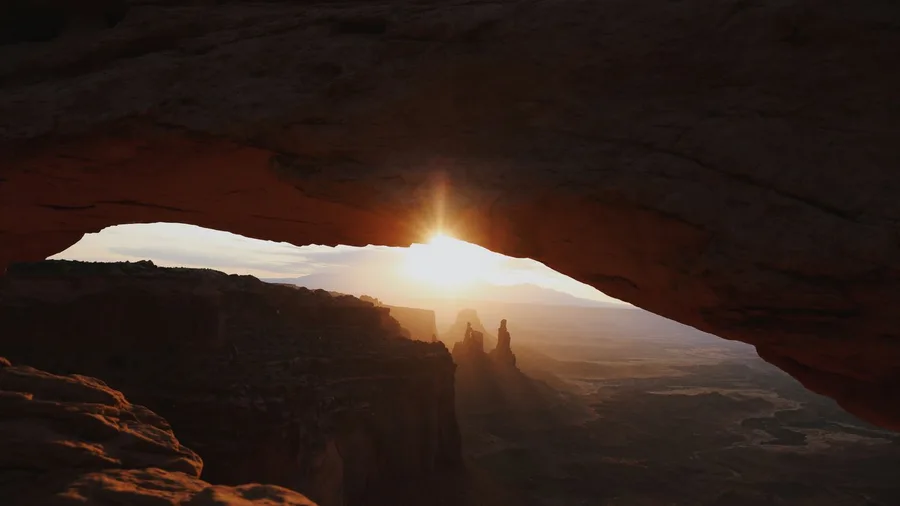
Mesa Arch is the shortest walk to a big Canyonlands payoff, and unlike most arch trails it will not wear out a knee on the way in. It is a 0.5-mile loop on gravel and slickrock with about 80 ft of gain and 30 minutes. Grand View Point gives you the wide gravel panorama a few miles up the same road. This one gives you a stone opening that frames the canyon below, and it costs nothing beyond the park entrance fee you have already paid.
The sunrise reputation is real, and so is the crowd that comes with it. Go early, both for fewer bodies along the rail and for the light that turns the arch's underside a warm orange. Come mid-morning instead and you will share a narrow shelf with a dozen tripods.
The surface is where you should pay attention. Slickrock is uneven underfoot, bumpy in places, and rougher than the paved rim walks that have carried the list so far. Poles help. So does watching where you plant rather than where you are looking. The 80 ft of gain is modest; it is the footing that decides whether this walk suits you.
Half a mile, 80 ft and 30 minutes is a fair trade for a framed view of the canyon. Treat the footing as the deciding factor, not the distance, and this short loop earns its place as the free win of the Canyonlands pair.
💡 Tip: Arrive 30 minutes before sunrise for a spot at the arch and easier footing in low light.
10. Balanced Rock Paved Arches Loop
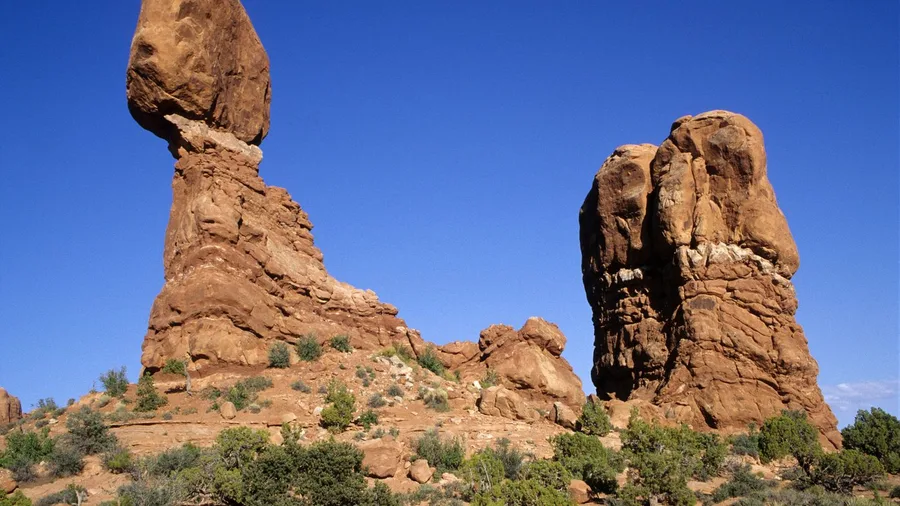
If your knees have had enough of uneven footing for one day, make this the stop. Balanced Rock Trail is the shortest walk here: 0.3 paved miles, about 30 ft of gain, 15 minutes round.
You park a few car lengths from the trailhead and the loop wraps the base of a 128-ft sandstone chunk perched on a narrow stem, the La Sal Mountains rising behind it. Smooth pavement the whole way, no rail-grabbing slickrock, no route-finding. It is the shortest walk in this list on both counts, distance and time.
Worth knowing: the paved loop is short but the parking lot is small, and midday fills fast, so a cool morning puts better light on the rock and an emptier lot around you. Half an hour, one of the park's signature formations, and no climb to speak of.
💡 Tip: Walk the loop clockwise for the best angle of the rock against the mountains.
11. Old Faithful Boardwalk Geyser Loop
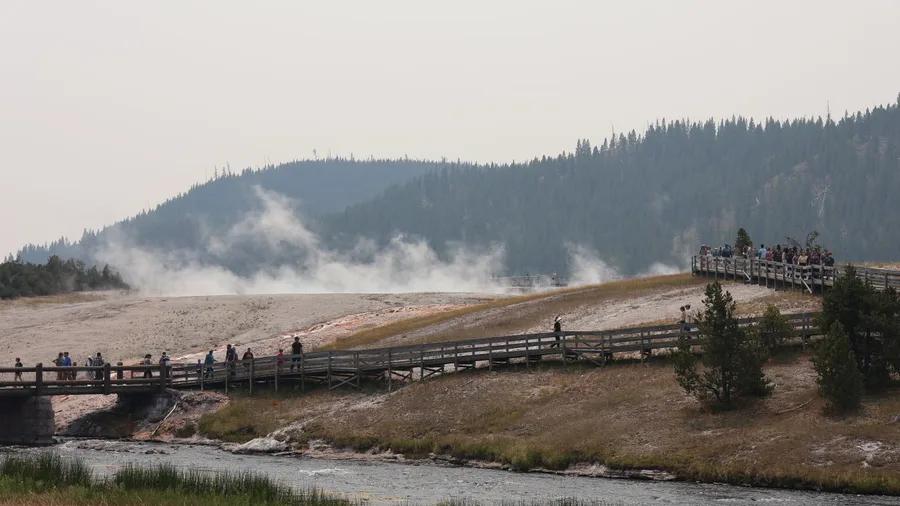
Plan around the eruption, not the walk. This is a flat boardwalk, but Old Faithful does not wait for you, and the visitor center posts the next predicted time.
The loop is 1.3 boardwalk miles with about 20 ft of gain and 45 minutes of walking; nearby geysers fill the gaps between eruptions. Park admission runs around $35 per vehicle, so treat the show as part of what that ticket buys. Time it right and you watch the plume rather than the clock.
💡 Tip: The boardwalk is flat and wheelchair-friendly; benches face the geyser for the wait.
12. Anhinga Trail Everglades Boardwalk

Yes, and it is 0.8 miles, dead flat, and doable in about 30 minutes. The Anhinga Trail runs through sawgrass marsh on boardwalk with handrails at every gap, so you are looking down at alligators and anhingas rather than over them.
This is the most forgiving walk on the list for strollers, wheelchairs and anyone who tires quickly, and it suits mixed-age groups who want everyone at the same rail. In cooler morning hours the birds are active and the alligators are out sunning.
Who it does not suit: anyone expecting isolation. The trail sits near the park entrance and fills early. Keep your distance from wildlife, and check current conditions before you go.
💡 Tip: Go early; the animals are active and the boardwalk is cooler before the afternoon heat.
Frequently Asked Questions
Are these trails really easy enough for someone over 60?
Yes, by the numbers: every walk here stays under 1.3 miles and 100 ft of gain, and most are paved or boardwalk. The exceptions are Mesa Arch (80 ft of gain on slickrock) and Grand View Point (exposed gravel), which need more care but are still short.
Do I need hiking boots for these walks?
Sturdy walking shoes with tread are enough for the paved and boardwalk routes. For Mesa Arch's slickrock and the gravel loops, wear shoes with grip and take the uneven sections slowly.
Which walk has the best view for the least effort?
Balanced Rock is the shortest at 0.3 miles and 15 minutes. If you want a waterfall, Lower Yosemite Fall gives you a major view in under an hour on pavement.
Are there benches and shade on these trails?
Sprague Lake is lined with benches, and Lower Yosemite Fall has bench stops along the paved loop. Cook's Meadow and the canyon rim walks are exposed with little shade, so plan those for early or late in the day.
Do I need to book a shuttle for any of these?
The Bryce Rim Trail one-way walk works best with the seasonal park shuttle back to your start. Other parks may run shuttles in peak season; check current operations on NPS.gov before you go.
Can I do one of these in a day from a nearby town?
Most are short enough to pair with a scenic drive. Balanced Rock and Old Faithful are minutes from parking; Lower Yosemite Fall and Cook's Meadow sit in Yosemite Valley, so they pair naturally with a valley day.
Choosing your easy-trail day by situation
Sort the twelve by situation and the choice takes care of itself. Shortest paved signature sight: Balanced Rock at 0.3 miles and 15 minutes, Sunrise Point at 0.5 and 20, Cook's Meadow at 1.0 and 30, Lower Yosemite Fall at 1.2 and 30 to 45. Benches and lake views: Sprague Lake at 0.8 miles, 10 ft and 25 minutes, Bear Lake at 0.5, 20 ft and 20. Canyon rim without a descent: the Rim Trail at 1.0 mile and 100 ft, Grand View Point at 1.0 and 50, Mesa Arch at 0.5 and 80. Flat wildlife boardwalk: Anhinga at 0.8 flat miles and 30 minutes. Shade and thermals: Trail of the Cedars at 0.9 and 60, Old Faithful at 1.3 and 20.
The belief that signature park scenery demands a long hike does not survive the ranges: 0.3 to 1.3 miles, 0 to 100 ft of gain, paved, boardwalk or gravel underfoot, 15 to 45 minutes. Confirm current trail conditions, closures and shuttle rules at NPS.gov, then build the day around the one walk that matches the sight you came for and the energy you brought.
Bookmark the table
Screenshot the at-a-glance table at the top before you leave wifi. It has the distance, gain and surface for all 12 walks in one place.