You have read the lists, and they all give you the same names with no fee, no hours, and no warning that the pavement quits at mile twenty. So the real question is narrower: which of these towns can you actually walk into today, and what does the walk cost you? About eleven of them, honest ones, and what sorts them is not fame.
The shortcut is a guided bus out of Las Vegas, one town, everyone else's hour, the same photograph as the stranger beside you. Open and walkable towns are a smaller set than the roundups suggest, and the gap between them is width of gate, hours of your day, and whether the last stretch is sealed or graded dirt.
Every one of the eleven carries its price, its time and its surface here, so a stop either earns the detour or gets cut.
What you end up holding is a loop of roughly 2,200 miles from Las Vegas to Tucson across seven states in 7 to 10 days, or three shorter versions of it, plus the one town to book first if a single day is all you have. Do the driving between May and October; the mountain towns shut under snow from November to April, and the desert ones cross 100 degrees by June.
The towns are all genuinely visitable. What separates them is what the gate charges, how long the place holds you, and what the road into it is made of, and those are enough to build a plan or cut one down to size.
Quick Tips Before You Start
Carry small bills
Entry fees run $5 to $10, and several of these towns are staffed by volunteers who may not take cards.
Fill up before the turnoff
Seven of the eleven have no gas, food or water on site, so top off in the nearest gateway town.
Bring a gallon of water per person
Desert stops like Rhyolite and Oatman offer zero shade and zero services, and summer afternoons hit 100°F-plus.
Check the road surface
Garnet and South Pass City end in 2-3 miles of graded dirt; a sedan is fine when dry, questionable after rain.
Go May through October
The Montana and Wyoming towns close under snow from November to April, so the window is narrower than you think.
1. Bodie: California's Preserved Gold-Mining Town
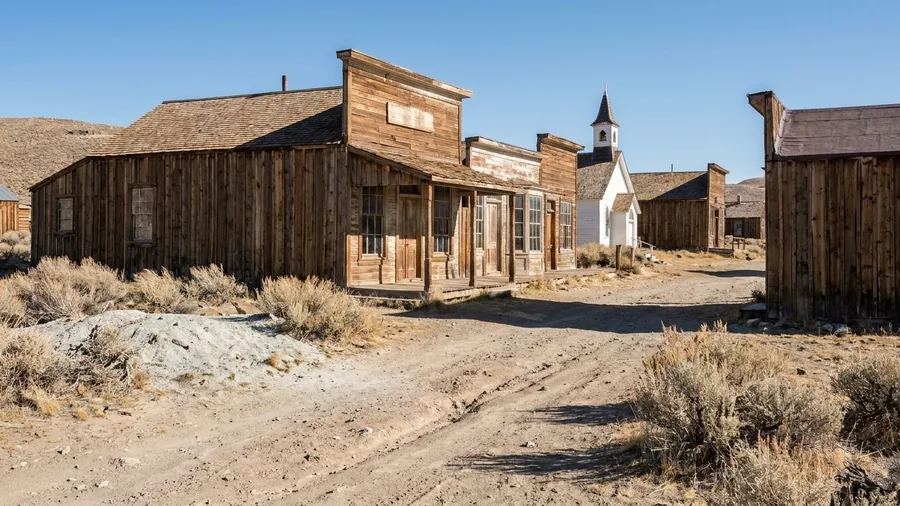
Compared with the stops that charge you a fee and then sell you a soda, Bodie asks more of your day and less of your wallet. It also hands you the most street per dollar of any gold camp in California.
Start with the road, because the road decides everything. From US-395 east of Bridgeport, a 13-mile paved spur climbs and then levels onto the high desert bench where the town sits. No 4WD, no washboard, no scrape of a muffler over loose rock on the way in. You drive to the gate like you would to a state park.
What the gate opens onto is the reason people plan a Tahoe or Yosemite trip around this stop. There are more than 100 structures standing on the original ground, not rebuilt on a fresh boardwalk: the stamp mill, a church, the schoolhouse, storefronts with their shelving still in place, whole residential blocks with porches sagging in the same wind. The museum adds the dates and the photographs so the streets make sense. This is preservation, meaning the town was left where it stood and held together rather than reconstructed for visitors.
The catch is density, and density costs time. Admission runs about $8 per adult, and you will spend half a day here if you walk the length of it, which is the longest you will give any California stop on this loop. Budget for it. It is also worth understanding what the fee does not buy: nothing is for sale on site. No fuel, no food, no bottle of water, so you fill the tank and the cooler in Bridgeport before the turnoff and carry what you need across those 13 miles.
For anyone with a rental car, a base in Bridgeport, or a day free between Tahoe and Yosemite, it is the California stop that rewards the hours you give it. Measured on the three numbers, it comes out to $8, half a day, all pavement, and the dirt question never gets asked.
💡 Tip: Arrive at opening. The parking lot is small and the wind picks up by midday.
🚗 A Four-Stop Desert Day from Las Vegas
Leave Las Vegas at 7 a.m.
Fill the tank before you go; the next services are at Beatty.
Rhyolite, 1-2 hours
Free, paved, and best in the morning light before the wind picks up.
Beatty for fuel and water
The last supply point before the desert stretch toward California.
Berlin, 2-3 hours
The fossil shelter is the reason to allow longer than the town itself needs.
Back through Beatty by late afternoon
Two ghost towns and one fossil exhibit, all before dark.
2. Calico: Family-Friendly Ghost Town Near Barstow
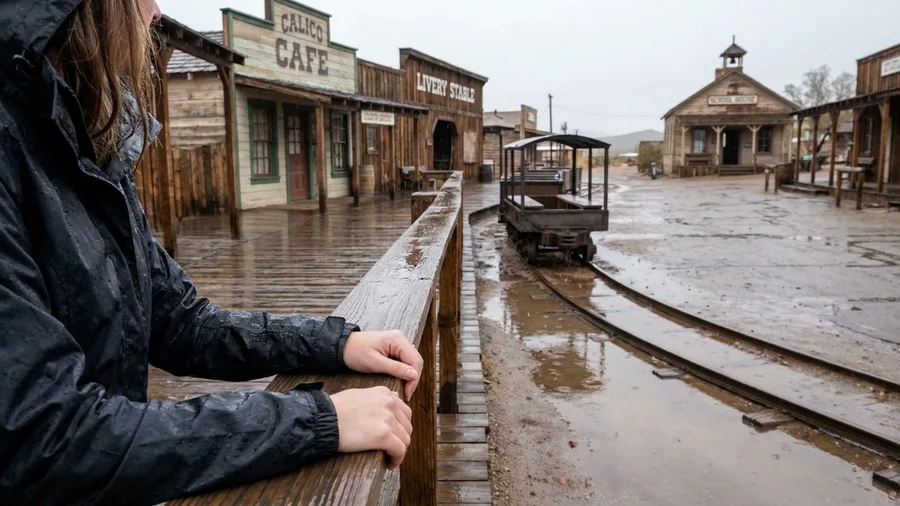
Book Calico for the first two hours after opening, not for lunchtime. It is the stop where the door price buys convenience rather than authenticity, and getting there early is what keeps the convenience from turning into a queue.
The gate sits just off I-15 outside Barstow, with pavement the whole way and about $10 per adult at the window, the highest ticket price on this route. It is restored, not preserved, and the place never fights you on that point. Storefronts are rebuilt and freshly painted, the saloon pours drinks, a mine train clatters out and back for the kids, and a schoolhouse sits open to walk through. That is exactly why short legs and strollers work here where they would struggle on rougher ground, and why the half day passes without anyone complaining of boredom.
Services are the real reason the extra two dollars disappear without argument. Gas and food are on site, so a family that skipped the cooler in Barstow does not go hungry or run dry. A campground nearby takes $25 to $40 a night, motels in Barstow run $90 to $150, and you can roll out of bed and be walking the streets before the tour groups pull in. Come after ten and you share the boardwalk with every I-15 road-tripper with the same idea.
3. Rhyolite: Nevada's Free Drive-Up Ghost Town
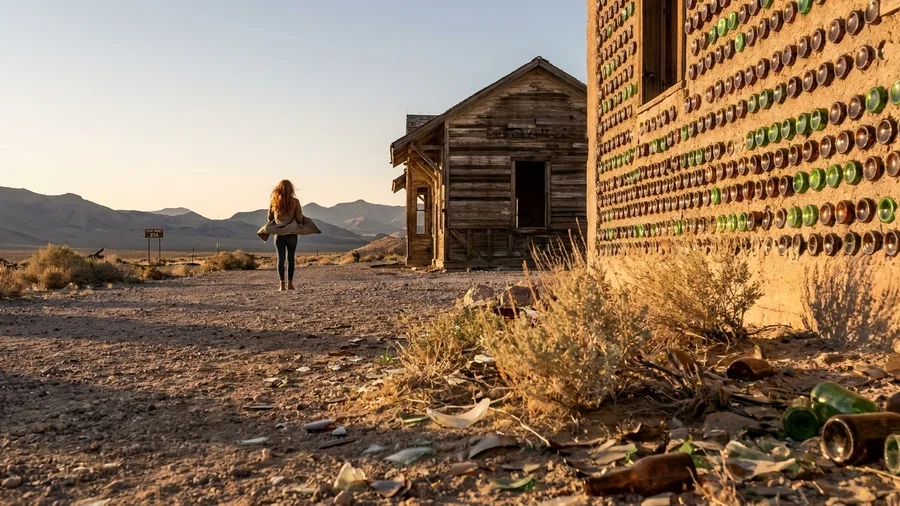
Under the high desert light, the whole place is quietly audible: a dry wind moving through the open bank building, the crunch of gravel under your shoes, and almost no voices once the morning photographers leave. It is the quietest free stop on the loop and the one where the sensible thing is to sit down and do nothing for a while.
State Route 374 runs paved out of Beatty toward the site, and there is no entrance gate, no fee, and no need for four-wheel drive anywhere on the way. What remains after the mining money left: a bank with its vault open to the sky, a jail, a train depot, rows of storefronts, and the Bottle House, the structure of glass-set-in-adobe that turned the town into a stop for photographers. Allow one to two hours. Nothing is sold on site, so fuel, food and water come from Beatty on the way out and back, and the cameras earn their keep where a museum would do the teaching elsewhere.
| Ghost town | State | Entry fee | Time needed | Services |
|---|---|---|---|---|
| Bodie | California | $8 | Half a day | None |
| Calico | California | $10 | Half a day | Gas, food, campground |
| Rhyolite | Nevada | Free | 1-2 hours | None |
| Berlin | Nevada | $8 | 2-3 hours | None |
| Garnet | Montana | $8 | Half a day | None |
| Bannack | Montana | $8 | Half a day | None |
| South Pass City | Wyoming | $5 | 2-3 hours | None |
| Shaniko | Oregon | Free | 1-2 hours | None |
| Oatman | Arizona | Free | 1-2 hours | Gas, food |
| Chloride | Arizona | Free | 1-2 hours | Gas, food |
| Terlingua | Texas | Free | 1-2 hours | Food, lodging |
4. Berlin: Nevada's Fossil-and-Ghost-Town Combo
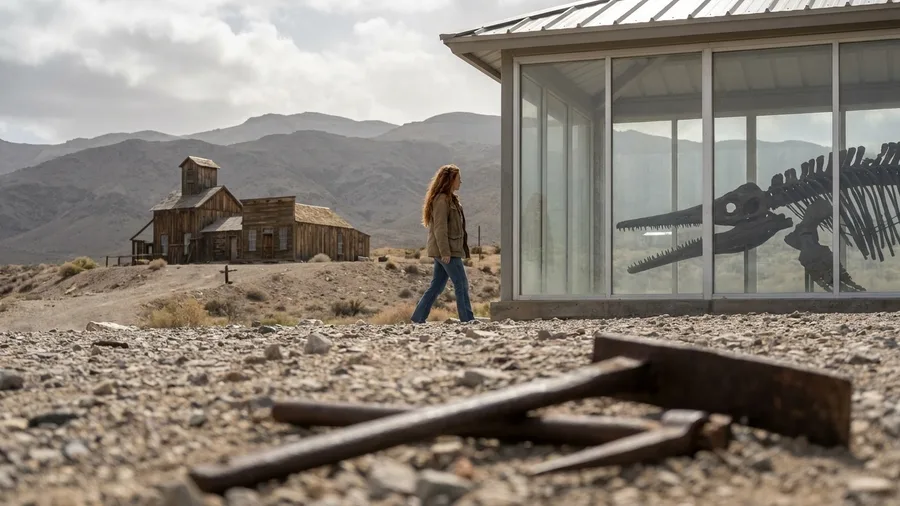
Twenty-three miles east of Gabbs, and the last stretch of that is dirt. You pay $8 per adult at the gate, and you should count on two to three hours inside, because the ticket is not for a town alone.
The town is the expected thing done well: a mill, an assay office, a scatter of houses, all held in place rather than rebuilt. What stretches the visit is the second half of the ticket, a glassed shelter over a full ichthyosaur skeleton pulled from these hills, jaw and ribs and the long spine of a marine reptile that swam here when Nevada was under water. That is why the stop outlasts the other Nevada towns, and why the road is the real cost: those dirt miles are the roughest approach so far, so call ahead or check conditions before you commit a sedan to them. Nobody sells gas, food or water at the site. If you are running between Reno and Las Vegas and want fossils with your ruins, $8 buys both halves, and the washboard buys the quiet.
💡 PRO TIP
The gate fee is not the trip cost
Budget fuel and motel nights by gateway town, not by admission price. Motels in Bridgeport, Beatty, Dillon, Rawlins, The Dalles and Kingman run $90-$150, which dwarfs the $5-$10 you pay at any gate.
5. Garnet: Montana's Snowbound Ghost Town
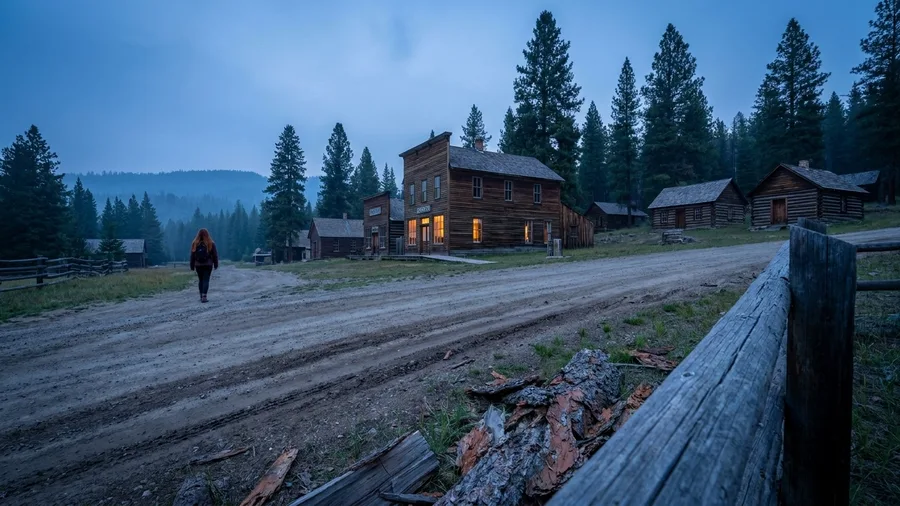
Garnet is a mining town left standing in the Garnet Range, and it sits about 20 miles east of Missoula.
The final 2-3 miles are graded dirt: fine in a sedan on a dry July afternoon, a different trip altogether once rain has been through. What waits at the end is more than 20 structures, a hotel, a saloon, a schoolhouse and a row of cabins, kept where they were built up in the pines instead of being reassembled along some main street. Admission runs $8 per adult and half a day covers it. There is no gas, food or water once you leave the highway.
6. Bannack: Montana's Walkable State-Park Ghost Town
Most of them, yes, and that is the whole case for the drive.
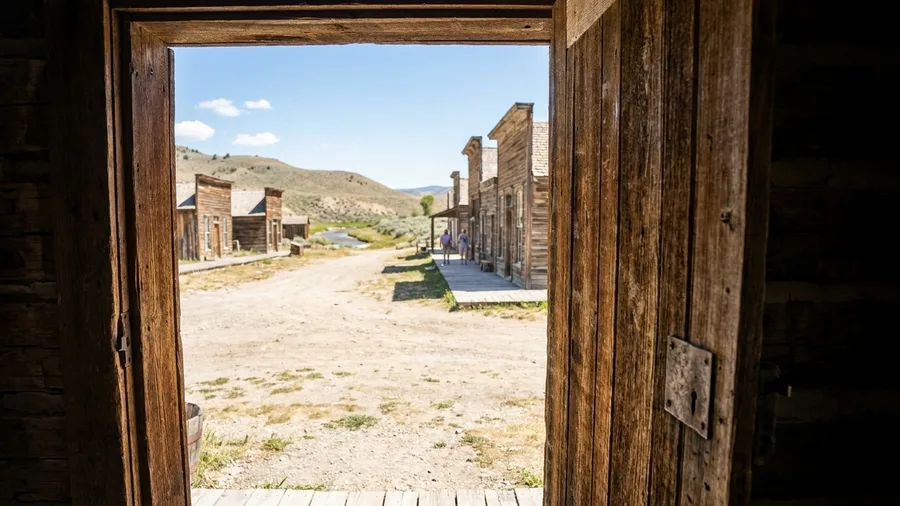
It is 25 miles west of Dillon on pavement from the moment you leave town, $8 per adult at the gate, and half a day once you are through it. Montana's first territorial capital has been kept as a state park, which is why doors open: more than 60 structures, a hotel, a church, a schoolhouse, the Masonic hall and the jail, laid out along Grasshopper Creek in the order the town grew. Compare that with a mountain camp of 20-odd buildings at the end of a dirt road and the arithmetic is obvious: same ticket, same state, three times the town and none of the washboard.
Stand on the slope above the creek in the last hour of light, when the false fronts throw long shadows down the street and the crowd thins to almost nobody. That is the frame the trip gets remembered by.
Come supplied. Nothing at the townsite sells gas, food or water, so fill the tank and buy the lunch in Dillon, where motels run roughly $90-$150 a night.
For anyone moving on I-15 between Yellowstone and Glacier, this is the stop with the best structures-per-mile ratio on the whole list: $8, half a day, full pavement, and a town you can walk into rather than photograph from behind a rope.
💡 Tip: The Masonic hall interior is the one people walk past. Go in.
What a Two-Day Ghost-Town Run Actually Costs
Motel rates based on $90-$150 a night in towns like Bridgeport, Beatty and Barstow.
7. South Pass City: Wyoming's Gold-Rush Survivor
That graded dirt at the end is the part nobody mentions. South Pass City sits south of Lander, Wyoming, and the last stretch runs unpaved, which is fine in dry weather and worth a glance at the sky before you commit.
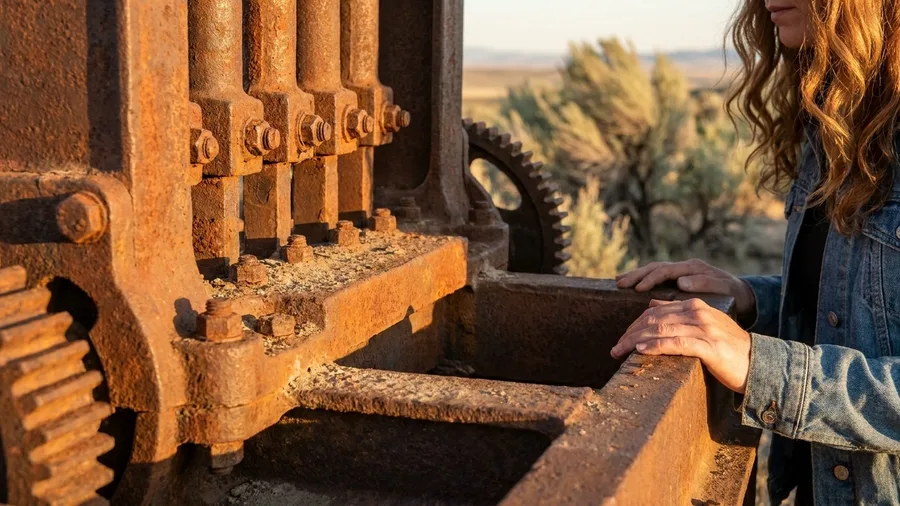
The payoff for the drive is a high-desert camp strung across open country: 20-plus buildings, a stamp mill, a jail and a saloon, with the horizon open in every direction and nothing between you and it. Entry is $5 per adult, the cheapest paid ticket on the loop, and you should give it 2 to 3 hours, which is less about the buildings than about how far apart they sit. Snow closes the place from November to April, so plan May through October. There is no gas, food or water at the site, and Rawlins is the motel base at $90 to $150 a night.
Paved vs. Dirt: Which Stops Fit Your Car
Paved all the way
- Bodie (13 miles off US-395)
- Calico (off I-15)
- Rhyolite (State Route 374)
- Oatman (Route 66)
- Chloride, Shaniko, Bannack
Dirt at the end
- Garnet: 2-3 miles graded dirt
- South Pass City: graded dirt approach
- Berlin: 23 miles, paved then dirt
- Fine in a sedan when dry
- Check conditions after rain
8. Shaniko: Oregon's Free Roadside Ghost Town
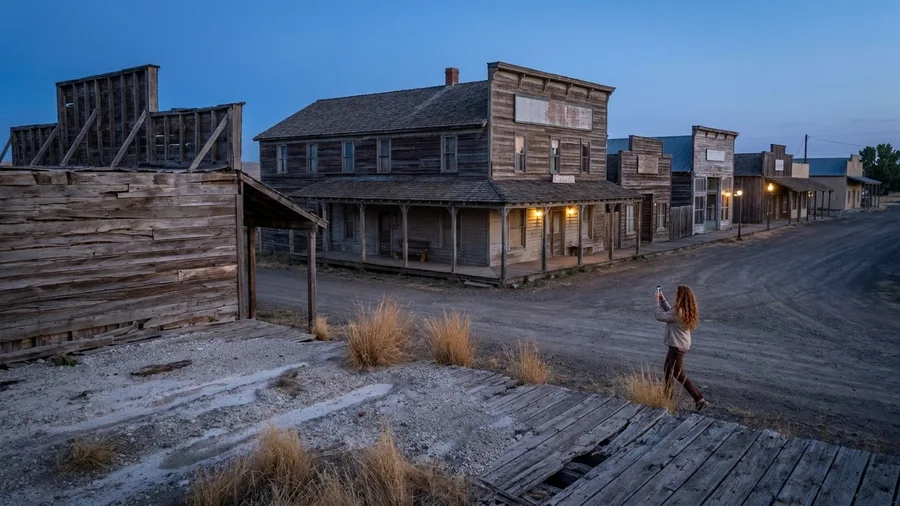
You step out of the car on US-97 and the wind hits first, dry and steady off the high desert, moving through the gaps in a row of false-front stores that were built to sell wool and now mostly sell the view of themselves. Shaniko shipped fleece down from the surrounding ranches in its brief boom, and what is left is a short block of wooden storefronts, a hotel and a schoolhouse, all sitting on pavement right off the highway with no gate and no ticket window.
So the money question answers itself: $0, paved to the door, 1-2 hours. The catch is size. This is a handful of buildings, not a district, and no gas, food or water is sold in town, so The Dalles is where you fuel, eat and sleep, with motels at $90-$150 a night. If you are driving between Bend and the Columbia River, pull off, walk the block, and keep moving; it earns a leg-stretch, not a day.
Bannack at a Glance
📍 Location
25 mi west of Dillon, MT
💵 Entry
$8 per adult
⏱️ Time
Half a day
🏚️ Structures
60-plus, interiors open
🛣️ Road
Paved the whole way
Best for
History-focused road-trippers on I-15 who want walkable streets and open doors.
9. Oatman: Arizona's Wild-Burro Ghost Town
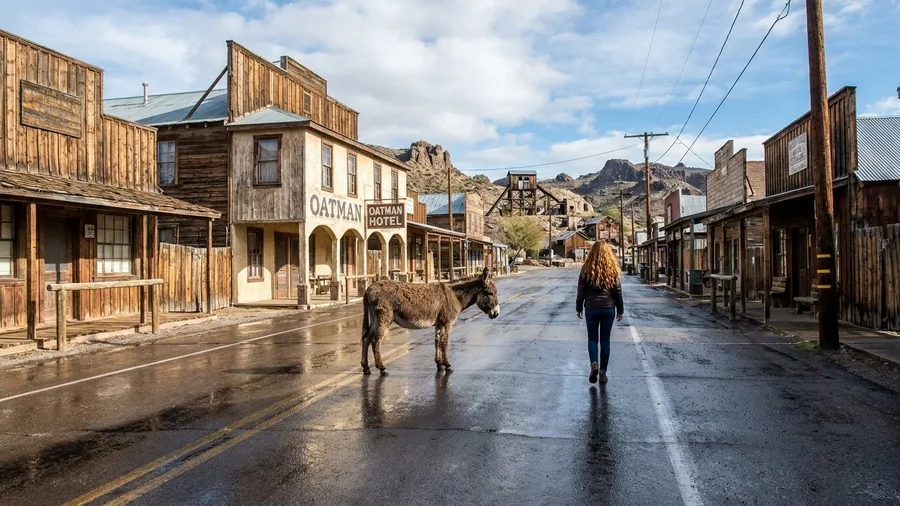
Shaniko charges nothing and gives you a quiet hour. For the same $0, Oatman adds burros, a daily shootout and a street full of people.
It is the liveliest stop on the list and the easiest to reach: on historic Route 66 south of Kingman, paved the whole way, no entry fee. Wooden storefronts and mine ruins remain, the Oatman Hotel among them, with burros wandering loose in the road and the daily shootout drawing a crowd. Gas and food are both available, one of only four stops with services, so you can arrive empty and leave full.
Go in the morning. June through August afternoons run 100°F-plus, and the 1 to 2 hours belong before the heat builds. The cost is paid in temperature and company rather than dollars, so skip it if you came for solitude.
💡 Tip: The shootout is at midday. If you came for burros and photographs, arrive before ten.
10. Chloride: Arizona's Quiet Silver-Mining Town
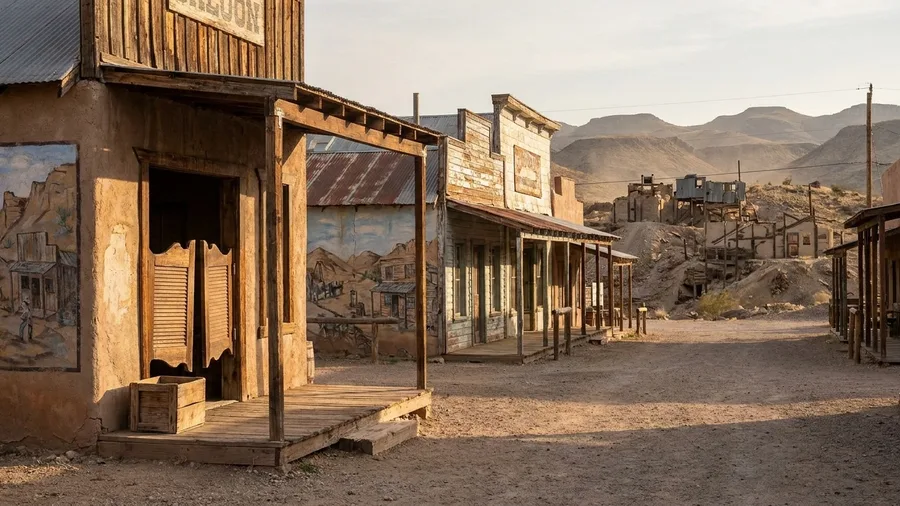
Two hours and zero dollars is all Chloride asks, and it returns more than most paid stops on this list. The turnoff is north of Kingman, Arizona, and the road stays paved the whole way in, so there is no washboard, no 4WD question and no gate.
This is a silver camp that never got a coat of paint or a ticket booth. You walk storefronts, a jail, mine ruins and murals at your own pace, and a few galleries and a saloon are still open and trading rather than dressed as exhibits. Gas and food are both in town, which puts Chloride in rare company among these stops.
Come in June through August and the afternoon runs past 100°F, so the walking belongs in the morning. It suits the traveler who wants the other Arizona stop without the crowds, the mock shootouts and the burros in the road; $0, paved and 1-2 hours are the same numbers, and the missing show is exactly what you came for.
Four Things People Get Wrong About Ghost Towns
11. Terlingua: Texas's Desert Ghost-Town Base
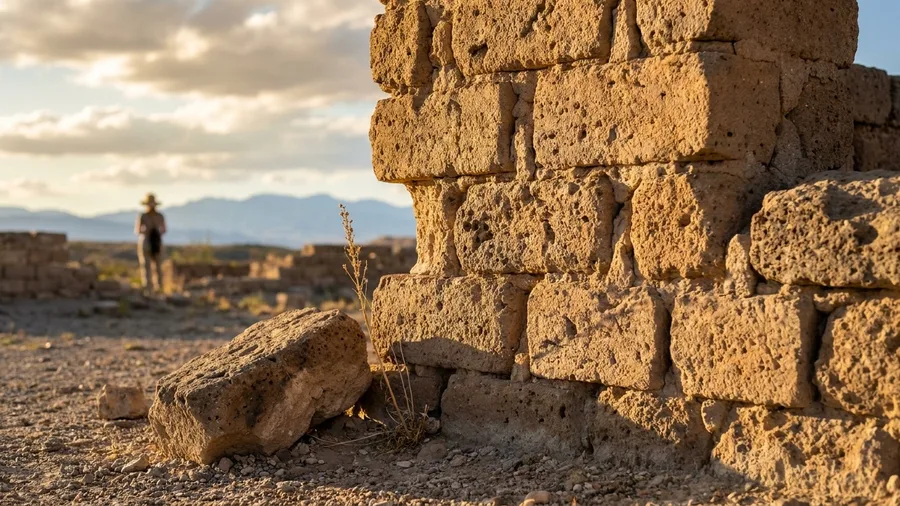
By nine in the morning the light out here is already hard and flat, and the only sound on the road into town is dust turning under your tires. Terlingua sits south of Alpine in West Texas, close enough to Big Bend National Park's west entrance that you can be at the gate in under half an hour, with paved asphalt the whole way and no fee at any point. It is the far outlier of this set, a full day's drive from anything else on it. What survives from the mercury-mining years is stone walls, a cemetery on the rise behind town, and a store. No gas station, no water to count on, no ranger booth. The rewards the drive, not the dollar: free, paved, short, which are the same numbers as the quiet Arizona camps and a completely different trip.
Give the town an hour or two, more if you sit down to eat, and eat you should, because the food is the reason to linger here. The signature order is a bowl of chili in one of the handful of places clustered around the old stone ruins, and you will pay roadside prices rather than city ones for it, in the range of ten to fifteen dollars a bowl. Several restaurants and a store keep the town alive, and lodging sits nearby, which makes this the one stop built as a base rather than a visit. Arrive before ten in June through August, when afternoons climb past 100°F and the walking stops being fun. Then decide: this is the stop you build a Big Bend trip around, or the one you skip entirely.
Frequently Asked Questions
Are these ghost towns actually open to the public?
Yes. All eleven are open for visits, though Garnet, Bannack and South Pass City close under snow from November to April. Check current hours before you drive out, since volunteer-run sites change schedules.
Do I need a 4WD to visit any of them?
Only Garnet and South Pass City end in graded dirt, and both are fine in a sedan on a dry day. Bodie, Calico, Rhyolite, Berlin, Bannack, Shaniko, Oatman, Chloride and Terlingua are paved the whole way in.
How much does it cost to visit?
Five are free: Rhyolite, Shaniko, Oatman, Chloride and Terlingua. The rest charge $5-$10 per adult, with South Pass City at $5 and Calico at $10. Motels in the gateway towns run $90-$150 a night, which is the bigger line item.
How long does the full loop take?
About 7 to 10 days for roughly 2,200 miles from Las Vegas to Tucson. You can cut it to three shorter loops: a Nevada-California desert run, a Montana-Wyoming mountain run, and an Oregon-Texas add-on.
When is the best time to go?
May through October. That is the only window when the Montana and Wyoming towns are open, and it avoids the worst of the desert heat, though June through August afternoons still hit 100°F-plus at Oatman, Chloride and Terlingua.
Can I visit with kids?
Calico is the easiest with short legs and strollers, thanks to restored storefronts and a mine train. Oatman works too, with burros in the street and a daily shootout. The quieter preserved towns like Bannack and Garnet are better for older kids who will walk.
Three Loops, and the One Stop to Book First
Three shapes cover all eleven. The desert loop is Rhyolite, Calico, Berlin, Oatman and Chloride, three or four days from Las Vegas on pavement to each gate. The mountain loop is Bannack, Garnet and South Pass City in July and August, when the dirt is dry. Shaniko and Terlingua are add-ons to a Columbia River or Big Bend trip, not a tour of their own. All eleven in one run is the 7- to 10-day, 2,200-mile drive from Las Vegas to Tucson, May through October.
With one day, book Bodie. It is $8, thirteen paved miles east of Bridgeport off US-395, more than a hundred buildings, half a day gone, and not a drop of water to buy on site.
A list gives you names, and the fee, the hours and the road surface are what turn names into a route; the free gates at Rhyolite, Shaniko, Oatman, Chloride and Terlingua pay for the $8 and $10 ones. Budget the nights before you budget the gates: $25 to $40 at campgrounds, $90 to $150 at motels in Bridgeport, Barstow, Beatty, Dillon, Rawlins, The Dalles and Kingman. Then pick your loop and check the last mile of road before you commit the car.
Pick your loop, then check the calendar
Look at the table above, choose the three or four stops that fit your week, and confirm each one is open before you drive. The May-October window is the one that matters.