Everyone compares Portugal to Spain, then books the Algarve. The difference that matters is scale: Portugal puts a hospital, an airport and a working town center within twenty minutes of each other in a way Spain's costas mostly do not.
That is the whole reason nine towns can be shortlisted before you ever get on a plane.
Here is the lazy version: fly into Faro, rent a car, drive the coast, fall for a beach, put in an offer. It happens every month, and it is how couples end up in a town that empties in January with a thirty-minute drive to the nearest emergency department.
The numbers that size this trip: nine towns, four filters, and a two-bedroom rent that runs from €900 to €2,100 a month ($972 to $2,268). Convert every price below at €1,000 to roughly $1,080 and the arithmetic stays honest.
What you actually do on the scouting trip: ride the 8am train into Lisbon, count the cafés serving lunch in February, walk the cobbles of Évora at 38°C in July, time the drive to a hospital with a stopwatch, drink a €1 coffee on a riverfront, and take the funicular up to a church that looks down on the whole decision.
The list below runs from the most expensive town to the cheapest and then out to an island that breaks the weather rule. Take what fits. You do not have to like all nine.
Quick Tips Before You Start
Go in the low season
Book your scouting trip for February or November, when the crowds are gone and you see the town as it really lives.
Clock the drives yourself
Time the run to the hospital and the airport with a stopwatch instead of trusting a listing agent's estimate.
Map the emergency department
All nine towns have one within twenty minutes, but three of them put it 20-35 minutes outside the center.
Price in health cover
A private insurance quote for a couple in their late 60s runs roughly €260-400 a month; budget it before the rent.
Rent before you buy
Live in a town for a month before any offer; the resale market rewards patience and punishes a fast decision.
Check the rules at the source
Residency, visa income thresholds and tax all change; confirm them with the Portuguese consulate and AIMA, never a forum.
1. Cascais: Lisbon polish with an Atlantic shoreline
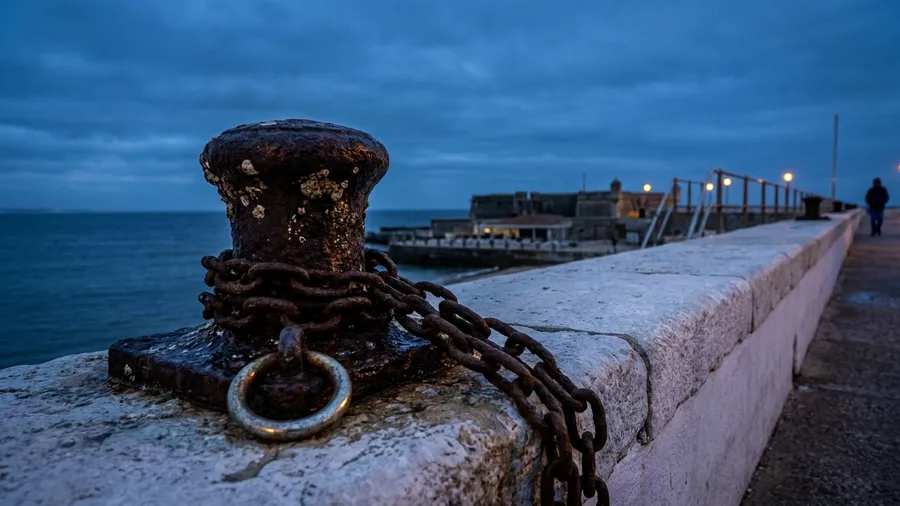
The train doors close at the Cascais station and the salt air comes through the car in one long breath, cold off the Atlantic, and then the housing blocks thin out and the water is on your left all the way to Lisbon.
That shoreline is the view worth remembering, and Cascais knows it. Stand on the Marginal seawall at sunset, facing west toward the Boca do Inferno cliffs, and the light drops into the Atlantic in front of you while the whole town walks the same flat path behind your shoulder. Come at 7pm in any month and you will see it: the promenade full, the fishing boats gone out of the harbor, the beach below the wall still holding the last warm color of the day.
Cascais is also the measurement. When a couple says Portugal with Lisbon access, this is the town their mind has already built: a furnished two-bedroom in the center rents for around €2,100 a month, roughly $2,268, and the same flat buys for about €600,000, $648,000. Nothing on the rest of any list starts higher.
What that rent actually purchases is time. The train runs into Lisbon in about 30 minutes, and the same rail line reaches the airport, so you never need a car to cross the country. An emergency department is in town. The seafront is flat enough to walk at 70. The premium is not square meters; it is minutes and a postcode.
The catch arrives in July. The center belongs to day-trippers from June through August, the narrow lanes restock with sandals and gelato, and the town you can walk at any hour in February is shoulder to shoulder by noon. To check it, ride the 8am train into Lisbon on a weekday and watch who is commuting and where they get off. Then come back down to the Marginal that evening and watch how fast the town empties once the day-trippers' buses pull out.
💡 Tip: Stand on the far end of Praia da Rainha at sunset. That is the photograph everyone takes, and it is worth taking once.
| Town | Region | Two-bed rent / month | Two-bed purchase | Best for |
|---|---|---|---|---|
| Cascais | Lisbon coast | €2,100 ($2,268) | €600,000 ($648,000) | Lisbon access and a flat seafront walk |
| Tavira | Eastern Algarve | €1,400 ($1,512) | €350,000 ($378,000) | A year-round center with an island beach |
| Lagos | Western Algarve | €1,550 ($1,674) | €390,000 ($421,200) | Walking to dinner and knowing your neighbours |
| Caldas da Rainha | Silver Coast | €1,000 ($1,080) | €230,000 ($248,400) | Ocean nearby at half the Algarve price |
| Viana do Castelo | Minho | €950 ($1,026) | €215,000 ($232,200) | Cool summers and the best coastal value |
| Coimbra | Centro | €950 ($1,026) | €225,000 ($243,000) | University life inland, hospital on the doorstep |
| Évora | Alentejo | €900 ($972) | €200,000 ($216,000) | The lowest cost on the list, at a weather price |
| Setúbal | Lisbon south bank | €1,100 ($1,188) | €260,000 ($280,800) | Lisbon access at two-thirds of Cascais |
| Funchal | Madeira | €1,400 ($1,512) | €370,000 ($399,600) | Never being cold again |
The four filters used to rank all nine
2. Tavira: the quiet Algarve that stays open
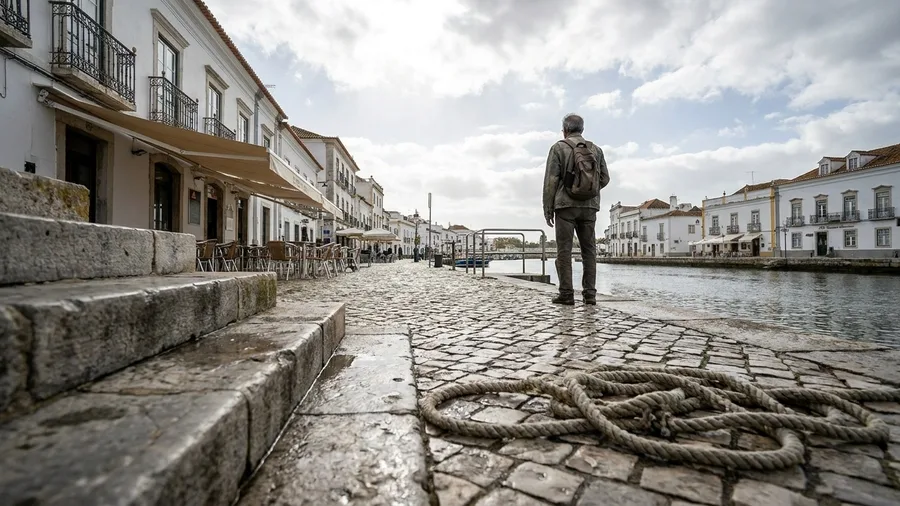
Tavira is the closest answer, and it costs €700 a month less than the benchmark by giving up exactly one thing.
A furnished two-bedroom in the center here rents for around €1,400 a month, about $1,512; purchase runs roughly €350,000, $378,000, the cheapest Algarve base worth considering. The riverfront is real, not scenery, and the cafés along it keep serving lunch in February rather than disappearing behind a strip of shuttered doors until spring. The island beach is a short ferry from the quay, Faro airport is 40 minutes by car, and from Faro, Lisbon is 45 minutes by air.
no hospital in town. The nearest emergency department sits 20 to 35 minutes away by road, and summer turns the ferry queue into a slow shuffle with a ticket booth. Compare that against the €2,100 Cascais rent with the hospital inside the town and it sharpens into a question: is €756 a month worth an extra half hour when it matters? To answer it, spend February here and count how many cafés are still serving lunch on a Tuesday, then drive the hospital route yourself before you decide.
Renting first vs buying first
Rent for a month first
- You find out how noisy Saturday nights really are
- Winter rain and summer heat get caught before money is committed
- You can walk away after four weeks and lose nothing but rent
Buy on the first trip
- A viewing in May says nothing about February
- Resale and legal costs follow you if it is wrong
- The premium towns are exactly where the market punishes impatience
3. Lagos: walkable, sociable, and crowded in August

One number decides Lagos: €1,550 a month, about $1,674, for a furnished two-bedroom in the old town, and it buys the hospital back inside the town that Tavira pushes 20 to 35 minutes out. That is €150 more than the quiet Algarve, paid for the minutes and for the noise that comes with them.
The night is what you are buying. You get an old-town flat with whitewashed lanes below the walls, a hospital a few blocks away, and a boardwalk to Meia Praia starting at the end of the street. Dinner is a walk, the same faces turn up at the same tables, and August highs settle around 30°C (86°F) with a coast built on roughly 300 sunny days a year. The check is the old-town walls at 9pm in August: stand there and listen to whether the bar noise below is the life you actually want, because the town you meet in June is not the one that keeps you awake in August.
⚠️ COMMON MISTAKE
Agent estimates are not stopwatch times
Every listing you read will say "minutes to the hospital." Drive it yourself, at rush hour, with a stopwatch. In three of these nine towns the emergency department is 20-35 minutes outside the center, and a winter evening changes the time.
4. Caldas da Rainha: the Silver Coast's practical bet

The Atlantic arrives as smell before anything else at Foz do Arelho: salt, wet sand, and the cold breath off the water where the lagoon meets the ocean. You sit on the sand with a coffee, and the whole argument for the Silver Coast makes itself.
Caldas da Rainha sits 15 minutes inland from that beach, one hour by car from Lisbon, and it rents for about €1,000 a month ($1,080) for a furnished two-bedroom in the center. Buying runs around €230,000 ($248,400), which is €160,000 ($172,800) under the Algarve town with the boardwalk and the hospital. The emergency department is in town. What you are buying here is a market town that functions in February rather than a resort that shutters in October, and the sea still 15 minutes down the road.
The trade is weather and company. Summers hold at 22-25°C, which is pleasant rather than hot; autumn brings rain, and winter here is cool and wet in a way the Algarve never is. English thins out away from the center, so the grocery queue becomes a language lesson you did not sign up for. Check it this way: give the Tuesday morning market a full slow pass, drive to Óbidos and the beach the same afternoon, and see whether one town covers an ordinary week. If it does, you have just found the cheapest sea on this list.
💡 Tip: August at Foz do Arelho is the busiest month by far; go in June, when the water is cold and the beach is empty.
What a two-bedroom actually costs across the nine
Illustrative monthly rent and purchase prices, converted at €1,000 to about $1,080
5. Viana do Castelo: green, northern, and unhurried
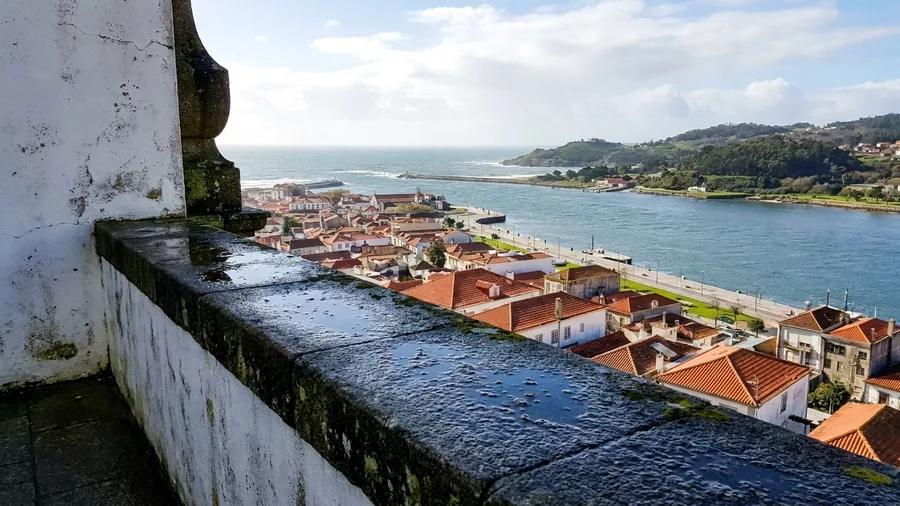
The dish to order here is arroz de lampreia in season, or failing that a bowl of caldo verde with a corn bread muffin, and lunch for two by the river will run you around €25 ($27) with a glass of the green wine the region makes. What brings you this far north, past the Silver Coast towns, is the price: €950 a month ($1,026) for a furnished two-bedroom in the center, and €215,000 ($232,200) to buy a two-bedroom flat. That is €1,150 a month ($1,242) under Cascais and $415,800 under it on the purchase, for a town where the hospital sits in the middle of things rather than up a coastal road.
Porto's airport is 45 to 60 minutes by car, and when the family flies in from the States, you take the 1-hour hop up from Lisbon rather than drive it. Trade-off: the rain runs October to March, English thins out noticeably once you leave the center, and the funicular up to Santa Luzia gives you the view without the climb. Ride it, then walk the Lima bank, then come back in November and see whether the wet streets and quieter restaurants still feel like a town you'd want for a wet Tuesday.
6. Coimbra: a university city that stays awake

The hills of the Alta are steeper than they look on a screen, so before you commit to a flat up there, know that the climb from the lower town to the university will cost you ten minutes and both knees on a hot afternoon. The rent is the same €950 ($1,026) that buys a northern coastal town, spent inland instead on a university city with €225,000 ($243,000) for a two-bedroom flat and a large university hospital right in town. Concerts, libraries and a student population keep the streets full in term time, which is what people mean when they worry that inland Portugal goes quiet at eight.
The summer heat is real, the sea is 45 minutes west at Figueira da Foz, and the town has no airport of its own, so Porto is the nearer of the two Lisbon connections for the family visits. What you get for those drawbacks is a working city at a coastal price, and the gradient and the heat are exactly what the saving is paying you back for. The beach is a day out, not a walk.
The odd little stop that breaks the drive is worth knowing about first: the university's Joanina Library, where the bats are protected and come out at night to eat the insects that would otherwise chew the old bindings. Tours run in timed slots and the queue forms early, so book the first one of the day, then take the walk through the botanical garden to the Alta and back again at 7pm to test how the hills feel on tired legs.
Coimbra — Before You Commit
🌡️ July average high
38°C / 100°F, with frosty January mornings
☕ Everyday costs
Coffee €1 ($1.08); prato do dia €9–12 ($9.70–13)
🛒 Weekly groceries for two
€110 ($119)
🩺 Private health cover, couple late 60s
€260–400 a month ($281–432)
✈️ Getting there from the US
Nonstop East Coast to Lisbon 6h30–7h, then 1h to Porto
Check on the ground first
Walk the Alta-to-lower-town climb at 3pm in July, not in spring. Confirm the flat is above the winter damp line and ask what the building's heating bill runs in January.
7. Évora: cheapest of the nine, hottest in July

Evora is the floor of the list: the price a couple reaches by trading the sea for inland quiet, and it is the lowest rent and lowest purchase price of any town here. A furnished two-bedroom in the center runs about 900 euros a month, roughly 972 dollars, and a two-bedroom flat to buy sits near 200,000 euros, about 216,000 dollars. Two inland stops the coast at 950; dropping the shore and the mild winter both brings it down another 50.
What that money buys is a walled UNESCO center you can cross on foot in twenty minutes and a hospital in town, with Lisbon 1 hour 20 minutes away by road. The residents' day runs through the same streets the tour buses circle: morning coffee at the counter rather than the terrace, the market early, the long lunch at home when the summer sun is at its height. Quiet is the product, and the price is paid in weather. July peaks near 38°C (100°F), January mornings come frosty, and the cobbles run everywhere, unkind to an ankle or a wheeled suitcase.
💡 Tip: Book an apartment with air conditioning in the bedroom, not just the living room. July nights are the part people underestimate.
The words that decide the budget
8. Setúbal: Lisbon access at two-thirds the price
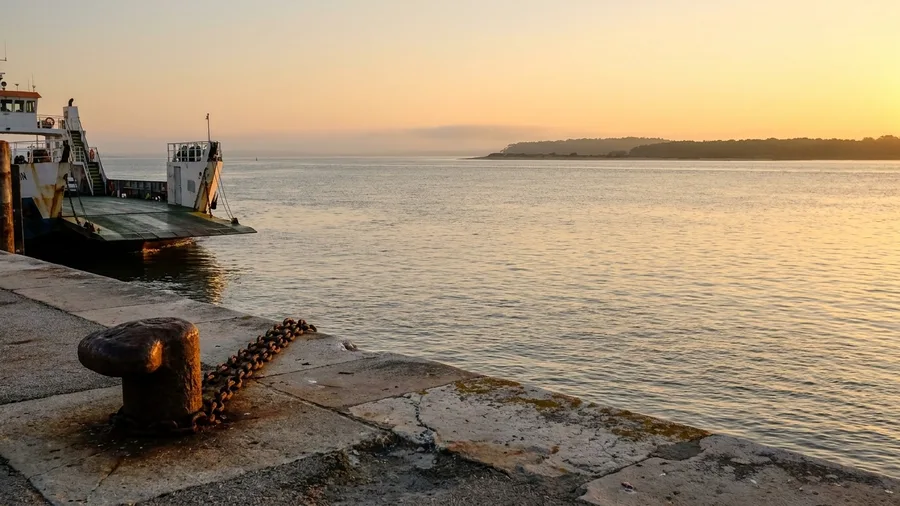
Setubal costs less effort to reach than the inland option and more noise than the resort version, and it trades the sea view for a working port. A furnished two-bedroom in the center runs about 1,100 euros a month (1,188 dollars), a two-bedroom flat to buy around 260,000 euros (280,800 dollars) – roughly 1,000 euros a month and 367,200 dollars under the top of the list, for about 20 to 30 more minutes on the train into Lisbon, which takes 50 to 60 minutes. The hospital is in town, the ferry to Troia leaves from the riverfront, and the Arrabida coast is on the doorstep.
It suits couples who want Lisbon within reach and a center that is useful rather than charming; it does not suit anyone chasing a pretty postcode or a view. The outskirts carry the industrial edge of a working port, and the center is practical, not picturesque. So take the rush-hour train into Lisbon on a weekday morning, and eat choco frito by the river that evening – that is the life, in one day.
9. Funchal: mild all year, and a flight from everything

Funchal is the only place on this list that answers yes, and it is the town that breaks the winter rule every other stop on the list pays for. The rent is 1,400 euros a month (1,512 dollars) for a furnished two-bedroom, and purchase around 370,000 euros (399,600 dollars) – the same rent Tavira asks, for a climate no mainland town here offers.
The history is the reason the town feels like a town and not a resort. Funchal grew rich on sugar and then on wine, and the Madeira wine lodges still sit in the old quarter where the cellars have aged it for two centuries – you can walk in, taste, and see the barrels. That trade is also why the harbor matters: everything the island does not grow arrives by ship, and everything a family visit needs leaves by air. The isolation is real in both directions.
Getting there and back is the second number to hold. From Lisbon it is 1 hour 40 minutes by air, after the 6 hour 30 to 7 hour nonstop from the US East Coast, and the airport sits close to the center. The hospital is in town, the old town is walkable, and the social life is on the streets year-round. The trade-off is that every arrival carries a flight, every family visit is a booking, and anything shipped to the island carries a premium.
So book a full week in February, walk a levada in the hills above town, and price the return flights you would actually take twice a year. That last figure is the one a listing never shows.
💡 Tip: Rent in Funchal itself or in the Lido area rather than up the hill in Monte; the walk home matters more than the view.
Frequently Asked Questions
Can a couple in their late 50s or 60s realistically do this on one trip?
Nine towns in two weeks is tight but workable if you stay two nights in the leaders and half a day in the rest. Better still, cut it to the top four before you fly, and give each of those three or four days.
Do we need a car?
For this list, yes, at least for the trip. Cascais and Setúbal are reachable by train from Lisbon, and Funchal by air, but Tavira, Caldas da Rainha and Évora all want a car for the beach and the hospital runs. Rent one for the middle week.
Is private health insurance really necessary?
A quote for a couple in their late 60s runs roughly €260-400 a month. Public care exists, but many couples pairing a new country with an older age carry private cover as well. Budget it alongside the rent, not after.
Which town is cheapest to live in?
Évora, at €900 a month ($972) rent and €200,000 ($216,000) to buy, with a hospital in town. It is also the hottest in July and the furthest from the sea. Caldas da Rainha and Viana do Castelo are the cheapest with ocean nearby.
What changes fastest, and what should we verify?
Rules, income thresholds and tax treatment change. Check current residency and visa requirements with the Portuguese consulate and AIMA rather than a forum or an agent's summary. Prices here are illustrative, not quoted.
How long before we could actually move?
That depends far more on paperwork than on town choice. The useful move now is the two-week scouting trip in the low season, then a month's rental in the leader, then a decision. Rent before you buy.
Book by Season, Not by Sun
Decide by situation, not by photograph. For Lisbon access, Setúbal at €1,100 a month does the job; Cascais is the same answer at €2,100. For the lowest cost, Évora at €900 rent and $216,000 to buy. For winter sun, Funchal holds 20-26°C all year. For neighbours, Lagos, with the hospital in town and dinner on foot.
Then make one move: book two weeks in the low season in the two towns that survived, February for the Algarve and the island, November for the north, and rent before you buy. On that trip, clock two drives with a stopwatch, one to the emergency department and one to the airport. Those minutes are part of the price no listing shows.
The €1,200 a month between Cascais and Évora is real, and it is not the point. The point is which of the two you would still be content in on a wet Tuesday in January, three years after the first visit. Book the flights, take the stopwatch, and let the minutes decide.
Two weeks in February decides more than a year of browsing
Take the four filters from this list, cut the nine towns to two, and go stand in each one in the low season before you sign anything.