Solvang always gets compared to Denmark, and Leavenworth to Bavaria. Fair enough. The comparison still misses the only difference that matters: one of those towns is a 2.5-hour drive from Seattle, and the other needs a passport and a plane.
Start with what the trip actually costs door to door. In Leavenworth that means about $12 for a bratwurst and a tank of gas from Seattle, not a transatlantic fare and a jet-lagged first morning. The cues on this list are concrete, not mood: painted timber facades, a working Dutch windmill, coquina walls at the Castillo, chalet lodges stacked against a Colorado slope. Each one sits inside a known drive, a known season, and a signature spend you can check before you commit.
So the decision in front of you is cues against costs, not countries against countries. Twelve towns, off-season hotel nights from $130 to $300, signature spends from about $1.50 for a streetcar ride to $50 for a gondola, drives from 30 minutes outside Iowa City to 2.5 hours out of Seattle. New Orleans is the one you fly into. By the end you can pick a base by the old-world cue you want, price the hotel and the one activity that defines the trip, and know which season to book.
Quick Tips Before You Start
Book the season, not just the town
Holland needs early May for Tulip Time, Leavenworth peaks late September, Vail needs January–March, and St. Augustine is best in winter.
Drive times are the whole trick
Most of these sit 1–2.5 hours from a major airport, so pair two towns per trip and skip the rental car upgrade.
Budget off-season hotel rates
Expect $130–$210 a night in most towns, $270 in Santa Barbara and $300 in Vail during ski season.
Price one signature spend per stop
A $12 bratwurst or a $6 pastry isn't the whole cost, but knowing the one splurge keeps the daily budget honest.
Reserve festival weekends early
Oktoberfest in Leavenworth and Tulip Time in Holland fill hotels months out; book those first, then build the drive around them.
1. Leavenworth, Washington: Bavarian Village
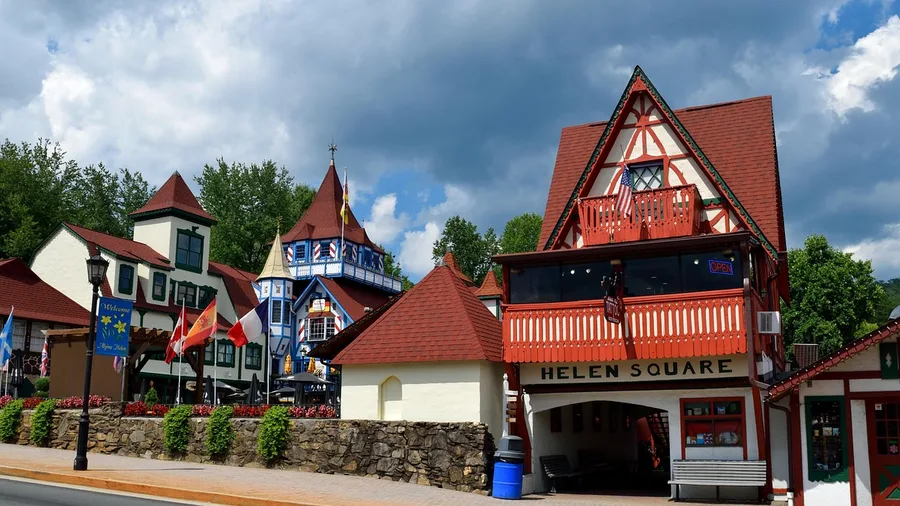
The first thing that hits you is the smell of bratwurst drifting down Front Street, and it starts before you see a single painted shutter. You are two and a half hours out of Seattle, still in Washington, and the town ahead has timbered fronts and window boxes like a Bavarian village someone dropped onto a Cascade valley floor.
Leavenworth used to be a logging town, and when the timber work faded the town remade itself: half-timbered storefronts, painted shutters, flower boxes under every window, and the mountains standing up behind the roofs doing half the work for free. The cue that earns the trip is that alpine-village look-a Bavarian streetscape with a mountain backdrop, not a generic mountain town with a few German signs on it.
Budget a bratwurst at about $12 and an off-season hotel night around $180. The bratwurst stand and the beer garden are the afternoon; the drive is the trade. A domestic mountain drive, a cheap sausage and a hotel night under $200 replace the airfare to Germany, and you get the alps cue without the passport or the eight-hour flight.
Time it for late September into early October if Oktoberfest is the thing, because that is when the village fills and the beer taps open, and the hotels know it. Come in the off-season and the room drops toward that $180 and the streets give you room to stand still. Book early for the festival window and you pay for the privilege.
One warning worth the ink: this is a small mountain town, and the day-trippers from Seattle arrive midday. Get in before noon, or stay the night and have the streets to yourself in the morning. It is a Bavarian weekend, not a Bavarian theme park, and it works best at the quiet edges of the day.
💡 Tip: Book Oktoberfest lodging at least three months out; the town's hotel rooms sell out and nearby Wenatchee becomes the overflow.
| Place | European feel | Signature cost | Typical hotel | Best season |
|---|---|---|---|---|
| Leavenworth, WA | Bavarian village | Bratwurst ~$12 | ~$180/night | Late Sep–early Oct |
| Solvang, CA | Danish village | Pastry ~$6 | ~$170/night | Spring or fall |
| Helen, GA | Alpine Bavarian | Tubing ~$15 | ~$140/night | Summer or late Sep |
| Frankenmuth, MI | Franconian Germany | Chicken dinner ~$25 | ~$130–$210 | Summer–Dec |
| Holland, MI | Dutch tulip town | Windmill ~$12 | ~$160/night | Early May |
| Lindsborg, KS | Little Sweden | Pancakes ~$9 | ~$130/night | Midsummer or fall |
| Amana Colonies, IA | German villages | Family meal ~$22 | ~$130/night | Fall |
| Fredericksburg, TX | German Hill Country | Tasting ~$20 | ~$180/night | Spring |
| French Quarter, LA | Creole Europe | Beignets ~$4 | fly-in city | Spring or fall |
| St. Augustine, FL | Spanish colonial | Fort ~$15 | ~$190/night | Winter |
| Vail, CO | Swiss alpine | Gondola ~$50 | ~$300/night | Jan–Mar |
| Santa Barbara, CA | Spanish Riviera | Mission free | ~$270/night | Spring or fall |
2. Solvang, California: Danish Village
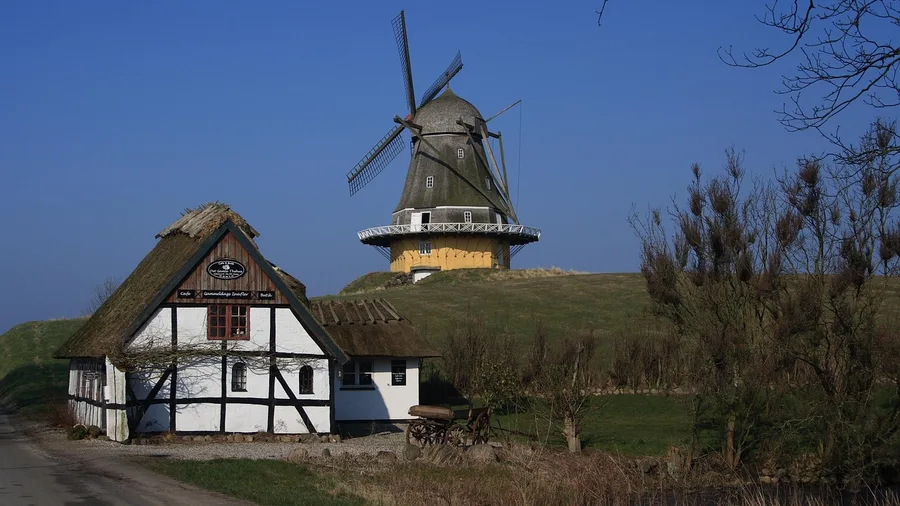
Know before you go that Solvang is busy at noon and the bakery line moves slowest on weekends, so arrive early or aim for a weekday. The alpine-cue idea travels south to the California coast here, where a different village proves the same point in wood and windmills: Denmark can be rebuilt forty-five minutes from Santa Barbara.
Solvang was Danish-settled, and the town leans into it with windmills, half-timbered buildings and bakeries putting out pastry. The cue is the bakery-and-windmill village, storybook Denmark rather than a generic cute stop. Locals head for the bakeries off the main drag and skip the front-street crush at lunchtime.
Pastry runs about $6, a hotel night around $170, cheaper than Santa Barbara's rates, and the drive is forty-five minutes from that coast. That short side trip and a $6 pastry are the trade for a Copenhagen flight. Spring or fall is the season, and the fall drive down from Santa Barbara keeps the Mediterranean light without the heat.
3. Helen, Georgia: Alpine Bavarian Town
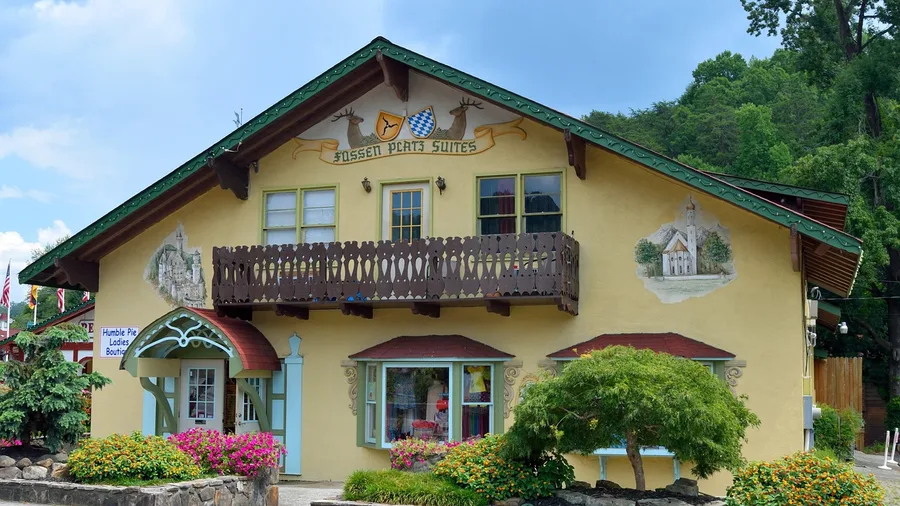
About 90 minutes up Georgia 400 from Atlanta, a logging town that remade itself in the 1960s now runs on gingerbread trim, a tight grid of streets and the Chattahoochee moving through the middle of it. Arrive before 9 a.m. or after 7 p.m. Between those hours in July, the tubing outfitters on the river bend are queued 20 deep and the sidewalks are a slow shuffle – the trim is still there, you just can't see it past the shoulders. Early morning is when the shopkeepers sweep the porches and the light hits the painted brackets on the second floors; late evening is when the day-tubers have gone home and the beer gardens along the river give up their tables.
The cue is the trim, not the mountains – plenty of Blue Ridge towns have peaks behind them, but only this one has the carved brackets, the cuckoo-clock faces on the storefronts and a river threaded through the village grid. Tubing runs about $15 for a rental that drops you upstream; a town hotel is roughly $140 a night. Summer is for the river, late September for Oktoberfest, and the two seasons pull different crowds – so pick your hour before you pick your weekend.
💡 Tip: The river tubing is the actual reason to come in summer; go on a weekday to avoid the weekend crowds.
4. Frankenmuth, Michigan: Franconian Germany
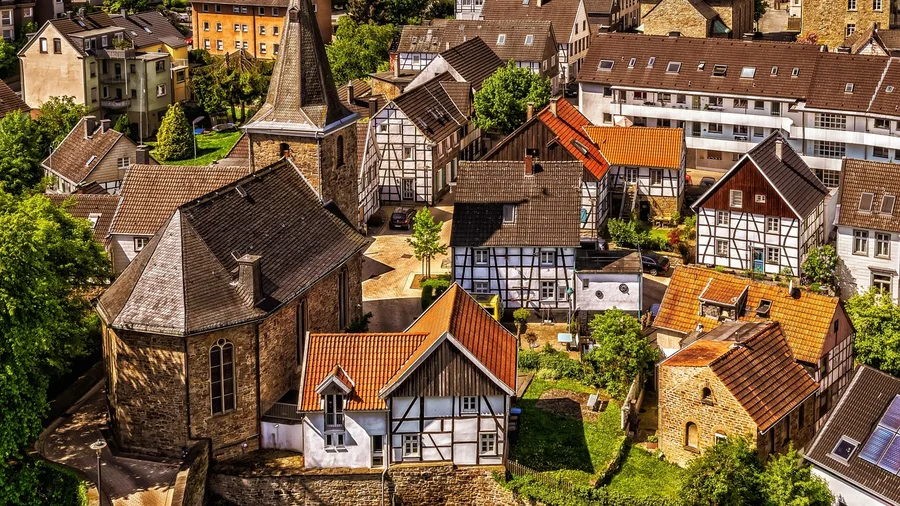
The clang of a glockenspiel carries down a street of timber-framed storefronts, and for a second you could be in a Franconian market square instead of mid-Michigan.
Frankenmuth is the Midwest's Little Bavaria, a town styled after Franconian Germany where the German accent comes from three things you can point to: a covered bridge, timbered buildings, and that glockenspiel chiming on the hour. It is built for sitting, not sprinting. Claim a bench by the river, let the afternoon go soft, and watch the riverboat fill and pull away without you on it.
When you do move, the family-style chicken dinner runs about $25 a head and the riverboat ride about $18, and both are the reason people come back. Off-season town hotel rates in the range that hold across this list run roughly $130 to $210 a night. From Detroit it is about 1.5 hours, and summer through December is the booking window, which is unusually wide.
That matters for planning. You are not chasing a two-week blossom window here; you pick a weekend, drive up, eat, and float. The $25 dinner and $18 boat carry the whole trip, and the drive replaces the flight. One caution worth knowing: the chicken dinners are the draw, so walk in early or expect a wait at peak weekend hours.
What a Two-Night Frankenmuth Weekend Costs
Rates are illustrative; check current prices with local businesses.
5. Holland, Michigan: Dutch Tulip Town
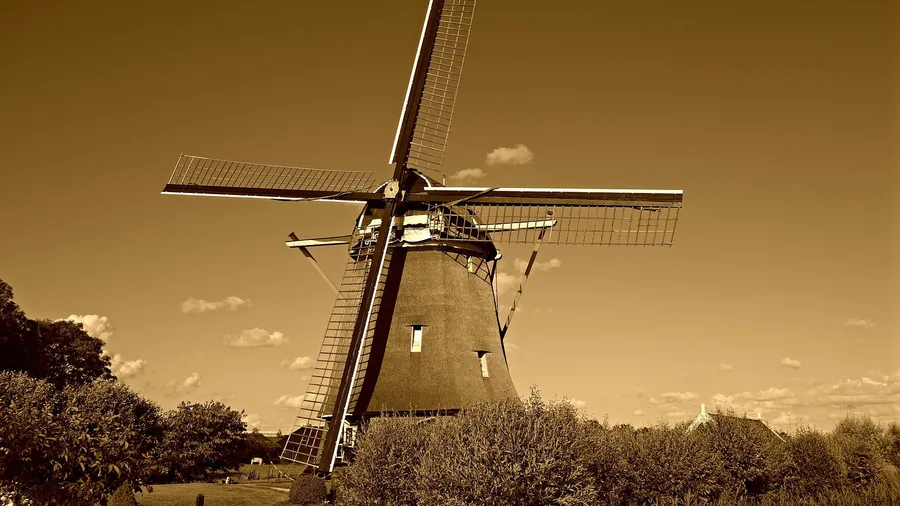
Go in early May or not at all. Holland's Netherlands cue is a narrow one, and the weeks that matter are the ones when the tulip beds are up.
The town sits on Lake Michigan, about 2.5 hours from Chicago, and it earns the Dutch label honestly: De Zwaan is a working windmill you can climb through, the bakeries sell Dutch pastries, and wooden shoes show up on porches and shop signs. Windmill Island runs about $12 to get in, and a hotel night lands around $160. Tulip Time is the festival that turns the beds into the reason to come, so check its dates and book early, because the window is short and the town fills. Outside that stretch you still get the windmill and the bakeries, just not the carpet of color.
💡 Tip: Tulip Time festival runs in early May; hotel rates spike and rooms sell out, so reserve by February.
6. Lindsborg, Kansas: Little Sweden

Lindsborg is a Swedish town on the Kansas prairie.
The story is the one that makes it worth the drive: Swedish immigrants settled this stretch of Kansas in the 1860s, and instead of shedding the old country they kept it, so the town still paints oversized Dala horses on street corners and serves Swedish pancakes in the morning. Bethany College, founded by the same settlers, anchors the art tradition with a gallery that gives the Nordic identity a real spine rather than a costume. You feel the left-field strangeness of it, flat wheat country all around and a red wooden horse on the sidewalk.
Pancakes run about $9 and a hotel night about $130, which makes this the low-cost version of the whole list. It is about an hour from Wichita, and Midsummer or fall are the times to aim for. The cue here is carried by the horses and the college, not by any alpine landscape, so come for the culture rather than the scenery.
7. Amana Colonies, Iowa: German Villages
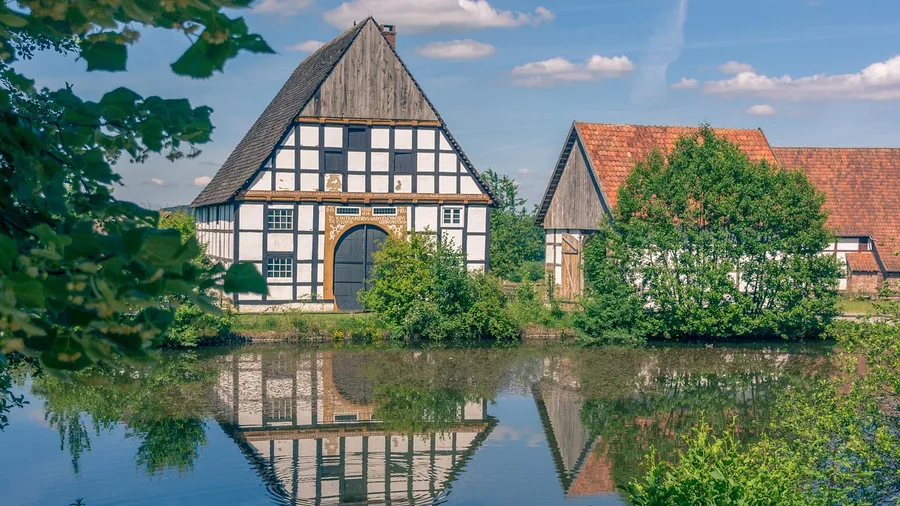
If you want a German village settlement where the buildings, not just the menus, carry the heritage, go to the Amana Colonies. Seven historic villages sit along one stretch of Iowa farmland, linked by craft shops, communal kitchens and the simple churches the original settlers built. The cue is rural Germany at its plainest: shared kitchens, craft barns, church architecture with no ornament to it. A Scandinavian identity can hold its ground on open prairie; here the German one holds the same ground with different roofs.
The meal is the point. Sit down to a family-style dinner in one of the communal-kitchen restaurants, about $22 a head, and the table fills whether you ordered it or not. Off-season hotel rooms run around $130 a night, and Iowa City is roughly 30 minutes away, which makes this the easiest rural-German weekend on the list. Book for the fall harvest weekends, when the villages put on their busiest stretch of the year. Thirty minutes, $22 and $130 stands in for the flight.
8. Fredericksburg, Texas: German Hill Country
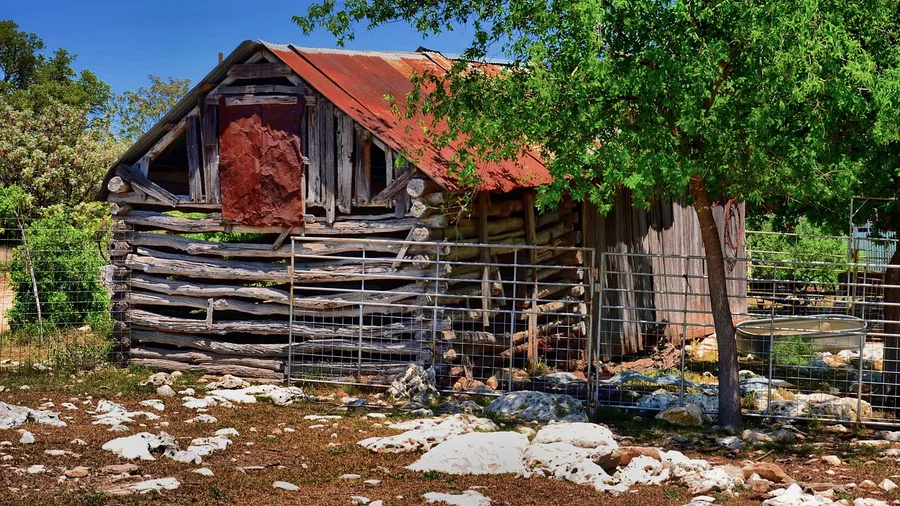
Fredericksburg asks for more money and more driving than a preserved farm village, and gives you a working town rather than a museum piece. German settlers built here in the Hill Country and left stone houses, biergartens and peach farms behind them. The stone alone separates it from every generic wine-country stop within an hour. You are paying for a Texas weekend that happens to read as the Rhineland.
Budget around $20 for a winery tasting and roughly $180 a night for the hotel. That is the splurge tier of this list, and it is worth it because the weekend carries two cues at once: German-Texan heritage in the buildings and a wine scene that fills the afternoons. Austin is about 1.5 hours east. Spring is the date to pick, when the wildflowers come up along the roads into town and the drive becomes part of the trip.
One caution: this is a weekend town, not an afternoon stop. Arrive Friday, leave Sunday, and book the tasting rooms ahead in wildflower season. The 1.5-hour drive, the $20 tasting and the $180 hotel night replace a Rhineland flight, with spring wildflowers as the reason to fix the date.
Fredericksburg — Book It Right
📅 Minimum stay
2 nights, Fri-Sun
📞 Book ahead
Tasting rooms in wildflower season
🚫 Skip this if
You only have an afternoon
💵 Cheaper window
Shoulder season, not peak bloom
🍑 Pairs well with
Hill Country peach stands en route
The failure mode
Arriving Sunday afternoon: most tasting rooms wind down, and the town empties before you see it working.
9. French Quarter, New Orleans: Creole Europe
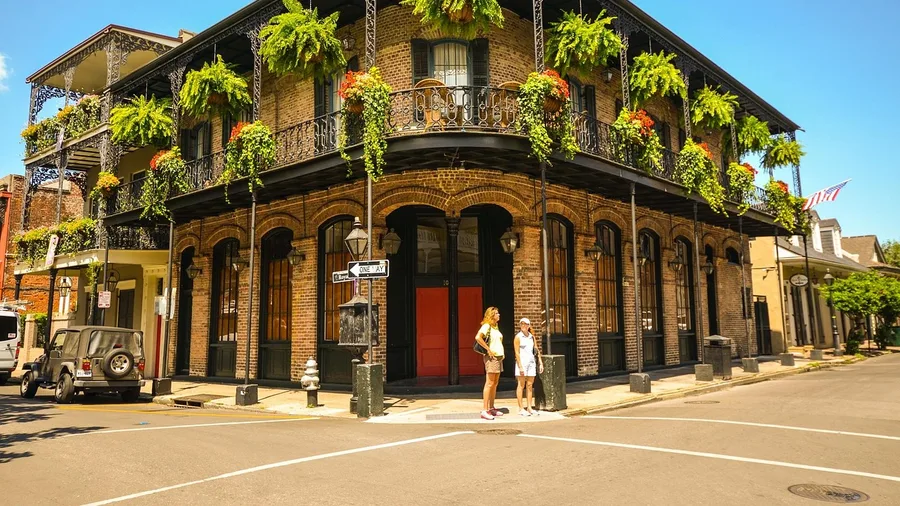
Know this before you go: the French Quarter is the one place on this list you cannot drive to, so the transatlantic fare becomes a domestic one and the trade changes shape. It is still the closest cityscape in America to old Europe. Iron balconies, courtyard cafes and French-Spanish Creole history do work that no theme village can copy, and street musicians fill the gaps between them. A German heritage cue in a food town is one thing; this is the urban version of the same argument.
Daily costs are the reward for the flight. Beignets run about $4 and the streetcar about $1.50, so once you have landed the city is cheap to move around. Go in spring or fall and skip peak summer, when the heat decides your schedule for you. Fly in, eat for $4, ride for $1.50, and the old-world neighborhood is waiting.
Fly-In vs Drive-In: What Changes When You Trade the Fare
Drive-In Towns
- 12 towns but only 2 fit a long weekend: pick one, not a loop
- Pair each with its airport: Seattle-Leavenworth 2.5 hrs, LA-Solvang 45 min
- The $130-$210 night only exists off-season; in season budget double
- Dutch and German cues are set dressing, so arrive on the event weekend or don't bother
Fly-In City
- The Quarter is walkable, so skip the rental car and the parking fees
- Beignets at $4 and the streetcar at $1.50 only pay off if you stay dense
- Spring or fall; peak summer heat sets your schedule and your budget
- Cheap once landed is the trade for the fare, not a cheaper trip overall
10. St. Augustine, Florida: Spanish Colonial
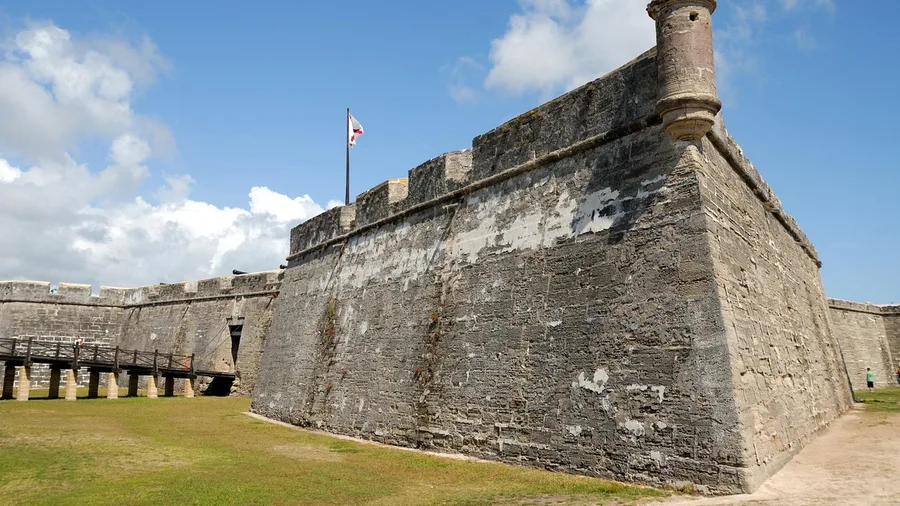
Late afternoon light hits the coquina walls and the whole street turns the color of wet sand, soft and porous and warm to the touch. That stone is why St. Augustine looks the way it does. Spanish builders cut it from shell beds on Anastasia Island in the 1600s, and because coquina is mostly shell, the British cannonballs at the Castillo de San Marcos in 1701 reportedly sank into the walls instead of shattering them.
This is the oldest continuously occupied European-founded city in what is now the U.S., and the Spanish colonial cue is not a theme-park reconstruction. The Castillo de San Marcos is a real masonry fort with a moat and a star-shaped plan, the narrow lanes off St. George Street still follow the colonial grid, and the central plaza has been a public square since the Spanish laid it out. Walk it at dusk and the comparison to Andalusia makes itself.
The free win here is the city itself: the lanes, the plaza, the water at the end of the street, the coquina facades. The fort is about $15 for adults, and it is worth it once for the ramparts and the harbor view, but you can have a full day without paying it. Check current hours before you go, since the fort runs on National Park Service schedules and occasionally closes sections.
The hotel is the real spend, around $190 a night in the historic district, and it is the reason to book winter or early spring rather than July. Off-season rates in January and February run lower and the streets are walkable instead of punishing. From Jacksonville it is roughly an hour's drive, which means this is a day trip or a single overnight rather than a flight-and-hotel commitment to Spain.
One caution: the main drag is a tourist corridor of gelato and tchotchkes, and if that is all you see you will wonder what the fuss is about. Walk two blocks off it. The side lanes are quiet, the coquina is real, and the old-world cue does its work without a single admission ticket.
💡 PRO TIP
The One-Hour Trick at Castillo de San Marcos
Fort admission is about $15, and the ranger talks and cannon demonstrations are included. Go early, because the fort courtyard gets crowded by midday and the coquina walls are best photographed before the tour buses arrive.
11. Vail, Colorado: Swiss Alpine Village
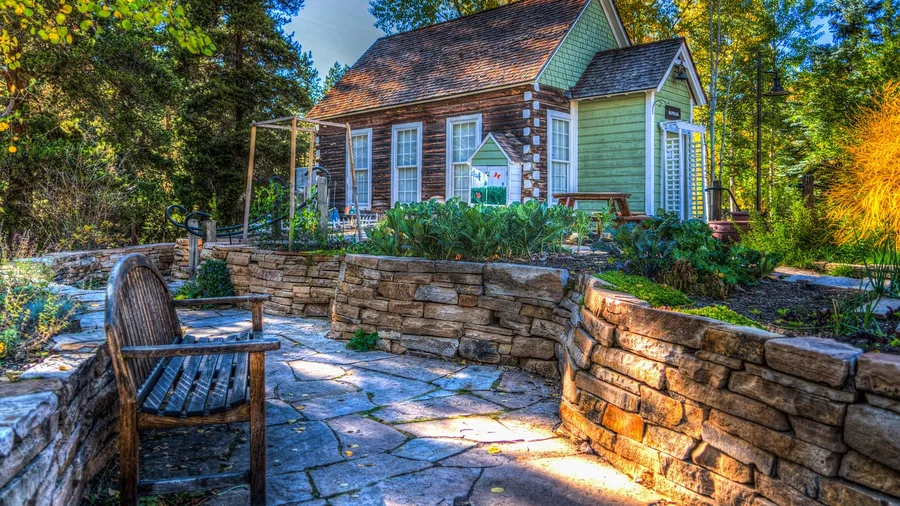
About $50 buys the gondola ride, and about $300 buys the ski-season hotel night. Those are the two numbers that decide Vail, and they are also why the alpine cue here is the most expensive on this list. The village was built from the 1960s onward to mimic Swiss and Austrian resort towns, and the chalet-style lodges, pedestrian streets and mountain backdrop do the job convincingly.
Stand at the top of the gondola on a clear January morning and the view is the one the trip is remembered for: the Gore Range filling the horizon, the village roofs below, the light coming in low and long. Go early, before the lift lines build, and bring a layer, because the temperature at the top runs well below the base. Walk the pedestrian village in the afternoon and the chalet facades and the mountain do the rest of the work.
The drive from Denver is roughly two hours, which replaces the flight to Zurich and the transfer to a resort. January through March is the season that justifies the spend, since that is when the snow and the skiing are the point; summer visits get the gondola and the views without the price peak. If the $300 night is too much, look at the shoulder weeks in early December or late March, when rates drop and the mountain is still open.
💡 Tip: Book ski-season lodging by early fall; Vail's December–March rooms fill up fast and rates climb.
Which Europe-Without-Europe Stop Fits Your Trip
- 🥨 Leavenworth in Oktoberfest — Book three months out and the whole weekend lands.
- 🥐 Solvang as a Santa Barbara side trip — 45 minutes each way and a $6 pastry.
- 🌷 Holland outside early May — The tulip cue is weaker; the windmill still works.
- 🏔️ Vail in ski season — About $300 a night, but the Alpine cue is strongest.
- ✈️ French Quarter expecting a drive-in — It's a fly-in city; budget domestic airfare.
12. Santa Barbara, California: Spanish Riviera
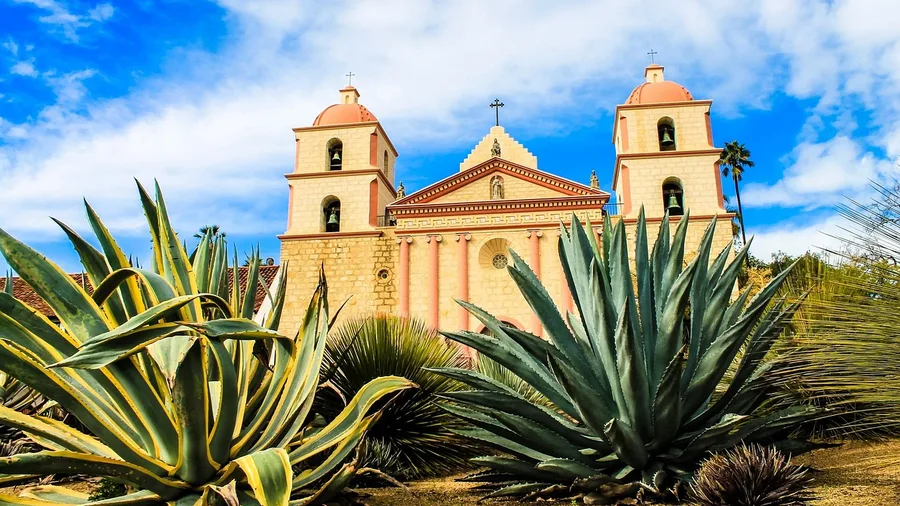
You come around a bend on the coast road and the sun hits the red-tile roofs all at once, and for a second the light and the stucco and the palms read as the Mediterranean. That is the Santa Barbara cue, and it is architectural rather than thematic: white stucco walls, clay tile, mission-style arcades, and a coastline that faces south into the sun.
Do the Mission Santa Barbara walk first, since admission is free and the grounds set the tone: the twin bell towers, the courtyard, the stone fountain. Then drive the coast and stop where the road meets the water. The city rebuilt itself in this Spanish Colonial Revival style after the 1925 earthquake, which is why the look is consistent rather than scattered, and why a drive through the residential streets is part of the experience.
The hotel is the offset, around $270 a night, and spring or fall is the season that makes the Mediterranean comparison land: warm but not hot, clear light, fewer crowds than summer. From LA it is about a 1.5-hour drive, which means the trip is a road decision rather than a transatlantic one. The free mission admission softens the hotel bill, and the coastal drive costs nothing but gas.
Frequently Asked Questions
Is it worth visiting these towns if I've already been to Europe?
Yes, if you go for the specific cue rather than a substitute. Leavenworth's Oktoberfest and Holland's Tulip Time are real events with their own character, not scaled-down copies. Treat them as American towns with a European accent and you'll enjoy them more.
How far in advance should I book?
For festival weekends like Leavenworth Oktoberfest or Holland Tulip Time, book three to six months out. Off-season weekends in most towns can be booked two to four weeks ahead, and rates drop.
Can I visit more than one of these in a single trip?
Yes. Pair Solvang with Santa Barbara, or Frankenmuth with Holland if you're driving through Michigan. Most towns sit 1–2.5 hours from a major airport, so two stops per long weekend is realistic.
Which of these is the cheapest overall?
Lindsborg, Kansas, is the low-cost pick: about $130 a night, $9 pancakes and an hour's drive from Wichita. The Amana Colonies are close behind at about $130 a night with a $22 family-style meal.
Do any of these require a flight?
Only New Orleans. Every other place on this list is a drive from a major airport, which is the whole point of the list. For New Orleans, the trade is domestic airfare plus low daily costs.
What's the best season for a European-feel road trip?
Spring and fall work for most towns: Solvang, Santa Barbara, Fredericksburg and New Orleans all peak then. Winter is for St. Augustine, and early May is non-negotiable for Holland's tulips.
Match Your Trip to the Right Town, Then Check the Dates
The airfare is optional. The cue, the season, the drive and the spend are what actually decide the booking, and all four are on the table here. Bavarian weekends are Leavenworth. Danish bakeries are Solvang. Architecture is St. Augustine or Santa Barbara, alpine hiking is Vail, and food and culture are New Orleans or Fredericksburg. Pick the town that matches, then verify current prices, hours and event dates with official local sources before you book a hotel or a timed activity.
Then go back to where this started: $12 for a bratwurst, 2.5 hours from Seattle. That was never a consolation prize for a cut-rate Europe. It is a domestic weekend decision, made on a calendar and a drive, and the passport can stay in the drawer.
Pick One Town and Book the Hotel
Scroll back to the at-a-glance table, choose the season that matches your dates, and call the hotel directly to confirm the rate before you lock in the drive.