Can you get a beautiful U.S. winter trip without paying for it twice? Yes, if the room drops and something free stays open. Most people assume the opposite: that winter beauty means spring-crowd prices in Sedona or a ski-resort bill somewhere in Colorado. The fifteen places below undercut both.
Winter cuts midweek lodging across all fifteen, with rooms running roughly $75 to $165 a night. It also closes mountain roads and seasonal facilities, so the free viewpoint or trail you came for has to be checked against official park, road and weather status before you build a trip around it.
The terms are fixed: three nights, midweek, January or February, one traveler, costs excluding travel to the destination and before taxes and fees. Food runs $30 to $55 a day, paid attractions $0 to $25 each. Room figures are illustrative midweek examples, not live quotes, so compare before you book.
What you get is a shortlist you can sort by mood: mild beach or desert walks, snowy national-park scenery, quiet small-town culture, or a cheap city weekend. Then you act on it: confirm access for your chosen anchor, pull live lodging for a midweek date, and go. The cheapest winter trips are not the lowest rates; they are the places where the rate falls and the free walk, drive or viewpoint stays open.
Quick Tips Before You Start
Go midweek
Tuesday to Thursday nights are where the winter rates actually drop.
Pack layers, not hope
A 60°F desert afternoon can turn into a 25°F night fast.
Check the road, not just the weather
State DOT and park sites list closures before any forecast app does.
Know what closes
Some park facilities and small businesses run shorter winter hours; call ahead or check.
Rates are examples
The numbers here are typical midweek winter examples, not live quotes; compare before you book.
Arrive early
Even in low season, popular trailheads and scenic drives fill by mid-morning.
1. Sip Green Chile Stew in Sedona
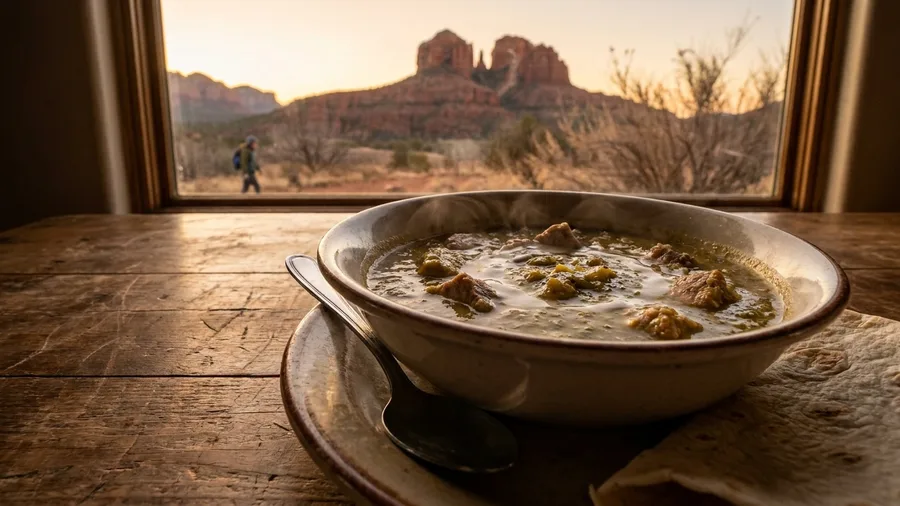
The smell that hits you first in a Sedona winter kitchen is green chile roasting, sharp and smoky, and outside the window the light drops fast against red rock at four in the afternoon. You came for the stone, but the food is how you warm up between walks. A bowl of green chile stew runs about $12 to $16 in town, and it is the cheapest good meal of the day.
midweek January and February rooms in Sedona land around $140 a night, well under the spring rate that climbs once the crowds return, and demand thins out enough that you can book close to your date. Your scenery does not charge admission. Pick a red-rock viewpoint or trailhead off the forest roads and walk it yourself, no jeep tour, no paid guide. Cool mornings mean layers and a hat, and the trails are quieter than they will be in April.
Trail access is the part to check, not assume. Before you drive out, look at Coconino National Forest notices, Arizona DOT road conditions and the National Weather Service forecast for that week; a storm can close a forest road or leave a trail icy underfoot. Walkers who want routes that stay passable without snowshoes can plan ahead with winter hikes that stay walkable. If being in a town with a warm bed, a bowl of stew and easy red-rock walks at a lower midweek rate is the trip you want, Sedona fits. If you need guaranteed trail mileage and warm sun, look elsewhere.
💡 Tip: Ask for the green chile on the side if you're not sure about heat; you can always add more.
| Destination | State | Typical midweek winter room | Free or cheap anchor | Best for |
|---|---|---|---|---|
| Sedona | Arizona | about $140/night | Red-rock viewpoint or trail | Mild-weather hikers |
| Moab | Utah | about $95/night | Colorado Riverway Scenic Drive | Road-trippers and photographers |
| Grand Canyon South Rim | Arizona | about $110/night | Rim Trail | First-time canyon visitors |
| Santa Fe | New Mexico | about $120/night | Plaza and Canyon Road | Museum-goers and walkers |
| Taos | New Mexico | about $105/night | Rio Grande Gorge Bridge | Landscape photographers |
| Durango | Colorado | about $100/night | Animas River Trail | Walkers and rail-and-town travelers |
| Flagstaff | Arizona | about $90/night | Urban Trail System | Budget snow-seekers |
| Asheville | North Carolina | about $115/night | Blue Ridge Parkway overlooks | Food-and-town travelers |
| Gatlinburg | Tennessee | about $85/night | Great Smoky Mountains roads and trails | Cabin groups |
| Hot Springs | Arkansas | about $80/night | Bathhouse Row and Grand Promenade | History walkers |
| Eureka Springs | Arkansas | about $75/night | Historic loop walk | Architecture lovers |
| Branson | Missouri | about $80/night | Branson Landing boardwalk | Families and road-trippers |
| Chattanooga | Tennessee | about $95/night | Walnut Street Bridge and Riverwalk | City-break travelers |
| Greenville | South Carolina | about $90/night | Falls Park on the Reedy | Walkable-city fans |
| Gulf Shores | Alabama | about $100/night | Public beach access | Beach walkers and snowbirds |
2. Pull Over at Hole N' the Rock in Moab
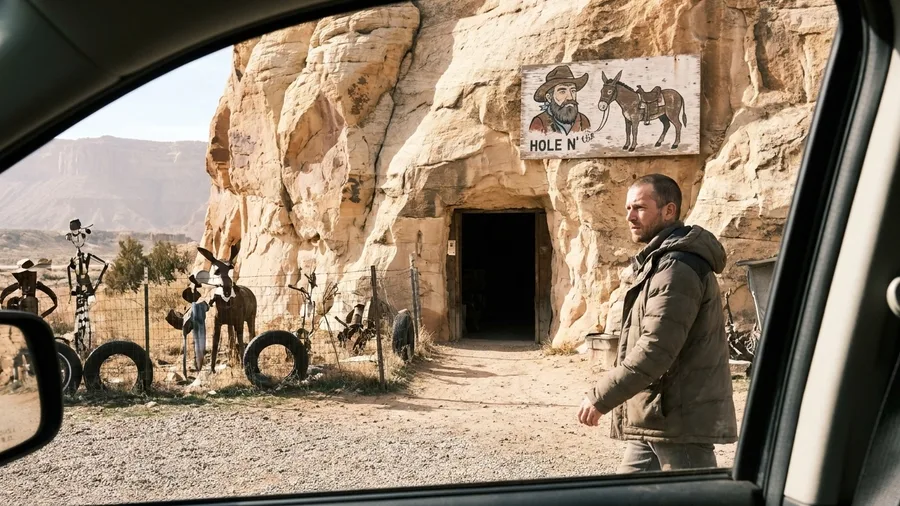
Hole N' the Rock is a roadside stop south of Moab carved into a sandstone formation: a house cut out of the rock, a gift shop, and a menagerie of oddities around the entrance.
Moab itself loses its peak-season room prices in winter; a midweek night runs about $95, and the free anchor is the Colorado Riverway Scenic Drive, a self-drive along the river that asks nothing but a tank of gas. Snow dusts the red rock, and some trails go icy, so check Utah DOT, BLM and National Weather Service conditions before you commit to a route. For road-trippers and photographers who can work in the cold, that is the trade: cheap rooms, cold trails, and one strange little detour to break up the drive.
💡 PRO TIP
Book the refundable rate
Winter roads can close without much warning. A refundable hotel rate costs a little more but saves you if a pass shuts down.
3. Walk the Grand Canyon Rim Trail in Winter
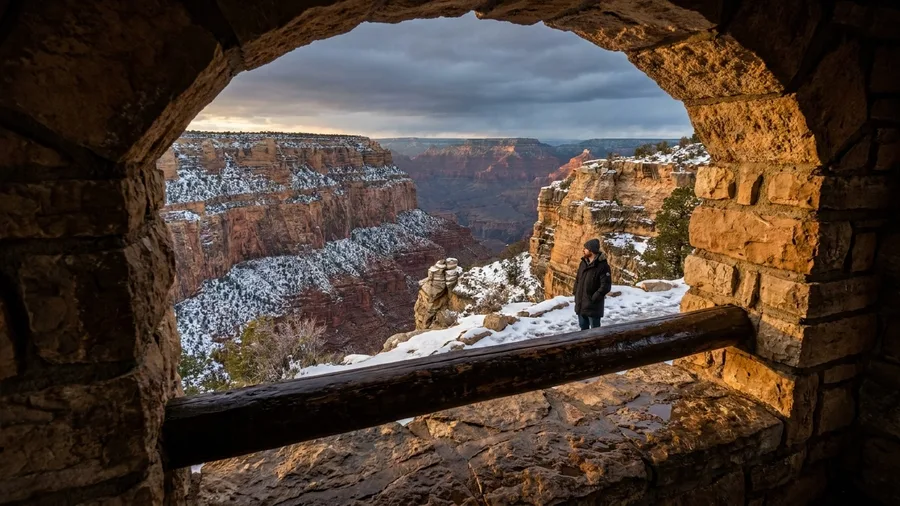
You step out of the car at the South Rim and the cold hits before the view does, dry and thin, and then the canyon opens up in front of you, wide enough that your eye keeps reaching and not finding the far wall.
This is the famous one, and winter is how you get it without the summer crush. Midweek January or February rooms at the rim come in around $110 a night, lower than peak season, and the crowd that fills the overlooks in July is mostly gone. The view itself costs nothing extra beyond your park entry: the Rim Trail runs along the edge and you walk it, no guided tour, no added fee. That is the whole bargain here.
The honest reservation is services. Winter trims what stays open along the rim, so some food spots and facilities run limited hours, and you should not plan on the same range you would find in summer. Build your day around the walk and eat where you can confirm it is operating.
Keep your expectations tied to the weather, not the brochure. Before you go, check Grand Canyon National Park status, Arizona DOT road conditions and the National Weather Service forecast; snow and ice can close stretches of rim or the road in, and the trail is not promised open. This is a major stop worth the trip for the scenery alone, but the crowd being gone is only half the win. The other half is the drive up being clear.
If you are a first-time canyon visitor who wants the view more than a list of activities, winter midweek gives you the same rim for less money and far fewer people. If you need every facility open and a guaranteed clear trail, wait for spring and pay for it.
💡 Tip: Sunrise at Mather Point is colder but emptier; the light hits the canyon walls and you'll have the railing mostly to yourself.
⚠️ COMMON MISTAKE
Don't assume winter means open
Mountain roads and some park services close seasonally. Always check official park, road and weather sources before you drive to a trailhead or viewpoint.
4. Stroll Canyon Road in Santa Fe for Free
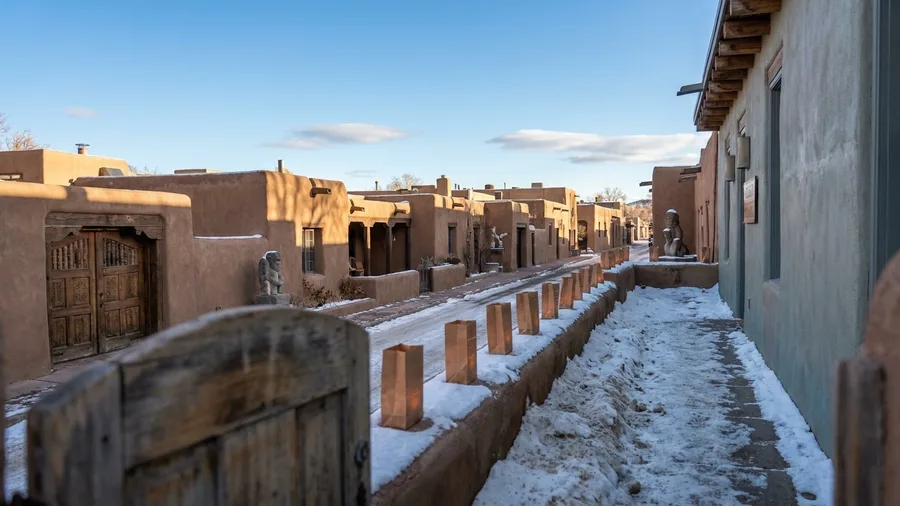
Yes to both, and the best of it costs nothing. A midweek room in January or February runs around $120 a night, well under the summer rate, and the walking gallery that is the Plaza and Canyon Road stays open and free in every season.
The adobe town is quieter after summer, so you get cool, clear days and elbow room on the sidewalks where summer crowds elbow through. Canyon Road stretches about half a mile, lined with galleries and sculpture courtyards you can wander at no charge, and the Plaza a short walk downhill is the natural start. Snow can shut the high-country trails in the Santa Fe National Forest, which is the trade: you trade trailheads for galleries, and cold, bright days reward the walker over the hiker. This town is made for museum-goers and anyone who prefers quiet streets to a full itinerary. Check New Mexico DOT and National Weather Service road and weather status before you commit, since snow can reach the town itself, then compare live lodging for your midweek dates.
5. Photograph the Rio Grande Gorge Bridge in Taos
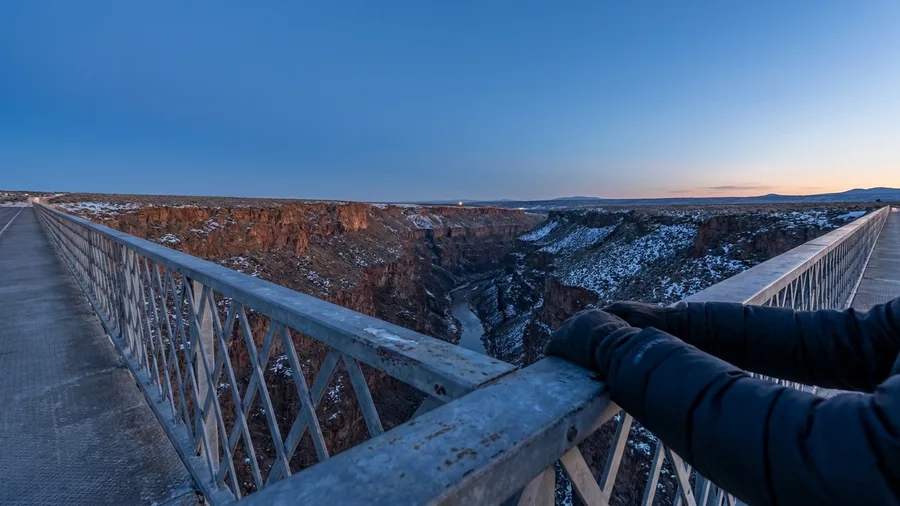
It is 650 feet down to the Rio Grande and about $0 to look. The steel deck of the Rio Grande Gorge Bridge carries you over the gorge on foot for nothing, and the view runs both directions at once: the river a thin silver thread below, the rim breaking away in rust-colored steps toward the far mesa. A midweek room in Taos runs about $105 a night, the value window before ski demand lifts some dates.
Stand at the west-end pedestrian walkway rather than the middle of the road span, where traffic vibrates the deck and photographs smear. Late afternoon is the hour: the low winter sun rakes across the far wall and turns the rock ochre, and the shadows in the gorge go blue. Bring a jacket, because the wind funnels up the canyon, and know that the bridge sits a short drive north of town on the road toward the ski valley.
Back in the adobe plaza, the pace slows to a walk past low brown walls and wooden gates. Ski weekends can push rates up, so midweek is where the money stays put, and the bridge itself never charges admission. Before you drive north, check New Mexico DOT and BLM road and weather status, because the rim road and the gorge access can change with snow and wind. Landscape photographers and culture-first travelers get the most from the pairing.
6. Walk the Animas River Trail in Durango
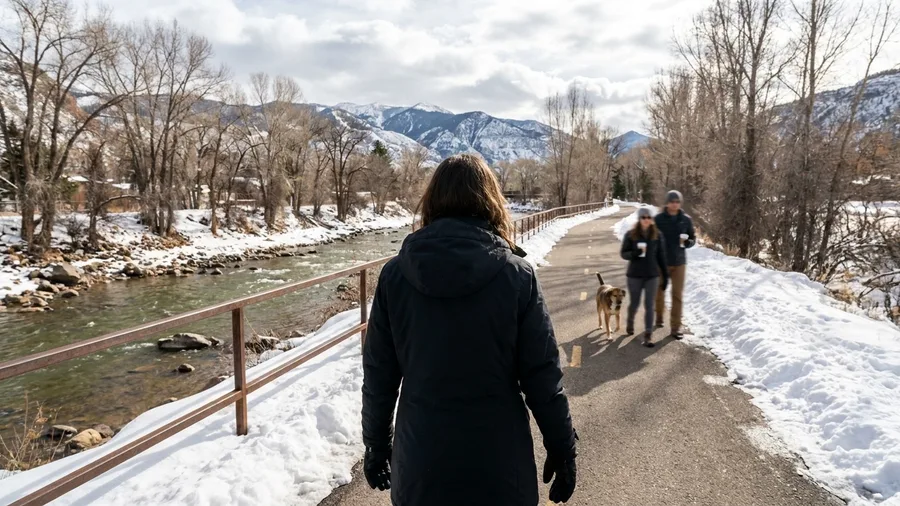
Know before you go: the mountain passes above Durango can close in winter, and the free trail that makes this town a bargain runs along the valley floor where the road stays open more often. That is the difference between a scenic stop and a stranded one, so check Colorado DOT road status and the National Weather Service forecast before you commit the drive.
The Animas River Trail is the reason residents walk here in February. It follows the river for several paved miles right through town, flat and free, with snowy peaks of the San Juan range standing over the cottonwoods the whole way. You will pass people with dogs and coffee, not tour groups, which tells you what the trail is: a local's route, not an attraction.
A midweek room runs about $100 a night, lower than the summer tourist rate because the town's demand sits mostly with ski packages and rail excursions. The free trail means you can build a morning around it and spend nothing but the room and your meals. Walkers and rail-and-town travelers who want cold-weather scenery get the cleanest bargain here.
The passes are the catch. Red Mountain and the high route toward Ouray can close with snow, and San Juan National Forest trails sit under winter cover, so treat the valley walk as the sure thing and any mountain detour as a bonus you verify the morning of. Check Colorado DOT, the forest and the weather service, then watch live lodging rates for the midweek nights you pick.
💡 Tip: The trail is plowed but can ice up after a freeze; strap-on traction devices are cheap insurance.
Flagstaff Winter — At a Glance
🏔️ Elevation
about 7,000 feet
❄️ Snow
common Dec–Feb
💰 Midweek room
about $90/night
🥾 Free anchor
Urban Trail System
🚗 Access
check Arizona DOT and NWS
Budget snow
You get a snowy mountain winter without the resort price floor.
7. Flagstaff's Urban Trail System for Snow on a Budget
Flagstaff costs less than a Colorado mountain base and asks less driving of you. Durango's passes can shut in a storm, but Flagstaff's snow sits on the town, so a midweek room runs about $90 a night and the trail network starts from your door.
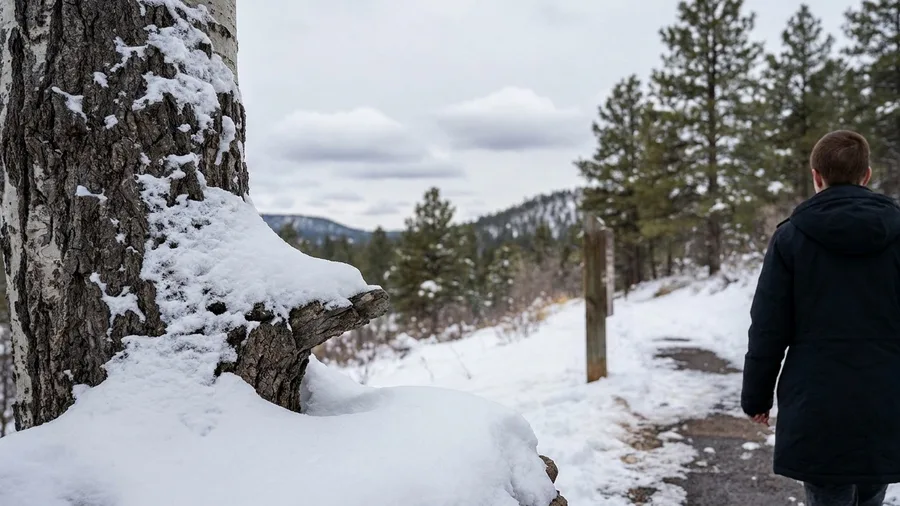
The free anchor is the Flagstaff Urban Trail System, a signed web of paved and gravel paths that threads the whole city and climbs into the pines at its edges. Snow piles along the shoulders and the aspen go black against the drifts, and you never pay a resort base fee or a lift ticket to walk it.
This one is built for budget snow-seekers and day-trippers who want nearby peaks without a lodging bill. It is not a ski-town substitute and not a place for anyone who needs a summit from the car park. Check Arizona DOT, Coconino National Forest and National Weather Service status before you count on any road or trail.
Our Top Winter Values by the Numbers
8. Catch Blue Ridge Parkway Views in Asheville
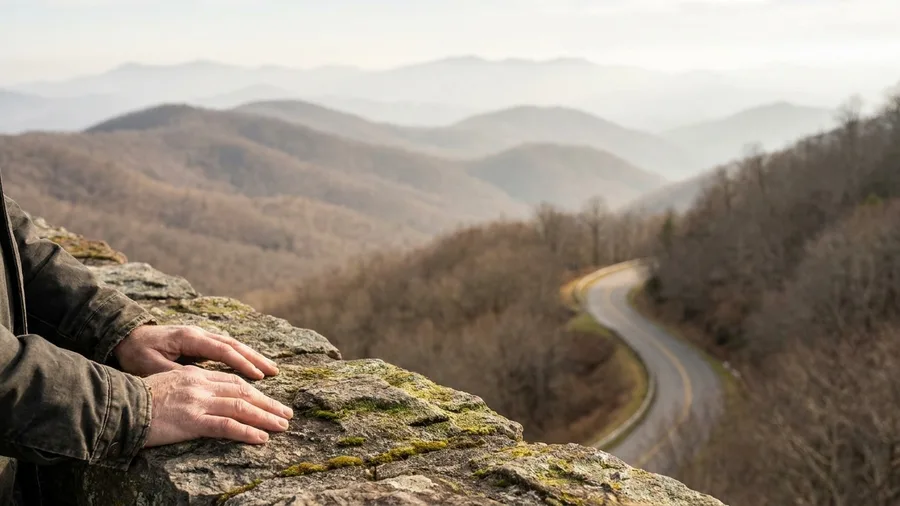
Worth it, if you trade the fall foliage crowd for the same ridges under bare hardwood. Asheville rooms sit around $115 a night midweek in winter against fall leaf prices, and the Blue Ridge Parkway overlooks cost nothing when the gates are open.
That parkway is a New Deal story: crews of the Civilian Conservation Corps cut the road and laid its stone barriers during the Depression, and the winding ribbon over the Blue Ridge has been a public drive ever since. In January the overlooks open onto brown-topped ridgelines, and the quiet is the point.
The winter trade is lower demand after leaf season, but ice and snow do close some sections, so check National Park Service Blue Ridge Parkway, North Carolina DOT and National Weather Service status before you promise yourself a turnout. Best for food-and-town travellers who can swap foliage for still views.
9. Watch for Elk in Great Smoky Mountains Near Gatlinburg
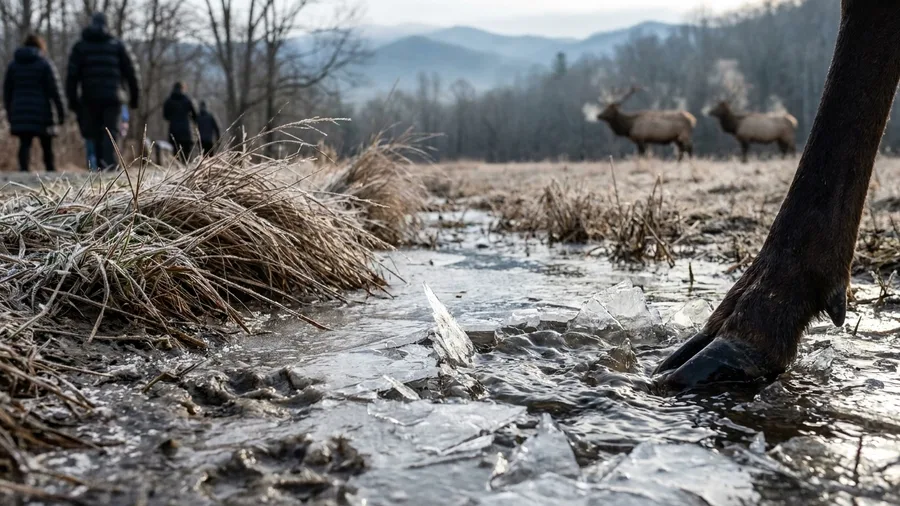
The first thing that reaches you is the cold hush of a frosted trailhead, then the sound of hooves breaking ice at a roadside seep. Gatlinburg is the base town, and midweek winter rooms come in near $85 a night as cabin demand drops outside the holidays.
Elk are real here: reintroduced to Cataloochee valley and now ranging across the park, they are seen most often at dawn and dusk in the open meadows. Sightings are likely but never guaranteed, so keep your distance and bring binoculars. The free anchor is the park's own roads and trails, yet ice can close them, so confirm current access with Great Smoky Mountains National Park, Tennessee DOT and the National Weather Service. It suits cabin groups and park visitors who want a base town.
10. Soak in a Hot Springs Bathhouse for About $30
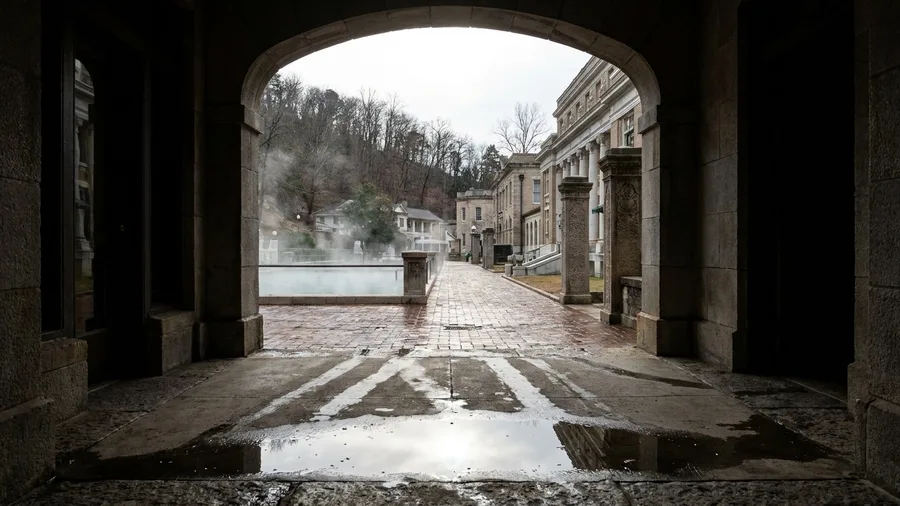
A hot springs bathhouse soak is the one paid extra worth building a cheap trip around. Hot Springs keeps midweek winter rooms near $80 a night, and Bathhouse Row itself – the row of early-1900s bathhouses preserved as part of Hot Springs National Park – costs nothing to walk past. The soak is separate, and here is the number that matters: a traditional bathhouse bath typically runs around $30, though the going rate at the operating houses changes and you should confirm it when you book.
The free part is the Grand Promenade, a brick path that climbs behind the bathhouses through the hillside, and it is quiet in January in a way it never is in summer. The trade is real: streets are cool and some shops keep short hours, and the bathhouses that still offer soaks book up on cold weekends, so a weekday soak is both cheaper and easier to get. Check Hot Springs National Park and Arkansas DOT for current conditions before you drive in, then budget the $30 soak on top of the room. It suits history walkers and the spa-curious who want to spend a little, not a lot.
Winter Worth-It vs. Skip-It
Worth it
- Midweek January–February room rates
- Free scenic drives and viewpoints
- Quiet trails and short restaurant waits
- Snowy peaks without resort prices
Skip it
- Holiday weekends and ski Saturdays
- Paid tours when a free trail exists
- Assuming all facilities are open
- Booking without checking road closures
11. See Eureka Springs' Victorian Loop at Dusk
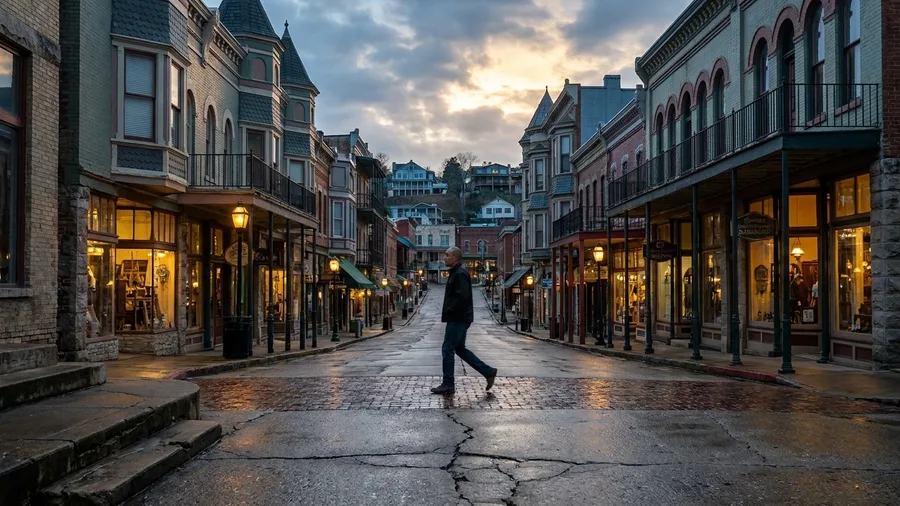
It is the cheapest base on this list – midweek rooms run about $75 a night – and the free part is a self-guided loop through the Victorian streets that tumble down the hillside. The catch is timing: the town is at its best in the hour around dusk, when shop lights come on and the steep lanes go quiet and you have the old facades mostly to yourself.
The trade is the hills. Eureka Springs is built on slopes so steep that some streets turn into stairs, and in winter ice on brick is a genuine hazard – go slow, wear grip, and skip any lane that looks slick. Several shops and cafes run limited winter hours, so a dusk walk beats an afternoon one partly because you are not depending on anything being open.
Go an hour before dark, walk the loop at your own pace, and let the shops be a bonus rather than the plan. This is for architecture lovers and couples who want a low-cost base and do not mind climbing. Confirm road conditions with Arkansas DOT and the weather service before you commit to a date.
💡 Tip: Wear shoes with grip; the historic streets are steep and can be slick after rain or snow.
12. Walk the Branson Landing Boardwalk
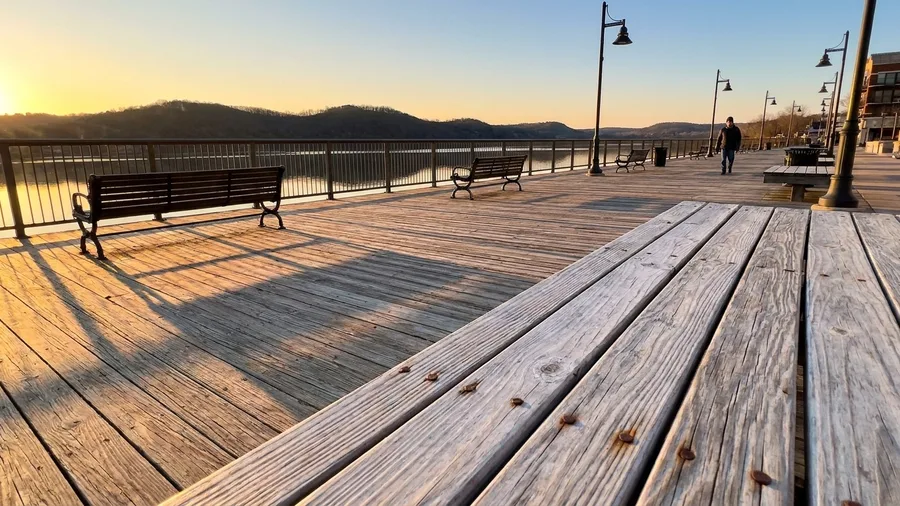
The boardwalk at Branson Landing runs along the Lake Taneycomo shore, and on a cold January evening the wind comes off the water and the whole thing feels like it belongs to you. Walk it south past the shops and the lake widens out, with the Ozark hills dark behind it and the lights on the water.
The walking is the point, and it is free. Midweek winter rooms in Branson run about $80 a night, and with the show season thin, some attractions cut their hours, so the boardwalk gives you something to do that does not depend on a ticket window. It suits families and road-trippers who want a cheap base near the Ozarks. Check Missouri DOT and the forecast before you drive, and confirm which attractions are running.
13. Cross Chattanooga's Walnut Street Bridge
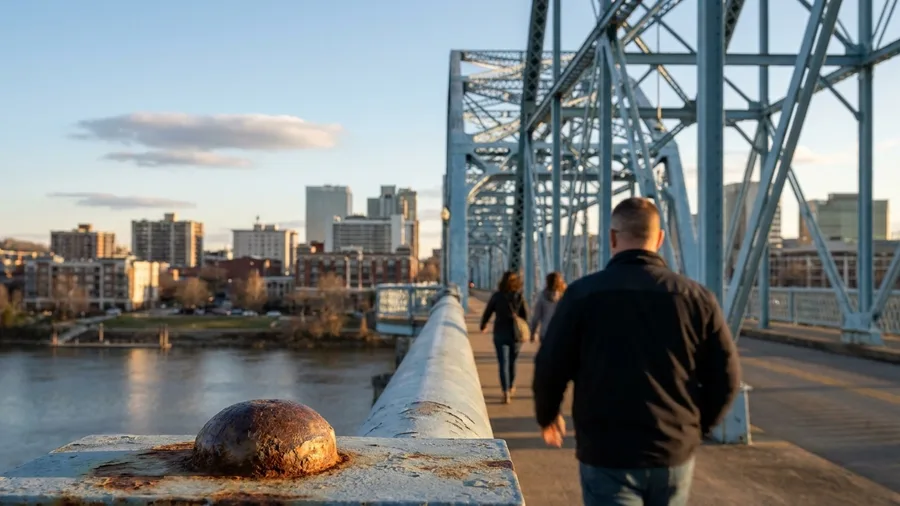
A midweek room in Chattanooga runs around $95 a night in January and February, and the Walnut Street Bridge costs nothing to walk. That is the whole pitch, and you should hear the catch before you book: the mild, low-season version of this city is a river town in a cold month, and not everything that makes it lively in spring keeps those hours in winter.
The bridge is the draw. You step on at one bank, the Tennessee River opens on both sides, and you cross on a span that once carried cars and now carries only people and bikes. Walk it end to end, then pick up the Riverwalk on the far side; both are free, both are flat, and on a clear winter afternoon the light comes off the water at a low angle you will not get in July. Pair the walk with a cheap lunch downtown and the day lands well under the food band. The honest reservation is the air: check the Tennessee DOT and National Weather Service forecast before you count on a long loop, and expect some outdoor attractions to keep shorter winter hours, so confirm before you build a day around one.
14. Sit by the Falls in Greenville's Falls Park
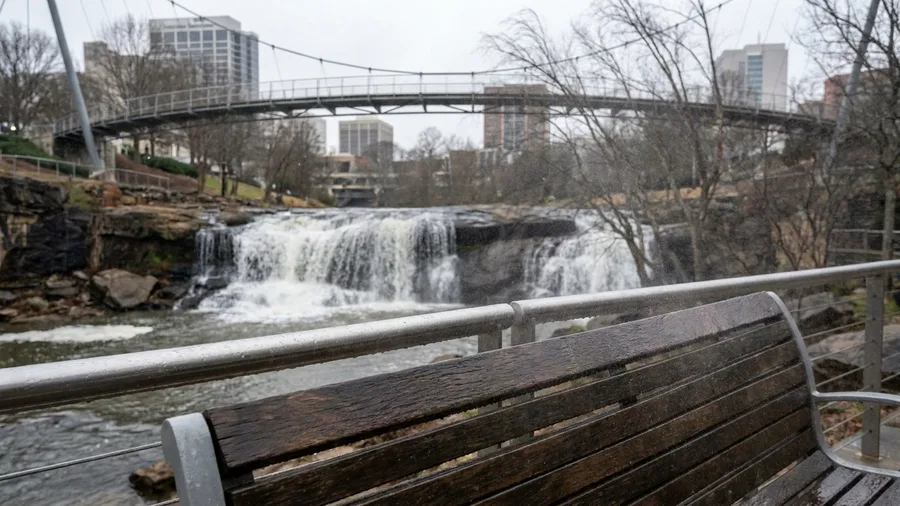
Where the river city keeps you moving across bridges and long stretches of walkway, Greenville asks less of you: the free centerpiece here is a single park you can cross in ten minutes and then simply sit in. Midweek winter rooms run about $90 a night, and Falls Park on the Reedy costs nothing to enter.
The Reedy River drops through the middle of downtown over a shelf of rock, and the pedestrian suspension bridge arcs above the falls so you look straight down the water. On a mild January day the park is quieter than the spring festival crowds ever let it be: a few people on the bridge, a bench free, the sound of the falls carrying. That is the trade. Greenville's winter payoff is mild days and lower demand, not a bare-bones town – you are here to walk the compact downtown, sit by the water for an hour, and eat well without spending the day's budget on one meal.
For a short, inexpensive trip with someone, it works because you do not need a car to fill the time. Check South Carolina DOT and the city parks and weather status before a winter date, since a cold snap or slick streets change the walk, then confirm a live rate for your night before committing.
15. Walk the Beach at Gulf Shores in Winter
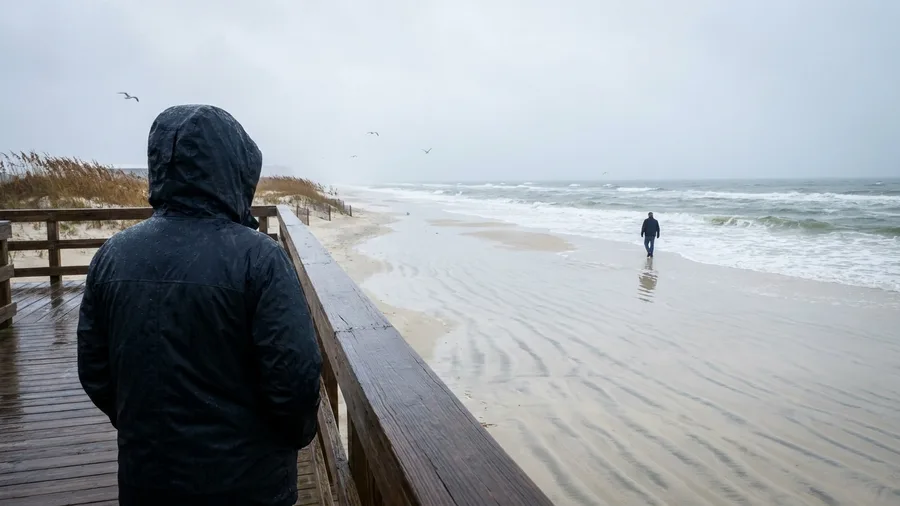
If the trip ends at the beach, end it here: Gulf Shores in winter is the cleanest version of this article's bargain, free sand and a midweek room around $100 a night when the summer condos sit empty.
Public beach access along the Alabama coast does not charge you to walk on it. You park, you cross the boardwalk over the dunes, and the Gulf is right there – gray-green in January, the surf up, the sand wide and mostly yours. Go early, because the wind off the water carries and the best hour is the first one, when the light is flat and the gulls are the loudest thing on the beach. A jacket and a windbreak matter more than a swimsuit. This is the beach as a long walk and a place to sit, not a swimming trip.
Lower demand is what got you here: winter empties the beach houses and condos, and the midweek rate falls well under peak summer money. That is the trade worth naming. The water is too cold for most people to swim, the wind can cut a mild afternoon short, and the empty stretch of coast that feels peaceful to one traveler can read as shut down to another who wanted boardwalk bustle.
Your one job before you go is to check the flag conditions and the surf and weather status through local beach and park sources and the Alabama DOT, and to confirm the access point near your lodging is open and staffed. Then compare a live midweek rate rather than trusting an example.
💡 Tip: Red flags mean stay out of the water; winter surf can be stronger than it looks.
🧭 Your Winter Trip Booking Steps
Pick your dates
Choose a midweek window in January or February, Tuesday to Thursday.
Check official access
Visit the park, state DOT and National Weather Service pages for road and weather status.
Compare live rates
Look up current lodging prices for your dates; the numbers here are examples, not quotes.
Book the room
Reserve a refundable rate if you're worried about winter road closures.
Pack for the cold
Layers, traction devices if needed, and a flexible plan for closed roads.
Frequently Asked Questions
Is it really cheaper to travel in winter in the U.S.?
Yes, in the places on this list midweek January and February room rates drop below peak season. The trade-off is cold weather and some closed facilities, so check official sources before you book.
Do I need to book ahead for these winter trips?
Book a refundable rate a few weeks out if you're worried about road closures. Popular spots like the Grand Canyon South Rim can still fill on weekends, so midweek is your friend.
What should I pack for a budget winter trip?
Layers, a windproof jacket, warm hat and gloves, and traction devices if you're hiking in snow or ice. Check the forecast and pack for the coldest day, not the average.
Are the room rates in this article guaranteed?
No, they're typical midweek winter examples, not live quotes. Always compare current lodging prices for your exact dates before booking.
Which of these places is best for a beach trip in winter?
Gulf Shores, Alabama, is the mildest entry and has free public beach access. The water is too cold for most swimming, but beach walking and shelling are good.
Can I do these trips without a car?
Some, like Chattanooga and Greenville, are walkable city breaks. Most others, including Moab and the Grand Canyon, really need a car to reach the free scenic anchors.
The One Booking Order I Would Change
The fifteen split four ways. Mild-weather beach or desert walks: Sedona and Gulf Shores. Snowy national-park scenery: Moab, Grand Canyon South Rim, Durango, Flagstaff, Asheville and Gatlinburg. Quiet small-town culture: Santa Fe, Taos, Hot Springs, Eureka Springs and Branson. Cheap city weekends: Chattanooga and Greenville. Pick your situation first, then the place.
Then do the booking in order: choose a midweek January or February date, check official road and park status for the free anchor you want, and compare live lodging rates before you commit. The room numbers here are illustrative midweek examples, not live quotes or statistics.
The appeal never changes: that Sedona red-rock trail or that Gulf beach without the spring or summer crowd. Winter's price cut is real only when the free anchor is open, and weather can close the second half of the bargain. So the cheapest winter trip is the rate plus an open walk, drive or viewpoint. Check the anchor first, then book the room.
Pick your winter window and check the roads
Choose a midweek January or February date, confirm park and road status, then compare current lodging rates before you book.