Everyone compares November in the Southern Appalachians to the Blue Ridge in October, and the one real difference is timing – the same ridges keep their color a full month later. You walk in believing leaf season ends in October, so a November weekend means bare branches and patchy hillsides.
It does not work that way. Southern fall is staggered: the oaks and hickories in the Appalachian coves, the high balds, and the river bluffs all peak in early November, while the cypress swamps and bottomland hardwoods hold until the second half of the month.
So nine trails here still reach peak color in November, at 2.1 to 5.2 miles and 50 to 1,100 feet of climb. The useful move is matching a Nov 1-10, Nov 5-15, or Nov 15-30 window to the distance, gain, and access you can handle.
Pick by date, fitness, whether you need a shuttle, and who is coming with you – then pull up the park's official fall-color and trail-condition page before you drive to a trailhead.
Quick Tips Before You Start
Go early in the window
The first three days of each color window are the safest bet; rain strips a ridge in about 48 hours.
Pack for two seasons
November mornings in the mountains sit near freezing while afternoons hit the 60s, so bring a shell and a warm layer.
Arrive by 8 a.m.
Trailhead lots on the Blue Ridge Parkway and GA-348 fill early on peak weekends and there is no overflow parking.
Expect wet leaves
Leaf litter over rock is slicker than it looks, so wear real tread and take descents slower than you think you need to.
Check the park page first
Call or check the official park site for closures, parkway gate status and hunting-season notices before you drive.
1. Raven Cliff Falls Trail, Georgia
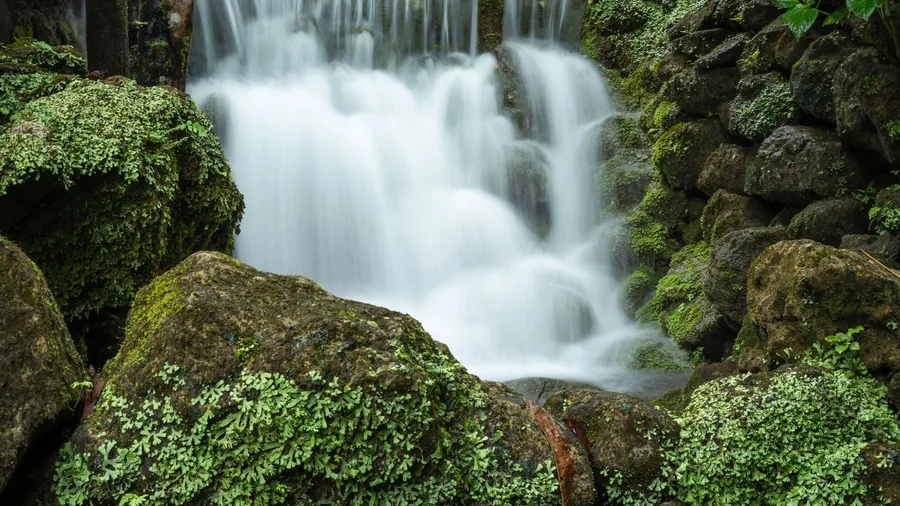
The first thing that hits you on the Raven Cliff Falls Trail is not the color, it's the sound – water working over rock somewhere ahead, constant enough that you stop noticing it until it goes quiet. The trailhead sits on GA-348 just outside Helen, and the walk is a 4.9-mile out-and-back with about 520 feet of gain, so plan on two to three hours. This is not a roadside overlook you dash out of the car for.
Peak color here runs Nov 1-10, and the reason to come in that window is the gorge itself: oaks and hickories holding their leaves in a hardwood gully that the waterfall keeps green and wet. Raven Cliff Falls is a name plenty of people know, so the lot fills on a bright Saturday – go early or go midweek. The 520 feet of gain is what keeps it reachable when you have a half-day, not a whole one. If October slipped past, this is the first-window answer: the waterfall stays put regardless, and the color is still up on the oaks.
💡 Tip: The falls sit at the far end of the trail, so don't stop at the first overlook thinking you've arrived.
| Trail | State | Distance | Elevation gain | Peak color window | Trailhead access |
|---|---|---|---|---|---|
| Raven Cliff Falls Trail | GA | 4.9 mi out-and-back | 520 ft | Nov 1–10 | GA-348 near Helen |
| Graveyard Fields Loop | NC | 3.5 mi loop | 600 ft | Nov 1–8 | Blue Ridge Pkwy MP 418.8 |
| Fiery Gizzard to Sycamore Falls | TN | 4.5 mi out-and-back | 700 ft | Nov 1–12 | South Cumberland State Park |
| Buffalo River Trail, Ponca to Steel Creek | AR | 4.8 mi one-way | 450 ft | Nov 1–15 | Shuttle on AR-74/AR-43 |
| Blue Suck Falls Loop | VA | 5.2 mi loop | 1,100 ft | Nov 1–10 | Douthat State Park, near Clifton Forge |
| DuPont High Falls Loop | NC | 3.1 mi loop | 300 ft | Nov 5–15 | DuPont State Forest, near Brevard |
| Pulpit Rock Trail, Mount Cheaha | AL | 2.5 mi out-and-back | 400 ft | Nov 5–15 | Off AL-281 |
| Caddo Lake cypress loop | TX | 2.1 mi loop | 50 ft | Nov 15–30 | Caddo Lake State Park, near Karnack |
| Congaree Boardwalk Loop | SC | 2.6 mi loop | Flat | Nov 15–30 | Congaree NP, near Hopkins |
2. Graveyard Fields Loop, North Carolina
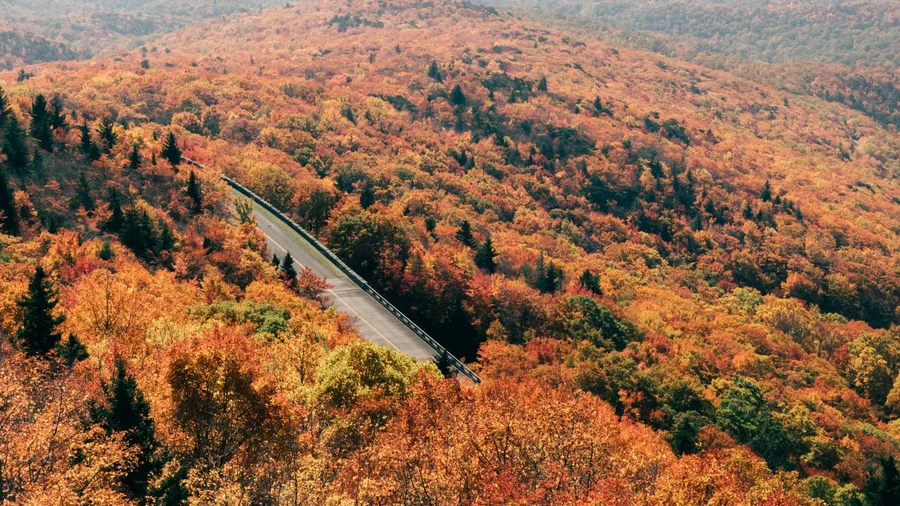
Pick Graveyard Fields if you want the high-elevation shot without committing to a long gorge walk – it is the quick stop worth taking. The loop runs 3.5 miles at Blue Ridge Parkway milepost 418.8, with about 600 feet of gain, and its window is the tightest of the early ones: peak color Nov 1-8. That is a first-week deadline, not a first-half-of-month one, and an early-November weekend is the one to guard.
What you are standing in is open meadow and blueberry bald, the kind of high ground that catches light differently from a forest floor. Come in the morning before the ridge fog lifts, stand on the open expanse where the trail crosses the bald, and look back toward the treeline – that is the frame. The mileage is shorter than a gorge out-and-back, but the 600 feet of climb is a touch more, so it rewards a parkway traveler breaking up a drive rather than someone set on a full morning of hiking.
The trade is honest: a narrow first-week window in exchange for big high-country scenery on a short loop. It fits the parkway agenda cleanly. Just watch the calendar – miss the first eight days and the bald will be past its best.
⚠️ COMMON MISTAKE
Don't Chase the View From the Road
Leaf-peepers pull over at every parkway overlook and see the same canopy from the same angle. The color at Graveyard Fields only looks like that if you walk the first half mile in — the bald is invisible from the asphalt.
3. Fiery Gizzard Trail, Tennessee
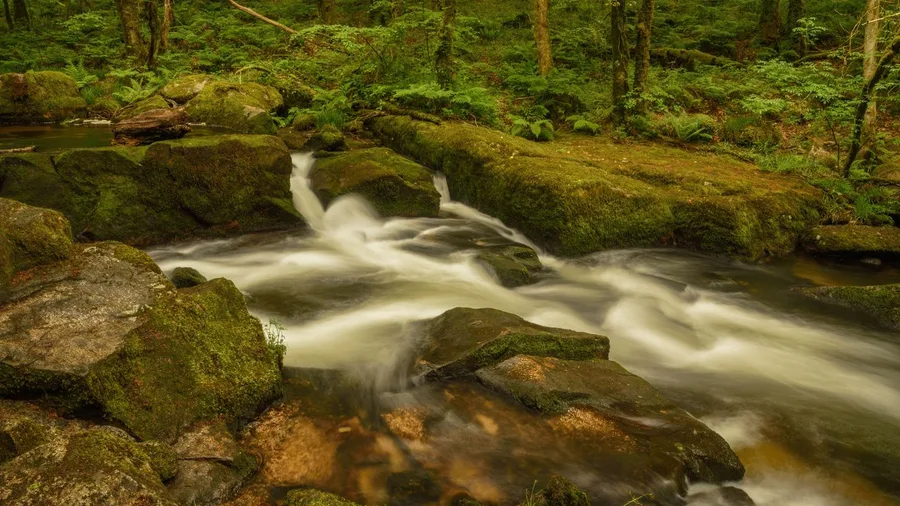
Where the high balds ask for a short climb and then hand you the view, the Fiery Gizzard asks you to stay a while – it is a place to sit down and do nothing for an hour, and the going there is rougher than the mileage suggests. The route from the trailhead to Sycamore Falls runs 4.5 miles out and back in South Cumberland State Park, with around 700 feet of gain, which reads like a half-day but walks like a rugged one.
Peak color runs Nov 1-12 here, and the reason it earns the space is the pairing: a creek gorge threaded with boulders, bluff views off the rim, and late-turning oaks that keep color into the second week. The terrain underfoot is the cost – roots, rock, and creek crossings that slow a careful hiker well past the pace a smooth trail would allow.
Come in fit and unhurried. This is the fit-hiker option of the early set, not a casual stroll, and the 700 feet of gain sits over a surface that never lets you settle into a stride.
Then sit. Sycamore Falls and the rock ledges around the gorge are the kind of spot where an hour disappears without anything happening – water moving, leaves on the oaks above, the bluff across the way catching the afternoon light. That stillness is the point of the extra effort.
The Nov 1-12 window is still full peak, and the demand is stated plainly: a rugged Tennessee creek gorge and open bluff views in exchange for late oaks. Bring traction-soled boots, give yourself the whole half-day, and let the sitting be part of the plan.
4. Buffalo River Trail, Arkansas
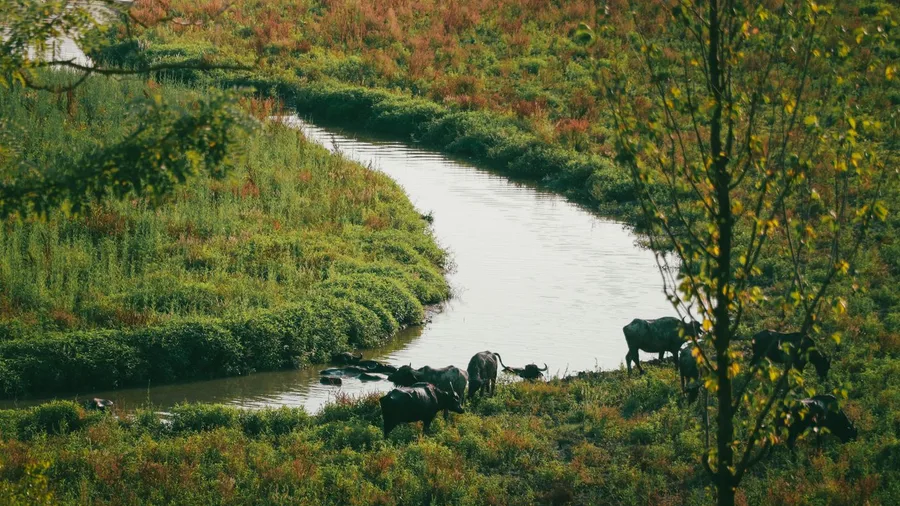
You need two vehicles before you need good legs. The Buffalo River Trail from Ponca to Steel Creek is 4.8 miles one-way with only 450 feet of gain, so the climb is not what will decide your day – the shuttle on AR-74 and AR-43 is. Drop a car at Steel Creek first, drive back to Ponca, and the walk itself is a ridge of river bluffs through oak-hickory forest with the water sliding along below you.
Peak color along that stretch runs Nov 1-15, which is the widest window in the early part of this list. Oak and hickory hold their leaves longer than the maples and birch higher up, so the first half of November still reads as color on the bluff tops rather than bare wood. If you can only get out on one weekend, that breadth gives you slack that a gorge closing by Nov 10 does not.
Sort out the second car the week before. The drive between the two trailheads takes a fair chunk of the morning each way, and arriving at Ponca after nine on a November Saturday means sharing the lot with everyone else who had the same idea. Both endpoints sit on paved roads, but check current conditions before you commit – a wet week can make the bluff sections slick and slow.
💡 Tip: Drop a car at Steel Creek first, then drive to Ponca — you finish at your vehicle instead of hitchhiking.
5. Blue Suck Falls Loop, Virginia
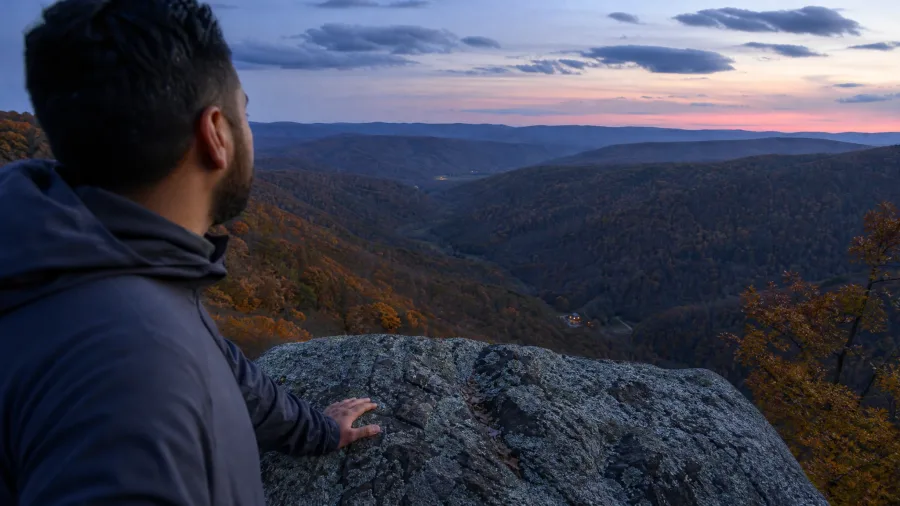
1,100 feet of gain over 5.2 miles, and it is the biggest climb on this list. The Blue Suck Falls Loop out of Douthat State Park near Clifton Forge earns its waterfall and bluff overlook, but it asks for legs that have done this before. Peak color runs Nov 1-10, so the window narrows back down after the broad first half of November elsewhere.
Go early, and by early mean at the gate when the park opens. The climb is mostly in shade on the way up, and the light hits the overlook and the falls face around mid-morning – that is when the color on the slope below reads at its best. Afternoon sun flattens it. For a fit hiker with a Nov 1-10 weekend and a few hours to spend on a real ascent, this is the one.
Late October vs. First Week of November
What changes on a gorge trail once the maples drop
Percentages reflect typical color density on a Southern Appalachian hardwood gorge, not a forecast.
6. DuPont High Falls Loop, North Carolina
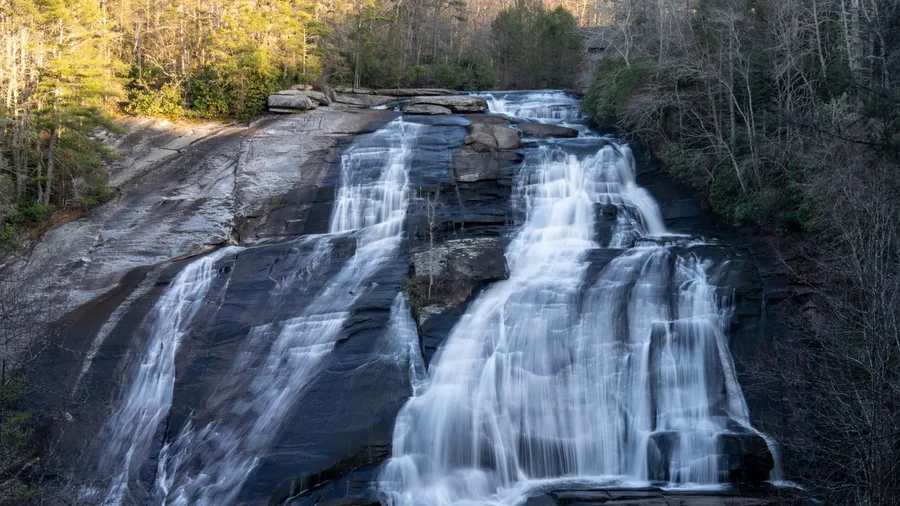
DuPont State Forest's High Falls Loop answers it: 3.1 miles, 300 feet of gain, and three waterfalls on easy gravel paths near Brevard. This is the loop you can walk with kids, with a parent who does not hike much, or on the morning you are leaving town and still want one last look at color.
Peak here runs Nov 5-15, starting later than the high Appalachian windows and giving you a little more room on the calendar. You are walking, not climbing – the point of the loop is to stand at the base of the falls and then keep moving along the gravel to the next one. The forest color behind the water holds through that window, which is why the trail earns a stop in the second week rather than the first.
Park at the High Falls access off Staton Road and go clockwise so you meet the main falls early, before the lot fills. Arriving before nine on a weekend buys you quiet on the path; by late morning the falls are crowded. Check the forest's trail page before you drive, since DuPont closes sections for work and the access roads change with it.
💡 Tip: The gravel is smooth enough for a jogging stroller, but the steps near the falls are not — bring a carrier for toddlers.
7. Pulpit Rock Trail, Mount Cheaha, Alabama
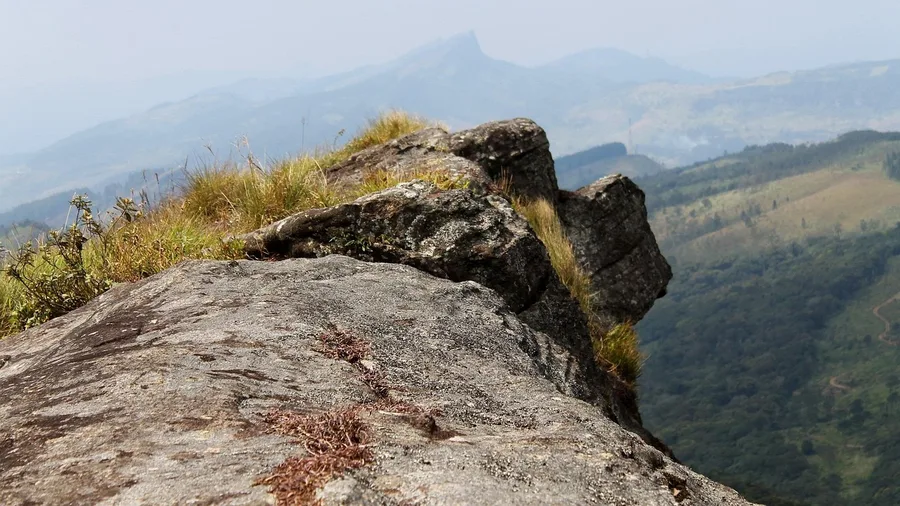
Pulpit Rock is a two-and-a-half-mile out-and-back with 400 feet of climbing, the short walk locals from Birmingham and Anniston take when the calendar has already run past October. Higher ground turns sooner, so a mid-November overlook at a lower elevation is the sensible move, and the payoff is the highest point in Alabama with a view west across the ridges.
The climb is moderate, not flat, and the trailhead sits off AL-281 near the summit road, so you park close and start walking rather than driving half the morning. Peak color here runs Nov 5-15, which suits a weekend planner with half a day to spare. If a state highpoint is on your list, this is the cheapest way to bag it: short mileage, an overlook at the top, and leaf color still holding when the first-week trails are done. My honest note is the summit itself, a parking area with a tower; the real walk is Pulpit Rock. Check the park's fall-color page before you drive, since the top balds turn earlier than the valleys below.
Two Ways to See Cheaha in November
Walk Pulpit Rock
- 2.5 miles, about 400 feet of gain
- Overlook at the end of the ridge
- Best light from 3 p.m. on
- Free, no reservation
Drive to the overlook
- Same view in five minutes
- No climb, no sweat
- Parking fills on peak weekends
- You skip the color along the ridge
8. Caddo Lake Cypress Loop, Texas
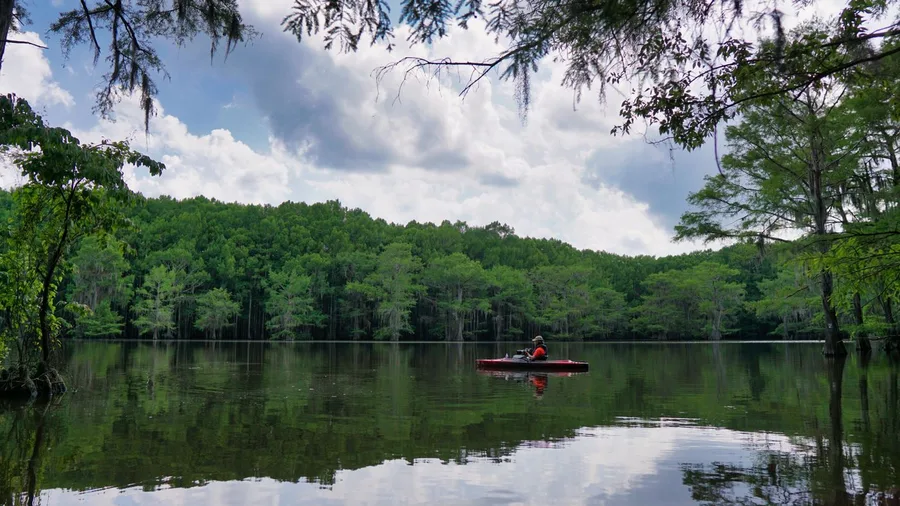
You hear the swamp before you see it: water lapping at cypress knees, a heron's croak, and the light going bronze through Spanish moss in the afternoon. Caddo Lake's cypress loop in Texas is a 2.1-mile walk with barely 50 feet of gain, and its color window is the latest here, running Nov 15-30. If you missed everything in October and November is almost over, this is where the color still is.
The draw is the swamp, not a gorge: knobby roots, dark water, and cypress needles turning rust while the hardwoods hold their leaves. Easy walkers and photographers fit best, since the flat ground leaves you free to stop every twenty feet. Birds are the honest wildcard, not a guarantee. Expect herons, woodpeckers, and cormorants in the channels, and go early, when mist on the water is the shot everyone wants. Bring bug spray even in November and check the state park's hours, which change with the season.
9. Congaree Boardwalk Loop, South Carolina
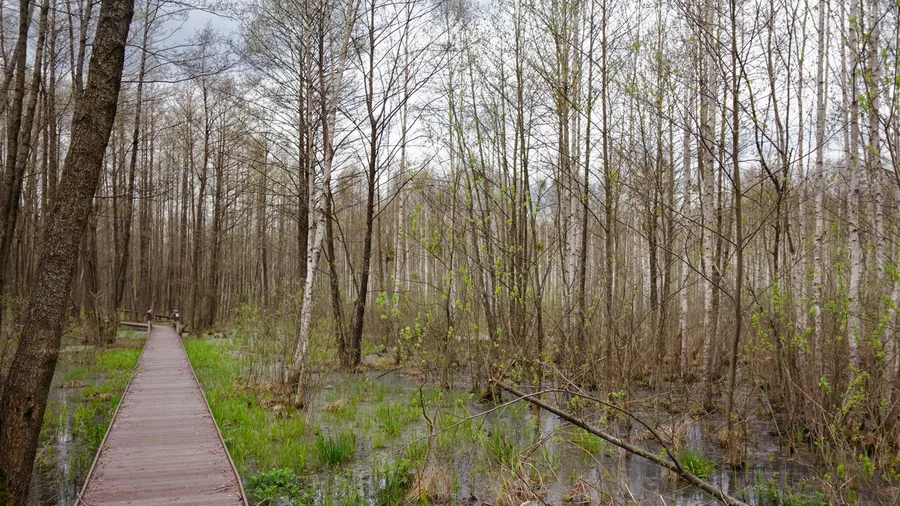
It is the easiest option here: 2.6 flat miles near Hopkins with no climb at all, and peak color runs Nov 15-30, matching the same late window Caddo holds on the water. Bottomland hardwood and cypress fire up while the mountains are already bare.
The boardwalk does the work for you, raised above mud and cypress knees, so kids, grandparents, and birders all move at the same pace. Go mid-morning and carry binoculars, because the forest is better for birds than for views: pileated woodpeckers, barred owls calling, and the flash of a warbler in the understory.
The odd draw is the quiet: a national park in South Carolina with almost nobody on the walk, and no fee at the gate. Check the visitor center for a trail map and the park's fall-color page for current conditions, since the boardwalk floods after heavy rain.
💡 Tip: The park's synchronous firefly season is a spring event — in November you're here for leaves and birds, not bugs.
Congaree Boardwalk — Plan Your November Window
🍁 Latest color
Best after Nov 20; mountains bare by then
⏱️ Time to allow
About 1.5 hours at birding pace
🚗 Vehicle access
Paved to the lot off SC-48 near Hopkins
🎟️ Entry cost
Free; no gate fee
🥾 Wet-season gear
Waterproof boots after rain; boardwalk sits low
Skip if
You want long views or elevation — this is tunnel forest, not overlooks.
Frequently Asked Questions
Is it really still peak color in the South in November?
Yes, on the right trails. The maples peak in October, but oaks and hickories run into the first two weeks of November, and cypress and bottomland forest hold color to November 30. The trick is matching the trail to the window rather than driving to a random overlook.
Which of these trails has the longest color window?
The Buffalo River Trail in Arkansas, roughly November 1 to 15, and Congaree's boardwalk at November 15 to 30. If your weekend is fixed and you can't move it, pick by window first and worry about the drive second.
Do I need a permit or reservation for any of them?
None of these nine normally requires a timed reservation just to hike, but DuPont and Congaree have signed trailhead lots that fill, and the Blue Ridge Parkway gates close in bad weather. Check the official park page before you leave, and expect shuttle arrangements on the Buffalo River.
What's the easiest one for kids or older hikers?
Congaree's boardwalk is the flattest at 2.6 miles with no climb, and the Caddo Lake cypress loop is 2.1 miles with about 50 feet of gain. DuPont's High Falls Loop works too — 3.1 miles of gravel — though the steps near the falls are not stroller-friendly.
How crowded are these trails on a November weekend?
Much quieter than October. Raven Cliff and the Blue Ridge Parkway lots still fill by mid-morning on a peak weekend, so arrive before 9 a.m. The late-November trails in Texas and South Carolina are usually close to empty on weekdays.
What should I pack for a November hike in the South?
A warm layer for near-freezing mornings, a shell for afternoon rain, real tread for wet leaves, and water you'd normally carry in summer — the climbs here are short but the air is dry and cold. Add a headlamp if you start after 1 p.m. on Blue Suck or Fiery Gizzard.
Which November Window Is Yours?
Pick by situation, not by ranking. Families get the easy late color on Congaree's Boardwalk Loop, 2.6 flat miles peaking Nov 15-30. Fit hikers with a half-day get the rugged gorge on Fiery Gizzard to Sycamore Falls, 4.5 miles and 700 feet, peaking Nov 1-12. Three hours out of Brevard gets you the waterfall loop at DuPont High Falls, 3.1 miles and 300 feet, peaking Nov 5-15.
Before you choose a trailhead, check that park's official fall-color and trail-condition page – the decision depends on the color that week and whether the trail is open.
That October weekend you missed was not the end of leaf season. The South runs it in sequence – Nov 1-10, Nov 5-15, Nov 15-30 – and the work is only lining the calendar window up with the walk you can actually do. Choose your date first, then your trail.
Pick Your Trailhead Today
Match your weekend to a color window in the table above, then confirm opening hours and trail conditions on the park's official page before you drive out.