Which December lights trip can you actually afford in three nights off? The answer depends less on which city glows brightest than on which trade you can live with: ticket cash, cold, or a car.
You probably picture a big-city tree, a ticketed show, and a hotel bill that hurts. For two people in mid-December, budget $185 to $290 a night downtown, about $480 round-trip air from a Midwest hub, and $40 to $70 a day for transit and rideshares. Most displays run from Thanksgiving week into the first week of January. The last two weekends before Christmas are the busiest, and hotel rates peak right along with them.
the strongest evenings on this list are not all ticketed. Dyker Heights is a free ten-block sidewalk loop, the San Antonio River Walk gives you 2.5 free miles of lit banks, and St. Augustine strings about three million bulbs through a historic district you walk for nothing.
So the city that wins is the one whose trade fits your free weekend, not the one with the most famous display. Nine cities follow, each with one display worth building the trip around, what it costs, and who it suits. Pick by your trade, then book the timed entry before it sells out.
Quick Tips Before You Start
Book timed entry early
Longwood, Denver Zoo and Biltmore use timed slots that sell out; reserve as soon as dates go on sale in early autumn.
Pack for the real evening
Chicago and New York sit at 25–40°F; Denver 20–35°F. A hat and gloves are not optional after 7pm.
Know if you need a car
Dyker Heights, the River Walk, St. Augustine and Leavenworth are on foot. Longwood, Biltmore, Denver Zoo and City Park need a car and $10–$20 parking.
Go early or go late
The last two weekends before Christmas are the busiest and hotel rates peak. A weeknight in the first half of December cuts crowds and cost.
Budget the light spend
Free walks exist in every warm-weather city here. If you want a ticketed evening, set aside $25–$35 per adult before you book the hotel.
1. Dyker Heights, Brooklyn: A Free Ten-Block Walk
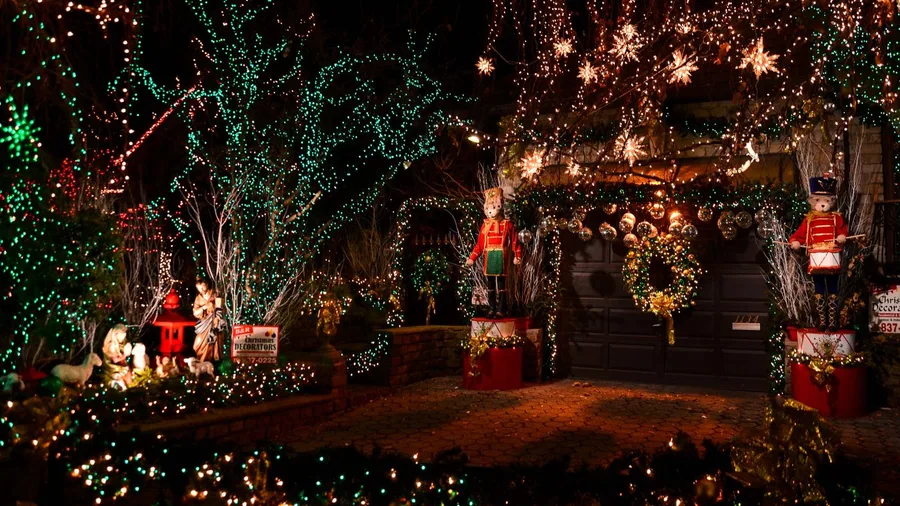
Cold is the first thing the lights give you. It comes off the pavement on a December night in Dyker Heights, sharp and clean, and the air smells faintly of somebody's front-yard pine, and then a whole block turns the corner and every hedge, every eave and every fence rail is wrapped and bright.
The loop is about 10 blocks between 11th and 13th Avenues in Brooklyn, best walked between 5 and 9pm, and it costs nothing beyond the subway ride from Midtown, which takes roughly 45 minutes each way. Go on a weeknight if you can; weekends bring a slow-moving crowd on the same narrow sidewalks, and the difference in how much of it you enjoy is real. These are private homes, so you stay on the sidewalk and keep your voice down – residents deal with this for six weeks straight. At 25-40F the evening air is the actual entry fee, and it is the one you pay with layers.
💡 Tip: Take the R train to 86th Street and walk south; the first big displays start around 11th Avenue.
| City | Signature display | Cost to see it | Typical December evening | On foot or drive-and-park |
|---|---|---|---|---|
| Brooklyn, NY | Dyker Heights private homes | Free | 25–40°F | On foot |
| Philadelphia, PA | Longwood Gardens | $30–$35 adult | 25–40°F | Drive and park ($10–$20) |
| Chicago, IL | Lincoln Park ZooLights | Free; $5–$10 peak pass | 25–40°F | On foot |
| San Antonio, TX | River Walk both banks | Free | 45–60°F | On foot |
| St. Augustine, FL | Nights of Lights historic district | Free | 45–60°F | On foot |
| Leavenworth, WA | Village of Lights | Free | 20–35°F | On foot (2-hour drive from Seattle) |
| Denver, CO | Zoo Lights + Civic Center | $25–$30 adult | 20–35°F | Drive and park ($10–$20) |
| New Orleans, LA | Celebration in the Oaks | $25–$30 adult | 50–65°F | Drive and park ($10–$20) |
| Asheville, NC | Biltmore candlelight | $130–$160 adult | 45–60°F | Drive and park (included) |
2. Longwood Gardens: A Timed Ticket Outside Philadelphia
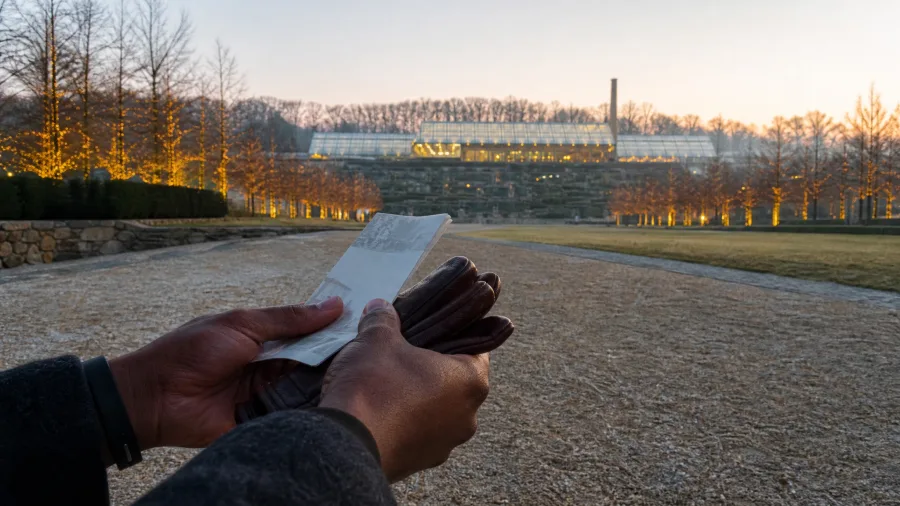
A timed-entry garden display an hour outside Center City, and the first stop on this list that asks you to buy a slot in advance. Adults pay about $30 to $35 at peak, parking runs $10 to $20 a car, and you book the hour before you fly. Book it late and you are choosing between a 5pm slot in the cold and nothing at all.
Budget the whole evening, not an hour. The drive out from Philadelphia eats one direction of daylight, the conservatory and the outdoor tree walk take two to three hours at a shuffle, and the drive back lands you at the hotel near ten. Against the $185 to $290 a night downtown rate and $40 to $70 a day in transit, the ticket is small; the evening is the real spend, and it is the one thing on this trip you cannot do twice.
Couples and anyone who gardens will find it worth the slot; small children who need to run will not last the indoor rooms. If you want a second Philadelphia night that costs nothing, the Miracle on South 13th Street block in South Philadelphia is a residential street that goes all in, lit for the season and free to walk. That pairing is the honest shape of a Philadelphia December: one paid evening with a reservation, one free wander with a coat on.
3. Chicago: Free ZooLights With a Reserved Pass
The cold hits your face at the gate before you see a single light, and that is the trade Chicago is offering: a free light show you have to survive to enjoy. Lincoln Park ZooLights costs nothing to enter, with a $5 to $10 reserved timed pass on peak nights, and that pass is the only light spend the evening requires.
The zoo sits a short ride north of the downtown hotels, and the lights run through the walkways between the animal houses. On a 25 to 40°F night, 60 to 90 minutes outside is the realistic window, not three hours. Plan the loop, see the big set pieces, and get warm. Standing around admiring anything for long is how the evening turns miserable.
The rest of the night is free and indoors when you need it. The Magnificent Mile lights are already lit along the avenue, and the Christkindlmarket stalls give you a hot drink and somewhere to thaw your hands. Walk the zoo first, then drift south into the market crowd and let the sponsored cups of cocoa do the warming.
Families with children get the most out of this: the pass is cheap, the walking is flat, and a meltdown costs you a $5 ticket rather than a $35 one. Anyone holding to the $185 to $290 downtown hotel budget will find the whole evening fits inside a day's transit and rideshare money.
The reservation is the catch. Peak nights sell their timed slots, so book the zoo pass before you book the flight, and pick a weeknight if the calendar allows. A free display with a sold-out pass is not free; it is closed.
💡 Tip: The zoo entrance on Cannon Drive is less crowded than the main gate; arrive 15 minutes before your pass time.
⚠️ COMMON MISTAKE
Do not book the last weekend before Christmas
The two weekends before Christmas are the busiest of the season, and hotel rates in every city on this list peak then. Shift your three nights to the first half of December and you will pay less and stand in shorter lines.
4. San Antonio River Walk: Lights on Both Banks
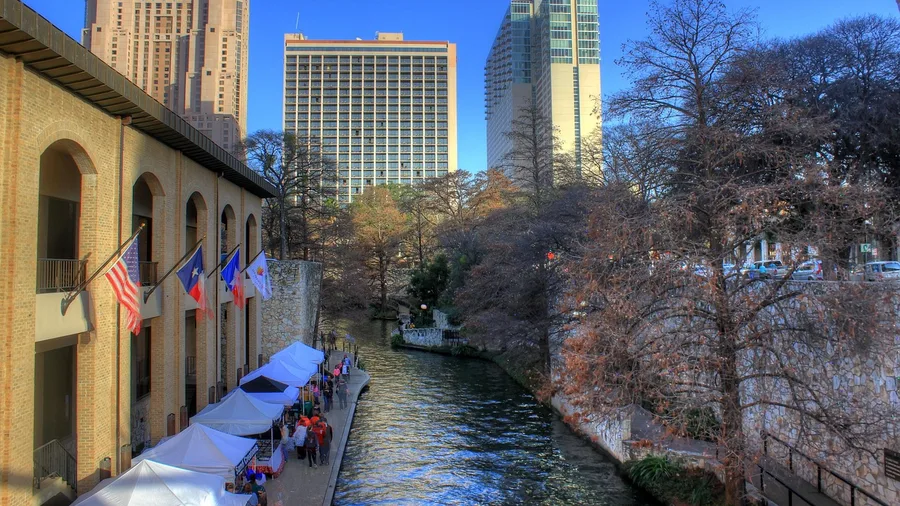
The catch with the River Walk is that the lights are only half the show, and the half you remember is the half you arrange in advance.
The walk itself is free: 2.5 miles of lit riverbank running below street level, cypress draped to the water line, arches of bulbs on both banks, and reflections doing most of the work. You can start at one end after dinner and finish at the other with nothing but a hotel key in your pocket. Evenings sit around 45-60°F in mid-December, warm enough to keep walking after the meal instead of retreating indoors, which is why this is the entry that answers the cold question. The river boat tour, roughly $15 a head, puts you at water level for the view up, and that's the optional line item. Against the trip frame – three nights for two, $185-$290 a night downtown, $480 round-trip air from a Midwest hub, $40-$70 a day in transit and rideshares – the walk costs zero and the boat is the only light spend. It's the pick for a multigenerational group, because nobody has to stand in a field to see it and the lights and dinner share the same stretch of river.
5. St. Augustine: Nights of Lights in a Spanish District
If you want the district to do the work for you, this is the one: about 3 million bulbs strung through historic St. Augustine, free to walk, no ticket window in sight.
That volume spread over a Spanish colonial street grid is the difference between looking at a display and standing inside one. The best hour is the slow one – find a stretch of brick off the main drag, sit, and let the crowds pass while the lights reflect in shop glass and wet pavement. Evenings run 45-60°F, so sitting down isn't a test of endurance. The trolley tour at $20-$30 is there for anyone in the group who would rather ride than walk, and the narrated loop is the easiest way to cover ground with older knees or small children.
One practical note that changes booking: the display runs into late January, well past the first week of January most of this list shuts down, so you can shift a trip out of the peak weekends and still catch it. You also don't need a car – the historic district is walkable from a downtown hotel, and Jacksonville is about 45 minutes away if you fly there. Against the frame of $185-$290 a night downtown, $480 round-trip air from a Midwest hub and $40-$70 a day for transit, the walking version adds nothing but meals. It suits weekend couples and anyone pairing the lights with a history afternoon rather than building the whole trip around one ticketed evening.
💡 Tip: The side streets off St. George Street are quieter and just as lit; skip the main drag between 7pm and 8pm when it is packed.
How the December Lights Season Unfolds
6. Leavenworth: A Bavarian Village Under Lights
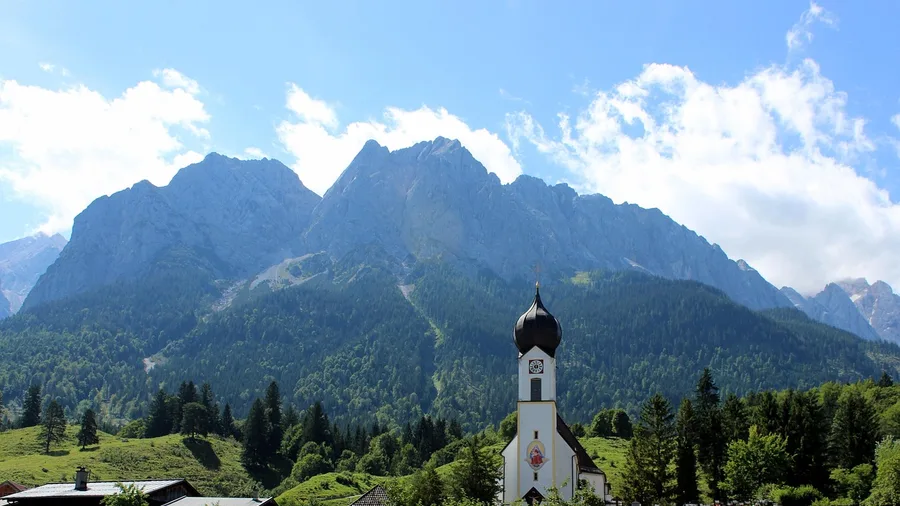
Only if what you want is a town small enough to finish on foot.
And that's the trade. Leavenworth's Village of Lights covers the whole walkable center free of charge, but it's two hours from Seattle-Tacoma, so it needs a night, not a day trip – the drive is the added leg, and it's the leg most travellers underestimate. Stand in the middle of Front Street after dark, snow falling on the decorated facades, mountains behind the rooflines, and you get the photograph the trip is remembered for. 20-35°F with snow likely, so pack boots and a cancelled-flight plan. Suits people who'll trade big-city dining for a town they can cross in fifteen minutes.
Lights Trip Terms, Decoded
7. Denver: Zoo Lights Plus a Free Civic Display
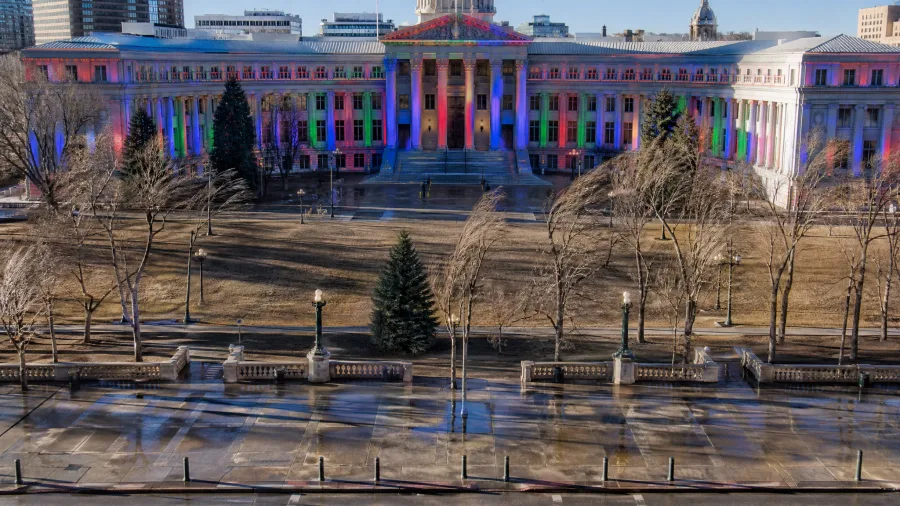
Denver asks less of you than a small mountain town does: no overnight, no two-hour drive from the airport, no need to build a whole weekend around one village. It is a connection city with a zoo lights trail and a free civic display, and one evening covers both.
Zoo Lights runs $25-$30 per adult on timed entry, and the City and County Building display across from the park costs nothing at all. That is the whole ticket spend for the night, before parking at $10-$20 a car. It is 20-35°F here in mid-December, so the car between the two stops is not a luxury: you are not walking from the zoo to the civic center in that cold with kids in tow.
For families and anyone routing through Denver on the way somewhere else, this is the sensible one-night plan: the zoo trail for the timed show, the building lit up across the park for the free one, and a hotel at the $185-$290 downtown rate. Book the zoo slot ahead, because timed entry sells out on the last two weekends before Christmas.
Denver Lights — At a Glance
📅 Peak vs quiet slots
Last 2 weekends before Christmas sell out; midweek earliest slots are calmest
🔁 Order of the night
Zoo first on the timed slot, then drive to the civic building after
🆓 Where the free display sits
Across from City Park, not next to the zoo
🚫 What to skip
Attempting the walk between both stops in the cold
⚠️ Watch for
Zoo lot queues at peak entry times; arriving early costs nothing
Best for
Travelers who want both lights stops done in a single evening without a second ticket.
8. New Orleans: City Park Oaks Draped in Lights
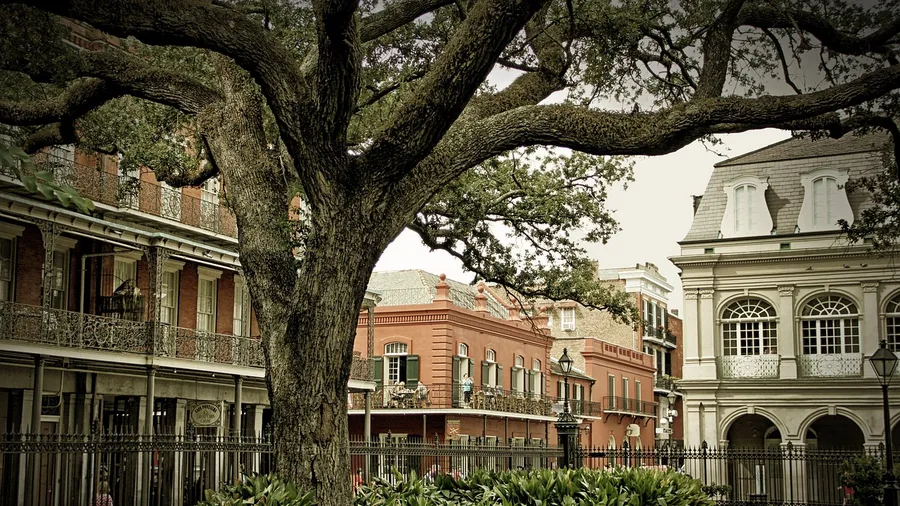
$25-$30 per adult gets you into Celebration in the Oaks, timed entry, and another $10-$20 puts the car in the lot. That is the ticketed half. The free half is the French Quarter and Jackson Square, decorated and walkable from most downtown hotels.
Denver does the same ticket-plus-free-display trick, but it does it at 20-35°F. New Orleans does it at 50-65°F in the evening, the warmest on this list, and the reason it suits anyone who wants to leave the coat at home. Adults get lights with music and food in the same walkable radius; families get rides in the park and a warm walk back to the hotel.
The honest boundary: if you want a single self-contained light show where the whole evening is one ticketed site, City Park is a stop on the way, not the destination. The city wins when you use both halves. Book the park slot for a weeknight and take the Quarter on foot.
💡 Tip: The oaks are the show, but the train ride through the park is the cheap way to see more of the display without walking.
9. Asheville: Biltmore by Day or by Candlelight
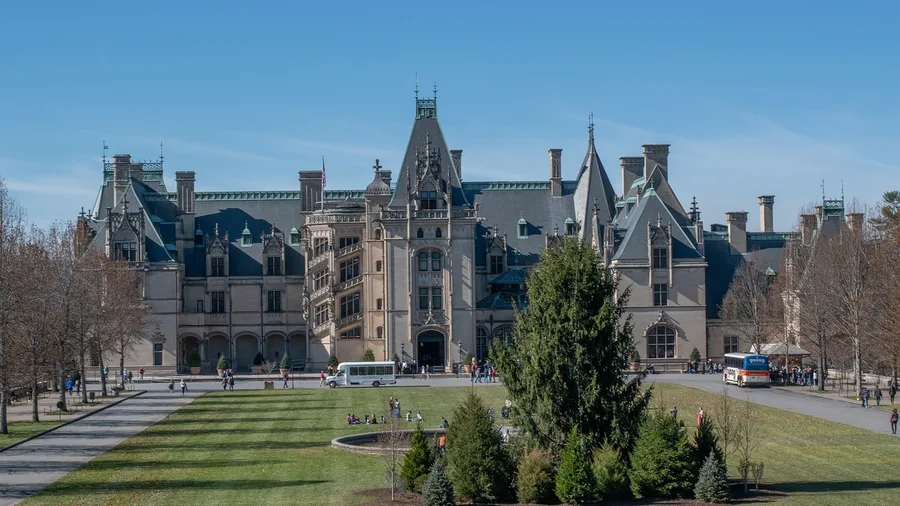
Biltmore is the most expensive ticket in this list, and it is worth naming plainly what that money buys.
Daytime entry runs $100-$130 per adult. The candlelight evening, when the house is lit and open after dark, runs $130-$160. Two candlelight tickets come to $260-$320, which is comparable to or above one night in a $185-$290 downtown hotel. That is the trade: Asheville is a splurge city, and the ticket is the splurge.
It sits two hours from Charlotte, parking is included in the ticket, and Asheville evenings run 45-60°F, mild enough to walk the grounds without a coat. The house is the draw; the estate at dusk is what people come back for. Give it a full day rather than squeezing it between other stops.
Book in early autumn. Evening slots go first, well before the last two weekends before Christmas, and by late November the candlelight calendar is thin.
Skip it with restless children, and skip it if your three nights are already full of other bookings. The locals' answer to the obvious question is that Biltmore is a day, not an evening, and the town rewards the people who plan around that.
Free Walk vs. Ticketed Display
Free and walkable
- Dyker Heights, Brooklyn: 10 blocks, 45 min from Midtown
- San Antonio River Walk: 2.5 miles of lit banks
- St. Augustine Nights of Lights: 3 million bulbs, into late January
- Leavenworth Village of Lights: whole town walkable
Ticketed and drive-and-park
- Longwood Gardens: $30–$35 adult, $10–$20 parking
- Denver Zoo Lights: $25–$30 adult, $10–$20 parking
- New Orleans Celebration in the Oaks: $25–$30 adult, $10–$20 parking
- Biltmore candlelight: $130–$160 adult, parking included
Frequently Asked Questions
Is it worth booking a trip just for Christmas lights?
If you pick the city whose trade matches your budget and cold tolerance, yes. A free walkable display costs nothing beyond your subway fare, and the trip becomes a normal city break with lights attached. The mistake is paying for a timed entry you do not need and then feeling rushed.
How far in advance do I need to book timed entries?
Book as soon as dates go on sale in early autumn for Longwood, Denver Zoo and Biltmore. Evening candlelight slots at Biltmore go first. For the free displays, no booking is required except Chicago's ZooLights pass on peak nights.
Which city is best if I do not want to rent a car?
St. Augustine, San Antonio, Brooklyn and Leavenworth are all walkable from a downtown hotel. St. Augustine is 45 minutes from Jacksonville, and Leavenworth is two hours from Seattle-Tacoma, so you still need a transfer but not a rental.
What should I pack for a December lights trip?
For New York, Chicago and Denver, pack a heavy coat, hat and gloves for 20–40°F evenings. For St. Augustine, San Antonio and New Orleans, a light jacket is enough at 45–65°F. Leavenworth needs boots and snow-ready layers.
Is it cheaper to go before Christmas or after?
Before Christmas is cheaper in the first half of December. The last two weekends before Christmas are the busiest and hotel rates peak. After Christmas, most displays close by the first week of January, though St. Augustine runs into late January.
Which of the Nine Fits Your Long Weekend
Book by the trade, not the fame. For free and walkable, that is St. Augustine. For warm weather, New Orleans. For a splurge, Asheville.
Run all nine against the three travellers: free-and-walkable goes St. Augustine, San Antonio, Dyker Heights, Chicago, Leavenworth, New Orleans, Longwood, Denver, Asheville. Warm-weather goes New Orleans, San Antonio, St. Augustine, Asheville, Dyker Heights, Chicago, Longwood, Denver, Leavenworth. Splurge goes Asheville, Longwood, Denver, New Orleans, St. Augustine, Chicago, Dyker Heights, San Antonio, Leavenworth.
Remember the ten free blocks in Brooklyn, the free riverbank miles in San Antonio, and three million bulbs in St. Augustine. The ticket is a choice, not the entry fee. Timed slots at Longwood, Denver Zoo and Biltmore go on sale in early autumn and are the only part that can sell out, so book those first.
Check your dates before you book
Look at the table above and pick the two cities that match your cold tolerance and budget. Then set a reminder for early autumn to grab timed entries at Longwood, Denver Zoo or Biltmore.