Steam rolls off Grand Prismatic, hits a pine branch at minus ten, and freezes there as a white fist. Nobody's elbow is in your frame. That is January in Yellowstone, and it is nothing like the picture most people carry: Old Faithful in July, shoulder to shoulder on the boardwalk, everyone assuming winter means a chained gate and a wasted season.
The gate stays open. The car is what closes. Old Faithful and the Lamar Valley come by guided snowcoach out of West Yellowstone or Mammoth, across 3 to 5 feet of snow on the plateau at 18-25F, with the boardwalk nearly empty when you get there.
Four or five days in January or February is enough for one park, and the decision is a trade rather than a ranking: guide or your own car, 44F or minus ten, skis or trail shoes.
This page gives you one park you can actually book – its January temperatures, its single signature route or sight, its gear requirement, who it fits – plus the check to run before any money moves. Pick the trade you'll accept, and the park chooses itself.
Quick Tips Before You Start
Check Road Status First
Every park here closes or gates at least one road in winter; the official park road-status page is the first tab you open each morning.
Layer for the Low, Not the High
Plan for the overnight low, not the afternoon high — the temperature swings 25 to 30 degrees between them in most of these parks.
Daylight Is Your Budget
January gives you roughly nine and a half hours of light; start driving at first light if the destination is more than an hour from your bed.
Book Guided Access Early
Yellowstone snowcoach seats and any ranger-led winter program sell out weeks ahead — reserve before you book flights, not after.
Traction Aids Are Not Optional
Pack strap-on microspikes for Bryce, Yosemite and the Smokies; packed snow on a graded trail turns to ice by mid-morning.
1. Ride a Snowcoach Into Yellowstone's Lamar Valley
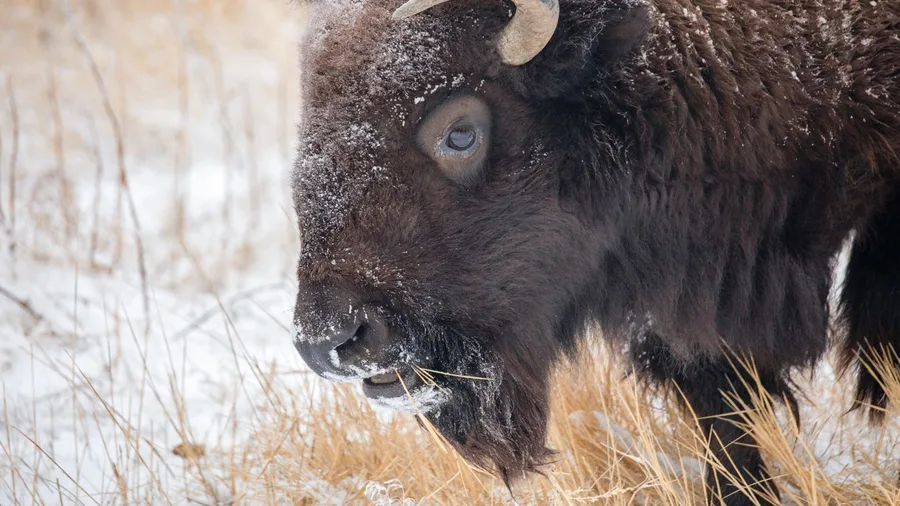
Yellowstone costs more and asks more than almost anything else on this list, so know the catch before you fall for the place: you are not driving yourself anywhere in January. The Grand Loop shuts to private vehicles, which leaves the guided snowcoach out of West Yellowstone or Mammoth as the way in to Old Faithful and the Lamar Valley. Seats sell out weeks ahead and get booked online, not bought at a gate window.
The cold is the price of the empty boardwalk. January highs run 18-25°F and the lows drop toward -10°F, over a plateau carrying 3-5 ft of snow. Stand at Grand Geyser on a still morning and you hear the steam freezing onto the lodgepole pines, a soft ticking as it lands, while the hot pools throw columns twice their summer height against air cold enough to keep everyone indoors.
Out on the Lamar road the coach tracks a valley the bison and wolves are still using, and the odds are good in the deep snow. Suit-up: thermal base layer, insulated boots rated well below freezing, hand warmers in the pockets. You hand over the wheel and the guide fee, and get back a valley with almost nobody in it.
💡 Tip: Book the Lamar Valley wildlife run over the geyser run if you can only do one — the geyser basin is spectacular but the valley is the part you can't replicate in July.
Is Winter Access Worth the Trade?
- Arches, Great Smoky Mountains, Bryce Canyon — Plowed trailheads or drive-up viewpoints; normal car, normal boots, short gear list.
- Grand Teton, Acadia, Yosemite Valley — Own car works, but snowshoes, skis or traction aids decide whether the day happens.
- Yellowstone — Private vehicles barred from the Grand Loop; budget for a snowcoach seat and book it early.
- Voyageurs — Sub-zero lows, short daylight, ice-road status to confirm with the park before driving.
2. Snowshoe to Taggart Lake, Then Hunt Moose
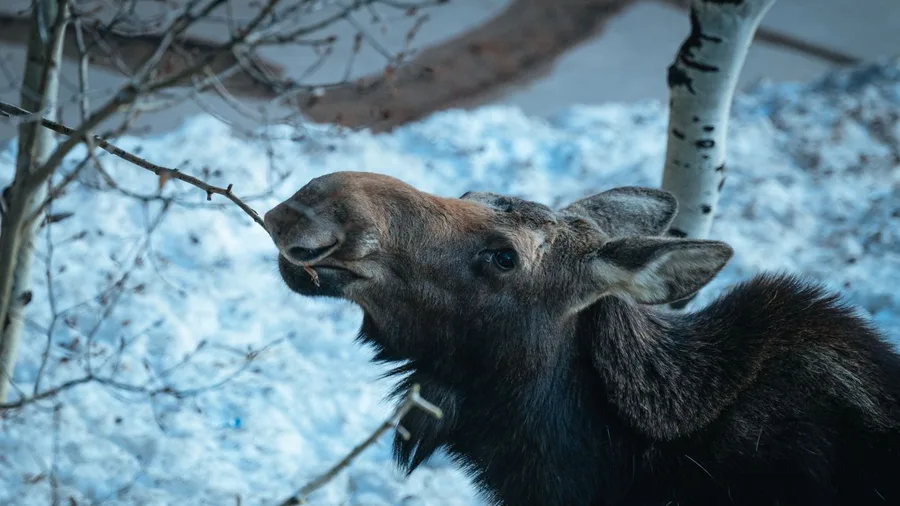
No, and that is the whole point of coming here after a snowcoach day in the park north of it: you park your own car at the Taggart Lake trailhead, strap on snowshoes, and set your own turnaround. The high country sits buried and out of reach, but this trail is not.
The loop runs 3.4 miles round trip under January highs around 24°F, a half day's walk rather than an expedition, ending at a lake frozen flat beneath the Teton wall, like the winter hikes that don't need snowshoes. Then drive the Gros Ventre road, where moose and bison often work the open flats with nothing but your headlights for company. Afterward, warm up over a bowl of bison chili and a beer in Jackson, roughly $20-25 a head.
| Park | January highs | Signature winter experience | Who it suits |
|---|---|---|---|
| Yellowstone | 18–25°F | Snowcoach to Old Faithful and the Lamar Valley | Travelers who'll hire a guide and leave the car |
| Grand Teton | ~24°F | Taggart Lake snowshoe, moose on the Gros Ventre road | Fit hikers wanting a marked half-day trail |
| Bryce Canyon | ~34°F | Hoodoos under snow from the rim and the Queens Garden loop | Photographers and short-walk viewpoints |
| Arches | ~44°F | Delicate Arch with no queue | Red rock and mild days, short gear list |
| Great Smoky Mountains | ~48°F in the valleys | Cades Cove loop in frost | Drivers and families without winter gear |
| Acadia | ~30°F | Carriage roads on cross-country skis | Skiers who want granite and surf |
| Yosemite | ~45°F on the valley floor | Horsetail Fall firefall in late February | Travelers who want one fixed date |
| Voyageurs | 15–20°F | Rainy Lake ice road and aurora over open ice | Northern-lights chasers who accept deep cold |
3. Walk Bryce Canyon's Hoodoos Under Fresh Snow
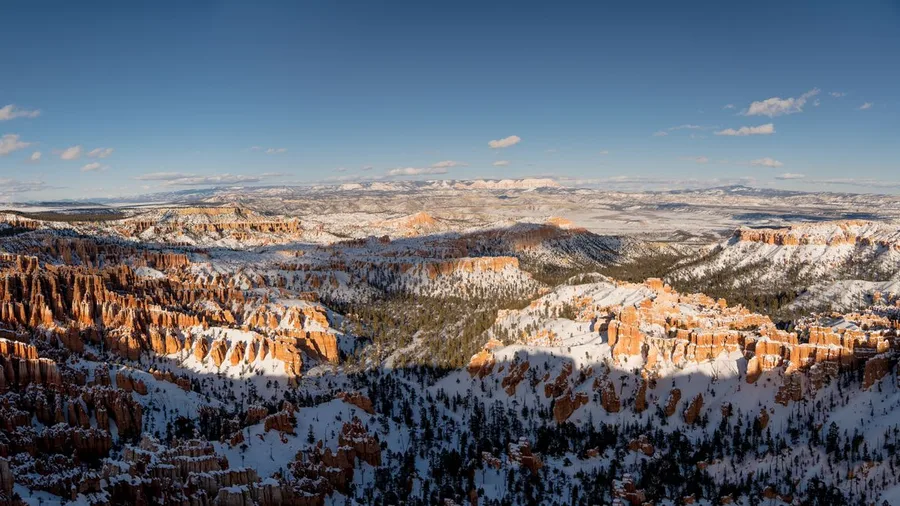
The first thing that lands is the quiet: fresh snow on hoodoos swallows sound, and the amphitheater below the rim goes almost silent except for wind moving through the fins. Walk ten minutes from the car park at dawn and you get a view that costs nothing but an early alarm.
At 8,000-9,100 ft the air bites. January days top out near 34°F and nights fall to about 12°F, so pack a warm mid-layer and a shell and strap traction aids to your boots, because the difference between a great day and a shortened one is grip. Sunrise and sunset are rim events, a short stroll to the viewpoints with no climbing required.
Go down and the snow edits the scene: the orange spires turn black-and-white, some outcrops reading as figures, others as waves caught mid-break. The Queens Garden-Navajo Loop is 3 miles with about 600 ft of descent into that, and what you see of it depends on the light and the day. The route suits photographers and anyone who wants parking to a classic view in a few steps, with the loop underneath if they have the legs.
4. Stand Under Delicate Arch Without a Queue
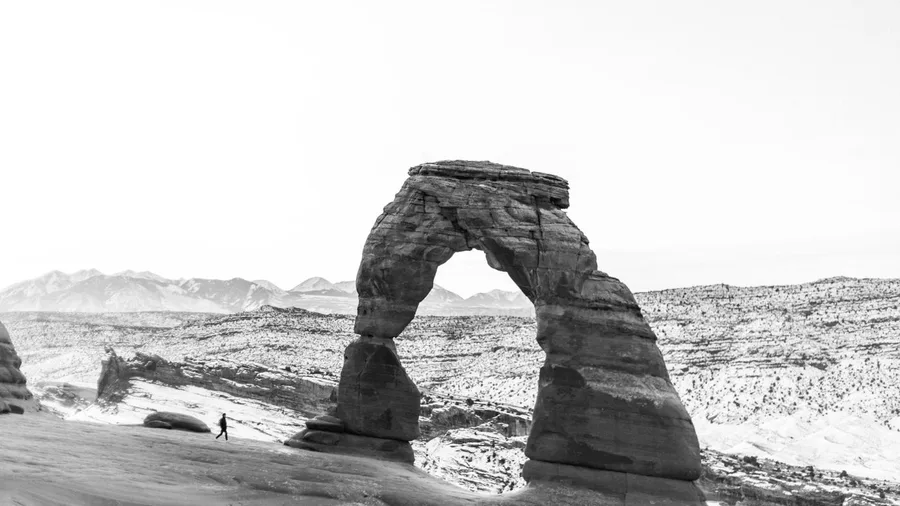
The one thing to know before you drive out to the trailhead: the Delicate Arch lot fills fast on a clear winter weekend, and once it's full there is no overflow lot and no shuttle in January – you wait in the road for a space or you come back. Arrive before nine and you walk in from your own car. Arrive at noon and you turn around. That's the whole gamble at Arches, and it is the only gamble, because the day itself is gentle: highs run about 44°F on the valley floor, lows sit near 20°F, and the gear list is a warm mid-layer, a hat and enough water for three hours. If Bryce had you clipping spikes into your boots to stay upright on ice, this is the park that hands you back your trail shoes and says go.
The walk to the arch is 3 miles round trip with 480 ft of climb from the Delicate Arch trailhead on the main road – plowed all winter, the usual start. The climb comes early and then the trail bends around a rock wall, and the arch is just there, framed against the La Sals with snow on them. In July you share that frame with a hundred people angling for the same photograph. In January it's you and maybe five others, and the sun sits low on the sandstone all afternoon, so the arch glows a deeper orange than any postcard you've seen. Give it four hours, or five if you drop into the slickrock basin below to shoot it from there.
Devils Garden is the second day – the fins and spires dusted white on their north faces, red and white banded across the rock, and the sun raking long across them by midafternoon. Bring microspikes only if it stormed in the last two days; otherwise the trail between the formations is packed snow at worst and bare rock at best. A quiet word of caution: the upper trail to Landscape Arch gets shaded early in winter and turns slick, so turn around when the surface stops holding your weight. This is the mildest of the red-rock winter parks, and the trade is that simple – winter takes the queue and leaves the arch.
⚠️ COMMON MISTAKE
Don't Trust the Valley Forecast on the Mountain
In the Smokies, a mild 48°F in Cades Cove says nothing about Newfound Gap Road at 5,046 feet, which turns icy and closes without much warning. Check the park's official road status page each morning before you commit to a route, and keep a low-elevation backup plan ready.
5. Drive Cades Cove in Frost, Free of Charge
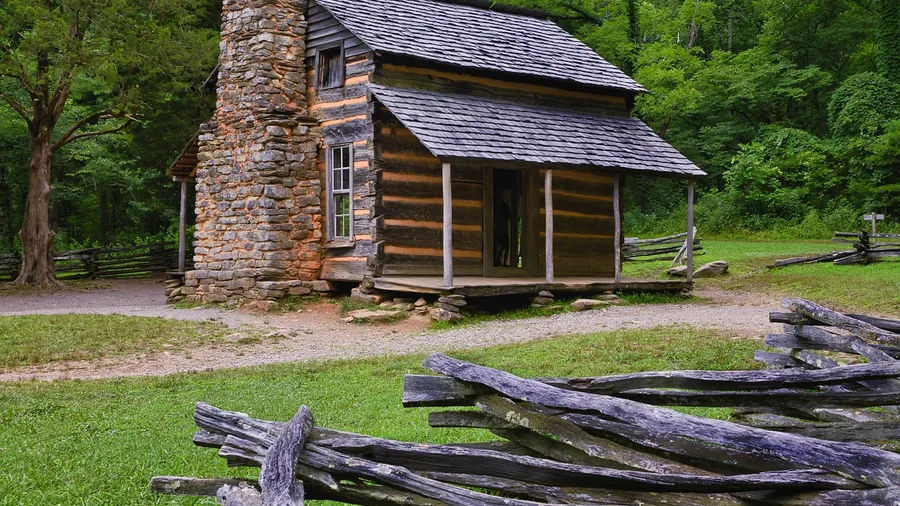
Zero dollars. That's the entry fee at Great Smoky Mountains National Park, the only one on this list that doesn't charge, and the Cades Cove loop – 11 miles of one-way road through the valley – is free to drive in January and February. No shuttle, no reservation system, no permit. You pull onto the loop and roll, stopping at pullouts when you want a closer look.
The valley floor in January runs a high near 48°F, the warmest number in this whole set. Which means you never really need winter gear down here: a jacket, decent boots and a thermos, and that's it. The ice and snow live higher up, on Newfound Gap Road as it climbs toward 5,046 ft, and that road turns slick in a hurry. Before you commit to crossing it, check the park's official road status page – closures are common in winter and no plan should depend on an open gap. The trick is to think in elevation. Cold and clear at the top, mild and drippy at the bottom, and you get to choose which version of the mountains you want to spend the afternoon in.
On the loop itself you drive through frosted fields with white-tailed deer standing in them, past the old log cabins with smoke in the air if you're lucky, and pullouts with nobody in them. In summer this loop is a slow crawl behind a hundred other cars. In January you'll get a mile of empty road before the next vehicle. Walk the short trail to the John Oliver Cabin – five minutes each way, flat – and you'll have it to yourself.
Families do well here because nothing is hard: the kids can be out of the car at every stop, and there are no icy ledges or exposures. Drivers do well because the scenery arrives through the windshield, and you're never more than a quarter mile from a warm seat. What it costs you is less than a tank of gas. Pick a clear day, drive in from Townsend or Gatlinburg, budget four hours for the loop and the side stops, and treat the higher road as a bonus only if the status page says it's open.
This is the park where winter asks the least of you – no gear, no booking, no cold-weather research – and hands back the same scenery that fills the summer with brake lights, now with frost on the fields and deer in the gaps between the trees. Pack a lunch, not just the camera.
Winter Trip: What You Gain, What You Give Up
What Winter Hands You
- Trailheads and viewpoints with a handful of cars, not a queue
- Wildlife pushed close to the road by empty verges
- Steam, snow and low sun doing things summer light can't
- Off-season lodging rates in gateway towns
What Winter Takes
- The Grand Loop in Yellowstone — snowcoach or nothing
- Any high-country trail buried under feet of snow
- Long daylight: roughly nine and a half hours in January
- Some services and lodges closed until spring
6. Ski Acadia's Carriage Roads Before the Light Goes
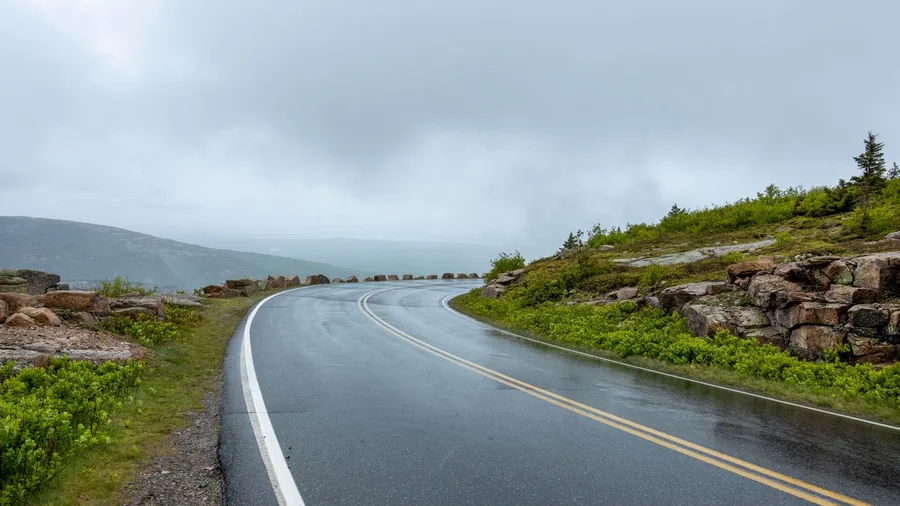
The sound of skis on cold snow is quieter than you'd expect – a soft shuffle under the trees, the lake silent, the granite cold enough to sting your face when the wind moves. January highs here hover near 30°F, cold enough to hold the base and keep the winter crowds home, workable if you're out for a few hours at a time. That cold is what matters: when the season holds, the 45 miles of Rockefeller carriage roads close to cars and bikes and belong to skiers and snowshoers.
Start on the Eagle Lake carriage road, a short out-and-back that gets you onto the terrain without committing to a full day. If the legs hold, head west for a longer circuit. Halfway through, when the light turns gold and the shadows run long across the snow, pull over at Jordan Pond and watch the sun go down over the Bubbles – the light is the reason you're here. The Ocean Drive stretch of the Park Loop Road is the drive to do, granite and surf with the tour boats gone, and Schoodic Peninsula is the quieter option across the water. The hour that makes Acadia in winter is the last one: arrive by three, ski the carriage roads by four, and stop to catch the late light from the park loop when the coast turns gold.
This is the park that asks for real gear – cross-country skis or snowshoes, winter boots, layers – in return for a coast that you have entirely to yourself. If you're a skier and you've never seen Acadia without the crowds, that's the trade: motion for an empty January beach, and the reward is earned one stride at a time.
💡 Tip: Rent skis in Bar Harbor before you drive into the park — there is no rental counter at the carriage roads, and the loop back to town costs you an hour of daylight.
The Eight Parks in Numbers
What the winter actually measures out to
7. Time Your Yosemite Trip to the February Firefall
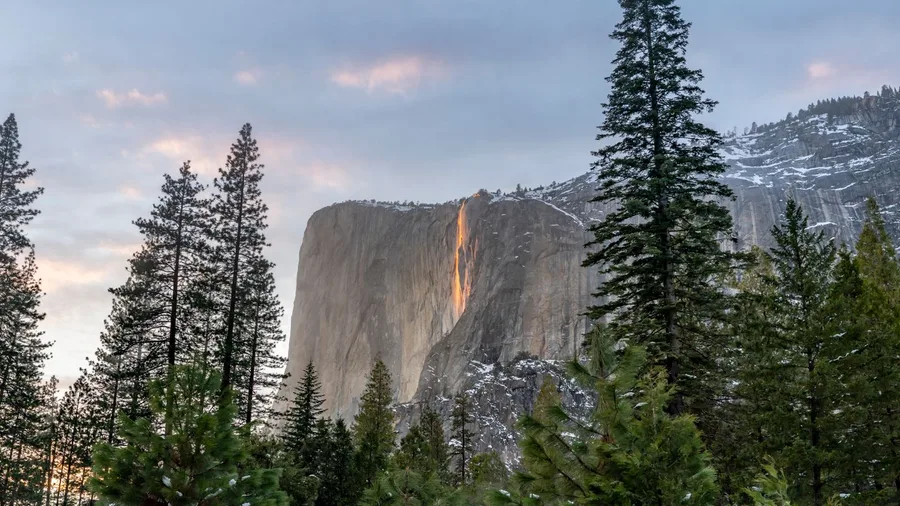
Yosemite in winter is the one big-name park here that does not make you work for the base. Valley floor January highs sit near 45°F, snow falls at the rim and reaches the floor only after storms, and the whole show happens above you while you walk around in a jacket.
The date that decides the trip is Horsetail Fall going orange in the last two weeks of February, when snowmelt and sunset line up and the waterfall looks lit from within. Put those two weeks in the diary before you book anything, pick your viewing spot early, and get there early – the crowd is small but not zero. Badger Pass, the historic ski hill off the valley road, fills the other days, and the valley loop is the walking day. If you would rather plan around one fixed date than solve a route, this is your park.
8. Take the Ice Road to Voyageurs and Wait for Aurora
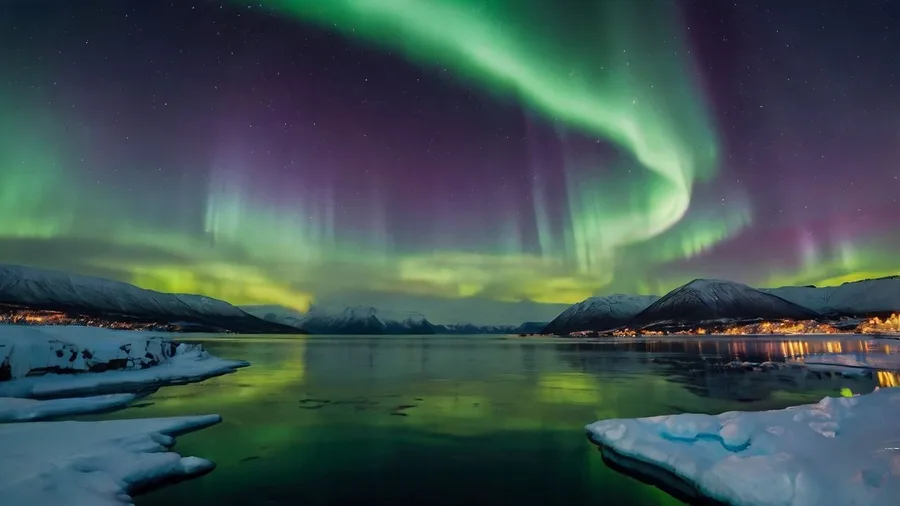
Go to Voyageurs for the ice road and the aurora, and accept that the access is the whole thing. January highs run 15-20°F with lows well below zero, and daylight is short enough that you choose your outside hours deliberately rather than drifting through a day.
The draw is the Rainy Lake ice road laid across the frozen lake, and the aurora burning over open ice — two reasons to come, and neither one works if the ice has not set. Confirm ice and road status with the park before you drive onto anything. A wrong assumption here is not a detour; it is water.
What the 218,000 acres of lakes and islands give you is snowshoe and ski routes leaving from the visitor center, with a treeline low enough that the sky stays open above you. The gear list is not optional at these temperatures, and a face covering and insulated boots are the difference between a memorable night and a miserable one.
It suits travelers chasing northern lights who will trade daylight and comfort for a park with nothing in the frame but ice and sky. If you want the far end of the cold scale and a place rather than a date, this is where the ladder ends.
💡 Tip: Set an aurora alarm for 10pm and again at 1am — the displays here often peak in the middle of the night, well after most people have gone to bed.
🗓️ Book a Winter Park in Six Steps
Pick your trade
Decide whether you'll give up the car, buy real gear, or take serious cold on this trip.
Open the park's winter page
Read the official road, lodging and tour status before anything gets booked.
Lock the guide
Reserve Yellowstone snowcoach seats or any ranger-led program first — they sell out.
Book the bed
Choose lodging in the gateway town closest to the trailhead or road you actually plan to use.
Pack traction and layers
Bring microspikes and layering for the overnight low, not the afternoon high.
Check status each morning
Re-read the road report before you drive; winter plans change overnight.
Frequently Asked Questions
Are these parks really empty in winter?
Empty enough that parking stops being a plan. Arches' Delicate Arch trailhead and Bryce's rim viewpoints drop from queues to a handful of cars. Yellowstone is the exception in feel — the Grand Loop is closed to private vehicles, so you'll be in a snowcoach rather than alone.
Which of the eight is the easiest winter trip?
Great Smoky Mountains for mild temperatures and driving, Arches for a plowed trailhead and 44°F afternoons. Both need nothing more than warm layers and boots. Yellowstone and Voyageurs are the two that demand real planning.
Do I need snow tires or chains?
Not for the valley-floor parks, but you do need to read the road report. Newfound Gap Road in the Smokies and the Bryce rim road ice up and close; carry traction aids for your boots and check conditions the morning you drive.
How much daylight do I actually get?
Roughly nine and a half hours in January, more by late February. That's the real constraint — it means one major destination per day, and for Yellowstone a single snowcoach run rather than two.
Is winter lodging open in these parks?
In the gateway towns, yes; inside the parks it varies by property and season. Yosemite Valley and a few others keep lodgings running, but many in-park facilities close in January, so confirm before you build the trip around a specific base.
Can I see the northern lights at Voyageurs reliably?
You can see them, but nobody can promise them. Clear skies and solar activity have to line up, and the displays here often peak in the middle of the night. Book two nights rather than one.
Where to Base Yourself for Each Park
The base town decides half the trip, and every park here has one obvious answer.
For Yellowstone, West Yellowstone puts you at the snowcoach departure point for the geyser basins, while Mammoth serves the northern range and the Lamar Valley. Jackson is the base for Grand Teton and the Gros Ventre road. Bryce works from Bryce Canyon City or Tropic, ten minutes from the rim.
Moab covers Arches, with the Delicate Arch trailhead fifteen minutes out of town. Townsend and Maryville are the quiet side of the Smokies, while Gatlinburg sits closer to Newfound Gap Road. Bar Harbor serves Acadia's carriage roads, and Yosemite Valley itself is the base for the firefall. For Voyageurs, International Falls is the gateway town. Book lodging before you book anything else — winter inventory in these places is thin, and the rooms near the trailheads go first.
One Park First Then The Next
Pick by appetite, not by ranking. Mildest and easiest to reach is the Smokies: 48°F on the valley floor, the 11-mile Cades Cove loop from the car, no gear. Deepest snow and most wildlife is Yellowstone: 3-5 ft on the plateau, bison and wolves in the Lamar, snowcoach and guide booked ahead. One date-driven spectacle is Yosemite, Horsetail Fall orange in the last two weeks of February over a 45°F valley floor. Far-north aurora is Voyageurs: 15-20°F highs, the Rainy Lake ice road, dark skies.
Before you book anything, open that park's official winter access page and confirm road, lodging and tour status. Winter access is the one part of the trip that rewrites itself.
Then go stand where the crowd was. The July boardwalk was missing only one thing, and every one of these eight parks proves it in a different currency of cold. Choose the trade you'll accept, and the park chooses itself – and the steam still freezes on the pine at minus ten, with your boots the only tracks in the snow.
Start With the Road Report
Open the park's official winter access page now and check road, lodging and tour status before you book a single night.