Most people pick the Alpine village from the photo and sort out the transfer, the ticket and the room rate afterward, which is exactly backwards. The two images you already know, the Matterhorn closing off Zermatt's main street and Hallstatt's lake doubling its spire, make the trip feel decided before you have priced anything.
Both views are real. The trip around them is set by harder things: 3 hours 40 minutes from Zurich to Zermatt against 1 hour 15 minutes from Geneva to Chamonix, roughly $145 for the Gornergrat train against about $22 for Hallstatt's funicular, and the hour the coaches unload.
So the village worth booking is the one whose transfer time, car-free streets, nightly rate and crowd rhythm fit this particular trip, not the one that photographs best.
Pick one or two, give them two nights each, and know going in who should pay for Zermatt, who should save in Garmisch-Partenkirchen, and who should splurge at St. Moritz or Lech.
Quick Tips Before You Start
Book two nights
One night means you see the village only at its most crowded; two lets you walk it after the day-trippers leave.
Leave the car
Every village on this list is reachable by train or bus from a major city; parking is expensive and often outside the center.
Set your hotel band first
Hotel prices range from $160 to $650 a night here, so decide your ceiling before you fall for a view.
Shoot early
The classic view is cleanest before 9am, when tour buses are still an hour away.
Check the pass
You do not need a ski pass to enjoy most of these villages; a single lift ticket is often enough.
1. Zermatt's car-free Matterhorn postcard
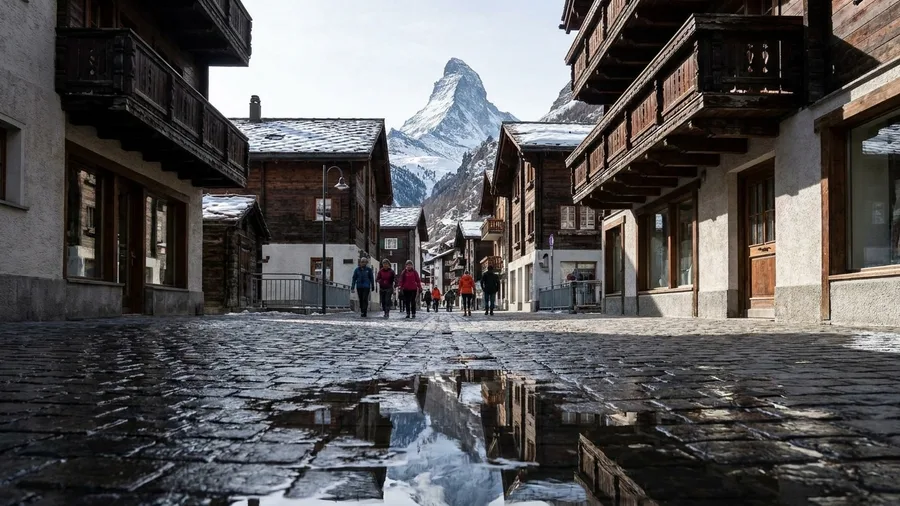
On a cold January morning in Zermatt the loudest thing you hear on the main street is a luggage cart rattling over the cobbles, because the only vehicles here are electric taxis and carts like that one. The town sits at 5,310 feet, entirely car-free, and at the end of that street the Matterhorn fills the gap between the buildings like a photograph already framed for you.
This is the top of the price-and-access scale on any honest winter list, and it earns the spot. The Gornergrat train runs about $145 round trip and hauls you up to the ridge that looks back down over the whole village with the peak behind it – the classic composition, shot from above instead of street level. Between the ticket and the bed, you buy the view twice.
Hotels run $280 to $450 a night, so do the arithmetic before you book. A single overnight barely covers the trip: the train from Zurich takes about 3h40 and drops you in the village station, and if you leave the next afternoon you have paid a premium for a few hours. Two nights is the minimum that justifies the transfer and the hotel outlay together, and it lets you ride up on the clearest morning of the stay rather than the one you happened to arrive on.
The setting suits couples and photographers who have already decided the car-free quiet is worth the bill. It does not suit families stretching a budget across four beds, or anyone squeezing one night out of a tight Swiss itinerary to say they saw the Matterhorn – they will spend most of that night paying for a room and most of that day on a train. The postcard here survives the cost only when the two nights are planned and the money is set aside before you start looking at hotels.
If Zermatt is the splurge you want, commit to it fully: two nights, one clear-morning ride on the Gornergrat, and a slow afternoon on the street watching the light slide off the peak. If that sounds like more than you can spend, the same train-only approach gets you a Swiss peak village for less – but go knowing the car-free hush and the Matterhorn at the end of the street are what you are paying for here.
💡 Tip: Ride the Gornergrat train up in the morning and walk down one stop before reboarding; the view stays with you and the train is emptier on the way back.
| Village | Country | Elevation | Signature winter view | Typical hotel | Access |
|---|---|---|---|---|---|
| Zermatt | Switzerland | 5,310 ft | Matterhorn at the end of the main street | $280–$450 | 3h40 by train from Zurich |
| Grindelwald | Switzerland | 3,400 ft | Eiger north face above village roofs | $220–$360 | 2h50 by train from Zurich |
| Hallstatt | Austria | 1,700 ft | Lake reflection and church spire | $180–$300 | 2h30 from Salzburg by train and bus |
| Cortina d'Ampezzo | Italy | 4,000 ft | Dolomite peaks over Corso Italia | $200–$350 | 2h15 by bus from Venice |
| Chamonix | France | 3,400 ft | Mont Blanc from town and the Aiguille du Midi | $190–$330 | 1h15 by bus from Geneva |
| St. Moritz | Switzerland | 6,000 ft | Frozen lake and palace facades | $350–$650 | 3h20 by train from Zurich |
| Garmisch-Partenkirchen | Germany | 2,300 ft | Zugspitze above painted facades | $160–$280 | 1h15 by train from Munich |
| Lech am Arlberg | Austria | 4,700 ft | Snowy main street and onion-dome church | $300–$550 | 2h30 by train and bus from Innsbruck |
2. Grindelwald's Eiger-framed village streets
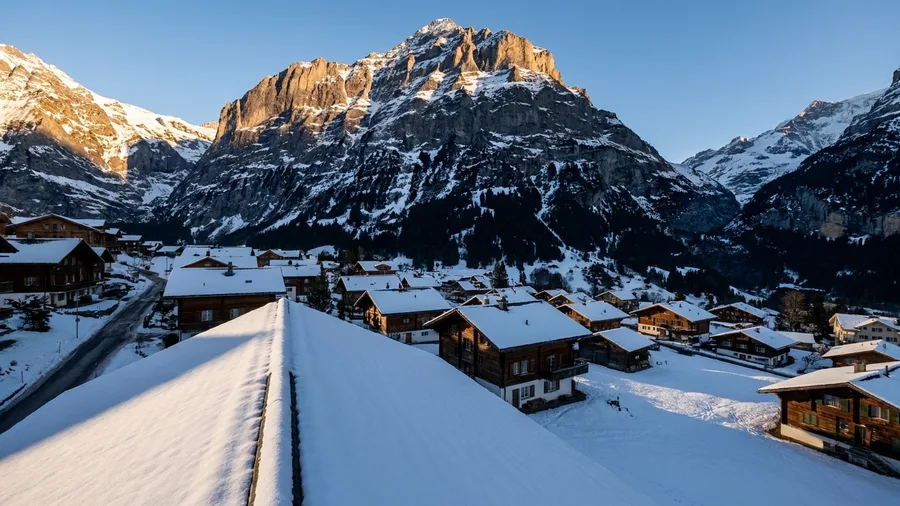
Grindelwald is the cheaper Swiss version of the same idea: a car-free village with a famous peak in it. The Eiger's north face rises directly above the rooftops and the chalet streets, 3,400 feet up, and you can stand on a village lane with a coffee and look straight up at one of the most photographed walls in the Alps. Mountain towns like this often look even better under snow than in summer, and a comparison of mountain towns prettier in winter helps you pick the right one.
The First gondola costs about $75 and lifts you to the higher, cleaner framing of the peak, with winter walking trails at the top; hotels run $220 to $360, under Zermatt's band. The train from Zurich takes about 2h50, no car needed at either end, so the village works as a train-based base – stroll the streets, ride up, come back for dinner in the same afternoon. For mixed groups who want village time and quick mountain access, this is the honest Eiger postcard at a lower price. The crowd at the gondola is real but moves fast; the queue is not the reason to skip it.
💡 PRO TIP
Buy the single lift, not the pass
If you are in an Alpine village for two nights and one mountain day, a single gondola or funicular ticket does the job. A multi-day ski pass only pays off if you are actually skiing every day.
3. Hallstatt's lake-mirror winter view
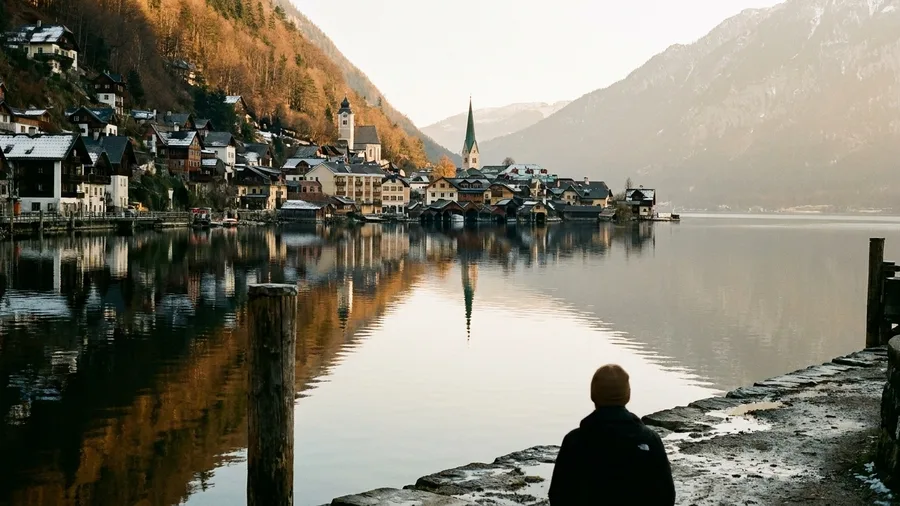
You step off the little train at Hallstatt station and it is not the village you see – it is the lake, flat as poured glass on a still winter morning, and above it the steeple and the stacked houses doubled upside down in the water. The reflection is the whole postcard here, and it only works when the surface is unbroken.
The village sits at 1,700 feet, reached from Salzburg in about 2h30 by train and then bus across the water to the shore; that last leg is a bus, so check the schedule and build your plan around it rather than assuming a taxi will be waiting. The funicular up to the skywalk costs about $22, and hotels run $180 to $300 – a moderate stay, not a splurge.
The catch is timing, not money. Day-trippers fill the lakefront by mid-morning, and by then the reflection is a wall of raised phones. Arrive on an early bus, walk the shore before the coaches unload, and stay the night so you get the clean water again after they leave – that overnight is the difference between the postcard and a crowd shot.
What actually makes the postcard
Ranked from the thin top of the image down to the wide base that holds it up
4. Cortina d'Ampezzo's Dolomite townscape
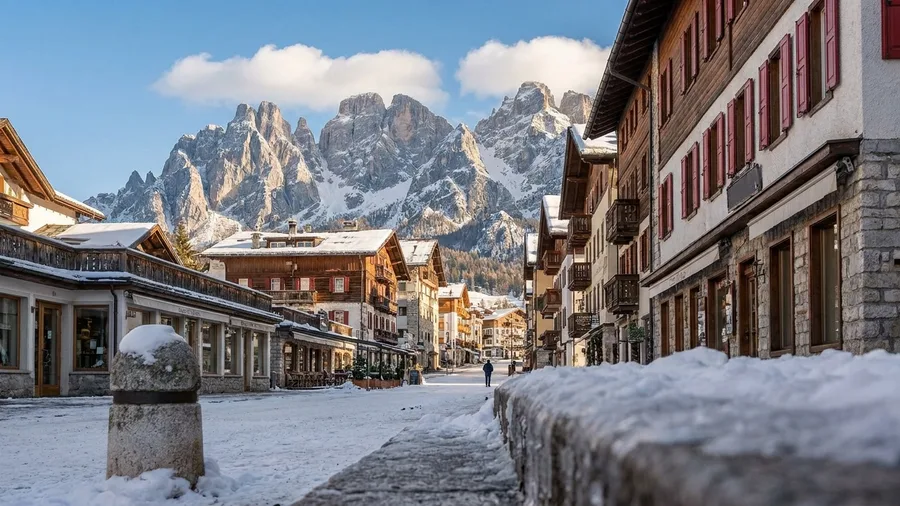
Hallstatt asks you to schedule your day around a bus and time your shot around the tour groups; Cortina asks less of both. It sits at 4,000 ft in a wide bowl with the Dolomite peaks standing around it on most sides, and the center is a real town rather than a single photogenic lane. Corso Italia is where residents take the evening walk, past shop windows and cafe tables, so the shot is a street with mountains over the rooftops, not a viewpoint you queue for. A lift day pass runs about $80, but nobody forces you to buy one: you can spend a morning on the stroll and a gondola ride and still feel like you saw the place.
Hotels sit in the $200-$350 band. Getting there is the practical argument: roughly 2h15 by bus from Venice, which turns Cortina into a two- or three-night winter add-on rather than its own expedition. Skiers get the lifts; non-skiers get the walk and the peaks without paying for a pass they will not use. Book the bus ahead in ski season, and if the forecast calls for snow on the pass road, build in slack, because the transfer is the one part of the plan you do not control.
5. Chamonix's Mont Blanc winter base
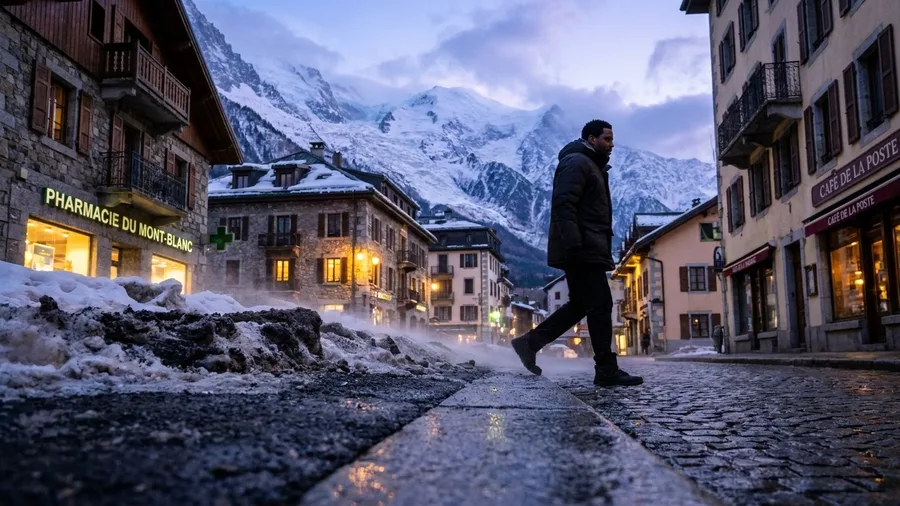
An $85 cable car and a 1h15 bus from Geneva: that is the whole cost and effort of putting yourself under Mont Blanc without ever clipping into skis.
Chamonix sits at 3,400 feet with the massif filling the end of the street, and the Aiguille du Midi lift does the vertical work in about twenty minutes. What you see up there is the Alps from above the tree line, and what you see is weather. On a clear cold morning the summit ridge and the glaciers below it come out in full; on a cloudy one you ride up into a white wall and pay $85 for the privilege. Check the webcam at the lift station before you buy, and hold the ticket for a day when the top is open.
Down in town, hotels run $190-$330 and dinner needs no ski pass, which is the point for couples who want scenery with restaurants. Two nights is enough. Base the trip on the town, treat the cable car as the optional splurge, and the view is still there from the bridge.
Day-tripper timing vs overnight timing
Day trip
- Arrive with the first buses around mid-morning
- Lakefront and main street at their most crowded
- One quick photo before the light flattens
- Back on the bus before the village empties
Two-night stay
- Walk the same street after 5pm when buses leave
- Clean reflection or empty viewpoint at 8am
- Time to ride the lift without rushing
- A second chance if the first morning is foggy
6. St. Moritz's frozen-lake glamour
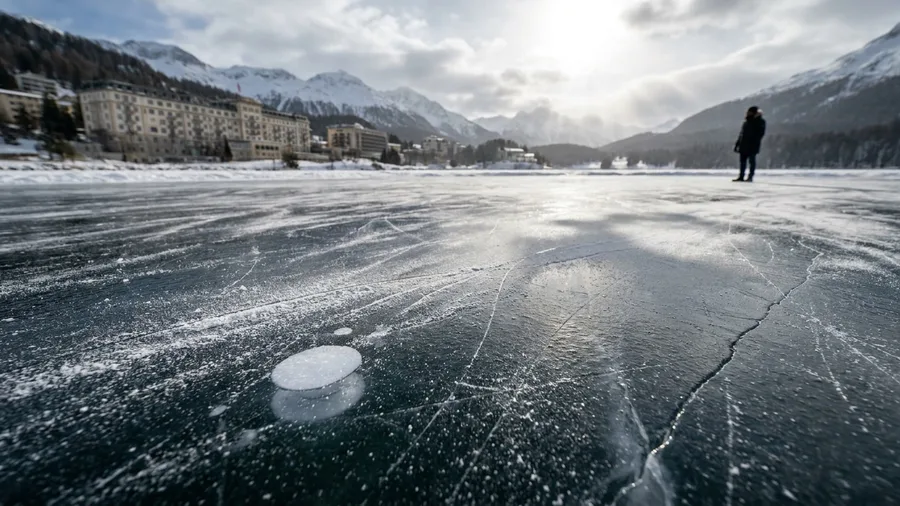
Price it before you romanticize it: plan on at least $500 a day for room, food and one lift, and know that the frozen-lake postcard is bought, not found.
St. Moritz sits at 6,000 feet, and what sells it is the lake frozen flat and the palace facades behind it. Hotels run $350-$650 a night, the funicular is about $45, and the compact center is walkable the moment you step off the train, 3h20 from Zurich. Budget travelers should stop reading here; this is not their village.
For everyone else, the move is to sit. Take a bench on the lakefront in the late afternoon, when the light goes off the snow and the skaters thin out, and do nothing for an hour. If you would rather trade the grand hotel for a quieter stay, these cozy winter cabin getaways match groups by size and distance to snow. That bench is what the money actually buys: the view without a queue in front of it. Go for the people-watching, the frozen lake and the walkable center, and skip it if the daily number makes you wince.
⚠️ COMMON MISTAKE
Do not book one night to save money
One night costs less but usually delivers the worst version of the village: you arrive with the crowds and leave before the evening empties the streets. Two nights is the real minimum on this list.
7. Garmisch-Partenkirchen's Zugspitze village
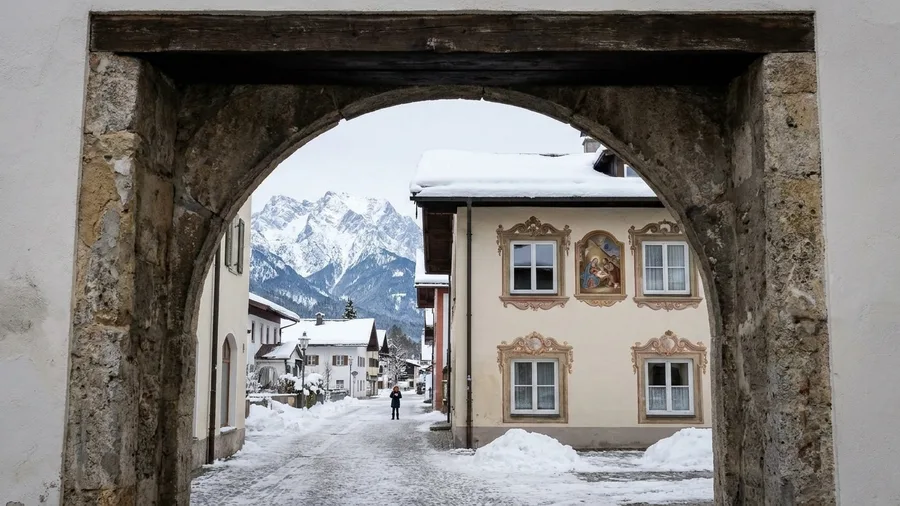
For most winter short-breaks, that's Garmisch-Partenkirchen, and the answer is a plain yes. It sits at 2,300 ft with the Zugspitze above it, and the train from Munich takes about 1h15, which means no rental car, no mountain pass, no parking garage to thread at noon.
The town hands you two separate pictures, and it's worth knowing which is which. The first is the village itself: painted Lüftlmalerei facades on the houses, done up in fresco borders and Bible scenes, and streets that are just ordinary streets until you look up. The second is the mountain, reached either by the cogwheel train or the cable car, roughly $75 for the round trip. Stand in the pedestrian center after a fresh snowfall and the frescoed walls carry a snow cap on every window ledge; walk fifteen minutes and the Zugspitze fills the end of the street.
For families and short-break travelers who want the convenience more than the exclusivity, this is the easiest big-mountain version on the whole list. Hotel bands run $160-$280 a night, the lowest of the villages here, and the snow is consistent because you're standing on the Zugspitze's shoulders, not chasing a forecast. Book two nights, ski or ride one day, walk the painted streets the other. The postcard here costs the least and asks the least of you.
Alpine winter myths, corrected
8. Lech am Arlberg's snowy main street
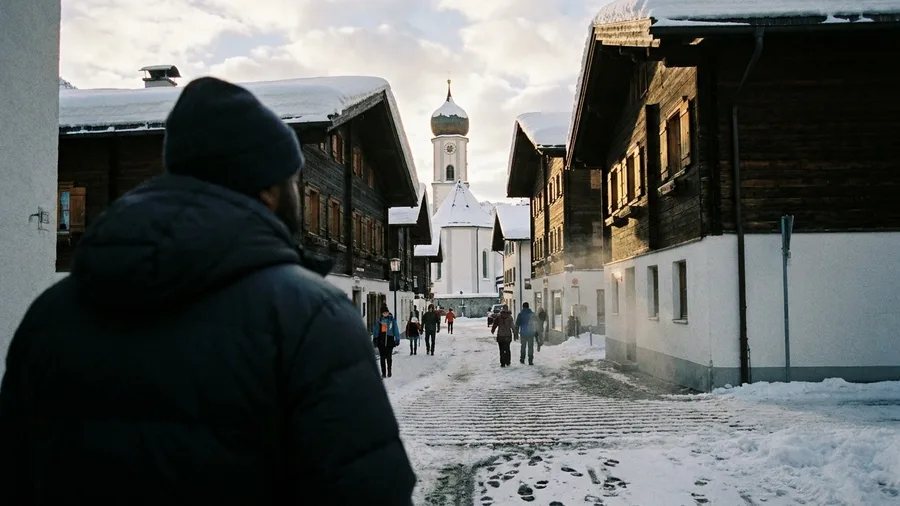
If you want a traditional chalet street in the snow, pay for Lech. The main street is tight, the chalets are low and dark-timbered, and the onion-dome church stands at the top of the view like a full stop. It costs nothing to walk it, which is the point: few villages this expensive give you the postcard for free.
The skiing behind the facades is the real reason many come, and a day pass runs about $85, with hotels at $300-$550. From Innsbruck the trip takes about 2h30 by train and bus, and February is the month to book in advance, since that's when everyone wants the same street in the same snow. Skiers and traditional-village seekers who will pay for the atmosphere get what they came for; everyone else gets a lovely walk and a hefty bill.
🗺️ How to choose and book in four steps
Set your hotel ceiling
Pick your nightly maximum first, because it rules out St. Moritz or Lech before you get attached to the photo.
Check the car-free transfer
Confirm the train and bus connections from your arrival city and how long the last leg takes.
Block two nights
Two nights is the minimum that gets you the village after the day-trippers leave and a second chance at the view.
Book February early
If you want Lech or St. Moritz in peak season, book well ahead; the chalet postcard is in highest demand then.
Frequently Asked Questions
Which village is best for a first car-free trip?
Zermatt if your budget allows it. The train from Zurich takes about 3 hours 40 minutes and the village is entirely car-free, so the Matterhorn view is waiting when you step off. Book two nights to justify the transfer and the $280–$450 hotel band.
Can you see these villages without skiing?
Yes. Cortina, Chamonix and Garmisch-Partenkirchen all work as town-and-view trips. A single lift ticket costs about $80 in Cortina or $85 for the Aiguille du Midi cable car in Chamonix, and you do not need a multi-day pass.
How much does a winter night in an Alpine village cost?
It ranges widely. Garmisch-Partenkirchen hotels run $160–$280, Hallstatt $180–$300, and Zermatt $280–$450. St. Moritz is the top of the range at $350–$650, where a realistic daily budget with food and one lift is around $500.
When is the best time to go for the postcard look?
Mid-January to late February gives the most reliable snow cover. Go early in the morning for the cleanest view before tour buses arrive, and stay overnight so you see the village after they leave. Book February well ahead for Lech and St. Moritz.
Do I need to book trains in advance?
Book the long transfers ahead, especially Zurich to Zermatt or St. Moritz, because seats fill in peak winter weeks. Regional buses, like the last leg into Hallstatt, run on a schedule you should check the day before.
One Village to Ride It Out In
Send car-free first-timers to Zermatt, budget city-breakers to Garmisch-Partenkirchen, splurge seekers to St. Moritz or Lech am Arlberg. Then book two nights, every one of you, so you are still there when the buses pull out.
The Matterhorn at the end of the street and the lake reflection are not tricks. The version worth paying for is the one you reach after the transfer, the lift ticket and the ten o'clock crowd, standing in the same spot at six with the light going pink and nobody in front of you.
Choose the postcard you can afford, reach without a car, and still be standing in after 5 p.m. That is the whole test, and it takes one evening of planning before you book anything.
Pick your village, then check the transfer
Use the table at the top to compare view, cost and access, then confirm the train or bus times for your dates before you book the room.