At four in the afternoon the elm shade slides across the white steeple and the whole block looks painted, until a delivery truck backs into the loading zone and snaps it back to a working town.
You come in with the postcard already in your head: white steeple, brick under awnings, a harbor at the end of a short street, and the suspicion that no Main Street actually looks like that. It usually does. What is rare is a street that gives back the hours you spent reaching it.
That return is decided by boring things. Length, 0.3 to 1 mile end to end. Walk time, 30 to 60 minutes if you never stop. Parking at the downtown edge, $0 to $10 a day. The season the town is built for, the anchor at the far end, and what lunch costs once you are there, $15 to $25 with coffee at $4 to $6 and an inn room at $180 to $320.
So the choice is a match, not a ranking: half-day set piece, full-day hill walk, harbor, beach, theme, river, coast, stairs, gorge, or one national anchor, set against the time and season you actually have.
By the end you should be able to pick one town, know when to go, where to park, how long to walk, and whether lunch or a night is worth the spend.
Quick Tips Before You Start
Park at the edge
Municipal lots at the downtown edge run $0 to $10 a day and save you circling the 0.3-mile core.
Go on a weekday
Saturday afternoon is when the day-trippers arrive; Tuesday morning the same street is yours.
Budget $25–$35
Coffee $4–$6 plus lunch $15–$25 covers a half-day without touching an inn room.
Wear real shoes
Galena, Eureka Springs and Jim Thorpe all climb; flat sandals will not survive the side streets.
Check foliage dates
Stockbridge peaks late September to mid-October; New Hope and Jim Thorpe fill up the same weeks.
Verify hours first
Small-town shops keep short, seasonal hours; call ahead before driving three hours for a closed storefront.
1. Stockbridge, Massachusetts: Norman Rockwell's Main Street
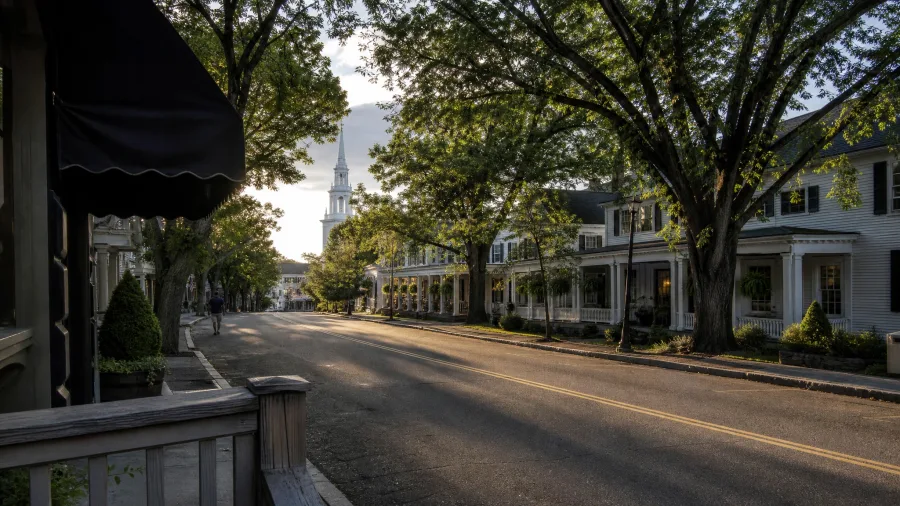
Four tenths of a mile, thirty to sixty minutes, and a coffee that runs $4 to $6. That is the whole of Stockbridge's Main Street, and it is the most photographed unreality in the set.
The white steeple at the head of the block and the elms leaning over the road do the work before Rockwell's name enters your head. Then you remember it is his town, and the resemblance stops being coincidence and becomes geography. The Red Lion Inn anchors the far end, and its porch is the piece built for people-watching: sit down and the street becomes a stage you're allowed to watch from cheaply.
Here's the catch, and it's a real one. The painting only appears in late September through mid-October, when the foliage turns the 0.4-mile walk into the image you drove for. Outside that window the street is handsome but unremarkable, and every leaf-peeper in New England knows the same dates. Treat it as a slow half-day: walk it, spend $15 to $25 on lunch, and skip the inn room unless the foliage drive continues past Stockbridge. Arrive before the leaf traffic does.
💡 Tip: Arrive before 10 a.m. in foliage season; the 0.4-mile street fills with leaf-peepers by mid-morning.
| Town | State | Population | Main Street length | Best season | Anchor |
|---|---|---|---|---|---|
| Stockbridge | MA | ~2,000 | 0.4 mi | Late Sep–mid Oct | Red Lion Inn |
| Galena | IL | ~3,300 | 6 blocks | May–Oct | Brick storefronts above the Galena River |
| Marfa | TX | ~1,800 | Courthouse square | Spring & fall | Presidio County Courthouse |
| St. Michaels | MD | ~1,000 | 0.3 mi | Spring & fall | Chesapeake Bay Maritime Museum |
| Carmel-by-the-Sea | CA | ~3,200 | 1 mi | Sep–Nov | Carmel Beach |
| Leavenworth | WA | ~2,000 | 4 blocks | Dec lights or Sep | Bavarian facades |
| Saugatuck | MI | ~900 | 0.5 mi | Jun–Sep | Kalamazoo River harbor |
| New Hope | PA | ~2,500 | 0.7 mi | October | Delaware River & Bucks County Playhouse |
| Mendocino | CA | ~900 | 0.3 mi | May–Oct | Mendocino Headlands |
| Eureka Springs | AR | ~2,100 | 5 blocks | Apr–Oct | Victorian historic district |
| Jim Thorpe | PA | ~4,800 | 4 blocks | Fall | Lehigh Gorge Scenic Railway |
| Cooperstown | NY | ~1,800 | 0.5 mi | May–Sep | National Baseball Hall of Fame |
2. Galena, Illinois: Brick Storefronts On A Hill
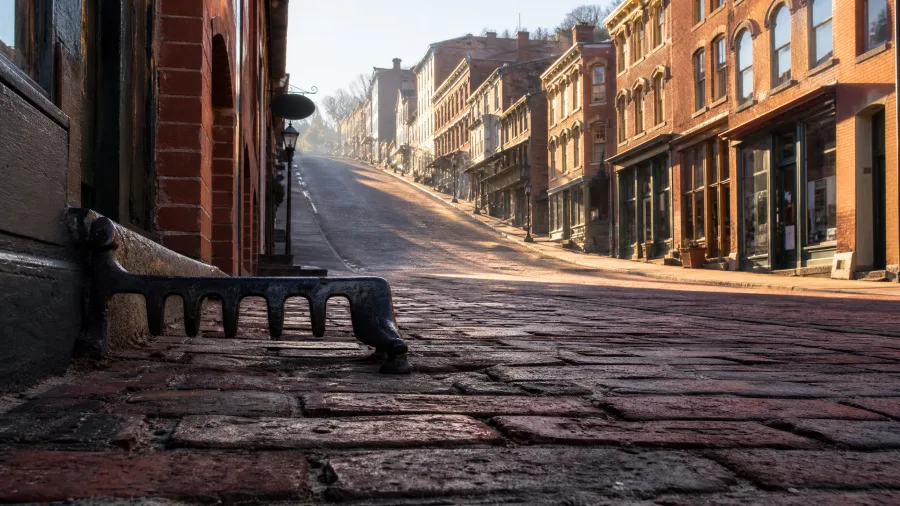
Sunlight bounces off six blocks of restored 19th-century brick, and the whole street smells faintly of the Galena River running a few dozen feet below it. Then you notice the road tilting upward and feel it in your calves.
This is the slope test for any brick-and-brick town: the six-block Main Street above the river genuinely climbs, and steep side streets branch off it in both directions, so budget the walk as a hill route rather than a flat promenade. Best May through October, when the facades and the river hold the day on their own without fall color as the only excuse. It suits walkers who don't mind an incline, and it lets you justify lunch at $15 to $25 and a slow browse, with parking at the downtown edge at $0 to $10 a day. Anyone with a stroller, a cane or tired knees should know what they're taking on before the first block, because the reward is up top.
3. Marfa, Texas: A Courthouse Square With Edge
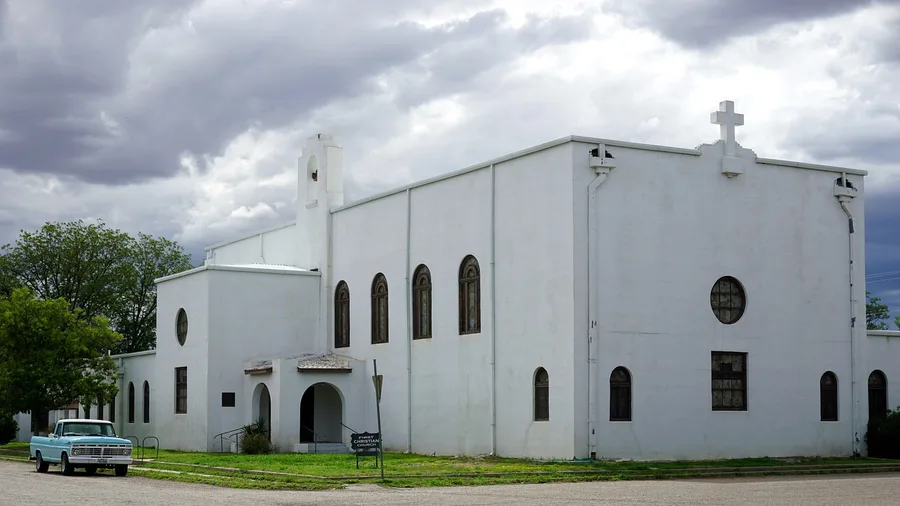
Marfa does not hand you a continuous row of shops to walk past, and if that is the postcard you came for, the three hours of open highway from El Paso will feel badly spent. The town holds around 1,800 people, and its center of gravity is the Presidio County Courthouse, standing on Highland Avenue behind a lawn and a clock tower you can see from the edge of town.
This is what pretty means out here: space, bleached stucco, and a horizon that does all the decorating. The storefronts are few and far between, sun-faded, spaced like punctuation rather than prose. You walk the square, look up at the courthouse, and then you are simply standing in the high desert with nothing between you and the sky.
Go in spring or fall. Summer afternoons push well past 90 degrees by early afternoon, and the walking is the whole point, so a mild season is not a luxury. Spring and fall give you mornings and evenings you can stay out in, which is when the square is at its best. Winter mornings can bite, but the sun still does the work by mid-morning.
Eat before or after the square, not on it, because the food here is not an afterthought. Marfa's reputation for a small town rests on a kitchen scene that punches above its 1,800 residents, and the local version of a breakfast taco, egg and potato and salsa on a griddled tortilla, runs around $4 to $6. Lunch at a sit-down place lands in the $15 to $25 range, and coffee is the same $4 to $6 you would pay in a city. Do not expect a strip of options on the square itself; the eating is spread out, so check hours before you commit a meal to a particular block.
That is the trade: three hours of driving for a walk you can finish in half an hour, and a meal that costs what a city meal costs. What you buy with the miles is scale, not density. If you want continuous shopfronts and a short drive from a highway, this is not your town. If you want a courthouse square, a short walk, big sky and a breakfast taco worth the stop, Marfa delivers exactly that, and nothing you did not ask for.
💡 Tip: Book a room before you drive out; Marfa's small inn stock fills on weekends and there is no next town for 30 miles.
4. St. Michaels, Maryland: Talbot Street By The Bay
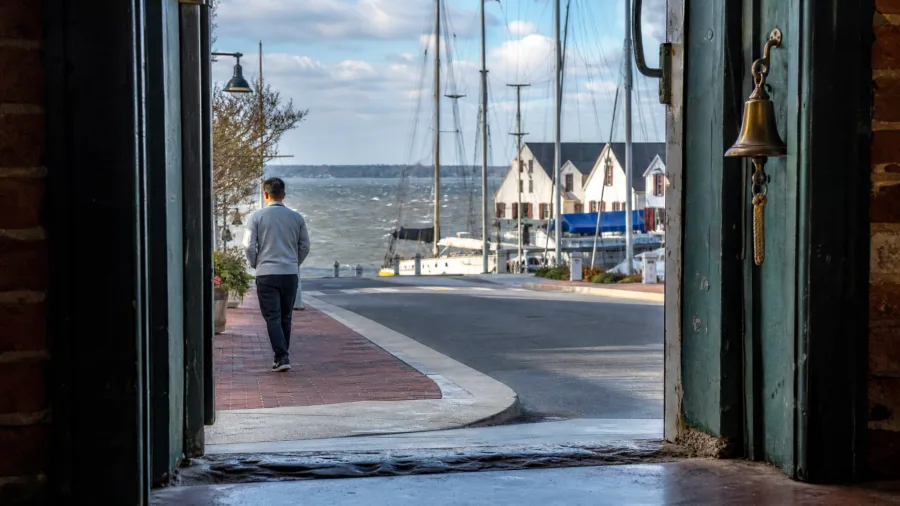
Talbot Street in St. Michaels answers that in about ten minutes of walking, no hill involved. The town holds around 1,000 people, and its main street runs roughly 0.3 mi, flat and level from one end to the other. Where a sparse high-desert square makes you drive three hours for emptiness, this is the opposite bargain: a short, easy street with a harbor bolted to the end of it.
That harbor has worked for centuries, first under sail and then hauling oysters out of the Chesapeake, and the Chesapeake Bay Maritime Museum sits right at the harbor end of the street, so the water is not a view you earn but the finish line you stroll to. Time it for spring or fall and you skip the summer crowd entirely; like the flat coastal walks in America, the half-day harbor walk is the whole point, not a warm-up for something else.
Parking sits at the downtown edge, typically $0-$10 for the day, and lunch runs $15-$25 if you stop. Nothing here asks you to budget a hill, a length, or a long approach: 0.3 mi out, museum at the water, 0.3 mi back. On a road trip measured in hours behind the wheel, that is the cheapest return you will find for the miles.
💡 PRO TIP
Start at the far end of the street
On any Main Street under 1 mile, park at the opposite end from the anchor. You walk the whole thing once, hit the anchor last, and never backtrack through the same shops twice.
5. Carmel-by-the-Sea, California: Ocean Avenue Cottages
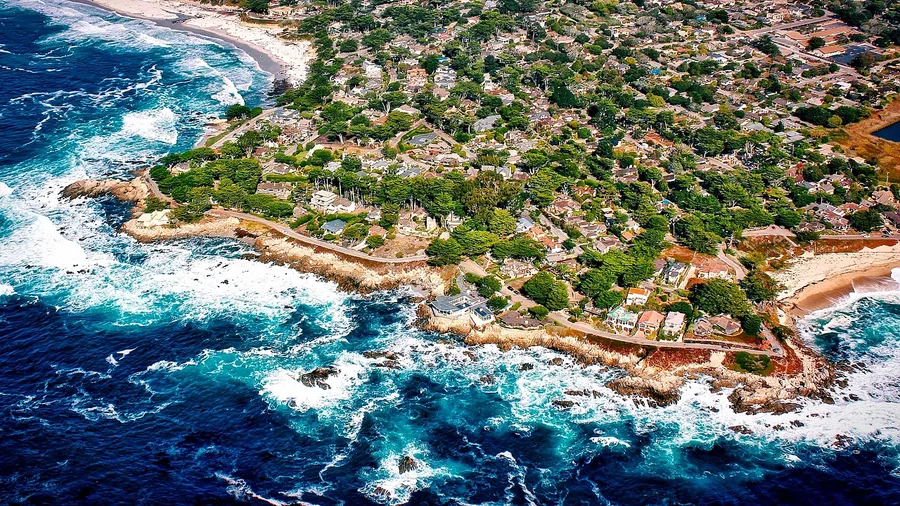
If you want a storybook street and sand in the same afternoon, spend the money here. Ocean Avenue runs about 1 mi and ends near Carmel Beach, which makes it the longest walk in this set, and it earns the splurge because the cottages are the draw, not the stores inside them. Cottage courtyards and facades out of a fairy tale line the frontage the entire mile, so the look is spread along the street rather than saved up for one photogenic block. Where a shorter street hands you a harbor and turns you around, this one keeps giving for the full stretch, then dumps you at the ocean.
Go September through November, when the crowds thin. Budget the full 30-60 minutes for the walk plus beach time, since 1 mi each way is an afternoon, not a pit stop. Expect coffee at $4-$6 and lunch at $15-$25, and if you stay, inn rooms run $180-$320 a night. Plan it as an afternoon's spend and it holds up fine; try to fold it into a bigger itinerary and the mile will eat the day.
The theme-town visit, two ways
6. Leavenworth, Washington: Bavarian Front Street
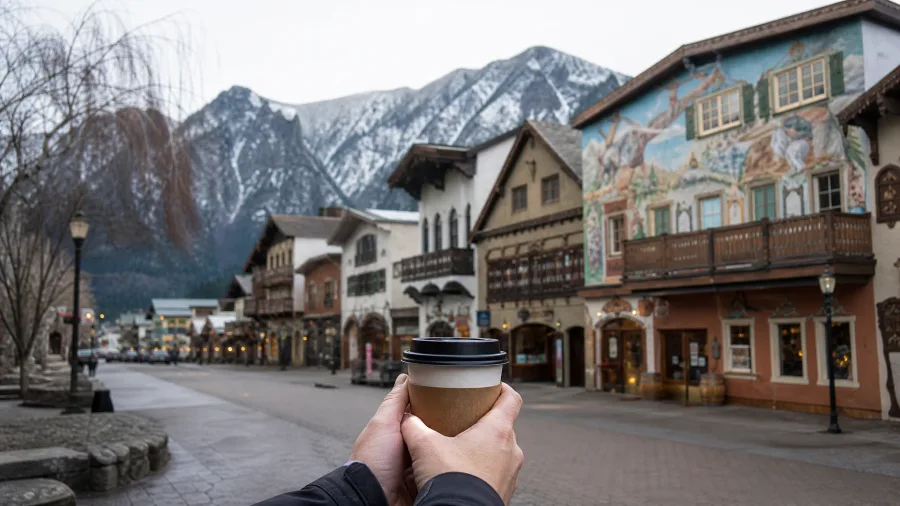
Carmel's storybook grew up organically from the coast; Leavenworth's Bavarian front was painted on, four blocks of it under the Cascades. It costs you less effort than the coastal mile and delivers a stranger sight: a walkable 30 minutes of shutters, gables and mural work, with the theme itself as the anchor, no museum or harbor needed. The trade for that easy length is a street that is frankly a set, and you decide going in whether an invented Main Street still counts.
It only truly earns the stop in the evening, and the specific evening is December, when the lights come on and the four blocks turn into something the daytime does not show. That window draws crowds and needs booking ahead; inn rooms run $180-$320 a night if you stay for the lights. Come in September instead and you get fall color on the slopes without the holiday crush, but you also get the facades with the switch off.
7. Saugatuck, Michigan: Butler Street To The Harbor
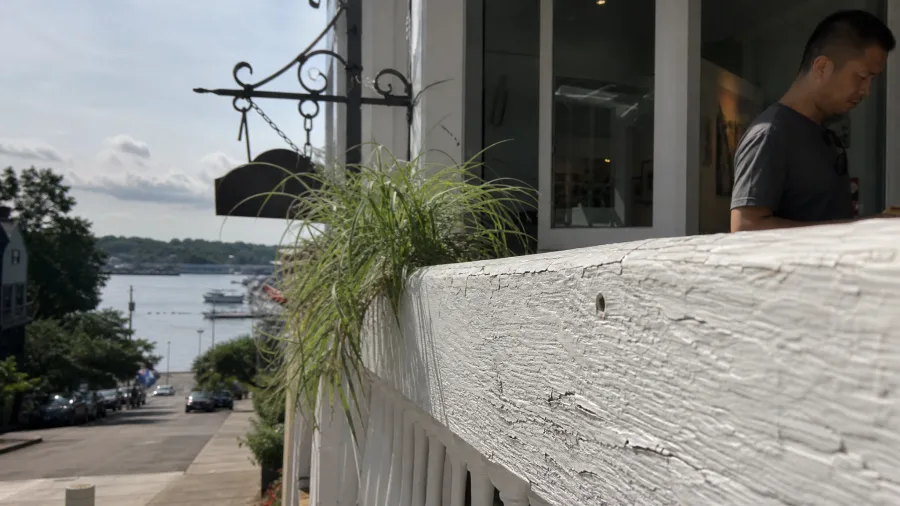
Butler Street is a half-mile art colony that happens to end at a working harbor. Saugatuck holds about 900 people, and the street runs from the first gallery cluster down the slope to the Kalamazoo River, where the docks and the boat traffic take over.
The galleries came first and the porches followed, which is why the storefronts still look like somebody's summer house with a sign hung on the railing. Dune rides and the Lake Michigan beaches sit a short drive away, so treat the walk as one piece of an art-and-beach weekend, not a photo stop on the way somewhere else. That is the honest scale of the detour here: June through September, a half-mile browse, then sand. Summer parking tightens by mid-morning, so start at the municipal lot on the downtown edge, $0-$10 a day, and walk in rather than circling the blocks.
8. New Hope, Pennsylvania: Main Street On The River
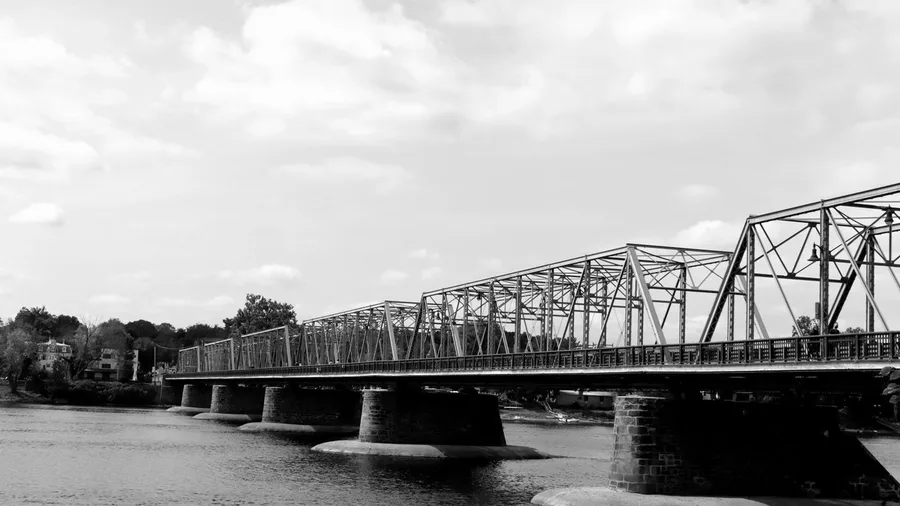
You hear the river before you see it: a low rush past the backs of the buildings, audible from the sidewalk on a quiet morning. Main Street runs about 0.7 mi alongside the Delaware, colonial storefronts stacked on the land side and the water doing the work on the other.
Residents walk it early, before the day traffic arrives, and that is the local move: parked and moving by 10 a.m., when the street and the river start pulling cars in from the highway. The anchors are the Bucks County Playhouse and the New Hope-Lambertville bridge, which puts New Jersey a five-minute walk across the water.
October is the season that fills it, and fall color on the far bank turns the whole walk into the view. Coffee runs $4-$6 and lunch $15-$25, both easy to fit into the morning plan. Where a summer colony hands you a beach, this one hands you a deadline: beat 10 a.m. or spend the afternoon looking for a space.
💡 Tip: Walk the bridge to Lambertville for a second Main Street without moving the car.
The prettiest street is not always the right detour
Worth the drive
- A 0.3–0.5-mile street with a real anchor — harbor, museum, courthouse, Hall of Fame
- A season that matches your trip: foliage, lights, or shoulder-week weather
- Parking at the downtown edge for $0–$10 a day, so you walk, not circle
- A half-day budget: $25–$35 for coffee and lunch, walking time under an hour
Skip or postpone
- A one-mile street when you only have 90 minutes before the next stop
- Hill towns in flat sandals — Galena, Eureka Springs and Jim Thorpe all climb
- Three hours of desert driving without a booked room in Marfa
- December Leavenworth without a reservation and a parking plan
9. Mendocino, California: Headlands At The End
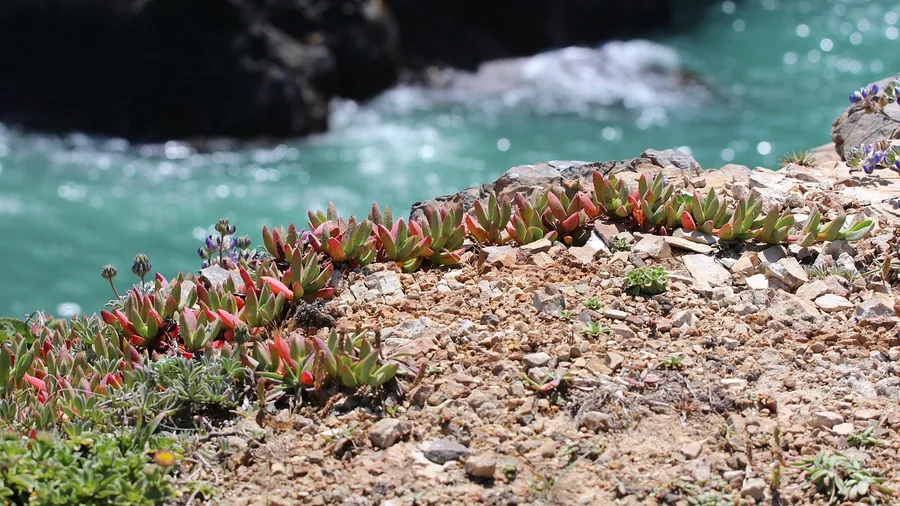
Mendocino asks less of you than almost any coastal town on this list: 0.3 mi of street, no hill, and the ocean waiting at the end without a ticket booth. New Hope's river is a wall you walk beside; here the water logic goes one step further and Main Street simply runs out at a bluff.
Weathered redwood storefronts and water towers give the village its coastal-set look, but the headlands are the reason to come. Mendocino Headlands State Park picks up where the pavement stops, and the trail along the cliffs turns a village stroll into a short hike. May through October is the window, though fog can sit on the point for hours and erase the view entirely.
The plan is a coastal walk with a village lunch, not a shopping day. Budget $15-$25 for that lunch and treat the ocean as the free finale. The crowds here stay modest compared to the famous coastal stops further south, which is precisely the trade: less to buy, more to look at, and an afternoon that ends at the edge of the continent.
💡 Tip: Check the fog before you commit; a 0.3-mile street with a whiteout bluff is a short afternoon.
Mendocino Detour — At a Glance
🚶 Walk time
20–30 min
🌊 Anchor
Headlands bluff
📅 Best months
May–October
💵 Half-day cost
$15–$25 lunch
🅿️ Parking
Downtown edge, $0–$10
The catch
Fog can close the bluff view any month; go early and check the sky before you drive.
10. Eureka Springs, Arkansas: Victorian Spring Street
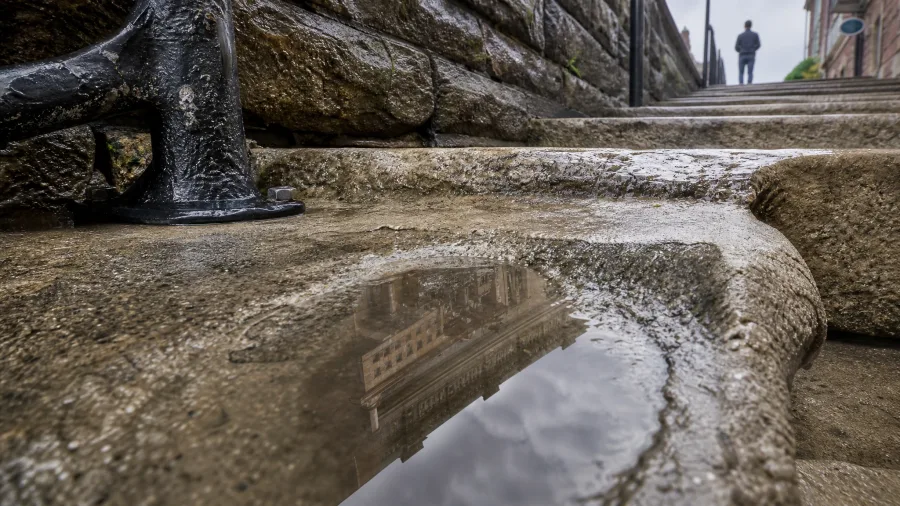
Five blocks, no entry fee, and a staircase in the middle of the walk. Eureka Springs gives you a Victorian streetscape that costs nothing to see, and charges you in calves instead of dollars. Population is around 2,100, and the historic district is set into an Ozark hollow, so Spring Street does not run so much as switch back.
The buildings are the show: ornate Victorian storefronts stacked onto a slope, retaining walls holding the blocks up, and springs worked into the plan of the district. April through October is the window. Wear shoes with a grip, because this is a hill route, not a promenade, and the side streets climb harder than the main one in places.
Budget more time than five blocks suggests. On flat ground that is fifteen minutes; here the stairs and the grade turn it into a proper 60 to 90 minute wander once you add the side streets and stop for the springs. There is no admission and no anchor charging a ticket at the end. The whole point is the architecture, and it is free.
Lunch runs $15 to $25 and coffee $4 to $6, so the day is cheap if you skip the paid attractions. Park anywhere at the downtown edge and walk in, because a car is a liability on these grades. The catch: anyone with a stroller, a cane or a bad knee should know now that the stairs do not go away, and one of the blocks can only be described as a workout.
What you get back for the drive is a hillside of Victorian facades that no flat Main Street can replicate. Hill-walkers will love it. Everyone else should read the grade before they commit.
Three ways to waste the detour
11. Jim Thorpe, Pennsylvania: Broadway In A Gorge
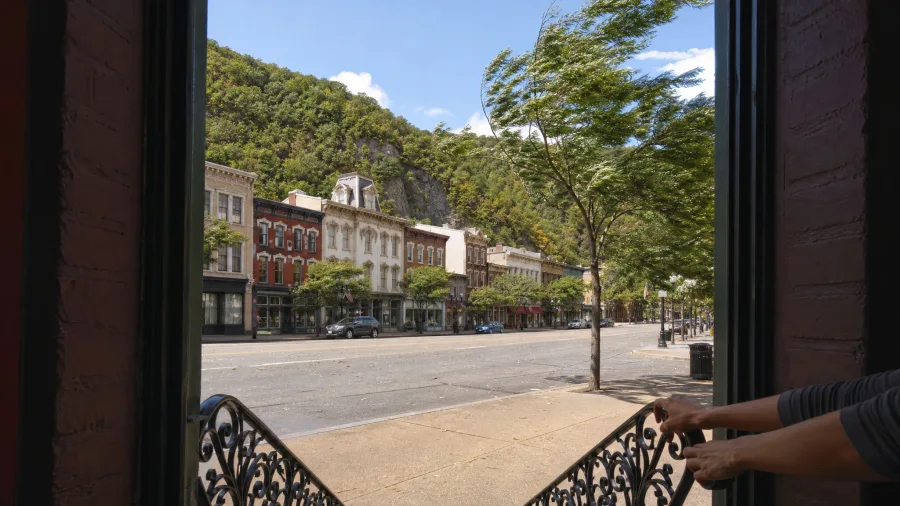
You hear a train whistle first, echoing off the stone walls, and then the gorge narrows and the light drops, and Broadway opens in front of you under a green shadow of forested mountain. This is a four-block Victorian street in the Lehigh River gorge, population about 4,800, and the facades that line it are the kind you walk slowly in front of on purpose. The second anchor is the Lehigh Gorge Scenic Railway, and the honest likelihood of seeing something worth the drive is high in fall, when the leaf trains run and the river runs cold below the street.
Fall is the season to plan around, and the leaf trains fill, so book ahead if the ride is the reason. The gorge backdrop is the reason the four blocks read bigger than they are. It is the same Victorian streetscape you find in most old coal towns, but here the setting does the work and the train is the second draw. If you only want the storefronts, a flat town does it cheaper. Come for the gorge, the train and the color, and two blocks of warm brick under a cold mountain sky will do the rest.
12. Cooperstown, New York: Main Street To The Hall

For a fan, it is a full day, and the town around it earns the rest: about 1,800 people, a half-mile of brick Main Street under awnings, and the Hall sitting at the far end of it. You walk toward the anchor the whole way, which is the cleanest version of the promise this list keeps making.
Walk the street first, because half a mile of awnings and brick takes 30 to 60 minutes and sets up the museum. Then the Hall takes the afternoon, and Otsego Lake is a short drive for a second walk when your eyes need a break from the exhibits. May through September is the window. Induction weekend packs the town and books it out, so check the calendar before you pick a date, and a $180 to $320 room is worth it only if the museum is the reason you came.
Frequently Asked Questions
Which of these towns can I walk in under an hour?
St. Michaels (0.3 mi), Mendocino (0.3 mi) and Cooperstown (0.5 mi) each walk end to end in 30 to 45 minutes. Galena and Eureka Springs are shorter in blocks but climb, so budget more time than the length suggests.
Where should I park on a tiny-town Main Street?
Municipal lots at the downtown edge run $0 to $10 a day and save you circling the core. In New Hope arrive before 10 a.m., and in Leavenworth during December plan the lot before the lights.
What does a half-day on one of these streets cost?
Coffee $4 to $6 and lunch $15 to $25 cover the walk without an inn room. Add $180 to $320 a night only if you are staying for foliage, holiday lights or a train.
Is Marfa's Main Street pretty in the traditional sense?
No — the anchor is the Presidio County Courthouse square, and the street is sparse and high-desert. Pretty here means space and edge, and the detour is a three-hour drive from El Paso.
Which towns are worth a full day rather than a stop?
Galena rewards a full day of hill walking among six blocks of brick. Cooperstown carries a full day if the Hall of Fame is the reason, and Jim Thorpe pairs the four-block walk with a rail excursion.
When is foliage season for Stockbridge and New Hope?
Stockbridge peaks late September to mid-October. New Hope is best in October, and Jim Thorpe fills on fall weekends — book the train before you plan the drive.
Three Towns Without a Car, Two for the Leaf Drive, One to Book First
Three towns work as a weekend without a car: St. Michaels, where Talbot Street is flat and ends at the maritime museum; Carmel-by-the-Sea, where Ocean Avenue runs a mile to the sand; Cooperstown, where a half-mile of brick ends at the Hall of Fame. Park once at a downtown lot and walk.
For a leaf drive, take Stockbridge between late September and mid-October and plan on the Red Lion Inn porch, or ride the fall trains through the Lehigh Gorge at Jim Thorpe.
If the classic shot is the goal, book Stockbridge first. The white steeple and elms over 0.4 miles of Main Street are real, and the inn fills before the color peaks. Then match the street to the afternoon you have, not to the best photo.
Pick your town, then check the season
Scroll back to the at-a-glance table, choose the walk length and season that fit your weekend, and call ahead on hours before you drive. One town, one afternoon, is enough.