Which domestic beach actually justifies the flight? Ask it that way and the answer narrows fast.
You have a week, a passport that is expired, lost, or six weeks from arriving, and a mental image of water the color of a screensaver. Domestic does not mean Caribbean, though. The color is real at twelve American sands, and each one carries a specific catch: about $5 entry at Trunk Bay, a Culebra ferry that sells out for Flamenco, no restrooms at Lanikai, $5-an-hour garage parking at Clearwater.
The trip works when the catch is one you can accept. So the list prices every catch in money, timing and services, and lets you choose the week instead of hoping for it.
By the end you can match a trip type, toddlers or snorkelers or city-plus-beach, to a named beach and know the single booking to make first.
Quick Tips Before You Start
Book the scarce piece first
Ferry tickets, park campsites and state park entry are the things that sell out; the flight is the easy part.
Pack shade, not hope
Several beaches on this list have one kiosk and zero rentals. Umbrella, water and cash travel in.
Check the daily water report
Winter swell can shut a cove and red tide can shut an entire Gulf day. Read it the night before.
Arrive before ten
Hapuna, Clearwater and Bowman's all fill their lots by mid-morning. Early is the whole plan.
Confirm ID rules
US territories are passport-free for citizens, but Real ID and airline rules change. Check with the airline first.
1. Trunk Bay, St. John: The Snorkel Trail
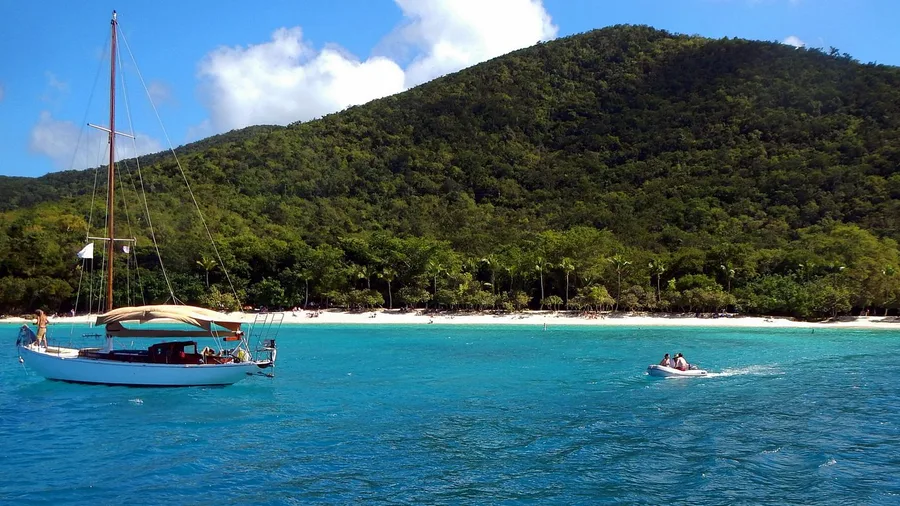
Trunk Bay is the brochure photo, and it is a national park beach, which is the first thing to know.
The 650-foot crescent of white sand sits inside Virgin Islands National Park, and the reason it earns the comparison is the marked snorkel trail running 30 to 60 feet offshore, where you swim out over coral and fish without needing a boat or a guide. Entrance runs about $5 per person. Showers, restrooms and a snack stand are there; chair rentals are not, so you carry your own or sit on sand. The water is calmest December through April, and that is the window to aim for.
The crowd has a clock, and it is the cruise ships. Trail traffic spikes on ship mornings, so before 9 a.m. or after 3 p.m. is the workable slot. This is a US territory, so US citizens travel here without a passport on this route, but confirm the current ID rules with your airline or the official government source before booking, since that detail changes. The deal is plain: you get the purest Caribbean look on this list for the price of a few dollars and an early start, and if you will set the alarm, it is a good trade.
💡 Tip: Bring your own mask. Rentals on St. John are limited and the ones on the beach are gone by ten.
| Beach | Sand and water | Cost on the sand | Best months |
|---|---|---|---|
| Trunk Bay, St. John | 650-ft white crescent, marked snorkel trail | ~$5 per person park entry | Dec–Apr |
| Flamenco, Culebra | 1-mile powder crescent, ~80°F | Ferry or 30-min flight, no fee on sand | Book ferry days ahead |
| Lanikai, Oahu | Turquoise, 75–80°F, calm in summer | Free, street parking only | Summer |
| Hapuna, Big Island | Half-mile white sand, lifeguards, 75–80°F | ~$5–$10 parking | Summer |
| Poipu, Kauai | Shallow sandbar, lifeguarded | Free | Check swell daily |
| Ka'anapali, Maui | 3 miles of sand, 75–80°F | Paid parking | Year-round |
| Siesta Key, FL | Quartz sand that stays cool, 80–86°F summer | Free parking | Avoid storm afternoons |
| Clearwater, FL | Shallow and calm, ~1,000 ft wide | ~$5/hr garage parking | Before 10 a.m. |
| Bahia Honda, FL | Clearest Keys shallows | ~$4.50 vehicle + $0.50 per person | Feb–May |
| Gulf Islands, FL | Emerald shallows, no buildings | $25 per vehicle, 7 days | Watch closures |
| Bowman's Beach, FL | Shells and sunset, no lifeguards | ~$5 vehicle + causeway toll | Lot fills by 9 a.m. |
| Coronado, San Diego | 1.5 miles of sand, 65–70°F water | Free entry, $1–$2/hr parking | Sep–Oct |
2. Flamenco Beach, Culebra: Powder Sand, No Shade
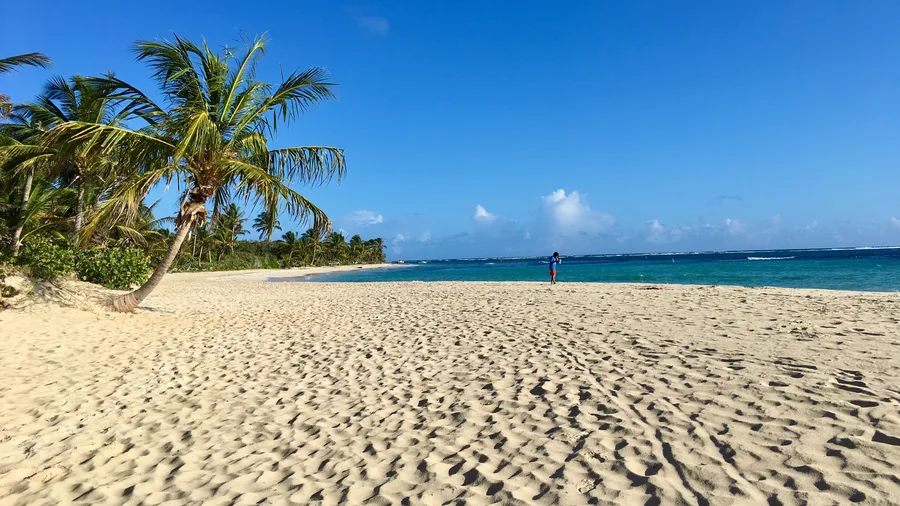
The heat lands first: at midday the sand reflects a glare so bright you squint, and there is nothing overhead but sky, because Flamenco has no trees, no shelter and one kiosk along the whole mile of it.
That mile is powder sand and that 80-degree water is the closest thing to the color without leaving the country, and it comes stripped down. You can arrive by a 25-minute ferry from Ceiba or a 30-minute flight. Swimmers get the shallow shelf and float for hours; snorkelers find less to look at and should plan elsewhere. Day-trippers live and die by ferry times, so high-season tickets sell out days ahead and you book before you book anything else. The practical list is an umbrella, water and cash. But the honest reservation is who it does not suit: anyone who cannot carry their own shade, and any parent counting on chairs or a shaded base, will be miserable by noon on a wide-open beach. Families who pack it all in can make it work; families who expect services should not.
The Numbers That Decide the Trip
Four figures worth knowing before you book anything
3. Lanikai Beach, Oahu: Turquoise Without the Resort Bill
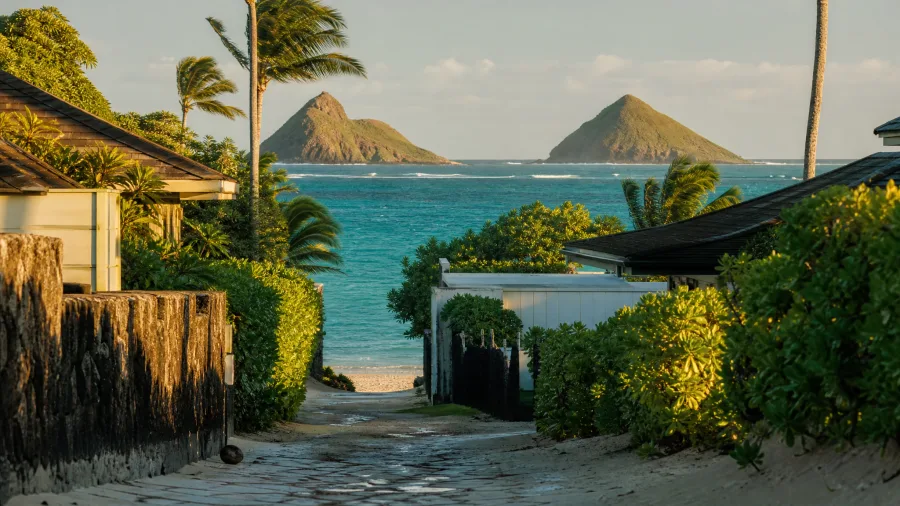
Before anything else: there are no restrooms and no lifeguards at Lanikai, so bring what you need and keep an eye on weak swimmers yourself.
The free turquoise here is the same water temperature as Hawaii's resort beaches, though, 75 to 80 degrees, reached through public right-of-way lanes between homes with no gate and no fee attached. The catch has simply moved from the ferry dock to the curb. Parking is street-only and neighborhood-restricted, and the practical window is before 8 a.m. or after 4 p.m., which is the local habit as much as a rule. Summer is calmest. Winter swell brings a shorebreak that is wrong for weak swimmers, so check the conditions before you commit.
The near-shore view toward the Mokulua islands is why residents come here instead of paying for the obvious waterfront, and kayak rentals nearby can put you out at those islands if you have the arms for it. It is a free beach for able swimmers who pack in every item they will need, and it rewards the early riser who claims the curb before the block fills.
💡 Tip: Park legally and walk. The residents' signs are enforced, and a ticket costs more than a week of parking elsewhere.
💡 PRO TIP
The afternoon window nobody uses
At Trunk Bay and Ka'anapali, the cruise and boat crowds clear by about 3 p.m. An hour later you get the same water with half the people, so swim twice and eat late.
4. Hapuna Beach, Big Island: The Lifeguarded Family Crescent
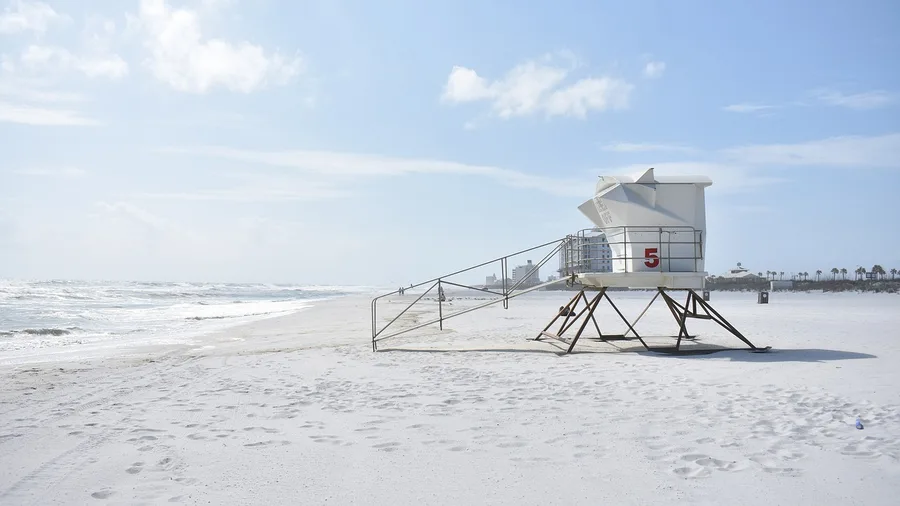
Hapuna Beach on the Big Island, because it is the rare Hawaii crescent where a lifeguard tower, restrooms and warm shallows sit in the same 50 metres of sand.
The beach runs about a half-mile along the Kohala Coast, white sand wide enough that a family can set up well back from the wash. Water holds 75-80°F year-round, which means nobody needs a wetsuit and the little ones stay in past the shiver point. Parking runs about $5-$10, the cheapest thing on the island after the airfare.
Summer is the forgiving season. The shorebreak stays gentle and the lifeguards are mostly watching, not waving people out. Winter changes the bargain: a bigger swell rolls a real shorebreak onto the sand, so the same beach that was calm in July can turn into a spot where only the strong swimmers go past the ankles. Ask the guard on arrival which side is holding.
The hotel next door does not own the sand. There is no gate, no wristband, no resort fee to swim, and you can walk out to the water from the public access without buying a towel. That is worth knowing if a resort quote scared you off the coast entirely.
The catch is timing. The lot fills by 10 a.m. and there is no overflow parking anywhere nearby, so early is not an optimization, it is the whole plan. Arrive at 8, claim a shady spot near the showers, and by the time the cars are circling you are already wet.
💡 Tip: Winter shorebreak is the real hazard here. Ask the lifeguard where the drop-off starts before you wade in.
Hapuna Beach — The Booking Numbers
🚗 Getting there
Kohala Coast, roughly 30-40 min north of Kona airport
🔁 Swap if full
Hapuna's lot has no overflow — Spencer Beach Park is the next public access south
📅 Season call
June-August for the gentlest shorebreak; Dec-Feb brings the swell
☂️ Shade
Thin. Bring your own umbrella; the trees are set back
🎒 Pack
Reef-safe sunscreen, towels, water — the nearest store is a drive
Skip it if
You want to sleep past 8. The 10 a.m. lot is not a suggestion, and there is no plan B on site.
5. Poipu Beach Park, Kauai: The Toddler Lagoon
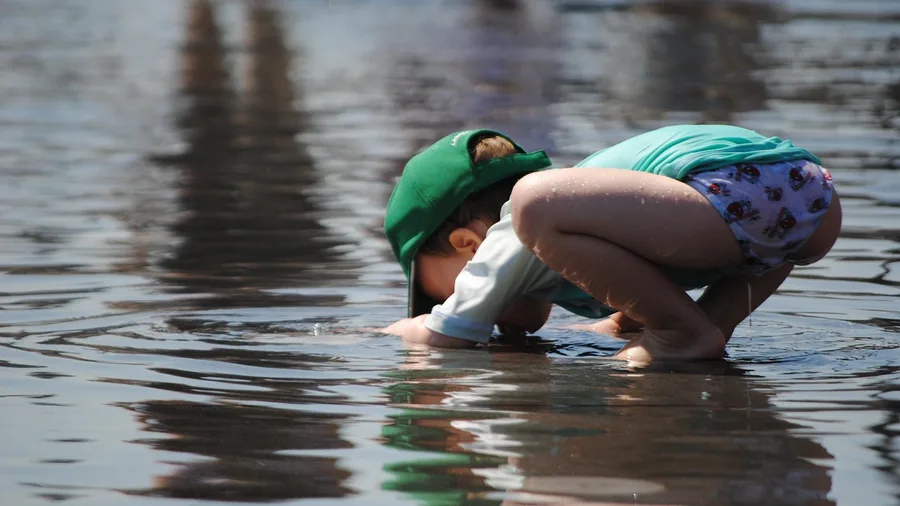
If you want the toddler-in-the-water problem actually solved, go to Poipu Beach Park on Kauai. A shallow sandbar and a sheltered cove hold waist-deep water where a three-year-old can paddle while you sit on the sand with both eyes on them.
Lifeguards work the cove, and the snorkelers are over on a separate rocky point, so the shallow end stays a shallow end. Monk seals sometimes haul out on the sand to sleep; posted signs and a wide berth are the rules that keep the encounter simple. Restrooms, showers, picnic tables and a snack stand across the road turn an hour into half a day.
Winter swell can shut the cove down, and the daily report is the thing to check before you commit the morning.
6. Ka'anapali Beach, Maui: The Walkable Resort Base
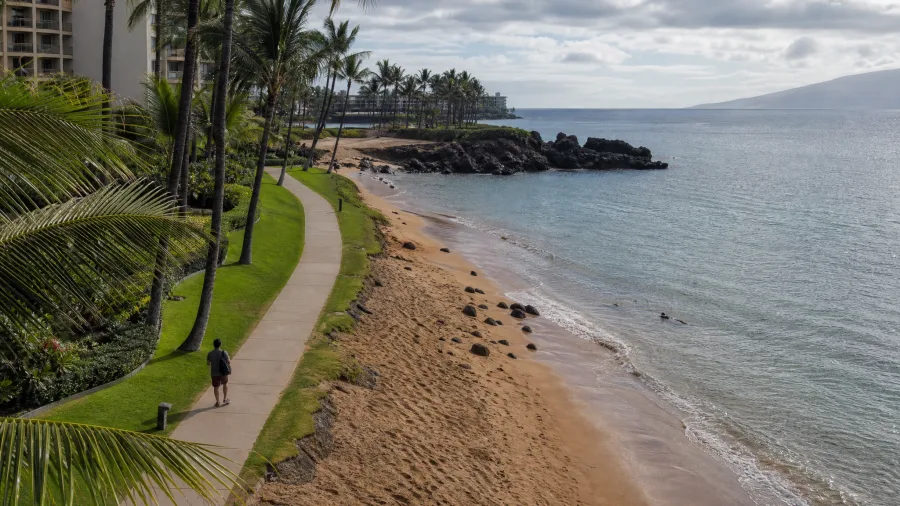
Ka'anapali costs more and crowds harder than a protected cove, but it answers a different question: where do you stay when you want gear, food and a snorkel without a car between them? Three miles of beach walk link the resorts, with public access paths between the buildings and paid parking at the ends. You can stay at a hotel or show up from a condo nine minutes up the road.
The water holds 75-80°F. Snorkel gear, paddleboards and catamaran sails rent on the sand, so nobody has to plan a rental for the morning. At the north end, Black Rock is the draw, and the honest way to do it is early, before the boats put divers and snorkelers in the same 30 feet of water.
The wildlife is real. Black Rock holds green sea turtles and a steady lineup of reef fish, and the turtles are usually out at first light. You will not see them from a lounger at noon in the middle of the boat traffic.
The trade-off is exact: resort density, paid parking and no empty stretch of sand after 10 a.m. Arrive after that and you are finding a patch between towels, not a quiet shore. The path past the hotels is not a beach for solitude, it is a base for a family day.
If you want rentals and a grilled lunch within walking distance of the water, this is the beach that delivers both. If you want to hear the waves and nothing else, drive on.
7. Siesta Key: Quartz Sand That Stays Cool
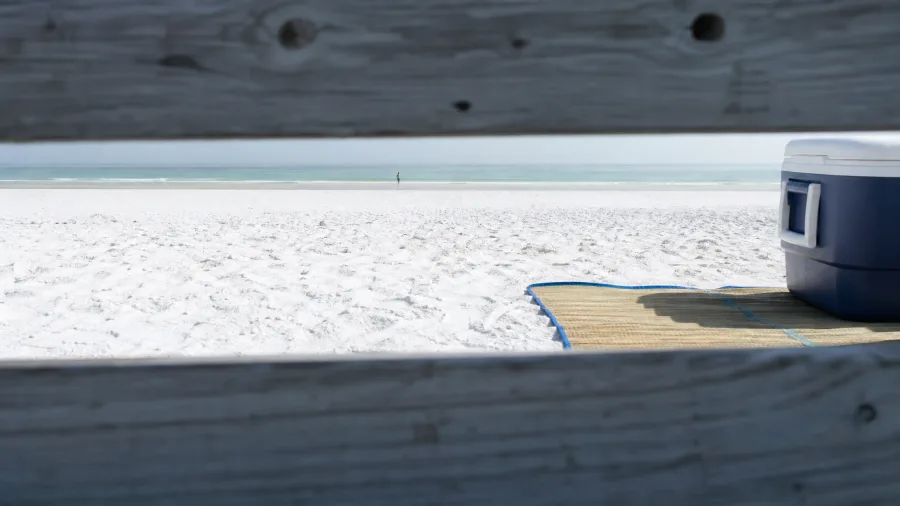
Zero dollars to park, zero dollars to get on the sand, and the one thing worth spending on here is a woven mat. Siesta Key's sand is nearly pure quartz, so it does not hold heat the way ordinary beach sand does, and by two in the afternoon you can walk it barefoot without the hop-and-dance. The trade is that the grains are fine and light: they stick to sunscreen, to wet legs, to the sandwich you set down. The mat is the practical layer, not a towel.
The public lot on the key is free and there are lifeguards and outdoor showers, and the village across the road handles lunch so you never have to carry a cooler. Most days the Gulf is bathtub-flat, and in summer it runs 80-86°F, which is warmer than most people's pools. The catch sits in the weather: summer afternoon storms roll in fast, and red tide can shut the whole thing down for a week. Check the county's water-quality postings the night before you commit a day, because no fee is a bargain only if the water is open.
8. Clearwater Beach: Calm Water and Full Services
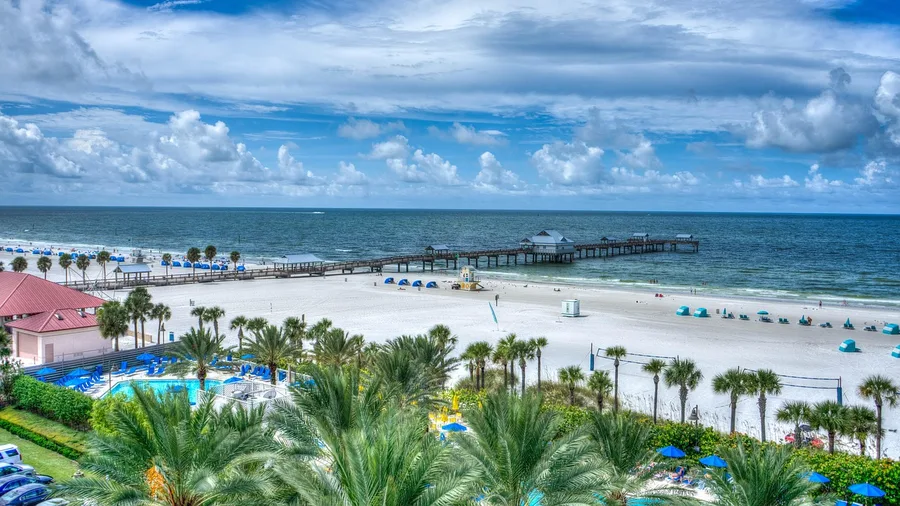
You walk out from the dune line and keep walking, and the sand goes on for a good 1,000 feet before your toes touch the water. That width is the whole pitch: room for the umbrella, the cooler, the kids' castle operation and the stranger's Frisbee that lands anyway. Lifeguards post up along it, a paved beach walk runs the length, and everything you forgot is for sale within a block.
What you do here is move. Swim in water shallow and calm enough that non-swimmers can stand and wade, then rent a paddleboard or a jet ski off the sand, or walk the beach walk to lunch and back without ever getting in the car. Here is the number to plan around: garage parking runs about $5 per hour, so a six-hour beach day is about $30 before you have bought a single thing. This is the busiest sand on this whole list.
Arrive before 10 a.m. or don't come at all, because by mid-morning the garages fill and the beach becomes a crowd you navigate rather than enjoy. The upside of all that development is a rain plan: walkable restaurants, a mini-golf course, and the Clearwater Marine Aquarium are all close enough to reach on foot or in a two-minute drive. The catch is simple – this is the zero-planning beach, and you pay for the convenience in parking fees and in other people.
⚠️ COMMON MISTAKE
The parking meter is the hidden beach fee
A $0 entry beach with $5-an-hour garage parking costs more than Trunk Bay's $5 park entry across a full day. Add the hourly rate up before you call a beach cheap.
9. Bahia Honda: The Keys' Clearest Shallows
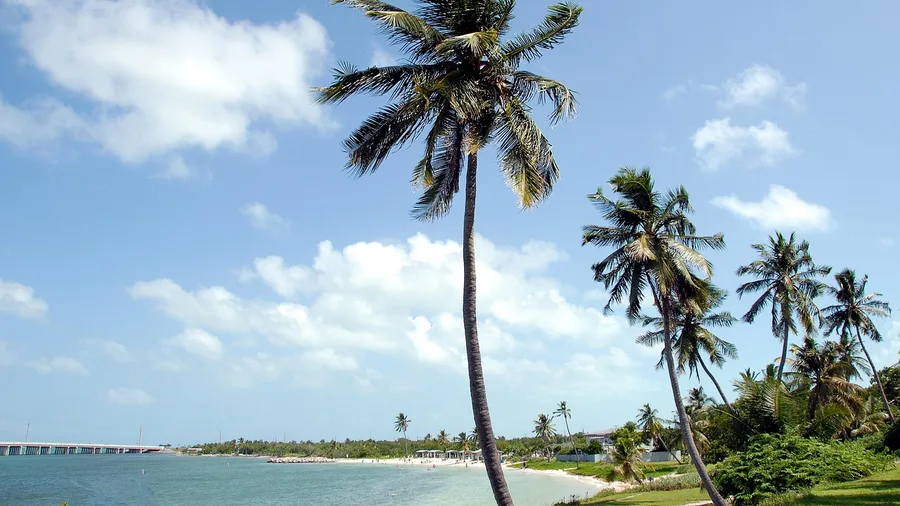
Know before you go that Bahia Honda has almost no shade and no real concession stand, which means the day lives or dies on what you carry in. Bring water, food and a sun cover of some kind, or plan to leave by noon with a sunburn. Pack for it properly and you get the clearest shallow water in the Keys without ever chartering a boat.
The entrance is about $4.50 per vehicle plus $0.50 per person, and at that price the snorkeling is the draw: the Atlantic side and the old bridge ruins give you structure and fish in water you can stand up in, while the bay side stays flat and calm for kids. Campsites here book months ahead if you want to stay. Shade is the scarce resource and there is nothing to buy once you are through the gate.
The real risk is seasonal. Summer heat turns the sand into a griddle by midday, and sargassum – the floating seaweed that piles up on Keys beaches in the warm months – can bury the shoreline and the smell with it. February through May is the cleanest window of the year. The catch for you: Bahia Honda delivers the Keys' clearest shallows at a low vehicle fee, and asks in return that you check the season, carry your own shade, and accept that the water can turn on you in summer.
💡 Tip: Sargassum arrives on the wind, not the calendar. Check a beach cam or call the park the morning you drive down.
10. Gulf Islands: White Sand Without the Umbrella Wall
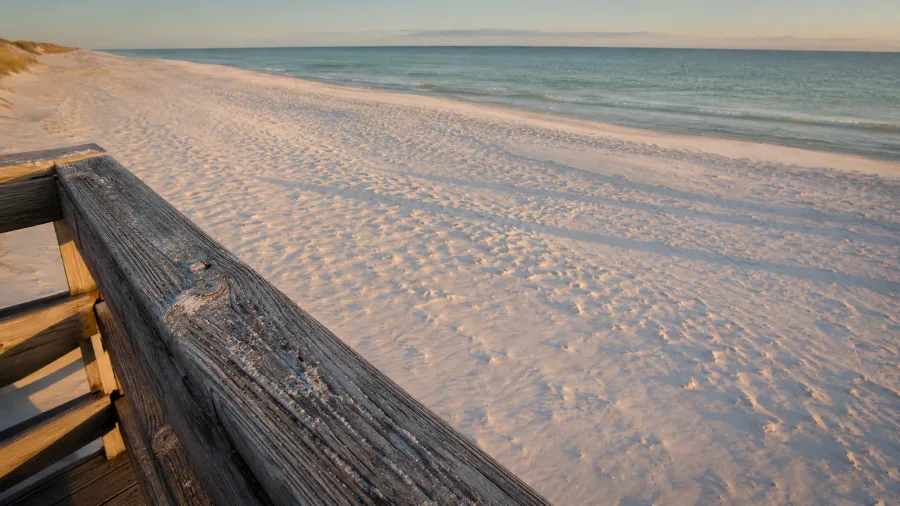
You drive less than half an hour past the Pensacola beach strip and the umbrella wall simply stops. The Florida district of Gulf Islands National Seashore charges $25 per vehicle for a 7-day pass, and what that money buys is absence: mile after mile of white sand with no buildings, no vendors, nothing to rent and nothing to buy. Bring shade, water and food or go without.
On a calm day the shallows run clear and green over the sand. Storms turn the Gulf into current, so pick an access with a posted lifeguard and swim in front of it rather than wherever the road happens to end. Before you commit, check the park's closure page, since nesting season can shut dunes and paths without warning. Stand on the open sand an hour before sunset, facing the water, when the light goes orange and the only footprints are yours.
11. Bowman's Beach, Captiva: Shells and Sunset
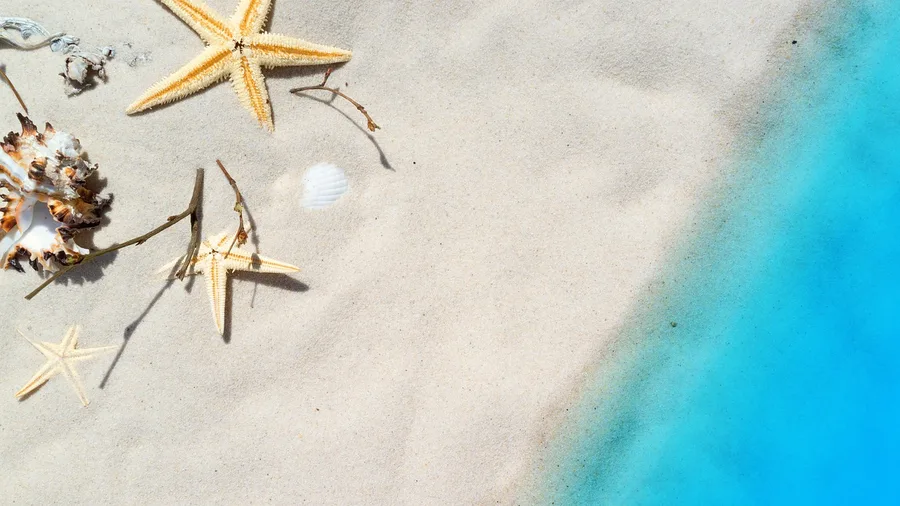
The shells arrive as a sound before you see them: a dry, shifting click underfoot as the Gulf washes over thousands of small fragments at once. Captiva's Bowman's Beach is a Lee County park, about $5 per vehicle plus the causeway toll each way, and for that you get restrooms, outdoor showers and picnic tables. The quiet comes from what it does not have.
Low tide after a front is the shelling window, when the wrack line is fresh and the best finds are still wet. Pack a mesh bag and water shoes; bare feet on broken shell is a short morning. The sand here is coarse enough that a mat beats a towel, and the sunset side faces west the whole length of the beach.
The catch is on the sign at the entrance: no lifeguards and no concessions. Weak swimmers and anyone counting on a rented umbrella or a hot lunch should pick a different sand. The lot fills by 9 a.m. most mornings, so the quiet is bought with an early alarm, not with money.
Two Ways to Do a Passport-Free Beach Week
Territory trip
- Trunk Bay or Flamenco water and color
- Ferry or inter-island flight to book first
- Fewer services, more self-sufficiency
- $300–$500 airfare from the East Coast
- Best December through April
Mainland trip
- Clearwater or Siesta Key convenience
- Car, garage parking, walkable food
- Lifeguards and restrooms standard
- $180–$350 airfare plus $120–$200 a night
- Watch summer storms and red tide
12. Coronado Beach, San Diego: The Fall Warm-Up
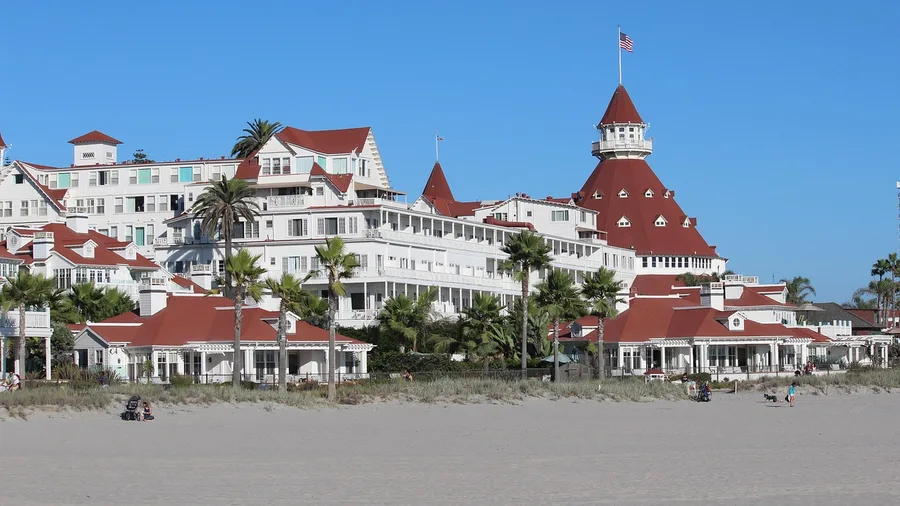
Coronado is a city beach with a city attached. It runs 1.5 miles along the sand behind the Hotel del Coronado, entry is free, and street and lot parking runs about $1 to $2 per hour, which for a beach of this quality is close to absurd.
The water is the trade. At 65-70°F it is a wetsuit or a fast plunge, not a long Caribbean float, and anyone expecting bathtub Gulf warmth will be disappointed. The Pacific here has real shorebreak too, so watch the flags and the lifeguard towers before you commit.
September and October are the window: the water is at its warmest and the morning fog that hides the point most of the summer finally burns off. That matters for the photograph, because the shot here is the hotel's red turrets behind the wide sand and the pier in the foreground. Walk south of the main lifeguard tower, turn back toward the hotel, and shoot in the last hour of light.
The food stop is a fish taco and a cold beer at one of the walkable places on Orange Avenue, ten minutes from the sand, usually under $20 all in. That is the point of Coronado: you can swim, shower, eat and see a city without moving the car.
It is the outlier of this list, and the one beach here where the trip is the destination as much as the water. If your week needs restaurants, a downtown and a beach in the same afternoon, this is the one that delivers all three.
Frequently Asked Questions
Do I really not need a passport for St. John or Puerto Rico?
Both are US territories, and US citizens travel to them without a passport on typical routes. Rules change, though, and airlines enforce them at check-in. Confirm with your airline and an official government source before you book, and carry a Real ID or state ID either way.
Which of these is closest to a real Caribbean beach?
Trunk Bay on St. John, and it is not close. The 650-foot white crescent and the marked snorkel trail thirty to sixty feet offshore give you the color and the fish in one stop. It costs about $5 per person to enter and rewards anyone who starts before 9 a.m.
Can I do Culebra's Flamenco Beach as a day trip?
Yes, but the ferry from Ceiba is the whole plan. High-season tickets sell out days ahead, so book before you book the flight. There is no shade, no chair rental and one kiosk on a one-mile crescent, so bring an umbrella and cash.
Where do I take a toddler who cannot swim?
Poipu Beach Park on Kauai, where a sheltered cove and a shallow sandbar sit in front of lifeguards. Winter swell can shut the cove, so check the daily report. On the mainland, Clearwater's shallow water and lifeguards work for non-swimmers too.
Is a Gulf beach cheaper than Hawaii?
Usually, yes. Gulf and Florida trips run about $180 to $350 round-trip from the Midwest plus $120 to $200 a night, against $250 to $450 in airfare to Hawaii from the West Coast. Watch the parking meter: Clearwater's garage runs about $5 an hour, which is $30 before lunch.
When should I go to avoid storms and weeds?
December through April for the territories and the Florida Keys, February through May for Bahia Honda's cleanest water, and September through October for San Diego. Gulf summers bring afternoon storms, and red tide and sargassum arrive on their own schedule, so read the county or park posting the day before.
The One Beach Day I Would Rebuild
Toddlers and non-swimmers: Poipu Beach Park on Kauai, for the shallow sandbar and the lifeguards. Snorkelers: Trunk Bay, for the marked trail 30 to 60 feet offshore and about $5 entry, or Bahia Honda for Atlantic shallows at roughly $4.50 per vehicle plus $0.50 per person. City plus beach: Coronado in September or October, when the water sits at 65 to 70 degrees and parking runs $1 to $2 an hour.
On airfare, be straight with yourself. Flamenco earns the flight on powder sand and 80-degree water, with Trunk Bay the snorkel-first alternative; Hawaii and the Florida picks are worth it for the trip built around the beach, not as stand-ins for the Caribbean.
The booking to make first is the scarce one. On Flamenco, that is the Culebra ferry, because high-season tickets sell out days ahead. The expired passport was never the obstacle. The catch is. Pick the one you can live with, book what runs out, and the screensaver water turns out to be domestic.
Book the scarce piece tonight
Decide your trip type from the last section, then check the ferry, the campsite or the September hotel while it still exists. Everything else can wait until morning.