A red headlamp clicks off, the last white dome light dies, and for ten seconds the hilltop is black – then the Milky Way comes up off the horizon like smoke. Most people never wait long enough to see it. They pack up at astronomical twilight, about 90 minutes after sunset, when the sky is still not fully dark. That is the moment a Milky Way trip is lost.
The core is a 10 p.m. to 3 a.m. appointment from April through September. By late October it hangs low and is gone before midnight, so the calendar decides as much as the map does.
So the question is not which dot on the map is darkest. It is which place has the drive, the bed, the price and the horizon glow that leave you awake and on site for that window. Below, ten destinations are pinned to drive times, overnight costs and the months the core is actually up.
By the end you will pick by situation: the easiest first trip, the darkest drive-to, the warmest winter option, the closest to a big city, the best guided telescope. Then you check the moon phase before you book.
Quick Tips Before You Start
Go red or go home
A red-filtered headlamp is not optional; one white phone screen resets everyone's night vision for 20 minutes.
Download the sky offline
Most of these parks have no signal, so pull a star app's offline charts before you leave pavement.
Pack for 30 degrees colder
Nights drop 25–40°F below the daytime high, so a 95°F afternoon can turn into a 55°F evening at 6,000 feet.
Bring something to sit on
A folding chair beats craning your neck from a car hood for three hours.
Book the new moon first
Check the moon phase before you book anything; a full moon erases the Milky Way entirely.
1. Cherry Springs State Park, Pennsylvania's Observing Field
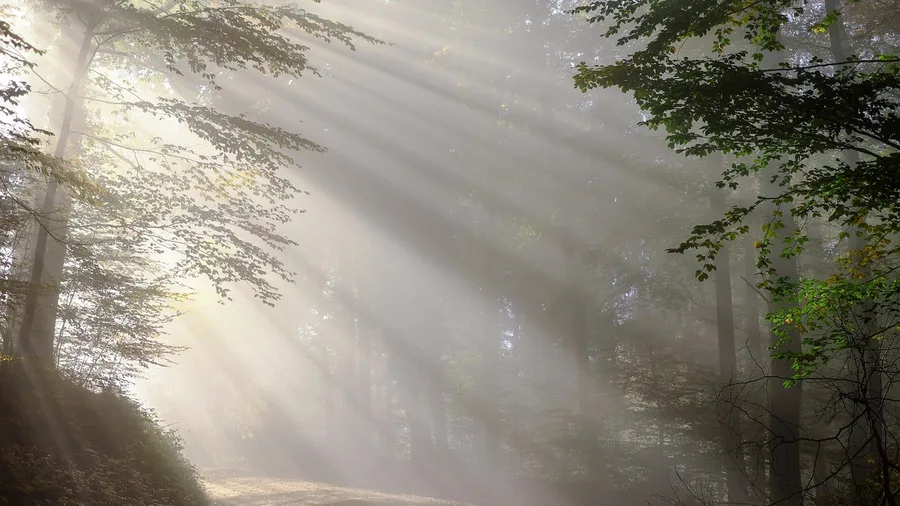
Yes – and the bill for it is roughly $15 to $25 a night on a bare hilltop in a Pennsylvania state forest, plus the fuel it takes to get there. New York is about five hours out, Philadelphia four and a half, Pittsburgh three and a half, and the final stretch is a two-lane forest road that you want to finish before the light goes, because arriving in the dark on an unfamiliar road with deer on the verges is how a good night starts badly.
The booking is where the money and the calendar bite. The red-light observing field is reserved for telescopes and people staying up all night, and the general camping field takes tents and campers – pick the observing field only if you can genuinely keep white light off until dawn, because one car door interior light at 1 a.m. undoes the field and your own dark adaptation with it. Summer new-moon weekends can be booked three to six months out; if the weekend is taken, shift to a midweek new-moon night, which is the real splurge here, paid in leave rather than dollars. East Coast humidity softens the horizon, so September and October beat July on transparency, and the core is still up in the early evening before late October drags it low. The gear that decides the night is cheap: a red-filtered headlamp, a star app that runs offline, a folding chair and a down layer for the 3 a.m. cold.
💡 Tip: East Coast humidity softens the low horizon. September and October beat July for transparency, and the core is still up in early evening before late October pulls it low.
| Destination | Region | Drive from nearest city | Where you sleep | Best months |
|---|---|---|---|---|
| Cherry Springs State Park | Pennsylvania | 3.5–5 hrs (Pittsburgh, Philadelphia, New York) | Rustic state forest campsite, $15–$25 | Sept–Oct, early core |
| Natural Bridges | Utah | ~40 min from Blanding | First-come campground, $15–$25 | Apr–Sept |
| Chaco Culture | New Mexico | 2.5 hrs from Farmington | No-water campground, $15–$25 | Apr–Sept |
| Great Basin | Nevada | 1 hr from Baker | High campground $15–$25 or Baker motel $90–$160 | Jun–Sept |
| Big Bend | Texas | 5 hrs from El Paso | Chisos Basin lodge $110–$220 or camping $15–$25 | Apr–May, then Sept |
| Death Valley | California | 2 hrs from Las Vegas | Furnace Creek $110–$220 or Beatty/Pahrump $90–$160 | Apr–Sept |
| Joshua Tree | California | 2.5 hrs from Los Angeles | Primitive site $15–$25 or gateway motel $90–$160 | Apr–May, Sept |
| Bryce Canyon | Utah | 4 hrs from Las Vegas | In-park lodge $110–$220 or gate motel $90–$160 | May–Sept |
| Headlands | Michigan | Walk from Mackinaw City | Mackinaw City motel $90–$160 | Late spring, early fall |
| Grand Canyon South Rim | Arizona | 1.5 hrs from Flagstaff | In-park $110–$220 or Tusayan $90–$160 | Apr–Sept |
2. Natural Bridges, the Original Dark Park
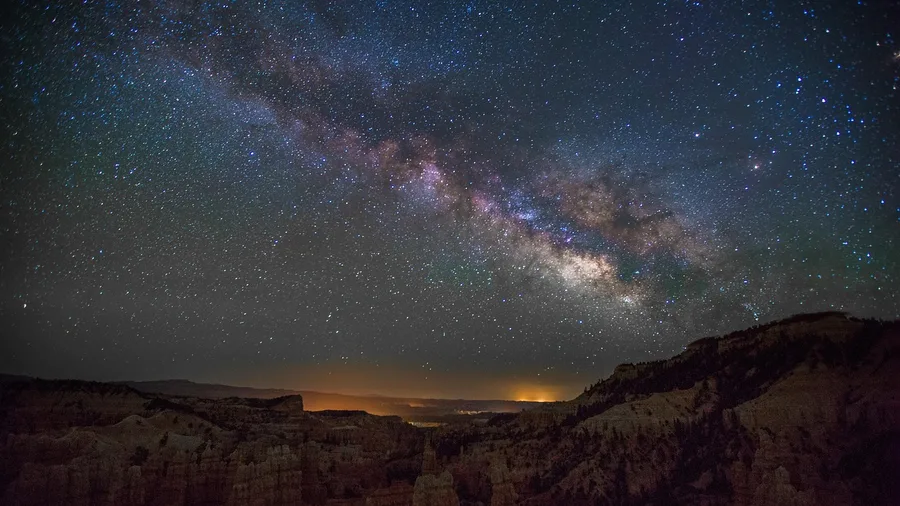
It costs less to sleep under than an eastern state forest, but it takes more of your day to reach – and it is the one that started the whole idea. Natural Bridges National Monument in Utah was the first place on earth handed a dark-sky designation, which makes it the origin rather than one more park with a star party. It also happens to be built over three stone bridges and a nine-mile one-way loop road that strings them together.
The practical magic here is that you do not have to walk anywhere to get a good frame. Owachomo Bridge Overlook is a car-accessible pullout where a stone span arcs up between you and the galactic core, and you can set a chair down, wait out the last of twilight and watch the dust lanes come through the arch. That is the shot, and it is the reason the drive is worth it: no hike in the dark, no headlamp on a rock ledge, no guessing where the footing is.
Sleeping here is a small first-come campground with no hookups, $15 to $25, which on a summer weekend means pulling in by mid-afternoon to claim a site and hauling your own water and food because nothing is sold inside the monument. Ranger-led telescope programs run on summer evenings, typically after dark; check the visitor-center schedule that afternoon and get in line early, since the queue for an eyepiece is the one crowd this park reliably produces. April through September is your core window.
For gas, groceries and a bed instead of a tent, Blanding is a 40-minute run each way, with gateway motels in the $90 to $160 range. Do the math before you commit: the town adds 80 minutes of driving to every night you sleep there, and the monument itself has no fuel, no food and no lodging. If the campground is full, that 40-minute dark road back is the real admission price.
🌌 How to Plan the Night Itself
Check the moon first
Pick a new-moon week before you book anything else.
Confirm the core window
Aim for April through September, with the core best placed 10 p.m. to 3 a.m.
Arrive before dark
Forest roads and dirt tracks are far worse after sunset.
Wait out astronomical twilight
Give the sky about 90 minutes past sunset before you judge it.
Go red and stay put
Filter every light and sit down with a chair and a down layer.
3. Chaco Culture, New Mexico's Dirt-Road Sky
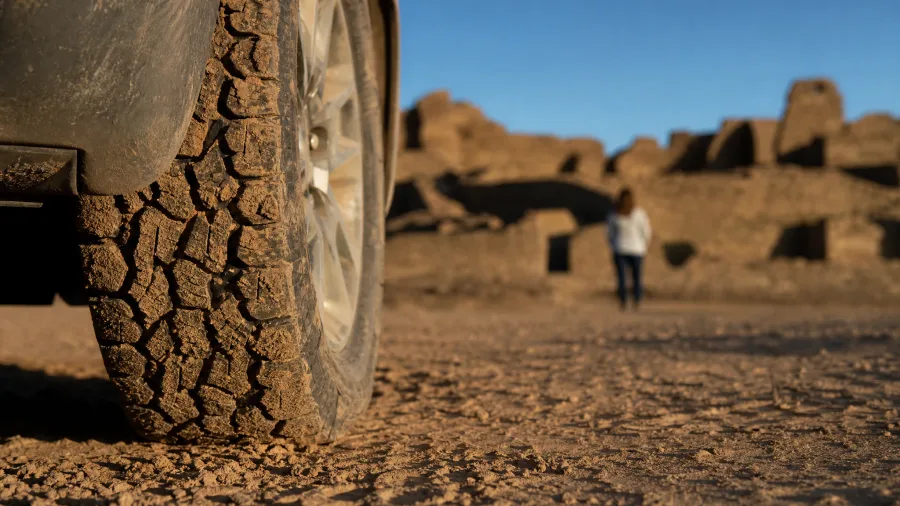
You step out of the car and the first thing you notice is the quiet – no engine, no cell signal, nothing but wind over sandstone and, once your eyes adjust, more stars than sky. That silence is the point and the price. The last 20 miles in come on washboard dirt after a 2.5-hour drive from Farmington, and when the clay is wet a normal car can bog down where the road dips. Check conditions before you leave the pavement, and leave an itinerary with someone, because there is no phone service out here to call for a tow.
Give the ruins an hour to do nothing. The thousand-year-old stone city sits there in the dark and the core's dust lanes come up over the walls, visible to the naked eye against the masonry – no telescope, no guide, just you, a folding chair and the sense that people were watching this same sky from this same plaza a thousand years ago. That is the slow night the drive buys. It is the opposite of a checklist stop: you sit, you wait, and the sky does the rest.
The campground has no water, no hookups and no fuel, $15 to $25, so bring every drop and every meal in from Farmington, including gas for the drive out. Spring and fall give the clearest Southwestern skies; a July or August monsoon afternoon usually clears by dark but sometimes does not, and the same dirt that bought you darker sky can strand you. April through September is the core window – the road is the filter, and it is the risk you are paying for the view.
💡 Tip: No water, no hookups, no fuel, no cell service in the park. Bring everything from Farmington, leave an itinerary, and watch the afternoon cloud in July and August.
⚠️ COMMON MISTAKE
The 90 Minutes Everyone Wastes
Sunset is not darkness. Astronomical twilight runs about 90 minutes past it, and the Milky Way does not show properly until then. Most first-timers pack up and drive back to the motel right as the sky is about to reward them.
4. Great Basin National Park, Nevada's High Dark Basin
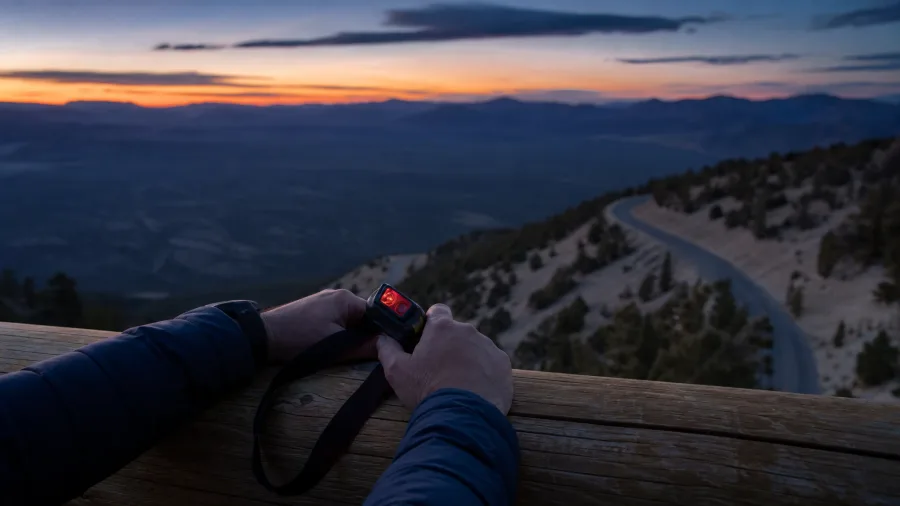
The cold hits first at 6,500 feet, and the air above Wheeler Peak is so dry and clear that the desert valleys below fade into a black floor with no town lights on the edge of it. You can get this sky with a paved road the whole way and a full tank of gas, and the last place to buy that gas is Baker, an hour down the two-lane from the park boundary – fill both gas and water there, because the basin has neither.
The campgrounds climb from roughly 6,500 up to 9,000 feet and cost about $15-$25 a night with no hookups; even on a summer day that hit 95°F, the night can fall to 55°F at the lower sites, and a down layer is the difference between watching the core cross the basin and shivering through a five-minute look. The visitor center runs a telescope setup and summer astronomy programs after dark in season, so check that schedule before you pick your night. Drive Wheeler Peak Scenic Drive to the high pullouts for the shot – no hiking, just altitude and a horizon unbroken by anything. Gateway motels in Baker run about $90-$160 if you skip the tent. The core sits well from April through September, but at this height the high country is only comfortable from June to September.
Ranked by What the Night Actually Costs You
Drive times measured from the nearest big city listed for each park.
5. Big Bend National Park, Texas's Remote Desert Sky
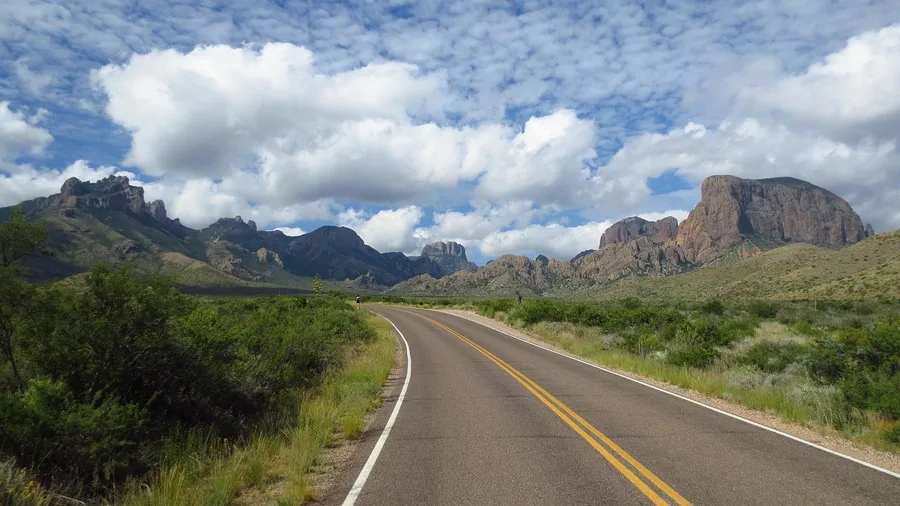
The headlights die a hundred miles before the nearest town glow reaches the Chisos, and that run from El Paso takes five hours. Gas and water are the reason to stop in Alpine or Marathon, because those are the last reliable pumps before the gate and the ranger station does not sell either. Chisos Basin gives you the night at either $15-$25 for a campsite or about $110-$220 for a room, and the elevation is what makes the sky worth the drive: the mountain rim widens the horizon in every direction and pulls the temperature down after a 100°F day.
Javelinas will walk into camp and go for your food bag, and a black bear moves through the basin now and then, so a real box, not a plastic bag, is the honest likelihood of seeing wildlife here – the desert itself is full of it and the core is not always lucky. November through April is the window for comfort, but the Milky Way is not a winter target; April and May are the bridge, when the air is still pleasant and the core is climbing.
In spring the core does not clear the Chisos until after midnight – around 2 to 3 a.m. in March and April, closer to midnight by May – so a nap before dinner or a deliberate late start is the whole strategy. The most remote park in the lower 48 buys you no light dome at all, and charges you five hours each way plus a night that spills past three.
Campsite or Gateway Motel?
Sleep in the park
- $15–$25 a night at nearly every park on this list
- You are already dark-adapted; no 40-minute drive at 1 a.m.
- Cold, early nights and no hookups at most sites
- New-moon weekends book out months ahead
Sleep in the gateway town
- $90–$160 motel rooms, usually available later
- 30–60 minutes of dark-road driving each way
- Hot shower and a real bed at 3 a.m.
- Town glow can follow you to the trailhead
6. Death Valley, the Largest Dark Sky Park
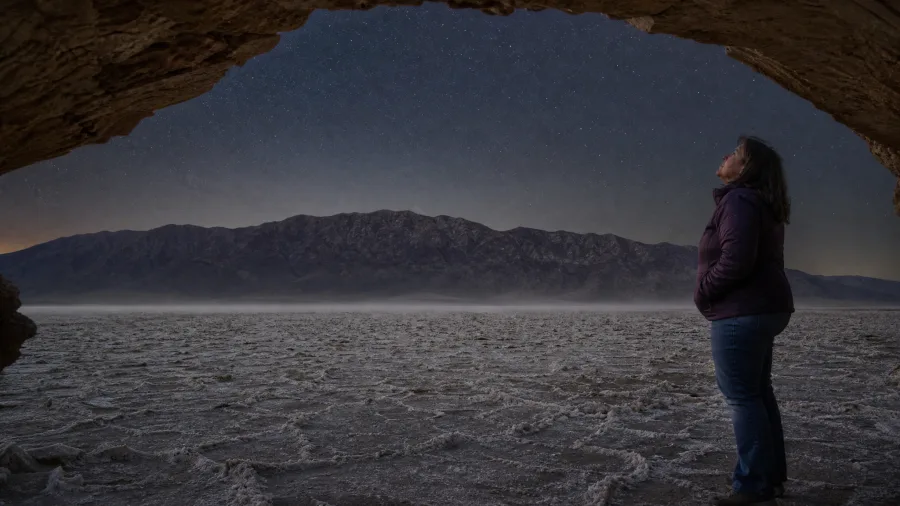
The call here is Badwater Basin for the cleanest horizon in the park, and it is a stop you can drive to and take in by car. You stand on the salt flats at 282 feet below sea level and the Panamints rise in front of you, and the core comes up over the ridge with nothing but white salt and dark sky between you and it. No foreground clutter, no trees, no town. Park at the lot and walk a few hundred yards onto the flat for the shot, and hold off until the sky is properly black rather than the pale blue of twilight.
Getting there is a two-hour run from Las Vegas to Furnace Creek, and the desert between the exits drops cell service, so start with a full tank and maps downloaded before you leave. Summer works as a night park – punishing days, mild nights, core overhead by 11 p.m. – while spring and fall are clearer and cooler to sleep in. In-park rooms run about $110-$220, and motels in Beatty or Pahrump come in around $90-$160 for a longer drive home at 2 a.m. Largest dark sky park in the country, and the cleanest four-night loop out of Las Vegas stacks a pair of new-moon nights here and a pair near Great Basin, about six hours between them. The core is April-September; the rest is the drive budget.
💡 Tip: Start with a full tank and download offline maps. Fuel and cell coverage both have gaps inside the park.
The Las Vegas Dark-Sky Loop — At a Glance
🌙 Viewing hours
10 p.m.–3 a.m.
🌇 Dark arrives
~90 min after sunset
🌡️ Night vs day
25–40°F colder
🏨 Gateway motel
$90–$160
📅 Core at its best
Spring, fall
⏰ By late October
Gone before midnight
The mistake that empties the lot
Most first-timers pack up at the end of twilight, about 90 minutes before the sky is actually black. Stay past 11 p.m. and bring a red headlamp.
7. Joshua Tree, the Closest Dark Sky to LA
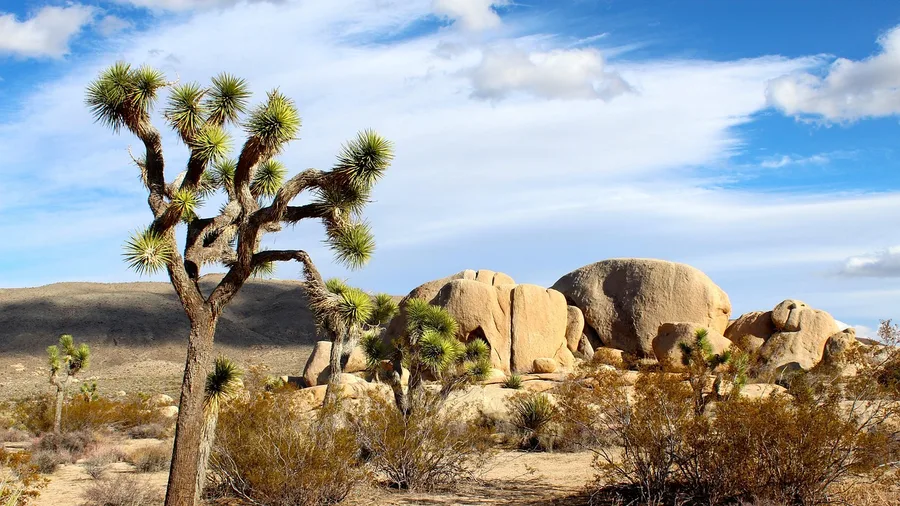
Joshua Tree is the dark-sky option that fits an LA weekend without a plane ticket. The drive is two and a half hours from the city, which makes it the closest real night sky to a metro area of millions, and that convenience comes with a visible price: from the western edges of the park you can see the glow of Palm Springs and the Inland Empire sitting on the horizon like a low ceiling of light. It is not a black sky. It is a dark-enough sky that fits a Saturday.
Where you sleep inside the park decides what you actually see. Cottonwood Campground sits near the south entrance, and the south gate opens onto Pinto Basin, where the eastern sky is darker and the core rises cleaner above the horizon; the campgrounds on the west side face the light dome and pay for it. Primitive sites run $15-$25 a night, and gateway motels in the towns around the park run $90-$160 if you would rather not sleep on the ground.
Book the new-moon weekend and you will be competing with everyone else who had the same idea; the sites go first and go early. A quiet weeknight is easier to get and just as dark, provided the moon is new. The core is up from April through September, and April, May and September are the months when the desert night is cool enough to stand outside in a jacket rather than a parka. If a horizon glow of any size bothers you, skip this and drive the extra hours to a darker park; if you want one easy night out of the city with the Milky Way overhead, it is good enough.
💡 Tip: If zero light dome is the goal, skip it and drive the extra hours to Death Valley or Great Basin. For a first easy night out of LA, it is good enough.
8. Bryce Canyon, Hoodoos and Ranger Telescopes
Do not show up at Bryce in July expecting to stand outside in what you wore all afternoon. The rim sits near 8,000 feet, and the temperature falls hard once the sun goes; a down layer is the difference between watching the telescope line and giving up on it. The cold is the price of the altitude, and the altitude is the price of the sky.
What you get for the cold is equipment you do not own. The park runs ranger telescope programs through the summer, and the June astronomy festival draws a crowd that books its slots in spring; sign up at the visitor center for that night's telescope line if you missed the festival registration. Looking through a real eyepiece at Saturn's rings or a globular cluster is a different thing from staring up with your eyes.
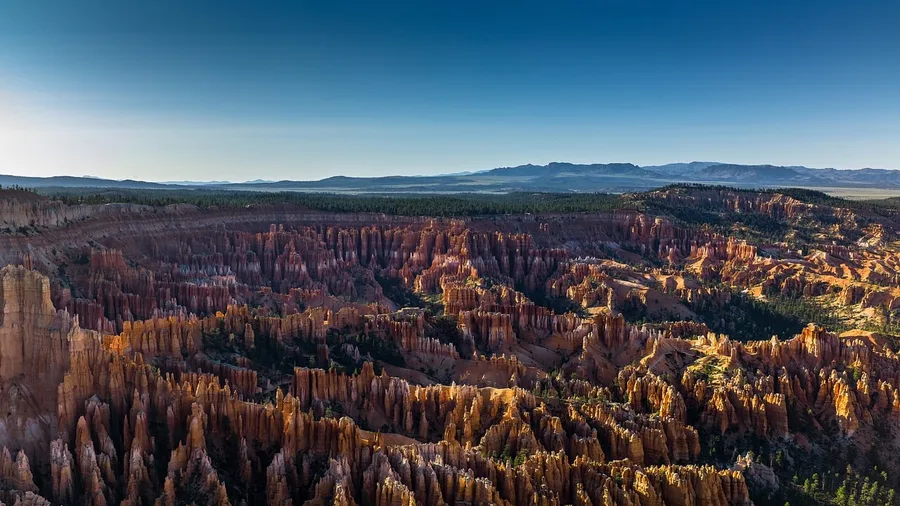
The viewpoints themselves are car-accessible and dark after twilight. Sunset Point and Sunrise Point put hoodoos between you and the core, so the rock silhouettes rise out of the basin and the Milky Way climbs above them; you do not need to hike to get the shot or the view.
Sleeping inside the park runs $110-$220 for in-park lodging, against $90-$160 for motels just outside the gate. The in-park room costs more, but it saves the dark drive back to a gateway town at one in the morning, and that drive is where a good night ends early.
The core is up April through September, but at this elevation May through September is the practical window; the guided telescope is the payoff for the cold you came prepared for.
9. Headlands Dark Sky Park on Lake Michigan
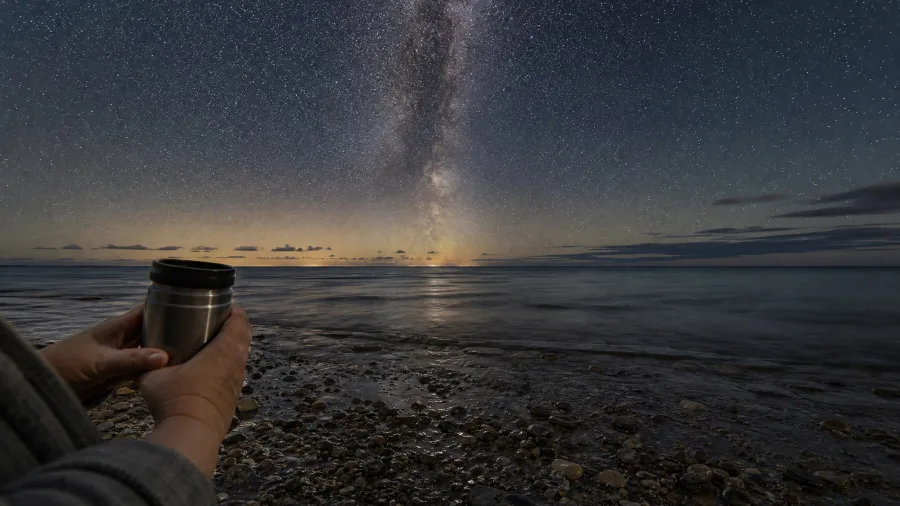
Headlands says yes. The park sits at the tip of Michigan's lower peninsula, two miles west of Mackinaw City, and you park in the main lot off Headlands Road and walk to the shoreline viewing area; there is no gate, no fee and no reservation. It is the rare dark-sky stop that costs nothing but the drive and a motel room.
The horizon is the reason it works. Lake Michigan opens west of you to the edge of the sky, so there is no tree line or ridge cutting the view, and the core comes up over open water rather than forest. The name is not marketing: this shore was set aside because the northern lights and the Milky Way both read against that flat, dark water.
Mild summer nights make it comfortable, but the core is late here, 11 p.m. to 3 a.m. in June and July, so a Mackinaw City motel at $90-$160 and a nap before midnight help. The core runs April through September; spring and fall put it up earlier and the nights are cooler, which is the better trade if you can pick your month. Aurora is a bonus on a strong geomagnetic night and never a guarantee, so check the forecast but do not build the trip around it. The cost is a motel and a late night, and the payoff is a water horizon that makes the sky look bigger than it is.
Score Your Shortlist Before You Book
10. Grand Canyon, the Famous Park After Dark
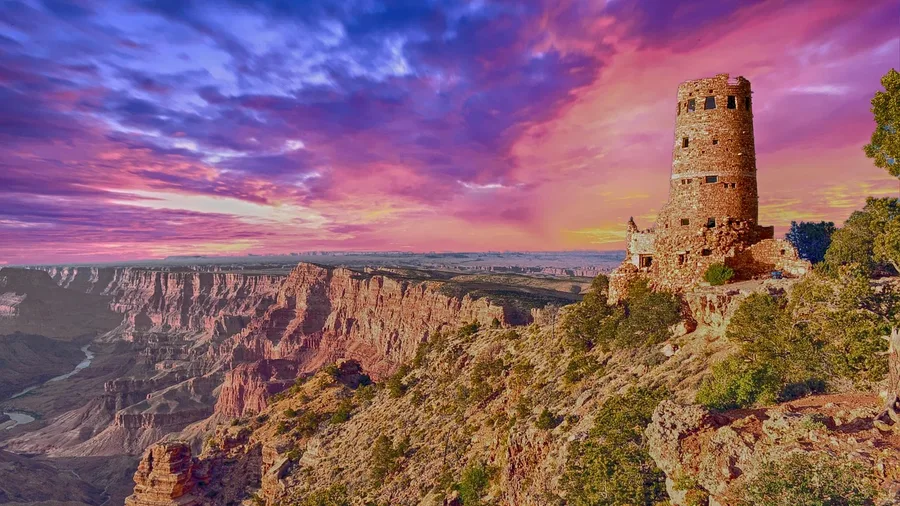
The most photographed canyon in America is also a dark-sky park, and the two facts fight each other after sundown.
The South Rim never closes, so any month you can drive in; the North Rim lives on borrowed time and shuts for the cold half of the year, which is why a winter stargazing trip is a South Rim trip by default. The lights that make the village workable also wash out the sky directly above the lodges, so you walk. Head west along the rim trail past the last lit building, or drive the pullouts toward Mather and Yavapai points, where there are no permits, no trailhead fees and no hike – you park, you set a chair at the rail, and the black of the canyon reads as a hole punched in the stars. From Flagstaff the drive is 90 minutes; from Las Vegas, closer to four and a half hours.
Spring and fall carry the clearest air. Summer storms build all afternoon and often quit after dark, but sometimes they hang on, and that is a gamble the core does not refund.
Rooms inside the park run about $110-$220, Tusayan just outside the gate about $90-$160, and staying in saves you the dark drive back. Come for the 10 p.m. to 3 a.m. stretch from April through September, when the core clears the far rim and the crowds thin to whoever was willing to stay up. The cost here is people and light; the payoff is the most familiar view in the country wearing a sky you have never seen.
Frequently Asked Questions
When can you actually see the Milky Way in the US?
The bright core is best placed roughly 10 p.m. to 3 a.m. from April through September. By late October it sits low and is gone before midnight, so a winter trip is a stargazing trip, not a Milky Way trip.
Do I need a telescope to see it?
No. At any of these ten parks the core and its dust lanes are naked-eye objects once the sky is fully dark, which is about 90 minutes past sunset. A telescope adds detail, not the experience.
Which is the easiest first dark-sky trip?
Cherry Springs in Pennsylvania if you are on the East Coast, or Joshua Tree if you are in Los Angeles. Both are under five hours from a major city and both have cheap camping close to the viewing area.
How much does a night in a dark-sky park cost?
Primitive park campgrounds typically run $15–$25 a night, in-park lodges and motels $110–$220, and gateway-town rooms 30–60 minutes out $90–$160. The bed choice matters more than the park choice to your total.
Is it safe to drive out of a park at 2 a.m.?
It is, with two rules: know the road in daylight first, and watch for wildlife on the drive out. Better still, sleep inside the park so the late drive disappears entirely.
Do I need to book ahead?
For new-moon weekends at Cherry Springs, book three to six months out. Natural Bridges campground is first-come, so arrive mid-afternoon on summer weekends. Always check current fees and hours at nps.gov before you go.
Pick Your Dark Sky by the Bed, the Drive and the Moon
Choose by situation, not by ranking. Cherry Springs is the easiest first dark-sky night from the East. Great Basin is the darkest sky a normal car can reach, one hour from Baker. Death Valley is the warm winter bet at low elevation, with the caveat that the core is an April-September target. Joshua Tree is the closest to a big city, and Bryce has the best guided telescope.
Before you book any of them, check the moon phase and build the trip around a new-moon week. A full moon erases the Milky Way, so the darkest park in America loses to a lit sky.
Then confirm current fees, hours and road conditions at nps.gov and darksky.org. The first-timer who leaves at astronomical twilight misses the 10 p.m. to 3 a.m. window entirely. Get the place, the price and the moon to fit, and the only job left is to stay up until the smoke comes off the horizon.
Check the Moon Before You Book
Open a moon-phase calendar right now, find the next new-moon week inside April through September, and hold those dates before you look at a single campsite.