The usual trip means a timed-entry lottery, a shuttle queue and a rim packed four rows deep. This list steers the other way, to gates where you can still turn in on impulse. National-park scenery does not require any of it: the rim view, the red rock and the waterfalls are landforms, and landforms do not stop at a boundary line. Dead Horse Point carries the Grand Canyon rim. Valley of Fire carries Zion's red stone. Silver Falls carries the Columbia River Gorge.
Each entry below hands you the look-alike, the exact trail or viewpoint, the drive time from a real gateway town, a $5-$20 day-use fee and the hour that beats the crowd. Choose by what you came to see, confirm the current fee on the state park page, then take one weekday-morning day trip.
The canyon rim, the hoodoo field, the bison herd and the slot are all on state-park trails, with short drives in and a start time you control. Pick one and set the alarm.
Quick Tips Before You Start
Arrive Before Nine
A weekday gate arrival before 9 a.m. beats most of the day's crowd at every park on this list.
Check the State Pass
An America the Beautiful pass does not cover state parks — buy the state's own day-use or annual pass.
Fuel at the Gateway
Fill up in Moab, Green River, Las Vegas, Rapid City, Ithaca or Bend before you head in; services thin out fast.
Carry More Water Than You Think
Desert and canyon parks here run dry and hot; two liters per person minimum for a short hike.
Time the Season
April-May and September-October for canyon and desert, June-September for Michigan and New York.
1. Dead Horse Point State Park, Utah
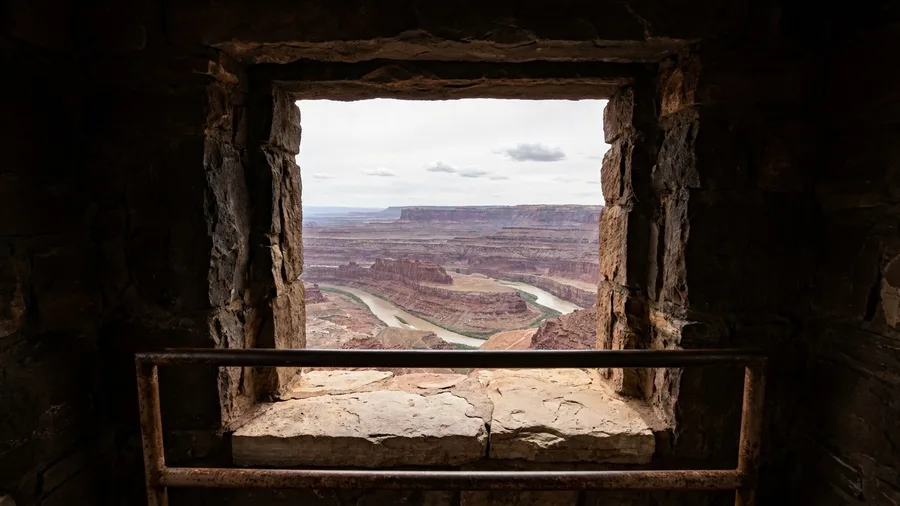
At sunrise the mesa edge is still cold enough that you keep your hands in your pockets, and the only sound is wind sliding off the rim into a canyon you can't see the bottom of yet. That is Dead Horse Point, on the East Rim and West Rim trails, where the gooseneck of the Colorado bends below you and the Canyonlands buttes stand up behind it like a second, further wall.
The Grand Canyon look-alike is the point: a mesa rim, a river cut, a horizon of layered rock, delivered with a handful of cars instead of a shuttle line. It is 32 minutes from Moab, the typical day-use fee runs $5-$20 per vehicle, and you should price that as the whole bargain, because a Grand Canyon-scale canyon hike costs you a timed plan and a full car park by eight. Come at sunrise or on a weekday morning, aim for April-May or September-October, and you get the overlook almost to yourself.
💡 Tip: Walk five minutes past the main overlook along the West Rim — the crowd thins out almost immediately.
| State park | Looks like | Signature trail or view | Drive time from gateway | Typical day-use fee |
|---|---|---|---|---|
| Dead Horse Point (UT) | Grand Canyon | East and West Rim trails | 32 min from Moab | $5-$20 per vehicle |
| Goblin Valley (UT) | Arches | Valley of the Goblins walk-in | 1 hr 10 min from Green River | $5-$20 per vehicle |
| Valley of Fire (NV) | Zion | Fire Wave, White Domes | 1 hr from Las Vegas | $5-$20 per vehicle |
| Custer (SD) | Badlands + Yellowstone | Needles Highway, Wildlife Loop | 40 min from Rapid City | $5-$20 per vehicle |
| Watkins Glen (NY) | Zion Narrows | Gorge Trail, Rainbow Falls | 30 min from Ithaca | $5-$20 per vehicle |
| Letchworth (NY) | Grand Canyon | Middle and Upper Falls viewpoints | 1 hr from Rochester | $5-$20 per vehicle |
| Porcupine Mountains (MI) | Acadia | Lake of the Clouds, Presque Isle River | 1 hr 30 min from Ironwood | $5-$20 per vehicle |
| Palo Duro Canyon (TX) | Grand Canyon | Lighthouse Trail, Canyon Rim Trail | 30 min from Amarillo | $5-$20 per vehicle |
| Caprock Canyons (TX) | Badlands | Upper Canyon, Haynes Ridge | 1 hr 40 min from Amarillo | $5-$20 per vehicle |
| Smith Rock (OR) | Yosemite | Misery Ridge, River Trail | 30 min from Bend | $5-$20 per vehicle |
| Silver Falls (OR) | Columbia River Gorge | Trail of Ten Falls | 1 hr from Salem | $5-$20 per vehicle |
| Anza-Borrego (CA) | Joshua Tree + Death Valley | Borrego Palm Canyon, the Slot | 1 hr 30 min from San Diego | $5-$20 per vehicle |
2. Goblin Valley State Park, Utah
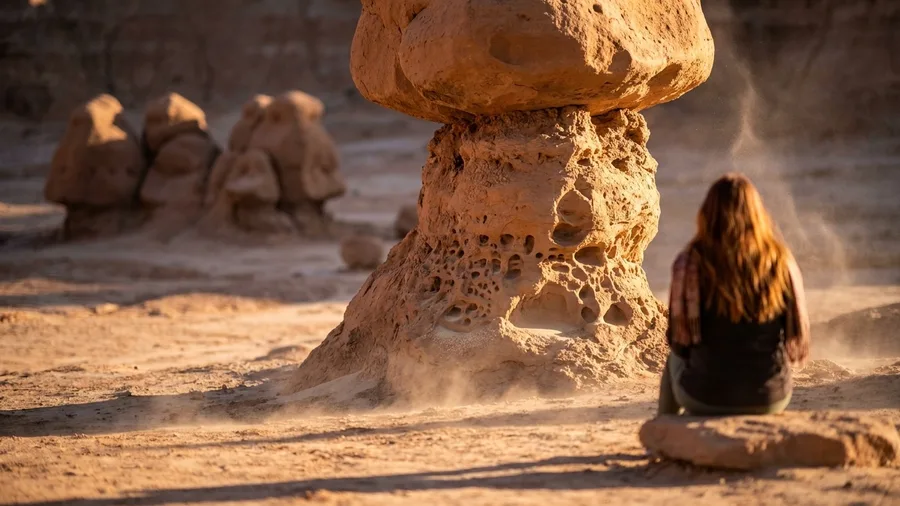
You drop down the last slope into the valley and the rock goes quiet around you, all those hunched Entrada sandstone figures standing at shoulder height with their caps balanced on top. From a canyon rim you look down at geology; here you walk into it and it is level with your eyes.
The Valley of the Goblins is a walk-in bowl of hoodoos, no timed-entry queue, no shuttle to wait for, and you can wander between the formations at whatever pace you like. It is 1 hour 10 minutes from Green River, the typical day-use fee is $5-$20 per vehicle, and weekday mornings before 9 a.m. in April-May or September-October give you cool air and space between the figures.
The slow part costs nothing. Pick a patch of flat rock above the main cluster, sit, and let the light move across the hoodoos while the day warms up. An hour here is not wasted time; it is the reason the place works better than a viewpoint you photograph and leave.
That is the swap this park makes: Arches and Capitol Reef rock scenery at walking scale, without the Arches reservation system or a bus window between you and the stone. Bring water, there is little shade, and the walk in is easy enough to carry more than you think you need.
3. Valley of Fire State Park, Nevada
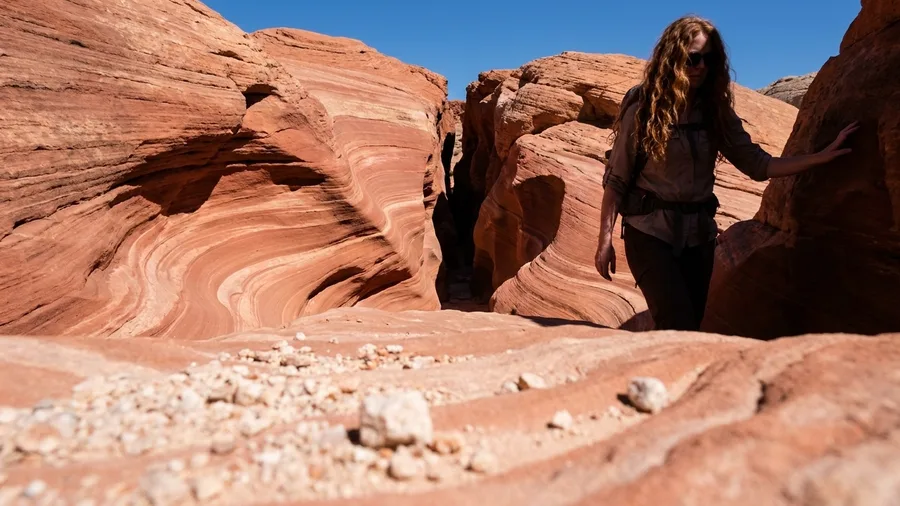
Yes, if you go early and go on a weekday, and yes even though you will not find a river slot you can wade. Valley of Fire gives you red Aztec sandstone in the Fire Wave's banded curves and the White Domes' narrow passage, plus petroglyphs on the rock faces along the way.
The drive is about an hour from the city, the typical day-use fee $5-$20 per vehicle, and the crowd window is a spring or fall weekday morning; April-May and September-October keep the heat off the sandstone and the car park half empty. What you skip is Zion's shuttle system and its packed overlooks, and you trade the canyon narrows for slots short enough to walk in an afternoon.
The petroglyphs are the part most people pass at speed, and they are the reason to slow down: figures pecked into the dark varnish of the rock, older than any road that brought you here, sitting beside a trail you can reach without a permit.
💡 Tip: Park at the Fire Wave trailhead and walk the 1.5-mile loop clockwise — the light lands better on the swirl.
Plan the Day Before You Go
4. Custer State Park, South Dakota
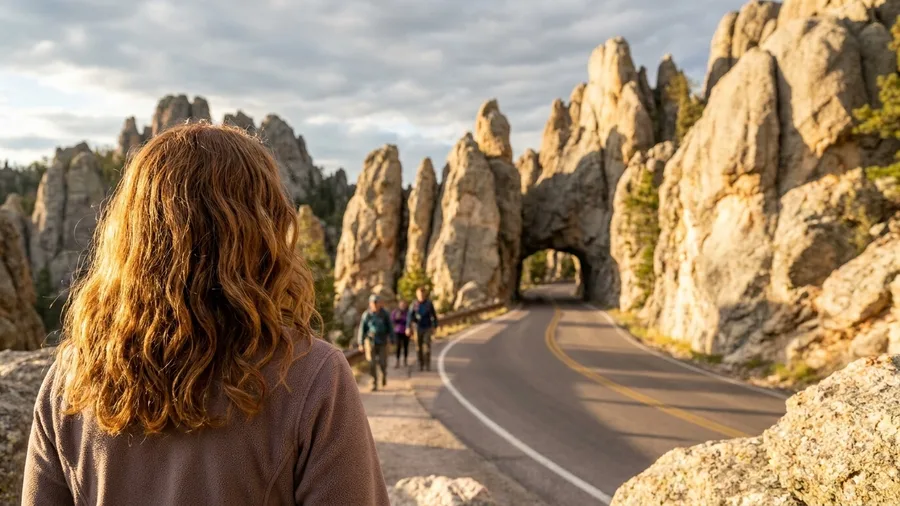
Custer State Park is the one stop on this list where you get two national-park signatures in a single afternoon of driving. The Needles Highway climbs through granite spires that read like the Badlands pushed skyward, then Wildlife Loop Road rolls out open prairie where bison herds graze in Yellowstone numbers.
It is 40 minutes from Rapid City and the day-use fee lands in the usual $5-$20 per vehicle range. Go June through September and start early; the wildlife is most active before the heat and the road traffic builds. You get the rock and the animals without committing two national parks' worth of days, entrances or jams to the itinerary.
5. Watkins Glen State Park, New York
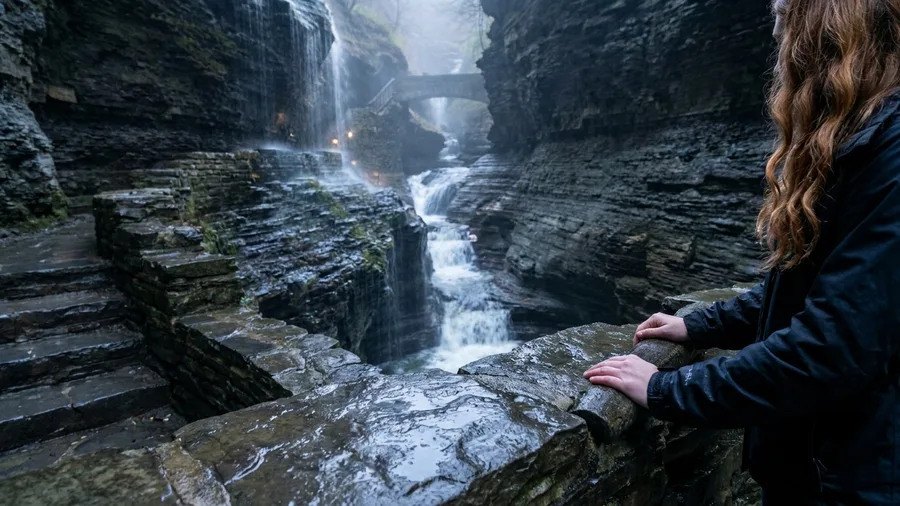
Nineteen waterfalls in under two miles of stone-walled gorge – that is what the Gorge Trail at Watkins Glen delivers, a Zion Narrows-style stream cut you can walk in the East. After the open roads and bison herds of the Black Hills, this is the opposite kind of day: a narrow slot of rock, water and shade you take on foot.
The trail runs past Rainbow Falls and through stone-step sections carved into the gorge walls, wet underfoot from the spray. It is a 30-minute drive from Ithaca, and the entry fee is the typical $5-$20 per vehicle. Bring a decent grip on your shoes for the steps.
Go June through September on a weekday before 9 a.m. – early is not optional here, because the stone steps get slick and crowded as the day fills in. And do the proper thing afterward: grab a bowl of soup and a sandwich in town for around $12-$15 to warm back up. No shuttle system, no national-park reservation, just a gorge you walk straight into.
💡 Tip: Wear shoes with real tread. The stone steps stay wet year-round and sandals on them are a bad idea.
⚠️ COMMON MISTAKE
Do Not Skip the Sunrise Slot
The most common mistake on this list is treating the canyon parks as an afternoon stop. Dead Horse Point, Valley of Fire and Palo Duro all give you their view in the low morning light, and all three fill up by 11 a.m. Set the alarm and you skip both the heat and the queue.
6. Letchworth State Park, New York
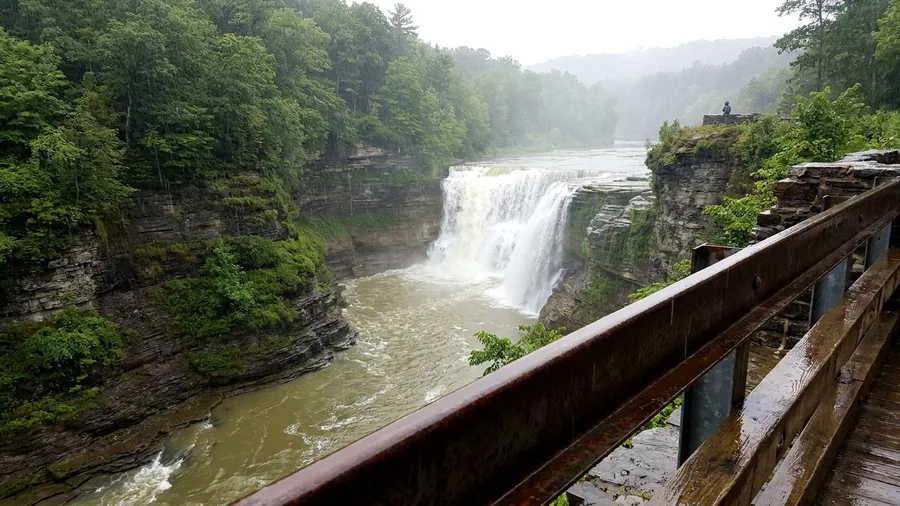
Letchworth asks less of your legs than the narrow gorge walks and gives back a bigger view: the Genesee River has cut a deep canyon past three major waterfalls, and locals call it the Grand Canyon of the East. Where a slot gorge pins you between walls, this one opens out into a wide, layered cut you can take in from a railing.
The Middle and Upper Falls viewpoints are the ones that deliver the Grand Canyon-style panorama, and it is an hour's drive from Rochester with the usual $5-$20 per vehicle entry. Go June through September on a weekday morning. The nickname is earned but not oversold – this is a genuine gorge, not a canyon, so come for the falls framed by rock walls rather than a mile-deep desert drop. Compared with a Western rim, you will wait at no entrance gate and share the overlook with a handful of people.
How the Canyon Signatures Stack Up
Fees and hours change by season – check the state park page the week you go.
7. Porcupine Mountains Wilderness State Park, Michigan
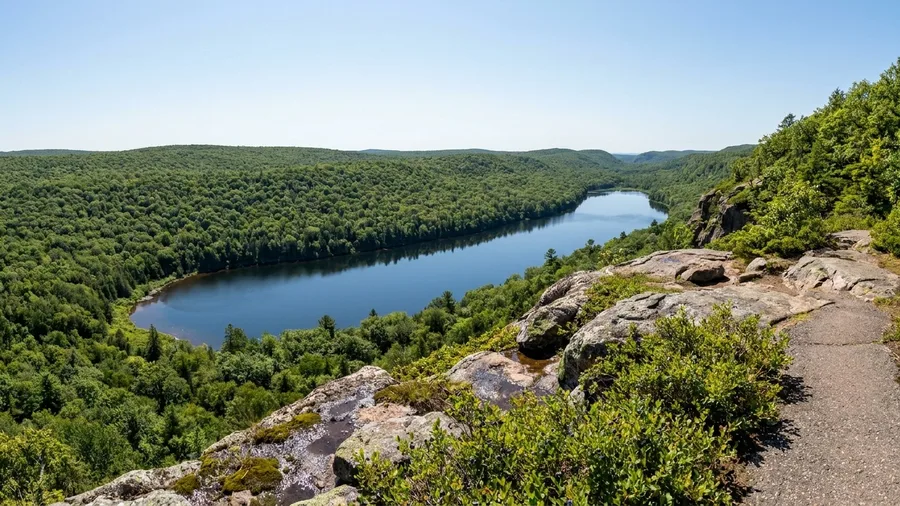
Porcupine Mountains is 60,000 acres of Lake Superior shoreline, old-growth hemlock and inland lakes, and the combination is the same coast-and-woods mix you drive to Acadia for. From the river gorge and falls of the East, you trade stone walls for a freshwater sea; the road network here is smaller and the traffic that clogs Mount Desert Island in July simply isn't on it.
Two stops earn the drive. Lake of the Clouds overlook sits above a valley filled with water and unbroken forest, reached by a short paved walk from the parking area off M-107; the Presque Isle River unit, in the park's western corner, runs a black-rock gorge past several waterfalls on an easy loop. Allow a full day to see both, because the two units are roughly an hour apart on park roads.
This is the accessible entry on the list, with real limits. The Lake of the Clouds path is short and paved enough for most visitors, and the Presque Isle river loop is mostly level, but the Escarpment Trail along the ridge is steep and long and belongs to hikers only. Plan on 1 hour 30 minutes from Ironwood, pay the $5-$20 per-vehicle day-use fee, and arrive on a June-September weekday morning: by midday the overlook lot fills, and the black flies are at their worst in late spring and early summer.
8. Palo Duro Canyon State Park, Texas
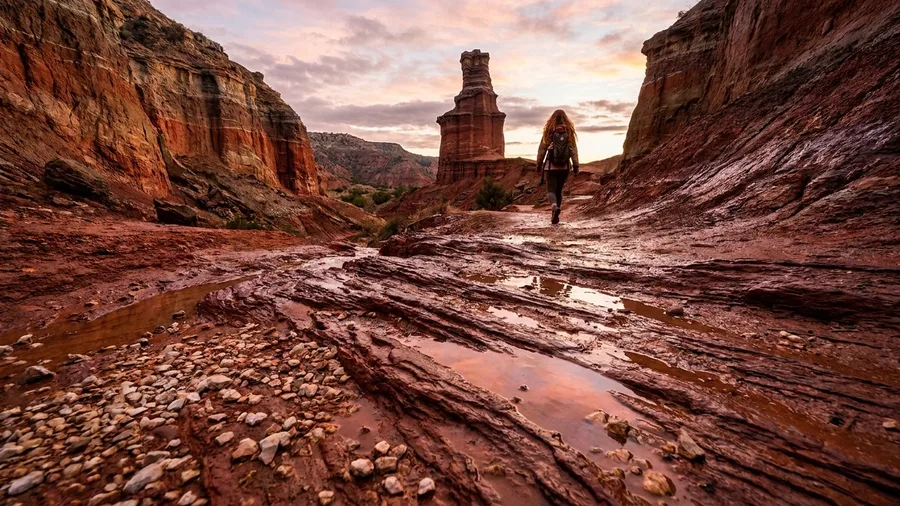
The canyon road is steep, with tight switchbacks and a grade that punishes a loaded trailer, so check your brakes before you drop in and take it in low gear. You descend roughly 800 feet from the rim to the floor in a few minutes, and the red walls close around you the whole way.
From that Lake Superior coast-and-woods country, Palo Duro is a hard left into a Texas canyon, and the drive is the attraction. The park road drops past layered red rock and hoodoo spires that look like the Grand Canyon's inner gorge with the crowds stripped out, and you do it on a state-park road, no entrance station queue and no timed-entry reservation.
Then you walk. The Lighthouse Trail is the signature hike, an out-and-back of roughly six miles round trip to a hoodoo formation that stands alone against the sky, and it is exposed the entire way, so carry more water than feels reasonable — or trade it for a ranger-picked trail. The Canyon Rim Trail is the gentler option, tracing the edge for wide views without the descent.
It is 30 minutes from Amarillo, which makes it the easiest canyon on this list to reach, and the day-use fee runs $5-$20 per vehicle. Go on an April-May or September-October weekday morning: summer afternoons here push past 100 degrees, and the trailhead lot is full by mid-morning on weekends.
If you have only an afternoon, drive the road, stop at the overlooks on the rim, and skip the Lighthouse. The view is the point, and the hike is a bonus for those with the legs and the water.
💡 Tip: Carry at least a gallon of water per person on the Lighthouse Trail — the canyon floor runs 10 to 15 degrees hotter than Amarillo.
Famous Park or State-Park Swap?
The national-park version
- Timed-entry or reservation lottery
- Shuttle bus from a remote lot
- Overlooks packed by 10 a.m.
- $35 per vehicle or an annual pass
- Camping booked months out
The state-park swap
- Turn up, pay at the gate
- Park at the trailhead
- Empty rim at sunrise
- $5-$20 per vehicle
- Same-day campsites more common
9. Caprock Canyons State Park, Texas
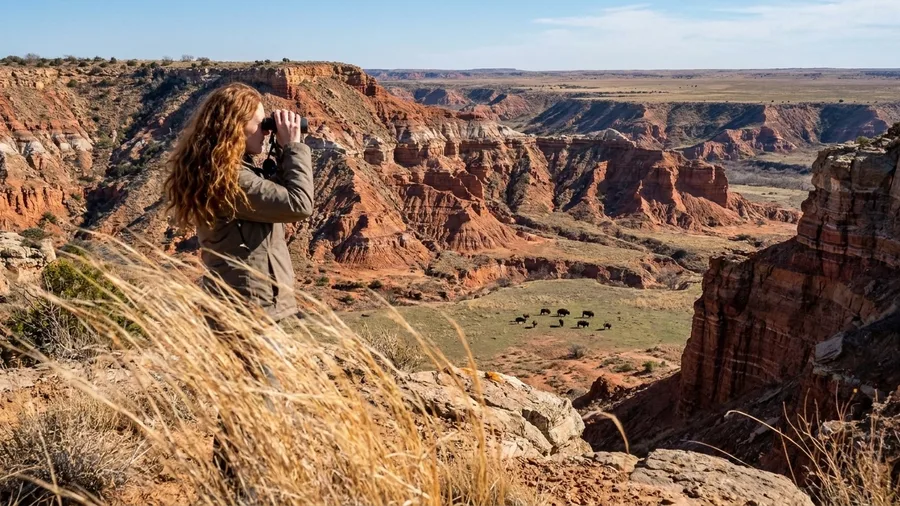
Caprock Canyons delivers exactly that: red caprock stacked in bands along the canyon edges, badlands-style erosion gullies, and a resident bison herd on the prairie below, the official state bison of Texas.
The photograph is from the Upper Canyon overlook, where the layered walls run out toward the plains, and it is best in the low light of a spring or fall weekday morning, when the red bands separate instead of flattening under noon sun. Haynes Ridge gives the higher, longer view if you are willing to climb for it.
It is 1 hour 40 minutes from Amarillo, a longer haul than the canyon closer in, and the day-use fee is $5-$20 per vehicle. Give the bison room, stay in your car if they are on the road, and take the northern plains answer to South Dakota with a fraction of the traffic.
10. Smith Rock State Park, Oregon
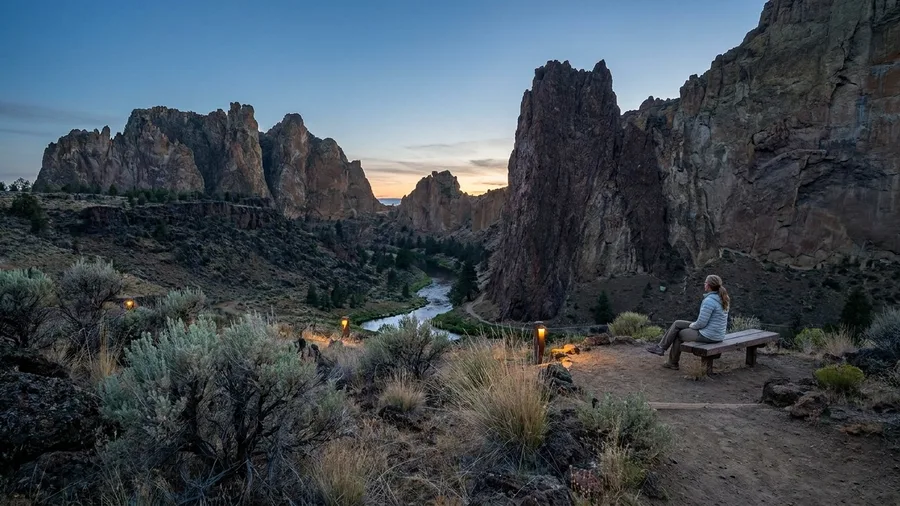
You hear the river before you see the wall. From the Rim Rock trailhead the Crooked River bends 400 feet below you, and the welded tuff spires across the gap stand up like something cut from a bigger mountain range. That is the Yosemite resemblance, and it is the reason people drive 30 minutes from Bend to stand here. The catch, and it is a real one: those spires are also a climbers' destination, so the parking lot at Smith Rock fills by mid-morning and the Misery Ridge trail becomes a single-file staircase of people going up while others come down.
Come in April or May, or in September or October, on a weekday, and start walking before the day warms. The Misery Ridge loop climbs roughly 600 feet in switchbacks, which is why it earns the name; the River Trail stays flat and gives you the cliffs from below if your knees vote no. Day-use parking runs in the usual $5-$20 per vehicle range, and the high-desert setting means the trails deliver Yosemite-scale scenery without a valley road or a shuttle queue. Just know what you are getting: a short, steep, busy trail rather than a long, easy one.
💡 Tip: Misery Ridge is steep and exposed on both sides — skip it in rain or ice and take the River Trail instead.
💡 PRO TIP
The Half-Mile Rule
At every rim, gorge and waterfall on this list, walk ten minutes past the first marked viewpoint. Dead Horse Point's West Rim, Letchworth's Upper Falls trail and Silver Falls' south loop all empty out within half a mile, and the view does not change.
11. Silver Falls State Park, Oregon
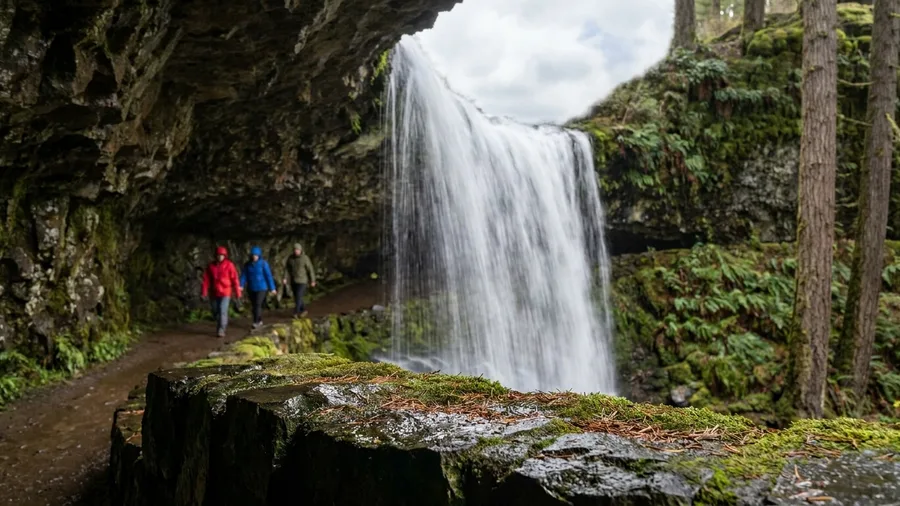
You trade dry rock for wet rock here. Where Smith Rock's cliffs are sunlit and bare, Silver Falls wraps its ten waterfalls in mossy basalt and old-growth fir, and the Trail of Ten Falls is a 7-8 mile loop that puts you behind several of the falls in a carved rock alcove. It is the closest thing the state has to a Columbia River Gorge waterfall day, packed into one park an hour from Salem.
The hour matters more than the season. South Falls, the first and biggest drop on the loop, empties into a natural amphitheater that fills with people by late morning, and the trail behind the curtain of water turns into a slow-moving line. Be at the South Falls trailhead before 9 a.m. on a weekday and you get the amphitheater close to empty, with the mist still hanging in it.
Fees land in the same $5-$20 per vehicle band as the rest of this list. The full loop takes most of a day and gains real elevation on the return, so if you have only a couple of hours, walk down to South Falls and back up. That one mile gives you the gorge look in miniature without committing to the whole loop.
12. Anza-Borrego Desert State Park, California
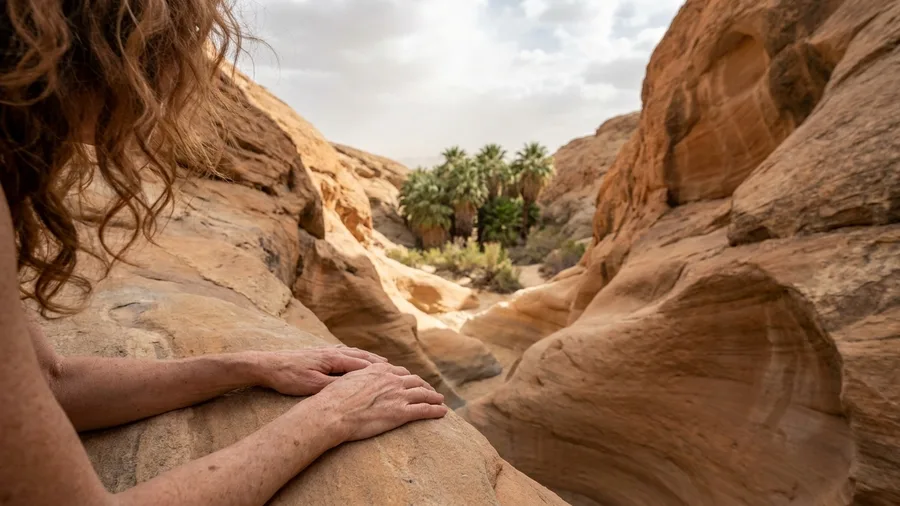
The thing to know before you go: Anza-Borrego is a desert park the size of a small state, and the distance between its signature stops will surprise you. The Slot and Borrego Palm Canyon sit on different roads out of Borrego Springs, so you burn driving time between them. This is not Joshua Tree, where the main sights cluster near one entrance road; plan one stop per morning and accept that you will not do it all in a day.
Borrego Palm Canyon is the wildlife bet, and the odds are decent rather than guaranteed: the trail follows a seasonal creek to a fan-palm oasis, and bighorn sheep do come down for water, most often at first light. April and May are the crowd-beating window, and the spring bloom, when it comes, is the busiest and best week of the year. The day-use fee falls in the $5-$20 range, and the drive from San Diego takes about 1 hour 30 minutes. Go on a weekday, be at the trailhead early, and treat any sheep you see as a bonus.
💡 Tip: Check the park's wildflower and road report before you go — the bloom timing shifts by weeks and so does the crowd.
Frequently Asked Questions
Do state parks accept the America the Beautiful national parks pass?
No. The federal annual pass covers national parks, monuments and federal recreation lands, not state park day-use fees. Each state sells its own pass, so budget $5 to $20 per vehicle unless you are buying a state annual.
What is the best time of year for these parks?
April-May and September-October for the canyon and desert parks — Dead Horse Point, Goblin Valley, Valley of Fire, Palo Duro, Caprock, Smith Rock, Silver Falls and Anza-Borrego. June through September works better for the Michigan and New York parks, where summer is the whole season.
Can I do any of these as a day trip?
Yes, most of them. Dead Horse Point is 32 minutes from Moab, Valley of Fire an hour from Las Vegas, Palo Duro 30 minutes from Amarillo, Watkins Glen 30 minutes from Ithaca and Smith Rock 30 minutes from Bend. Porcupine Mountains and Caprock Canyons are the two that really want a full day or an overnight.
Which one is best for families with young kids?
Goblin Valley is the easiest sell — the hoodoos are at walking scale and there is no exposure. Custer's Wildlife Loop is a drive, not a hike, and the bison hold attention. Skip Misery Ridge at Smith Rock and the full Lighthouse Trail at Palo Duro with small children.
Do I need a reservation or timed entry?
Not for day use at any park on this list. The friction is parking, not permits — Smith Rock and Palo Duro can close their gates when lots fill, and Watkins Glen's gorge trail gets narrow and slow by mid-morning. Arrive on a weekday before 9 a.m. and you skip both problems.
Is the scenery really comparable to the national parks?
At the signature spot, yes. Dead Horse Point delivers a Grand Canyon-scale rim, Valley of Fire delivers Zion's color, Watkins Glen delivers a Narrows-style gorge and Anza-Borrego delivers Joshua Tree's desert. What you give up is the marquee trail network and the visitor infrastructure, not the view.
Two Days or Seven for These Parks
Match the pair to the view. Dead Horse Point or Palo Duro for canyon rims. Goblin Valley or Valley of Fire for red rock. Custer or Caprock Canyons for badlands layers and wildlife. Watkins Glen or Silver Falls for waterfalls. Porcupine Mountains or Anza-Borrego for coast and desert in one.
Then take the low-commitment test: one weekday-morning day trip at a gateway 30 to 60 minutes out. Confirm the current day-use fee and hours the week you go, and check the state pass page before you lean on an annual pass.
The packed overlook, the timed entry and the shuttle were never the price of the view. The same rim, hoodoo, slot or waterfall sits on a state-park trail for $5-$20, provided you are at the trailhead before 9 a.m. One pair, one named viewpoint, one gateway drive.
Choose Your Day Trip
Pick one entry above, check its gateway drive time and current day-use fee, and put a weekday 8 a.m. arrival on the calendar. That is the whole plan.