Nine hill towns, and the longest drive from Florence is 2 hr 30 min. That single figure resets the whole trip: the Uffizi core is queue-heavy, while San Gimignano's surviving tower skyline sits 1 hr 15 min away and fills a 3-5 hour walk.
The rest split cleanly by time. Montepulciano, Pienza and Cortona are 2 hr; Orvieto is 2 hr by car and on the Florence-Rome train line; Montalcino and Todi are 2 hr 15 min; Assisi and Spoleto are 2 hr 30 min. Each has a calm window before 10 a.m. or after 3 p.m., and weekends tighten it.
So match the town to your trip type and the shape of your day: postcard first-timer, wine cellar, car-free train stop, art-and-faith, or a slow walk. Chasing one ranking of views is the mistake.
One town per day, drive or train time checked, $65-95 typical spend, parking $2-4 per hour outside the walls, arrival before 10 a.m. or after 3 p.m. Weekdays are calmest; May-June and September-October want earlier starts.
Quick Tips Before You Start
Arrive before 10 a.m.
The tour buses hit most towns mid-morning. Early mornings give you empty lanes and the best light.
Park outside the walls
Expect $2–4 per hour at lots just outside the historic center. Inside the walls is often restricted.
Budget $65–95 per person
That covers fuel or train, parking, coffee and a casual lunch for a day trip from Florence.
Check drive times
San Gimignano is 1 hr 15 min; most others 2–2.5 hr. Base yourself to avoid backtracking.
Book tastings ahead
Montalcino and Montepulciano cellars often require reservations, especially on weekends.
1. San Gimignano's Medieval Tower Skyline
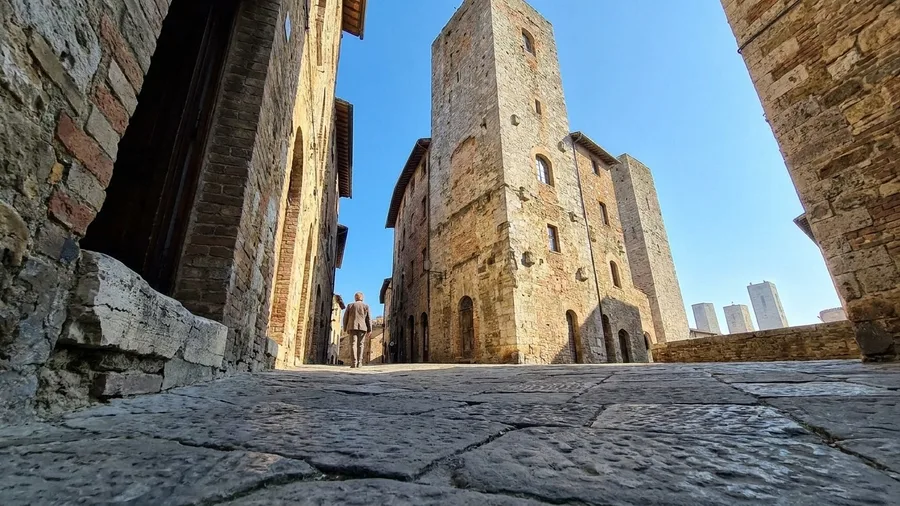
Yes, and it costs you nothing but the drive. San Gimignano keeps its medieval tower skyline intact, a cluster of stone towers rising over a walkable core, and that is the classic Tuscan picture most people drive south for. What it does not have is a queue-heavy art circuit, so if your day depends on major galleries, this is the wrong stop.
The drive is 1 hr 15 min from Florence, the shortest on this list, and 3 to 5 hours on foot covers the whole compact center. Arrive before 10 a.m. or after 3 p.m., especially on a weekday, to miss the midday bus surge, and park outside the walls at $2-4 per hour. For a first-timer chasing the postcard view, 1 hr 15 min buys exactly that silhouette; the trade is museum depth, and it is a fair one.
💡 Tip: Climb the Torre Grossa for the best view, but go right at opening time to avoid the narrow stairwell crowd.
| Town | Region | Signature sight | Drive from Florence |
|---|---|---|---|
| San Gimignano | Tuscany | Tower skyline | 1 hr 15 min |
| Montepulciano | Tuscany | Vino Nobile cellars | 2 hr |
| Pienza | Tuscany | Piazza Pio II and pecorino | 2 hr |
| Cortona | Tuscany | Etruscan walls and views | 2 hr |
| Montalcino | Tuscany | Brunello wine country | 2 hr 15 min |
| Orvieto | Umbria | Duomo and underground city | 2 hr (also by train) |
| Assisi | Umbria | Basilica of St Francis | 2 hr 30 min |
| Spoleto | Umbria | Ponte delle Torri | 2 hr 30 min |
| Todi | Umbria | Piazza del Popolo | 2 hr 15 min |
2. Montepulciano's Vino Nobile Cellars
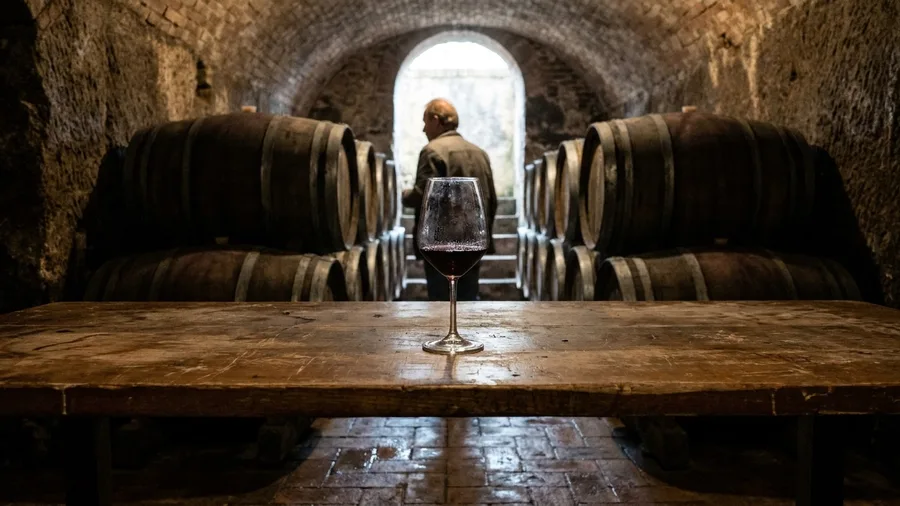
Know before you go that the lanes climb hard and steep. If anyone in the car struggles with stairs or long uphill walks, this town will tire them faster than a tower skyline did, because the reward here sits at the top of a stiff climb. What another 45 minutes past the shortest tower drive buys is a different day entirely: Vino Nobile cellars cut into the tufa and wide Val d'Orcia views where gallery lines would be.
Plan on 2 hr from Florence, then 3 to 5 hours on foot plus 1 to 2 hours for a long lunch. Parking outside the walls runs $2-4 per hour, and a sit-down lunch is $30-45 per person, so budget the day rather than the hour. This suits wine-focused travelers and couples with a car who want to linger over a tasting.
It is a poor fit for a quick car-free add-on to Florence, and that is the honest catch: 2 hr in each direction turns this into a full day, not a half-day detour. Come for the cellars and the steep lanes, and accept that the drive spends your whole day to do it.
3. Pienza's Pecorino and Piazza
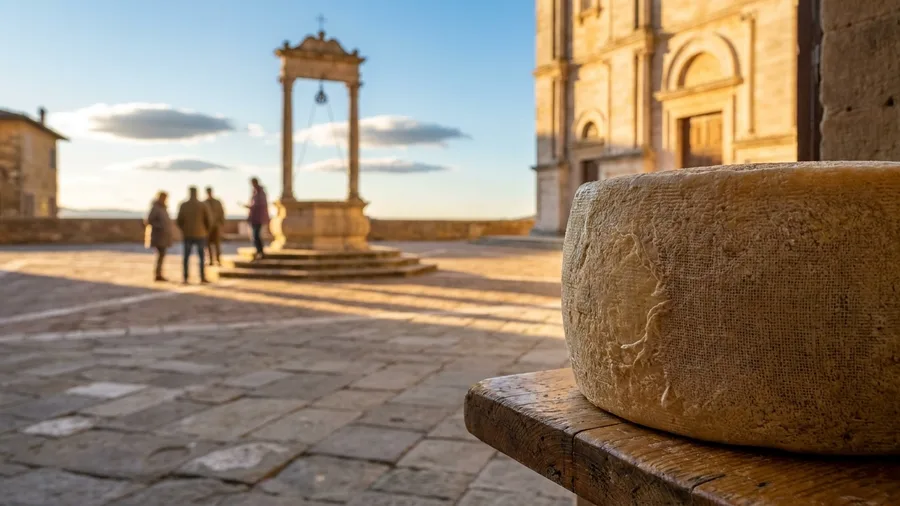
You step into Piazza Pio II just after three and the tour buses are already pulling out, leaving the pale stone square almost to you and the light going gold on the Duomo's facade. That is the hour to aim for. Pienza is the compact, low-friction counterpoint to a day spent climbing cellars: a polished Renaissance core of Pecorino shops and one perfect piazza, small enough to walk in an easy morning.
It is 2 hr from Florence, and 3 to 5 hours on foot is plenty for the whole town. Arrive before 10 a.m. or after 3 p.m. to dodge the midday peak, park outside the walls at $2-4 per hour, and you have spent little for a half-day of cheese and views.
This is the stop for travelers wanting a short food-and-view visit with no stairs to conquer and no schedule to keep. Skip it if you came for big museums or nightlife: 2 hr buys a low-friction half-day of Pecorino and piazza, and nothing more ambitious than that.
💡 Tip: Buy a wedge of pecorino di Pienza from a caseificio, not a souvenir shop, and ask for a taste first.
💡 PRO TIP
The midday window trick
Between 10 a.m. and 3 p.m., tour buses unload in most of these towns. Use that window for a long lunch or a cellar tasting, then re-emerge when the day-trippers leave.
4. Cortona's Etruscan Walls and Views
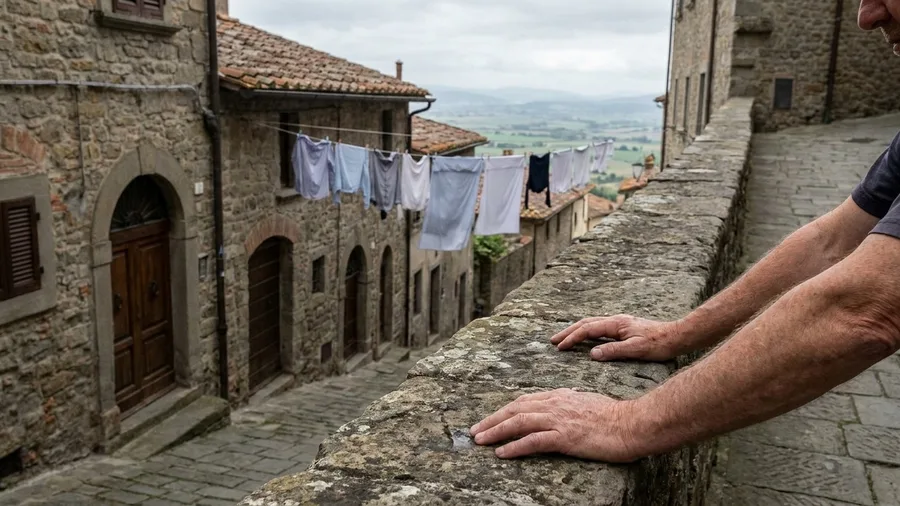
Cortona rewards atmosphere over checklist sights, and only walkers get the reward. The town stacks a steep medieval core inside a ring of Etruscan walls, and the lanes keep folding upward, each turn opening a wider slice of the Val di Chiana below. No single monument anchors it the way a cathedral anchors some towns, so you come for the mood: laundry lines, low stone doors, a view that keeps changing as you climb.
Budget 3 to 5 hours on foot from a 2-hour drive out of Florence, plus 1 to 2 hours if you stop for a long lunch. Park outside the walls for $2 to $4 an hour and start on a weekday morning or late afternoon, when the tour groups have thinned. The catch is the gradient: stairs, cobbles, no shortcut to the top. If anyone in the car has bad knees, this is the town to trade for a flatter one.
How steep is the walk?
From gentle to leg-burning, based on the lanes in each town
- Pienza: Flat piazza and gentle lanes
- Orvieto: Some slopes, but escalators help
- San Gimignano: Rolling streets, a few steep climbs
- Montepulciano: Steep, narrow lanes throughout
- Cortona: Very steep, uneven steps
5. Montalcino's Brunello Wine Country
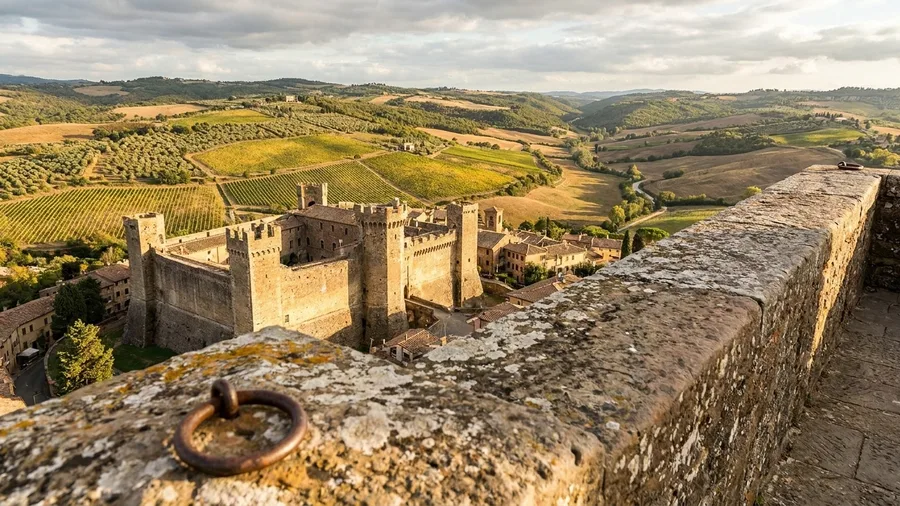
Late afternoon in Montalcino smells of warm stone, cut hay and dust off the vineyards, and the light goes long and gold across the ridges. The streets are quiet in a way the bigger wine towns are not, and the silence is the point: the extra 15 minutes past Cortona buys you a hill town that still feels like itself.
The draw is Brunello, grown on the slopes below and poured in cellars tucked into the lanes, with wide views out over the Orcia valley. But the honest reservation comes first: this is not a place to squeeze in. The drive is 2 hr 15 min from Florence, so treat it as a full day built around a booked tasting, not a walk-through between other stops.
Book the tasting ahead, because the good cellars run on appointments and small groups. Lunch runs $30 to $45 a person, casual or sit-down, and parking outside the walls sits at $2 to $4 an hour. Give yourself 3 to 5 hours on foot, plus 1 to 2 hours for the tasting and the meal.
The mistake is trying to tick off three hill towns in one day. Montalcino punishes that plan. It fits wine travelers who want to linger over a glass and a plate of pecorino, not drivers racing a clock, and the quieter streets are the payoff for the longer haul.
If you want a wine town where nobody rushes you, this is it. If you want to see four towns before dinner, pick a closer one and skip it.
💡 Tip: Book a cellar tour at a Brunello producer at least a week ahead; walk-ins are often turned away at harvest.
6. Orvieto's Duomo and Underground City
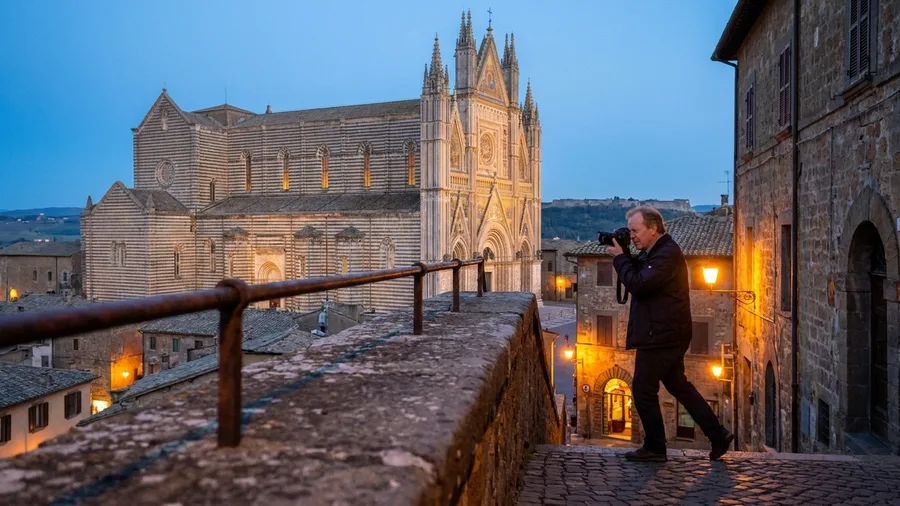
Two hours from Florence buys you a hill town you can reach by car or by train, with two major sights stacked inside the walls. Orvieto sits on the Florence – Rome line, so you can arrive without driving at all, and that same 2-hour trip carries the Duomo and the underground city beneath the streets.
The doing here is the underground. You follow carved tunnels and deep wells down into the soft volcanic rock, cool and dim and a world away from the crowds up top, with a guided tour the usual way in; check current hours and book ahead in high season. Back on the surface, the Duomo's striped facade takes the rest of the morning, and 3 to 5 hours on foot covers the core with 1 to 2 hours spare for a museum or a long lunch.
Time it before 10 a.m. or after 3 p.m. to dodge the midday crush, and budget $30 to $45 a person for a sit-down lunch. It does not fit travelers who want vines at the door: there are no vineyards here, just a cathedral, a hollow hill, and a train platform. For a car-free day with real substance, the trade makes sense.
Car vs. train for Orvieto
Take the train
- Direct on the Florence–Rome line, about 2 hr
- No parking hassle or ZTL fines
- Arrive in the center, walk to the Duomo
- Good for a car-free day trip
Drive instead if…
- You're combining Orvieto with other towns
- You want to visit a nearby winery
- You have heavy luggage or kids in tow
- You're staying outside the center
7. Assisi's Basilica of St Francis
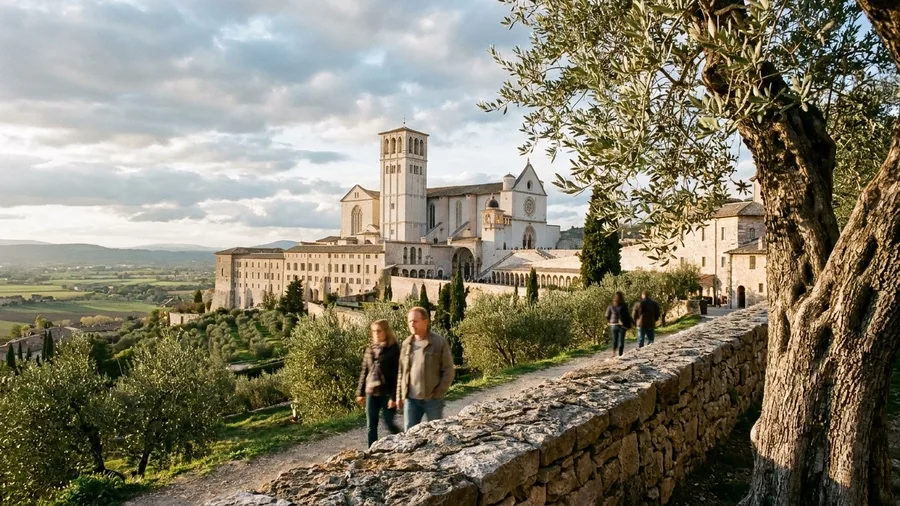
Assisi is a pilgrimage basilica with a hill town attached, and the two are worth a full day even if you never set foot in a Mass. The drive is 2 hr 30 min from Florence, roughly half an hour more than the dense car-free Umbrian day you might already have planned, and what that extra half hour buys is a shift from underground passages to pale-stone lanes climbing in tiers above the valley.
The Basilica of St Francis is the reason people come, and the honest question is whether it earns the time for a non-believer. It does, because the frescoes in the upper church are a Giotto cycle that reads like the moment European painting learned to show real bodies in real rooms. Allow 1 to 2 hours inside, and go early: the tour groups arrive mid-morning and the lower church, where the tomb sits, stays calmer than the upper nave.
On foot the rest of the town takes 3 to 5 hours: lanes of pale local stone, olive groves and cypresses below the walls, and a long view across the Umbrian plain from the Rocca. Add 1 to 2 hours if you want a sit-down lunch, which runs $30 to 45 per person. Park outside the walls for $2 to 4 per hour; do not try to drive into the historic center, which is pedestrian in much of its core.
The crowd rhythm here is different from a museum town. Weekday mornings and late afternoons are calmest, and the basilica itself absorbs people better than a gallery queue because it is large and dim and people move through quietly. The honest caution: this is a working pilgrimage site, so dress covered, and if you want wine cellars or a fast one-stop visit, another hill town on this list fits you better.
The trade is straightforward. Another 30 minutes beyond a car-free Umbrian stop buys a basilica and a crowd rhythm that feels devotional rather than touristy, at the cost of a steeper walk and fewer places to sit with a glass. For art-and-faith travelers and slow walkers, the fuller Umbrian day is worth the extra drive.
⚠️ COMMON MISTAKE
Don't drive into the center
Most hill towns have restricted traffic zones (ZTL) with cameras. Park in the lots outside the walls and walk in—fines arrive months later by mail.
8. Spoleto's Ponte delle Torri
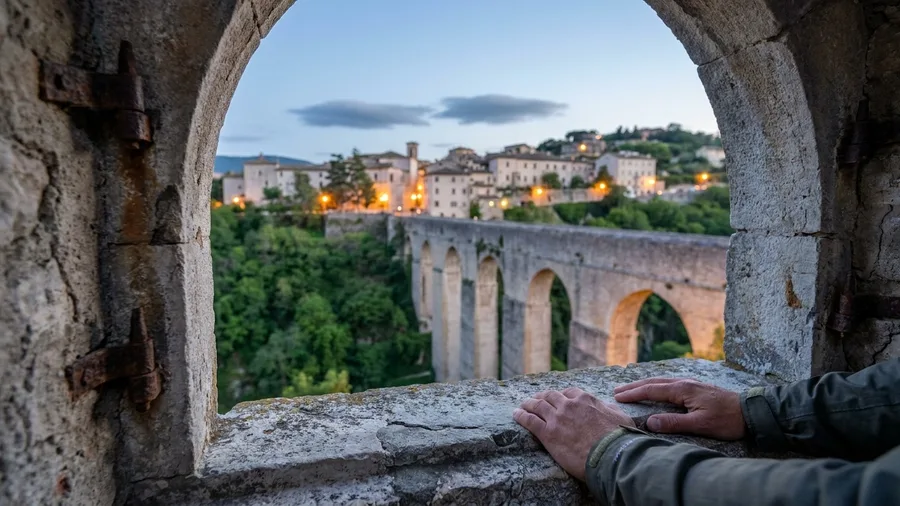
Spoleto is a working Umbrian town that happens to have a medieval aqueduct bridge, and it costs less in crowd-fighting than a basilica town does. The same 2 hr 30 min from Florence buys steep lanes with fewer tour groups and the Ponte delle Torri, a 230-metre aqueduct bridge that walks you out over a wooded gorge and back.
The splurge is time, not money: 3 to 5 hours on foot, a sit-down lunch at $30 to 45 per person, parking outside the walls at $2 to 4 per hour. Arrive before 10 a.m. or after 3 p.m. on a weekday. Skip it if you want one street and a monument; come for the walk, the gorge, and a town that does not perform for visitors.
9. Todi's Piazza del Popolo
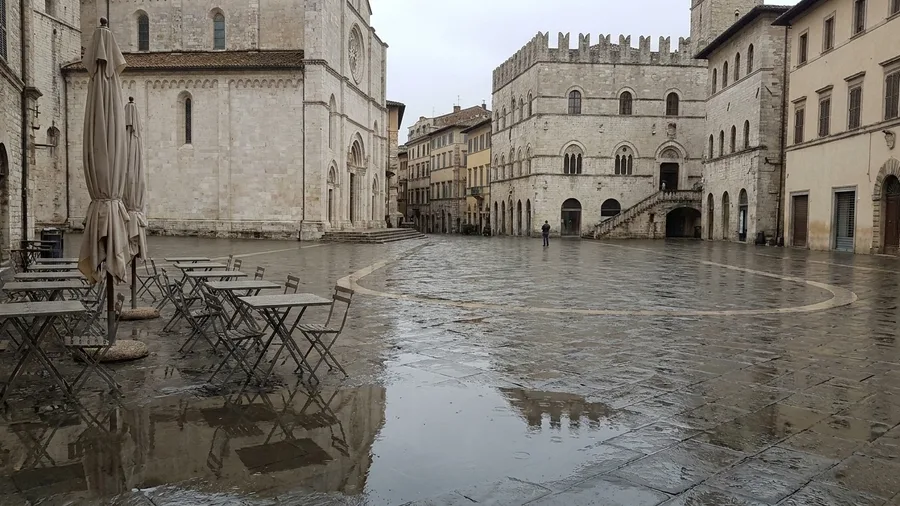
Todi is 2 hr 15 min from Florence, the shortest of the Umbrian drives, and it puts you in a quiet town built around one of Italy's best medieval piazzas. That is the whole case, and it is a strong one for a slow day.
Piazza del Popolo is a long, level, oval of pavement flanked by a cathedral and a town hall, with cafes you can sit at for an hour without feeling pushed along. Walk the surrounding lanes for 3 to 5 hours, lunch for $30 to 45 per person, park outside the walls at $2 to 4 per hour, and come on a weekday morning or late afternoon. It is for slow travelers and repeat visitors; if you need a headline monument, this is not your town.
💡 Tip: Sit at a café on the piazza around 5 p.m., when the light turns golden and the locals come out for their passeggiata.
A perfect hill-town day
Frequently Asked Questions
Can I visit more than one hill town in a day?
Yes, but you'll spend most of your time driving. Pick towns that are close together—Montepulciano and Pienza are 20 minutes apart—and allow at least 3 hours in each. Trying to combine three towns usually means you see none of them properly.
Which hill town is easiest without a car?
Orvieto is the clear winner. It's on the Florence–Rome train line, about 2 hours from Florence, and the Duomo and underground city are walkable from the station via a funicular. Most other towns on this list require a car or a bus.
How much does a day trip to a hill town cost?
Budget $65–95 per person for fuel or train, parking, coffee and a casual lunch. A sit-down lunch runs $30–45 per person. Add $15–30 for a museum or cellar tour. Parking is typically $2–4 per hour outside the walls.
When is the best time to visit these towns?
May–June and September–October have the best weather but the biggest crowds. Arrive before 10 a.m. or after 3 p.m. to avoid the midday tour buses. Weekdays are calmer than weekends year-round.
Are these hill towns suitable for people with limited mobility?
Some are easier than others. Pienza and Orvieto are relatively flat and have escalators or gentle slopes. Cortona, Montepulciano and Spoleto are steep with uneven steps. Check your specific town's terrain before you go.
Do I need to book wine tastings in advance?
Yes, especially in Montalcino and Montepulciano. Many cellars require reservations, particularly on weekends and during harvest (September–October). Book at least a week ahead, and confirm the time—walk-ins are often turned away.
Sort your trip type, then book one town
There is no single best hill town here. Each of the nine pairs a distinct draw with a known drive or train time and a before-10 a.m. or after-3 p.m. window, at a typical $65-95 per person for the day, so Florence's queues become optional rather than unavoidable.
San Gimignano's 1 hr 15 min tower skyline is the shortest proof that postcard Tuscany does not require Florence-size crowds. The longest drives, 2 hr 30 min to Assisi and Spoleto, buy the fuller Umbrian days.
Sort by trip type: first-timer, San Gimignano and Pienza; wine lover, Montepulciano and Montalcino; car-free, Orvieto; art-and-faith, Assisi; slow walker, Cortona, Spoleto and Todi. Then pick one town per day, check the drive or train time, and plan to arrive before 10 a.m. or after 3 p.m. Weekdays are calmest, and May-June or September-October need earlier starts.
Pick your town and go
Choose one from the list, check the drive or train time, and set your alarm for an early start. The lanes will be empty and the light will be on your side.