Ten towns, and the widest of them is 130 blocks. Every one of these historic districts was built between roughly 1820 and 1900, every core runs 1.5 miles end to end at most, and not a single chain hotel sits inside one. You have been burned before: a brick sidewalk at noon, souvenir racks on the porch, a fifteen-minute wait for a photo with nobody in it. So here is the thing that saves the trip. Crowds in these towns arrive in pulses, not seasons. One excursion train or tour bus fills a main street for about 45 minutes, and then it empties. Weekday mornings before 11 a.m., the streets are near-empty. That is the whole trick.
Go May to June or September to October for weather. July and August weekends are the busiest. January to March is the cheapest and quietest, with the catch that some inns and small museums close midweek. Each of the ten sits 1 to 3 hours from a regional airport, street parking is free and limited, so you park once and walk.
Lodging is small: in-district inns of 6 to 24 rooms, $140 to $190 midweek off-season and $210 to $280 on summer and fall weekends. Historical-society museums charge $5 to $15. Two nights for two, including one paid attraction, runs $600 to $850. So a trip built on a weekday-morning window, an inn inside the district and a cost you already know gets you 1800s streets without the honeypot crush. Pick three of the ten. Build around the quiet.
Quick Tips Before You Start
Ask the arrival time, not the date
Call the inn and ask when the excursion train or bus tour pulls in. Book around that hour, not around the day.
Build the trip on a weekday morning
Plan to be on the main street before 11 a.m. Tuesday to Thursday. That window is the trip; everything else is buffer.
Pack for one carry-in
Free street parking fills fast and the core is 0.5 to 1.5 miles. Carry one bag from the car and leave the rest.
Ask what closes midweek
January to March is cheapest, but some inns and small museums shut Tuesday to Thursday. Confirm both before booking.
Check the grade before the stairs
Bisbee's Brewery Gulch and Eureka Springs' 1880s loop climb steeply. A 1-mile walk can take two hours; ask the inn for the flat route.
Know which fee the park sets
Harpers Ferry is a national-park unit, so entrance and shuttle times come from the park's own site. The $5-$15 museum fee does not cover it.
1. Virginia City: Boardwalks Above the Silver Mines
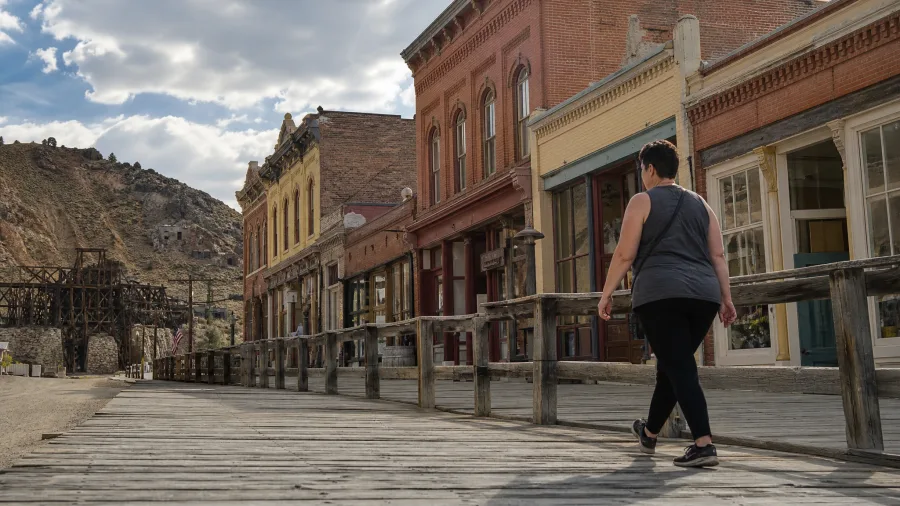
Virginia City is a silver town whose boardwalk sits on top of a working mine. The 1860s money put up the brick blocks and the wooden walk along C Street, and roughly 800 people still live behind those false fronts; the old mill ruins crumble at the town's edge where the ore came out. It streets are wide enough for a wagon team and flat enough for a stroller or a knee that does not want stairs.
The boardwalk empties between 8 and 11 a.m. on a weekday, then the excursion train and the midday coaches roll in and fill it for about 45 minutes at a stretch. Time it right and you have the walk almost to yourself; time it wrong and you are part of the 45-minute pulse. Book the mine tour for after 2 p.m. instead. What has changed sits at eye level: saloons, t-shirt racks and a candy store at street level, with the original brick upper walls untouched above them. Skip the weekend gunfight show if you came for quiet; it draws its own crowd and it is loud.
Sleep in a 6- to 12-room inn on C Street or just off it, at $150-$190 on a midweek night. Two nights for two, with one paid attraction in the budget, lands inside $600-$850. It suits anyone who wants the 1800s handed to them flat and walkable; it does not suit a traveler who needs a chain hotel, a paved attraction every hour, or steps they can avoid. Park once and walk, and check the mine tour's current price and hours before you go.
💡 Tip: Book the mine tour for after 2 p.m., when the tour buses have gone.
| Town | Era its streets date from | Residents | Walkable core on foot | Quietest window |
|---|---|---|---|---|
| Virginia City, NV | 1860s | ~800 | 0.5–1 mile | Weekday 8–11 a.m. |
| Bisbee, AZ | 1880s | ~1,700 | 2 blocks | Weekday 8–10 a.m. |
| Galena, IL | 1850s | ~3,100 | 0.5–1 mile | Weekday mornings, June |
| Harpers Ferry, WV | 1830s | ~290 | 0.5 mile | Before 10 a.m., after 4 p.m. |
| Deadwood, SD | 1876 | ~1,300 | 0.5–1 mile | Weekday mornings |
| Eureka Springs, AR | 1880s | ~2,100 | 1 mile loop | Weekday mornings, Apr–May, Sep |
| Mendocino, CA | 1850s | ~900 | 0.5 mile | Weekday before 11 a.m. |
| Nevada City, CA | 1850s | ~3,100 | 0.5 mile | Tue–Thu |
| Hermann, MO | 1837 | ~2,400 | 0.5–1 mile | Midweek May and Sep |
| Jim Thorpe, PA | 1850s | ~4,800 | 0.5 mile | Weekday mornings |
2. Bisbee: A Copper Town Stacked on Stairs

You come up a staircase between two brick walls and the whole canyon opens under you, tin roofs and brick stacked in tiers, the morning still cold in the shade. Bisbee builds 1880s brick and tin straight up a canyon wall, with the Copper Queen Mine buildings, Brewery Gulch and flights of stairs threading between street levels, and about 1,700 people live in it now. The weekday-morning window holds here too, but the stairs, not the storefronts, are what funnel the crowd and slow it down.
The hour to be on those stairs is 8 to 10 a.m., early enough that you climb in shadow and hear nothing but your own breath. By Saturday 11 a.m. to 3 p.m. the day-trippers pack the two-block core shoulder to shoulder and the stairs become a queue. What changed is the storefronts: 1900s shops now hold galleries and a coffee roaster, and the mine tour is the paid anchor at about $15.
Wear real shoes, because the flights turn a town you could walk in an hour into a leg-tiring two. There is no chain hotel in the core, just 6-to-24-room in-district inns at $140 to $190 midweek or $210 to $280 on a summer or fall weekend. Two nights for two comes to $600 to $850 including one paid attraction, and the mine tour is the one worth paying for.
⚠️ COMMON MISTAKE
Don't book the weekend first
Summer and fall weekends double some rates and fill the main streets by noon. If your dates are fixed to a Saturday, pick a town whose festival calendar is clear that day and treat the early morning as your only quiet hour.
3. Galena: Brick Storefronts and Grant's Front Porch
The river smell comes off the levee first, then the brick wall of Main Street takes the morning light. Galena's 1850s commercial blocks run nearly unbroken along the street, one of the longest intact stretches in the Midwest, and the Galena River and levee sit at the bottom of it with Grant's home a short walk uphill. About 3,100 people live here. The story to know is Grant's: he came back to this river town after the war and the town gave him a house on the hill, and the brick around it was already forty years old when he arrived.
The fall-color weeks in October are when the crowd comes, not midsummer, so a weekday morning in June is the quiet window worth planning around. What has changed is mostly downhill and at the edges: tasting rooms and a couple of chain shops, while the brick and iron fronts above stay as they were. Book a 10- to 20-room inn two blocks off Main at $160-$190 midweek; two nights for two with one paid attraction runs $600-$850. Park once, because Main Street spaces turn over slowly; check current museum hours before you go.
Galena at a Glance
🚌 Crowd pulse
One tour bus fills Main for ~45 min
🍂 Busiest week
October fall-color weekends
❄️ Cheapest season
Jan-Mar, some inns close midweek
🅿️ Parking reality
Free but limited; park once
🎟️ Museum cost
$5-$15 at historical society
Skip if
You want chain-hotel convenience inside the core – none exists; all lodging is 6-24-room inns.
4. Harpers Ferry: An Armory Town of Stone Steps
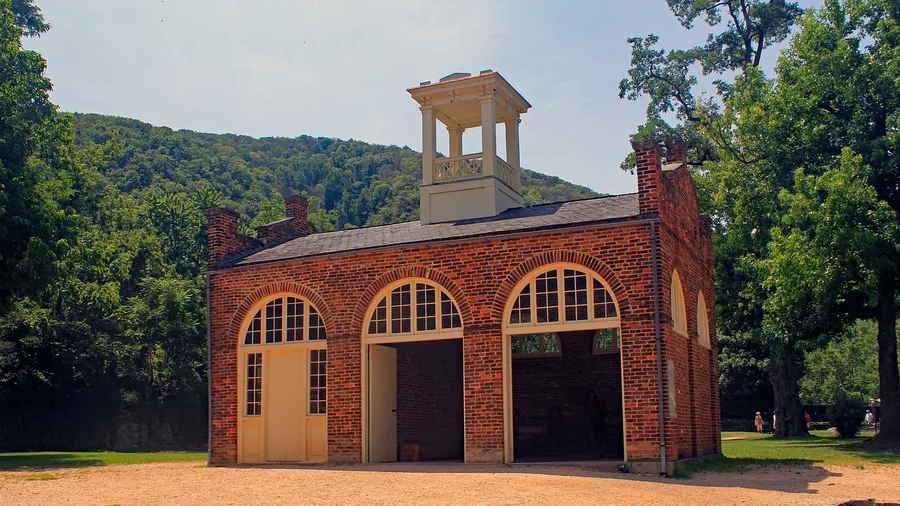
Climb the stone stairways first thing, before the town wakes up. Harpers Ferry is small enough to feel owned by whoever gets there early: about 290 people live inside a grid of 1830s armory buildings, stacked stone paths and brick along Shenandoah Street that still carries high-water marks from the floods that nearly erased it. The whole commercial row is a national park unit now, so the entrance fee and the shuttle schedule are set by the Park Service, not by any guide – check the park's own site for current numbers before you commit a morning to it.
Be at the bottom of the steps before 10 a.m. or come back after 4, and aim for a weekday in April or November if the calendar allows; by midday two trainloads of visitors pour off the platform and the narrow lanes between the brick press tight. The 0.5-mile core and the climb to Jefferson Rock will eat half a day at an unhurried pace, and the Maryland Heights trail claims the other half if your legs are willing. Sleep inside the district in a 6- to 24-room inn – $140-$190 midweek, $210-$280 on summer and fall weekends – and two nights for two lands at $600-$850 with one paid attraction folded in.
5. Deadwood: A Gold Gulch of Brick Facades
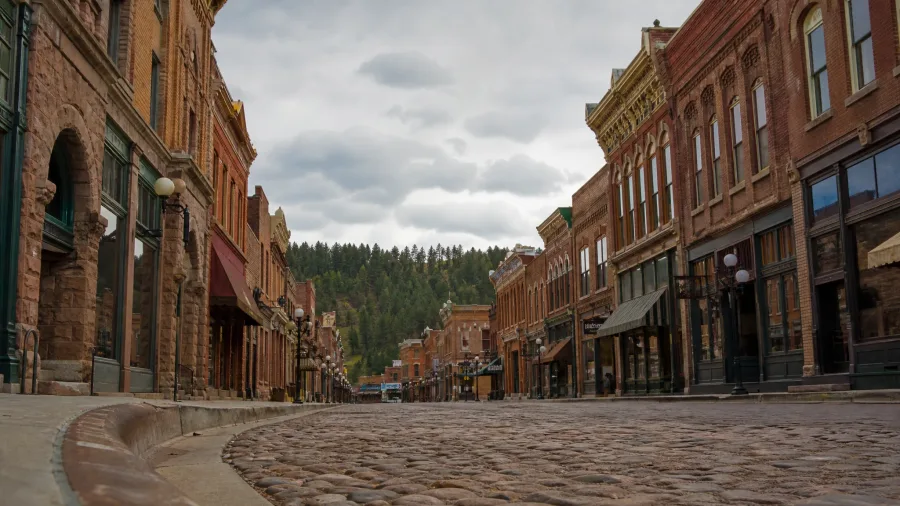
Deadwood asks less of your legs than a canyon of stone steps does, but it asks more of your calendar. The street is a narrow gulch with 1876 brick facades packed wall to wall and about 1,300 people living around it, and a weekday morning outside rally week is close to empty. What you cannot do is drift in on a whim in late July or August. The motorcycle rally takes every room in the gulch and doubles the rates, so book months ahead if your dates come anywhere near it.
Where to stand for the shot: the uphill side of Main Street, looking down the gulch with the brick fronts stacked on both sides and the hills closing behind them. Morning light comes over the ridge and hits the upper facades first, which is why the same block photographs flatter at 8 a.m. than at noon. Then drive up to Mount Moriah Cemetery.
The cemetery sits on the hill above town, and this is the view that explains the place – the whole gulch laid out below you, the rooflines and the brick, the reason a gold camp grew exactly here and nowhere else. The uphill walk through the rows of 1870s headstones takes an hour if you let it.
Be honest with yourself about the ground floors before you arrive. Nearly every one is a casino or a bar, so the shopfronts are not the reason to come; the streetscape and the cemetery are. Set your expectations there and the town delivers.
Sleep in a 6- to 20-room inn just off Main at $140-$180 midweek, and two nights for two runs $600-$850 including one paid attraction. That is the quiet-winter math working in your favor, provided you check January and February midweek openings first.
💡 Tip: Check the rally dates first — they can double every room rate in town.
Which towns pass the quiet-window test
- Harpers Ferry (before 10 a.m.) — Only 290 residents and a clear early-morning window.
- Bisbee (weekday 8–10 a.m.) — Two-block core is empty before the day-trippers.
- Mendocino (weekday before 11 a.m.) — Highway 1 traffic arrives late morning.
- Hermann (midweek May and Sep) — Wine buses come on October harvest weekends, not midweek.
- Deadwood (outside rally week) — Most ground floors are casinos; the streetscape is the draw.
- Galena (weekday June) — October fall-colour weeks are the crush.
- Jim Thorpe (October weekends) — Excursion trains and foliage crowds fill Broadway by noon.
- Eureka Springs (festival weekends) — The 1-mile loop is packed; go midweek in spring or September.
6. Eureka Springs: Victorians Climbing a Spring-Fed Cliff
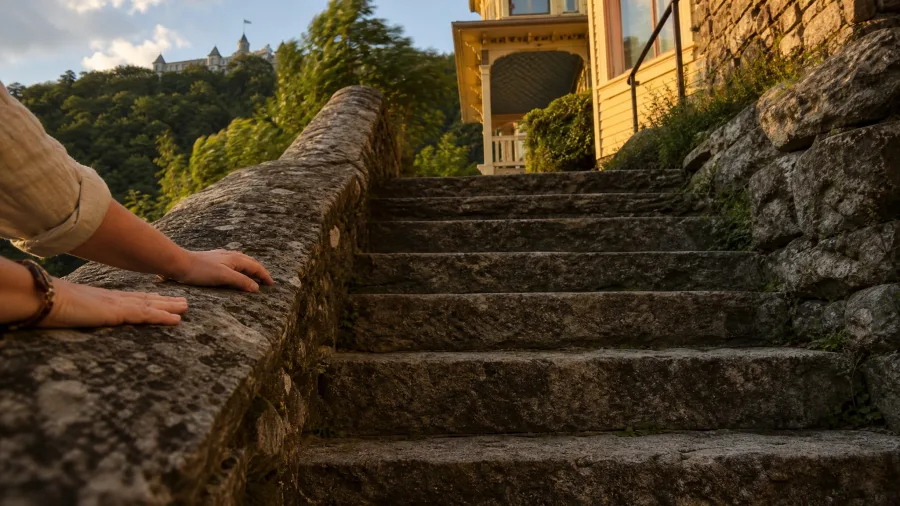
Know before you go: this is a town built on a slope, and every street between the storefronts is a stair. Eureka Springs stacks its 1880s Victorian houses up a spring-fed cliff, with the old commercial loop, the stone stair streets and the Crescent Hotel sitting on the ridge above about 2,100 residents. Skip a festival weekend and skip peak fall color if you want the loop to yourself; a weekday morning in April, May or September is when the stair streets run quiet and you can hear your own footsteps on the stone.
Sort out the hill driving before you arrive. A hotel or tram tour runs roughly $15 and saves you wrestling the car up the switchbacks, after which the one-mile loop is best done entirely on foot. The old storefronts now hold galleries and shops, and the chain motels sit out on the highway – none of them inside the historic district – so an in-district inn of 6 to 24 rooms keeps you inside the loop: $140-$190 midweek, $210-$280 on a summer or fall weekend, and $600-$850 for two nights for two with one paid attraction included.
7. Mendocino: Saltbox Victorians on the Headlands
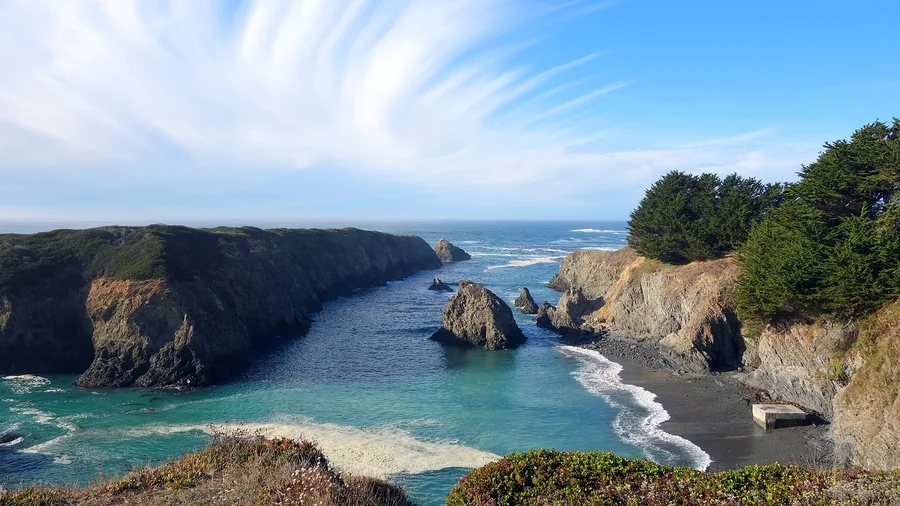
Sleep there. The town itself is small enough to walk in an afternoon, but the headland it sits on is not, and the fog that rolls in off the bluff is the thing you came for. A day-tripper gets the saltbox Victorians and a coffee. An overnight guest gets the same street at dusk, when the Highway 1 traffic has gone home and the only sound is the surf two blocks west.
This is a lumber town of roughly 900 people, and the 1850s saltbox houses on the headland were built by the men who worked the sawmills. The street grid ends at the bluff trail, which is the point. Wooden water towers still stand behind several houses, and the whole core is about half a mile end to end, walkable in half a day. The headlands deserve the other half. Go before 11 a.m. on a weekday and you will have the boardwalk and the bluff path largely to yourself; summer weekends and holiday Mondays bring a steady stream of cars off the highway, and the village fills by noon.
What has changed is modest: a few tasting rooms and galleries in the old storefronts, and patchy cell coverage that most visitors treat as part of the deal. Book a village inn of six to twelve rooms, which runs about $190 midweek and closer to $260 on a fall weekend. Two nights for two, with one paid attraction, lands in the $600 to $850 range. Park once and walk, because the side streets are narrow and the lots fill fast.
8. Nevada City: Gold Rush Brick on Broad Street
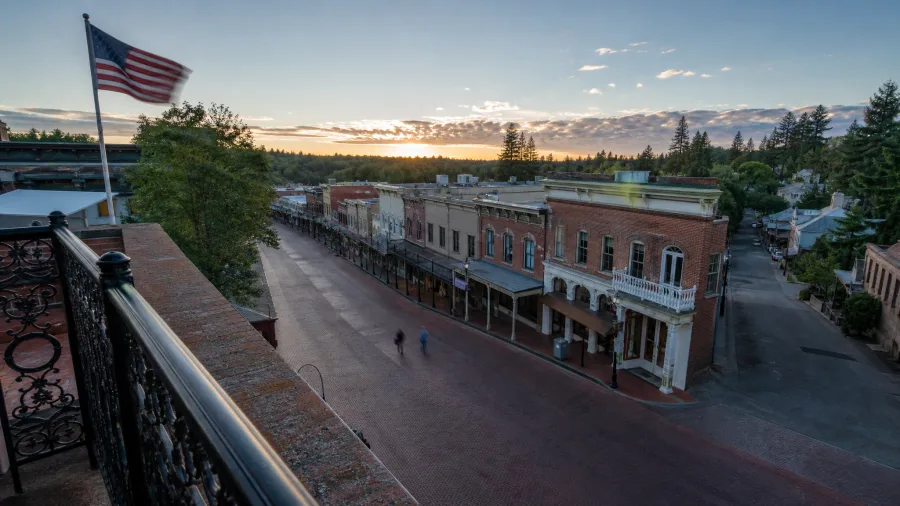
Park at the top of Broad Street and walk down. That is the local move, and it saves you the tight turnaround at the bottom where the street dead-ends into the hill. From the upper lot you get the whole brick run in one view before you commit to it, and the walk back up is short enough to manage even with a coffee in hand.
The catch is the calendar. Nevada City is calm Tuesday through Thursday, but summer music weekends and the December holiday stretch fill Broad Street with people who came for the event, not the architecture. If your only window is a festival Saturday, you will spend more time finding a parking space than looking at the 1850s brick and iron facades that make the street worth the trip. A Tuesday in May gives you the same buildings with room to stand back and see them.
The town holds about 3,100 residents, and the historic core is a compact half mile of storefronts built front to front, with the old firehouse and narrow side streets of Victorian houses running off it. The 0.5-mile core takes half a day at an unhurried pace; add the state park trail if you want a longer walk and a view back over the rooftops. The street itself rewards slow looking, because the upper floors are where the original detail survives.
What has changed is mostly at ground level: a food co-op, a handful of restaurants and a few tasting rooms now occupy the old storefronts. The brick above them is untouched. An in-district inn of six to 24 rooms runs about $140 to $190 midweek and $210 to $280 on a summer or fall weekend, and no chain hotel sits inside the core. Two nights for two with one paid attraction stays in the $600 to $850 range.
The honest reservation is that Nevada City rewards planning around its calendar more than most towns on this list. The quiet window is real, but it is narrow, and the event weekends that make the town lively are the same ones that make it crowded. Pick your days first, then book the inn.
💡 Tip: Park at the top of Broad and walk downhill — the return climb is easier on the way back.
9. Hermann: A German Brick Wine Town
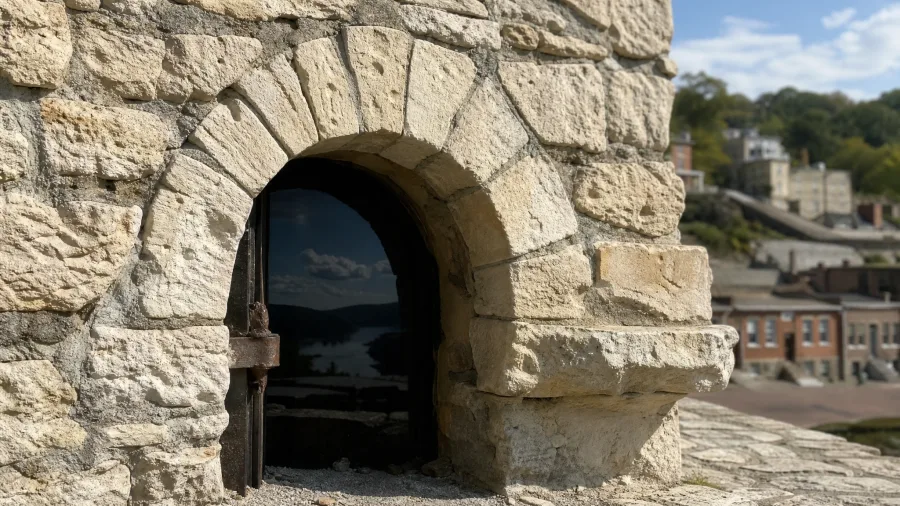
The smell in Hermann on a quiet May morning is limestone dust and river air off the landing, with the brick storefronts of 1837 standing along a wine trail that runs through a town of about 2,400 people. The modern spikes are the tasting rooms and a trolley, but the brick and limestone cores are original, and the stone houses climb the hill above the Missouri River landing. In October, harvest weekends bring buses; midweek in May and September you get a Tuesday with the cellars to yourself. Book the cellar tour at $10 to $15 first and build the days around it.
For wildlife, honestly, the odds are modest: the birdlife on the river landing and the wooded hill edges are what you will see, not anything dramatic. Two nights for two runs $600 to $750 here, including lodging, in a 6-to-24-room in-district inn, and that is the quiet version of the wine country.
The numbers that decide the trip
What two nights actually costs
10. Jim Thorpe: Coal, Rail and Victorian Broadway
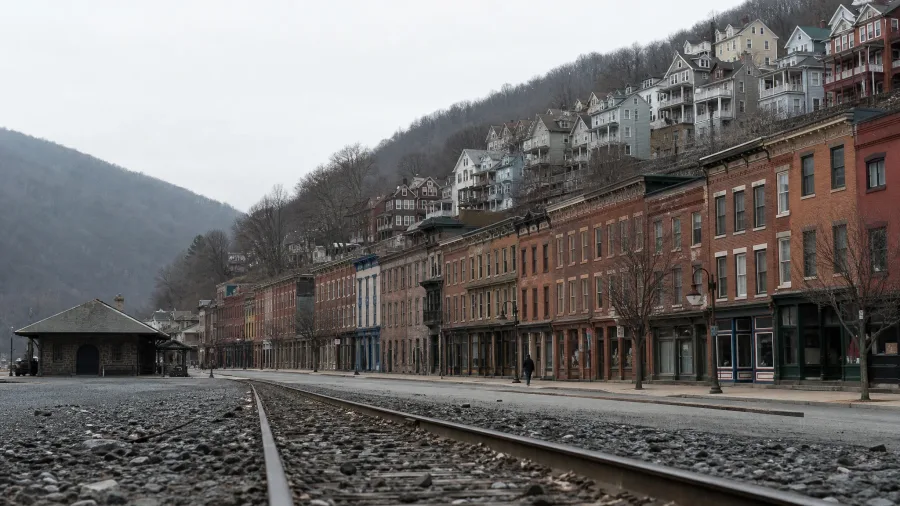
Come on a Tuesday or Wednesday and Jim Thorpe is the best of this list; come on an October Saturday and it is the worst, and both are the same four blocks of Broadway. The town wedges 1850s coal-and-railroad brick into a gorge so narrow the hillside houses stack four and five deep above the shopfronts, the coal depot sits at the foot of the street, and roughly 4,800 people live here year-round. By noon on a fall weekend the excursion trains have unloaded and Broadway is shoulder-to-shoulder from the depot to the far corner. By 9 a.m. on a weekday it is you, a delivery van and a shopkeeper sweeping.
The crowd is on a timetable, so check the timetable before you book. Scenic rail excursions and the foliage runs that sell out every October weekend put hundreds of people onto the same half-mile at once, and the leaf-peeping traffic off the highway does the rest; call the rail operator or check the town's event calendar for the dates you are considering, because a single scheduled departure decides your morning. Outside those pulses, the core plus the Switchback trail fills a full day – the trail climbs the old rail grade above town and gives you the gorge from the inside. A bike shop and a few chain hotels have arrived across the river; none of them is on Broadway.
Sleep inside the district in a 10-to-20-room inn at $150-$190 midweek, and keep the whole trip to two nights for two at $600-$850 including one paid attraction. If your only window is a Saturday in October, pick a different town – this one will not give you the morning you came for. Weekday mornings, it gives you the 1800s street with nobody in the frame.
The quiet window vs the crowd pulse
Do this
- Arrive Tuesday–Thursday before 11 a.m.
- Book an in-district inn of under 20 rooms
- Check the excursion-train and festival calendar first
- Park once and walk the whole core
- Budget $600–$850 for two nights for two
Not this
- Saturday in October at the famous town
- A chain hotel on the highway outside the district
- Assuming the crowd is seasonal, not a 45-minute pulse
- Driving between stops inside a 1-mile core
- Skipping the paid mine or cellar tour to save $15
Frequently Asked Questions
Are these towns actually quiet, or just small?
Small does not mean quiet. Crowds arrive in pulses — one excursion train or tour bus can fill a main street for about 45 minutes. Weekday mornings before 11 a.m. are consistently near-empty in all ten.
What is the best time of year to go?
May, June, September and October give the best weather, but October weekends are the busiest in Galena, Hermann and Jim Thorpe. January to March is cheapest and quietest, though some inns and small museums close midweek.
Do I need to book the inn far ahead?
Midweek in the off-season, a week or two is usually enough. For summer or fall weekends, and especially for Deadwood during rally week or Jim Thorpe in October, book months ahead or move your dates.
How much does a weekend actually cost?
Two nights for two people, including one paid attraction, runs $600–$850 in most of these towns. Hermann is the low end at $600–$750, and midweek off-season inn rates are $140–$190 a night.
Can I do more than one town in a weekend?
You can, but each core deserves half a day on foot and the quiet window is the whole point. Two towns in three days is realistic if they are within an hour's drive; three is a driving trip, not a walking one.
Which town is best for someone who hates stairs?
Galena and Nevada City are the flattest cores on the list. Bisbee and Eureka Springs are built on stair streets and will tire anyone with knee trouble; Harpers Ferry's stone steps to Jefferson Rock are optional.
Main Street With Nobody On It
Match the town to the trip. Virginia City is the rail-and-mine history weekend, boardwalk over the silver mills and the mine tour booked for after 2 p.m. Mendocino is the romantic cliffside stay, bluff trails and saltbox Victorians. Deadwood is the cheapest quiet winter weekday, $140 to $180 midweek, once you have checked the January to March closures and confirmed the inn and museums are open. If your only window is a Saturday, skip Jim Thorpe entirely: October excursion trains and foliage crowds fill Broadway by noon.
The noon-crowd fear is answered by the calendar, not by an undiscovered town. Weekday mornings before 11 a.m., pulses of about 45 minutes, two nights for two at $600 to $850 including one paid attraction.
So do this now: pick a Tuesday to Thursday in May or September, book an in-district inn of under 20 rooms, and check the town's festival and excursion-train calendar before you lock the dates. The 1800s streets are already there. The quiet window and the small inn are what you book.
Pick your town, check the calendar, book the room
Start with the table above: choose one town, confirm its quiet window, and call a small in-district inn directly. That is the whole trip.