Most people book the flight for the cities and hope a mountain view turns up somewhere between the museum and the train station. This goes the other way: pick the view first, then find the shortest way to stand in front of it.
A tight itinerary makes any mountain look like a lost day. A flight, a train, a climb, two days of sore legs – that is the usual arithmetic, and it is why so many good views get cut.
These ten run 1 to 4.5 miles and 1 to 3 hours, with elevation changes from 100 feet to 650. Each one names its view, its transport and the months it actually works.
An easy trail earns its airfare when the view is specific, the effort is measured, and the logistics fit the trip you already booked. Not the shortest walk – the right one.
By the end you can slot trails into a first tour, a city break or a low-fitness day by car-free access, season and effort, and you will know which one to book first once you have checked status and weather.
Quick Tips Before You Start
Wear real shoes
Trail runners or low hiking shoes handle every path here; flip-flops fail at Plitvice and Sugiton.
Pack a shell
Gorges and high ridges turn wet or cold fast, even in July and August.
Book the return leg
Six of these trails are point-to-point; check the last bus or train before you start walking.
Start before 9am
Every famous viewpoint here fills with coaches between 10am and noon.
Carry one litre
Madeira, Sugiton and Meteora have no reliable water on the trail itself.
Check the season
Snow closes the Swiss ridge, and heat closes nothing but ruins Sugiton and Meteora in July.
1. Männlichen to Kleine Scheidegg Ridge Walk
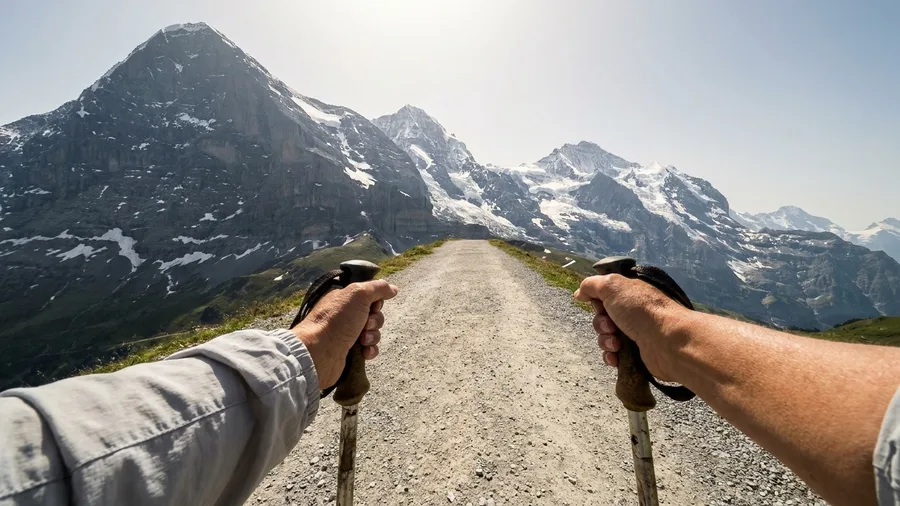
On this ridge, yes – the catch is the calendar, not your legs.
Männlichen to Kleine Scheidegg runs 3.5 miles one-way, 1.5 to 2 hours, dropping about 650 feet along a wide gravel path most fitness levels handle. You ride the gondola up from Wengen, walk the ridge, and catch the train out of Kleine Scheidegg – no return leg, no retraced steps. Point-to-point, lift up, rail down: the logistics do the climbing for you.
The payoff holds for most of the route. The Eiger north face fills one side, the Jungfrau massif the other, and the trail keeps them in frame almost the whole way – easy national park trails with zero technical effort. The window is June to September: outside it, the high ridge can hold snow. Book the flight for summer, because the view you came for lives there.
💡 Tip: Buy the gondola-plus-train combination at the Wengen station rather than separately; it usually costs less than two one-way tickets.
| Trail | Country | Distance | Time | Elevation change | Access |
|---|---|---|---|---|---|
| Männlichen–Kleine Scheidegg | Switzerland | 3.5 mi one-way | 1.5–2 hr | 650 ft descent | Gondola from Wengen; train from Kleine Scheidegg |
| Path of the Gods | Italy | 4.5 mi one-way | 2.5–3 hr | 500 ft descent | Bus to Bomerano; bus from Nocelle |
| Partnach Gorge | Germany | 2.5 mi round trip | 1.5 hr | 300 ft gain | Walk from Olympic Ski Stadium |
| Plitvice Boardwalk | Croatia | 3.5 mi loop | 2–3 hr | 150 ft gain | Park shuttle and boat |
| Vintgar Gorge | Slovenia | 1.6 mi one-way | 1–1.5 hr | 100 ft gain | Shuttle from Bled |
| Ponta de São Lourenço | Portugal (Madeira) | 2.5 mi one-way | 1.5–2 hr | 400 ft gain | Bus or taxi from Funchal |
| Calanques de Sugiton | France | 3 mi round trip | 2 hr | 450 ft gain | Bus to Luminy |
| El Torcal de Antequera | Spain | 1.5 mi loop | 1 hr | 150 ft gain | Drive from Antequera |
| Great Meteoron trail | Greece | 2 mi round trip | 1.5 hr | 350 ft gain | Train to Kalambaka, then taxi |
| Sete Cidades crater rim | Portugal (Azores) | 3 mi loop | 2 hr | 300 ft gain | Drive from Ponta Delgada |
2. Path of the Gods, Amalfi Coast
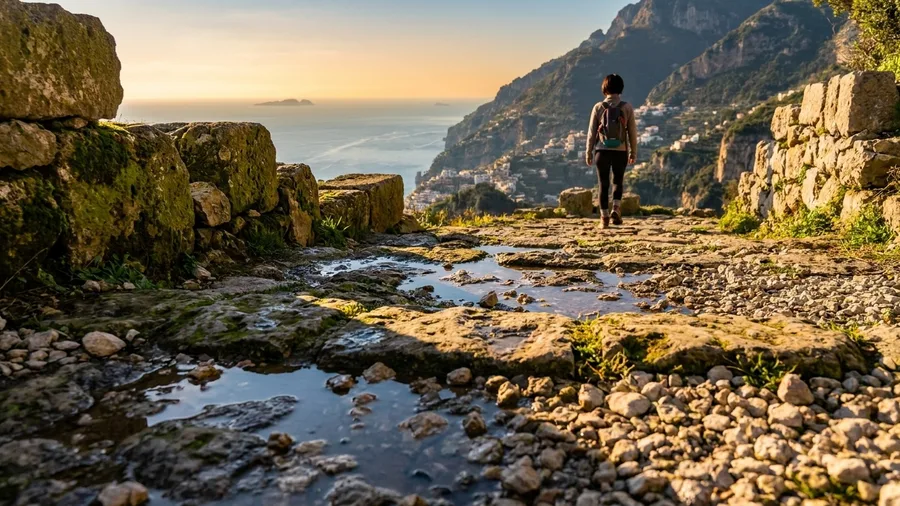
Take the Path of the Gods, and make the finish a plate of pasta in Positano – the two belong together.
Where a lift carried you up a Swiss ridge, here the walking does the work: 4.5 miles one-way, 2.5 to 3 hours, roughly 500 feet of descent with some uneven steps as you drop toward Nocelle. A bus reaches Bomerano at the start, and from Nocelle another bus carries you down to Positano. Car-free, village to village, sea the whole way. Book the meal for after, when you have earned it: a plate of spaghetti alle vongole with a glass of white runs roughly 25 to 35 euros on the coast, more with the view.
The classic Amalfi picture arrives without a climb – cliffside villages stacked above the water, Capri visible on a clear day. Sturdy shoes are the tradeoff; the rocky sections punish sandals. April through October is the season.
Ranked by View-to-Effort Ratio
3. Partnach Gorge, Germany
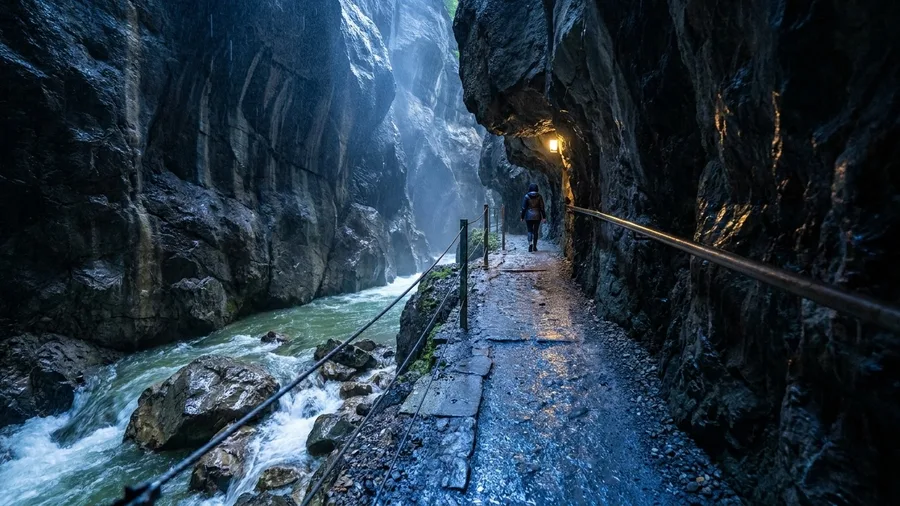
You hear the gorge before you see it: water thundering through a slot of wet limestone, spray cooling the air ten degrees.
Partnach Gorge is a 2.5-mile round trip, about 1.5 hours, 300 feet of gain, and the walk starts from the Olympic Ski Stadium in Garmisch-Partenkirchen. Entry is around $7, the path is paved and gravel, May to October, and the footing stays slick in places. It is a rail day from Munich, and it is worth the small fee and the wet socks – pack a waterproof layer and go early, before the coach groups fill the narrow galleries.
Tourist Timing vs the Better Window
The obvious plan
- Arrive at Vintgar at 11am in August
- Walk Plitvice at midday in July
- Take the afternoon bus to Bomerano
- Attempt Sugiton in the July heat
- Drive to Vista do Rei with no backup morning
The better window
- Vintgar before 9am or after 4pm
- Plitvice at opening, with the boat crossing
- Bomerano on the first morning bus
- Sugiton in May, June or late September
- Two mornings on São Miguel, one clear one spare
4. Plitvice Lakes Boardwalk, Croatia
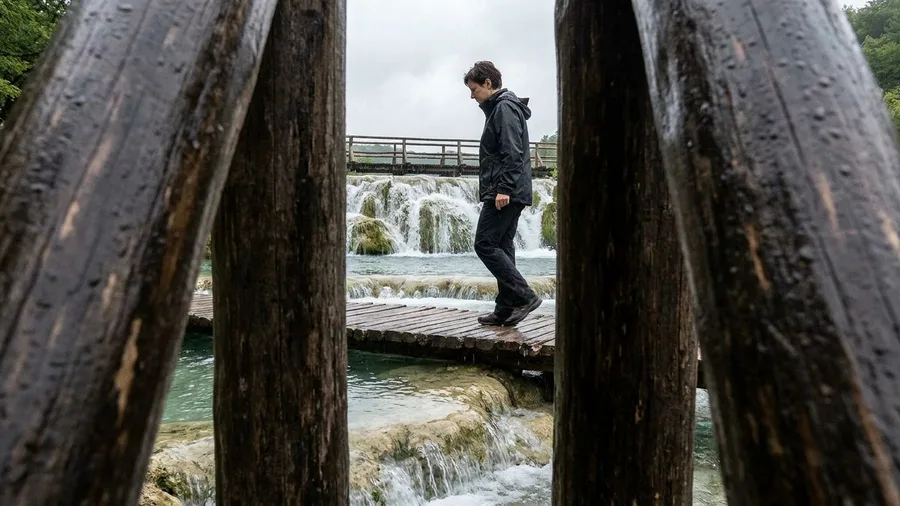
The roar reaches you before the water does, and then the first terrace appears below the rail: water sliding over a lip of pale travertine into a pool so green it looks lit from beneath.
Plitvice Lakes is the boardwalk model scaled up to a whole valley. The loop is 3.5 miles, 2 to 3 hours, and only about 150 feet of gain – one of the smallest climbs on any trail worth flying for, though the walking time is longer because you will stop constantly. The terraces stack in steps for most of the route, and the finale is Veliki Slap, the park's biggest fall, dropping into the lower lakes.
Park transport handles the logistics: a shuttle links the upper and lower entrances and an electric boat crosses the largest lake, so you can connect the sections without retracing. Park ticket is roughly $25, book or arrive early, and the boardwalks run May to September as the summer season.
The locals' move is the entrance and the hour, not the trail. Everyone studies the same maps and books the same mid-morning slot; regulars enter at opening, take the boat across first and walk back against the incoming flow of tour groups. By eleven the narrow planks are a single slow queue. Go early and the same 3.5 miles belongs to you.
💡 PRO TIP
The point-to-point rule
Six of these ten trails do not end where they start. Before you set off, look up the last bus, train or lift of the day and set a turnaround time. The walk is easy; the logistics are what catch people.
5. Vintgar Gorge, Slovenia
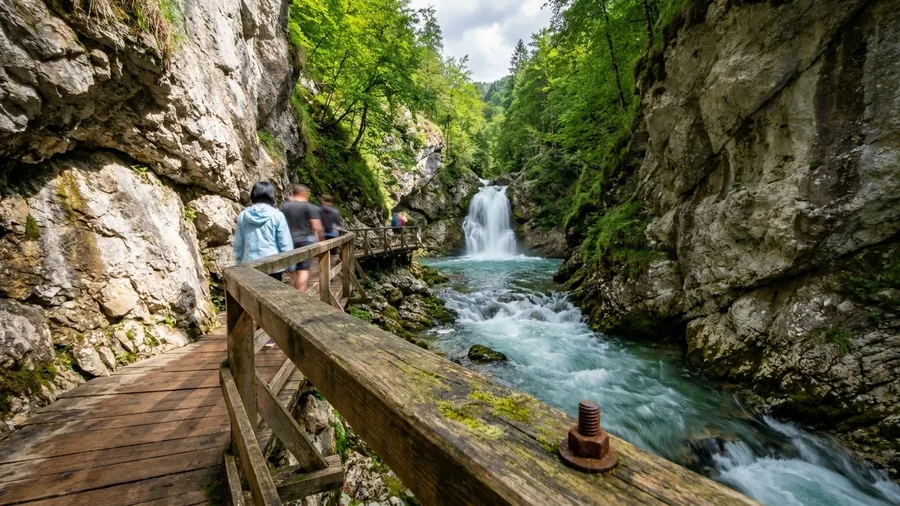
Twelve dollars and under an hour and a half, and you are standing on planks bolted to a gorge wall with water roaring past your feet.
Vintgar Gorge is the boardwalk formula at its smallest and easiest: 1.6 miles one-way, 100 feet of gain, and a flat river-level walk the whole way. The Radovna runs turquoise the entire length, squeezing between walls that close to a few feet in places, and at the far end the Šum waterfall drops about 40 feet into a pool you have to stop and watch. Shuttle from Bled runs to the entrance, and the walk exits at the far end where you can rejoin transfer; the boardwalk ticket is around $12.
The reason to go slowly is that the gorge ends in a clearing, not a road. Come out at the Šum side and there is grass and a bench and nobody telling you to keep moving. Sit for an hour. This is the stop where doing nothing is the point – the sound is what you came for, and it only registers once you stop walking.
Two practical notes. The season runs April to October, and the planks are wet most of that time – after rain they get genuinely slick, so grip matters and hands on the rail are fine. And the gorge is a one-way flow of people; go early or late in the day and you get the pond to yourself. Check current hours and shuttle times at the Bled end before setting out.
6. Ponta de São Lourenço, Madeira
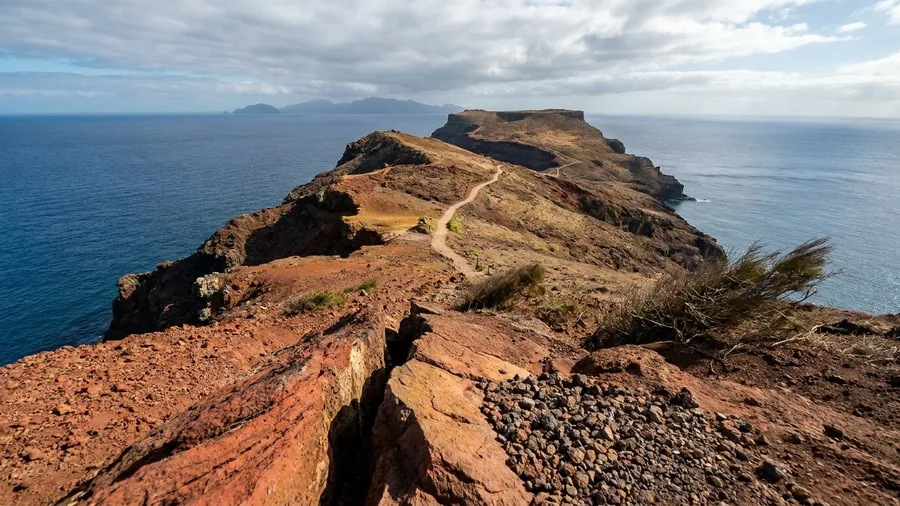
After the green pools and shaded planks of a river gorge, this one hands you no cover, no ticket booth and no waterfall – just red rock, wind, and a path running out along a ridge to the sea.
Ponta de São Lourenço is the eastern tip of Madeira: 2.5 miles one-way, 1.5 to 2 hours, about 400 feet of rolling gain along an exposed volcanic spine. Red cliffs drop to the Atlantic on both sides, the Desertas Islands sit offshore, and the path keeps climbing over small rises until the flat headland at the end. Bus or taxi gets you from Funchal to the trailhead, and it runs year-round – the most flexible season on this list.
The one story to know is what you are walking through. This is not a scenic coastline that happens to be spare; it is a natural reserve whose pale rock and scrubby plants are the island's dry, older face, and the wind that shapes them is the same wind that will shape your walk. Carry sun and wind layers, check the forecast, and skip it in high wind or rain – the exposure does not forgive a bad day.
💡 Tip: Go for late afternoon: the cliffs light up, the day-trippers have gone, and the wind usually drops.
7. Calanques de Sugiton, France
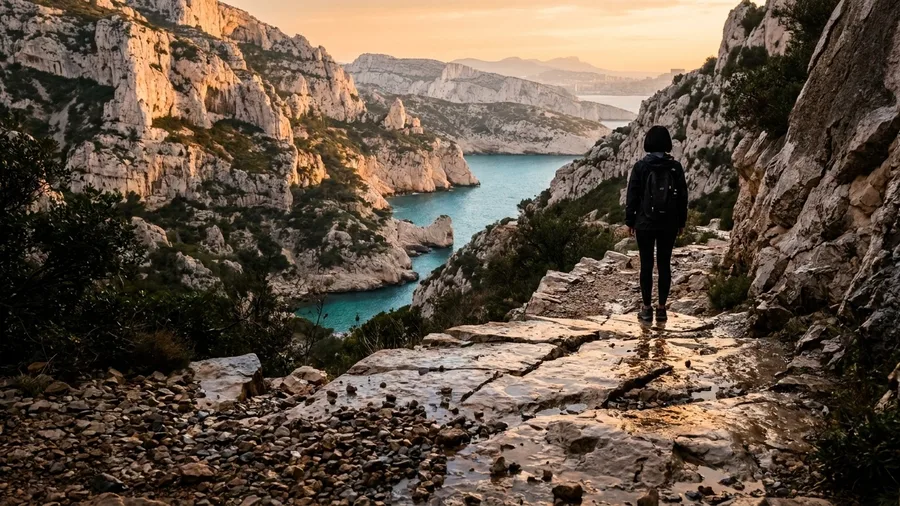
The catch is the season: this one works April to June and again in September and October, and midsummer is not the time to try it. The limestone bakes, the scrub gives no cover, and the Marseille heat turns a two-hour walk into a punishment. Come in the shoulder months and you get the cove at its best.
The Calanques de Sugiton is a three-mile round trip out of the Luminy campus on the edge of Marseille, roughly two hours of walking with about 450 feet of climbing each way. A bus gets you to Luminy from the city center; from there the path is marked, rocky in stretches, and drops toward a white-rock inlet where the Mediterranean sits an impossible shade of blue against pale stone. Allow time on top of the two hours to sit and, if the weather cooperates, to swim.
This is where the trip does double duty. You start in a major city, ride a bus to the trailhead, and finish at a cove you can wade into before the afternoon ferry crowds arrive. No car rental, no gondola ticket, no entry fee. The 450 feet of gain and the loose stones underfoot mean modest fitness still matters, and you should carry more water than feels reasonable, because the path offers no refill and little shade.
The footing is the honest trade-off. Some sections are worn limestone with a scatter of rolling stones, and the descent toward the water takes more attention than the climb out. Wear proper shoes rather than sandals, and if rain is forecast, save it for another day; wet rock here is unforgiving.
Line it up against a Marseille stay rather than a dedicated detour, and it pays off: you trade a morning in the city for a swim in a limestone cove that no elevator or road can reach. That is the easy view this trail buys, and at shoulder-season temperatures it costs you a bus fare and half a day.
⚠️ COMMON MISTAKE
Do not assume the summer trail is open
Both Sugiton and the Madeira headland can close on short notice – fire risk in France, wind in Portugal. Check the official park or trail status the morning you go, and hold a second option for the same day.
8. El Torcal de Antequera, Spain
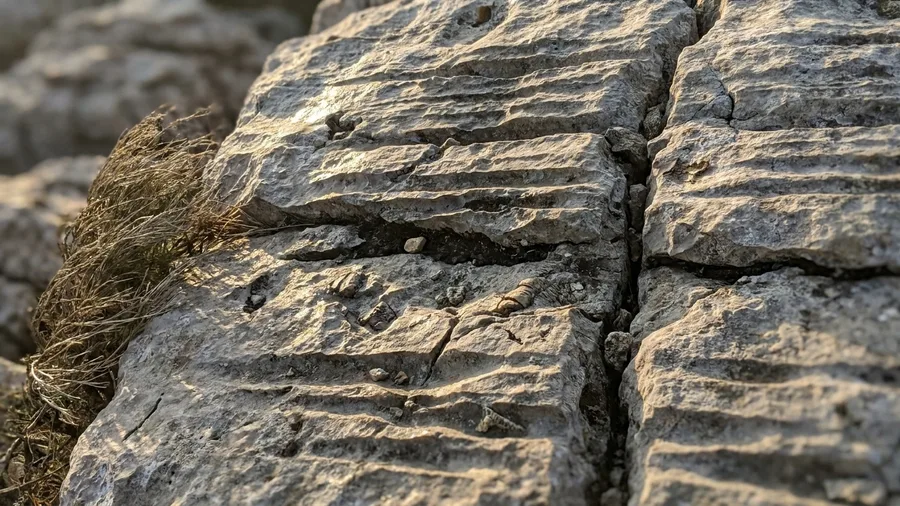
El Torcal de Antequera is a one-and-a-half-mile loop through stacked limestone towers that look less like a landscape than a heap of unbalanced plates.
The walk is about an hour with only 150 feet of gain, the shortest and quickest of its kind on this list, but you reach it by driving from Antequera and the rock turns slick when wet. Go March to June or September to November, start from the visitor center where the marked trails begin, and you get the Guadalhorce valley framed between the formations. For a tight Málaga itinerary it delivers strange scenery in an hour; the car and the slick footing are what you trade for that speed.
9. Great Meteoron Trail, Meteora
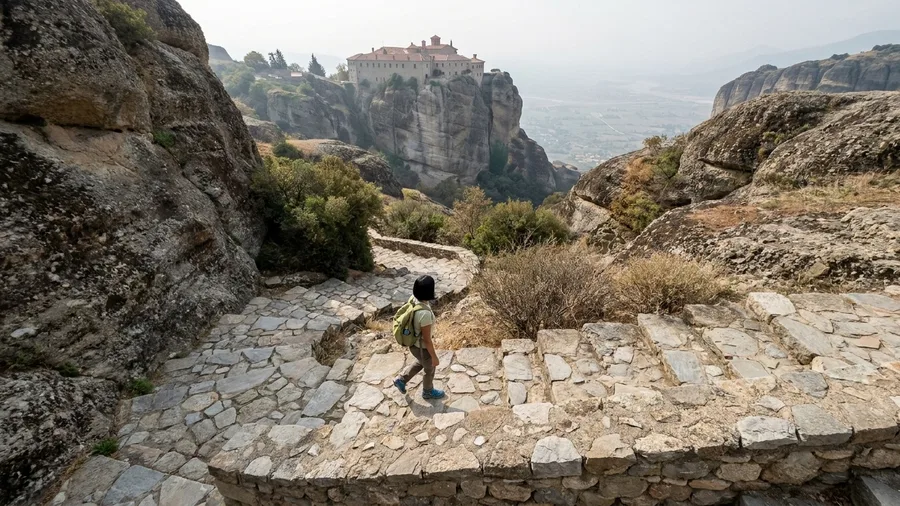
Go early or go late. The Great Meteoron path climbs to a monastery perched on a rock pillar above the Thessalian plain, and by mid-morning the tour buses have filled the viewpoint and the stone. First light or the last hour before closing gives you the pillars without the crowd and softer heat on the uneven steps.
It is two miles round trip out of Kalambaka, about an hour and a half with 350 feet of gain, reached by train and then a taxi to the trailhead, with monastery entry costing extra on top. The climb is gentle but the stone is uneven, and the payoff is cultural as much as scenic: rock towers and clifftop buildings rather than a summit view. Between the train transfer and the entry fee, plan it as a day, not a spare hour.
10. Sete Cidades Crater Rim, Azores
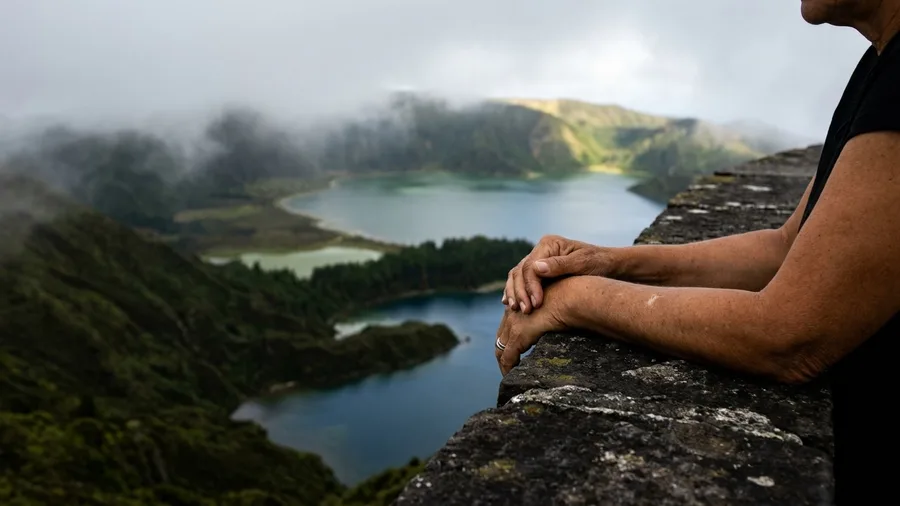
For Sete Cidades, yes, if the budget covers a car and the weather holds. The gentle 3-mile loop around the rim packs the classic twin-lake view into about two hours and 300 feet of gradual gain, well short of a full-day trek. It is the rare case where the scenery, not the walk, does the heavy lifting.
Access is the cost that makes this one a splurge: there is no train to the trailhead, so you drive from Ponta Delgada to the Vista do Rei car park, usually renting a car for the day. Because the road stops right at the viewpoint, it also means you can start later and still catch the view from above, where the blue and green lakes sit in the crater like two poured pools that never quite mix.
Seasons here are May through September, and the rim's main variable is mist: a clear morning can turn cloudy within an hour, and in seconds the lakes disappear entirely. So check the forecast before you commit your flight. Book this one for the view, and go early enough that the weather window is still open.
Vintgar Gorge and Sugiton at a Glance
🥾 Vintgar distance
1.6 mi one-way
⛰️ Vintgar gain
100 ft
🎟️ Vintgar ticket
around $12
🏊 Sugiton distance
3 mi round trip
⛰️ Sugiton gain
450 ft
🚌 Sugiton access
Bus to Luminy
Best pairing
Both sit within two hours of a city break base – Bled and Marseille – and both reward an early start.
Frequently Asked Questions
Are these trails really easy, or just short?
Both, in most cases. Every one is under five miles and under 650 feet of elevation change, and several lose elevation rather than gain it. The Path of the Gods and Sugiton have uneven or loose footing, which is a different challenge from fitness, so bring shoes with grip.
Do I need a car for these hikes?
Four of the ten need one: El Torcal de Antequera, Sete Cidades, and to a lesser extent the Partnach Gorge and Meteora trailheads, where a taxi or local train covers the last leg. The Swiss ridge, Path of the Gods, Plitvice, Vintgar, Madeira and Sugiton all work with lifts, trains or buses.
What is the best month overall?
June and September. Both keep the Swiss and Slovenian trails open, avoid the worst Amalfi and Croatian crowds, and sit inside the Madeira and Azores windows. July and August work but add heat and coach traffic; May and October risk snow up high and closures down low.
Can I combine two of these in one trip?
Yes, if you pick the right pair. Vintgar and Plitvice are a reasonable drive apart in the same region; Partnach Gorge and the Swiss ridge share a rail corridor through Bavaria and eastern Switzerland. Sugiton and El Torcal both sit within reach of a southern Europe city break.
How much do the trails themselves cost?
Five are free to walk: the Swiss ridge, Path of the Gods, Ponta de São Lourenço, Sugiton and the Sete Cidades rim, though the Swiss gondola and train cost money. Elsewhere budget around $7 for Partnach, $12 for Vintgar, $25 for Plitvice, and extra for monastery entry at Meteora.
What should I pack for a three-hour version of this?
Trail shoes, a one-litre bottle, a light shell, and a charged phone with the trail status page saved. Add swimwear for Sugiton, and a dry bag for Partnach and Vintgar, where spray reaches the path.
Sort the ten by trip style before you sort the flights
The ten earn their flights on view-to-effort ratio, not on being the shortest walks. Distance alone tells you little; elevation, access and season decide whether the day works.
Sort them by trip style. First time in Europe: the Mannlichen ridge, the Path of the Gods, Plitvice, Meteora. Car-free city break: Vintgar, Sugiton, Ponta de Sao Lourenco. Family or low-fitness day: Partnach Gorge, El Torcal, Sete Cidades.
Book the Swiss ridge first: 650 feet of descent, a gondola from Wengen, a train from Kleine Scheidegg, June through September, the Eiger north face and the Jungfrau massif in front of you for most of the way.
That tight itinerary which made a mountain view look like a lost day still starts with a flight, so before you lock it, check official park or trail status and the forecast. Snow closes the Swiss ridge, wind and rain close Ponta, mist hides Sete Cidades. Then book the view.
Pick your two trails, then lock the dates
Choose one city-break trail and one mountain trail from the ten, then check each park's official status page and the local forecast for your week before you book.