Is the famous stop actually the best use of your days and dollars, or is it just the one you can name? Often it is just the name. Santorini runs about $320 a night and $260 a day at peak; Nafplio, two hours by car from Athens, runs $150 and $140, and you still get the Aegean. That is the opening test, and it mostly fails in favor of the smaller town.
The lazy move is to book the postcard and hope the crowds thin out. They do not. The better play is a base town 30 to 120 minutes from the icon, close enough to visit and far enough to sleep well.
None of this is settling. Each swap keeps the same pleasure, sea, art, canal, old town, or landscape, and loses exactly one signature sight. Nine swaps make the trade explicit: hotel cost, daily spend, the gateway transfer, and the one thing the famous stop still wins. Pick the town when cost, crowds, and a slower base outrank the postcard. Pick the famous stop only when its signature sight is the whole reason, and book that sight early.
Quick Tips Before You Start
Book the swap, not the icon
Peak-season rates at the underrated towns are 30-60% lower, but they still fill in July and August. Reserve by March.
Check the transfer first
Every swap here has a direct train, bus or short flight. If the connection takes more than 2 hours, it is not a swap, it is a separate trip.
Book the one signature sight early
If you are going to the famous stop anyway, book its museum or hike weeks ahead. That is the only part you cannot replicate.
Budget in daily spend, not hotel rate
The gap between a $260 day and a $140 day adds up to $840 over a week. That is a second trip.
Stay central, walk everywhere
Underrated towns are small. A central room costs $20 more and saves $30 in taxis and an hour of transit.
1. Nafplio Instead of Santorini
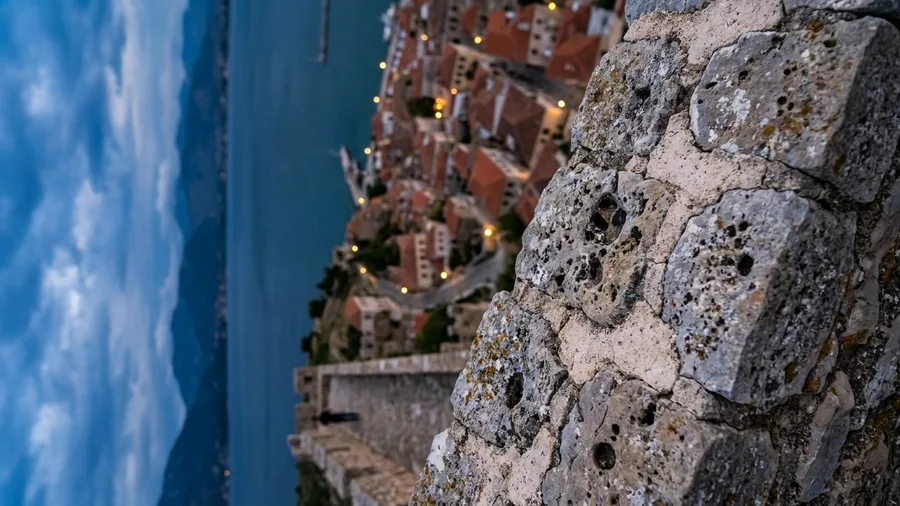
Nafplio is a Peloponnese seaside town that gives you the Aegean without the caldera markup.
Santorini in peak season runs about $320 a night for a hotel and $260 a day in spend, and what that money buys is the one thing Nafplio cannot reproduce: the caldera rim, the white villages stacked above it, the view from Oia at dusk. That view is real and it is singular. But you are paying a premium to share it, and the sunset terrace at Oia is a scrum by five in the afternoon.
Nafplio runs around $150 a night and $140 a day. The transfer from Athens is roughly two hours by car, which makes it the rare Greek coastal base you can reach without a ferry booking or a flight to a second island. The old town is compact and flat, the water is a few streets down, and nobody is funneling you toward a tender boat.
Your evening moves from the Oia crush to the climb up to Palamidi fortress, where the ramparts look straight down on the town and the gulf beyond it. Go late, when the heat drops and the light goes gold on the stone. Afterward you eat in the squares instead of queuing for a table with a view, and the sea is still there in the morning.
Take Nafplio if sea access without cruise-ship timing and a hotel bill half the size matter more than the postcard. Take Santorini only if the caldera view is the reason you are going, and if it is, book that view early. Everything else here is a base, and Nafplio is a good one.
💡 Tip: Park outside the old town and walk in. The center is pedestrianized and the parking tickets are steep.
2. Ferrara Instead of Venice
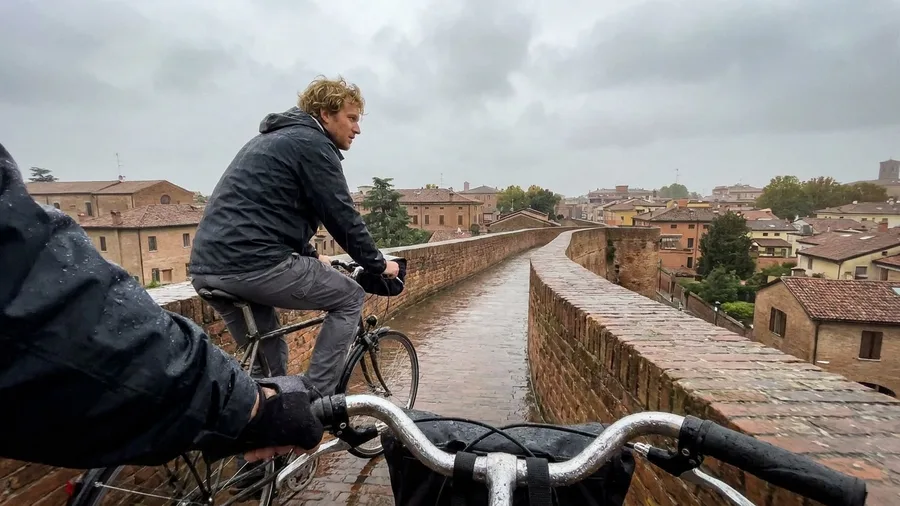
Yes, and the honest catch is that you give up the water. Ferrara sits about 50 minutes by train from Bologna airport, where a hotel runs around $130 a night and daily spend closer to $120, against roughly $280 and $240 in peak-season Venice. The canals and the lagoon atmosphere are the one thing Ferrara cannot reproduce, so if a gondola under a bridge is the trip, go to Venice. If it is Renaissance streets, frescoed palazzi and a meal you can hear yourself talk through, Ferrara is half the cost and none of the crush.
The day runs on the city walls, which you can cycle almost the whole way around, then the palazzo streets and the quiet squares behind them. Rent a bike, because that is how the locals treat the walls. This is walkable art without the tide, and the verdict is simple: Ferrara if quiet meals and walkable art beat canal spectacle, Venice if the canals are the reason.
| Overrated destination | Underrated town | Typical peak hotel/night | Typical daily spend | Gateway transfer | Still worth it for |
|---|---|---|---|---|---|
| Santorini | Nafplio | $320 vs $150 | $260 vs $140 | Athens to Nafplio: 2 hr by car | Caldera views |
| Venice | Ferrara | $280 vs $130 | $240 vs $120 | Bologna airport to Ferrara: 50 min by train | Canals and lagoon atmosphere |
| Paris | Rouen | $300 vs $140 | $260 vs $130 | Paris Saint-Lazare to Rouen: 1 hr 15 min by train | Louvre and Orsay scale |
| Amsterdam | Utrecht | $260 vs $160 | $230 vs $150 | Amsterdam Centraal to Utrecht: 30 min by train | Major museums and nightlife |
| Barcelona | Girona | $220 vs $140 | $210 vs $130 | Barcelona Sants to Girona: 40 min by AVE | Beaches and Gaudi |
| Dubrovnik | Šibenik | $240 vs $120 | $220 vs $110 | Split airport to Šibenik: 1 hr by bus | City walls and Game of Thrones sights |
| Prague | Olomouc | $180 vs $95 | $160 vs $90 | Prague to Olomouc: 2 hr 15 min by train | Castle scale and big-city variety |
| Reykjavik | Akureyri | $280 vs $230 | $260 vs $220 | Reykjavik to Akureyri: 45 min flight | Airport access and nightlife |
| Cinque Terre | Camogli | $250 vs $170 | $230 vs $160 | Genoa to Camogli: 30 min by train | The five-village coastal hike |
3. Rouen Instead of Paris
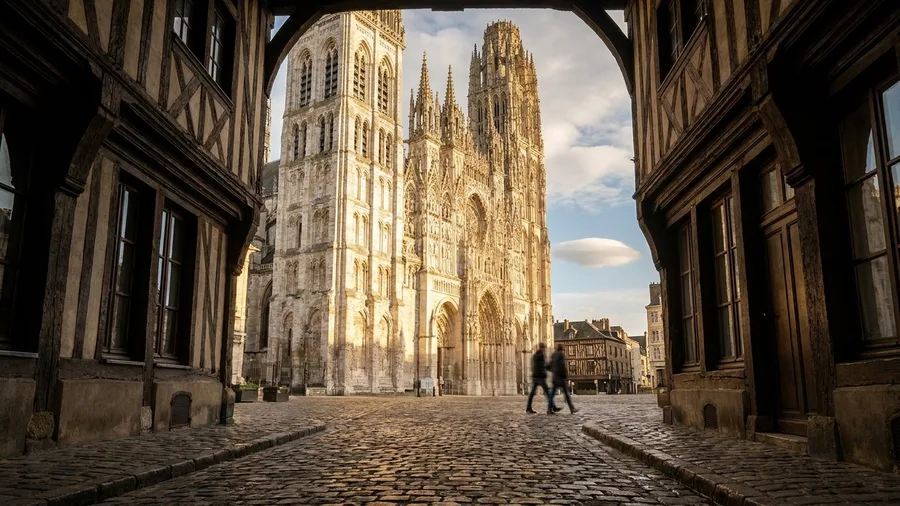
You come out of the half-timbered lane into the square and the cathedral facade fills the whole frame, lace-cut stone going amber in the late light.
That is the photograph, and it is free. Rouen gives you the Gothic set piece that Paris spreads across a morning of queuing, and you reach it from Paris Saint-Lazare in about 1 hour 15 minutes by train. A hotel here runs around $140 a night and daily spend about $130, against roughly $300 and $260 in peak-season Paris. The day spine is the cathedral, the Joan of Arc sites where she was tried and burned, and those overhanging streets. Stand in front of the west facade in the hour before sunset, when the stone warms and the tour groups have thinned.
The Louvre and the Orsay, with their sheer scale, remain Paris's unique win, and no provincial city matches them. But that decides the trip only if the museums are why you came. If Paris was mainly your gateway or one art stop, Rouen does the city-break job at less than half the cost. Take Rouen if Gothic architecture and a half-timbered old town beat museum scale; take Paris if the Louvre and Orsay scale are the reason.
⚠️ COMMON MISTAKE
Don't write off the famous stop entirely
The point of a swap is not to avoid the icon. Book one day trip into the famous city for the one thing it does best, then sleep and eat in the cheaper town. You get both.
4. Utrecht Instead of Amsterdam
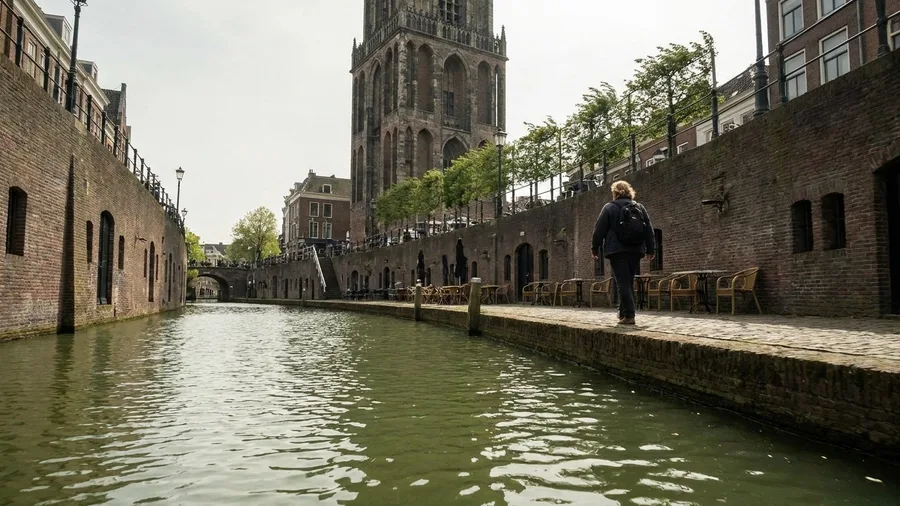
If you want the Dutch canal picture without the Amsterdam crowd math, sleep in Utrecht. The transfer is the easiest in this whole set: a train from Amsterdam Centraal puts you at Utrecht Centraal in 30 minutes, and you can be standing on a wharf-level canal ten minutes after that.
The money reads $160 a night and about $150 a day against Amsterdam's $260 and $230 at peak season. That is a lower bed and a shorter crowd exposure on the exact thing you came for, which is water at street level, brick, and a city you can cross on foot in an afternoon. The Dom Tower is the fixed point: 112 metres of it, the tallest church tower in the country, and you climb or you photograph it from every canal bend below.
What Utrecht does not carry is the Rijksmuseum, the Van Gogh, and a night that runs until four. If those museums and that nightlife are the reason you booked the flight, stay in Amsterdam and pay for it. If the reason was canals, the red-light windows and coffee-shop queues are the texture you are trading away, and most travelers find they do not miss it.
💡 Tip: The Dom Tower climb is timed and sells out on weekends. Book a slot online the day before.
The famous stop vs the swap: what you gain and give up
Famous stop
- Signature sight you cannot replicate
- Higher hotel and meal costs
- More crowd pressure at peak hours
- Better public transport connections
Underrated town
- Lower costs by $60–$185 a night
- Walkable center without queueing
- Local restaurants at local prices
- Needs a short transfer from the gateway
5. Girona Instead of Barcelona
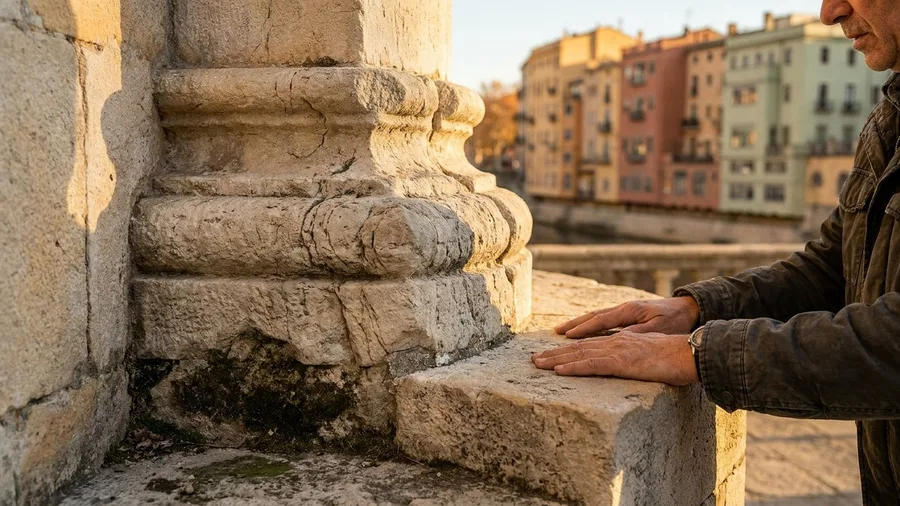
Girona asks less of you than Barcelona on almost every count – a 40-minute AVE from Barcelona Sants, a bed at $140 instead of $220, a day at $130 instead of $210 – and it asks you to give up the beach. That is the honest line. Come here with kids who need sand and shade by noon and you have picked the wrong base; come here to walk walls and eat late in a small square and it suits you better than the city does.
The old town stacks up the Onyar, the cathedral steps are the ones from the screen, and the city walls run far enough to tire a nine-year-old without losing them. The Costa Brava beaches are a day trip, not a doorstep. Las Ramblas pressure, the pickpocket drill, the queue for the Sagrada Familia – none of it follows you here. Gaudi and the city beaches are what you lose.
Girona at a Glance
🚫 Swap the block if
Beach by noon is non-negotiable
💵 Saving per 3-night stay
$390 vs Barcelona
📍 Where to base
Barri Vell, inside the old town
🚗 Costa Brava run
Around 1 hr by car to the coast
🎟️ Book ahead for
Cathedral and Arab Baths, same day
Skip this swap if
You want Gaudi, a metro pass and a beach you can walk to. Barcelona wins that trip; Girona loses it.
6. Šibenik Instead of Dubrovnik
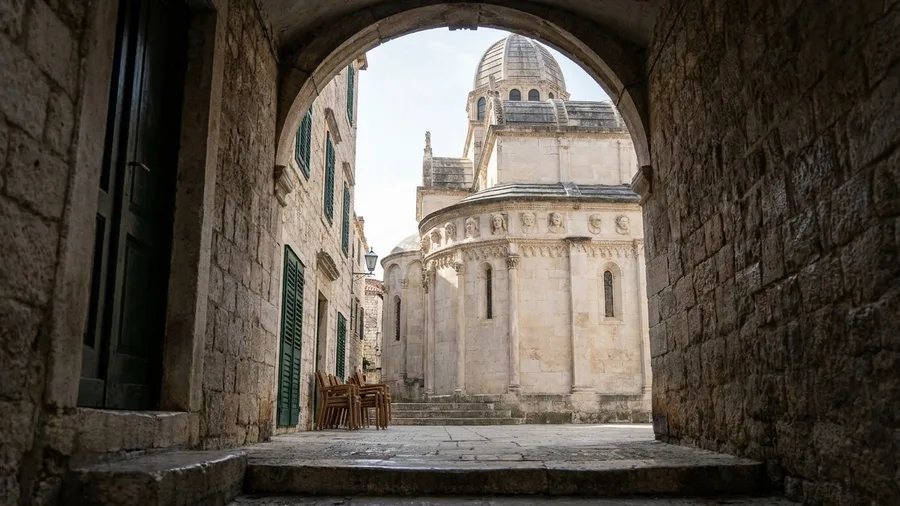
Know before you commit: the reason to base in Šibenik is not the town alone. It is that you can reach Krka National Park in under an hour and be at the boardwalks before the coaches from the coast arrive, and that timing decides whether the day is water and birds or a slow shuffle behind a flag.
The town itself sits at $120 a night and about $110 a day against Dubrovnik's $240 and $220. Arrive from Split airport by bus in roughly an hour and you are on the same limestone, the same Adriatic light, with a fraction of the cruise-ship surge that fills Dubrovnik's Stradun by mid-morning. The stone streets are narrower and quieter, and dinner does not come with a queue.
St James Cathedral is the anchor, a whole church built from interlocking stone slabs with no mortar binding the vault, and you can stand in front of it at nine in the morning with room around you. The fortress above gives you the rooftops and the water in one frame.
The nature is the reason to build two nights here. Krka's waterfalls run hard in spring and early summer, the boat to the lower falls is part of the day, and the birdlife along the channels is reliable rather than guaranteed. Go early, check current park hours and boat schedules before you set out, and you will see what the afternoon crowd misses.
What you give up is the famous walk. Dubrovnik's city walls and the Game of Thrones filming spots are the one thing this coast cannot hand you anywhere else. If those walls are the trip, book Dubrovnik and go up at opening. If the trip was the Dalmatian coast itself, Šibenik gets you the cathedral and the waterfalls without the cruise timing.
💡 Tip: Krka entry is timed. Book the first slot of the day and you will have the main falls almost to yourself for an hour.
What a week in Šibenik actually costs
Based on typical peak-season rates for one person, mid-range hotel and restaurant meals.
7. Olomouc Instead of Prague
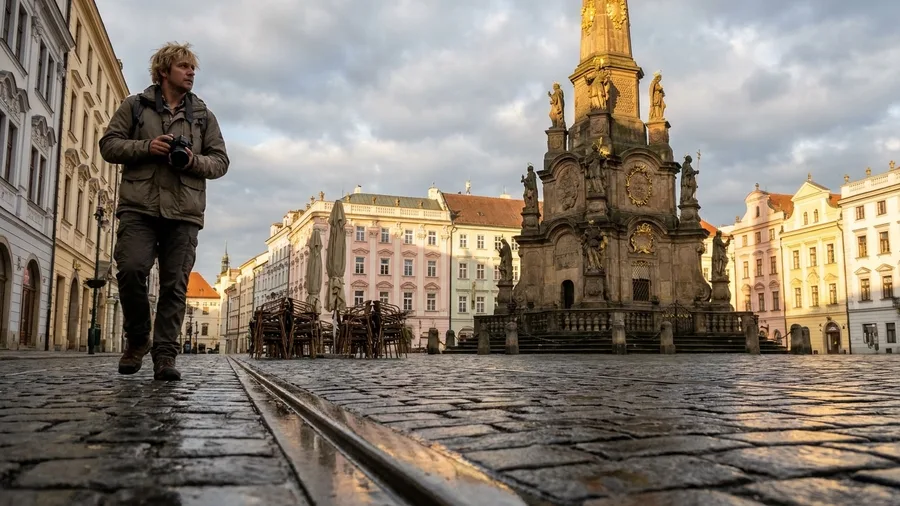
In Olomouc, the thing you notice first is the quiet: no music bleeding from a bar, no group of men in matching t-shirts shouting at each other across a square. Just trams, and the clatter of cafe chairs being pulled out onto cobbles around mid-morning, and somewhere in the distance the low murmur of a market winding down. You can hear a city thinking.
This is the Czech base that eliminates the crowd you came to avoid, and it costs you almost nothing. Prague peak-season runs about $180 a night and $160 a day; Olomouc comes in around $95 and $90 on the same basis, and the train from Prague takes 2 hours 15 minutes, which is a morning out of your trip for the whole of a smaller, softer city break. The center fits inside twenty minutes of walking, the Holy Trinity Column dominates the main square like a carved stone wedding cake, and the cafes are cheap enough that you stop for a second coffee without checking your watch. None of it charges admission.
What you give up is real: Prague's castle scale and big-city variety, the sheer number of museums, neighborhoods, and late-night options that fill a week. Olomouc hands you a compact center and a good cafe life, which is a different trip – a slower one, where the afternoon is a table and a book rather than a queue. Take Olomouc when the walking and the coffee are the point. Take Prague when castle scale and variety are the reason you booked the flight.
💡 Tip: Climb the town hall tower for the view over the Holy Trinity Column. It costs a few dollars and the stairs are short.
8. Akureyri Instead of Reykjavik
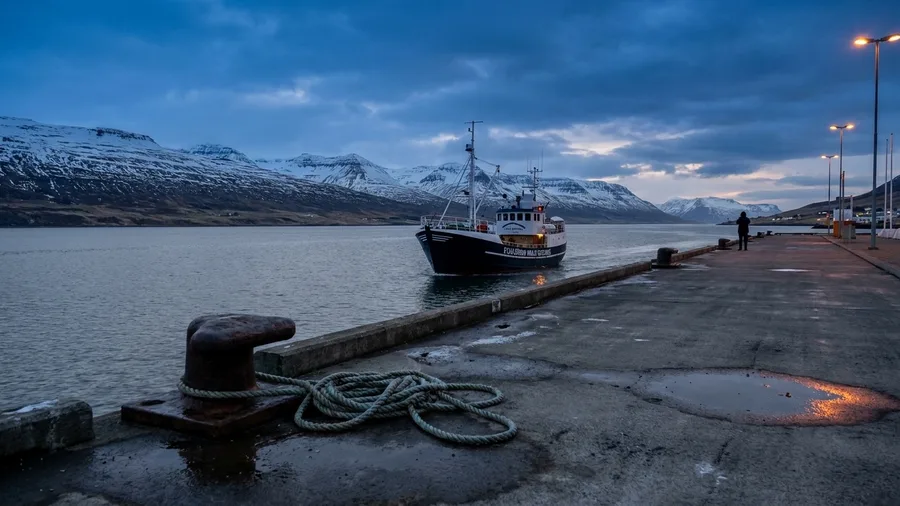
The gap is the narrowest in the whole set: $50 a night and $40 a day. Reykjavik runs about $280 a night and $260 a day in peak season; Akureyri comes in around $230 and $220, and the flight from Reykjavik takes 45 minutes. If you are comparing on price alone, this is the swap that saves least – so you have to want the north itself.
You should, and here is the dish that makes the case: a bowl of lamb soup at one of the harbor-side places, thick with root vegetables and refilled without charge, somewhere around $20-25 a bowl, sitting in a warm room while the fjord goes gray outside. Then the botanical garden, free to walk through, is a strange and quiet hour of Arctic flowers and tidy paths – the kind of place you stop at for ten minutes and stay for forty. Whale-watching boats leave the harbor in season, typically three hours out and back, and the northern landscapes start at the edge of town rather than a day's drive from a capital.
What Reykjavik keeps is airport access and nightlife, and both are real advantages if your trip leans on a late arrival or an evening scene. Akureyri trades them for northern nature on the doorstep. Choose it when the landscapes and the whale watching are why you flew to Iceland, and the $50 gap is just the detail that stops the choice from hurting.
9. Camogli Instead of Cinque Terre
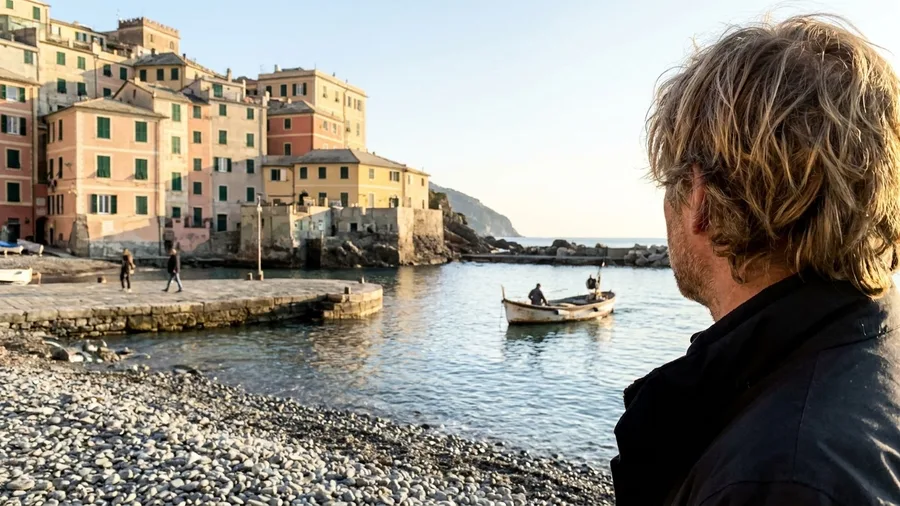
Know before you go: Camogli's beach is pebbles, not sand, and it is small. If you arrive at noon in August expecting a long strip of pale sand, you will be disappointed, and the harbor-front restaurants will be full.
The compensation is everything else, and it is a different kind of Riviera day. Cinque Terre peak-season runs about $250 a night and $230 a day; Camogli comes in around $170 and $160, and the train from Genoa takes 30 minutes. The harbor is a semicircle of tall pastel houses, the water in it is clear enough to see the bottom from the quay, and the Ligurian eating is slow and unhurried – a plate of trofie al pesto, a glass of white, an hour that becomes two. You sit on the rocks at the harbor mouth and watch the boats come in and out and do almost nothing, which is the entire point. What you sacrifice is the five-village hike, and if hiking those trails is why you came, take the crowded version and start early.
🗺️ How to pick your swap in four steps
Name the one sight
Write down the single thing you would regret missing from the famous stop.
Check the transfer
Confirm a direct train, bus, or flight under 2 hours from the gateway city.
Compare the daily spend
Multiply the nightly gap by your number of nights. If it pays for a day trip, the swap works.
Book the icon separately
If you still want the famous sight, book that museum or hike early and treat it as a day trip.
Frequently Asked Questions
Is Santorini really overrated?
Santorini is not overrated as a sight; it is overpriced and overcrowded at peak times. The caldera view is genuinely one of the best in Europe. If that view is the reason for your trip, go and pay for it. If you mainly want a Greek seaside base, Nafplio gives you sea access and lower costs.
Can I do Venice as a day trip from Ferrara?
Yes. Ferrara to Venice is about an hour and a half by train, with a change in Bologna or Padova. Go early, see the canals, and come back to a quieter dinner. You get the Venice morning without the Venice hotel bill.
Which swap saves the most money?
Olomouc versus Prague has the biggest nightly gap at $85, and Nafplio versus Santorini saves the most on daily spending at $120. Over a week, either swap frees up several hundred dollars.
Do I need a car for these underrated towns?
Most of them are reachable by train or bus. Nafplio is the exception: a car from Athens is the easiest way, though buses run from Athens KTEL station. Girona, Utrecht, Rouen, Ferrara, Olomouc, and Camogli all have direct rail connections.
Is Akureyri worth it if I only have five days in Iceland?
Probably not. The 45-minute flight plus transfer eats half a day. Akureyri works best on a seven-day trip or longer, when you can use it as a base for the north. With five days, stay closer to Reykjavik and do day trips.
Which Europe base fits your trip: postcard or pace?
So the rule is plain: take the underrated town when cost, crowds, and a slower base matter more than the postcard sight. Take the famous stop only when its signature sight is the reason you booked the flight, and book that sight the day tickets open.
Run it once more on the Santorini test. $320 a night and $260 a day against Nafplio at $150 and $140, with a 2 hr car transfer from Athens. The alternative is a different base, not a lesser copy of the trip.
The pleasure survives without the postcard, as long as you name the one sight you will not give up before you book. Then every swap here is a trade you made on purpose. Name that sight tonight, and the base decides itself.
Before you book, check the transfer
Open a train or bus timetable for your chosen swap right now. If the direct connection is under 2 hours, you have your base. If it is longer, pick a different pair from the list.