Everyone books Strasbourg and calls it the Christmas town; Colmar, twenty minutes down the line, is the one that keeps its lights on after the 24th. You probably believe the trip is finished on December 26, that the Glühwein huts are already down and only Munich or Vienna has anything left standing. Half true. Many German and Alsatian markets do pack up by Christmas Eve, and the ones that stay are worth confirming with the local tourist office before you commit. What survives is the part you came for: lit lanes, shop windows, canal walks, fondue, pub fires. Bruges Winter Glow and Tallinn's Town Hall Square market commonly run past Christmas.
So pick one town, two, three at most – two nights in most, one or two in Hallstatt, three if you choose Zermatt or Rovaniemi. Doubles land anywhere from $110 to $420 a night, and daylight runs from about nine hours in Alsace down to four in the Arctic. Cities get the crush; these towns get the quiet.
Book rail and rooms six to eight weeks out for the December 26 to 31 window, and choose by what you actually want: classic streets, a lower bill, real snow, a food town, or mild weather. That is the whole bet – and it pays.
Quick Tips Before You Start
Check dates directly
Confirm market and attraction hours with the official tourist office for each town; many German and Alsatian stalls close by Dec 24.
Book rail early
Six to eight weeks ahead for the Dec 26–31 window; trains fill and flexible fares climb.
Pack for wet cold
Waterproof boots and a rain shell matter more than a heavy coat in Bruges, York, Bergen and Annecy.
Plan around daylight
Aim for outdoor walks before 2 pm in Tallinn and Bergen (6 hours of light) and before noon in Rovaniemi (4 hours).
Three nights, not twelve
Pick one to three towns; two nights is the sweet spot for most, three for Zermatt or Rovaniemi.
1. Colmar's Canal-Lit Old Town
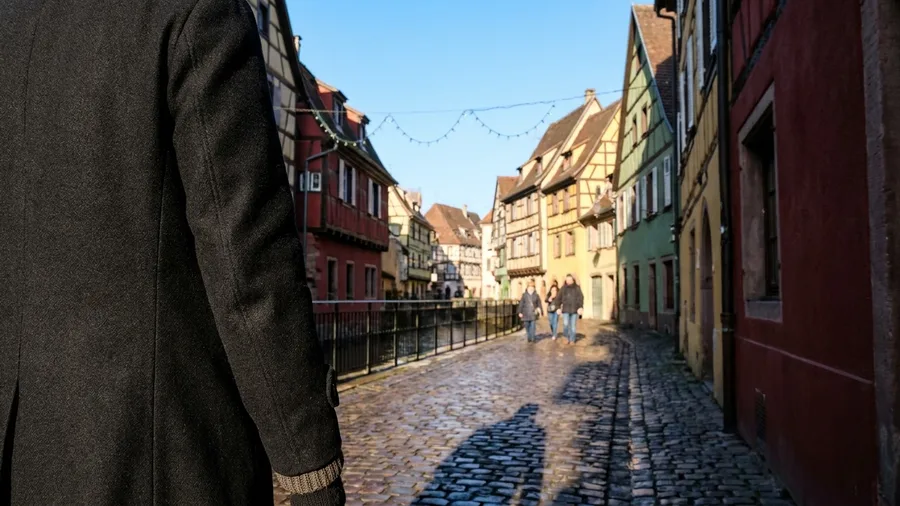
The cold hits first when you step off the train – a raw, damp Alsatian cold that smells of woodsmoke and wet stone, and the lane ahead glows amber from shop windows even though the stalls are gone.
That is the Colmar you get after Dec 25: half-timbered lanes, a canal walk through Little Venice, and a museum worth two hours when your fingers stop working. It is also why it earns two nights, not one. Hotel doubles inside the old town run about $170-240 midweek. Plan the outdoor hours before 4pm – late December gives you 8 to 9 hours of daylight, and the light goes soft and blue early. Then eat: a winstub dinner of choucroute or tarte flambée, $30-55 a head, café lunch $15-25. Walk the La Petite Venise canal and spend an afternoon in the Unterlinden Museum. Confirm what is actually open with the official Colmar tourist office, because many Alsatian stalls shut by Dec 24 – the lights and the shop windows stay. Couples and food travelers get the most out of it. You come for the town, not a market guarantee.
💡 Tip: Book a winstub table for 7 pm; kitchens slow down between the holidays and walk-ins get turned away.
| Town | Country | Best for | Signature between Dec 26–31 | Typical 3-night stay |
|---|---|---|---|---|
| Colmar | France | Couples, food travelers | Canal-lit lanes and Alsatian winstubs | $510–720 |
| Rothenburg | Germany | Quiet couples | Walled medieval streets and year-round Christmas Museum | $390–570 |
| Bruges | Belgium | Food-focused couples | Canal reflections and Winter Glow lights | $540–780 |
| Tallinn | Estonia | Budget travelers | Town Hall Square market commonly running past Christmas | $360–540 |
| Český Krumlov | Czechia | Low-cost quiet | Empty lanes and river-bend views | $330–510 |
| Hallstatt | Austria | Scenery-first couples | Lake-and-mountain hush after day-trippers leave | $570–840 |
| Zermatt | Switzerland | Splurge travelers, ski families | Car-free snow and Matterhorn views | $780–1260 |
| Rovaniemi | Finland | Families with Santa-age kids | Arctic light and Santa Claus Village | $660–1080 |
| Bergen | Norway | Seafood eaters, atmosphere seekers | Bryggen wharf and rainy-day warmth | $540–840 |
| York | UK | Train travelers, pub lovers | Snickelways and York Minster | $480–690 |
| Annecy | France | Couples via Geneva | Thiou canals and Savoyard food | $510–780 |
| Óbidos | Portugal | Budget, mild-weather seekers | Walled village and ginjinha | $330–510 |
2. Rothenburg's Walled Medieval Christmas
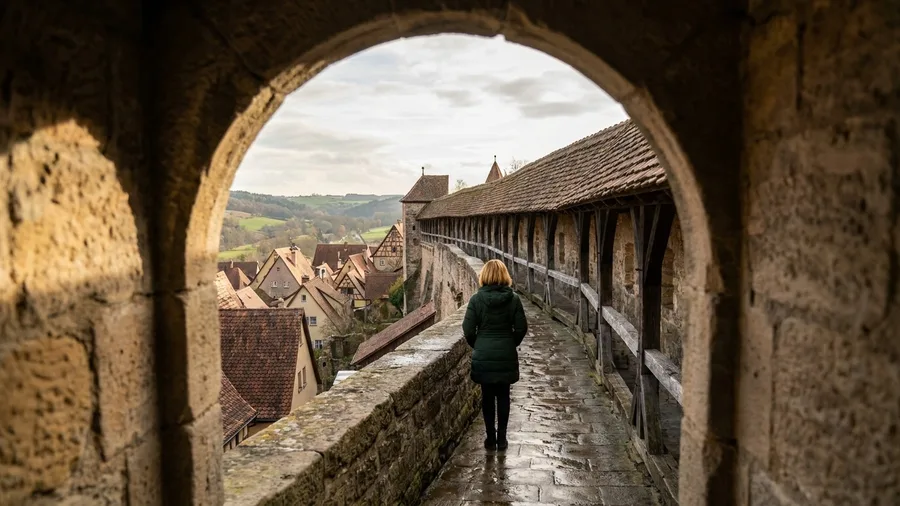
Magical, if you go for the stillness – and Rothenburg does silence better than almost anywhere.
Two nights inside the walls, $130-190 a double midweek, and the whole point is sitting on a wall-walk bench above the Tauber valley with the Marktplatz below and nobody around. The Schneeballen shops and the lights stay on after the stalls go. The Christmas Museum runs year-round, so check its holiday hours before you build the day around it. Most Reiterlesmarkt stalls close before Dec 25 – the official Rothenburg tourism site is your date source. Quiet couples, yes. Skip it if you want nightlife; the evenings here are very still and that is the draw.
Book now vs wait: the Dec 26–31 decision
Book 6–8 weeks ahead
- Rail fares are lower and seats exist
- Hotels hold midweek rates
- Restaurant slots in Zermatt and Rovaniemi
- Activities in Rovaniemi are available
Wait until December
- Peak-season rail prices
- Only the expensive rooms remain
- No fondue tables after 7 pm
- Santa Village slots sold out
3. Bruges by Canal and Candlelight
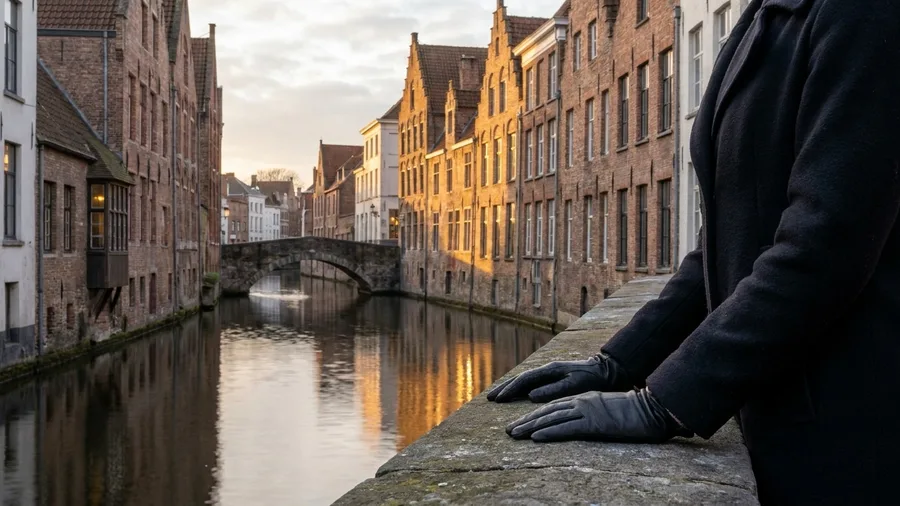
Know this before you book: Bruges in the dead week is cold, wet and still busy, and the canal-ring center is small enough that the crowds funnel into the same three lanes. You can work around it, but you have to plan for rain.
The fix is to book two things before you arrive – a timed Belfry slot and a hotel inside the canal ring. Doubles there run about $180-260 midweek, which puts Bruges at the pricier end of the compact medieval towns. It buys you candlelit alleys, canal reflections at dusk and a compact center you can cross in twenty minutes when the weather turns.
Pack a real rain layer and treat the wet as the condition, not the disaster. Reflected lights on black water are half the reason you came.
Then eat: a brown café with mussels or Flemish stew and a long, warm table, which is where the money goes and where the trip lands. Bruges Winter Glow dates shift year to year, so confirm with the official tourism office, and note some museums close on Jan 1.
Food-focused couples get the most out of it. The town carries the week on indoor warmth and canal light, not on guaranteed stalls.
💡 Tip: Book the Belfry first thing in the morning; afternoon slots sell out and the climb is narrow.
⚠️ COMMON MISTAKE
Don't assume the market is still open
Many German and Alsatian Christmas markets close by Dec 24. Confirm dates with the official tourist office for each town before booking non-refundable rail.
4. Tallinn's Medieval Old Town Glow
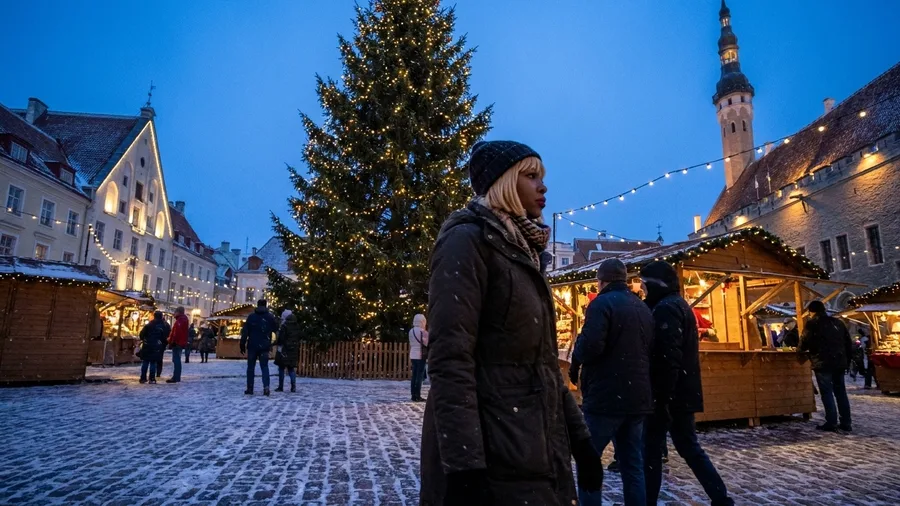
Tallinn asks less of your wallet than almost anything else on this list and gives back a market that actually stays open. Double rooms in the Old Town run $120-180 midweek, the lowest band here short of the Czech and Portuguese picks, and the Town Hall Square stalls commonly trade right through the limbo week. Confirm dates with the official Estonian tourism office before you book; the market's schedule shifts year to year.
Two nights inside the walls is the shape. You walk the medieval ramparts, duck into a sauna to thaw out, and eat hearty Estonian food – black bread, pork, potatoes – for dinner money that stays under $30. Daylight is the constraint: about six hours, dark by mid-afternoon, so plan the wall walk and the square for late morning and save the sauna and the cellars for the long evening.
It is cold. Genuinely freezing, well below the damp chill of the canal towns further west, so pack real layers rather than a smart coat. What you get for the discomfort is a lit medieval square that is still working when the meat stalls and mulled wine are packed away elsewhere – the rare case where the market itself, not just the lights, carries the week.
5. Český Krumlov's River-Bend Quiet
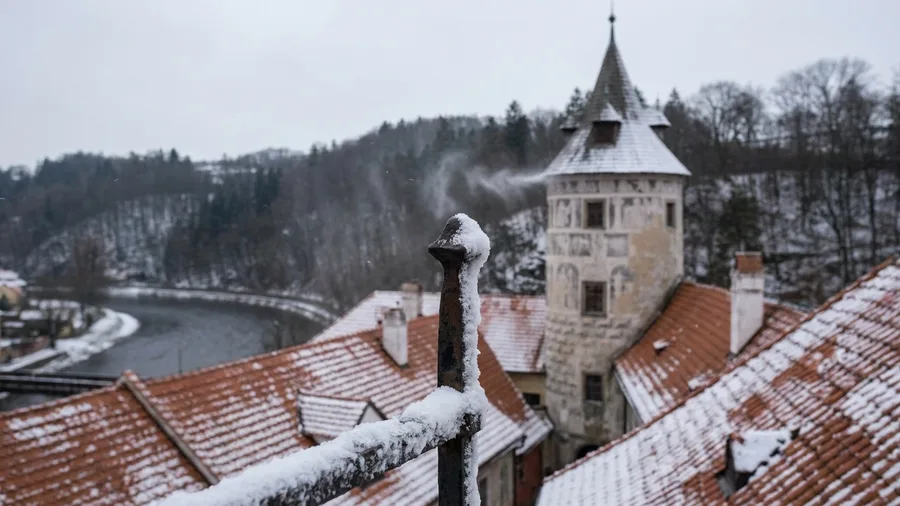
Český Krumlov is worth two nights between the holidays, and it costs less than the town you just read about. Doubles sit at $110-170 midweek, which puts it in the same low band as the Estonian pick but trades the market for something quieter – a compact knot of lanes bent around a Vltava river bend, with a castle on the ridge above.
The reward is scenery and a cellar table, not stalls. Climb to the castle viewpoint for the bend in the river and the red roofs stacked below it, then eat svíčková or goulash in a vaulted cellar restaurant for dinner money in the $30-55 range. The nature beat is the river itself and the wooded hills that close in on both banks – honest odds of a heron on the water at dusk, no promise of anything rarer.
The catch here is hours, not weather. Castle interiors and some restaurants cut their schedules between Dec 26 and 31, so check the official town and castle sites before you commit to a day plan – a shuttered castle is the one thing that ruins the reason you came. Come for the empty lanes and pub cellars, not for a fireworks show; this is the quiet end of the week.
6. Hallstatt's Lake-and-Mountain Hush
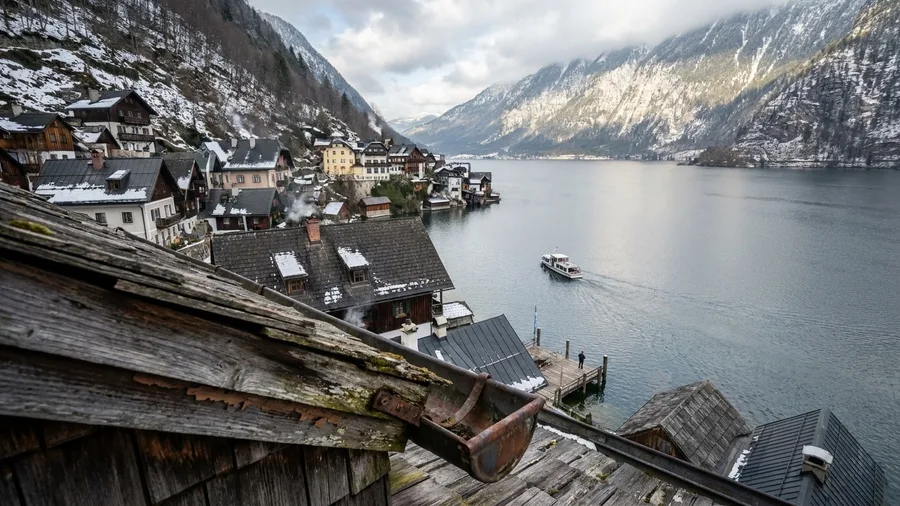
Hallstatt is one street wide and about a kilometre of lakeside, and it costs $190-280 a night to sleep in it – double the Czech rate for a village a tenth the size. You are paying for geography: a strip of houses pinched between a sheer mountain and the water, reachable by ferry, and quiet enough after dark that you can hear the lake against the dock.
Arrive by boat, not car, and take the lake-view walk before the light goes. Late December gives you eight or nine hours of grey-blue daylight on the water, and if the weather holds, the salt mine and the Skywalk above the village are the two things worth the climb. Both keep holiday schedules, so check the ferry timetable and the salt-mine opening days – closures between Christmas and New Year's are common and will decide your morning.
The drawback is the middle of the day. Coach parties arrive late morning and the narrow lanes clog until mid-afternoon, which is the whole argument for staying overnight rather than day-tripping. By four the buses are gone, the water goes still, and the village belongs to whoever booked a room.
One to two nights is right – it is a small place and you will have walked it twice by the second morning. Best for couples who came for scenery rather than a scene; there is no nightlife to speak of beyond a warm restaurant and the dark. The hush after the day-trippers leave is the entire reason to be here in this particular week.
💡 Tip: Take the first ferry of the morning; the village is empty and the lake is flat.
Zermatt — At a Glance
🚫 Cars
Car-free village
🏔️ Signature view
Matterhorn
🚠 Lift status
Runs through holiday week
💰 Double midweek
$260–420
🛏️ Nights
2–3
🧀 Eat
Fondue or raclette
Book ahead
Reserve lifts and restaurants; holiday week is peak demand.
7. Zermatt's Car-Free Snowy Village
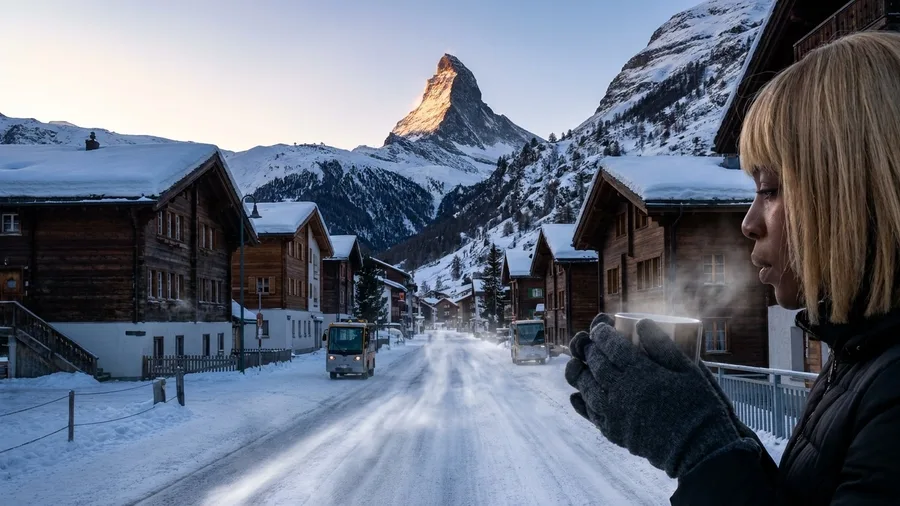
You step off the train at 9am and the cold hits your face before the platform clears, and there is no engine noise anywhere because the streets carry only electric taxis and feet. Zermatt is a car-free village where the Matterhorn sits at the end of the main street like a prop that has been left out on purpose, and it takes the mountain towns prettier in winter test and scales it up into a working village with lifts, restaurants and a much bigger bill.
The whole place only earns its price between about 8 and 10am, when the valley is still blue and the first light catches the eastern face of the peak and nothing moves yet. By 11 the ski crowds are queued at the lifts and the lunch restaurant tables you wanted are gone, so go early or go dark and leave midday to the pistes. Budget $260-420 per night for a double midweek and stay 2-3 nights, ride the Gornergrat railway for the big view, and book a fondue or raclette dinner before you arrive – the lifts run all holiday week, but you check snow and lift status with Zermatt tourism first.
💡 PRO TIP
Ride the early train, not the noon one
In Zermatt the Gornergrat railway at 8 am gives you clear Matterhorn views; by noon the cloud often builds.
8. Rovaniemi's Arctic Santa Stop
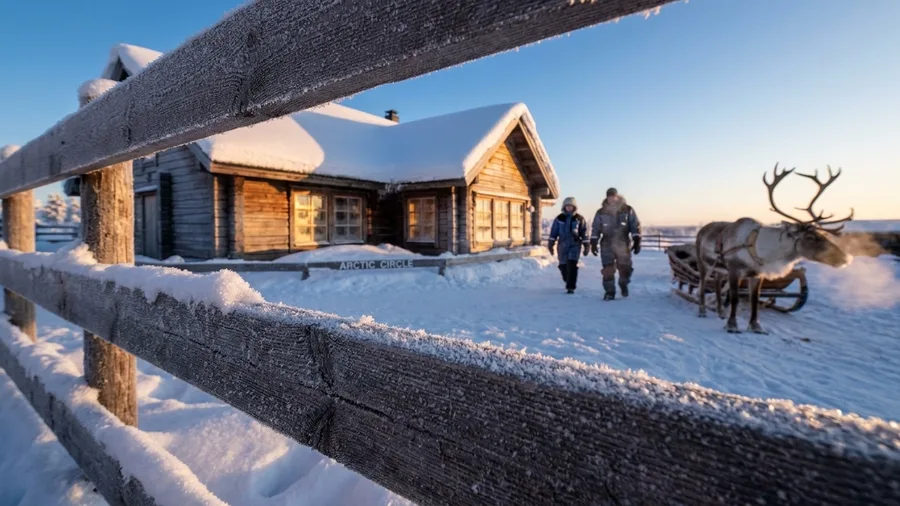
Rovaniemi is the Arctic family choice: Santa Claus Village, reindeer, snow and long dark evenings, 2-3 nights booked from about $220-360 per night for a double midweek, and a flight from central Europe to get there.
It pushes the same snow test into -10 to -20°C and roughly 4 hours of daylight, which is exactly why the day plan is not about ski lifts but about one photograph and one booked activity. Stand on the Arctic Circle line at Santa Claus Village in the last hour of grey light, around 2pm, when the sky turns deep blue and the lamps come on and every child is looking up at the right thing. Book Santa Claus Village and any husky or reindeer outing well ahead; Dec 26-31 is peak season and Visit Rovaniemi is where you confirm what is actually running.
Thermal gear is the kit, not an afterthought – rent it if you would rather not pack it. Best for families with Santa-age kids; nightlife seekers will find the evenings very long and very quiet, because the post-Christmas draw here is short daylight and reserved activities, not a market.
Rovaniemi vs Bergen: what you are choosing
Two Nordic towns, opposite trade-offs
9. Bergen's Wooden-Wharf Rainy Warmth
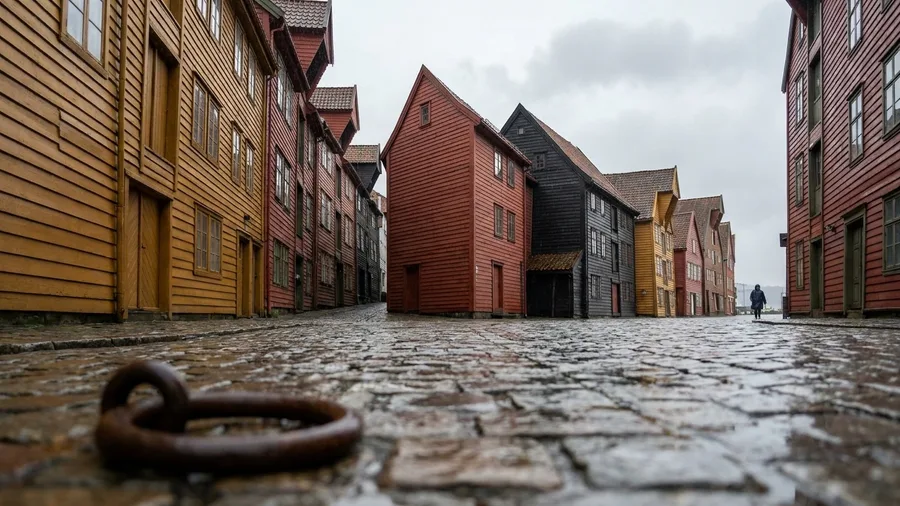
You walk, eat soup and use the funicular when the cloud lifts for twenty minutes – and you build the day so the weather decides nothing. Bergen swaps Arctic cold for Nordic rain: about 6 hours of daylight and $180-280 per night for a double midweek, 2 nights near Bryggen, reached by flight from central Europe.
The story that matters here is Bryggen itself. Those eleven leaning wooden warehouses on the wharf were the trading base of the German Hanseatic merchants from the 14th century on, and the gaps between them still hide the cooperative passageways where goods and fires lived; walk the back of the wharf blocks, not just the harbour front, and you feel how cramped and dark the trade really was. Keep an indoor backup ready: the fish market and a fish-soup lunch cost around $15-25 for the bowl, and Fløibanen's holiday hours are the one thing to check before you climb.
Best for atmosphere-over-snow travelers and seafood eaters. The test it passes is warm indoor stops on a wet afternoon, not a snow guarantee – go up the funicular the moment the cloud clears, and otherwise eat well and walk.
10. York's Snickelway Christmas Warmth
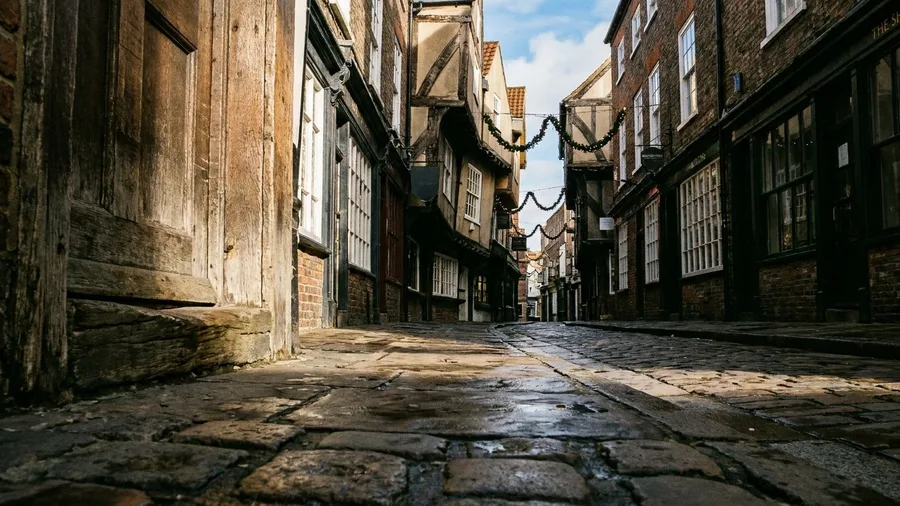
York is a medieval city inside its walls, and bad weather doesn't ruin it. You can spend the whole afternoon indoors and feel like you got the place.
Book two nights inside the walls, where doubles run about $160-230 midweek. Walk the Shambles early, before the crowds fill its overhanging upper floors, then duck into York Minster, which stays open through the holiday week. For lunch, skip the tourist-facing rooms and follow locals into a pub off the main drag for a plate of roast and a pint by the fire. York Christmas Market dates come from Make It York, and many stalls pack up before Dec 25; the lights and the attractions don't. Expect rain, not snow. This is the pick for train travelers from London and for anyone who'd rather warm up in a pub than queue at a stall.
11. Annecy's Alpine Canal Lanes
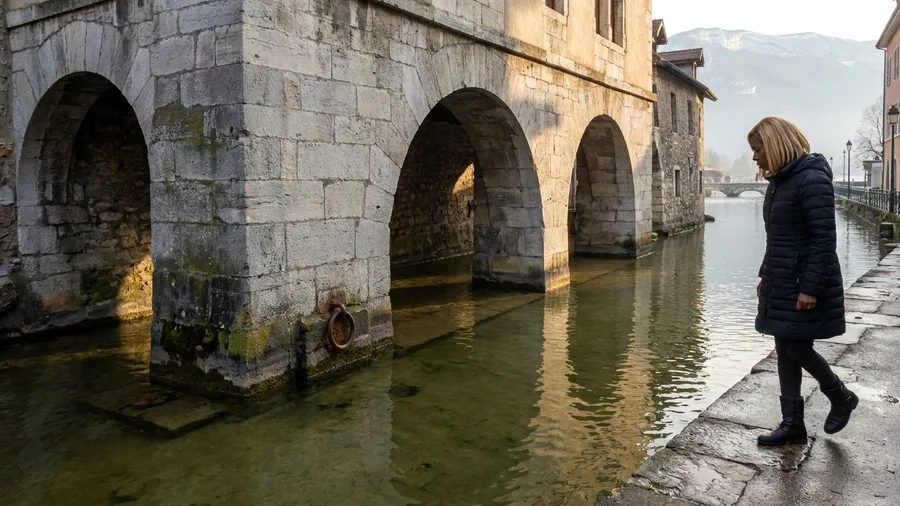
Go to Annecy for the canals and the food, not for snow. The old town sits where the Thiou cuts through in narrow channels, alpine peaks stacked behind the rooftops, and in the dead week the lanes are quiet enough to hear the water, like the historic river towns it resembles.
Give it two nights in the old town, doubles around $170-260 midweek. Walk the Thiou canals and the lake promenade by day, then commit to a Savoyard dinner: fondue or tartiflette, fondue for two $60-90. Check the Annecy tourist office before you count on lake boats or a specific restaurant, since holiday schedules shrink. Geneva is the easy gateway, which makes this a couples' choice. Snow in town isn't guaranteed, so book it for the lanes and the melted cheese, not a white Christmas.
12. Óbidos's Walled Christmas Village
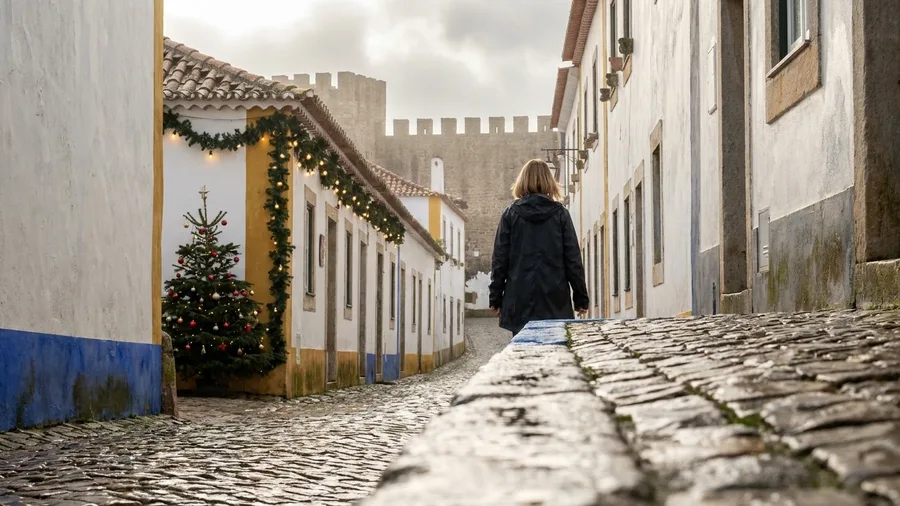
The first thing you notice walking into Óbidos is the temperature: 10-15°C in late December, mild enough to leave the heavy coat in the bag. Whitewashed lanes run inside the medieval walls, and you can walk the ramparts with 8-9 hours of daylight to do it in.
Here's the catch: it isn't a snow town. You come for the walls, the compact village and the Óbidos Christmas Village, whose dates you should confirm with the official village before you book. Two nights inside the walls run about $110-170 midweek, and the bus from Lisbon takes roughly an hour. Drink ginjinha in a chocolate cup, pack a rain layer, and treat it as the mild-weather answer for budget travelers.
💡 Tip: Buy ginjinha from a tiny shop, not the main square; the cups are the same and the queue is shorter.
Frequently Asked Questions
Are Christmas markets still open between Christmas and New Year's?
Some markets run past Dec 25, notably Tallinn's Town Hall Square and Bruges Winter Glow, but many German and Alsatian stalls close by Christmas Eve. Always confirm dates with the official tourist office for the specific town; do not rely on last year's schedule.
How much does a three-night stay cost in these towns?
Typical midweek double rates range from $110 to $420 a night, so three nights run roughly $330 to $1,260. Add $15–25 for a café lunch and $30–55 for dinner; fondue for two is $60–90.
Do I need a car to visit these towns?
No. Most are reachable by rail, Óbidos is a one-hour bus from Lisbon, and Zermatt is car-free. Rovaniemi and Bergen require flights from central Europe, then local transport or tours.
Which town is best for families with young children?
Rovaniemi is the clear family pick, with Santa Claus Village, reindeer and a real chance of snow. Zermatt works for ski families, and Colmar or Bruges suit families who prefer towns over Arctic activities.
How far ahead should I book for Dec 26–31?
Six to eight weeks is a safe lead time for rail and hotels. Zermatt and Rovaniemi fill earlier because they are peak holiday destinations, and restaurant slots in both disappear fast.
What should I pack for these towns?
Waterproof boots and a rain shell for Bruges, York, Bergen and Annecy; thermal layers and wool socks for Tallinn and Rovaniemi; a warm coat and gloves for Zermatt and Hallstatt. Daylight is short, so a small torch or phone light helps in the evening.
Which Town Fits Your Week Between the Holidays
Choose by situation, not by fame. Colmar, Bruges or York if you want classic festive streets and food. Tallinn, Český Krumlov or Óbidos if the bill matters. Zermatt, Rovaniemi or Hallstatt for snow and scenery, with Hallstatt at one or two nights and the other two at three. Bergen or Annecy for couples chasing food and atmosphere who can handle rain or want fondue.
Check market dates with the official tourist office for whichever town you land on, then lock rail and hotels first, six to eight weeks ahead for December 26 to 31.
The dead week is not a market-or-nothing gamble. When the stalls close, the lit lanes, the food and the landscape still carry it – which is why the trip works best small, booked early, and chosen for the cold and the price you actually want, not the market you assumed would be open. Pick your one to three towns and book tonight.
Check the dates, then book the rail
Pick one to three towns from the list, confirm their holiday hours with the official tourist office, and reserve your trains and rooms six to eight weeks out.