Most people plan a river-town weekend around the biggest name on the map and spend Saturday walking a strip of shops that could sit in any state. Steer the other way: pick the town by the picture you already have in your head, then go stand in it. That picture is usually a bridge over a river with hills behind it, and you can find it at golden hour in New Hope, Pennsylvania, a few blocks from the car.
a bridge span, a bluff edge, a brick street crest, a levee curve. All of that can be planned. Each town below comes with the street, bridge, bluff or levee to head for, the season or light to aim at, and the trip it fits, whether a fall-foliage weekend, a bluff-top architecture stop or a car-free train ride.
By the end you'll have one town, one weekend, one hour and one corner, plus the single step to take before you book. The lucky turn isn't luck. It's an address and a clock.
Quick Tips Before You Start
Time the light
Golden hour runs 90 minutes before sunset; sunrise mist on big rivers burns off within an hour, so be in place early.
Park once
In walkable towns like New Hope, St. Charles, and Hudson, park at the top or end of the main street and cover the rest on foot.
Book fall early
Mid-October foliage weekends fill inns in New Hope and Hudson; reserve two to three months out or go midweek.
Check festival dates
Natchez spring pilgrimage and Paducah riverfront events change the crowd and the price; check the town's visitor site first.
Layer for the water
River towns run 5–10°F cooler on the waterfront; a windproof layer makes a dusk walk on the levee or bluff comfortable.
1. New Hope, Pennsylvania: Delaware River Mill Town
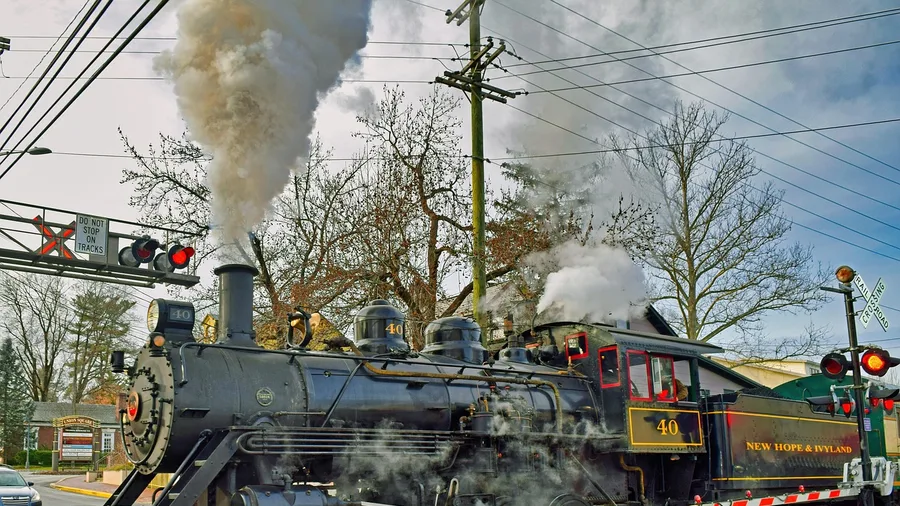
New Hope is a mill town on the Delaware, and the whole picture fits in one turn of your head.
Main Street runs tight along the water, 18th-century storefronts on one side and the river on the other, and the old mill sits by the river holding down the downstream end of the street. Stand on the New Hope riverfront at golden hour and look at the Lambertville-New Hope bridge: hills rise behind the span, water runs in front of it, and that is the corner the postcards come from. It costs nothing to stand there.
October is when the hills behind the bridge turn, so a fall weekend in mid-October puts color in the top third of the frame; the trade is crowds, and a weekday morning instead gives you an empty bridge and an empty street for the same shot. Either way you park once. Shops, a river walk and dinner are all inside a couple of blocks, which is why a couple or a solo traveler can leave the car where it is from arrival to checkout.
💡 Tip: Park in the lot off South Main Street and walk the bridge on foot; the toll is for cars, and the pedestrian path gives you the view.
| Town | River | Signature view | Best light or season | Best for |
|---|---|---|---|---|
| New Hope, PA | Delaware | Lambertville–New Hope bridge from the riverfront | Golden hour; mid-October foliage | Walkable shops and river walk |
| Galena, IL | Galena River | Brick Main Street rooflines from the valley floor | Spring or fall weekday | Layered hillside streetscape |
| Hannibal, MO | Mississippi | Riverfront at sunrise; Lover's Leap bluff outlook | Early morning; weekday | Big river view and literary stop |
| Natchez, MS | Mississippi | Bluff-top rooftops and river at sunset | Spring pilgrimage; late afternoon | Antebellum architecture and gardens |
| Paducah, KY | Ohio | Floodwall murals from the riverfront walk | Late afternoon into dusk | Art-minded weekend downtown |
| Marietta, OH | Ohio & Muskingum | Levee view toward the confluence and bridge | Clear evening; fall weekend | Low-key river walk and local history |
| St. Charles, MO | Missouri | Brick Main Street crest; riverfront park | Weekday morning; spring or fall | Shops, food, and river within blocks |
| Hudson, NY | Hudson | Warren Street sightline to the Catskills | Late afternoon; fall weekend | Train-from-NYC car-free weekend |
2. Galena, Illinois: Brick Streets in a River Valley
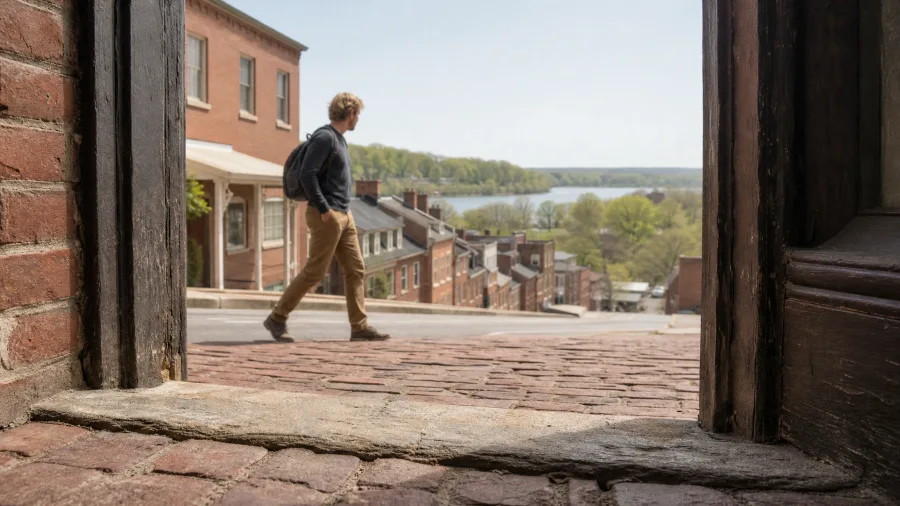
You feel the grade first — the street tilts up away from the Galena River and the brick under your feet keeps going, storefront stacked over storefront until the rooflines read as steps.
That vertical stacking is the reason to come, but it sets the catch: this is not a flat strip you drift along, and in summer or on a fall Saturday the narrow sidewalks and the climb make a modest crowd feel like a squeeze. The reward is the view looking back — stand on the Galena River trail or the valley floor and the brick Main Street builds itself into layers up the hillside, each roof a little higher than the last. Ulysses S. Grant's home anchors the scale of that 19th-century wealth, and a spring or fall weekday gives you clear light on the brick and room to walk. Come if you want the hill to be part of the walk, not in spite of it.
💡 Tip: Start at the river trail and walk up; the view of the stacked rooflines only works from below.
⚠️ COMMON MISTAKE
Don't chase the midday shot
Most river-town views flatten between 11 a.m. and 3 p.m., when the sun is high and the water turns to glare. Plan your walk for early morning or the last two hours before sunset; the brick and the bluffs need side light to read as a painting.
3. Hannibal, Missouri: Mississippi River Bluff Town
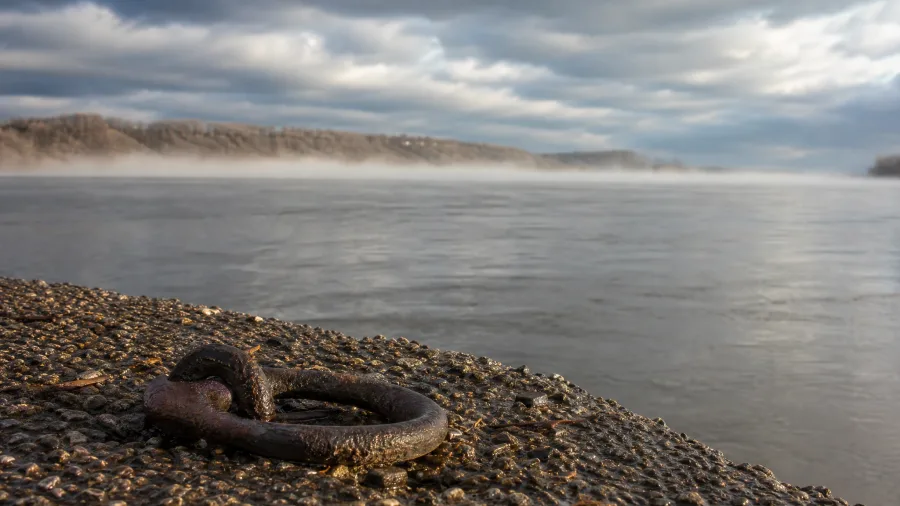
Come after nine on a summer morning and you will have missed the reason to be here. The river fog that makes this stretch of the Mississippi look painted burns off fast once the sun clears the Illinois bluffs on the far bank, and by mid-morning the whole scene is flat, hazy and ordinary. Set the alarm.
Two frames carry Hannibal, and they are two different pictures of the same river. The first is the riverfront at first light, when a low band of mist hangs a few feet over the water and the far shore sits behind it as a pale gray line – soft, no shadows, nothing hard anywhere in the frame. The second is the view from the Lover's Leap bluff outlook, high above town, looking down on the river bending away and the roofs of the 19th-century blocks packed together below the ridge. Walk the downtown in twenty minutes, then drive up to the overlook for the wide version.
The Mark Twain Boyhood Home sits a few blocks back from the water, alongside the low brick and clapboard blocks that make up the historic core, so you can move from riverbank to front porch on foot in under ten minutes. Give the museum an hour, and go on a weekday if you can – weekend afternoons in summer put the tour groups through in waves and the narrow rooms get tight. This is the stop for a road-tripper who wants a big river, a short walk into the past and a clean literary hook, all before lunch.
💡 Tip: The mist burns off within an hour of sunrise; if you sleep in, skip the riverfront and go straight to the bluff.
River Towns at a Glance
4. Natchez, Mississippi: Antebellum Houses Above the River
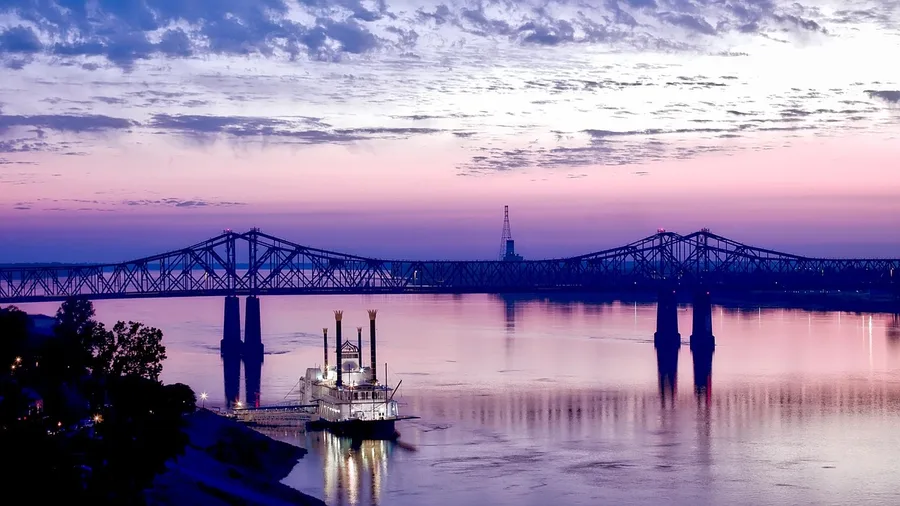
Plan on $30 to $45 a head for a single house tour in Natchez, and two or three of them in an afternoon adds up fast. That is the money question here, and it is worth answering up front: the bluff is free, but the picture you came for is mostly inside the gates. Natchez puts its antebellum houses and live oaks along the lip of a Mississippi River drop, so the town's rooftops and trees fill the near half of the frame and the water goes dark behind them as the light leaves.
Be on the bluff edge an hour before sunset. The far bank fades first, the river turns to pewter, and the oaks go black against it while the house fronts still hold a little warmth; that half hour is the composition. Walk the bluff-top streets as a circuit of fronts, gardens and oaks rather than a main street, and you will pass more architecture in ten minutes than most towns show in a mile. Spring brings pilgrimage season and green gardens, and prices and crowds climb with them. If you only have one afternoon, skip the shopping entirely. The draw is the houses, and the shopping is not what anyone drives here for.
💡 Tip: Buy tour tickets at the visitor center rather than individual houses; the combined pass is cheaper if you plan to see more than one.
The River Town View Pyramid
Build your stop from the foundation up
Based on the eight towns in this list
5. Paducah, Kentucky: Ohio River Murals and Main Street
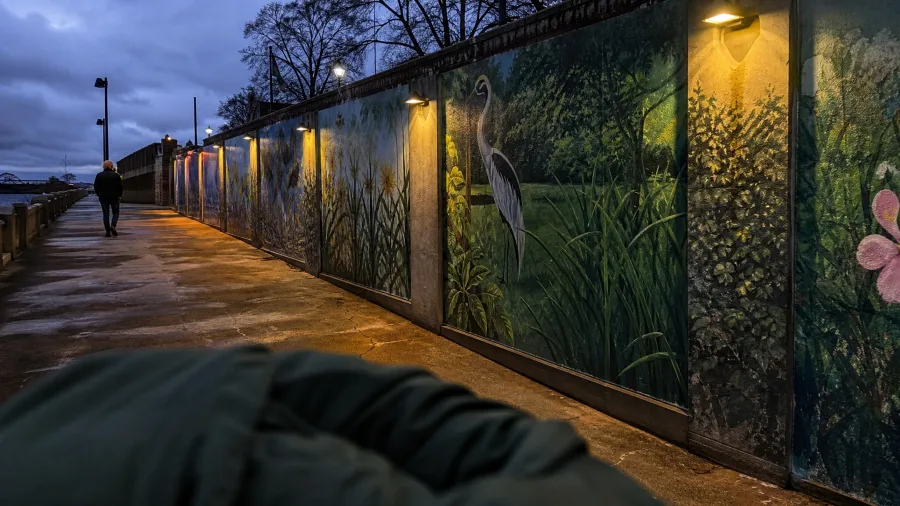
It costs nothing and takes twenty minutes, which is a different kind of stop from a bluff lined with ticketed house tours. Paducah's picture is painted, literally, on the floodwall that stands between downtown and the Ohio River. You walk along the panels instead of looking out at a view, and the wall does the work a hillside does elsewhere: it gives the eye something to climb.
Start on the riverfront walk in late afternoon and keep the water at your back. The painted panels fill the frame in front of you, and the mural colors hold best in that flat, bright hour before dusk, when the river light behind you stops throwing shadows across the paint.
The panels run the length of the wall in a continuous sequence, and you can walk the whole thing in comfortably under an hour if you don't stop to read every plaque. You will. Give it two hours if you're the sort who reads.
Then turn around, because downtown is a few minutes' walk the other way. The restored storefronts sit close enough that you can do the murals and the main street in one loop without moving the car.
This is the town for an art-minded weekend. It is compact, it is flat, and it does not ask you to choose between the river and the street.
💡 Tip: Start at the riverfront end of the floodwall and walk toward downtown; the panels read in order that way.
6. Marietta, Ohio: Two Rivers and a Historic Levee
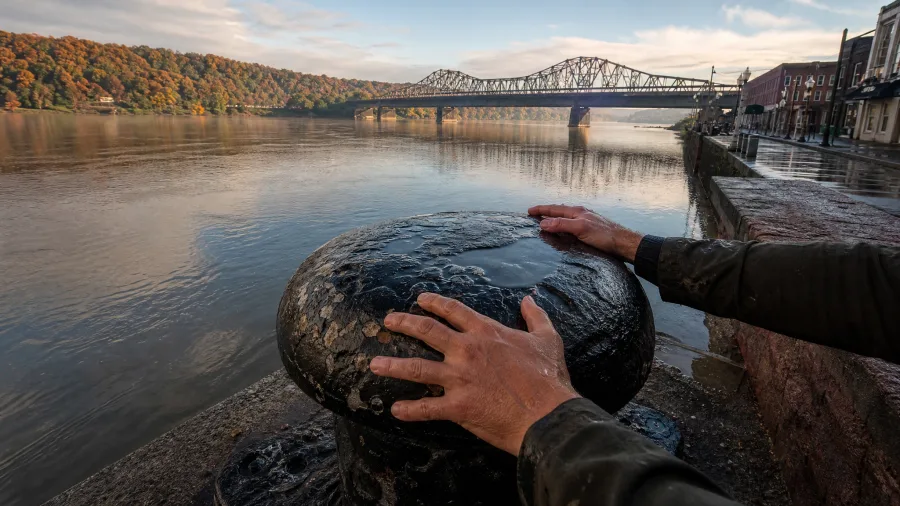
Skip the single-waterfront towns and go where two rivers do the composing for you. That is Marietta: the Ohio and the Muskingum come together at the west edge of downtown, and because the water arrives from two directions at once, you get a view with depth and movement that one broad river, however fine, cannot give. A river town with a historic levee is rarer than it sounds, and this one still works as the edge of town rather than decoration.
Stand on the levee at the foot of the Harmar district, face the Muskingum confluence, and you see the bridge cut across the frame while the Ohio sweeps away to the left. The old Harmar Village streets just behind you hold the town's 19th-century frontage, brick and low storefronts running down to the water, so the walk itself is part of the picture. Give it an hour and a half at an easy pace: the levee, the bridge, the bend, and the little grid of Harmar lanes.
Arrive in late afternoon, before the sun drops, and stay while it goes down; that is when the sky opens up and the bridge takes on a hard outline against it. In fall, the hills across the river carry enough color to double the effect, so a clear October weekend is the one to plan around. Nothing here is a scramble or a charge, and a person on foot can cover the whole town in an afternoon, which is the point of a place like this.
💡 Tip: The levee is a working flood-control structure, so check the river level after heavy rain; high water can close the lower walk.
Walkable Core vs. Scenic Detour
Park-once towns
- New Hope: shops, bridge, and dinner within a few blocks
- St. Charles: brick Main Street and riverfront park on foot
- Hudson: Warren Street runs straight to the river
- Paducah: downtown and floodwall murals minutes apart
Worth the short drive
- Hannibal: Lover's Leap bluff is a separate stop from downtown
- Natchez: bluff-top circuit is walkable, but the river view is the edge
- Galena: the valley-floor view requires leaving the main street
- Marietta: Harmar Village sits on the river side of town
7. St. Charles, Missouri: Brick Main Street by the Missouri
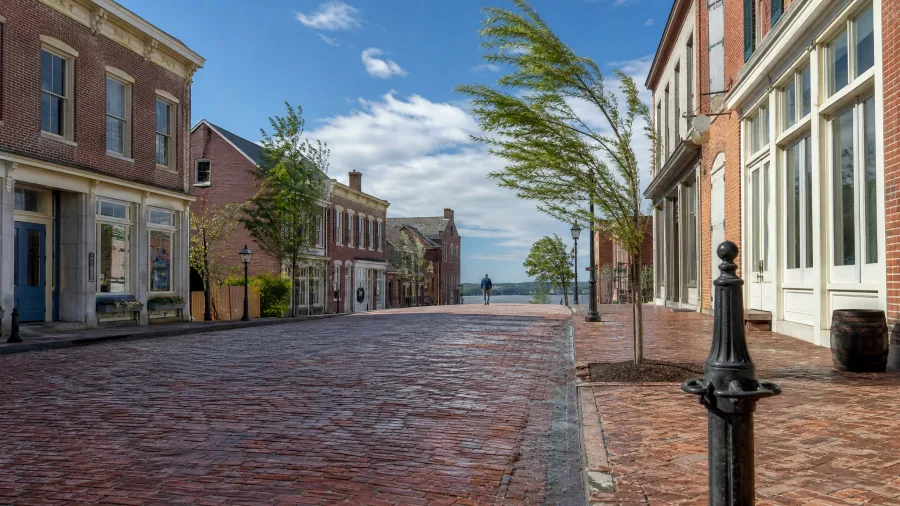
In St. Charles, yes, and the walk is the whole point: a long brick Main Street that runs back from the Missouri, laid out as one climb up the grade and one descent on the other side. Park once near the crest and the town spreads in both directions — shops and restaurants uphill of you, the water downhill.
Where St. Charles reads as painted is from the top of that climb, looking along the brick facades as they stack away toward the river; walk a few blocks down and the riverfront park hands you the Missouri itself, brown and broad. A weekday morning is the hour to take it, sidewalks empty and the brick clean in flat light, though a spring or fall weekend gives you walking temperatures on a grade that turns punishing in July. The Lewis and Clark Boat House anchors the lower end and ties the street to the expedition that shoved off from this bank. Anyone with a stroller or a bad knee should hear the honest part: brick is uneven underfoot and the hill is real. Everyone else gets shops, dinner and a river within a few blocks of one parking spot.
8. Hudson, New York: Hudson River Views from Warren Street
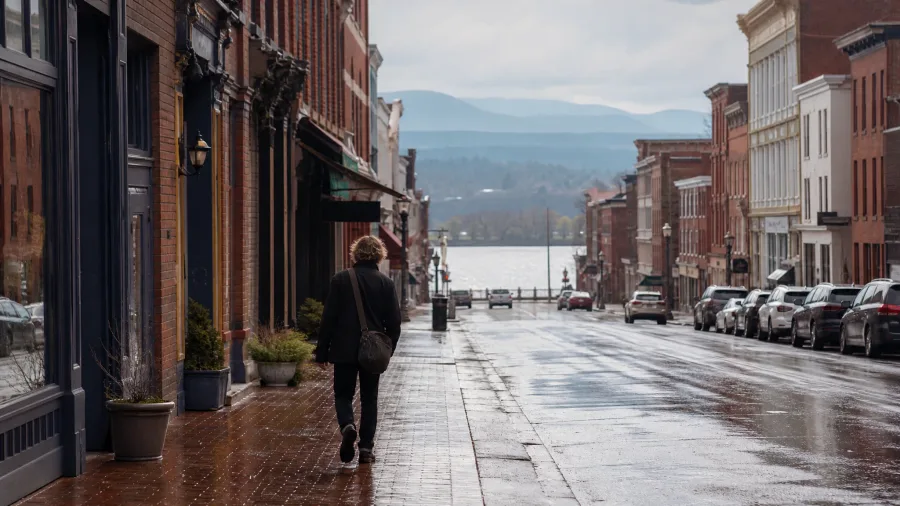
Late afternoon on Warren Street, the light comes straight up the street from the west and the Catskill Mountains sit pale blue beyond the water at the bottom of the sightline. The storefronts line both sides of that view like a proscenium, and the street stops being a corridor and becomes a frame. This is the one town on this kind of list where the main street does not merely lead to the river — it aims at it.
The walk is one continuous line: start at the top of Warren Street, 19th-century facades on either side, and go west until the pavement ends at the riverfront park. That is where the nature arrives. The Hudson flyway runs overhead, and herons and bald eagles work the water and the shallows in front of the park — most reliably in the quiet first hours and again toward dusk, never on cue. Treat a sighting as a bonus, not a schedule; the mountains hold the view either way.
To do it without a car, take the train from New York City — it puts you at the top of Warren Street and the whole weekend is on foot, galleries and shops above, river below. Fall weekends bring foliage down the river and the heaviest foot traffic with it; late afternoon on a weekday is the calmer version of the same picture. The composition is a street pointed at water and a ridge of mountains behind it, and it works in every season the light does.
💡 Tip: Take the Amtrak to Hudson and walk downhill from the station; the whole town is between you and the river.
Frequently Asked Questions
Which of these river towns is best for a fall-foliage weekend?
New Hope and Hudson are the two strongest fall picks. New Hope's hills behind the Lambertville–New Hope bridge peak in mid-October, and Hudson's Catskill views carry color along the river. Book inns two to three months out for those weekends.
Can I visit more than one of these towns in a weekend?
Yes, if you pair towns that are close. New Hope and Hudson are a few hours apart by car or train, and St. Charles and Hannibal are a reasonable drive. Trying to cover three or four in two days means you'll spend the weekend in the car, not on the riverfront.
Do I need a car to see these towns?
Hudson is the easiest without one, since Amtrak drops you at the top of Warren Street and the river is downhill from there. New Hope, St. Charles, and Paducah are walkable once you park, but you'll need a car to get there. Hannibal's bluff outlook and Natchez's river edge are easiest with a car.
What time of day should I plan for the best view?
Sunrise for big-river mist, especially in Hannibal, and the last two hours before sunset for brick streets, bluffs, and mountain sightlines. Midday flattens most of these views, so build your day around early and late light.
Are these towns expensive for a weekend?
Expect roughly $250–$500 per person for a weekend, depending on the inn and whether you pay for house tours. Natchez tour tickets run around $25–$45 per person, and New Hope and Hudson inns run higher in foliage season. The walks and riverfronts themselves are free.
Which town is best if I want architecture over shops?
Natchez is the architecture stop, with its antebellum houses and bluff-top streets. Galena is the close second if you want a layered brick streetscape. New Hope and Hudson are stronger on shops and street life than on house tours.
Which River Town Matches Your Weekend
Match the town to the weekend you are actually taking. For fall foliage, New Hope in mid-October puts the bridge and hills in one frame, or take the train to Hudson and walk downhill through late-October color with the Southern trails at peak in mind. For bluff-top architecture, Natchez in spring pilgrimage season. Easiest without a car is Hudson, since Warren Street and the riverfront park at its foot sit within a walk of the station, with New Hope the equivalent once you have parked.
So go back to that opening picture. A bridge over a river with hills behind it at golden hour is a scheduled event, not a lucky find, and all eight towns run on the same equation: a named corner plus a named hour.
Before you book anything, check each town's visitor site for festival dates, because pilgrimage season in Natchez and fall weekends elsewhere move both the crowds and the prices. The painting isn't the town. It's where you stand and when, and once you pick both, the picture is yours.
Pick your frame and go
Choose the town that matches your weekend, check the visitor site for festival dates, and set your alarm for golden hour. The river will be there.