The Dordogne gets compared to Tuscany in every brochure, and the comparison is lazy. Tuscany gives you rolling hills and a rental car full of other Americans; the Dordogne gives you a river with a castle on each bank and villages built straight into the cliff above it.
Here is the shape of it. Five nights in Sarlat, a compact rental car at roughly EUR 260 for five days and about EUR 70 in fuel, and the main villages sitting 15 to 35 minutes apart by road – close enough to plan by drive time, not map distance.
The belief worth overturning is that medieval Dordogne is a castle checklist. It is really eight villages competing for the same few days, each with one paid sight worth the ticket, one free view or lane worth the walk, and a different reason to stop.
You will ride a flat-bottomed gabarre under a limestone cliff, climb a castle wall that changed hands in the Hundred Years' War, stand on a bastide terrace over the whole river valley, walk a thirteenth-century grid of arcaded squares, and eat a walnut cake on a bridge.
Every village below gets the same treatment: the one medieval sight to prioritize, the time to allow, and the skip when the day is tight. By the end you can pick a one-day castle run or a two-day slow route, and you will know exactly which village to drop with only a half-day.
Quick Tips Before You Start
Take the smallest car you can
Village lanes in Beynac and La Roque-Gageac are narrow enough that a mid-size SUV becomes a liability; a compact hatchback parks where bigger cars circle.
Carry coins for parking
Most village car parks run on meters or ticket machines at roughly EUR 3 to 4 for two hours – card readers are inconsistent, so keep euros in the glovebox.
Arrive before 10am or after 4pm
La Roque-Gageac and Beynac are narrow single-street villages, and the coach groups land between 10:30 and 3.
Pick one castle, not two
Beynac and Castelnaud sell separate tickets and sit across the river from each other – decide which before you leave Sarlat or you pay twice.
Bring repellent for the river stops
The Dordogne and Vézère confluence at Limeuil breeds mosquitoes from June through September, and the beach is where they find you.
Know your market day
Monpazier runs its market on Thursday; if that is the reason you are going, build the day around it rather than discovering it closed.
1. La Roque-Gageac: Riverside Cliff Village
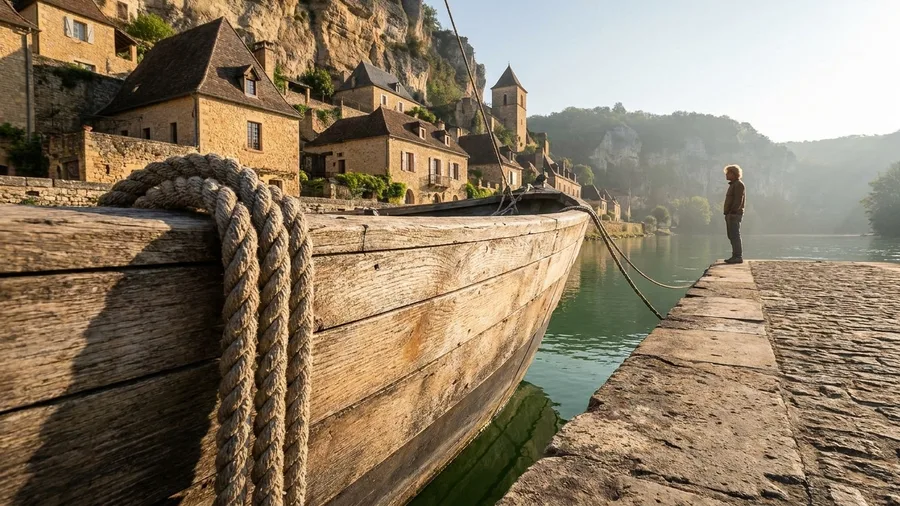
La Roque-Gageac is the cliff-and-river village you pictured before you booked the car. Honey-coloured houses are wedged on a narrow strip between a limestone wall and the Dordogne, so the whole place looks like it might slide into the water if you lean on the wrong railing.
There are two ways to see it and both are cheap. Park at the east entrance for about EUR 4 for two hours, then either drive the river road for the free view or pay EUR 10 adult for a gabarre, a flat wooden boat that takes you out on the water and shows you the cliff face from below, which is the angle the road can't give you. Budget 1 to 1.5 hours either way.
Do it early or late. By midday in summer the one lane through the village is packed shoulder to shoulder and the stop stops being fun. On a tight schedule this is your low-cost opener: one boat or one free drive, easy parking, and nothing here rewards lingering past 90 minutes.
💡 Tip: Sit on the left side of the gabarre going downstream if you want the cliff face rather than the road bank.
| Village | Medieval hook | Best for | Time to allow |
|---|---|---|---|
| La Roque-Gageac | Cliffside houses on the river | River-level first impression | 1–1.5 hours |
| Beynac-et-Cazenac | Clifftop château | The storybook castle climb | 2–3 hours |
| Domme | Hilltop bastide terrace | Big valley view, low effort | 1.5–2 hours |
| Castelnaud-la-Chapelle | Fortress with warfare displays | One castle, done properly | 2 hours |
| Monpazier | 13th-century grid plan | Town planning, Thursday market | 1–1.5 hours |
| Limeuil | Dordogne–Vézère confluence | A slow hour by the water | 1.5 hours |
| Belvès | Cliff dwellings under the square | Something other than churches | 1.5 hours |
| Saint-Jean-de-Côle | Romanesque church and old bridge | A route-filler on the drive back | 45–60 minutes |
2. Beynac-et-Cazenac: Castle Above the River
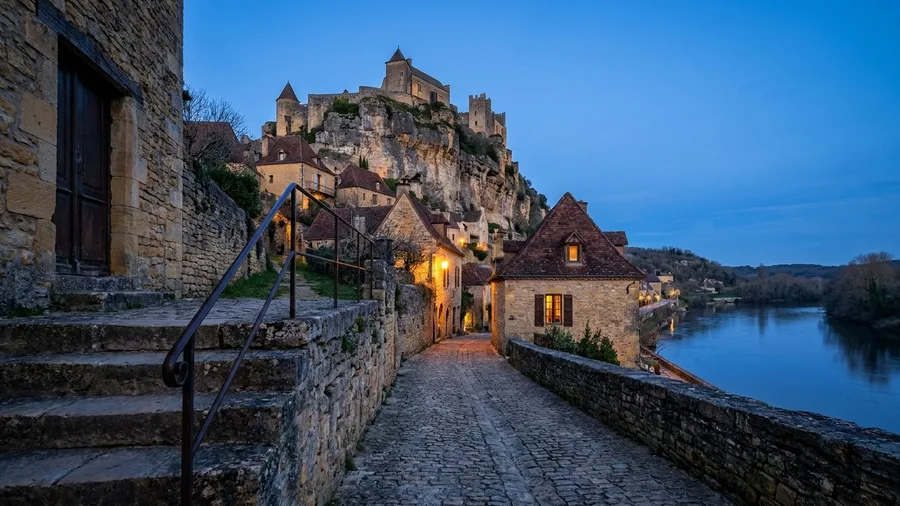
Know before you commit: the château at Beynac is up a steep 10 to 15 minute climb from the river parking, and there is no shortcut. If anyone in the car has limited mobility, or you've only got a half-day, this is the one to skip.
Once you've seen the river from water level, the next move is the village that puts a fortress directly above it. Beynac-et-Cazenac stacks its lanes and stone houses up a hillside with the château sitting on top, and the climb is what buys you the view back down the Dordogne.
Entry is EUR 10.50 adult, and the lanes below the gate are free, so the castle is the paid event and the lanes are just the approach. Allow 2 to 3 hours. This is the first real time commitment on the route, and it's worth it only if the castle itself is the goal.
The story here is the one that makes the view mean something. Beynac was a French stronghold on a river that was the front line between French and English during the Hundred Years' War, and the castle you climb to was fought over, taken and retaken across that long argument. Stand on the terrace, look across at the rival fortress on the far bank, and the geography of the war is laid out in front of you.
If you're only checking boxes, skip it. The climb and the 2 to 3 hours eat a short visit whole, and you can see the silhouette from the river road for nothing. Give it the time when you want the castle, not just the photo of it.
Beynac or Castelnaud: Pick One Castle
Beynac-et-Cazenac
- Any legs, no elevator: the 10–15 minute climb is the whole entry fee
- Park at river level and walk up; the lot is small and fills by mid-morning in summer
- Paid entry covers the castle only; the lanes below the gate cost nothing
- Bring water; there is no shade on the upper switchbacks
Castelnaud-la-Chapelle
- The siege engines and warfare rooms are the reason to choose this over Beynac
- You park at the base and walk up, but the grade is gentler than Beynac's
- Beynac's ticket does not work here, and this ticket does not work there; budget both if you want both
- Allow 2 hours minimum; the displays reward a slow read
3. Domme: Hilltop Bastide With a View
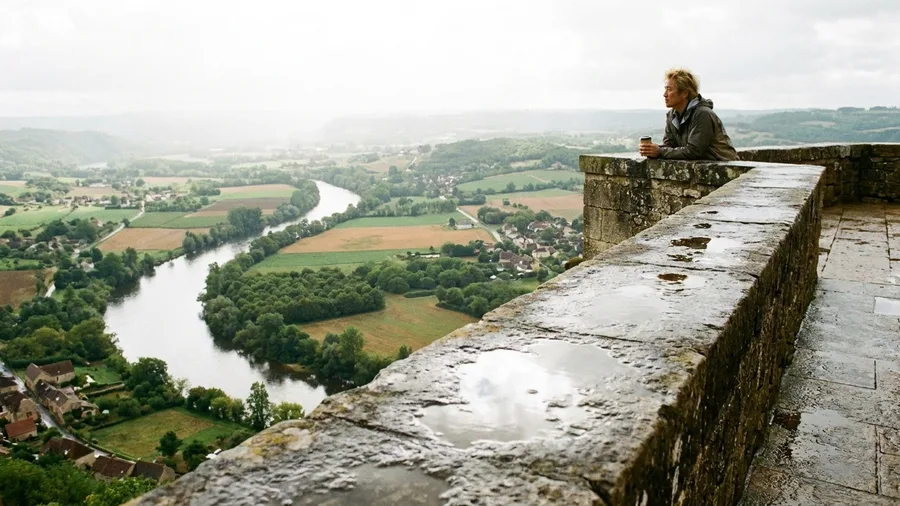
About EUR 3 for two hours of parking and you're at the top of a hill with the whole Dordogne valley spread out below you. After the vertical effort of a river castle, Domme is the stop where you park, walk twenty metres, and sit.
This is a hilltop bastide, a planned fortified town, and its panoramic terrace is the payoff: no climb, no ticket, just a stone parapet and the river winding away under you. The cave beneath the main square costs EUR 9.50 and is the add-on rather than the reason to come. Allow 1.5 to 2 hours, most of it doing nothing on the terrace with a coffee, and count it as the low-effort big view that balances out the steep days.
Dordogne Words You Will Keep Seeing
Learn these five and the plaques at every stop stop reading like a foreign language.
4. Castelnaud-la-Chapelle: The War Castle
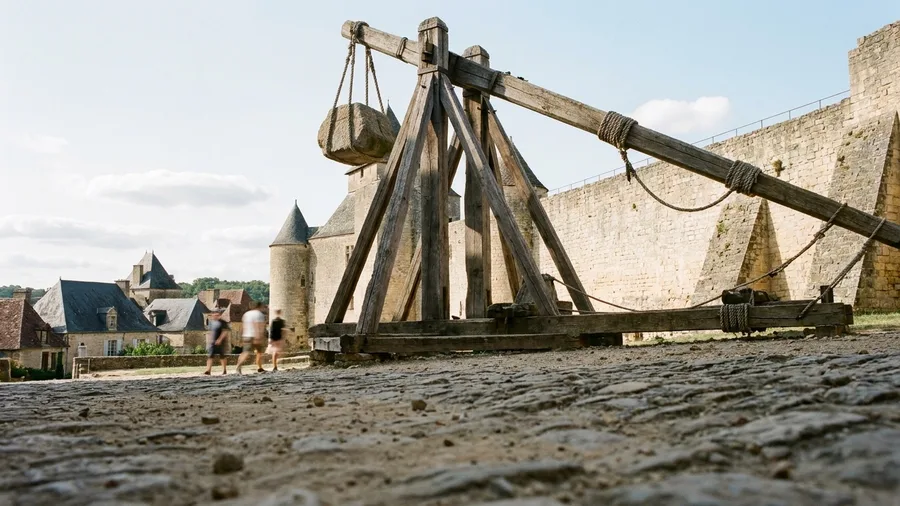
Anywhere else, a castle you could sleep in on the far bank would be the one you drove out of your way to see. Here it shares a river bend with Beynac, and that changes the arithmetic: the two are separate tickets, so unless you plan to pay EUR 12.90 here and EUR 10.50 across the water, you pick one.
Pick Castelnaud if you want the medieval war machine explained. The displays walk you through siege engines and the nasty mechanics of taking a fortress, and the parapets look straight back across the water at Beynac, which is the picture most people come away with. Budget two hours and EUR 4 for parking, and count on a steep climb through the village below to reach the gate. Then it is Beynac for the river setting or Castelnaud for the warfare, and you can say out loud which you picked and why.
The two hours are the real cost. If your day is already carrying a hilltop terrace and a river stop, this is the one that gets squeezed, because Castelnaud without the displays is just a climb to a view you can nearly match from the road.
⚠️ COMMON MISTAKE
The Double Castle Tax
Beynac and Castelnaud sell separate tickets – about EUR 10.50 and EUR 12.90 per adult – and they face each other across the river. Doing both costs roughly EUR 23 and four to five hours of one short trip. Decide which castle you want before you drive out of Sarlat.
5. Monpazier: The Grid-Plan Bastide
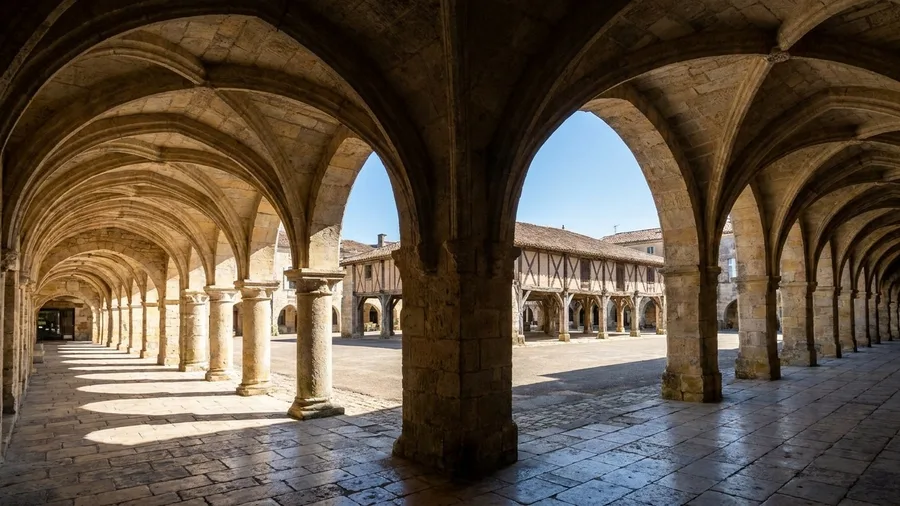
You step into the arcades and the heat drops off you at once, shade on four sides of an open square, and the first thing you notice is that the square is the whole plan. Monpazier was laid out in the 13th century on a grid, and it still reads as a drawing someone followed: streets that meet at right angles, a covered market in the middle, houses built to a line.
Walk it in an hour to ninety minutes and you have the lot. Parking at the village edge is free and so is the square, which makes this the counterweight to a run of paid castles. Arrive on a Thursday and you get the market, which is a lot of noise and local cheese, and it is optional: any other morning you will have the arcades close to yourself.
🚗 The One-Day Castle Run From Sarlat
8:30 – La Roque-Gageac
Park at the east entrance, walk the river road, and take the first gabarre if the queue is short – 90 minutes total.
10:15 – Beynac-et-Cazenac
Climb to the château and give it the full two to three hours; this is the day's big spend in both time and legs.
13:30 – Lunch in Beynac
Eat in the village lanes rather than driving on; the next stop is fifteen minutes away and there is no reason to rush lunch.
15:00 – Castelnaud-la-Chapelle
Skip the ticket if you climbed Beynac and instead take the free view of the fortress from the far bank.
17:00 – Domme
EUR 3 parking, a walk onto the terrace, and the valley view as the light drops – an hour is plenty.
6. Limeuil: River Confluence Village
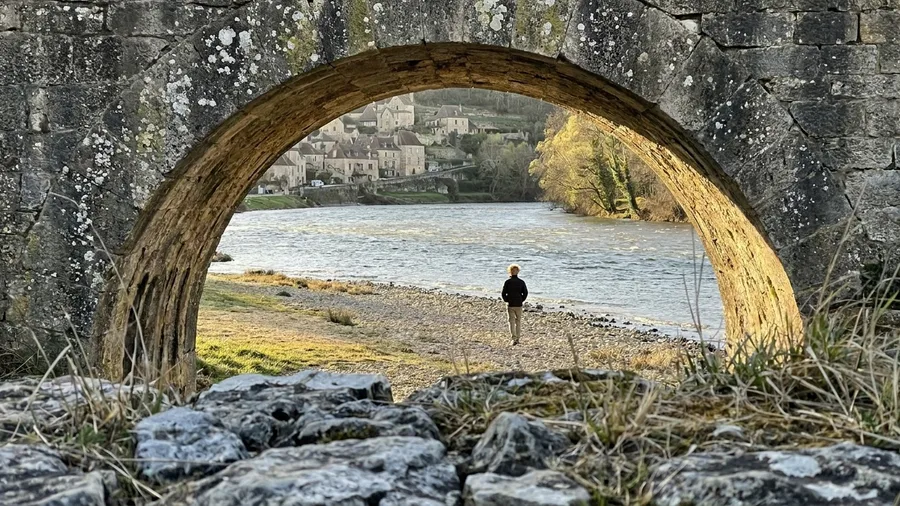
Skip the paid attractions and go sit by the water at Limeuil. This is where the Dordogne and the Vézère meet, and residents from the surrounding villages treat the river beach as their own back garden rather than a sight to file past. Park low, walk down, lay a towel out.
There is no grand ticket here, which is exactly the point after a grid town and a string of castles. Bring bread and something cold, allow 1.5 hours, and use it as a leg-stretch before the next paid stop on your list.
One caution: the lane up from the lower parking is steep, and in summer heat it feels steeper. Go slow, carry water, and do not plan this as a quick in-and-out.
Five Days in the Dordogne, Sorted
Fuel for the week runs about EUR 70; the compact rental roughly EUR 260 for five days.
7. Belvès: Cliff Dwellings and Rooftops
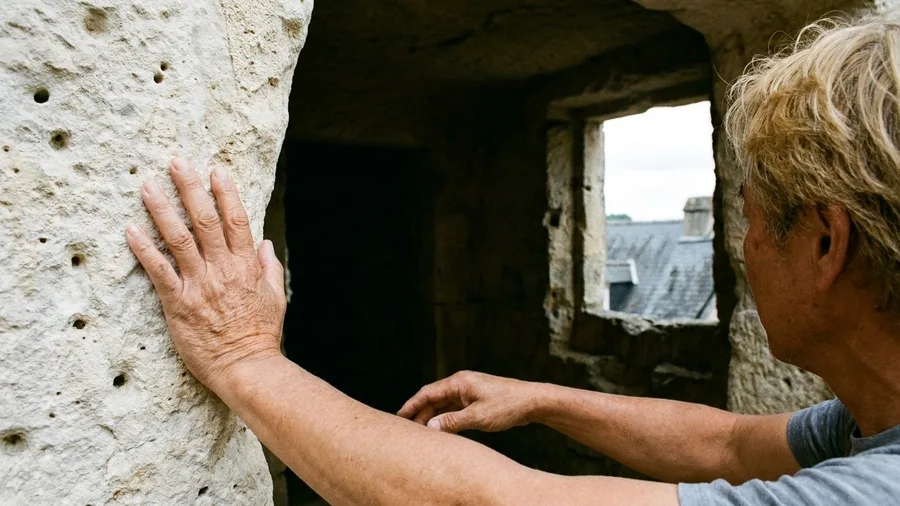
Belvès is the one on this list among European villages frozen in time where you climb down into the medieval world instead of looking up at it. The town sits on a hill, and directly under its belvedere, cut into the rock, are actual cliff dwellings — rooms, passages, the lot, hollowed out by people who lived in the cliff face rather than building beside it. Entry runs about EUR 8, and the belvedere above costs nothing.
Give it 1.5 hours and you have done the good part: the paid warren underground, then the free rooftop view from the terrace, where the village roofs stack down the hill in a way that makes the map suddenly make sense. Treat it as a half-day add-on rather than a whole day — there is not enough else here to fill one. That is precisely why it earns a slot: EUR 8 and 90 minutes buy a different subject entirely, and the belvedere costs you nothing, so the visit stays compact.
Four Ways the Dordogne Drive Goes Wrong
8. Saint-Jean-de-Côle: The Quiet Stone Half-Stop
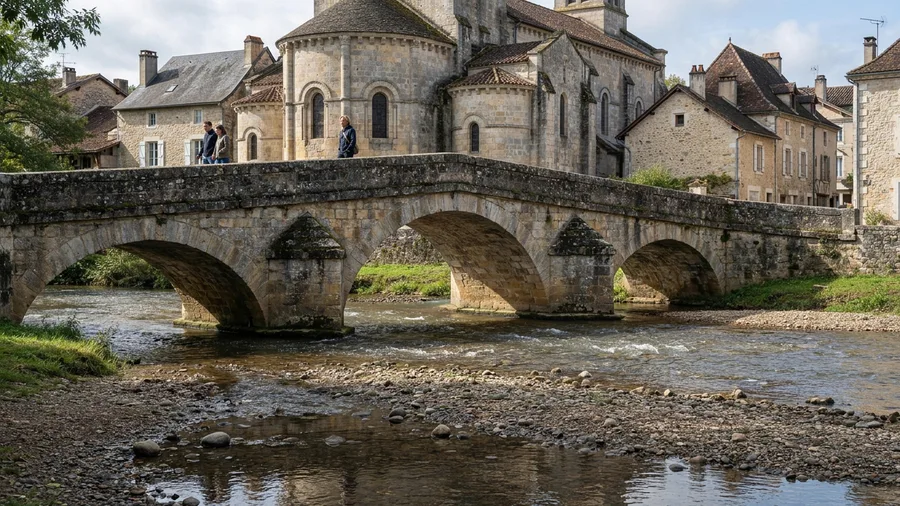
You hear Saint-Jean-de-Côle before you fully see it — the shallow rush of the Côle under the old stone bridge, low arches humped with age, and the hush that comes when you step off the road and the village closes in around you. The church is Romanesque, plain and heavy, and the lanes around it are few enough to walk in a few minutes. Nothing here is ticketed, so nothing is keeping you.
Allow 45-60 minutes, and stop for something on the way out rather than building a meal into it: a coffee or a cold drink from the little terrace by the square runs a few euros and gives you a reason to sit and let the quiet settle. There is no paid castle, no major sight, and that is the point. Make it your route-filler between Monpazier and Sarlat, or tack it onto a Belvès day on the drive back — not a destination in itself. On a list where every other village asks for a ticket or a climb, this one earns its place by fitting the drive.
💡 Tip: Park on the far side of the bridge and walk back across it; the view of the village from the water is the one you came for.
Frequently Asked Questions
How many days do you need to see the Dordogne villages?
Four days covers six of the eight comfortably from a Sarlat base; five nights lets you do all eight with one slow afternoon left over. If you only have two days, do La Roque-Gageac, Beynac, Domme and Monpazier and drive past the rest.
Do you need a car in the Dordogne?
Yes, for this list. The villages sit 15 to 35 minutes apart by road and the regional bus network will not get you between them in a useful order. A compact rental runs roughly EUR 260 for five days, plus about EUR 70 in fuel.
Which castle should you choose, Beynac or Castelnaud?
Castelnaud if you want medieval warfare displays and siege engines, at about EUR 12.90. Beynac if you want the river setting and the story of two garrisons facing each other, at about EUR 10.50, and you can manage a steep 10 to 15 minute climb. The tickets are separate, so decide before you go.
Is the Dordogne expensive?
The villages themselves are cheap to walk. The paid stops are modest – roughly EUR 8 to 13 per adult – and parking runs EUR 3 to 4 for two hours. Two castles, a boat and a cave in one day is where the cost adds up.
When is the best time to visit?
May, June and September. July and August are hot and busy, and the narrow villages fill with coach groups between 10:30am and 3pm. Whatever month you pick, arrive before 10 or after 4 for La Roque-Gageac and Beynac.
Is Beynac suitable for people with limited mobility?
Not really for the château. The climb from the river parking is steep and takes 10 to 15 minutes, with no easier route. Domme gives you a hilltop view with about ninety seconds of walking, so use it instead if the climb is a problem.
Sort the Eight Into One Day or Two, Then Drive
If you want the one-day castle run, take La Roque-Gageac, Beynac and Castelnaud. The gabarre is about EUR 10 and 1 to 1.5 hours, Beynac's château about EUR 10.50 and 2 to 3 hours, Castelnaud about EUR 12.90 and a solid 2 hours. If you only buy one castle ticket, choose Beynac for the river setting or Castelnaud for the warfare displays, not both. Every stop sits 15 to 35 minutes from the last.
Got two days? Run the slow route instead: Domme with its cave at about EUR 9.50 and parking around EUR 3 for two hours, free Monpazier, the free river beach at Limeuil, Belvès with its cliff dwellings at about EUR 8, and Saint-Jean-de-Côle with its free church in 45 to 60 minutes. All within 15 to 35 minutes of the next stop.
With only a half-day, drop Saint-Jean-de-Côle first – the free church and bridge is the route-filler, not a paid priority. Then keep one castle, Beynac or Castelnaud, and one river stop.
The five-night Sarlat base stays the anchor: about EUR 260 for the car and EUR 70 in fuel. That budget and those short drives are what let you choose the one-day castle run or the two-day slow route, and know which medieval Dordogne you are getting.
Decide your one castle before you leave Sarlat
Beynac or Castelnaud, not both. Pick the side of the river you want, note the entry price, and let the other six stops fill the days around it.