Hallstatt gets compared to a screensaver, and that is the fairest thing anyone has said about it. The village is real; the problem is that most people meet it during the four hours when everyone else does too.
The lazy version of a European village trip is a coach stop: pull in at eleven, photograph the square, buy a magnet, leave by three. You will see the same buildings that way and almost none of the place.
Twelve countries, twelve villages, roughly one per country across the western core — Portugal up to the UK. Allow two to four hours on foot for each, one half-day excursion where it earns it, and $120–$220 a night if you sleep inside the walls.
You can climb a hill fort above a lake, cross a footbridge to a dying plateau, walk a covered town wall, drift a canal in an electric boat, eat fondue under a castle, and stand on a Cotswold lane at 8am with nobody in the frame.
That is what this list is for: one defensible village per country, the months that work, and the hour that turns a postcard into a stay. Skip three of them if you like. Take the ones whose trade-off you can live with.
Quick Tips Before You Start
Book the overnight
One night inside the village beats three day trips through it — the empty lanes at 7am are the whole point.
Decide the car question early
Monsaraz, Albarracin, Civita di Bagnoregio and Esch-sur-Sure are easiest by car or a prebooked transfer.
Aim for May-June or September
Shoulder months keep the lanes walkable and guesthouse rates at the lower end of $120-$220.
Park outside and walk in
Most of these villages are pedestrian once you pass the gate; expect a car park at the edge, not a kerb space.
Check tickets and hours the week you go
Bridge tickets, cable cars, museum hours and lake ferries change by season — confirm on the official tourism site.
Pack for cobbles
Steep, uneven and often wet stone: flat soles with grip, and one layer you can shed by mid-morning.
1. Monsaraz, Portugal's Whitewashed Hill Fort
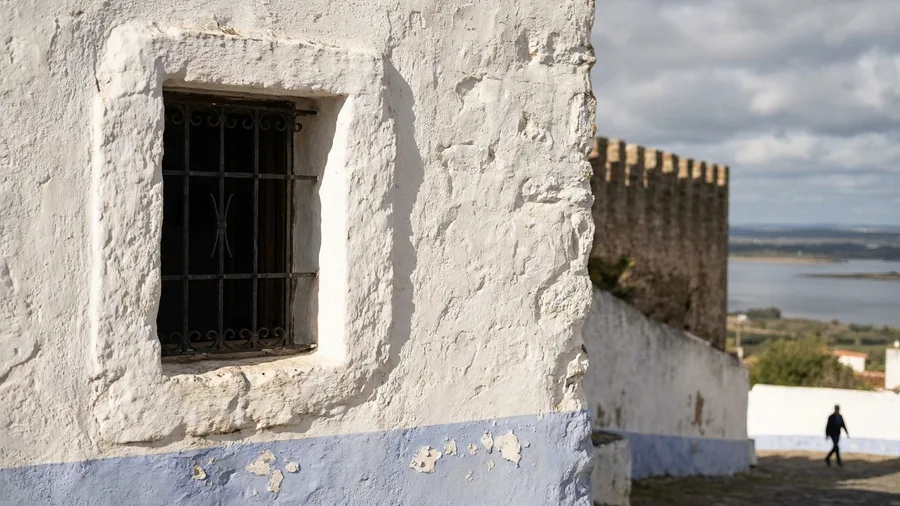
Pick Monsaraz over any other Alentejo hill town and you have bought the cheapest hour in Europe. There is no ticket, no ferry booking, no bridge to cross. The castle walls, the white lanes and the drop down to Lake Alqueva are free, and the only thing standing between you and the view everyone photographs is the time of day you arrive.
The walk itself is short: 2 to 3 hours covers the main gate, the Matriz church, the castle and the frescoed chapel, which means you can do it on the way in or out of a longer Alentejo drive. What you should plan around is lunch. Order the local bread soup with poached egg and a glass of the region's red at a tasca off the main square, and expect around $15-$25 for the two. Eat early or eat late, because the lanes have almost no shade at midday and the walk becomes a chore. Park below the walls and walk up. It is not a car-free village and does not pretend to be, but the car stays outside the gate. Then comes the test: at 5pm the day drivers leave, the light drops onto the white walls, and the place goes quiet. A guesthouse inside the walls runs $120-$220 a night, and it buys the version of Monsaraz that arrives after the coach doors close.
💡 Tip: Arrive after 5pm if you cannot sleep over — the cars leave and the light drops at the same time.
| Country | Village | Region | Best months | Why choose it |
|---|---|---|---|---|
| Portugal | Monsaraz | Alentejo | May-Jun, Sep | Castle walls and lake views with no ticket and no queue |
| Spain | Albarracin | Aragon (Teruel) | May-Jun, Sep | Red plaster lanes stacked above a river gorge |
| France | Eguisheim | Alsace | May-Jun, Sep-Oct | Circular wine village with tasting rooms on the street |
| Italy | Civita di Bagnoregio | Lazio | Apr-Jun, Sep-Oct | Bridge-only plateau reached on foot |
| Germany | Rothenburg ob der Tauber | Bavaria | May-Jun, Sep | Complete walkable medieval wall circuit |
| Austria | Hallstatt | Salzkammergut | May-Jun, Sep | Lake and cliff setting, best before 9am |
| Switzerland | Gruyeres | Fribourg | Jun-Sep | Castle, working dairy and a strange museum in one street |
| Belgium | Durbuy | Wallonia | May-Sep | Stone lanes that pay off at dinner, not breakfast |
| Netherlands | Giethoorn | Overijssel | May-Jun, Sep | Canal-only village crossed on foot or by whisper boat |
| Luxembourg | Esch-sur-Sure | Luxembourg Ardennes | May-Sep | Castle ruin over a river bend with nobody there |
| Ireland | Adare | County Limerick | May-Sep | Thatched street, abbey and a pub meal near Shannon |
| United Kingdom | Bibury | Cotswolds (Gloucestershire) | May-Jun, Sep | Arlington Row at 8am, before the coaches |
| Typical costs | Guesthouse $120-$220/night | Simple dinner $25-$45 | Car $45-$75/day | Train or bus to a village $10-$30 |
2. Albarracin, Spain's Red Medieval Labyrinth
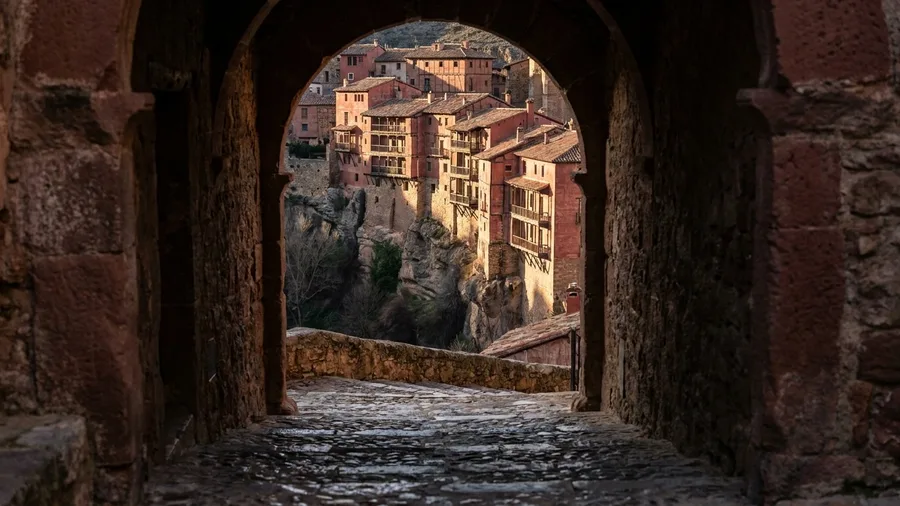
Albarracin answers yes, and it costs you nothing but the fuel and the legs. The reddish plaster, the hanging houses over the Guadalaviar, the walls and the cathedral square are all free to walk. No ticket, no toll at the gate, no booking. Just a car and the willingness to climb.
Allow 2 to 3 hours, and hear the word climb literally. The lanes are steep and uneven, the cobbles are slick after rain, and the route up to the walls does not loop back gently. This is a fixed-end effort rather than a wander, so the usable window is shorter than the drive time suggests. Easiest by car, which is the point: it sits off the main line, and that is why the detour between Madrid and Valencia is the reason to come rather than an obstacle.
Pair it with the Sierra de Albarracin for half a day and you get both halves of the landscape: the village as the built half, pine ridges and rock outcrops as the other. Low sun is when the red walls read best, and it is also when the traffic up the gorge has thinned. Drive in, walk the climb, stay for the light. The pattern holds one range over, and the walls do not charge admission.
Civita di Bagnoregio – At a Glance
🚗 From Rome
About 1.5 hours by car
🚶 Access
Footbridge only
⏱️ Time needed
2 hours
🎟️ Ticket
Check official site
♿ Mobility
Stairs, no strollers
The hour that pays
First entry or after 4pm gets you the light and the bridge to yourself.
3. Eguisheim, France's Circular Alsace Wine Village
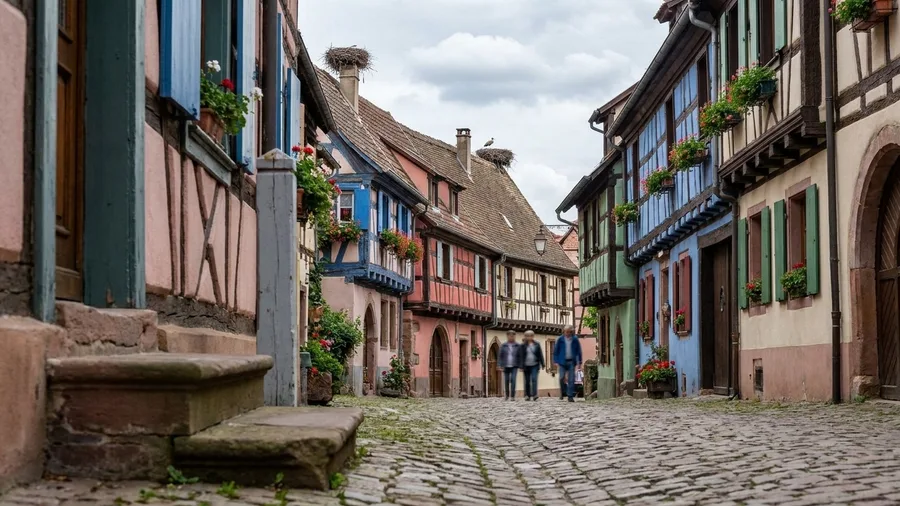
You hear the storks before you see the rings of houses: a dry clatter of beaks from the nests stacked on the chimneys above the half-timbered roofs. Eguisheim sits just outside Colmar in Alsace, built as concentric cobbled circles with wine producers on the street itself, and the right hour here is the evening after the Colmar day traffic has gone.
The circular plan is the practical gift. No route-finding, so the 2 hours you allow go into looking rather than navigating. Then comes the second half of the visit, which is a glass. The tasting rooms and the vineyard just beyond the ring are what keep you in the village past 5pm, and 5pm is exactly when the coaches end and the lanes go back to being a place. If you only have a short window, come late. Stay overnight and the ring street, small enough that one quiet hour changes it entirely, is yours before breakfast.
💡 Tip: A tasting room is the mechanism that keeps you past 5pm — exactly when the Colmar coach hour ends.
4. Civita di Bagnoregio, Italy's Bridge-Only Village
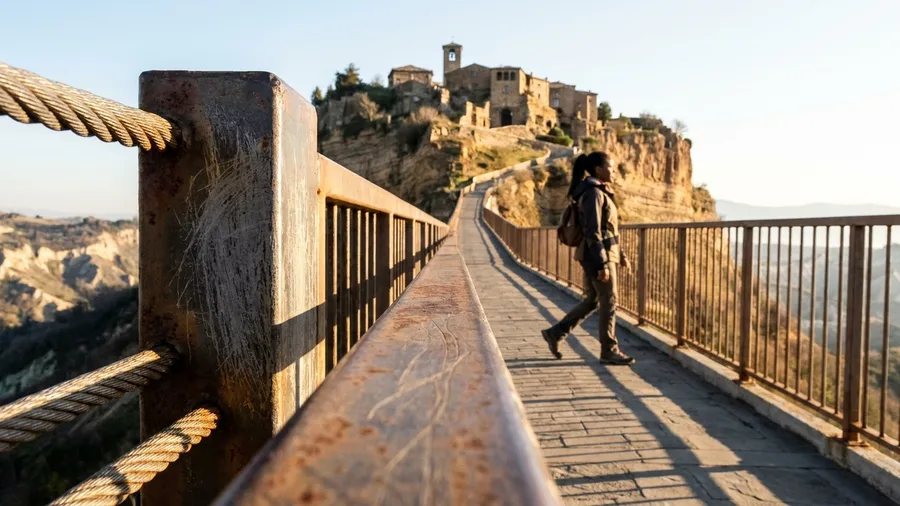
Know this before you book anything: Civita di Bagnoregio is not a village you stroll into. The old town sits on a tuff plateau above the badlands of Lazio, and the only way in is a long pedestrian bridge from Bagnoregio itself.
That is the first thing the bridge costs you and the last thing you think about when you see it. Somewhere between Rome and Orvieto, roughly an hour and a half by car from the capital, the houses hang on the edge of a drop that keeps eroding. Walk across, pay the ticket at the gate on the Civita side, and you are inside a place that is genuinely emptying, street by street, into the valley below.
The ticket and the access rules are the one moving part. Check the current price and entry arrangements on the official tourism site before you commit a day or a hotel to it, because the arrangements have shifted and will shift again. What does not move is the light and the space: arrive at opening or after 4pm, when the bridge is a bridge rather than a conveyor belt.
💡 Tip: Wear grip soles — the tuff paths polish smooth and stay damp in the shaded lanes.
⚠️ COMMON MISTAKE
Do not treat any of these as a lunch stop
The 11am-to-3pm window is when every coach on this list arrives. Build the drive so the village is your first hour of the day or your last, not your middle.
5. Rothenburg ob der Tauber, Germany's Walled Town
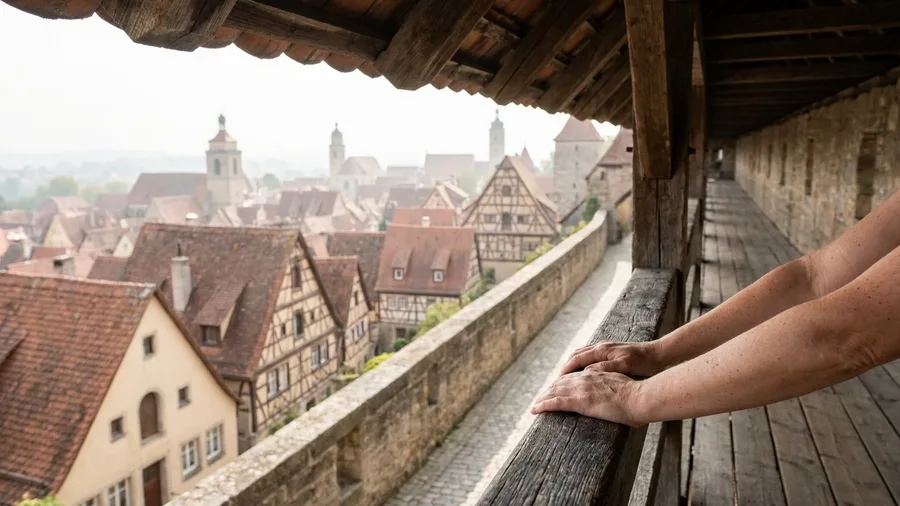
Rothenburg ob der Tauber is a walled medieval town in Bavaria, on the Romantic Road, and it is the reason to believe the detour rather than the guidebook photograph.
What makes it work is the complete circuit of the walls, the timbered houses and the Christmas museum inside them, and the fact that the covered parapet lets you see the town from above instead of looking up at it. Walk the wall in the morning, before the heat and before the groups, and the circuit takes you round the whole thing in a way the flat squares never can. The catch is the crowd: it is busiest 10am to 4pm, and the same streets are a different place outside those hours.
6. Hallstatt, Austria's Lake-and-Cliff Classic
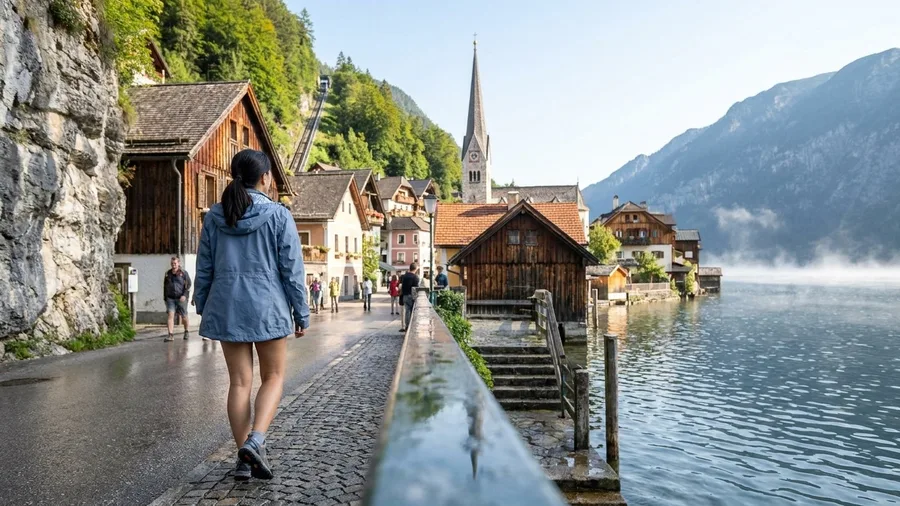
Hallstatt is the harder test than any walled German town: its crowd problem is real and known, so the setting has to be strong enough to survive the people standing in front of it. It is. That is the whole verdict, and it does not need a qualifier.
The village runs along the western shore of Hallstätter See in the Salzkammergut, one street wide, with the lake on one side and the cliff on the other. What you came for is compressed into a short walk: the water from the lane, the Protestant church with its spire, the salt-mine cable car climbing the slope behind the roofs, and the cliff paths that put you above the village looking down at the shape everyone photographs.
The odd, cheap thing that breaks up the drive here is the salt. Hallstatt's fortune was mined from the mountain above it for centuries, and the cable car takes you up to the old workings and the skywalk – a small, strange stop that costs less than a nice dinner and gives you the village from the angle that makes the lake-and-cliff setting legible. Ride it once, walk down if the knees allow.
Getting in is part of the plan. The train stops at Hallstatt station across the water, and a ferry connects it to the village; drivers park outside the centre and walk in, because inside is foot traffic only. The day-trip window of 10am to 4pm is the bottleneck – that is when the coaches land and the one street fills shoulder to shoulder.
Sleep inside the village and you get the water before the first ferry, flat and empty, with the mist still on it. That hour is the reason to pick Hallstatt over a photograph of Hallstatt. Shape the stay as a two-to-three-hour walk plus one half-day on the cable car or the cliff path, and the crowds become something you read about rather than something you queue in.
💡 Tip: The salt-mine cable car and the cliff paths close in winter weather — check before you build a day around them.
Day trip vs sleeping inside the walls
The day-trip version
- Arrive 11am with the coaches
- Photograph the main square in flat light
- Eat at the one place open at peak
- Leave by 3pm having seen one street
- Remember the queue, not the place
The overnight version
- Walk the lanes at 7am with nobody there
- Same buildings, low sun, empty frame
- Dinner in the village at $25-$45
- Wall or cliff path before breakfast
- Guesthouse $120-$220 a night, worth it
7. Gruyeres, Switzerland's Castle-and-Cheese Perch
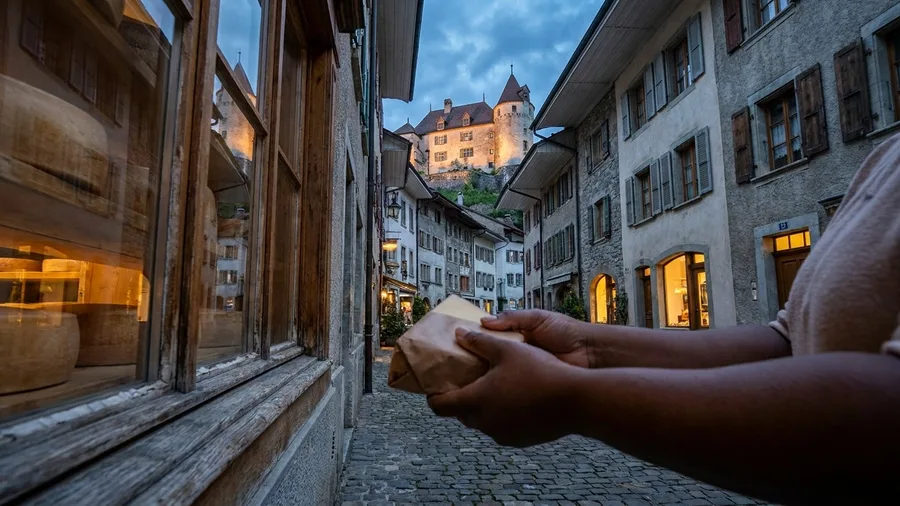
Give it two to three hours on foot, or budget half a day if you sit down for fondue, which is the right trade here: you add no new sight, you just eat the one you have been walking through. Trains run direct from Montreux and from Bern; no rental car is involved at any stage, and the station sits a short, steep walk below the village gate. The village and the timetable are both small.
The reason to linger rather than rush is the stop itself, not the time of day, and that is the point of contrast with the famous Austrian lakeside village that dominates the day-trip crowd. Here the trade is depth against breadth: the castle, the dairy, the museum, and the long lunch are all the town, so two nights would leave you with nothing new to see. As a family stop it works because the dairy gives kids something to watch, the walk is short, and the castle is small enough to hold attention. If you are in a hurry, skip the museum.
8. Durbuy, Belgium's Stone-Lane Miniature Town
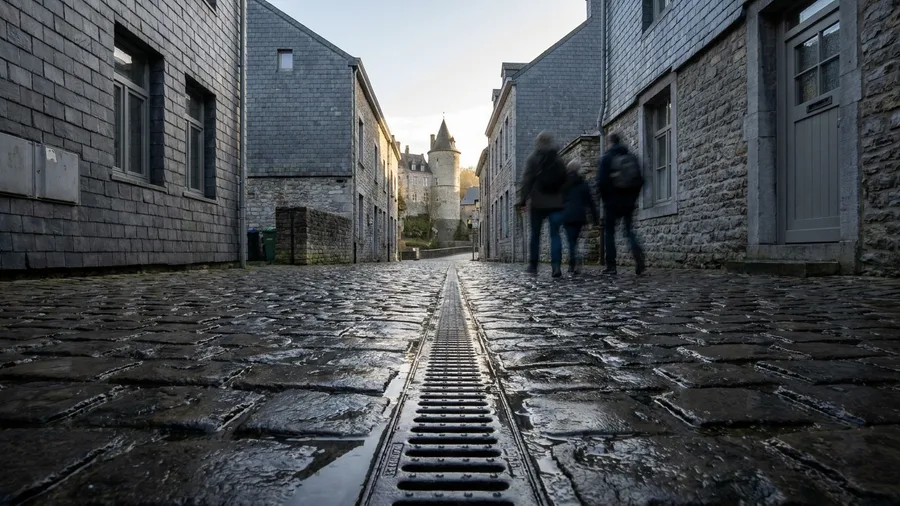
What the evening buys here is the meal, not the empty lane. La Roche-en-Ardenne, half an hour away up the Ourthe, gives you a second stop and a second day, and the pair together makes a weekend base. Durbuy is not a rail hub, though, and that is the catch. The car does real work on this one: expect roughly an hour from Liege or a little over an hour and a half from Brussels behind the wheel. A simple dinner runs $25-$45 and a village guesthouse under $120 a night can cost $120-$220, which is the weekend's shape, not the afternoon's.
💡 Tip: Weekenders get the best of Durbuy — arrive Saturday afternoon, eat late, walk it again on Sunday before checkout.
💡 PRO TIP
The one booking that changes every stop
Book the overnight before you book the car. A guesthouse inside the village at $120-$220 resets the whole day: you get the 7am lane and the 9pm square, and the drive becomes a transfer instead of a race.
9. Giethoorn, Netherlands' Canal-Only Village
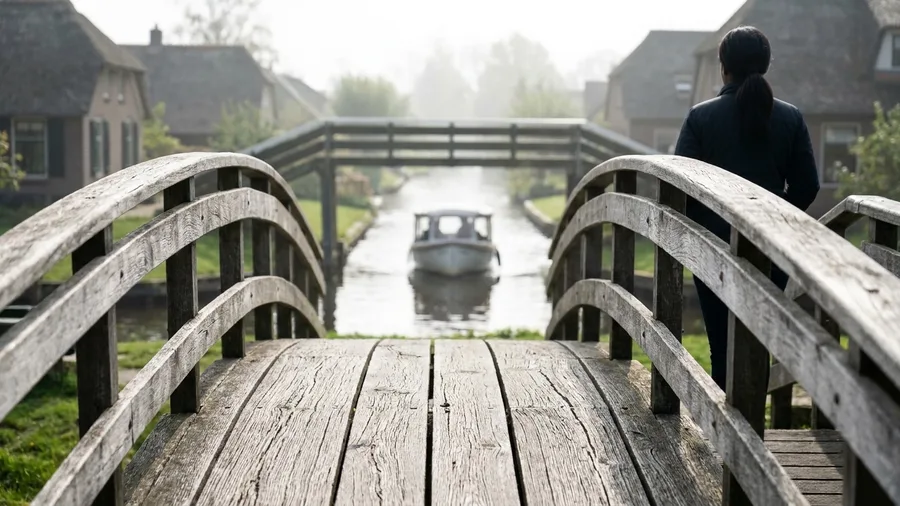
You hear the water before you see it: a low, even lapping under the footbridges, then the electric hum of a whisper boat sliding past without a wake. Giethoorn sits in Overijssel, in the Weerribben-Wieden wetlands, where the canals are the streets and the footpaths are the pavements. Two to three hours on foot is the honest version, and the whisper boat is the alternative that makes the half-day. Stay after the day tours leave and the village gets its voice back.
Yes, the coach crowd is real, and it bites hardest between 10am and 4pm. But Giethoorn is car-free by design and still a timetable problem, because the crowd arrives by the busload, not the carload. Train to Steenwijk plus a bus, or park at the edge and walk in, and the only thing between you and the quiet version is the hour you choose.
💡 Tip: Giethoorn is the inverse of Monsaraz: car-free by design and still a timetable problem, because the crowd arrives by coach.
Village-trip vocabulary, decoded
10. Esch-sur-Sure, Luxembourg's River-Bend Castle Village
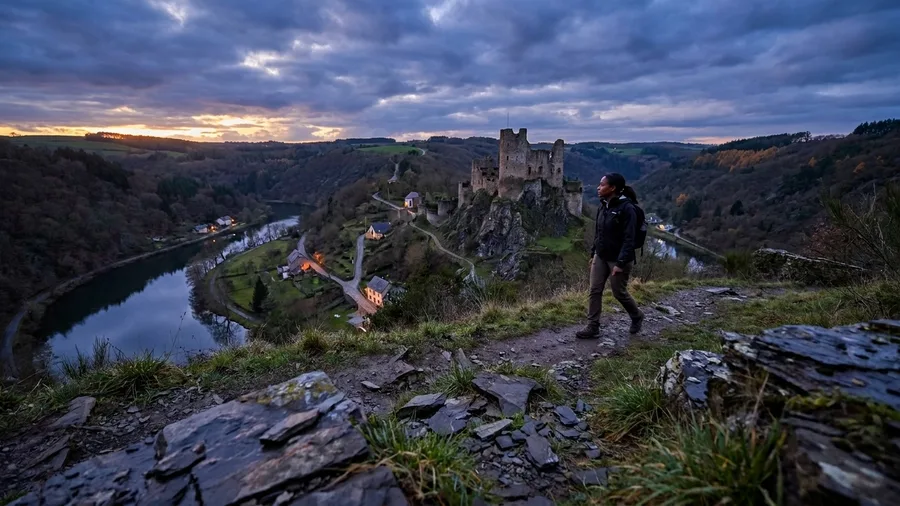
Know before you set out that Esch-sur-Sure has almost no bus service, and that is not an oversight you can plan around. A castle ruin stands on the rock above the tightest loop of the Sure river, stone lanes run below it, and the nearest lake beach is a short drive up the valley. The quiet here is the reward for the awkwardness: no coach flotilla, no timed entry, no bridge ticket. If you want a Luxembourg stop between the Ardennes of Belgium and the German border, this is the one, and the reason is that nobody has made it easy.
Make it active: climb the path to the ruin first, 20 minutes up, then walk the river bend below and drive 10 minutes to the lake for a swim. Allow 2 hours for the village and half a day with the water. Go by car – the road in is the filter that keeps the lanes empty, which is the clock buying you what it buys nowhere else on a shortlist of walled showpieces: the ruin and the bend are the whole show, and you will have them to yourself. A simple dinner runs $25-$45 if you stay.
11. Adare, Ireland's Thatched-Cottage Village
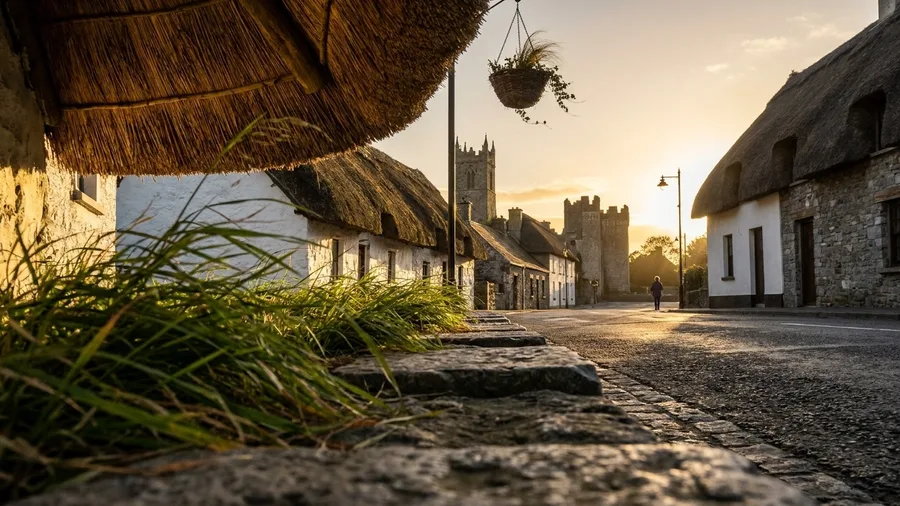
Adare asks less of you than a castle above a river bend does: it sits on a road outside Limerick, near Shannon Airport, and you arrive by car, taxi or the flight that just landed. The trade is honestly stated. This is a village on a road rather than one preserved from it, and the thatched cottages along the main street are the image while the Augustinian abbey in its grounds beyond is the substance. Arrive in late afternoon and walk the cottages and Desmond Castle in about two hours, with the low sun lighting the thatch from the side.
Then stay for a pub meal, because dinner is the plan here and not the afterthought. Budget $25-$45 for it.
The social evening is what the clock buys in Adare, and it is the reason to sleep here rather than pass through, especially on your first or last night when the airport is minutes away.
12. Bibury, England's Cotswold Stone Postcard
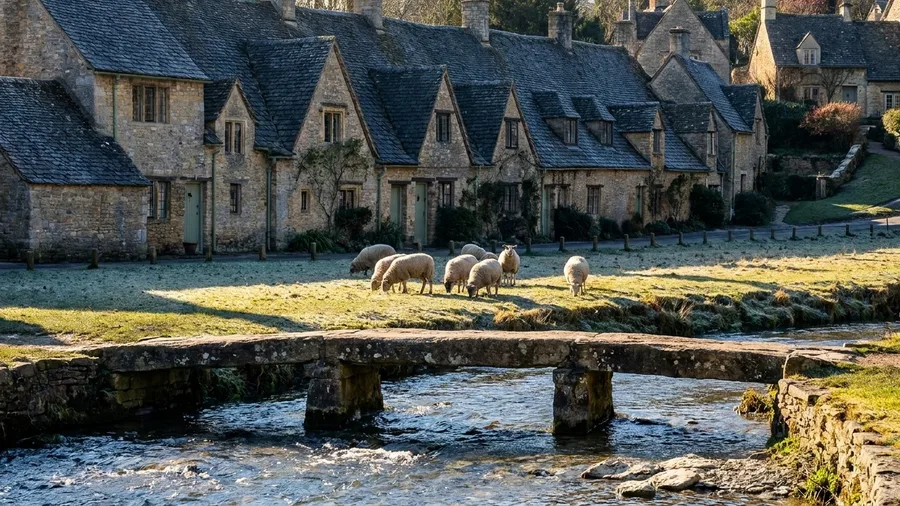
The River Coln runs shallow and fast past the cottages, and the stone along Arlington Row holds the cold of the night until well after the sun is up. Bibury is Gloucestershire's Cotswold image, the row on one side of the water and the trout farm upstream, and the whole visit is 1-2 hours, the shortest walk on this list. Go before 10am. The coach traffic knows the address, and the same 200 metres is a photograph or a place depending on the hour you stand in it.
Come by car or taxi from Cirencester, since there is no big rail stop, and the locals use the early hour for the same reason you will: it is the only version of the village that belongs to anyone who lives there.
Frequently Asked Questions
How many of these villages can you realistically do in two weeks?
Four or five, done properly. Pick one country cluster — Portugal and Spain, or Germany, Austria and Switzerland — and sleep in each village for at least a night. Driving between them eats hours, and the whole point of this list is the hour before the coaches arrive.
When is the best time to go?
May to June and September for most of these villages. Hallstatt and Rothenburg are busiest between 10am and 4pm year-round, so the season matters less than the hour you turn up. Alsace adds October if you want the vineyards turning.
Do you need a car?
For Monsaraz, Albarracin, Civita di Bagnoregio and Esch-sur-Sure, yes, or a prebooked transfer. Gruyeres and Hallstatt work by train plus ferry or bus. Rental cars run roughly $45-$75 a day, and parking is almost always outside the village gate.
Is Civita di Bagnoregio worth the bridge ticket?
Yes, if you can manage a long exposed walk and stairs. Check the current bridge ticket and access rules on the official tourism site before committing, because those arrangements change, and eat before you cross since food hours inside the gate are limited.
What does a night in one of these villages cost?
Guesthouses typically run $120-$220 a night, a simple dinner $25-$45, and a train or bus from the nearest city $10-$30. Sleeping inside the walls is the single upgrade that changes the trip more than any other line in the budget.
Is Hallstatt still worth it with the crowds?
Yes, with a plan. Arrive before 9am or stay overnight, and take the cable car up rather than joining the scrum in the one-street lane. The lake-and-cliff setting survives the crowds; the midday lane does not.
Time Your Village for the Season
First-timers who want one win with no car: Gruyeres. Romantics who want the evening to be the event: Durbuy, with dinner booked and a Sunday morning walk. Drivers linking countries: Monsaraz, and Albarracin on the way to France. Rail-only travelers: Hallstatt, overnight, with the 7am water as the reward.
Then make one booking before anything else — the overnight inside the village itself, not a hotel forty minutes away and not a day trip. A guesthouse at $120–$220 a night is what buys you the empty lane, and the empty lane is what this entire list is actually about. Check official tourism and national rail sites for current access, hours and bridge tickets before you lock the route.
Book the bed before you book the car
Pick one village from the table above, find a guesthouse inside the walls, and check the official tourism site for current opening hours and access rules. Everything else on the trip is negotiable; that night is not.