You're standing on a black gravel path at 9 a.m., the wind trying to take your hat, and the ground is splitting open in front of you. That's Þingvellir, and it's the first of ten stops on a loop most first-timers try to rush.
The lazy version is to fly into Keflavík, book a Golden Circle bus, and call it Iceland. You'd skip the south coast waterfalls, the iceberg lagoon, and the entire east. The Ring Road rewards the driver who commits to the whole loop, not the one who samples Reykjavík and leaves.
The numbers for this example loop: eight days clockwise on Route 1 from Reykjavík, about 1,330 km or 830 miles, ten stops, and two one-night weather buffers tucked into the east. A compact 4×4 runs about $95/day plus $35/day insurance, fuel for the loop is roughly $240, guesthouses land at $170–$230/night, and parking at the popular stops costs $6–$8.
Late June gives you 8–12°C, daylight that never quite ends, and rain likely on any given afternoon. Check road.is and safetravel.is every morning before you turn the key.
What you actually do on this loop: walk between tectonic plates, watch a geyser erupt every few minutes, stand behind a waterfall, climb 527 steps for a rainbow, photograph icebergs on black sand, and eat lamb soup in a village at the end of a fjord. The driving is the thread; the stops are the beads.
This is a plan you can trim. Pick the stops that fit your days, protect the two buffer nights, and book the scarce beds before anything else.
Five Things to Lock Down Before You Leave Reykjavík
Start Þingvellir by 9 a.m.
Two hours there, then 1 hr to Geysir and 15 min on to Gullfoss. Leave Reykjavík after 10 and the Golden Circle eats your afternoon.
Reserve the Jökulsárlón boat
The amphibian runs about $65 and fills days ahead in late June. You need 2 hr at the lagoon; book the slot, then build the drive around it.
Spend the buffers in the east
Jökulsárlón to Seyðisfjörður is 3 hr 45 min with a half-day of East Fjords in between. The two one-night buffers belong here, not in the south.
Fill up before the empty stretches
Vík to Jökulsárlón is 190 km with little between. Fuel is roughly $240 for the loop, but the gap that strands you is the one after Höfn.
No F-roads needed
Route 1 covers all ten stops on paved tarmac. A 4×4 is for wind and gravel shoulders, not river crossings; the $35/day insurance is the part worth keeping.
1. Þingvellir National Park's Tectonic Rift
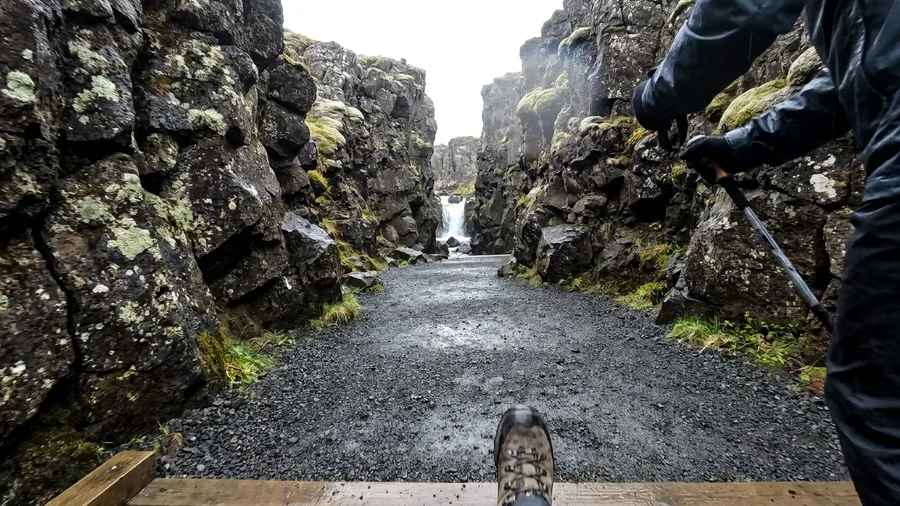
About $7 in parking, two hours of your day and a 50-minute drive from Reykjavík: that is the whole price of standing in the gap between two continents, and it is the cheapest thing on your Golden Circle morning. The catch is the clock. Þingvellir sits closest to the capital, which means the tour buses reach the Almannagjá gorge before independent drivers do, so a 9 a.m. arrival puts you on the boardwalk with forty people and a guide holding a flag.
Walk down through the gorge and the black rock walls rise on both sides, that is the seam where the North American and Eurasian plates are pulling apart a couple of centimetres a year. Keep going and the path delivers you to Öxarárfoss, a small waterfall dropping into the fissure, and then to the law rock, where Iceland's old parliament met from the 10th century. Geology and history in one flat 30-minute walk, no climbing involved. Paths are marked and gravel-surfaced; ordinary shoes handle them.
The reason to slot it before the geothermal stops rather than after is sequence and light: arrive by 8:30, clear the gorge in two hours, and you are on the road north while the coach parties are still unloading. Then it is one hour to Geysir and the rest of the Golden Circle falls into place behind you. Skip Þingvellir on the grounds that you will see rift scenery elsewhere and you spend the day looking at steam instead of standing in the crack it comes out of.
💡 Tip: Park at the main P1 lot and walk the Almannagjá path in one direction—it's about 2 km to the law rock and back.
| Stop | Region | Time needed | Why it earns the stop |
|---|---|---|---|
| Þingvellir | Golden Circle | 2 hr | Walk between tectonic plates and see the law rock. |
| Geysir | Golden Circle | 45 min | Strokkur erupts every 5–10 minutes. |
| Gullfoss | Golden Circle | 45 min | Two-tiered drop with spray in your face. |
| Seljalandsfoss | South Coast | 45 min | Walk behind the falling water. |
| Skógafoss | South Coast | 1 hr | 527 steps and rainbow views. |
| Reynisfjara | South Coast | 1 hr | Basalt columns and sea stacks on black sand. |
| Jökulsárlón | Southeast | 2 hr | Icebergs in the lagoon and on Diamond Beach. |
| Seyðisfjörður | East Fjords | Half day | Fjord road to a rainbow-painted street. |
| Mývatn | North | 3 hr | Geothermal mud pots and lava formations. |
| Goðafoss | North | 30 min | Horseshoe crest right off Route 1. |
2. Geysir Geothermal Area and Strokkur
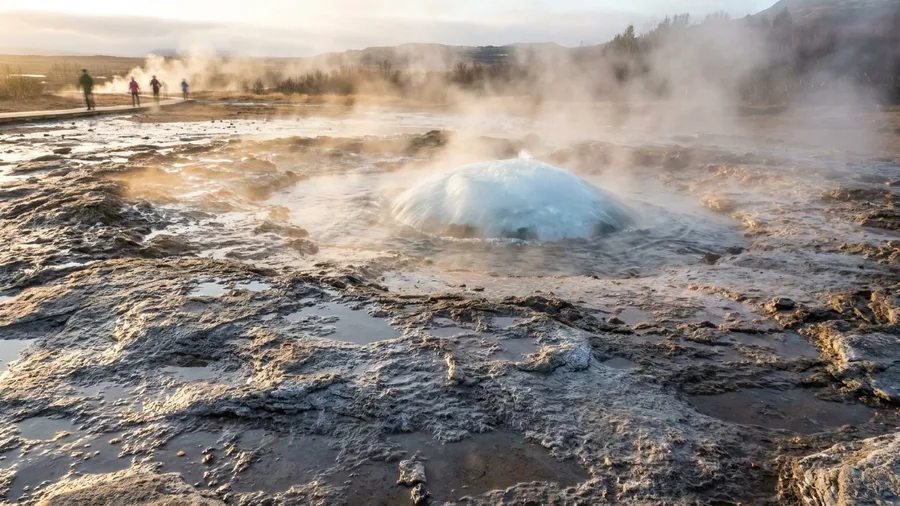
Geysir is the geothermal field next to the original Geysir, the vent that gave every geyser its name and now mostly sits quiet.
The working show is Strokkur, which fires every 5 to 10 minutes, so a single wait cycle almost always gets you an eruption: stand upwind of the blue bubble as it swells and it blows 15 to 20 metres without warning. Give it 45 minutes and stay on the marked paths around the steaming boardwalks, because the water runs near boiling and the crust around the vents is thinner than it looks. Parking at the popular stops runs $6 to $8, and the visitor centre does a quick lunch so the stop does not stretch into a half-day. Not for you if anyone in the car needs flat, predictable ground: this is a short loop on foot over uneven, steaming terrain, and a stroller will fight it.
💡 Tip: Stand downwind of Strokkur for the eruption photo, but upwind for staying dry—the spray carries.
⚠️ COMMON MISTAKE
Don't turn the Golden Circle into a full day
Þingvellir, Geysir and Gullfoss together take 2 hours, 45 minutes and 45 minutes, with drives of 50 minutes, 1 hour and 15 minutes. That's a half-day, not a full one—book your south-coast guesthouse for the same night and keep moving.
3. Gullfoss Waterfall's Two-Tiered Drop
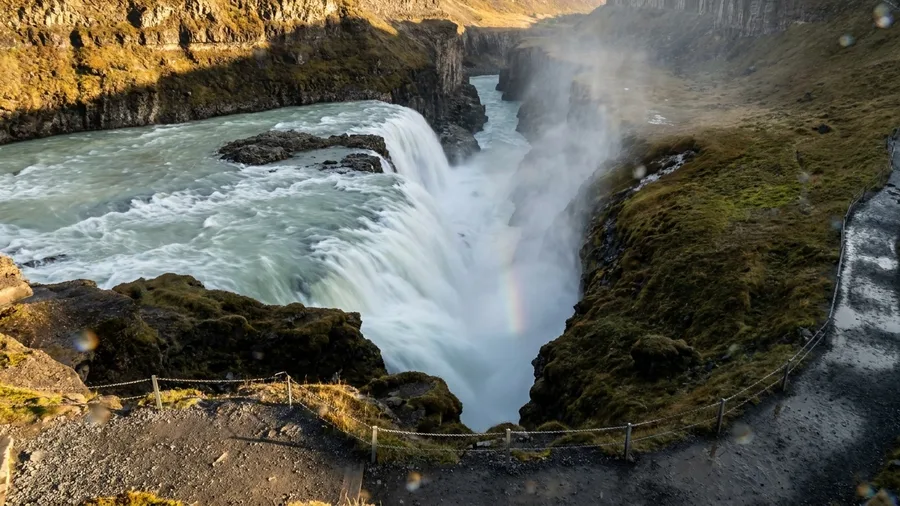
Gullfoss asks for less effort than the steaming ground you just left and gives back more noise. It sits 15 minutes down the road, so the Golden Circle stays compact and the waterfall lands before the route turns south.
The Hvítá river drops 32 metres in a double cascade here, and the upper path puts you close enough that the spray hits your face before you see the second tier. Walk both viewpoints in 45 minutes; wind and spray are part of the deal in late June too, so a rain shell earns its place on the Golden Circle day. Use the main lot and go on foot, with the usual $6 to $8 for parking.
Add the Golden Circle up honestly: two hours at Þingvellir, 45 minutes here at Geysir, 45 at the falls, stitched by drives of 50 minutes, an hour and 15 minutes. One thing worth eating before you point the car south is a skyr with cream and berries from the Gullfoss visitor centre cafe, a few dollars and enough to hold you to the next stop. It is a short, high-return leg that leaves the afternoon free for the south, and no F-road driving is needed anywhere on it.
Ring Road Quick Planning Guide
4. Seljalandsfoss Waterfall Walk-Behind Path
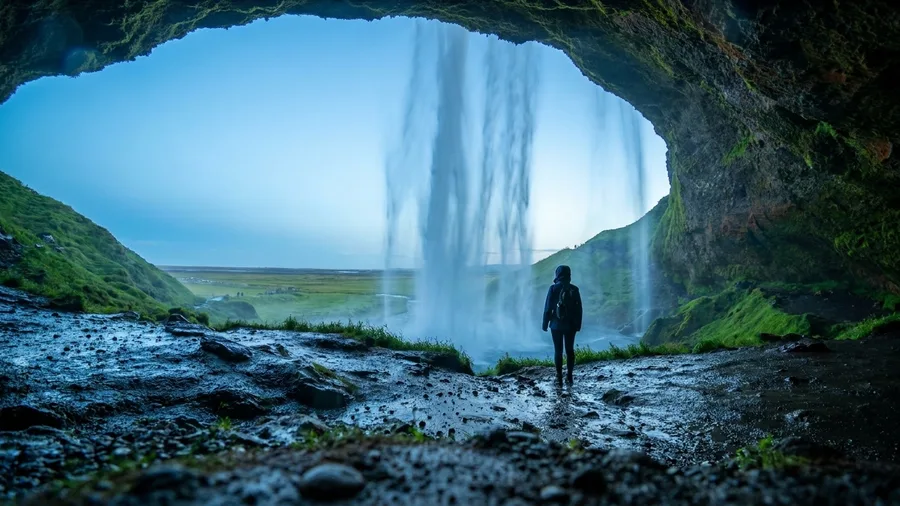
The path behind the water is wet before you reach it, and that is the thing to know before you park. Even in late June, Seljalandsfoss throws enough spray sideways that the walk-behind trail runs slick, so a rain shell and shoes with grip are not optional gear; they decide whether you enjoy the loop or tiptoe it.
With the Golden Circle behind you, Route 1 turns south and Seljalandsfoss is the first stop on the 190 km run toward Vík, a roughly 45-minute stop if you protect it and about $7 in parking. The trail climbs a short way, curves into the gap behind the falling column, and you stand in the slot with the water dropping in front of your face and daylight coming through it.
The photograph almost everyone misses is five minutes further on. Follow the path past the main falls to the mouth of Gljúfrabúi, a narrow cleft where a stream drops into a shadowed hollow you enter by stepping across stones. Two waterfalls, one 45-minute stop, and the second is the one people leave without seeing.
Shoot the walk-behind from inside the curve, framing the green cliff edge through the water, and go late in the day when the low sun lights the spray. Expect to get soaked at the edges of the frame no matter how careful you are. Keep the whole visit to Route 1; no F-road driving is needed to reach either fall.
💡 Tip: Bring a dry bag for your phone—the spray reaches the back of the path, not just the front.
Three mistakes that wreck a first Ring Road trip
5. Skógafoss Waterfall and Fimmvörðuháls Trailhead
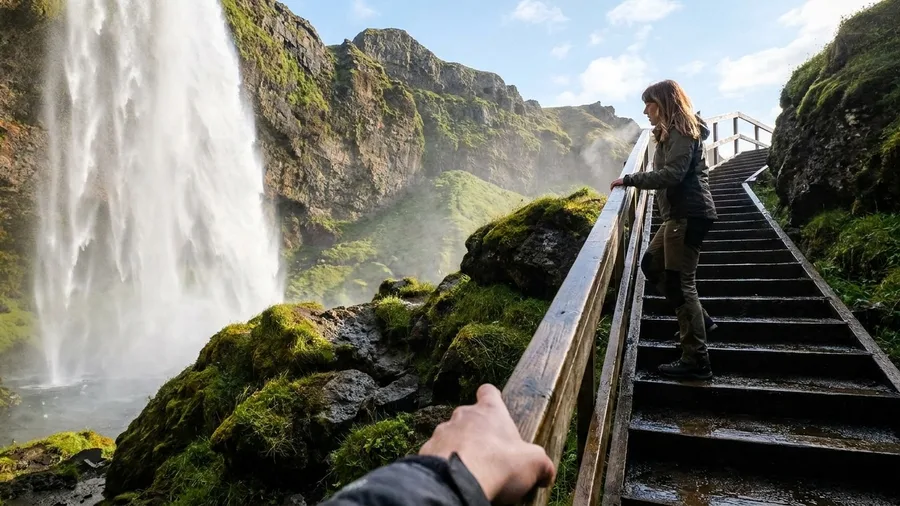
Climb the stairs. Skógafoss earns the hour it takes for one reason: the 60-meter curtain throws enough spray that when the sun breaks through, a rainbow sits in the mist at the base, and the top of the 527 steps puts you above it looking down the south coast.
The parking area sits right by the falls, so the walk to the base is short, but expect to be soaked there even in summer. The upper viewpoint also marks the trailhead for the Fimmvörðuháls hike, a long day that this loop leaves out. Keep the visit to an hour and the 35-minute run from the previous waterfall keeps your Vík overnight within easy reach.
How much each south-coast stop costs you
Time and money, ranked from quick win to long haul
- Geysir: 45 minutes and $6–$8 parking—the cheapest return on the loop.
- Seljalandsfoss: 45 minutes, $7 parking, and you get two waterfalls.
- Skógafoss: 1 hour and $6—worth it for the stair climb alone.
- Jökulsárlón: 2 hours plus a 2 hr 45 min drive from Vík; book the $65 boat.
- Seyðisfjörður: Half a day and a detour off Route 1—only if you have the buffer.
6. Reynisfjara Black Sand Beach and Sea Stacks
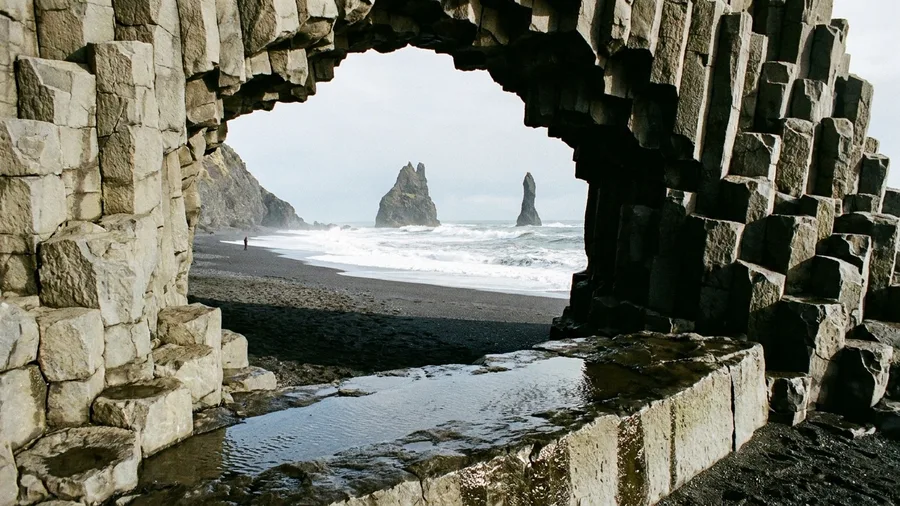
Your shoes sink a little and the cold comes through, and the first thing you notice on Reynisfjara is how fast the nearest wave retreats, dragging the black sand back with it. That pull is the warning. Sneaker waves here reach further up the beach than the last one did, and the safe rule is to stay well back from the waterline, not to time the sets.
The lava columns stack like a staircase against the cliff, and the Reynisdrangar sea stacks stand offshore in the surf, with the black volcanic beach as the foreground for both. Give it an hour, shoot the stacks from the sand and the columns from below, and leave the ocean's edge to the people who ignore the signs.
Reynisfjara sits between the waterfall behind you and Vík, so it is the stop before you check in. That makes the Vík guesthouse one of the beds to book ahead, at $170-$230 a night, because the beach is the last sight of the day and the town is where the loop sleeps.
💡 Tip: Read the warning sign at the car park—it's not decorative. Sneaker waves have caught experienced travelers here.
Vík overnight vs. push to Höfn
Stay in Vík
- Breaks the south coast into two easy days
- Guesthouses $170–$230/night
- Early start for Jökulsárlón
- Book months ahead
Push to Höfn
- Adds 2 hr 45 min after a full day
- Fewer beds, higher prices
- Risk of night driving
- Skips the Vík dinner stop
7. Jökulsárlón Glacier Lagoon and Diamond Beach
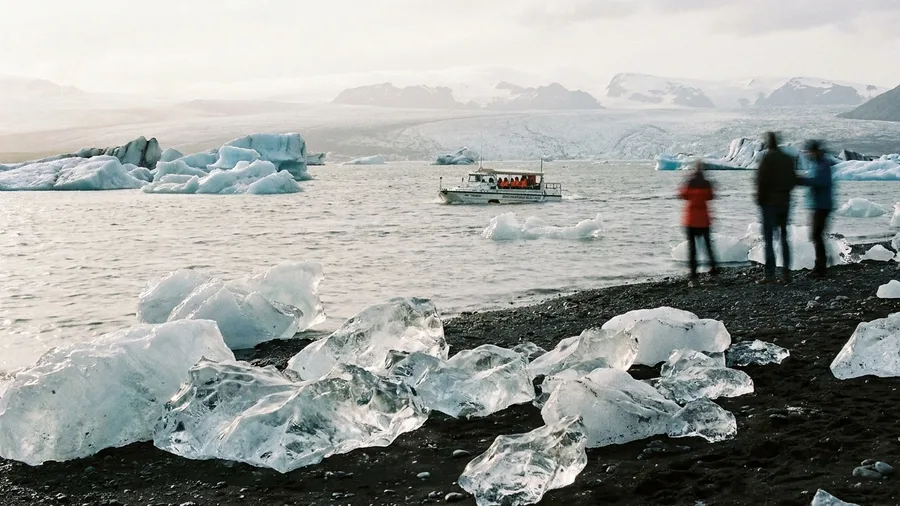
The ice moves. That is the sound at Jökulsárlón: a low crack, then a pause, then the splash of a chunk the size of a car rolling off a berg and settling lower in the grey water. You stand on the shore in a rain shell at 9°C in late June and watch the lagoon rearrange itself.
It is worth the 190 km and the 2 hr 45 min from Vík, but only if you give it 2 hours and a bed near Höfn on the far side. If winter quiet and empty trails appeal more than summer crowds, see national parks in winter before you book the dates. The floating icebergs, calved off Breiðamerkurjökull and drifting toward the sea, are the payoff for the longest south-coast leg; Diamond Beach is across the road, a short walk from the car park, where the same ice washes up as clear chunks on black sand. Sit on the shore and do nothing for a while. The lagoon rewards that more than another viewpoint.
An amphibian boat tour runs around $65 and gets you closer to the bergs, and it is a book-ahead item alongside the Vík and Höfn guesthouses, which run $170-$230 a night. That Höfn bed is the real reason this stop works: the next leg to Egilsstaðir is 260 km, and without a night here the eastbound loop turns into a night drive through fog, which is exactly the wrong way to spend the one stretch of Iceland you cannot photograph from a moving car.
💡 Tip: Book the first boat of the day—the water is calmest and the light is softest for photos.
Jökulsárlón — The Booking Layer
🎟️ Boat departure
Sells out on July sailings; reserve 2-3 weeks out
🅿️ Parking
$6-$8 at lagoon and Diamond Beach
💨 Skip the boat if
Wind above ~15 m/s or you have under 90 min
🛏️ Höfn fallback
If full, push to Egilsstaðir (3 hr 45 min) same night
Morning check
Read road.is and safetravel.is before the 260 km leg; fog closes the pass.
8. East Fjords' Seyðisfjörður Detour
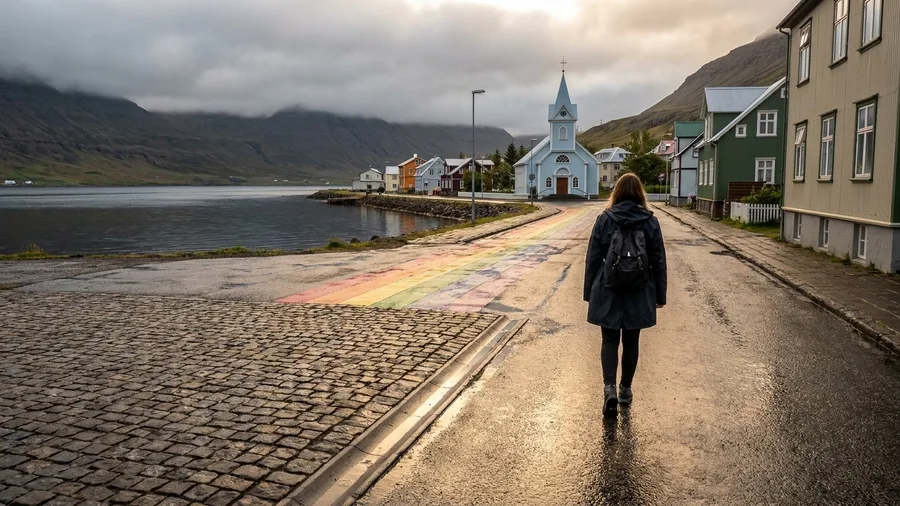
If the schedule has the half-day, spend it here, because the steep road down to Seydisfjordur ends at a small blue church and a street of wooden houses painted in every color a paint shop stocks, and that village is the thing that makes the long haul east feel like more than a transit stage.
The detour splits the 260 km from Jokulsarlon to Egilsstadir and the 165 km on to Myvatn, so it does the structural work the east needs: a built-in pause where the weather buffers sit, rather than a straight 3 hr 45 min run from glacier lagoon to fjord. Fill up in Egilsstadir before you climb back north, then drive the fjord road down to the rainbow street and walk it.
💡 Tip: Fill the tank in Egilsstaðir—the next reliable station north is a long way.
9. Lake Mývatn, Hverir, and Dimmuborgir
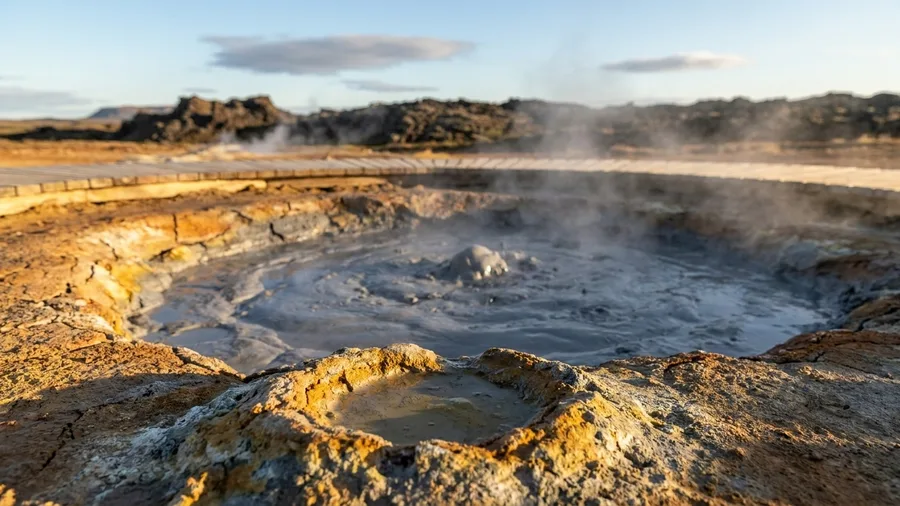
You step out of the car at Hverir and the first thing that hits you is the smell: sulfur, sharp and eggy, rolling off the ground in a warm cloud while steam hisses out of vents a few steps away. This is the Myvatn afternoon, an hour of walking on ground that is genuinely hot, on marked paths that keep you off the crust.
The story of this landscape is volcanic, and it is written in the rock around the lake: Hverir's mud pots bubbling and steam vents breathing and the lava formations of Dimmuborgir, where pillars and caves of cooled basalt stand in a maze you walk through. The sites sit close enough together to fill one three-hour block without a long drive between them, which is what makes the lake a base rather than a drive-by.
That block is your afternoon. The geothermal ground is fragile and shifting, so stay on the paths at Hverir, keep your distance from the steam, and let the walking do the work rather than a string of roadside pull-offs.
Then sleep at Reykjahlid, right by the lake, and the next morning's drive to Godafoss is 45 minutes instead of a long haul from the east. Myvatn is 100 km from Akureyri and 165 km from Egilsstadir, so an overnight here keeps the northbound pace honest and leaves the waterfall finish within easy reach.
💡 Tip: Don't step off the boardwalk at Hverir—the crust is thin and the water below is near boiling.
10. Goðafoss Waterfall's Horseshoe Crest
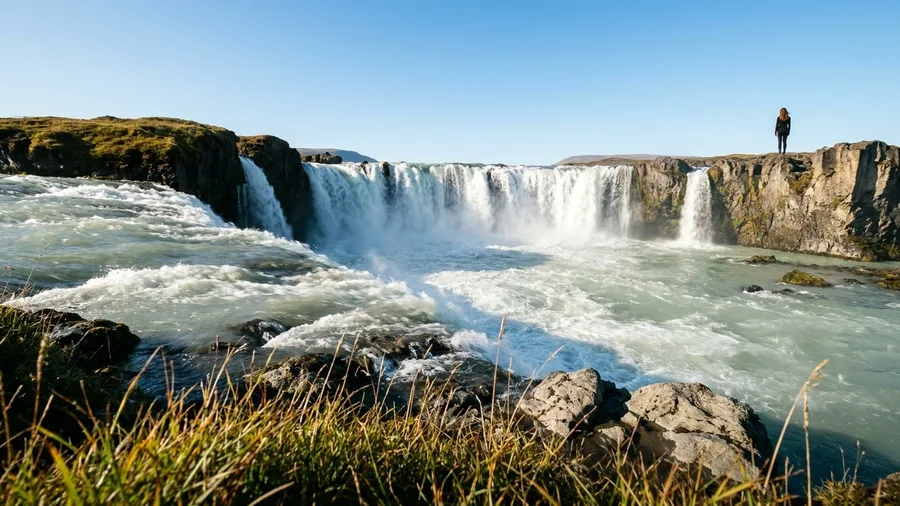
Goðafoss is worth 30 minutes and no more, and 30 minutes is all it asks. You're already on the road from Mývatn toward Akureyri, and this is the last waterfall before the northern loop bends back to the city, so stopping costs you almost nothing: pull off Route 1, park (no fee here, unlike the paid lots further south on this route), and walk the short path down to the east bank. The payoff is the shape. The Skjálfandafljót river fans out over a wide horseshoe crest and drops maybe 12 meters in a broad curtain rather than a single spout, which means you see the whole span from one viewpoint instead of hunting for the right angle.
Give it half an hour to see it from both banks, and don't linger past that. The drive from Mývatn is 45 minutes and the drive on to Akureyri is another 45, so the city's fuel pumps and a hot meal land squarely in the early afternoon. This is the low-cost return before the long closing leg: Akureyri to Reykjavík runs about 4 hr 30 min, and the loop ends when that road does. No F-road driving, no booking, nothing to reserve. The waterfall is the last thing the Ring Road hands you before the drive home, and it earns its 30 minutes.
Frequently Asked Questions
Do I need a 4×4 for the Ring Road?
For this eight-day clockwise route on Route 1, a compact 4×4 is comfortable but not strictly required—you won't drive any F-roads. A 2WD would handle the paved loop, but the 4×4 gives you margin in wind and rain. Budget around $95/day plus $35/day insurance.
How much does the whole loop cost?
For this example: rental around $760 for eight days, fuel about $240, guesthouses $170–$230/night, parking $6–$8 per stop, and the Jökulsárlón boat around $65. Expect $250–$350 per person per day once food is included.
Is eight days enough for the Ring Road?
Yes, if you keep the ten stops to their planned times and protect two one-night weather buffers in the east. Eight days is tight but doable clockwise from Reykjavík. Fewer than seven days means cutting stops, not speeding up.
What should I book ahead?
The 4×4, the Vík and Höfn guesthouses, and the Jökulsárlón amphibian boat. Those are the scarce items. Everything else—parking, fuel, food—you can pay as you go.
When is the best time to drive the Ring Road?
Late June gives you 8–12°C, long daylight, and the full loop open. Wind and rain are likely any month. Check road.is and safetravel.is each morning before driving.
Can I do the Ring Road in a day?
No. The loop is 1,330 km / 830 miles. Driving it nonstop is over 16 hours behind the wheel. Even a rushed version needs at least five days, and eight is the realistic minimum for the ten stops here.
Book the beds before you lock the ten-stop order
The ten stops hold up as one eight-day clockwise loop because each earns its time and money: roughly 1,330 km, $95 a day for the 4×4 plus $35 insurance, $240 fuel, $170 to $230 guesthouses, $6 to $8 parking, and the $65 Jökulsárlón boat only if floating closer to the ice matters to you. Book the beds before you lock the order. The fear of missing the icons is answered by sequence, not extra stops: Golden Circle morning, south-coast falls and Reynisfjara, Jökulsárlón with a Höfn bed, the Seyðisfjörður half-day, a Mývatn afternoon, Goðafoss last.
Late June means 8 to 12°C, wind, rain and daylight that barely quits, so the daily road.is and safetravel.is check stays on the plan, and the two one-night buffers in the east absorb whatever the weather does to the long Jökulsárlón to Egilsstaðir and Egilsstaðir to Mývatn legs. Drivers who would rather trade Icelandic weather for milder roads can compare scenic winter road trips back home.
So do the thing that makes the rest possible: reserve the 4×4 and the Vík and Höfn guesthouses now, then hold two buffer nights in the east. Later, on that gravel at Þingvellir with the wind at your hat, you will be glad the plain decisions were made early.
Ready to book the loop?
Start with the Vík and Höfn guesthouses, then the 4×4. The ten stops can wait an hour; the beds can't.