Book the cruise first, then build the coast around it, and you get one interior cabin for seven nights, three ports (Santa Barbara, Monterey, San Francisco) and roughly $3,150 for two all in. Main dining is included, a specialty dinner runs about $40 per person extra, and nobody drives. You unpack once. You also see three places.
Now price the other version. San Francisco to Los Angeles on Highway 1 is 466 miles over 7 days and 6 nights, with 12-plus named stops and six different beds for about $2,835 for two. The road trip takes scenery, flexibility and stops. The cruise takes exactly one thing: no driving and no unpacking.
Two things to lock down before you commit. Big Sur lodging and Hearst Castle tickets, eight weeks ahead, or you are paying whatever is left. And no driving after dark on the Big Sur stretch, which is a rule, not a preference.
After the itinerary you can book each overnight, protect the $420 rental rate, hold food near $100 a day for two, and pick your number. Do the arithmetic once: seven days, 466 miles, 12-plus stops, six overnights, about $2,835 against $3,150, provided you do the driving.
Quick Tips Before You Start
Book the car early
Reserve a compact or midsize at SFO or downtown San Francisco; the $420 weekly rate is your fixed vehicle cost.
Lock in Big Sur
Peak-season rooms run $250–$350 a night and sell out eight weeks ahead. Book that night first, then fill in the rest.
Fuel up before the wild stretch
Fill the tank in Carmel or Monterey; stations south of Big Sur are few and far between.
No after-dark driving on Big Sur
The road is narrow with unlit curves. Plan to be at your lodging before sunset on days three and four.
Reserve Hearst Castle
Tickets go on sale months out and tours fill. Book the late-afternoon slot eight weeks ahead.
Budget $100 a day for food
That covers two people eating well at casual spots, with room for one splurge dinner in Carmel or Santa Barbara.
1. Day 1: San Francisco to Half Moon Bay
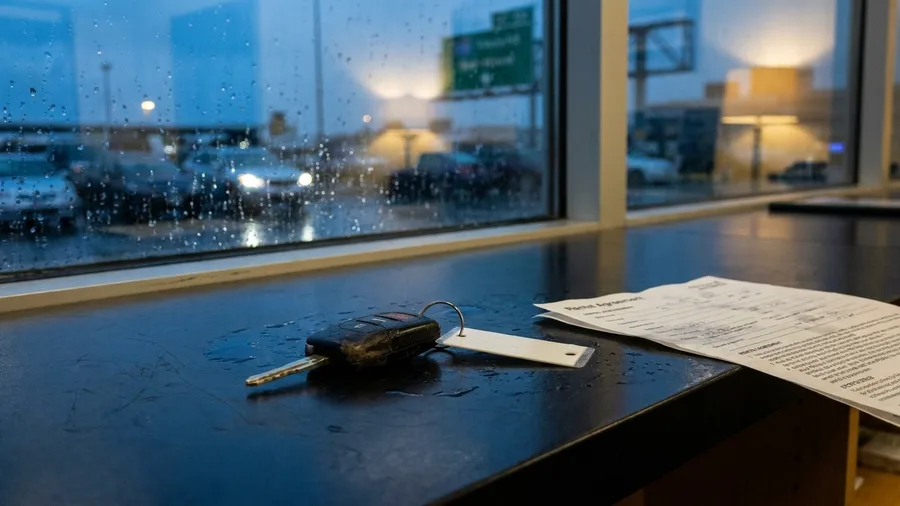
Start the rental pickup at SFO or downtown San Francisco, but know the catch before you sign: the $420 weekly rate locks your vehicle line for all 466 miles, and that is the whole point of day one. Without the car you have a cruise's fixed schedule; with it you have a week of coast. Pick up early, load the bags once, and don't look at the meter again.
Clear the city and take Highway 1 south, not I-280. The interstate gets you out faster, but it also gets you out of the scenery, and this route is the reason you rented the car. Half Moon Bay arrives inside the first 30 miles or so, and this 75-mile run toward Santa Cruz is a two-hour drive before you count a single stop.
Pull into Half Moon Bay for coffee and a beach walk, unscheduled and unhurried, then keep rolling so you reach Santa Cruz before dark. That is the honest trade here: you drive yourself and you pick the pace, and the $420 car rate already buys the first of the trip's six beds. A cruise's port call gives you a clock; this gives you a start time you chose.
💡 Tip: Pick up the car at SFO rather than downtown; the airport rental center is faster and gets you onto Highway 1 without city traffic.
| Cost item | 7-day PCH road trip (2 people) | 7-night coastal cruise (2 people) |
|---|---|---|
| Vehicle / cabin | $420 rental car | $2,400 interior cabin |
| Fuel | $85 | Included in cruise fare |
| Lodging | $1,380 (6 nights, $230 avg) | Included in cabin |
| Food & drinks | $700 ($100/day) | $250 drinks & Wi-Fi + specialty dining extra |
| Activities | $250 | $200 (2 shore excursions) |
| Port fees / taxes | $0 | $300 |
| Total | ≈ $2,835 | ≈ $3,150 |
2. Half Moon Bay to Santa Cruz
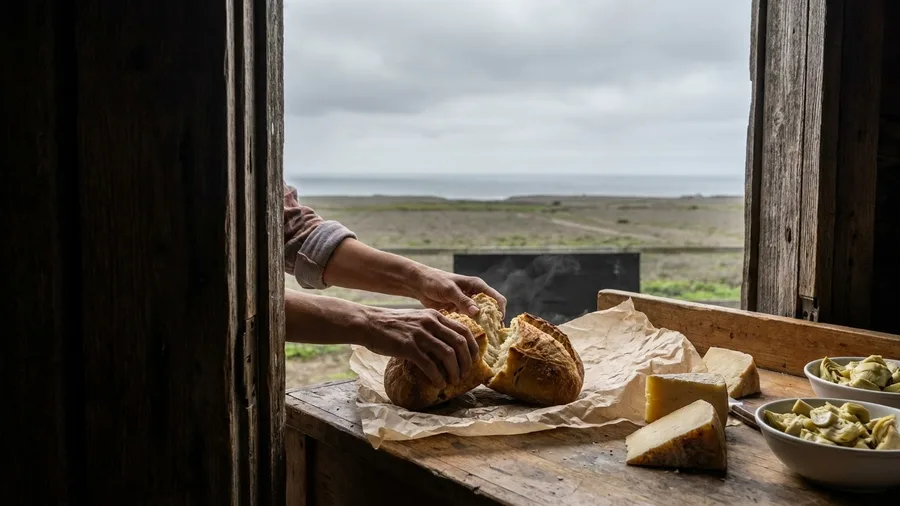
The smell arrives before the town does: yeast and warm flour out of a farm-stand doorway in Pescadero, and you pull over without needing a sign. This is the county road just off Highway 1, and it costs nothing but a few minutes. Inside, the loaf to ask for is the artichoke bread, served warm and split, heavy on the cheese and chopped hearts, roughly $8 to $10. You eat half in the car and regret nothing.
Then you're back on the water at Bean Hollow State Beach, a short drive south, where the sand is coarse and the tide pools sit at the north end with anemones and hermit crabs in the rock. It's a free stop, unstaffed, with a small gravel lot that can be full on a sunny weekend morning. Stand at the bluff edge here and look south: the coast unrolls in a line of dark coves and white surf. Give the pair of stops an hour, maybe more.
The full run from Half Moon Bay into Santa Cruz is about 75 miles and roughly two hours of driving if you never lift off the pedal, and the stops are exactly where those extra hours go. That's the whole argument for the road right here: a cruise ship holds a fixed clock at a fixed port, and you can't ask it to wait while you eat bread and watch tide pools. You arrive in Santa Cruz with the light still up and one of six different beds waiting, a motel at $180 to $250 a night in May or September. The Santa Cruz Beach Boardwalk will absorb two hours if you let it, and it's a good two hours, but it costs you the early start toward Monterey the next morning. Skipping it buys the start instead.
💡 Tip: Skip the Santa Cruz Beach Boardwalk if you want an early start toward Monterey the next morning; it adds two hours.
Your 7-Day Highway 1 Plan
3. Day 2: Santa Cruz to Monterey
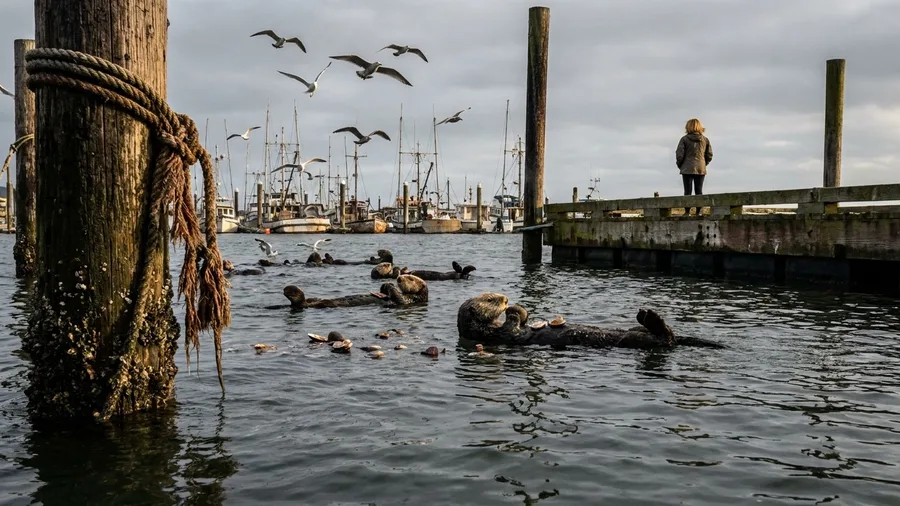
The cold fog rolls off Monterey Bay in sheets and the sea otters at Moss Landing float on their backs in the grey chop, cracking shells on their chests while gulls scream overhead. This 45-mile run from Santa Cruz to Carmel is only about an hour of driving, which is the point: the short leg leaves your morning for the coastline. Stop at Moss Landing for the otters and a quick lunch before Monterey, and let the pace stay slow.
Once you reach Monterey, pick one thing. The Monterey Bay Aquarium or Cannery Row, not both, keeps the day to about two hours of driving and leaves you room to actually sit. This is the entry where you do nothing for an hour, and the bay is a good place for it.
Fill the tank before Carmel. Monterey has more stations than the road south, and stations past Big Sur get scarce fast, so topping off here is cheap insurance for the next two days.
The aquarium-or-Cannery Row choice is exactly the flexibility a cruise shore excursion removes. On a ship the port time decides for you; here you decide, and one unhurried port-time decision beats a packed schedule someone else built.
4. Monterey to Carmel-by-the-Sea
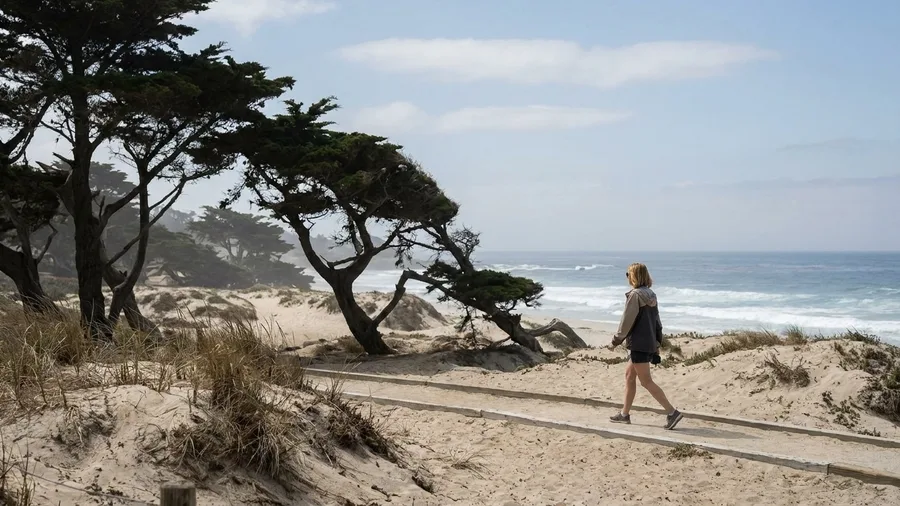
You need a room in Carmel before you drive south, not after. The transfer from Monterey is 10 miles in 20 minutes, which sounds like nothing until you realize it puts the car at the top of the Big Sur leg with a full tank and a bed behind you.
Park once and walk. The beach path runs along the sand at sunset, downtown dinner needs no reservation, and the evening happens on foot with no clock on it. Night two costs $220 to $350, one of six different beds on this route, and it is the splurge that earns its money by position rather than thread count. Check Big Sur road conditions before you sleep: the narrow section wants daylight, and this overnight is partly about waking up 26 miles from Bixby Bridge instead of an hour and a half away.
⚠️ COMMON MISTAKE
Don't drive Big Sur at night
The 26 miles from Carmel to Big Sur have narrow curves and no streetlights. Plan to be at your lodging before sunset, and check road conditions the night before.
5. Day 3: Carmel to Big Sur
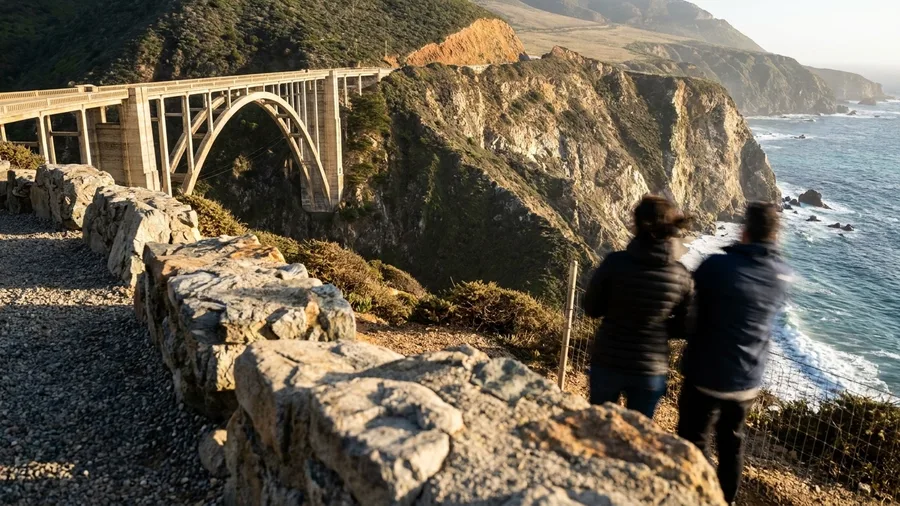
The Big Sur drive is 26 miles from Carmel, about an hour if you never pull over, and nobody should never pull over. Bixby Bridge and Point Lobos sit close together near the start, so the stops stack up early and cheap.
Fuel in Carmel first. Stations south are few and the ones that exist charge for the privilege, and the $85 fuel line covers the whole 466-mile route only if you are not topping off at resort prices. Two rules keep the morning working: pullouts fill by mid-morning, and the section gets no driving after dark. Daylight is not a preference here, it is the itinerary.
Big Sur rooms run $250 to $350 in peak season, the highest band on the route, and they book about 8 weeks ahead. What you get for that is one hour of coast with a bridge in it and redwood canyon stops off the shoulder, which is more actual shoreline than a cruise hands you in a full sea day.
💡 Tip: Stop at the Bixby Bridge pullout on the north side for the classic photo; the south side is crowded and the angle is worse.
6. McWay Falls and Nepenthe
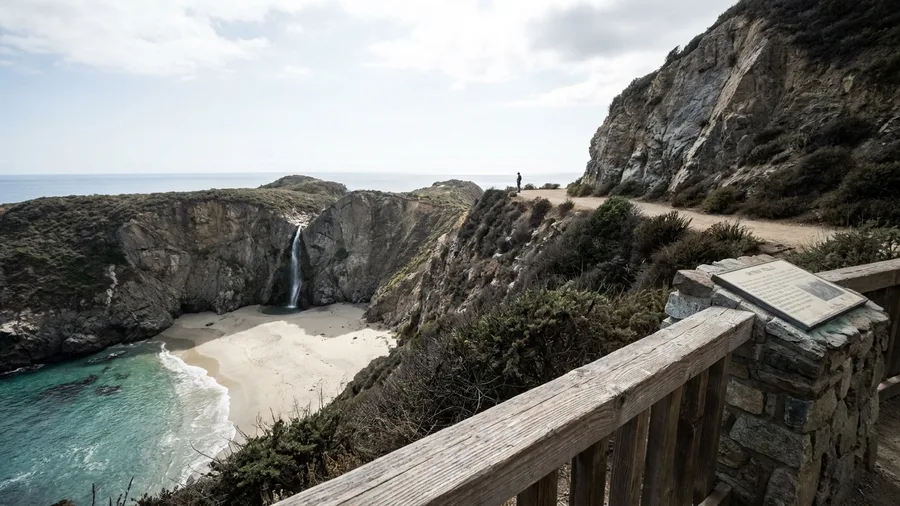
Budget $30 to $45 for two at Nepenthe and an hour for the afternoon you actually want. The terrace above Highway 1 is where locals send people instead of the crowded beach lot down the road, and a drink with that cliff view costs less than a specialty dinner at sea.
McWay Falls is the other half. You see it from the Highway 1 overlook, a 0.5-mile walk and no fee, and the fall drops straight to a cove you cannot reach. Go late morning or early afternoon, when the light is behind you and the pullout still has space.
Pfeiffer Beach is the trap: a full lot can eat an hour of your day for a shoreline no better than the one you already have. Skip it. Take a second walk near your lodging instead, because the unlit curves between Big Sur and the next stretch make the no-after-dark rule practical, and the afternoon is better spent choosing two stops than collecting six.
7. Day 4: Big Sur to San Simeon
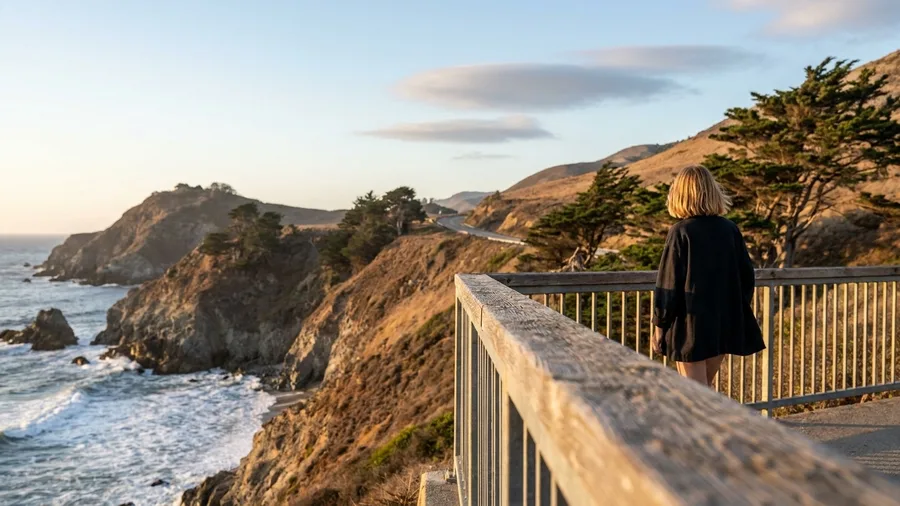
Seventy miles, about 2.5 hours of driving, the longest leg of the week. That still leaves daylight for the elephant seals and a Hearst Castle tour, provided you start in the morning and treat the drive as the day's main event rather than a gap between activities.
Ragged Point is the first pullout after the narrow section, and it marks where the tight, cliff-hugging Big Sur road finally lets out. The shoulder widens, the van in front of you pulls over, and the coast opens on both sides at once. Pull in, stretch, look back north at the road you just drove, and take the photo from the terrace. There is a cafe and restrooms here, and it is the last easy stop before ranch country flattens the view.
Book the Hearst Castle tour for late afternoon. A 4 p.m. ticket keeps the 2.5-hour drive unhurried and puts you inside the house in daylight, with the ocean going gold below the terraces. It sits inside the $250 activities budget alongside the Piedras Blancas elephant seal stop 5 miles north of San Simeon, which costs nothing at all. That pair is the road trip's quiet argument: a paid mansion and a free wildlife colony, and a late-day castle ticket that moves with the road when you linger at Ragged Point, rather than a staged shore excursion with a fixed return to the ship.
💡 Tip: The elephant seal rookery at Piedras Blancas is five miles north of San Simeon and free. Go before the castle tour if you have time.
Hearst Castle and Elephant Seals — At a Glance
🎟️ Castle ticket cutoff
Reserve 8 weeks out in May, June, September
🕒 If the 4 p.m. sells out
Take the 3 p.m. and skip the Ragged Point cafe stop
🐘 Seal colony timing
Go before the castle, not after — gates close near dusk
🛏️ Lodging pinch
Peak Big Sur rooms hit $250-$350; San Simeon/Cambria stays near $230
⏭️ Skip if
You are running past 1 p.m. — drive straight to San Simeon
Timing
The no-dark-driving rule on Big Sur sets your hard ceiling: leave by 10 a.m. or the castle tour is the thing you lose.
8. Hearst Castle and Elephant Seals
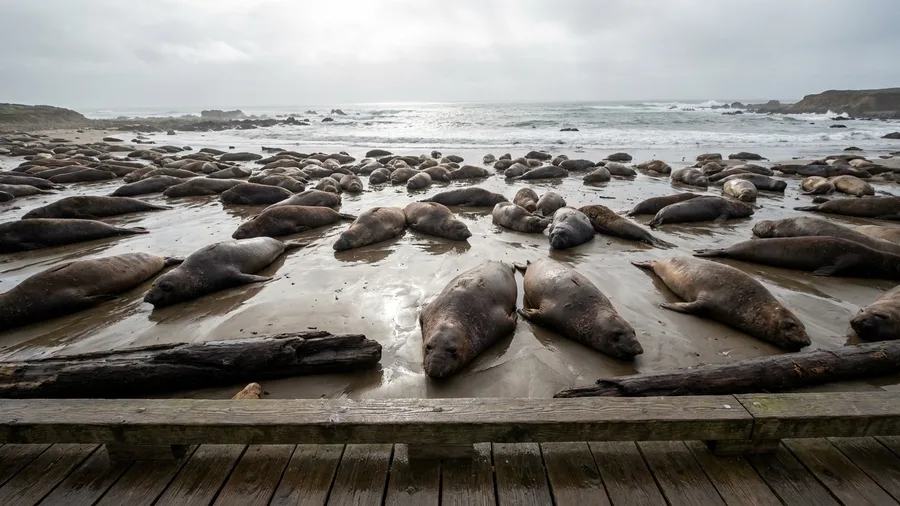
The elephant seals cost nothing and ask nothing of you but a short walk from the roadside lot; the castle asks for a ticket, a booking eight weeks out and two hours of your day inside a guided group. Do both anyway, starting at 9 a.m., and you have the coast's best pairing of paid and free before lunch. The seals alone, plus a beach walk, are the realistic fallback if you sleep in.
Piedras Blancas rookery sits 5 miles north of San Simeon, free, with docents on the fence line and a boardwalk over the sand. You will see them: hundreds of bodies, most of them motionless and looking like driftwood until one lifts its head and barks. A cruise charges toward $200 for two shore excursions to see wildlife through a bus window; this one is a pull-off, and you control how long you stay. Night four lands in San Simeon or Cambria, where lodgings average $230 and hold the six-night total near $1,380.
9. Day 5: San Simeon to Morro Bay
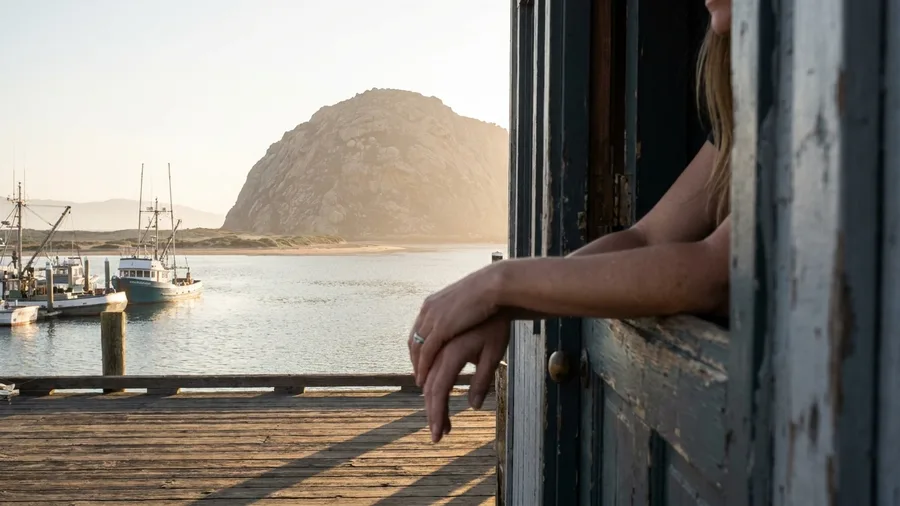
Morro Bay is a 60-mile morning that starts in ranch country and ends at the base of a 576-foot rock. The road from San Simeon leaves the cliffs behind, runs past cattle and eucalyptus, and then Morro Rock appears ahead of you with the estuary water on its left.
Stop first in Harmony, a one-street town you walk in 20 minutes for free, with a potter's studio and a saloon that has not changed much. Then push on to the Embarcadero, where clam chowder runs under $25 a person and still fits the $100-a-day food budget for two. Stand at the north end of the waterfront for the shot: the rock, the fishing boats and the sandspit stacked in one frame, best in late-morning light before the wind picks up. The afternoon stays open, and if the wind is low you rent a kayak on the spot; that low-wind call made from the dock, not a shore schedule bought months earlier, is exactly what the road buys you here.
10. Morro Bay to Pismo Beach
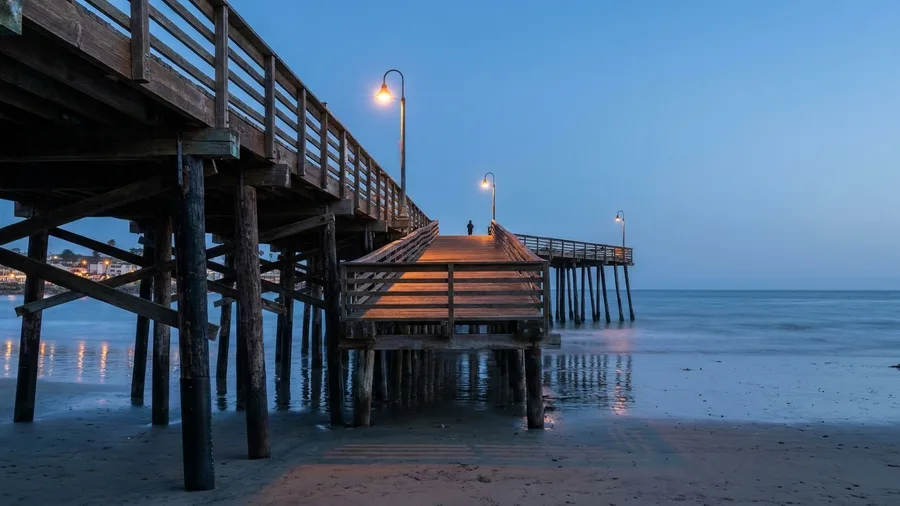
Morro Rock is the easy stop: you pull off the Embarcadero, walk twenty minutes, and the rock does all the work. Pismo Beach is the one that costs you something, because it is the finish line of the 60-mile San Simeon day and the town where the famous pier either rewards you or hands you a parking search at 6 p.m.
The pier is worth it, with a caveat. At sunset the light comes in low off the water and the whole structure goes gold, and you are standing on a deck over the sand with the town behind you and nobody selling you a ticket. That is the cruise's shore-excursion money buying nothing. The caveat is timing and the outlet mall. The outlets sit a few minutes inland and they will eat your evening if you let them, so skip them and keep the light on the coast.
For the night, the honest math matters more here than anywhere else on the route. A plain motel runs $180-$250, and an oceanfront room can push to $350. Take the cheaper bed unless the view is the reason you came. Six nights on this route average $230, and Pismo is the leg where staying low keeps that average honest rather than theoretical. The cruise has one interior cabin for seven nights and no $180 option on the menu at all.
Fill the tank in San Luis Obispo before the Santa Barbara leg. It is the last easy stop before a 95-mile day, and fuel across the whole 466 miles is a single $85 line, so a cheap fill here is not a savings so much as insurance against hunting for a station when you would rather be driving.
The pier, the clam chowder, the cheap motel and the full tank together are the argument in miniature. The road buys you a fifth night on the coast for $180-$250 and a sunset you chose to stay for. The ship buys you the same water from a deck with a fixed dinner seating and a cabin you cannot relocate to Pismo.
Road Trip vs Cruise: What You Trade
7-Day PCH Road Trip
- 12+ named stops, six different overnight towns
- You set the clock at every beach and bridge
- Total cost for two: about $2,835
- El Matador and McWay Falls are actual stops, not sea-day views
7-Night California Cruise
- Three ports: Santa Barbara, Monterey, San Francisco
- Fixed port times and one interior cabin
- Total cost for two: about $3,150
- Shore excursions and drinks cost extra
11. Day 6: Pismo Beach to Solvang
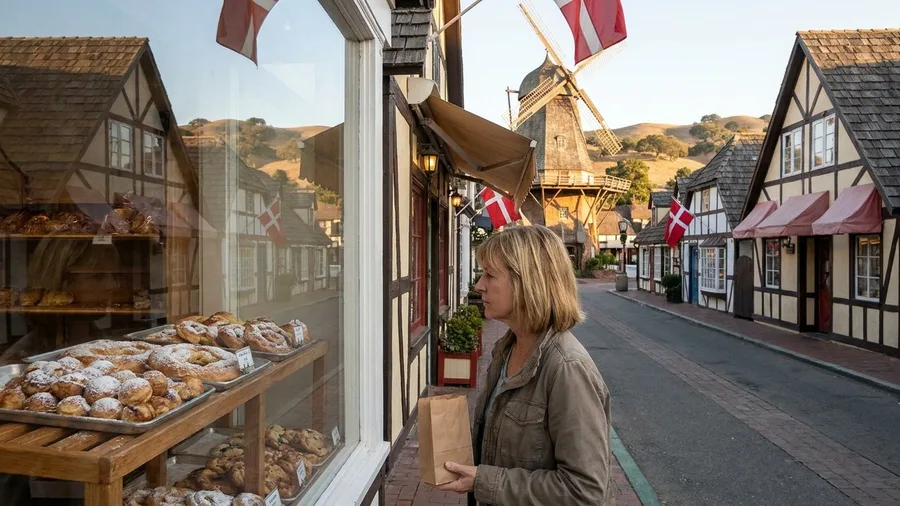
Ninety-five miles separate Pismo Beach from Santa Barbara, and Solvang sits roughly halfway. The 95-mile run is the longest kind of day on this route after Big Sur, so build in two hours of actual driving and let Solvang be the reason you stop rather than the reason you are late.
Go early, ideally before 10 a.m., when the pastry shops on Copenhagen Drive are pulling the first trays out and the free lot behind the main street still has spaces. A one-hour walk and a pastry is the whole visit: the windmills are a photo, the bakeries are the point, and the parking costs nothing, so the stop is a dollar or four of pastry, not a shore excursion. There is a strong case for skipping the town if you have already eaten and daylight is short: it is a sweet detour, not a reason to lose an afternoon. Then take Highway 154 through Los Olivos instead of Highway 101, and the transfer becomes a wine-country drive with oak slopes on both sides instead of a freeway slog.
💡 Tip: The Danish bakeries in Solvang sell out of aebleskiver by early afternoon; go before noon.
12. Solvang to Santa Barbara
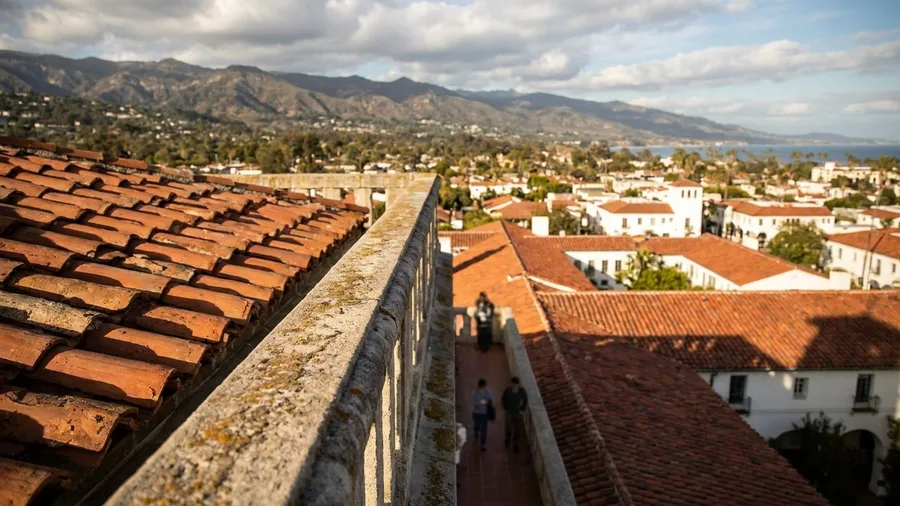
Stay in Santa Barbara: downtown or near the beach, rooms $200-$350, and arrive by 4 p.m. if you can. That arrival time is the whole recommendation, because it is what leaves you the best walkable evening on the route, and if you roll in at seven you have bought a bed and missed the town.
State Street is the walk, and from the top of the courthouse you get the red-tile roofs spread out below and the mountains behind, which costs nothing and takes twenty minutes. The Public Market is where the $100-a-day food budget for two survives without cooking: you each pick a counter, you eat outside, and the bill lands close to $50 for the pair instead of tipping into a sit-down dinner. This stop suits couples and families fine, anyone who would rather walk than drive after a 95-mile day. It genuinely does not suit the traveler who came to wine taste and can still see the last leg tomorrow: the Santa Barbara-to-Los Angeles run needs a clear morning, so skip the tasting room and buy a bottle to drink on the pier instead.
This is the route's sixth different bed, and the one that makes the difference plain. Six nights average $230, and a Santa Barbara night at the low end keeps that number real. A cruise can dock at Santa Barbara for an afternoon, but it cannot move its single cabin onto State Street and give you a walkable night out. The road can, and that is what the extra unpacking buys.
13. Day 7: Santa Barbara to Malibu
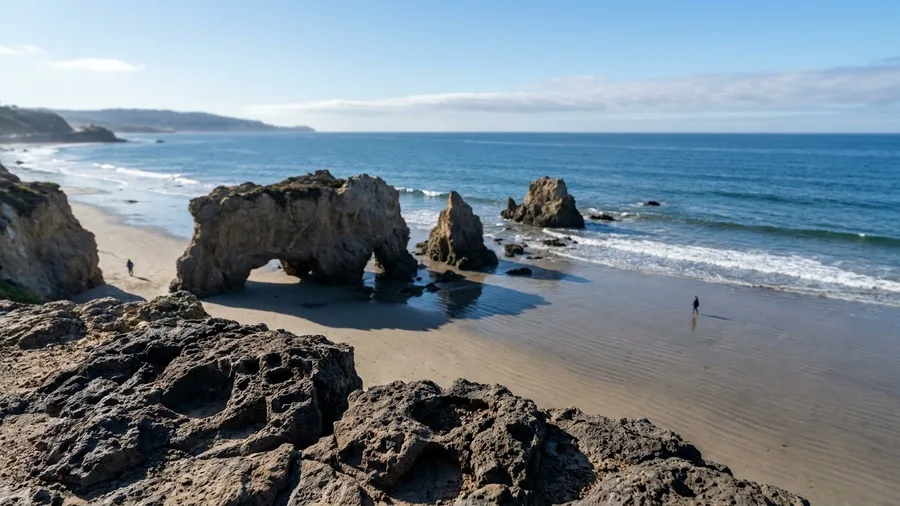
Check the tide table before you leave Santa Barbara, because El Matador State Beach lives or dies by it. The arches and sea stacks that make the place photograph like a movie set sit behind water at high tide, and the short stair descent to the sand becomes a wet scramble with nowhere to stand.
The final day runs 95 miles to Los Angeles, and the decision point comes early: you are in Malibu at roughly the 75-mile mark, which leaves only the last 20 miles for the run into Santa Monica. That split is what makes this the day to spend money rather than miles. Arrive low-tide at El Matador and you pay nothing for the best fifteen minutes of the week, no ticket window and no excursion desk, where a ship charges for its two shore trips at about $200 a head for the pair.
Lunch is the splurge that earns its keep: a seafood shack on the Malibu stretch, fish caught that morning, roughly $25 a person with a picnic table and the Pacific over your shoulder. Two of those and you are still inside the $100-a-day food line for two, which is the whole point of spending here instead of on a fixed dining room with a cover charge for the good menu.
Then the timing: Point Dume and the last breaches behind you, traffic thickens through the afternoon, so plan to be parked at Santa Monica before 3 p.m. Miss that window and the 5 p.m. rush eats the finish you drove 466 miles for, pier and all.
This last coastal reach hands you the ocean a cruise saves for one designated sea day, except here the water comes with El Matador's rock arches and a Malibu lunch in the log rather than a ship's rail and a schedule. That is what the road sells on its final afternoon: scenery you can stop inside.
💡 Tip: Check the tide chart the night before; low tide is the only time you can walk through the El Matador arches.
The Tourist Way vs The Better Way
14. Malibu to Santa Monica
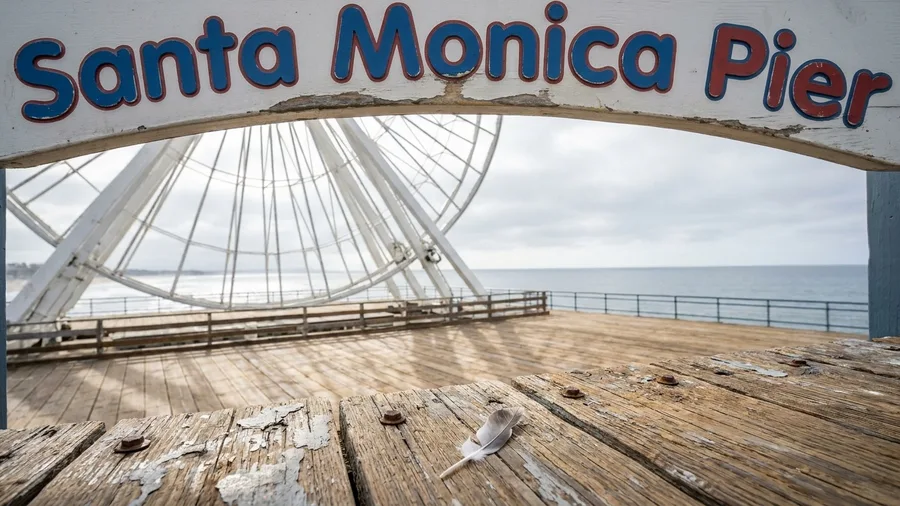
Gulls, diesel from the pier, and the temperature dropping as the marine layer rolls in off the water — that is the sound and feel of the last 20 miles, Malibu to Santa Monica in about 45 minutes if the traffic behaves. Park once, walk the pier or the bluff at Palisades Park, and take the free photograph with the coastline stacked behind you; for empty January beaches with this kind of solitude, it costs nothing and it bookends the drive.
Drop the rental at LAX or in Santa Monica and the $420 weekly rate closes out the full 466 miles. Then do the math for two before you book anything else: $420 car, $85 fuel, $1,380 across six beds, $700 food, $250 activities, about $2,835 in all against a cruise near $3,150 once the $2,400 cabin, $300 in port fees and taxes, $250 for drinks and Wi-Fi and $200 in shore excursions are added. Over 12 named stops and six different overnights against three ports — the road finishes cheaper, and every hour of that coast was yours to set.
📅 Book Your Highway 1 Week in 6 Steps
Reserve the car
Book a compact or midsize at SFO or downtown San Francisco for the full seven days; expect about $420.
Lock Big Sur lodging
Book night three in Big Sur eight weeks ahead; peak rooms run $250–$350.
Book Hearst Castle
Reserve a late-afternoon tour for day four, eight weeks out.
Fill the other five nights
Santa Cruz, Carmel, San Simeon or Cambria, Pismo Beach, and Santa Barbara; average $230 a night.
Check the calendar
Book for May, June, or September for the best weather and fewer crowds.
Plan the food budget
Set aside $100 a day for two; that covers casual meals and one splurge dinner.
Frequently Asked Questions
Is the 7-day Pacific Coast Highway road trip better than a cruise?
For scenery, flexibility, and the number of stops, yes. You get 12-plus named stops and six different overnight towns for about $2,835 for two, versus three cruise ports for about $3,150. The cruise wins only if you refuse to drive and want to unpack once.
How much does the road trip cost for two people?
About $2,835: $420 rental car, $85 fuel, $1,380 for six nights of lodging at roughly $230 a night, $700 for food, and $250 for activities like Hearst Castle.
When is the best time to drive Highway 1?
May, June, and September have the best mix of clear skies and manageable crowds. Book Big Sur lodging and Hearst Castle tickets eight weeks ahead no matter when you go.
Do I need to book Big Sur lodging in advance?
Yes, especially in peak season. Rooms run $250–$350 a night and sell out eight weeks ahead. Book that night first, then fill in the rest of your overnights.
Is it safe to drive Big Sur at night?
No. The road is narrow, with unlit curves and few guardrails. Plan your day so you are at your lodging before sunset on the Big Sur section.
Can I do this trip in fewer than seven days?
You can, but you will skip stops. If you have five days, cut day five (San Simeon to Pismo Beach) and drive straight to Santa Barbara from San Simeon; that is a longer day but keeps the best stops.
The Verdict: Book the Car, Not the Cabin
Book the car, not the cabin. Seven days on Highway 1 buy scenery, flexibility and 12-plus named stops for about $2,835 for two. The cruise costs about $3,150 and buys one unpacking and no driving. That is the whole decision.
The trade is the same one the week opened on: the cabin and its three ports set a clock, while six beds and 466 miles put you at Bixby Bridge, McWay Falls, Hearst Castle and El Matador in daylight, on your own schedule.
So book eight weeks out — the rental car and the Big Sur room, where peak-season rates run $250 to $350, plus Hearst Castle tickets on the same lead time. Target May, June or September.
Finish at Santa Monica Pier with more coast behind you than three ports give and a smaller total bill, as long as the $420 car and the Big Sur bed are secured before that eight-week window closes.
Ready to Drive the Coast?
Book your car and Big Sur lodging eight weeks ahead, then follow this day-by-day plan from San Francisco to Santa Monica.