Where do you stay when the point of the trip is to stop moving? You pick one town, pay $165 to $210 a night, and stay long enough that the morning stops needing a plan.
The default US week is a checklist: five towns, a new hotel every two days, the car repacked like a suitcase on wheels. Set that against a $185 cabin in Asheville for four October nights – porch coffee, a walkable downtown, one drive up the Blue Ridge Parkway for an overlook – and the shape changes completely.
Finding things to do was never the hard part. The hard part is choosing a base whose nightly rate, best season, and minimum-stay rhythm all push you toward staying put rather than moving on.
So here are eight specific US bases, each with a realistic rate, the season that works, a stay length that fits, and one low-effort thing to do. Match one to your situation – mountain quiet, walkable town, lake or coast, a self-catering week – then confirm the shoulder-season rate and book the lodging before you add a single day trip.
Quick Tips Before You Start
Book shoulder season
May-June and September-October rates drop below summer peak at most of these bases.
Pick one daily anchor
Choose a walk, trail, or square you can repeat every morning without checking a map.
Decide the car first
Hudson and Burlington work without one; Door County and Traverse City need one.
Stay three nights minimum
Two nights feels like a stopover; three or more lets the pace settle.
Budget nightly, not daily
At $165-$210 a night, lodging is the big line; keep activities cheap and local.
1. Asheville, North Carolina: Blue Ridge Base
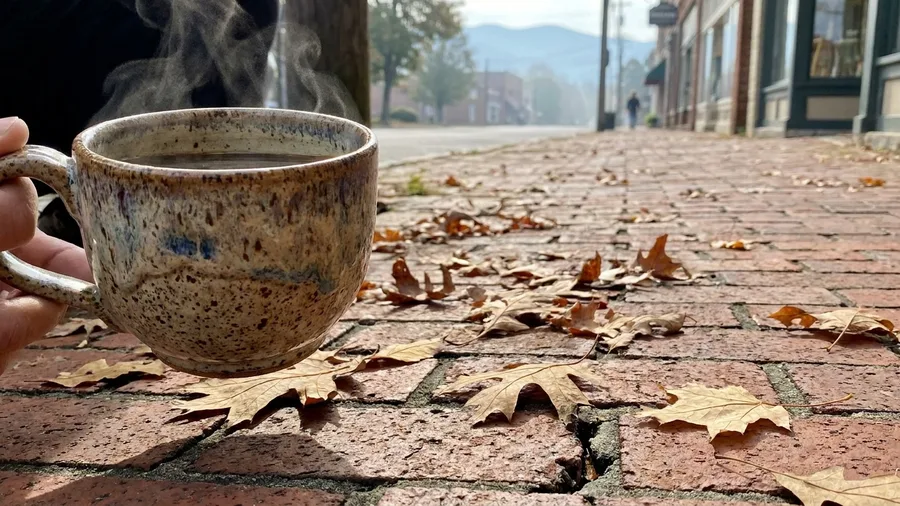
$185 a night, four nights in October, and the car keys do not leave the hook until day three.
That rate buys a cabin or an inn room in Asheville, and the pattern is so common it tells you what the place is for. You park once. Downtown is walkable in the way a mountain town rarely is: coffee at one end, dinner at the other, galleries in between, and the River Arts District a short stroll or a cheap ride down by the water. You can spend a whole afternoon browsing studios in old brick warehouses and never touch the highway.
The low-effort mountain piece is a single Blue Ridge Parkway overlook, or one short trail off it. That is the entire mountain plan, and it is enough. The pullouts fill by mid-morning on a clear fall weekend, so go early or go late and let the afternoon stay empty. The entrance ramp onto the Parkway is close enough that you are on the ridge before the coffee is cold.
May and June, then September and October, are the seasons that reward this. October is leaf season: the ridges turn, the porch is cold in the morning and warm by noon, and the four-night stay is the pattern because a weekend barely gets you through the gateway. Spring works the same way with dogwood and a wetter trail underfoot.
This is not a ski-week base and it is not built for people who want to tag three parks in four days. It is for the traveler who wants mountains within reach and a town you can walk, and who understands that a cabin rate for four October nights, plus one overlook, is the whole trip. Staying put is the point.
💡 Tip: October leaf season fills cabins fast. Book eight to ten weeks out if you want the $185 rate.
| Destination | Best season | Typical nightly rate | Suggested stay | Slow-travel draw |
|---|---|---|---|---|
| Asheville, NC | May-Jun, Sep-Oct | $185 | 4 nights | Walkable downtown, Blue Ridge Parkway |
| Burlington, VT | Jun-Sep | $165 | 3 nights | Lake Champlain bike path, farmers market |
| Santa Fe, NM | Apr-May, Sep-Oct | $210 | 5 nights | Plaza and Canyon Road galleries |
| Door County, WI | Jun-early Oct | $175 | 1 week | Shoreline and orchard stops |
| Hudson, NY | May-Jun, Sep-Oct | $195 | 2 nights | Amtrak access, Warren Street |
| Bend, OR | Jun-Sep | $190 | 4 nights | Deschutes River Trail, breweries |
| Traverse City, MI | Jun-Sep | $205 | 3 nights | Bayfront, dunes, wineries |
| Savannah, GA | Mar-May, Oct-Nov | $180 | 2 nights | Historic squares, Tybee Island day |
2. Burlington, Vermont: Lake Champlain Rhythm
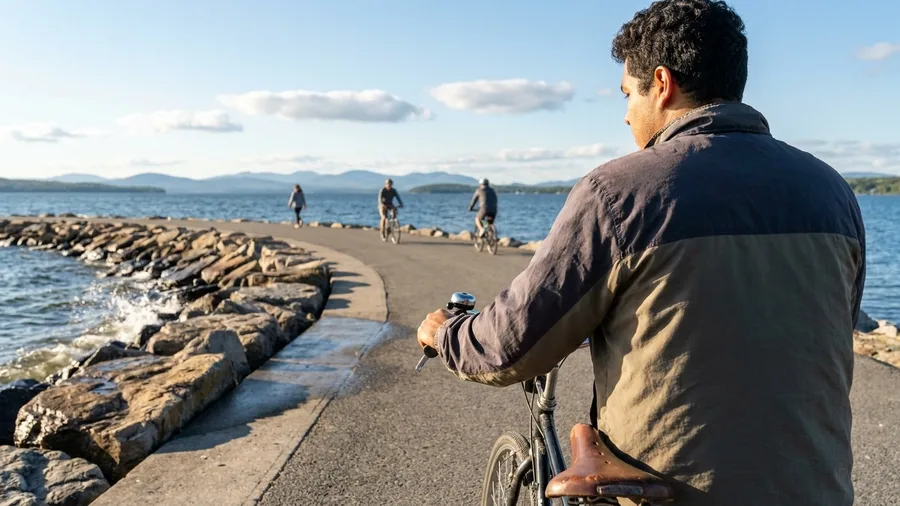
The first thing you notice on the Lake Champlain waterfront in July is the slap of water against the breakwater and the smell of lake and hot pavement mixing in the sun.
The lakefront bike path runs the shore, flat and easy, and it sets the day: a morning walk or a slow ride north, then you turn around. A summer farmers market downtown handles lunch. For the history, take the short trip to the Shelburne Museum and spend one afternoon on the lake's steamboat-and-collection story rather than the whole weekend – the point is one story told properly on the water's edge, not a survey.
An inn runs around $165 a night, less than a big-city base, and a three-night stay is the suggested unit for affordable US vacations. June through September is the window; a car helps if you want a farm-stand lunch out in the hills. Waterfront, market, one farm stand – that rhythm is the whole test, and three nights cover it.
💡 Tip: The summer farmers market runs on Saturdays near the waterfront. Go early, before the lunch crowd.
💡 PRO TIP
One anchor beats five outings
Pick one repeatable routine per base – a river walk, a waterfront path, a downtown loop – and do it every morning before you decide anything else. The trip organizes itself around that habit.
3. Santa Fe, New Mexico: High Desert Casita
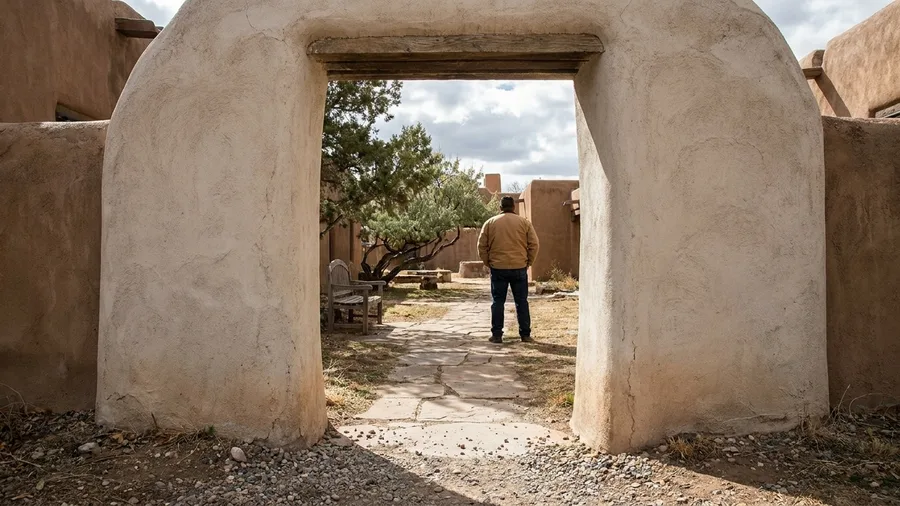
You step off the plane at 7,000 feet and the first breath feels thinner than it should, so you walk the plaza slowly and let the altitude set the pace.
The plaza and Canyon Road are the daily anchor: adobe walls, galleries one after another, and a stroll that takes an hour even when you stop. A casita runs about $210 a night, and five nights is the suggested stay – long enough to take the high desert a trail and a gallery walk at a time, not a national-park sprint. One trail or one scenic drive is the whole outing. April-May and September-October are best, and the first day is slow because of the elevation, not the itinerary.
4. Door County, Wisconsin: Peninsula Cottage Weeks
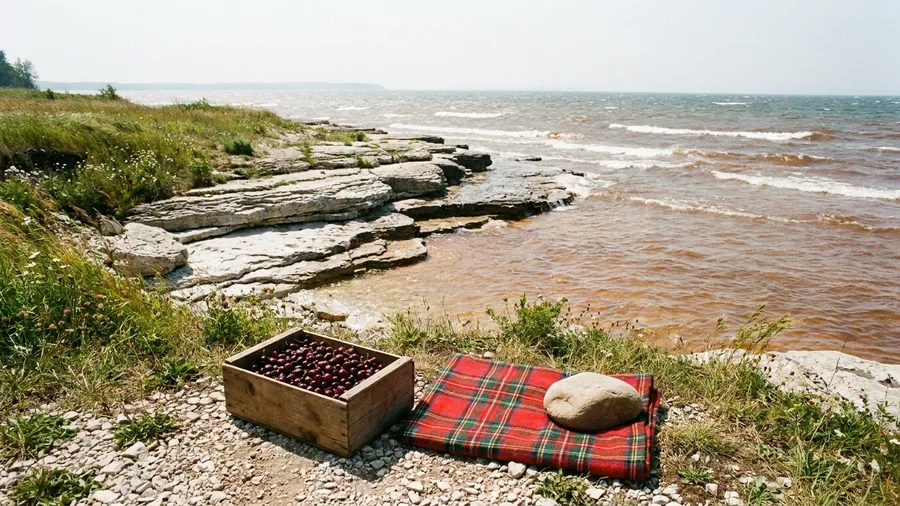
Door County, the Wisconsin peninsula that juts into Lake Michigan north of Green Bay. A cottage here runs around $175 a night, but the summer norm is a weekly rental, so the week is the unit – not the day. Book Saturday to Saturday, bring a car, and plan to spend it on shoreline, an orchard stop, and your own kitchen. A casita in the high desert slows you down by giving you more nights; a peninsula cottage slows you down by making the whole week one self-catering base, where dinner is whatever you picked up that afternoon.
The view is the one the trip is remembered for, and it has a precise address: the shoreline drive on the lake side, pulled over at any of the small stone beach turnouts, roughly an hour before sunset. The water goes flat and copper, the limestone bluff behind you turns the color of bread crust, and no filter is needed. Arrive June through early October – cherry orchards around Fish Creek and Egg Harbor sell by the box in July, apples take over in September, and a picnic assembled from a farm stand costs less than one restaurant lunch. Families settle in here easier than couples chasing a scene; if you want a bar on every corner, pick somewhere else. One orchard box, one shoreline sunset, and the rest of the week is yours.
Which base fits your week
- 🚶 Hudson, NY — No car needed. Train from the city, walk Warren Street.
- 🚴 Burlington, VT — Bike path and market on foot; car optional.
- 🏜️ Santa Fe, NM — Walkable plaza; one trail a day is plenty.
- 🌊 Savannah, GA — Squares on foot; Tybee is the one drive.
- 🚗 Door County, WI — Car required; weekly rental is the real unit.
- 🚗 Traverse City, MI — Car helps for dunes and wineries.
- ⛰️ Asheville, NC — Car only for the Parkway; downtown is walkable.
- 🏞️ Bend, OR — River trail on foot; car for a day trip.
Rates are typical shoulder-season examples, not quotes.
5. Hudson, New York: Train-Town Browsing
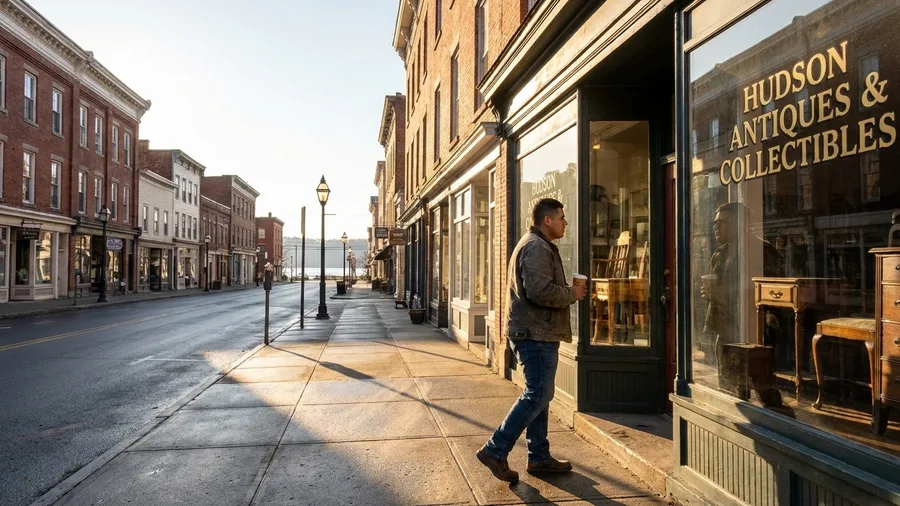
The thing to know before you go: two nights is the minimum, and a two-night stay is not a stopover if you do it right. Hudson suits a short, low-cost slow trip, not a weekend of ticking off towns. Amtrak runs here from New York City, the station sits close enough to the inns that you never need to rent a car, and Warren Street – one long, walkable main street of antiques, coffee, and small storefronts – is the spine of the whole stop. That strips the self-catering week down to a train ticket, a bed, and one street to walk.
The food stop worth planning around is a coffee and a pastry at one of the Warren Street cafes, roughly $8 to $12 and a seat by the window for an hour. The point is not the drink; it is that you sit down instead of moving. An antique store or two is the browse, the riverfront walk is the leg-stretch, and May or June and September or October are the months when the street is pleasant and the inn rate of around $195 a night holds. The daily pacing is slower than a checklist – but that is exactly the point.
6. Bend, Oregon: River Trail and Breweries
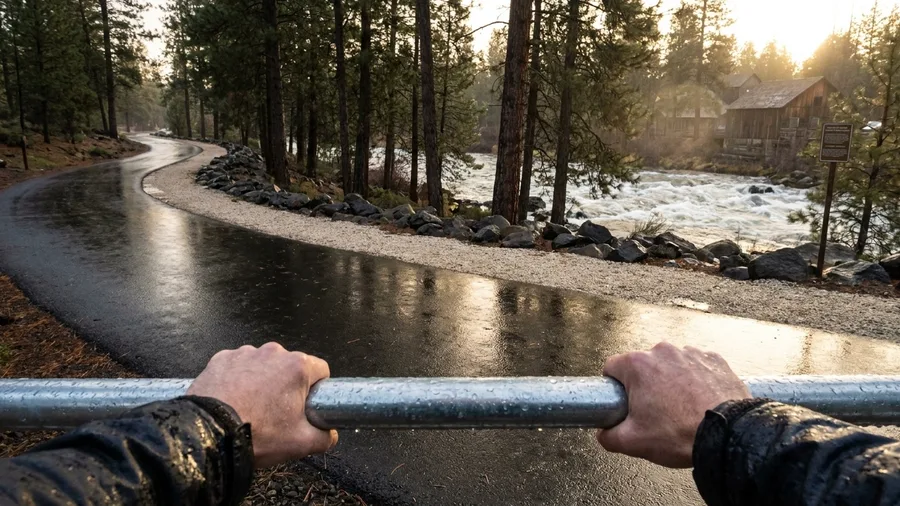
Bend is a river town with a trail running through its heart. The daily anchor sits right in town: the Deschutes River Trail, where you walk out of your rental in the morning, follow the water for an hour or two, and get the whole day's exercise before breakfast. No car required for that. A four-night stay at around $190 a night is the right length, June through September is the season, and if you want one afternoon out, keep the car for a single trip into the Cascades. The morning river walk and one brewery are the entire plan – and if you have only a no-car short stay, a stay built around a single unhurried walk replaces it.
The afternoon can stay empty. One brewery on the patio, a coffee stop, and that is the day's social activity done, which is why four nights work here: the routine is repeatable, not a schedule. Book the rental first, then decide which single day trip gets the car.
💡 Tip: Walk the river trail early, before the heat and the bike traffic build.
Two ways to spend the same week
Checklist tour vs. one base, same budget
Percent bars show how much of the week gets eaten by logistics.
7. Traverse City, Michigan: Bayfront Base
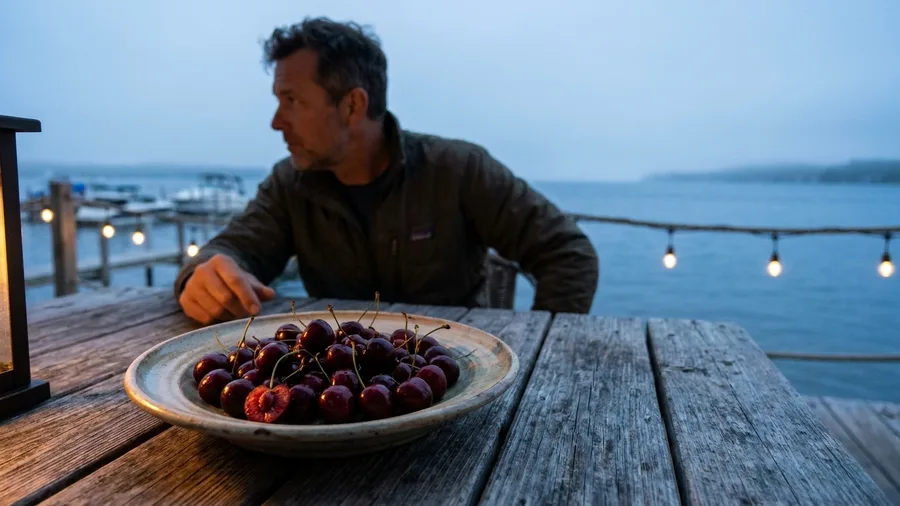
A bayfront condo costs more per night than a riverside rental and buys you less walking. That is the trade, and it is worth knowing before you book. Traverse City runs about $205 a night, and unlike a base where the trail starts at the door, the water here is a view first and a path second – the bayfront is for sitting, not striding. What you get for the higher rate is a shared unit that splits four ways and a shoreline that makes the morning easy without a plan.
Three nights is the right unit, and it is a shorter stay than some of the mountain bases because the rhythm is narrower. You wake to the bay, you take one outing – the Sleeping Bear Dunes drive south along the shore, or a scenic loop when the dunes are busy – and you come back. June through September is the window; before June the water is still cold and after Labor Day the rentals thin out and the rates ease. The point is not to fill the days, it is to have water in front of you while you do very little.
Traverse City can turn into a tasting marathon if you let it. The peninsula is dense with wineries and the temptation is to string six together in an afternoon. Don't. Pick one winery stop or a farm-market lunch and let that be the whole outing, because a shared condo plus a single pour on a shaded deck is the version of this base that rewards staying put. Book the unit for three nights, confirm the summer rate early, and leave the tasting schedule at home.
💡 Tip: Split a bayfront condo three ways and the nightly rate drops to near $70 each.
8. Savannah, Georgia: Historic Squares and Coast
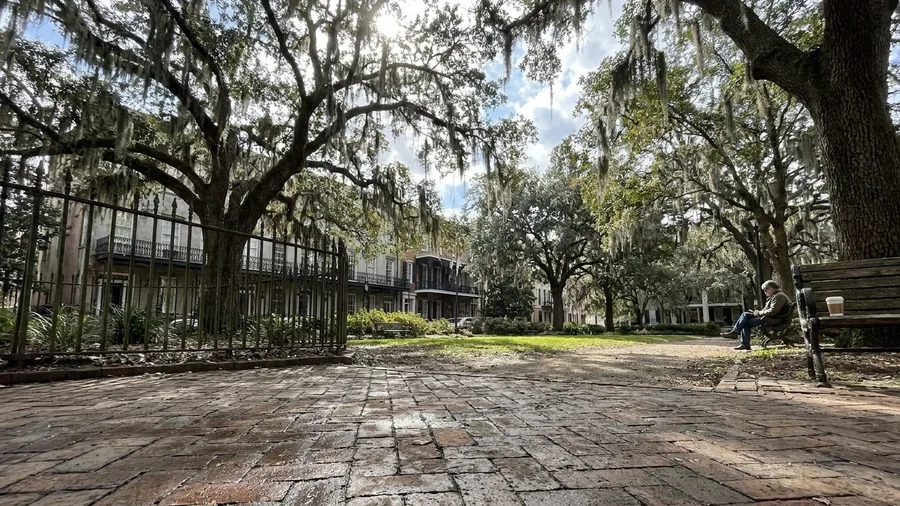
Savannah is the easiest place on this list to be a first-time slow traveler, and the squares are why. Twenty-two of them sit inside the historic district, each within a couple of blocks of the next, shaded by live oaks and hung with Spanish moss. You do not need a route. You walk out of the inn, pick a direction, and the city hands you a square, then a bench, then a coffee, then another square. That is the daily pace here – hours of walking, no destination.
It is also the most forgiving base for anyone traveling with a stroller, a cane, or a parent who tires by mid-afternoon, because the walking is flat and you can stop every few minutes without feeling like you have quit. The inns run around $180 a night with a two-night minimum, which is low commitment for a city this walkable. March through May and October into November are the seasons – mild, green, and cool enough to keep moving – while summer heat makes the squares a morning-only proposition.
The one excursion is Tybee Island, an easy drive out to the coast for a beach day, and it works precisely because it is the only one. You take it on your middle day, you come back sandy, and the next morning you are back on the squares with coffee in hand. Two nights proves the model; three or four lets you actually settle. If you have never done a slow trip before, this is the place to test whether you can sit still.
Where it does not suit: anyone who wants a packed itinerary of museums and tours, or a base for day-tripping to overrated US destinations and beyond. The squares reward lingering, not driving. Come here to walk and to stop, and to learn that a city can be the whole week.
Slow week vs. checklist week
Stay put
- One base, three to five nights
- One daily anchor you repeat
- Day trips only if they earn it
- Unpack once
Move every night
- New hotel every 48 hours
- A different map every morning
- Packed itinerary to justify the drive
- Repack the car twice a week
Frequently Asked Questions
Do I need a car for these slow-travel bases?
Not for Hudson or Burlington. Hudson works entirely on Amtrak and Warren Street; Burlington's waterfront and market are walkable and bikeable. Door County and Traverse City need a car for shoreline, orchard, and dune stops. Asheville, Santa Fe, Bend, and Savannah work on foot for the daily anchor, with a car useful for one outing.
How many nights should I book for a slow trip?
Three nights is the minimum for the pace to settle. Santa Fe earns five, Asheville and Bend four, Burlington and Traverse City three, and Savannah and Hudson two. Door County is a weekly rental in summer, so the week is the unit.
When is the cheapest time to go?
Shoulder season, generally May-June and September-October, sits below summer peak at most of these bases. Winter is cheaper still in Asheville and Savannah but changes what you can do outside. Check the rate for your specific dates before booking.
Are these destinations good for first-time slow travelers?
Savannah and Hudson are the easiest starts: walkable, short minimum stays, and no car required. Santa Fe is the next step up because of the altitude and the longer stay. Door County is best once you know you like the self-catering rhythm.
What does a week actually cost?
At typical nightly rates of $165 to $210, a four-night stay runs roughly $660 to $840 in lodging before food and activities. Splitting a Traverse City condo three ways cuts the per-person rate sharply. Keep activities local and cheap to hold the total down.
Match the base to your week, then book three nights
Mountain quiet points to Asheville or Bend. A walkable town with no car points to Hudson or Savannah. Lake or coast points to Burlington or Traverse City. A self-catering week points to Door County, and the high desert points to Santa Fe.
Then take one first step: pick a base, book three nights or more, confirm the shoulder-season rate, and hold off on day trips until the lodging is locked. The trip organizes itself from there.
Pick one base this week
Choose the destination that matches your week, check the shoulder-season rate, and book three nights before you plan a single day trip.