Most first trips to Europe run London, Paris, Rome, then home, which is why this list steers the other way. The assumption behind that route is that anywhere underrated must also be hard work. The ten countries below are not.
You may have done the big three already, or decided to skip them. Either way, here is the baseline to plan against: 12 nights, two countries, and a flight into a gateway such as Venice, Vienna, Dubrovnik, Helsinki or Tirana. Round-trip from the US East Coast runs $650 to $950 in shoulder season, $1,100 and up in July and August, when coastal rooms add roughly 30%.
All ten share the same shoulder window, mid-May to mid-June and September to early October. Capital hops take 2 to 4 hours by bus or train, except Albania, Montenegro and Georgia, where legs run 4 to 6. Days cost $85 to $170 per person. Six countries use the euro; Romania, Bulgaria, Albania and Georgia keep their own currencies.
Each entry gives you what the country offers, what a day costs, when to go and the single catch. Choose your situation, pick the gateway city before the country, and book the shoulder-season flight first.
Five Choices the Intro Leaves to You
Pick countries by daily budget
$130–$170 a day narrows you to Slovenia, Estonia, Latvia or Malta; $100–$130 points to Romania or Slovakia.
Use budget as your first filter
At $85–$110 a day, Bulgaria, Albania, Montenegro and Georgia are the only four on this list that fit.
Pick the gateway, then the country
Venice pairs with Slovenia, Vienna with Slovakia, Dubrovnik with Montenegro, Helsinki with Estonia or Latvia, Tirana with Albania or Georgia.
Skip Georgia if time is tight
Albania, Montenegro and Georgia have the 4–6 hour overland legs; a 12-night two-country trip barely absorbs one.
Carry the matching cash
Four of the ten sit outside the euro (leu, lev, lek, lari); a euros-only wallet stalls exactly where days cost least.
1. Slovenia: Alps, Caves and a Two-Hour Hop From Venice
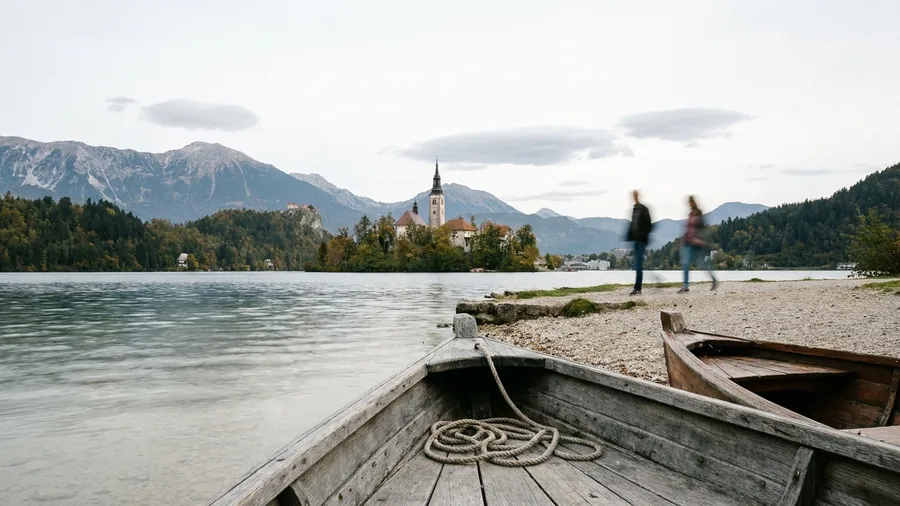
The bus from Venice pulls out of Mestre and two hours later you are standing on the Ljubljana riverbank watching willows fold over a cafe terrace, and the Alps you crossed for have not even shown up yet.
That is the trick of the place: you get the Julian Alps, a train that runs into a cave on rails laid over a century ago, and a baroque old town with a pink-and-cream market colonnade, and the whole country is narrower end to end than the drive from one end of an Italian region to the next. You come off the coast or out of a Venice trip and keep going, no airport transfer, no new currency, no new language to learn for the cafe order. Three anchors sit within about 90 minutes of that riverbank: the lake at Bled with the Vintgar gorge walk cut into the rock beside it, the Postojna cave train that drops you into a cold cathedral of stalactites, and Ljubljana itself for the evening.
Mid-range spending runs $130 to $170 a day per person, the top of the band here but still the leanest way to buy an Alpine morning of any option on your shortlist. Come in mid-May to mid-June or September to early October and the trails are dry and the terraces open. The honest catch is Bled: it is the one spot where the tour coaches converge around mid-morning, the rowboats queue at the island dock, and the postcard view comes with elbows. Sleep in Ljubljana or the little baroque town of Skofja Loka and drive or bus in before nine, or simply leave it to late afternoon when the light is better and the coaches are gone.
💡 Tip: Book the Postojna cave train online a day ahead; walk-up tickets sell out in summer.
| Country | Stands in for | Mid-range daily cost | Best months | First move |
|---|---|---|---|---|
| Slovenia | Alps without Swiss logistics | $130–$170 | Mid-May–mid-June; Sep–early Oct | Book a Venice or Trieste gateway flight |
| Slovakia | Castles and mountains without crowds | $100–$130 | Mid-May–mid-June; Sep–early Oct | Book Bratislava flight; plan Tatras for summer |
| Romania | Medieval towns without tour buses | $100–$130 | Mid-May–mid-June; Sep–early Oct | Reserve village guesthouse before flying |
| Bulgaria | Roman ruins and coast on a budget | $85–$110 | Mid-May–mid-June; Sep–early Oct | Book Sofia flight; plan Plovdiv by bus |
| Albania | Half-price Mediterranean coast | $85–$110 | May, June, September | Book Tirana flight and rental car |
| Montenegro | Fjord and walled town, easy add-on | $85–$110 | Mid-May–mid-June; Sep–early Oct | Book Dubrovnik flight; bus to Kotor |
| Malta | English-speaking ease | $130–$170 | Mid-May–mid-June; Sep–early Oct | Book Valletta flight; no car needed |
| Estonia | Medieval capital plus ferry to Helsinki | $130–$170 | Mid-May–mid-June; Sep–early Oct | Book Tallinn flight; ferry to Helsinki |
| Latvia | Art nouveau and empty beaches | $130–$170 | Mid-May–mid-June; Sep–early Oct | Book Riga flight; train to Jūrmala |
| Georgia | Caucasus culture and wine | $85–$110 | Mid-May–mid-June; Sep–early Oct | Check Georgian government entry site; book Tbilisi flight |
2. Slovakia: Castles and the High Tatras Without the Crowds
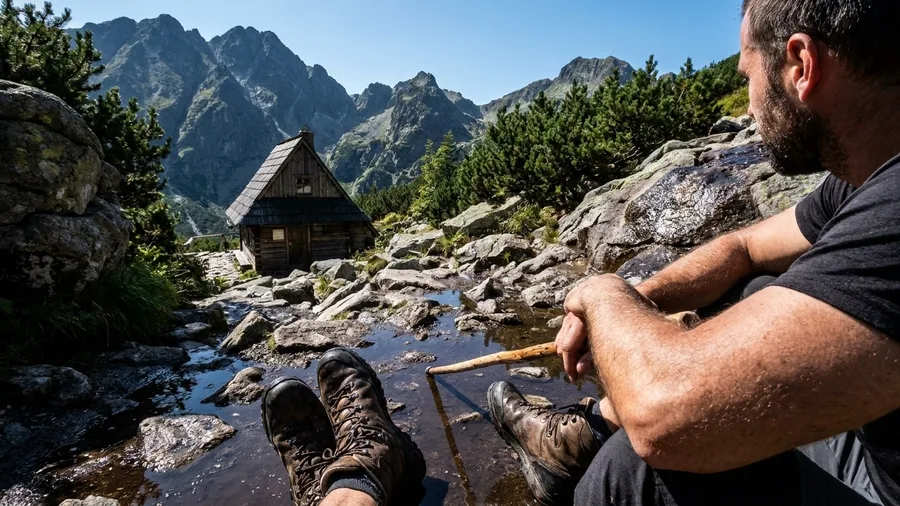
Slovakia takes the same Alps-and-castles bargain and strips another layer off the price: a compact baroque capital you can walk in a morning, the High Tatras a one-hour train ride from its edge, and castles stacked so tightly you have to choose which ones to skip. It is the cheapest Alpine-adjacent country on this list, and it earns that place on the days that cost you nothing at all: the old-town lanes of Bratislava, the castle ruin at Devin where the Morava meets the Danube, and the trailheads above Strbske Pleso that anyone with a pair of shoes can walk.
Daily spend lands around $100 to $130 per person, with mountain huts and the cable cars up the peaks priced on top, so pick two castle detours rather than five: Devin is a half-day from Bratislava, Spis or Orava fits the mountain leg. Go in mid-May to mid-June or September to early October, because the cable cars and high trails close in October and this is a summer and early-fall plan, not a winter one. You trade a short mountain season for thin crowds and the lowest bill of any Alpine stop here.
3. Romania: Transylvania's Fortified Towns and Saxon Villages
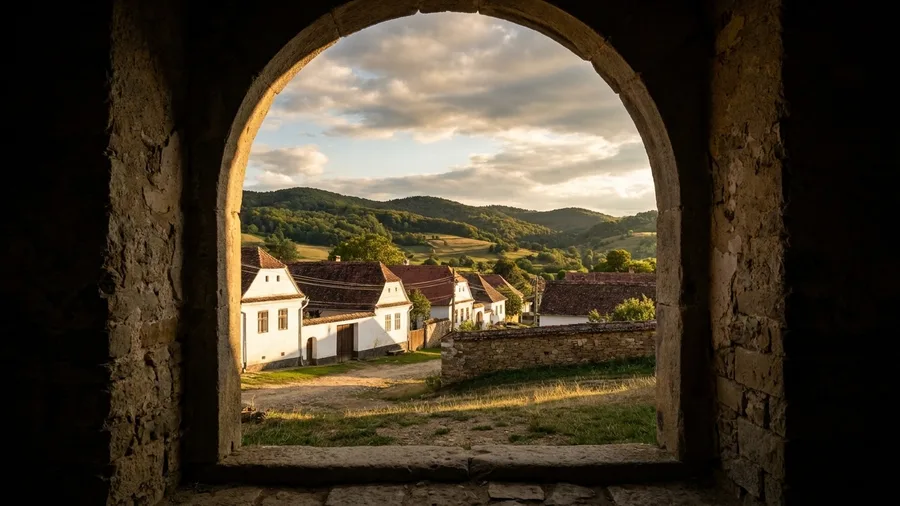
Plan Transylvania as a loop, not a day trip: walled towns, fortified churches and Carpathian forest, with none of the coach traffic that crowds Prague or Salzburg, and its own airports and rail lines to reach it.
Brașov, Sibiu and the fortified church at Viscri string into one circuit. The train from Bucharest to Brașov runs about 2.5 hours, and Sibiu to Brașov by road is a similar stretch, so the three towns chain into a drive of a few hours each with forest and hay meadows between. Spend a day in Sibiu's lower town doing nothing: a coffee on the sloping square, the bridge of lies creaking overhead, the afternoon going nowhere. Daily spend is around $100 to $130 per person, best mid-May to mid-June or September to early October. The one catch is cash and the calendar: village guesthouses take bills, not cards, and they fill in September, so book before you fly.
⚠️ COMMON MISTAKE
Don't skip the currency check
Romania, Bulgaria, Albania and Georgia use their own currencies, not the euro. Arrive with some local cash for guesthouses and rural buses — cards are not accepted everywhere outside the capital.
4. Bulgaria: Roman Ruins, Plovdiv's Old Town, Black Sea Beaches
The one warning before you go: July and August belong to the package resorts on the Black Sea coast, not to you. Come in early September and the same water, the same sand and half the people.
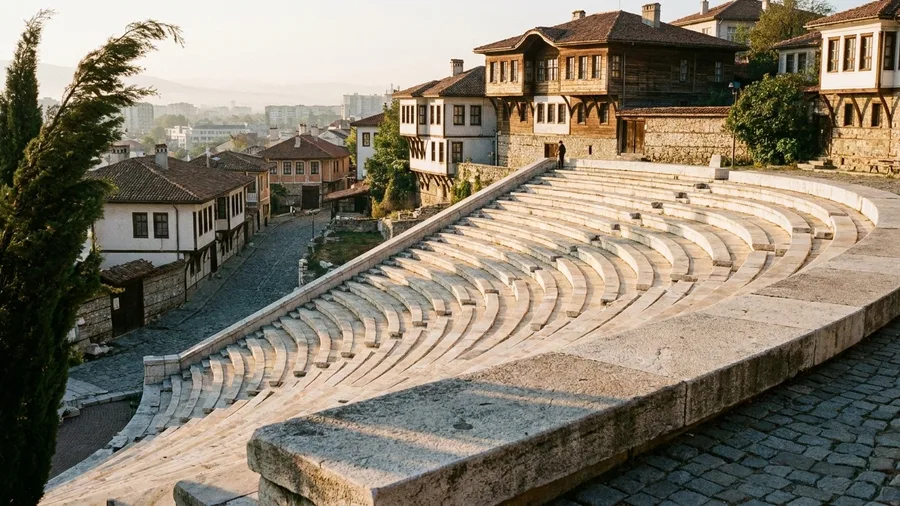
Bulgaria keeps the medieval-town pull but drops the daily cost into the lowest tier on this list, and it swaps car-dependent village stays for buses. Plovdiv's old town is the photograph the trip is remembered by: climb to the Roman theatre at dusk, when the restored marble seating fills with light and the city spreads out below, and stand at the top tier for the frame. Sofia's Alexander Nevsky cathedral, with its green and gold domes, is the other shot worth the morning.
Your money stretches further here than almost anywhere in Europe. Budget $85 to $110 a day per person for a double room, one sit-down meal and local transport, and you are comfortable. If you want to see how that daily figure stacks against the rest of the map, the cheapest countries in Europe rank them side by side. Buses, not trains, link Sofia and Plovdiv in under two hours, so you can base in one and day-trip the other without a car. Aim for mid-May to mid-June or September to early October.
The catch is that beach season is squeezed away from peak. Nessebar's peninsula, crammed with Byzantine churches on a strip of land you can walk in twenty minutes, is glorious in early September and a scrum in August. Book the shoulder and you get the ruins, the old town and the coast at their best and cheapest.
🗺️ How to Book a First Trip to Any of These Ten
Pick the gateway city
Choose Venice, Vienna, Dubrovnik, Helsinki or Tirana based on which country pairs best.
Book the shoulder-season flight
Target mid-May to mid-June or September to early October for $650–$950 round-trip from the US East Coast.
Reserve beds and guesthouses
Village guesthouses in Romania and coastal rooms in Albania fill up; book before you fly.
Check entry rules
Verify passport validity and any pre-travel registration on official EU and national government sites.
Plan the 2–4 hour hops
Buses and trains link capitals and coast in 2–4 hours, except in Albania, Montenegro and Georgia where legs run 4–6 hours.
5. Albania: The Riviera Before the Rest of Europe Arrives
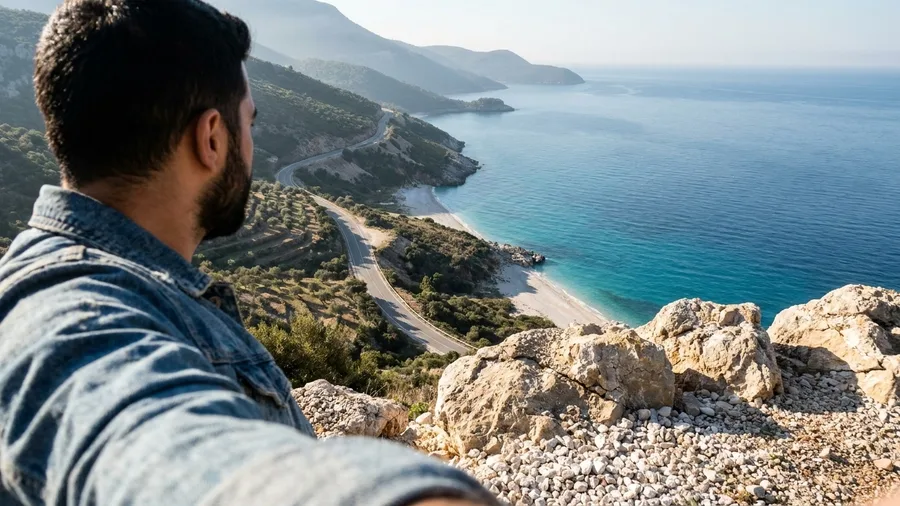
A double room, one sit-down meal and local transport run $85 to $110 a day per person, roughly half what the same Mediterranean coast costs across the water in Croatia.
Albania pairs a riviera of pebble-and-sand coves with Ottoman hill towns, and the opening of Tirana's airport and the coastal road have made it manageable rather than adventurous. Berat's stacked white houses climbing a hillside and Gjirokastër's slate roofs are the two towns to build the route around; the Dhërmi-to-Ksamil coast road is the drive that strings them together.
This is the wildlife entry because the coast is still genuinely wild in places. On the road south of Dhërmi the mountains fall straight to the sea and the beaches are backed by olive terraces rather than hotels, so you are swimming in water clear enough to see the bottom ten feet down on a calm morning. The likelihood of seeing it unspoiled is high now and falling every season; go before the rest of Europe finishes arriving.
May, June and September are the months for the coast. August is packed and priced up, with rooms adding roughly a third. If you have the choice, early June gives you warm water and empty coves at the same time.
The catch is the road itself. Albania has the slowest overland links on this list, with legs running four to six hours, so fly into Tirana and drive rather than stitching together a multi-country bus route. The trade is a half-price Mediterranean for a driving trip; the catch is those long legs and the August spike.
The Numbers That Make the Case
6. Montenegro: A Fjord, a Walled Town, a Mountain Road
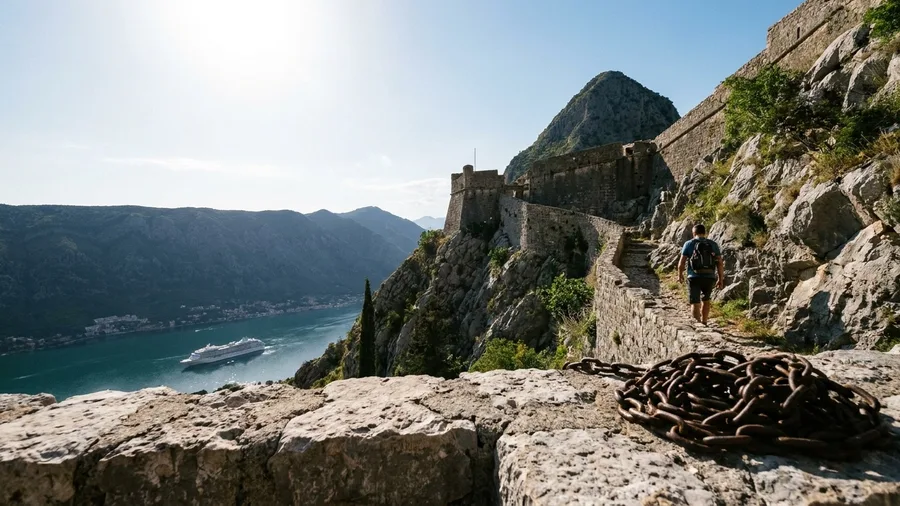
Montenegro packs three set pieces into a country you can cross in a morning: the Bay of Kotor, the Venetian walls of Kotor town, and Durmitor national park inland.
The easiest way in is not a flight but a bus. Dubrovnik to Kotor runs about two hours, so you can book one airfare, land in Croatia, and add a second country on a single ticket. Then the splurge: a night inside Kotor's walled old town, where rooms run roughly $120-$180 in shoulder season and put you on the cobbles before the cruise crowds arrive. Daily spend otherwise is $85-$110 per person, best mid-May to mid-June and September to early October, and the mountain road up to Durmitor is where the fjord-and-peaks photograph you came for actually happens – pull over at the switchbacks above the bay and shoot down as the light goes gold.
The one crowd to time is Kotor itself. Cruise ships unload mid-morning and the lane to the walls fills, so climb before 9am, when the steps are yours and the bay is still glass, or wait until after 5pm and watch the light drop behind the mountains. Cheaper than the coast it sits beside, smaller than the loop you would drive to see the same thing, and reachable without a car – that is the trade, and the only catch is picking your hour.
Cruise Crowd or Quiet Walk?
Time it right
- Climb the walls at 8am, then walk the bay road before the coaches roll in
- Cross the Kotor-Dubrovnik border at 7am, not 11am, to clear the queue
- Ride the Durmitor switchbacks after 3pm when tour vans are heading back
Time it wrong
- Start the walls at 10am and queue behind cruise groups on the steps
- Hit the border at 1pm on a summer Saturday with everyone leaving the coast
- Drive the Durmitor road at noon and share the pullouts with coach parties
7. Malta: English-Speaking and Crossable in a Day
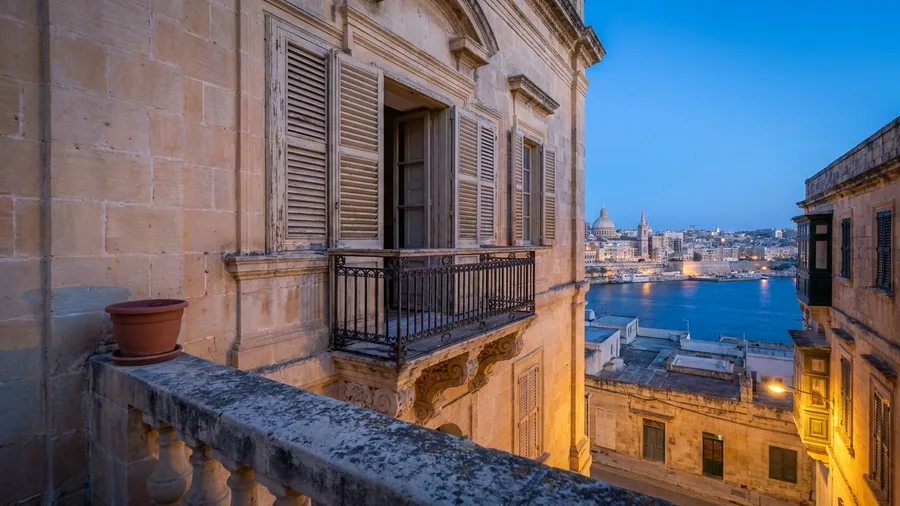
In Mdina the streets are so narrow the sun only reaches the paving in slivers, and the sound is your own footsteps, then nothing. That silence is the whole argument for Malta: you are somewhere old and strange, and nothing about getting there has been hard.
English is an official language here, the road signs are in it, and the island is a 45-minute drive end to end, so the two classic first-timer fears, language and navigation, simply do not apply. Valletta's baroque grid, the empty lanes of Mdina and the temple complex at Hagar Qim are the three anchors, and buses radiate from Valletta to all of them, so you need no car at all. Budget $130 to $170 a person per day, the top of this range, and go mid-May to mid-June or September to early October.
8. Estonia: A Medieval Capital With a Two-Hour Ferry
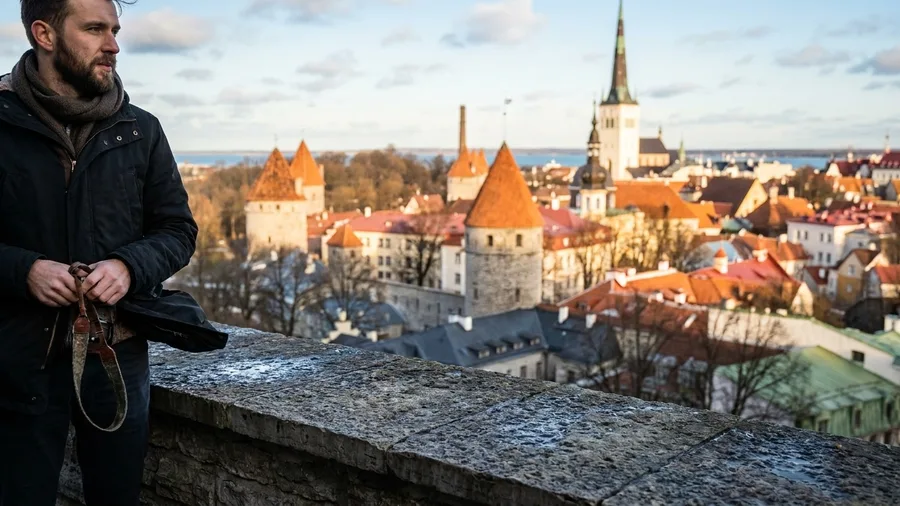
Yes, but only if you sleep there rather than ferry back the same evening. Estonia trims navigation worry to almost nothing – a walled old town you can cross in twenty minutes on foot, trams and buses that run on a card you tap – and then adds a two-hour ferry across the Gulf of Finland. That single crossing is how one airfare becomes two capitals: Helsinki in the morning, medieval Tallinn by lunch.
The old town is the intact thing, towers and merchant houses and a town hall square that has not been rebuilt around a car park; the design and tech side shows up in Kalamaja's converted warehouses and cafés a fifteen-minute walk north. Budget $130-$170 a day mid-range, aim for mid-May to mid-June or September to early October, and give Lahemaa national park a full day if you want forest and bog lakes after the stone streets. The catch is crowd timing: in summer the old town fills with cruise groups by mid-morning and stag parties after dark, so book a room in Kalamaja and walk in before eight, when the lanes are yours and the coffee is still being set out.
9. Latvia: Riga's Art Nouveau and Empty Baltic Beaches
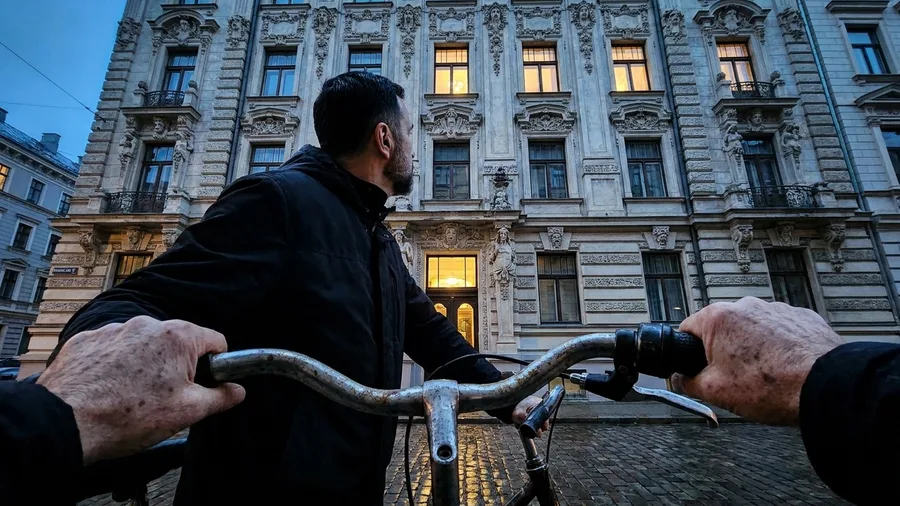
Rent a bike and ride the art nouveau blocks of Alberta iela, because Riga is one of the densest runs of these facades in Europe, and you will see more of them at handlebar height in an hour than on foot in a day.
The city hands you the active version of a Baltic capital: facades with carved stone faces stacked four floors high, then a covered market the size of a stadium, then a train out to sand. Riga's Central Market is worth an hour alone for the smell of smoked fish under the old zeppelin hangars.
Jurmala is 30 minutes from the center by suburban train, a beach coast at well under Nordic prices, and in June it is nearly empty. That is the reason to give Latvia more than a weekend: city, market and sea in one afternoon, no ferry and no transfer.
Budget $130 to $170 a day, best mid-May to mid-June or September to early October. Jurmala lives for June through August, so outside summer plan the days around the city and treat the beach as weather-dependent.
The four-hour bus or train to Tallinn or Vilnius is what makes this a three-capital Baltic route. Take it as a piece of a longer loop rather than a standalone stop, and the four hours stop being a cost. For travelers who would rather settle into one place, these slow-travel European cities show how a month in a single base compares.
💡 PRO TIP
The Baltic combo trick
Fly into Helsinki, take the two-hour ferry to Tallinn, then a four-hour bus to Riga. One airfare, three capitals, and the ferry is cheaper than a checked bag.
10. Georgia: The Caucasus, Wine Country and Old Tbilisi
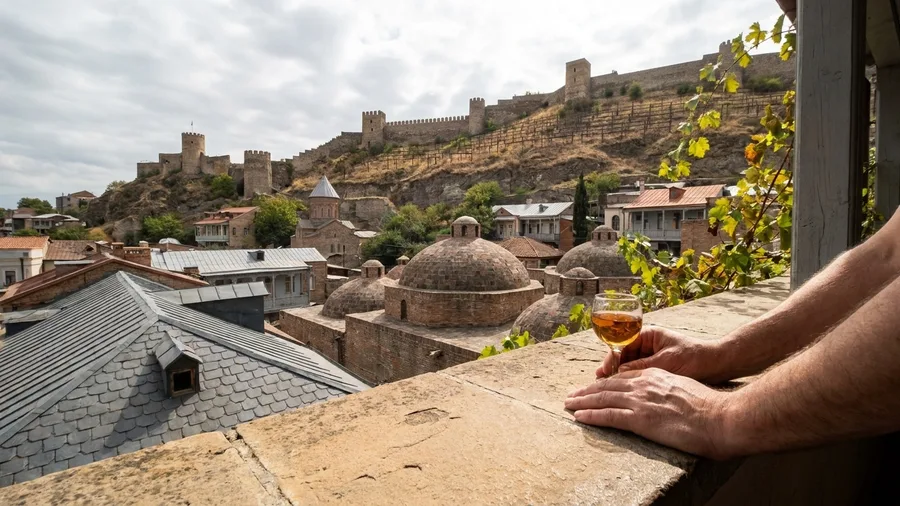
The first thing you notice in Tbilisi's old town is the smell of sulphur drifting up from the bathhouse domes, warm and mineral, with the vine leaves baking on the hillside above it. Georgia sits a five-hour flight past the European gateways you have been flying into, and it is the outlier on cost and distance at once, matching the cheapest countries here per day while adding Caucasus peaks and a wine culture older than any you will meet in Western Europe.
The trip runs three ways: the old town and sulphur baths in Tbilisi, the mountain pass to Kazbegi for the Gergeti church below the ice, and a day in the Kakheti wine region, where a pour costs about a dollar and a long table lunch runs $15. Expect $85 to $110 a day mid-range; go mid-May to mid-June or September to early October. Give it 8 to 10 days, since the distance makes a short hop pointless, and check passport validity and any pre-travel registration on the official Georgian government site before you book – the rules shift.
Frequently Asked Questions
Is it worth skipping London and Paris for these countries?
If you have already done the classic circuit or want lower costs and thinner crowds, yes. You trade iconic landmarks for easier daily budgets and less time in queues. You can still fly into a major hub like Venice or Vienna and be in Slovenia or Slovakia within two hours.
How much does a 12-night trip to two of these countries cost?
Round-trip airfare from the US East Coast runs $650–$950 in shoulder season. Mid-range daily spend per person ranges from $85 in Bulgaria and Georgia to $170 in Malta and Slovenia. Two weeks in the cheaper countries can come in under $2,500 per person including flights.
Do I need to speak the local language?
No. English is widely spoken in Slovenia, Slovakia, Estonia, Latvia and Malta (where it is an official language). In Romania, Bulgaria, Albania, Montenegro and Georgia, expect English in cities and tourist areas, but learn a few basic phrases for rural guesthouses.
When is the best time to go?
Mid-May to mid-June and September to early October for all ten. July and August add about 30% to coastal room prices and bring the biggest crowds. October closes cable cars and high trails in Slovakia's High Tatras.
Can I combine two of these countries in one trip?
Yes, and you should. Slovenia pairs with Italy via Venice; Montenegro pairs with Croatia via Dubrovnik; Estonia pairs with Finland via the two-hour ferry to Helsinki. Romania and Bulgaria work as a two-week loop by bus.
Is Albania or Georgia too adventurous for a first-timer?
Albania is manageable if you fly into Tirana and drive, but overland legs run 4–6 hours. Georgia sits five hours beyond European gateways and rewards 8–10 days. For a first trip, pick Malta or Estonia if you want ease, and save Georgia for a second visit.
Which of the Ten Fits Your Trip, and What to Book First
No ranking, a choice by situation. A nervous first-timer takes Malta or Estonia. The tightest budget goes to Bulgaria, Albania or Georgia. An eight-day trip bolted onto Venice or Vienna fits Slovenia or Slovakia. Two weeks with a car suits Romania plus Bulgaria.
Then make one move: gateway city before country, shoulder-season flight first. Underrated never meant difficult. The $650 to $950 airfare, the 2 to 4 hour hops, the $85 to $170 days and the catch you can read before booking all say the same thing. Second-guessing ends once you pick the trade you can live with.
So it comes back to that first line. London, Paris and Rome will still be there next time. This time, book the flight into the smaller gateway and leave the Eiffel Tower photo for someone else.
Pick your gateway, then book the flight
Choose Venice, Vienna, Dubrovnik, Helsinki or Tirana based on the country you want to pair, and book shoulder-season airfare before anything else.