The lamps on Royal Street hiss on at dusk and a trumpet player draws six people to a corner, and that is the whole promise of this route in one block. Start here on foot: three hours on the French Quarter costs nothing, and Jackson Square, Royal Street and the courtyards behind the Creole townhouses are original city fabric, not a ticket booth diorama.
That is the test for every stop after it. The past holds hardest where the original structure is still in use — the bluff-top mansions, the siege earthworks, the steel bridge, the cobbled squares — and softens where admission buys you a reconstruction.
This is the 1,200-mile loop from New Orleans to St. Augustine by way of Natchez, Vicksburg, Oxford, Montgomery, Selma, Savannah, Charleston and Beaufort: ten separate pasts, each with a price and a clock on it.
Ten to fourteen days covers all of it. A five-day core survives on New Orleans, Natchez, Vicksburg, Montgomery and Selma. Houses run $10 to $25 and take two to three hours, military parks charge $20 per vehicle for a half-day, and walking districts are free. Go March to May or September to November; summer afternoons hold above 90 degrees with humidity that turns a cobblestone walk into work.
Ten stops where the past is physical, sequenced by time and cost so you can run the full route or cut to five.
Quick Tips Before You Start
Book the car early
Rental rates in New Orleans spike in spring; reserve two months out and pick up downtown, not at the airport.
Weekends are for locals
Charleston and Savannah fill with weekenders Friday to Sunday; do those cities Tuesday to Thursday.
Humidity is the enemy
Pack a second shirt for afternoon stops; March to May and September to November are the only stretches you'll actually enjoy walking.
Carry small bills
Several small house museums and churches still run on cash or a donation box; a $20 bill covers most.
Check house hours
Many historic homes close Mondays or Tuesdays and run tours on the hour; confirm the day before or you'll stare at a locked gate.
Walk the bridge, don't drive it
At Selma, park on the downtown side and cross the Edmund Pettus Bridge on foot; the walk is the point.
1. New Orleans' French Quarter: A Creole Time Capsule
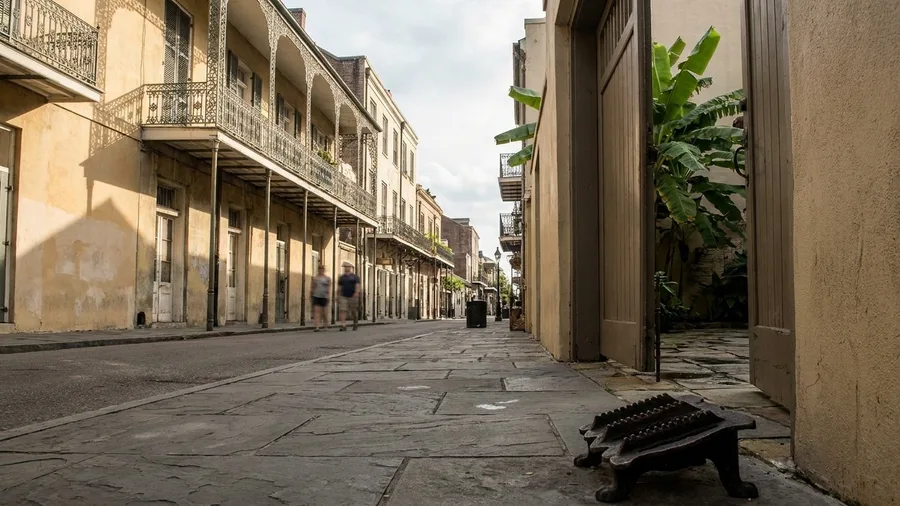
Park the rental car before you check in, not after. The Quarter's streets are narrow, the hotel garages run high per night, and once you are on foot you will not want to move the car again until you leave the city.
The walk itself is free and takes about three hours if you keep a steady pace. Jackson Square is the anchor, with the St. Louis Cathedral facing the river and the Creole townhouses crowding the streets behind it; Royal Street runs parallel and gives you the wrought-iron balconies, the antique shops and the courtyards you can glimpse through open gates on certain blocks. The 1850 House, if you want one interior, sits in the $10-$25 range that every house museum on this loop trades in, and it takes maybe forty minutes.
The wildlife here is the city itself: cats in the courtyards, pigeons working the square, the occasional horse from a carriage line. The fabric is what you came for, and the honest thing to say is that it is available without a ticket. Start early, before the heat and the tour groups, and you will have Royal Street almost to yourself.
💡 Tip: The courtyards behind the Royal Street shops are usually open to walkers — push the gate, look up, and leave if it's private.
The Tourist Version vs. the Slower Version
2. Natchez, Mississippi: Antebellum Homes on the Bluff
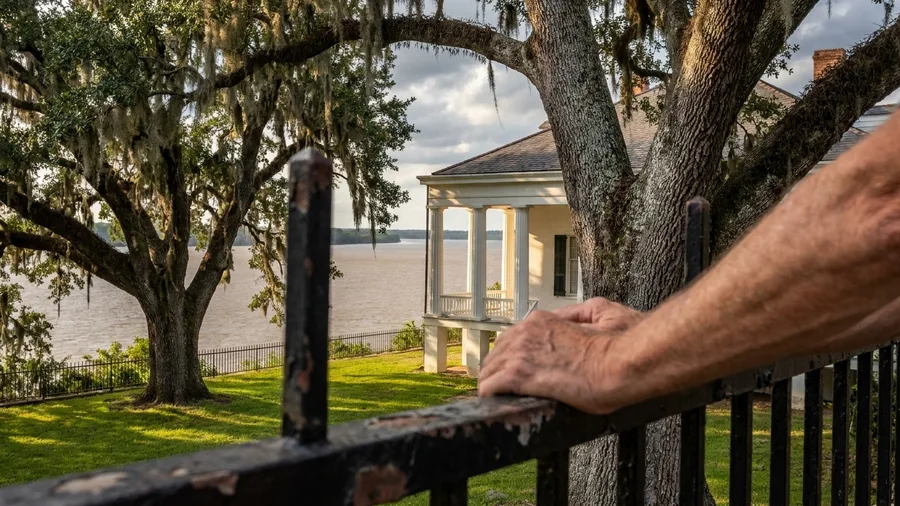
It is worth it, and the reason is density: like other historic river towns, the mansions sit on a bluff above the Mississippi within a short walk of one another, so you are not driving between isolated houses.
Longwood and Rosalie are the pair to book. Longwood is the one that stays with you, an octagonal house left unfinished when the war arrived, its upper floors still bare brick and timbers. Rosalie is the finished version, a full interior of the kind you picture. Admission runs $15-$20 per home, and two house tours take two to three hours.
Walk to the bluff edge afterward and the river is below you, wide and brown and slow. That view is the piece the brochures leave out and the reason the town sits where it does.
Time the visit for the March-April Spring Pilgrimage if you can. The houses open their doors wider, the gardens come in, and the town fills with people who came for the same reason you did. It costs more and it is busier, but the classic image is real here, backed by physical houses rather than a staged version of them.
💡 Tip: Do Longwood first, while your eyes are fresh. Rosalie afterward feels like the reward.
⚠️ COMMON MISTAKE
The house-tour trap
Doing five antebellum homes in one day is the most common mistake on this route. By the third, the parlors blur and you stop noticing the details. Pick two per town, ideally one unfinished and one furnished, and you'll remember both.
3. Vicksburg National Military Park: Earthworks and the USS Cairo
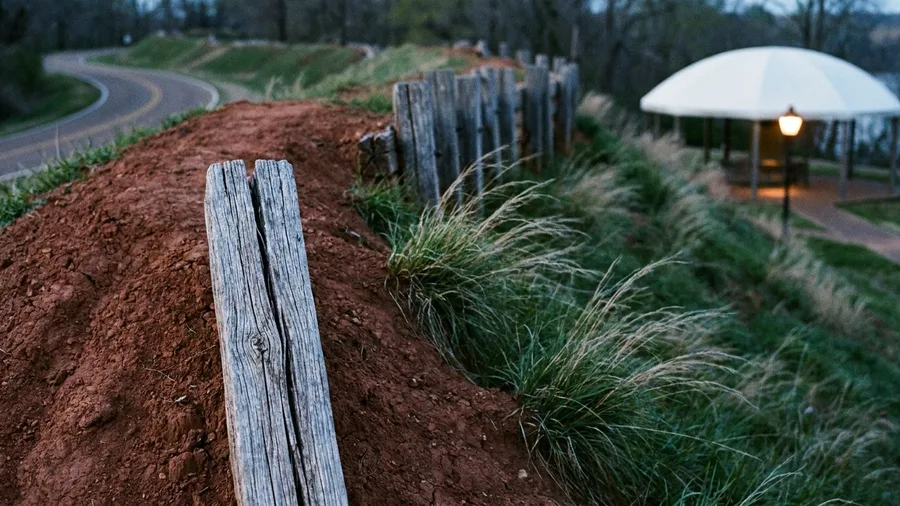
Twenty dollars per vehicle, three to four hours, and sixteen miles of driving tour. That is the shape of Vicksburg National Military Park, and it is the stop that shows you what the war actually did to the ground.
The earthworks are still there, ridges and trenches you can walk up to and stand in, and the route takes in the USS Cairo, an ironclad pulled from the Yazoo and partly reconstructed, and the national cemetery. Drive it, stop where the ground looks interesting, and let the older kids climb the mounds. Military-history people will want the full half-day; everyone else gets the point in two hours.
💡 Tip: Start at the visitor center for the map and the film; it orients you for the whole 16-mile drive.
| Stop | State | Era/Theme | Time Needed | Admission | Best For |
|---|---|---|---|---|---|
| French Quarter | LA | Creole colonial | 3 hours | Free (1850 House $10–$25) | Dense walkable start |
| Natchez | MS | Antebellum | 2–3 hours | $15–$20 per house | Classic Old South houses |
| Vicksburg | MS | Civil War | 3–4 hours | $20 per vehicle | Earthworks and USS Cairo |
| Oxford | MS | Literary/19th-c. square | 2–3 hours | $5 Rowan Oak; square free | Faulkner fans |
| Montgomery | AL | Civil rights + 19th c. | 2–3 hours | $10–$12 per museum | Both eras in one walk |
| Selma | AL | Civil rights | 1–2 hours | Free | Crossing the bridge |
| Savannah | GA | Antebellum squares | 3–4 hours | Free district; $18 house | Walkers and architecture |
| Charleston | SC | Colonial/antebellum | 3–4 hours | Free Battery; $15 house | Polished house tours |
| Beaufort | SC | Antebellum + Penn Center | 2–3 hours | $8–$12 | Quieter, layered history |
| St. Augustine | FL | Spanish colonial | 3 hours | $12–$15 | A different empire's past |
4. Oxford, Mississippi: Faulkner's Rowan Oak and the Square
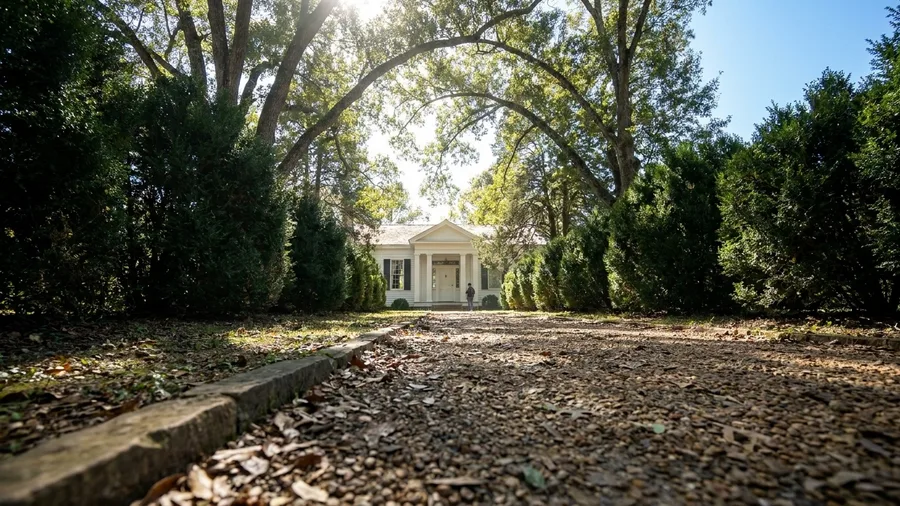
Cicadas start up in the oaks before you see the house, and the light through those trees falls in moving patches on the gravel drive.
Rowan Oak, Faulkner's home on the edge of town, costs $5 and takes about an hour. The study is the reason: his outline for A Fable is still penciled on the walls, a room you stand inside rather than behind glass. Literature fans will want longer than an hour; everyone else is fine with one. The 19th-century courthouse square sits a short drive back in, and it is free for 1 to 2 hours of walking. Square Books faces the square, and the whole stop fills a compact, walkable morning between the battlefield terrain behind you and the civil-rights core ahead.
If nobody in the car reads novels, keep it brief or drive on.
Montgomery — At a Glance
🚶 Walkable core
Rosa Parks Museum and Old Alabama Town within blocks
💵 Admission
$10 Rosa Parks; $12 Old Alabama Town
⏱️ Time needed
2–3 hours total
🏛️ Two eras
Civil rights and restored 19th-century streets
🆓 Free add-on
Freedom Rides Museum and Court Square
The walk
Civil rights history and restored 19th-century storefronts sit in the same downtown fabric; one loop carries both.
5. Montgomery, Alabama: Civil Rights and 19th-Century Downtown
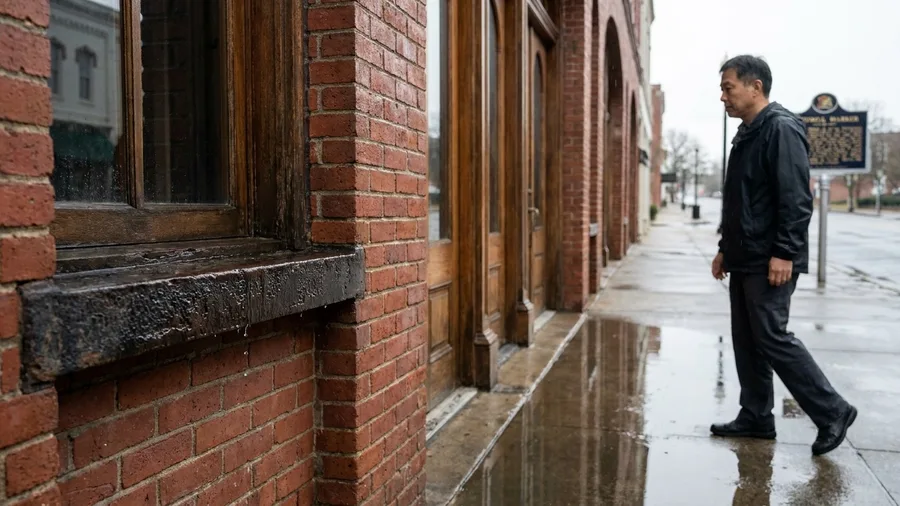
Montgomery is the stop where you pay for two museums and get three more, and the catch is that the two you pay for are not the ones that will stay with you. The Rosa Parks Museum runs around $10 and Old Alabama Town around $12, and they sit close enough that you can walk from the bus boycott to a restored 1850s streetscape in a few blocks. Budget 2 to 3 hours for both.
Old Alabama Town is the architectural half: a village of moved and restored 19th-century buildings, some of them log cabins, that shows how the city actually looked before the 20th century arrived. The Rosa Parks Museum is the difficult half, built on the corner where she boarded, and it works mostly through film and archival footage rather than objects. Neither is a walk-through diorama, but neither is a grand mansion tour either, and if you came for antebellum interiors, you will get more of that in Natchez or Charleston.
Then walk down to the Freedom Rides Museum, housed in the old Greyhound station where the 1961 riders were attacked, and it costs a few dollars or is free depending on the day, so check before you go. Court Square, a block or two over, is free and holds the fountain where the city's slave market once stood, with a marker that does not soften it. One downtown walk carries the 19th-century streetscape and the civil rights movement in the same frame, which is the reason to stop here rather than pass through.
6. Selma, Alabama: The Edmund Pettus Bridge

The Edmund Pettus Bridge is a steel arch over the Alabama River, and you walk it.
It is free and takes about an hour to cross and stand a while. Come early, before the traffic thickens, and shoot from the eastern approach where the arch frames the river. Brown Chapel AME Church and a historic-district walking route fill out 1 to 2 hours, with the older buildings still lining the 1965 route.
It suits civil-rights pilgrims and anyone who wants the story to be a physical crossing rather than a label; pair it with Montgomery for context.
💡 Tip: Walk the bridge in the morning before the heat rises; there's no shade on the span.
Two Ways to Do the Coastal Half
Polished and paid
- Charleston's Aiken-Rhett House ($15) with a preserved interior
- Savannah's Owens-Thomas House ($18)
- Guided walking tours ($20–$30) for the story behind the streets
- Spring pilgrimage season for private house openings
Free and unhurried
- Charleston's Battery walk at no cost
- Savannah's 22 squares and Forsyth Park
- Beaufort's waterfront and antebellum streets
- St. George Street in St. Augustine
7. Savannah, Georgia: Cobblestones and Antebellum Squares
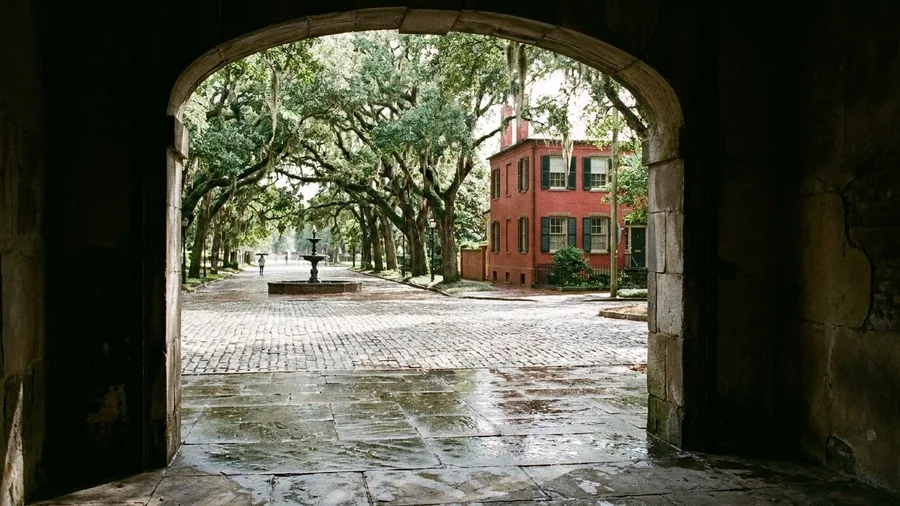
After the quiet of a river town, Savannah hands you a whole city you can cross on foot, and the walking costs nothing. The historic district charges no admission. You park once near the edge of the grid and leave the car there, because the exhibit is the street plan itself: 22 squares set on a lattice laid out in 1733, still shaded by live oaks with their branches meeting overhead.
Start where the locals start, on a square rather than at a ticket window. Cobblestones run underfoot on the riverfront streets, and the houses facing the squares are original, not rebuilt to look old. Owens-Thomas House is the one interior worth your money at around $18, and it takes about two hours on its own; budget three to four for the house plus the district. Guided walking tours run $20 to $30 if you want someone else doing the pointing, but the free version is the same streets.
Forsyth Park and Bonaventure Cemetery are where residents actually spend a Sunday, and both cost nothing. Bonaventure is a few miles east of downtown, so drive or take a rideshare rather than walking it. Walkers and architecture lovers get the most here; anyone wanting an air-conditioned attraction every hour will find the district thin. Twenty-two squares is more than most people manage in a day. Pick four or five and sit in them.
What People Get Wrong About This Route
8. Charleston, South Carolina: The Battery and Aiken-Rhett House
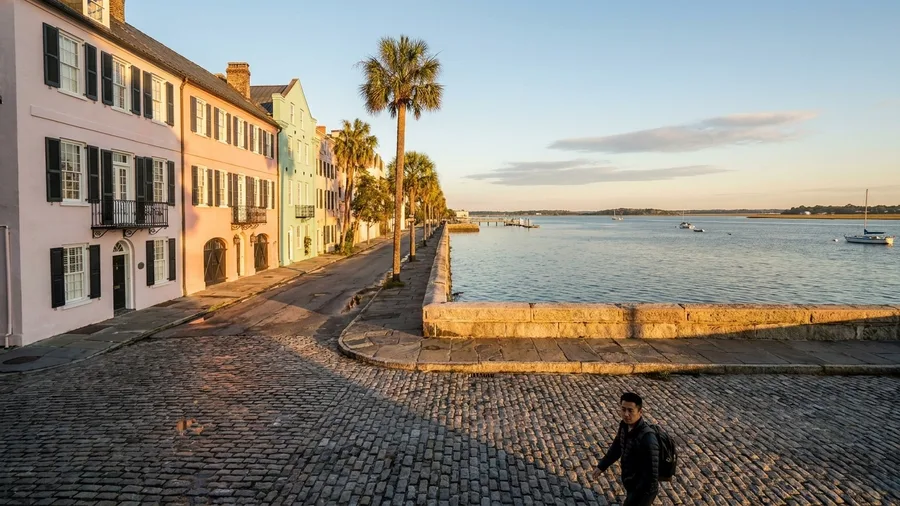
You hear the cobblestones before you feel them, a hollow clack under your shoes as the lanes narrow toward the water. Charleston takes the same walking-city idea and tightens it: fewer squares, denser blocks, and one house interior preserved so completely you can read the wallpaper layers like tree rings. The Battery is free and takes maybe an hour at an unhurried pace, past the mansions facing the harbor and Rainbow Row's pastel facades on East Bay.
Do the walk first, then pay for the house. Aiken-Rhett House runs about $15 and takes roughly two hours, and it is preserved rather than restored, which means the worn floors and faded paint stay as they were found. Rainbow Row and City Market fold into the same three-to-four-hour stroll. Spring is the seasonal draw here, with the pilgrimage tours and gardens open, but the streets look the same in October with a fraction of the crowd.
Come for polished historic-house tours and this is your stop; come wanting a quick photo and the $15 is wasted on you. Park once near the visitor area and walk the rest. The Battery in late afternoon, when the heat lifts off the harbor, is the two hours most people remember.
💡 Tip: Aiken-Rhett is the one to pay for. Walk the Battery before or after, not during the midday heat.
9. Beaufort, South Carolina: Antebellum Houses and Penn Center
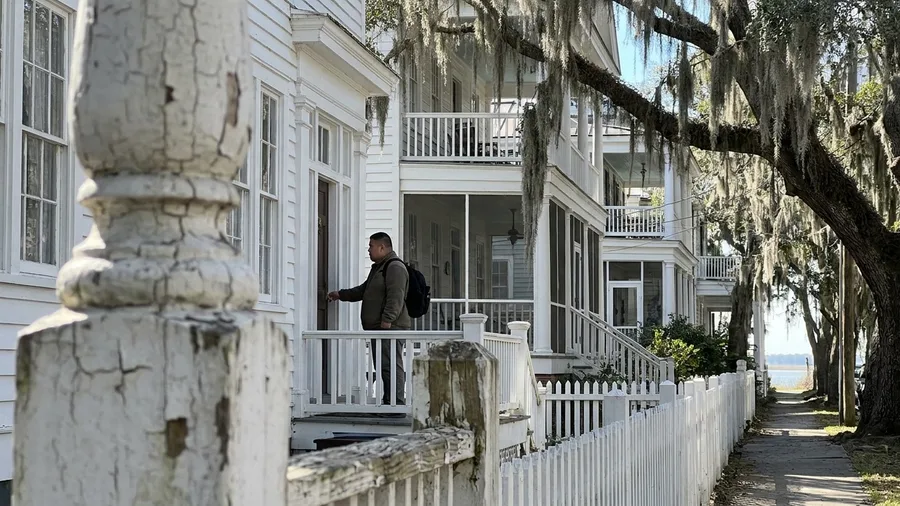
Skip the crowds and take Beaufort instead. It is the quieter Lowcountry version of the same story, and the reason to choose it is not the antebellum houses alone but the pairing of those houses with Penn Center, which tells what happened on this sea island after the planters fled.
The houses along the waterfront are the draw everyone expects: a tour of one runs about $12, and the streets themselves are free to walk. What most visitors miss is Penn Center, on St. Helena Island a few miles out, where the Penn School was founded in 1862 to educate freedpeople and kept going for generations. Admission is around $8 and the museum takes one to two hours. Give the whole stop two to three hours, and drive rather than walk to Penn Center.
The story is the point. Beaufort's wealth was built on rice and Sea Island cotton worked by enslaved people, and Penn Center is where their descendants built schools, kept land, and held a culture together through Reconstruction and Jim Crow. Standing in the same town for both halves of that is different from touring mansions alone.
Expect low density and low cost: no ticket queues, no packed sidewalks, and room to slow down. The waterfront and the town's film locations are a low-key bonus if you have an extra hour. Travelers who want history without crowds get more here per dollar than almost anywhere on the route.
It is a half-day, not a full one, and that is the appeal. Slow down, take the house tour and the Penn Center visit, and leave the afternoon open.
🗺️ Build the Loop in Four Stages
New Orleans to Natchez
Start with the French Quarter walk, then drive the river road up to the bluff.
Vicksburg to Oxford
Spend a half-day on the siege earthworks, then cut east to Faulkner's square.
Montgomery and Selma
Do both civil rights stops in one day; the bridge is a morning walk.
Savannah to Charleston
Trade the car for cobblestones and do one paid interior in each city.
Beaufort to St. Augustine
Slow down in Beaufort, then close the loop at the Spanish fort.
10. St. Augustine, Florida: Spanish Colonial Streets and the Castillo
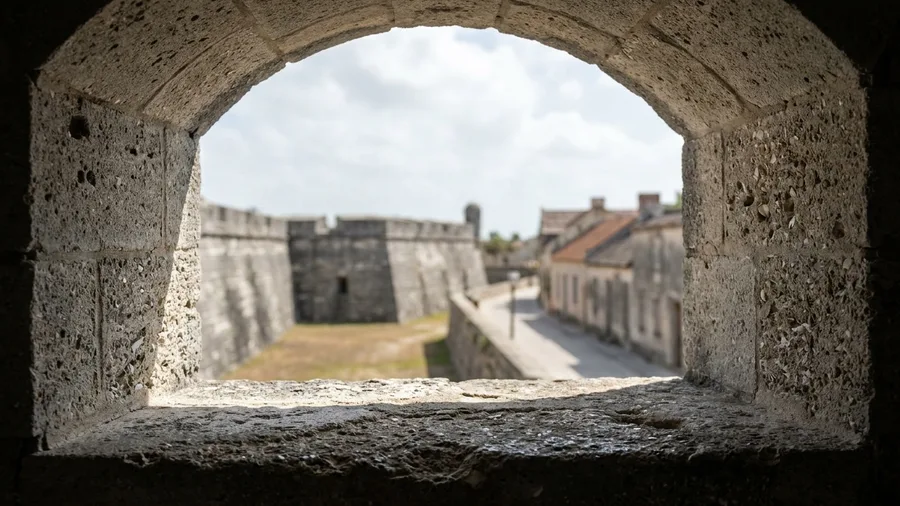
The one thing to know before you go: the fort charges by the person, not the car, and the ticket window queue at midday in spring is the longest wait of the day. Castillo de San Marcos runs about $15 an adult and the walk through the casemates, the dry moat and up onto the gun deck takes roughly two hours. Go at opening. The coquina walls – crushed shell compressed into stone – are the original 17th-century fabric, and they are why the place survived every siege thrown at it.
From the fort you are three minutes on foot from St. George Street, the pedestrian spine of the colonial town, and Flagler College, the 19th-century hotel turned school whose courtyard you can tour for a small fee. Colonial Quarter, the reconstructed block, costs about $12 and is the one piece here that is rebuilt rather than original – worth it if you have kids, skippable if you don't. Budget three hours for the whole walk. This is the finale, and the accent has changed: Spanish coquina and a star fort instead of English brick and antebellum columns, a different empire's fabric under your feet, closing the 1,200 miles on the only street in the country where the flags went from Spanish to British to Spanish to American.
💡 Tip: Go to the fort at opening. By 11 a.m. the courtyard is a sun trap and the tour groups arrive.
Where to Base Yourself on the Loop
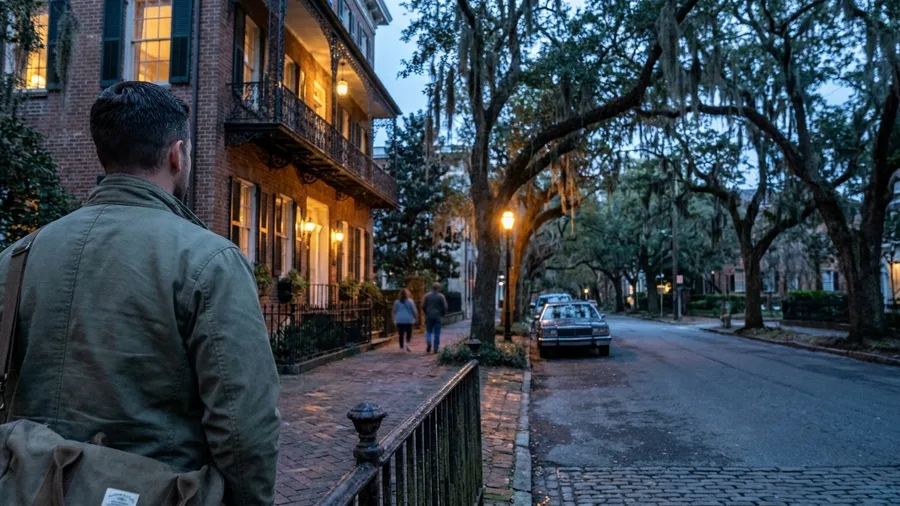
The base you pick decides half your parking bill. For the inland half, take two nights in New Orleans – the densest walkable start on the route, and you will not need the rental car until you leave. Then choose Natchez or Vicksburg for one night. Natchez puts you on the bluff with the river in view and the mansions in walking distance. Vicksburg is the practical midpoint if you would rather not backtrack east.
For the coastal half, two nights in Savannah and two in Charleston is the right split. Savannah is cheaper and considerably easier to park in; Charleston is denser and more polished, and you will pay for both. Beaufort makes a good one-night stop between them if you want the quieter version of the same Lowcountry streetscape.
Running the full 10 to 14 days, add a final night in St. Augustine so the last fort is not a dash. Cutting to five days, you need none of the coastal bases – stay inland, run the Mississippi and Alabama stops, and save the coast for a second trip.
The trade-off never changes. A cheaper base 40 minutes out means you drive in every morning and hunt for a space. A walkable base costs more per night and saves you the parking, the circling and the hour you would rather spend on foot.
Frequently Asked Questions
How many days do you need for this Deep South loop?
Ten to fourteen days covers all ten stops at a reasonable pace. Five days gets you New Orleans, Natchez, Vicksburg, Montgomery and Selma — the inland core — and that's a legitimate trip. Adding Savannah, Charleston, Beaufort and St. Augustine is what pushes you past a week.
Is it worth it to pay for house tours?
Yes, but pick two per town, not five. House museums run $10 to $25, and the interiors are where the past becomes physical. The walking districts themselves are free, so most of your time costs nothing.
When is the best time to go?
March through May or September through November. Summer afternoons regularly top 90°F with high humidity, and you'll be walking cobblestones. Spring pilgrimage season in Natchez and Charleston is a draw if you can time it.
Do you need a car for this route?
Yes for the loop itself — the 1,200 miles between stops are the point. But park once in each city: the French Quarter, Savannah's historic district and Charleston's Battery are all walkable without a car.
Is this route expensive?
It can be done on a moderate budget. Walking districts are free, house museums run $10 to $25, and the Vicksburg military park is $20 per vehicle. The main costs are gas, lodging and the two or three paid interiors per town.
Which stop should I skip if I'm short on time?
Oxford, unless you're a Faulkner fan. It's a compact, pleasant stop, but the literary payoff is specific. If you're not there for Rowan Oak, spend the hours in Montgomery or Selma instead.
Follow the River Road South From Natchez
The French Quarter walk is still the standard, and it is still free: three hours, no ticket, the city itself doing the work. Every later stop earns its place the same way, by making the past something you stand on rather than read about.
Cut to five days with New Orleans, Natchez, Vicksburg, Montgomery and Selma. With ten to fourteen, add Savannah, Charleston, Beaufort and St. Augustine. Short on time, skip Oxford unless there is a Faulkner reader in the car.
The verdict is plain. Natchez is the single best stop for a first-timer chasing the classic time-travel feeling, Charleston is the pick for polished house tours, and Selma's bridge is the civil rights anchor. Build the loop around those three, then fill in the coast.
Then walk Royal Street at dusk one more time, and notice the trumpet player drawing a crowd of six without charging a cent.
Build your route from the table
Scan the at-a-glance table near the top, pick your five, and check house hours the day before you drive.