The planning mistake is signing up for a guided walking tour before you have checked whether the town even needs one. The belief you arrive with is that a single free day in a river town means either a rushed tour or a tram to sights too far to walk. In all ten towns below, the riverside sights sit inside a 2- to 3-mile loop, and the route starts and ends within 20 minutes' walk of the main station or river dock. The constraint is not distance. It is deciding what to skip.
Two to three miles on foot, four to six hours with a coffee stop and lunch, $15 to $25 for the meal and $5 to $15 for one entry. That buys a complete day in any of the ten.
By the end you will name the town that fits the day you actually have, and walk off the train or the dock already knowing the loop, the lunch stop, and the one sight worth the queue.
Quick Tips Before You Start
Wear broken-in shoes
Cobblestones in Porto, Heidelberg, and Strasbourg punish new soles. Bring the pair you already trust.
Carry a day bag only
You will cross bridges, climb stairs, and eat lunch. A backpack beats a rolling suitcase on these loops.
Keep small cash
Market stalls in Ljubljana and Passau may not take cards for a $5 coffee. Carry euros in small notes.
Download the town map offline
Old-town alleys in Bamberg and Colmar confuse phone GPS. Save the official tourist map before you leave the station.
Start by 9:30
Cruise groups hit the main squares around 10. Walk the priority sight first, then loop back through the old town.
1. Porto: Ribeira, Dom Luís Bridge, Port Cellars
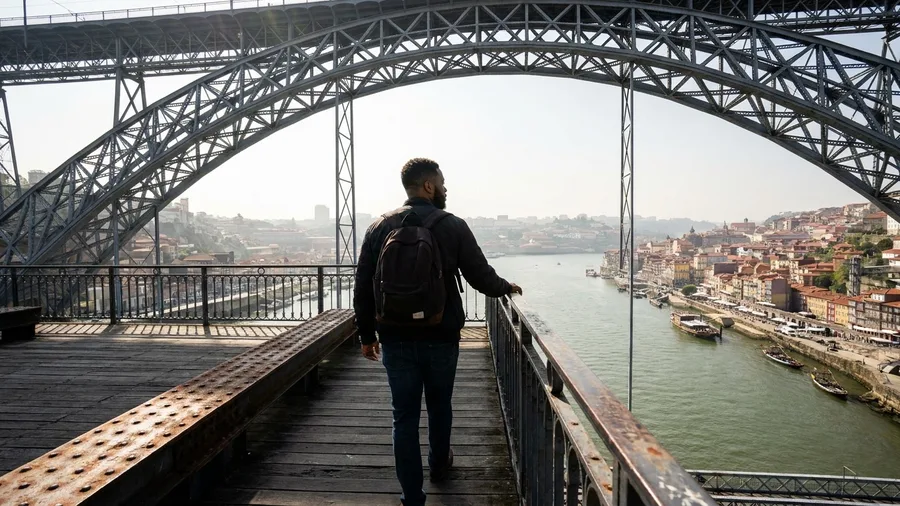
Yes: the whole route stays low. Start at São Bento, where the blue-and-white tiled walls of the entrance hall are worth ten minutes before you have walked anywhere, then let the street fall to the Douro. That descent to Ribeira is 2.5 miles of loop in total and about five hours with a stop, and it costs you nothing but gravity going down.
The lower deck of Dom Luís I carries the river at water level, so you cross the way the boats do. When the funicular queue runs past 15 minutes, take the Ribeira steps instead: the wait roughly equals the walk, and you shop the same river views. Lunch at a Ribeira tasca runs $15-$25 for grilled fish or a francesinha, and a port cellar on the Gaia side charges $5-$15 to close the loop. The priority sight is that crossing, not a museum. First-timers who want riverfront and wine, not labels on a wall, find this loop is built for them.
💡 Tip: Start at São Bento station around 9:30 and walk down before the cruise groups fill Ribeira. The steps are easier going down than up.
| Town | Walking loop | Time on foot | Best for |
|---|---|---|---|
| Porto | 2.5 miles | 5 hours | River views and port wine |
| Heidelberg | 2.8 miles | 5-6 hours | A view over the old town |
| Bamberg | 2.2 miles | 4-5 hours | Beer lovers and slow walkers |
| Salzburg | 2.5 miles | 5 hours | Mozart, river, coffeehouse cake |
| Lucerne | 2.0 miles | 4 hours | Half-day or rainy backup |
| Verona | 2.6 miles | 5 hours | Roman sights without a car |
| Strasbourg | 2.7 miles | 5 hours | Canals and architecture |
| Ljubljana | 2.3 miles | 4-5 hours | Solo travelers and couples |
| Passau | 2.1 miles | 4 hours | River-cruise port day |
| Colmar | 2.0 miles | 4 hours | Wine lovers and photographers |
2. Heidelberg: Old Town, Bridge, Philosopher's Way
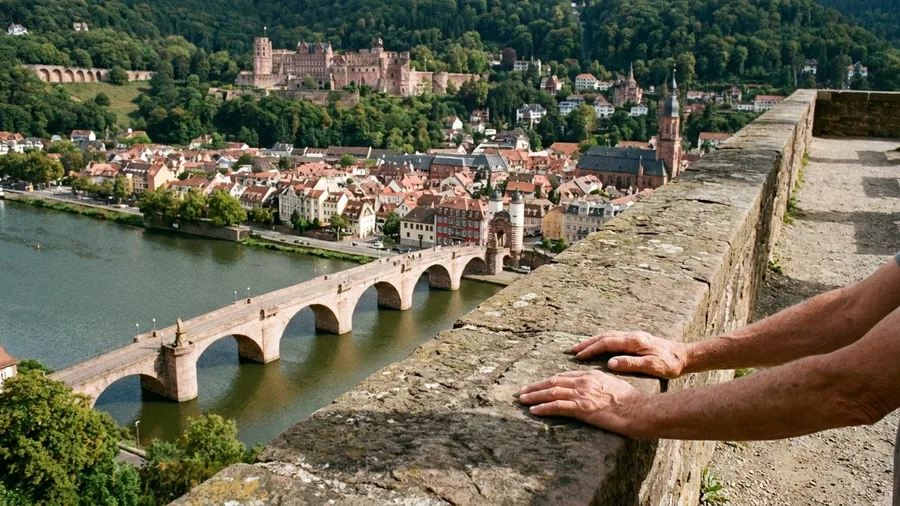
Heidelberg is compact enough to cover on foot in a day, with one catch: its climb is the reason most people come, not a thing to be avoided. The loop runs about 2.8 miles, 5 to 6 hours with stops, from Bismarckplatz through the Old Town and over the arched Old Bridge, then up Philosopher's Way on the far bank and back along the Neckarstaden.
The Philosopher's Way climb is steep for ten minutes and then the town is below you, the river bending around red roofs, the bridge laid across the water in a single line of stone. That is the payoff, and it is free. The catch is that it is also the whole point of the loop. If your knees object, the walk works perfectly without it: stay on the riverbank, follow the path at water level, and you still see the town from the bridge. You just see it from lower down. Lunch in the Old Town runs $15-$25 for schnitzel or a pretzel sandwich, and you eat it knowing the view was free.
The trade this loop makes is the castle. Most people queue for the funicular and the palace rooms, pay the entry, and come back down without ever seeing the town from the far side. The view from Philosopher's Way looks down on the castle and the river and the roofs all at once, and it costs nothing. That is the honest skip here: you can have the view or you can have the castle interior, and the view is better.
💡 Tip: Walk Philosopher's Way in the morning when the light is behind you and the path is empty. The castle terrace charges admission and the view is better from the free path.
Heidelberg vs. Porto: Two Loops, Two Obstacles
3. Bamberg: Little Venice, Beer, and Cathedral
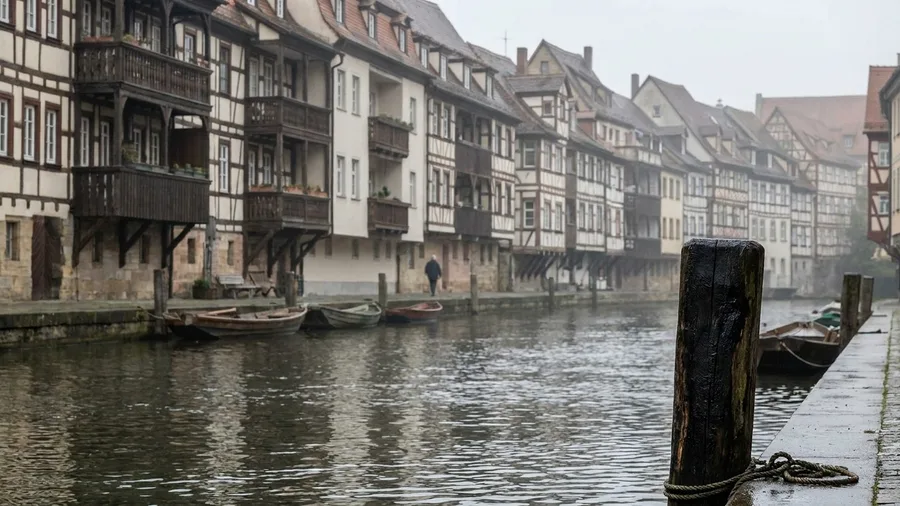
The smell hits you in the morning: wet stone warming under smoked malt, a low sweet fug that hangs in the lanes from the day's first beer. Bamberg's ground is flat with one exception – the hill where the cathedral and the Neue Residenz crouch above the river, a ten-minute climb. That is the only rise on the loop; where Heidelberg makes the far bank uphill for ten minutes, Bamberg puts its one climb on a single optional hill and keeps the rest of the walk level. So a slow walker setting the pace at an amble can still finish everything, sightseeing on a flat core with one deliberate detour up.
The loop is 2.2 miles through the old town and back, four to five hours with stops. From the station, the way runs through Obere Brücke, where the town hall stands on an island amid the river, then along Klein-Venedig, whose fisherman's houses cost nothing and need no ticket. Choose one of the two interiors – the cathedral or the resplendent Neue Residenz. Both cost energy better spent on the riverbank. Early is better here; by mid-afternoon the Beer and the smoke and the narrow lanes are full of tour groups queuing for lunch tables.
Save the brewery tavern for 12:30, when the Schäuferla comes out: pork shoulder roasted till the crackling splinters, smoked beer from the Rauchbier gravity-fed barrel for $15-$25 with a plate. That is where slow walkers win – the loop has room to set the table down for an hour, which is why beer lovers and unhurried travelers like Bamberg.
💡 Tip: Order the Schäuferla (pork shoulder) at a Brauerei on the Klein-Venedig side. It is a heavy lunch, so plan the cathedral climb for after you eat, not before.
⚠️ COMMON MISTAKE
Do not try to see both the cathedral and the Residenz
In Bamberg, the cathedral and Neue Residenz sit on the same hill, but each takes an hour. Pick one interior and spend the saved hour on the riverbank instead.
4. Salzburg: Salzach River and Old Town
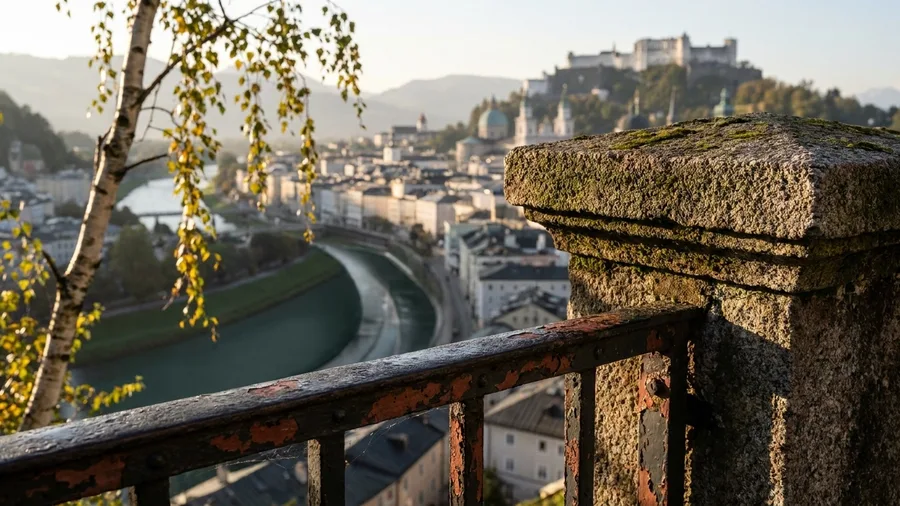
Salzburg rewards the walker, but only if the walker admits one thing up front: the view everybody comes for sits roughly 400 feet above the river, and how you cover that height decides the shape of your whole day. The route itself is gentle and compact, about 2.5 miles out of the Hauptbahnhof, through the old town, along the Salzach and back across the Mozartsteg footbridge, and five hours is a comfortable allowance with stops.
Mozart, the river, the cake. Skip the second museum and the second climb, and the day stays light on its feet.
💡 Tip: Take the Mönchsberg lift, not the fortress funicular. The lift puts you on the ridge for the river and roof view without the fortress crowd.
Salzburg at a Glance
🚶 Loop distance
2.5 miles
⏱️ Time on foot
5 hours
☕ Pacing stop
Coffeehouse cake
🛗 One climb
Mönchsberg lift
🍽️ Lunch budget
$15-$25
Priority sight
The river and roofs from the height, with coffeehouse cake as the stop that paces the loop back through the market streets.
5. Lucerne: Chapel Bridge, Lakefront, Old Walls
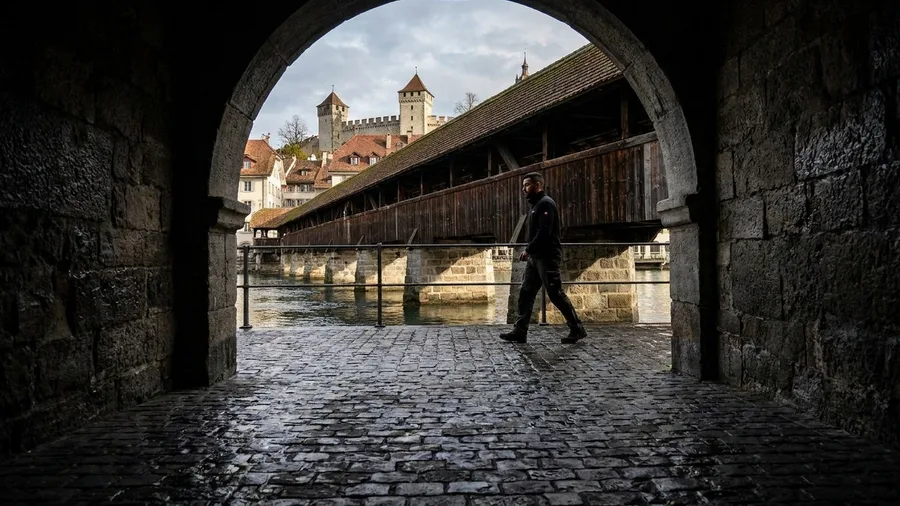
You smell the water and the wet timber of the Chapel Bridge before the lake comes into view, and the painted panels overhead are close enough to read as you pass under the roof. You are two minutes from the station, and the day has not cost you anything yet.
Lucerne makes the test easier than almost any town on this list: the loop runs 2.0 miles and takes about 4 hours from the station, over the Chapel Bridge, along the lakefront, through the old town, up to the Musegg Wall, and back over the Spreuer Bridge. The station sits 5 minutes from the start, the closest approach of the ten, and the route closes a full day in half the time a bigger town demands.
The photograph is from a Musegg tower. Climb one for the view over the lake and the red roofs, and know the wall walk itself is free, though not every tower is open, so check which before you commit to a particular one.
Lunch is $15-$25, a lakefront takeaway or a plate at an old-town cafe, and either works with the pace of a four-hour morning.
Best for travelers with half a day to spend or a rainy forecast as backup, this is the town that proves a compact loop can carry a whole day.
💡 Tip: Walk the Musegg Wall from the old town side and descend near the Spreuer Bridge. That puts the lake behind you and the river in front for the loop back.
6. Verona: Adige River, Arena, and Old Streets
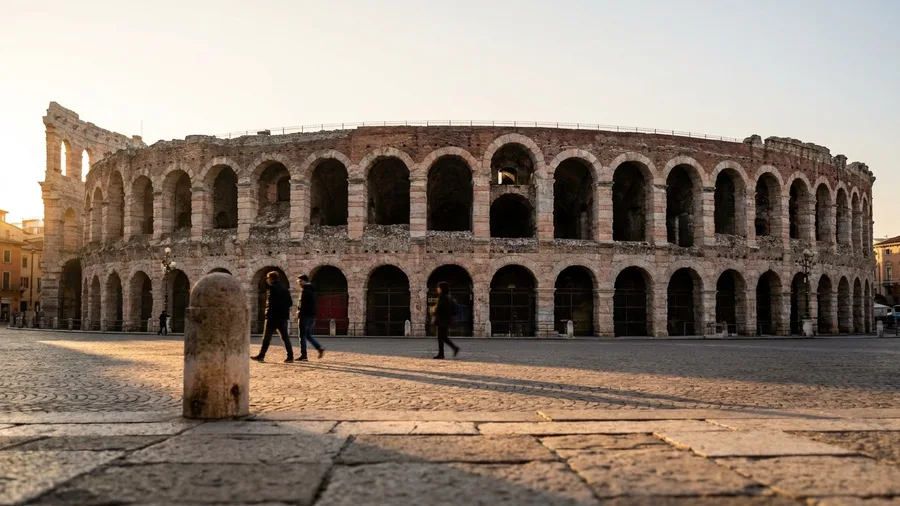
Walk Verona, and choose it for that reason: the river, the Roman arena and the old streets all fit a flat 2.6-mile loop out of Porta Nuova and back, about five hours with a stop, and the risk here is a line rather than a hill. You start on level ground and stay there, tracing the Adige past Castelvecchio and over the stone of Ponte Pietra without gaining more than a step.
The line is at the Arena, and it is the only real decision. Entry runs about $10 to $15 and the interior is worth it once, but when the queue spills past 30 minutes, stand back in Piazza Bra: the pink stone exterior against the sky is the sight, and skipping the tunnel keeps your afternoon whole. Spend the saved hour instead on bigoli or risotto in a trattoria off Piazza delle Erbe, $15 to $25, then walk the riverbank slow. No car, no climb, no obligation to queue. The flat loop is the free win here, and the arena interior is the optional spend.
💡 Tip: If the Arena line is long, walk to Castelvecchio first and come back. The queue thins after 2 p.m. when tour groups leave for lunch.
River Town Walking Terms, Decoded
7. Strasbourg: Grande Île, Petite France, River Locks
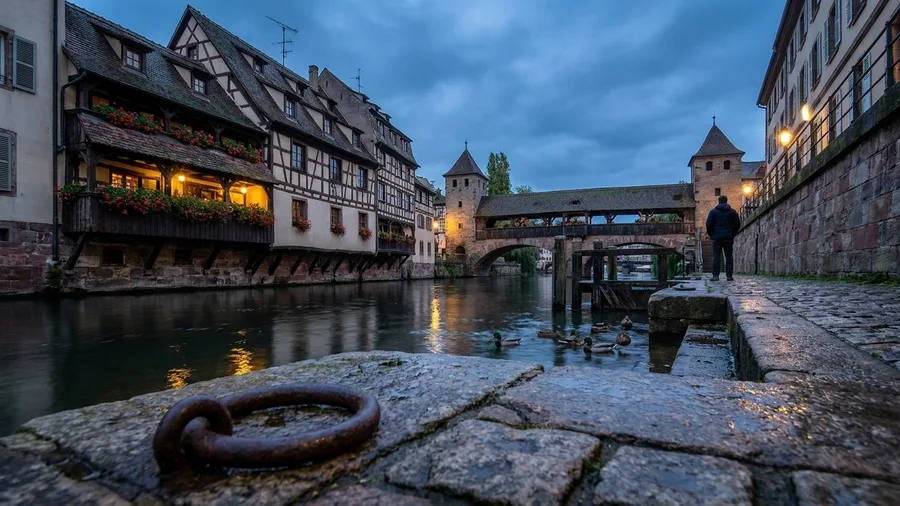
Eighteen minutes on foot separate the station from the cathedral spire, and the whole stretch is level. Strasbourg's loop runs 2.7 miles through the Grande Île, out to Petite France, over the covered bridges, and back along the Ill, and five hours covers it with lunch and a coffee. Nothing on it asks for a climb.
Residents skip the tower queue and walk the quay instead. Cathedral entry is free; the climb costs money and, on a busy morning, forty minutes of standing, so treat it as optional and only if the line reads under 20 minutes. The covered bridges and the locks at Petite France are the sight that earns the crossing count, timber frames over green water, ducks holding position in the current. Budget $15 to $25 for tarte flambée or a choucroute plate in a winstub off the main square.
💡 Tip: Skip the cathedral tower if the line is past the door. The covered bridges give you the same river view for free, and you keep the afternoon for Petite France.
8. Ljubljana: Ljubljanica Bridges and Castle Hill
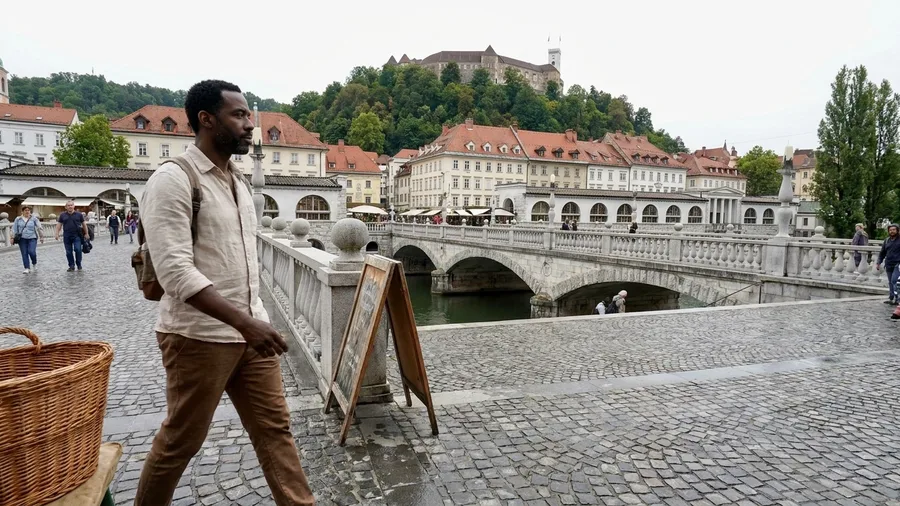
Strasbourg's loop crosses the Ill four times without gaining a metre, and Ljubljana does the same on a smaller river with a city hill dropped in the middle. The full circuit runs 2.3 miles from the station through Prešeren Square, over the Triple Bridge, along the riverside market, up to the castle, and back through the old town: four to five hours at an unhurried pace.
The funicular to the castle costs $5 to $8 round trip; the walk up takes 15 to 20 minutes and the hill is short, so the choice is a coffee and a pastry against a ride. Either puts you above the red roofs with the river bending below. If you would rather spend the money on lunch, climb. If the knees are tired, the funicular earns its price.
The market is the morning's sight as much as its stop. Stalls run along the Ljubljanica under the colonnade, and you can build a $15 to $25 lunch there or at a riverside café with a table facing the water. Solo walkers and couples get the most from this one: compact, flat except the single hill, and short enough to leave the afternoon free.
💡 Tip: The central market runs along the river and is the best free sight in town. Walk it before the castle, then take the funicular down and eat lunch by the water.
Ljubljana: Funicular or Walk Up?
Take the funicular
- Best if you're carrying a daypack or it's raining
- Queue at the lower station can hit 20 minutes midday
- Runs roughly every 10 minutes; check last descent before dinner
Walk up instead
- Path starts behind the market, not from the bridge
- Slippery after rain; wear grippy shoes
- Skip it if you have knee trouble, take the funicular down
9. Passau: Three Rivers, Dom, and Old Town
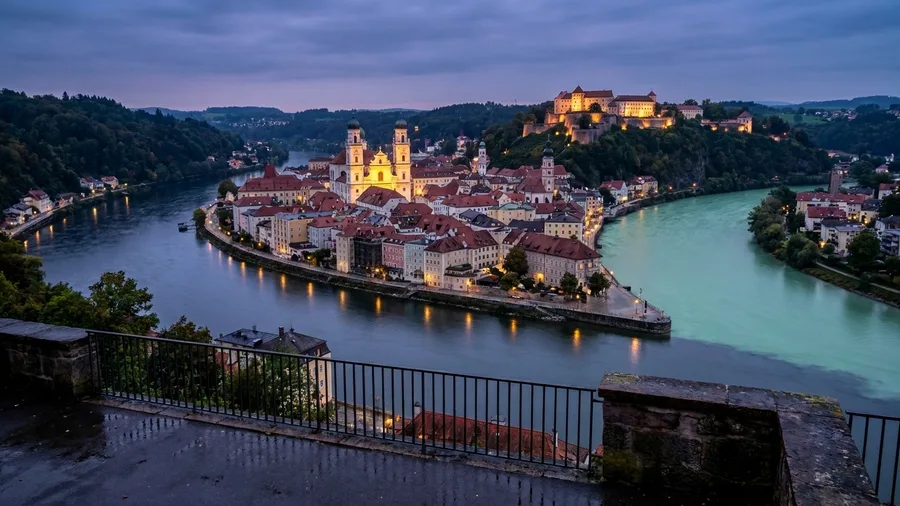
Ten to fifteen minutes on foot is all the dock to old town costs, which is what makes Passau work on a port day. The loop is 2.1 miles along the Danube to the Dom, out to the Inn riverbank, and back: four hours at a steady pace, and short because the strip between the Danube, the Inn, and the Ilz does not leave room for a longer one. If you arrive by train instead, the station sits a similar walk from the same start.
The Dom is the icon. St Stephen's holds one of the largest organs in Europe, and if you catch an organ recital the sound goes through the stone rather than over it: free to enter outside services, roughly $5 to $10 for the recital, and worth the half hour whether or not you care about organs. The queue, when there is one, moves.
Veste Oberhaus is the decision the day asks. The fortress sits 20 minutes uphill, or a $5 to $8 shuttle, and the honest answer is that you want it for one thing: the view down where the three rivers meet, the Ilz dark, the Inn pale green, the Danube carrying both. Choose the terrace, skip the museum inside. Doing both costs more time than a fixed sailing allows.
Lunch near the Dom runs $15 to $25 for a Bavarian plate, and the strip is narrow enough that you will pass the same square twice without noticing. Watch the clock from the moment you leave the dock, not the moment you finish lunch.
💡 Tip: Check your ship's all-aboard time before you leave the dock. The loop is short, but the Inn riverbank is easy to linger on.
10. Colmar: Little Venice, Canal Lauch, Old Town
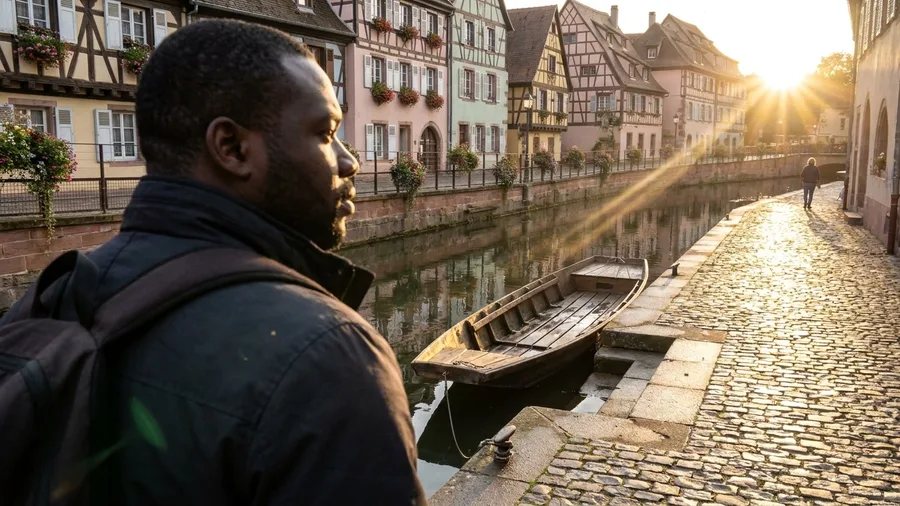
Measure Colmar by the train, not the sailing schedule, and it wins: the shortest loop of the ten, 2.0 miles, from the station through the old town, out along Little Venice and the Canal Lauch, past the covered market, and back, four hours flat. That is the whole argument for ending a walking day here. You can roll in on a late morning train and still shut the loop before dark. If a compact town with a pretty main street is what you are after, tiny towns with unreal Main Streets picks the ones worth the detour.
The station to the old town is a 15-minute walk, which sounds like the long approach of the bunch but is in fact the reason to plan it: you arrive already inside a town that needs no hill and no second wind. The one sight that earns the morning is Little Venice itself, the canal of half-timbered houses on the Lauch, and the honest likelihood of having it to yourself is low after ten. Go the moment you arrive, walk the quay slowly, and accept that photographers and everyone else gather on the little bridges by midday. The canal boats run $8-$12 and give you the same facades from water level; if the queue on the landing stage is short, take one, and if it is not, the quay is the view and the boat is the optional spend, not the point. Watch the herons and the ducks working the green shallows instead and you have your nature fix for free.
Lunch is a winstub, $15-$25 for tarte flambee crisp enough to hear it crack or a plate of charcuterie with a glass of whatever the house pours. Wine lovers and photographers get the most from this loop, one for the cave a vintner keeps in a courtyard, the other for the canal corner at the end of the Rue des Tanneurs before the tour groups arrive. The station walk back is your second easy approach, which is the promise this day makes when you have used up the light and cannot afford a missed connection.
💡 Tip: Walk Little Venice in the late afternoon when the tour groups have gone and the light hits the canal houses. The covered market closes earlier, so do that first.
Avoid These Mistakes on a One-Day River Town Loop
Frequently Asked Questions
Do I need a car to explore these river towns?
No. Every town on this list has a 2- to 3-mile walking loop that starts within 20 minutes of the main train station or river dock. The old cores are compact and the routes are designed to be walked, not driven.
How much should I budget for lunch and entry fees?
Lunch in a casual tavern, market stall, or café costs $15-$25 per person. Optional museum, church tower, or funicular entries run $5-$15. A full day with lunch and one entry stays under $40 per person.
Which town is best if I only have half a day?
Lucerne. The station is 5 minutes from the start of the loop, the route is 2.0 miles, and you can walk it in 4 hours including a coffee stop. Colmar is also a good choice at 2.0 miles, but the station-to-old-town walk is 15 minutes.
Are these walks suitable for someone with knee problems?
Mostly yes, with exceptions. Heidelberg, Salzburg, Bamberg, Passau, and Ljubljana each have one short hill or tower climb. You can skip the climb and still complete the loop in every case. Porto's Ribeira steps are easier going down than up, so start at São Bento and descend.
When is the best time to visit these towns on foot?
Late spring and early autumn give you mild weather and thinner crowds. Summer works if you start by 9:30 and finish the priority sight before the tour groups arrive. Winter is quiet but some castle paths and wall walks close, so check before you go.
Do I need to book tickets in advance?
For most of these loops, no. Cathedral entry in Strasbourg is free and walk-in. The Arena in Verona and the Salzburg funicular can be booked same-day unless you are there in peak August. Port cellar tours in Porto often fill by noon, so book that one the night before.
Pick One for River Views, One for Beer, One for a Half-Day
Pick one for river views, one for beer, one for a half-day: Porto, Bamberg, Lucerne. One town, one reason, no comparison shopping.
The free day never needed the guided tour or the tram. The 2- to 3-mile loop from the station or the dock was the tour, and the only real choice was which hill, queue, or boat to skip.
Before you set out, check the official town map and confirm whether the river dock or the station is the closer start. They are rarely on the same side of the water, and that single fact moves the loop. The measure of the day is closing the loop at the same bridge you started from, not counting the sights. So check the first turn before you take it, and skip the guided tour you were about to book.