The market you keep comparing these to is the one in the nearest big city at home: $9 for a plastic mug, imported ornaments, the same wooden stalls every year. The difference is not the lights. It is the setting, the dates, and the thing you can only buy there. A 5- to 9-night trip from the US runs $650-$1,100 round trip from the East Coast, with a central three- or four-star room at $150-$320 a night, and no photograph settles whether that is worth it.
admission is mostly free, so the money question is flights, hotel nights and rail legs at $30-$100, not tickets. Gluhwein or mulled wine is €4-6, the mug deposit €3-5 back when you return the cup, market food €6-12 a plate.
Two markets with a distinct setting, a date window you can plan around, one signature buy and one rail pairing will carry the flight better than five cities you photograph from a bus window.
Work backwards: lock the final week before Christmas first, pick the rail route second, and match the market to how you actually travel. Then price 5 to 9 nights with the numbers above.
Quick Tips Before You Start
Book the final week
The week before Christmas has the fullest market schedules and the highest hotel prices; lock flights by September for the best fare.
Pair by rail, not by plane
Two cities 2-3 hours apart by train ($30-$100) beat a third flight and a third hotel check-in.
Carry euro coins
Mug deposits are €3-5 cash, and many small stalls still do not take cards.
Pack for standing
You will be outside for hours at a time; insulated boots and a hip-length coat matter more than a stylish one.
Stay inside the old town
A central room at $150-$320 a night saves you the tram ride home in the cold and lets you revisit the market at night.
1. Strasbourg Christkindelsmärik, France's Alsatian Classic
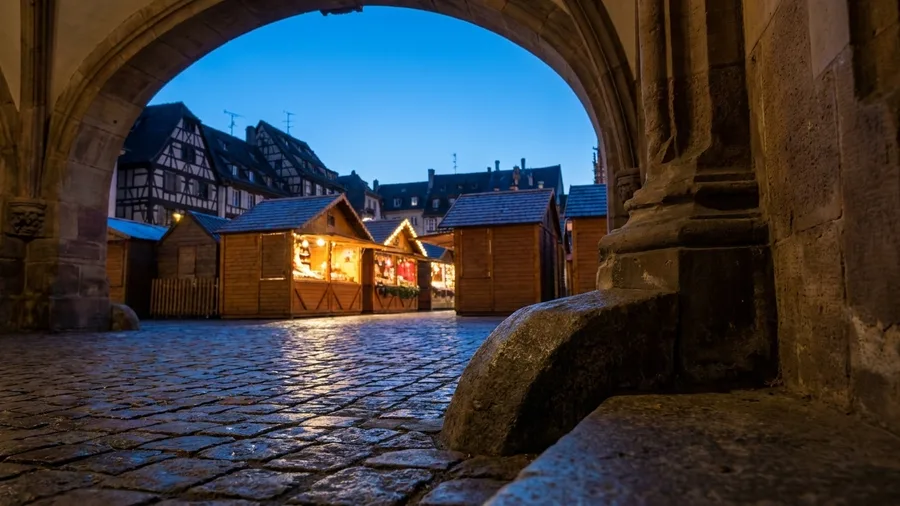
Book your hotel before you book anything else, because Strasbourg in December is not a market you wander into on a whim. The Christkindelsmärik runs from late November to December 24, and the old-town hotels inside the walkable ring sell out weeks ahead of the final stretch. Get a room in Petite France or around the cathedral, walk to Place Broglie on foot, and the whole market becomes a free-entry circuit rather than a ticketed attraction.
It is called the Christkindelsmärik, and it spreads across Place Broglie and the squares around the cathedral as roughly 300 wooden chalets, which puts it at the top of the scale for a city that is not a capital. Walk the circuit after dark when the timber fronts are lit and the smell of vin chaud carries down the lanes. Then buy: bredele, the small Alsatian Christmas biscuits, and handmade crafts from stalls run by people who make them.
The splurge here is the trip shape, not the market. Mulled wine is EUR 4-6 a mug with a EUR 3-5 deposit back when you return it, market food runs EUR 6-12, and entry is free, so a full evening costs less than dinner at home. What earns the flight is the old town itself, which you can cross on foot in twenty minutes, paired with Colmar or Baden-Baden by rail at $30-$100. Fly into Frankfurt or Paris as the anchor and let the train do the rest.
💡 Tip: Go on a weekday evening. Saturday afternoons in December pack the Broglie square shoulder to shoulder.
| Market | City | Typical dates | Entry | Signature buy | Best for |
|---|---|---|---|---|---|
| Christkindelsmärik | Strasbourg | Late Nov-Dec 24 | Free | Bredele | First-timers |
| Cathedral Christmas Market | Cologne | Late Nov-Dec 23 | Free | Reibekuchen | Scale and drama |
| Rathausplatz Christkindlmarkt | Vienna | Mid-Nov-Dec 26 | Free | Punsch | Couples and families |
| Vörösmarty Square | Budapest | Mid-Nov-Dec 31 | Free | Chimney cake | Budget travelers |
| Old Town Square | Prague | Late Nov-early Jan | Free | Czech glass | First-timers who want the square |
| Striezelmarkt | Dresden | Late Nov-Dec 24 | Free | Nutcrackers | Craft shoppers |
| Tivoli Gardens | Copenhagen | Mid-Nov-Dec 31 | ~$22 | Danish design | Design-minded families |
| Town Hall Square | Tallinn | Late Nov-early Jan | Free | Handicrafts | Winter-atmosphere seekers |
| Winter Wonders | Brussels | Late Nov-early Jan | Free | Waffles | Food-and-drink travelers |
| Advent | Zagreb | Late Nov-early Jan | Free | Štrukli | Local-culture seekers |
| Münsterplatz | Basel | Late Nov-Dec 23 | Free | Läckerli | Quiet-luxury travelers |
| East Princes Street Gardens | Edinburgh | Mid-Nov-early Jan | Free | Scottish crafts | Families and Hogmanay |
2. Cologne Cathedral Christmas Market, Germany
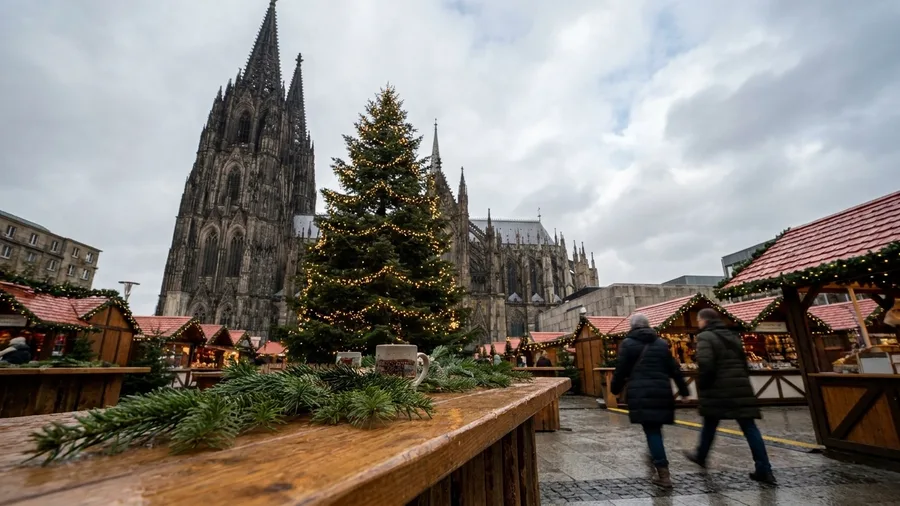
Cologne is the answer for a traveler who wants the market to feel enormous, and yes, it still earns the flight. Smaller Alsatian squares give you charm and a wooden-chalet village; Cologne gives you a cathedral spire over your head and a Christmas tree tall enough that people stand at its base and look up before they look at the stalls.
The market sits on the square directly beneath Cologne Cathedral, one of the tallest church facades in the world, and the event runs from late November to December 23. You walk out of the Hauptbahnhof and it is there in front of you, no transit connection, no ticket queue on the square itself. Entry is free, which matters because the ticket you already paid for is the flight, and the spectacle is the cathedral and the tree before you have spent a cent.
There is history in the setting worth knowing and not worth reading a plaque about. Cologne traded on this river crossing since Roman times, and that cathedral took more than 600 years to finish after work began in 1248, a fact that explains why its towers look like they were designed to be seen from a distance. The market under it is a modern arrangement, but it is staged against the old argument, which is that this is a river city built to be crossed and looked at.
The reason to eat here rather than anywhere else is Reibekuchen, the fried potato cakes served with applesauce, and glühwein to wash them down. Glühwein runs EUR 4-6, the mug deposit is EUR 3-5, and a plate of food is EUR 6-12, so you can graze the stalls for lunch and still spend less than a sit-down restaurant. This is a market you do with your hands and your feet, working around the square in a loop.
The practical pairing is the Cologne-Düsseldorf-Aachen rail line, where a leg runs $30-$100 and turns a single square into a regional route. Cologne suits travelers who want scale and cathedral drama and don't mind sharing the square with a city's worth of evening crowds. If you want a quiet chalet village, go smaller. If you want the photograph where the tree and the spire both fit in frame, this is the one.
Which Market Fits Your Trip
- 🏰 Strasbourg — Go if you want a classic first market in a walkable old town.
- ⛪ Cologne — Go if the cathedral backdrop is the point and you want easy rail links.
- 🎻 Vienna — Go if you want formal, illuminated, Christmas-card polish.
- 🪵 Dresden — Go if you are buying handmade goods, not just looking.
- 🥨 Budapest — Go for lower prices, but expect a bigger, busier square than the photos suggest.
- 📸 Prague — Go early morning if you want the square without the crowd.
3. Vienna Rathausplatz Christkindlmarkt, Austria
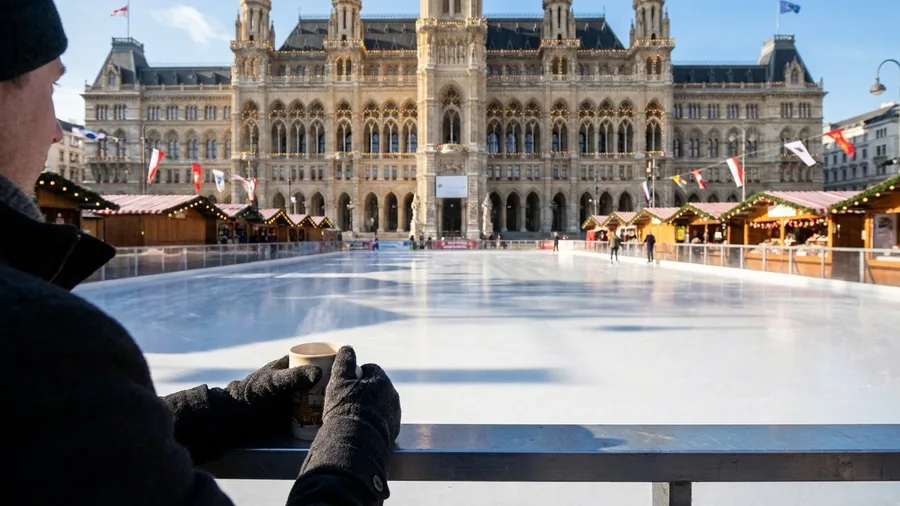
Vienna costs you the formality of a capital and repays it with the most polished square on the route. The Rathausplatz Christkindlmarkt is free to enter and runs from mid-November to December 26, and it is set in front of City Hall, where the building is lit and the plaza becomes a stage.
Where the cathedral-and-tree drama of a river city is about height, Vienna is about the ice rink and the choir stages on the square. Come for the punsch rather than the glühwein, buy Austrian crafts, and stand on the far side of the rink at dusk when the City Hall windows come on and the skaters move across the front of the frame. Pair it with Schönbrunn Palace and the coffeehouses, then take the Vienna-Budapest rail at $30-$100 if you want a second city. Couples and families get the theatre here; anyone hunting a rough edge will miss it.
Vienna Christmas Market — At a Glance
📅 Dates
Mid-Nov-Dec 26
🎟️ Entry
Free
⛸️ Signature activity
City Hall ice rink
🥤 Drink to order
Punsch (€4-6)
🚆 Rail pairing
Vienna-Budapest ($30-$100)
👨👩👧 Best for
Couples and families
4. Budapest Vörösmarty Square, Hungary
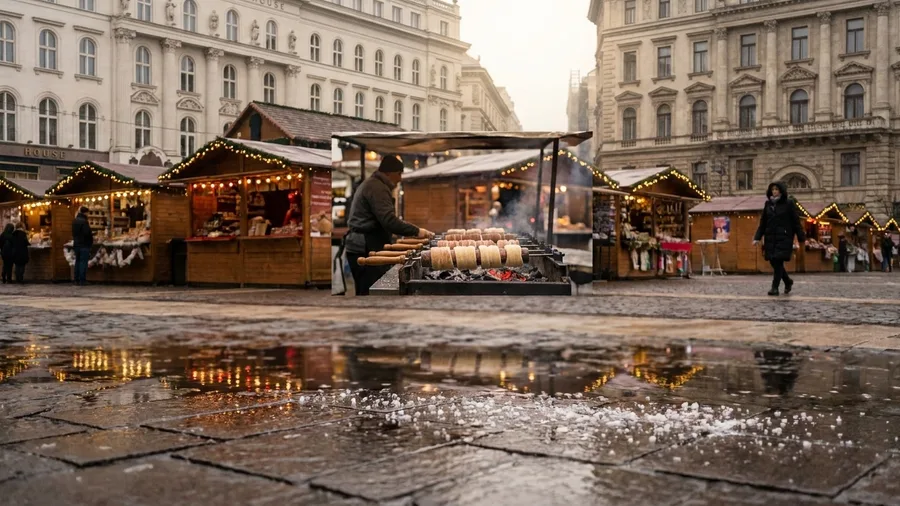
Entry costs nothing, and the food and drink inside run €4-6 for a mulled wine and €6-12 for a plate. That is the arithmetic that makes Vörösmarty Square the answer when Vienna's polish starts to feel like a Western European bill.
It is a large central market that fills the square from mid-November through December 31, free to walk into. You spend your money on chimney cake turned over the coals, a bowl of goulash, folk crafts from the stalls along the edges, not on a ticket. The same €4-6 mulled wine and €6-12 food you would pay anywhere anchors the day's spend.
Then pair it: thermal baths in the afternoon, ruin bars after dark, and you have a full city break rather than an hour in a square. Rail from Vienna runs $30-$100, so fly into Vienna and take the train down, or reverse it. Old-world square drama at a lower on-ground cost, and it suits budget travelers who still want a big central market instead of a small one.
💡 Tip: The chimney cake is best hot off the spit; buy it from the stall that is actually rolling and baking, not the one with a stack of pre-made ones.
5. Prague Old Town Square, Czechia
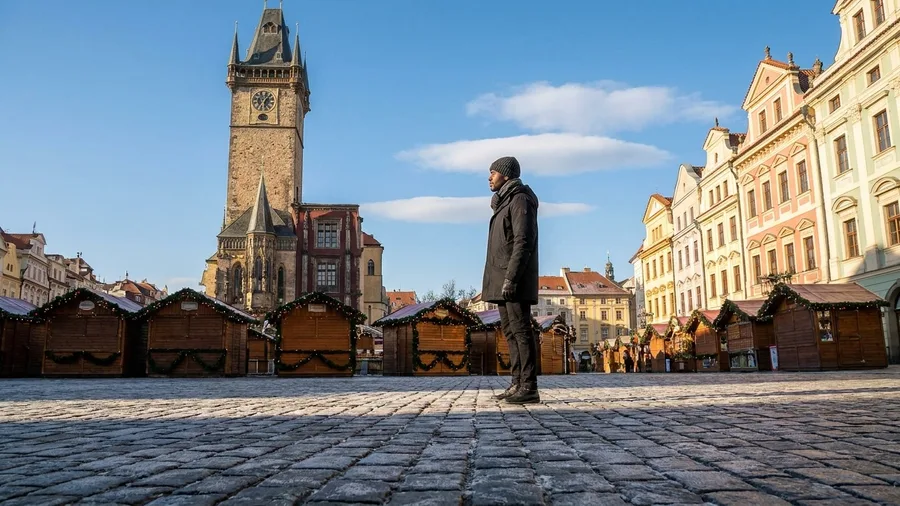
The astronomical clock clicks over on the hour, the crowd tilts its phones up, and the smell of trdelník dough on hot rollers cuts through the cold. This is the postcard square, the most crowded of them, free to enter from late November into early January.
Buy the trdelník, buy Czech glass, and accept that you are sharing the cobbles with a lot of people. Come at early morning before the crush, or pair it with the quieter Lesser Town market nearby. Mulled wine runs €4-6, food €6-12. The setting is the reason to accept the crowds, and for a first-timer it is worth it once.
⚠️ COMMON MISTAKE
Skip the five-city bus tour
A coach that hits five markets in five days spends more hours on the motorway than in the squares. Book one or two cities and a single rail leg instead; the $30-$100 train between paired cities buys you an afternoon you would otherwise spend in a bus seat.
6. Dresden Striezelmarkt, Germany's Craft Capital
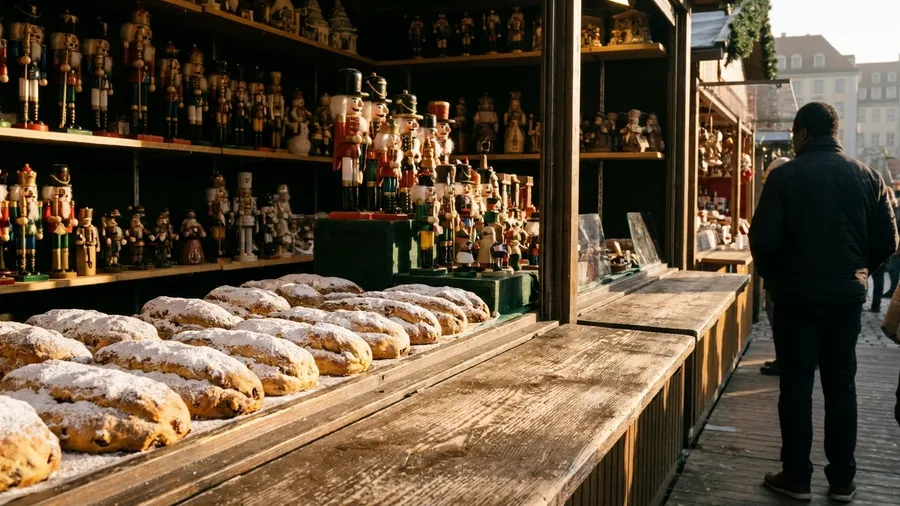
The Striezelmarkt is Dresden's Old Town craft market, free to enter, running from late November to December 24. It is where you go to actually buy handmade Christmas goods rather than photograph a square.
More than 200 stalls, and the reputation is built on the buying. Stollen, nutcrackers, wooden toys turned and painted by hand; this is a place to spend, not a spectacle to walk through and leave. That is the honest reason Dresden earns the flight when the setting alone has stopped being enough.
Allow a morning. The food and drink are the standard €6-12 a plate and €4-6 a mulled wine, with a €3-5 deposit on the mug you hand back. The buying is the point here, and a serious craft shopper can lose an hour at a single stall.
It is also the easy add-on to a postcard square that has more souvenir than substance. Rail from Prague to Dresden runs $30-$100, so a route that flies into Prague and takes the train north puts a crowded, trdelník-led square and a craft-first market on the same ticket.
Book the hotel near the Old Town and walk. This is a craft shopper's market, and it suits travelers who want to bring home something handmade, so plan to spend money on the goods and not on admission.
💡 Tip: Buy the stollen at the end of the day, not the start; it is heavy and you have more walking to do.
7. Copenhagen Tivoli Gardens, Denmark
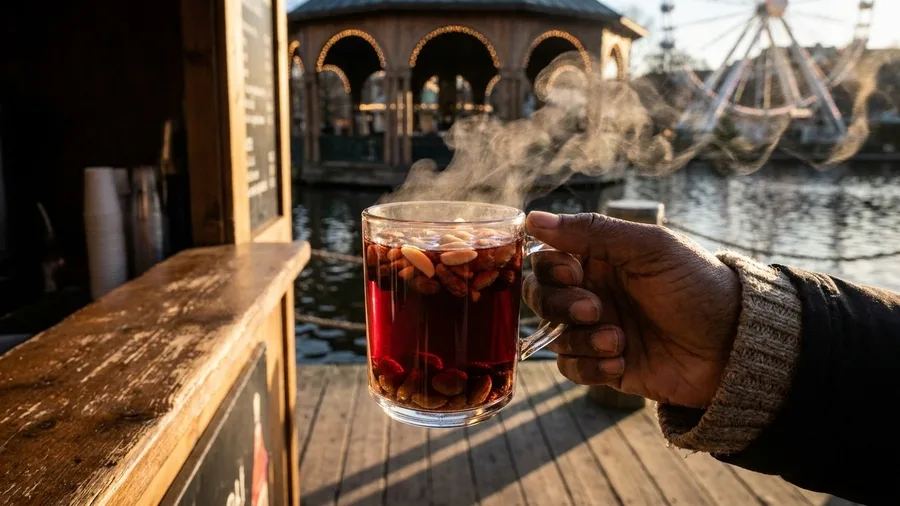
Tivoli Gardens charges roughly $22 for adults to walk in, and the ticket buys you a whole designed winter evening in the middle of Copenhagen, not a row of stalls.
The gates run mid-November through December 31, and the lights cover the lake, the Chinese pagoda and the wooden rides. You buy gløgg at the stalls, browse Danish design ceramics and knitwear rather than imported ornaments, and can ride the vintage roller coaster in the dark if the cold gets through your coat. Food sits in the usual €6-12 band, and the sit-down restaurants inside take bookings, so reserve if you want a warm meal at a table instead of standing.
Weigh that $22 against a $650-$1,100 flight and $150-$320 a night for a central room, and it becomes the least of the trip cost. If you are counting every dollar, free-entry markets in other cities give you the same glühwein for nothing at the gate. For design-minded families and couples, the ticket is worth it once.
🎄 Build Your Christmas Market Trip in 5 Steps
Pick your dates
Target the final week before Christmas for the fullest schedules, and book flights by September.
Choose one or two cities
Use the table above to match a market to your budget and travel style.
Book the flight and hotel
Fly into Frankfurt, Munich, Vienna or Paris, and stay central at $150-$320 a night.
Add the rail leg
Pair your city with a second market on a $30-$100 train ride.
Plan the evenings
Check current market hours and book any ticketed attraction, like Tivoli, in advance.
8. Tallinn Town Hall Square, Estonia
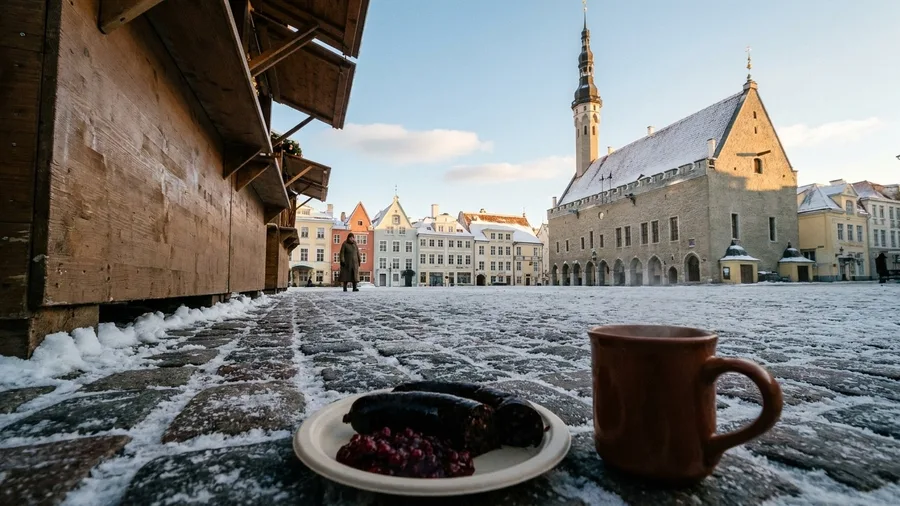
The cold hits your face before the square comes into view, and then you are standing on cobbles under timbered gables with snow in the gutters and the town hall clock overhead. Tallinn's market runs late November to early January with no admission charge, which puts it below the ticketed attractions of the north while giving you the medieval set piece in full.
Black pudding, Estonian handicrafts and a sauna visit fill the hours, and the mulled wine runs €4-6 with food at €6-12. The ferry to Helsinki takes you into a second country inside the same trip.
The Tourist Way vs the Better Way
9. Brussels Winter Wonders, Belgium
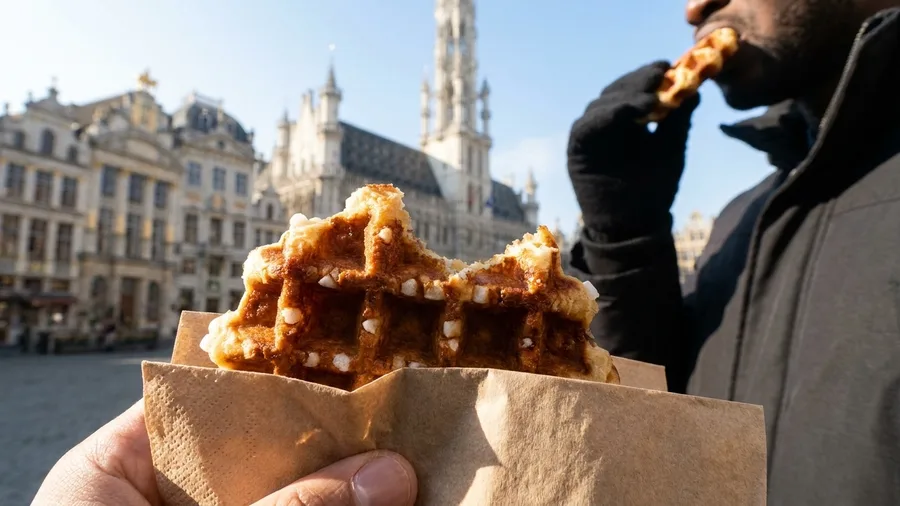
A market can be one square you queue through, or a route you wander for hours; Brussels is the second kind. Winter Wonders spreads from the Grand-Place outward through the lower city, so the effort is walking it end to end rather than standing in one crowd, and entry costs nothing from late November to early January.
The Grand-Place light show runs on the facade of the guild houses in a loop, and you eat your way along: a waffle, a cone of fries, a Belgian beer or a mulled wine at €4-6, market food €6-12. Come hungry and come after dark, when the lights are doing their work. It is a food-and-drink city break more than a single stop, and that is the reason it earns the airfare.
Add Bruges or Ghent on the train for $30-$100 and you have two Belgian cities in one loop. You are here for what goes in your mouth and what lights up the square, in that order, and Brussels delivers both across a whole evening.
10. Zagreb Advent, Croatia
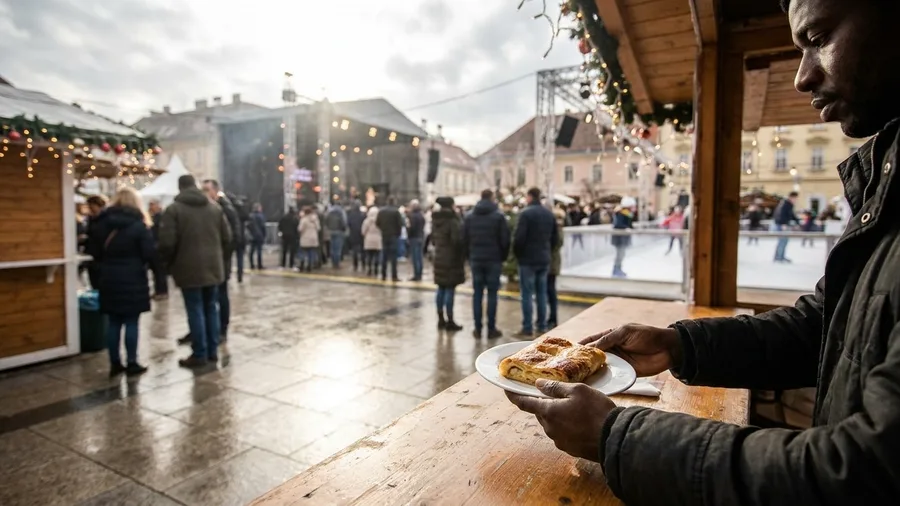
Go to Zagreb if you want a Christmas market that belongs to the people who live there, and accept that it comes in pieces rather than in one grand square. The Advent runs from late November into early January, entry is free, and the whole center becomes the venue: stages on squares, a ribbon of lights down the streets, an ice rink, choirs on most nights.
Budget it the same as anywhere on this list, mulled wine at €4-6 and food at €6-12, and eat the štrukli, a baked cheese pastry that costs less than a museum ticket. The catch is exactly what makes it feel local. There is no single backdrop to photograph, so if you came for one square framed by a cathedral, this is not the city to book. Pair it with Ljubljana by rail at $30-$100 and you get two cities for the price of one hotel week, which is why budget travelers and local-culture seekers pick it over the bigger names.
11. Basel Münsterplatz, Switzerland
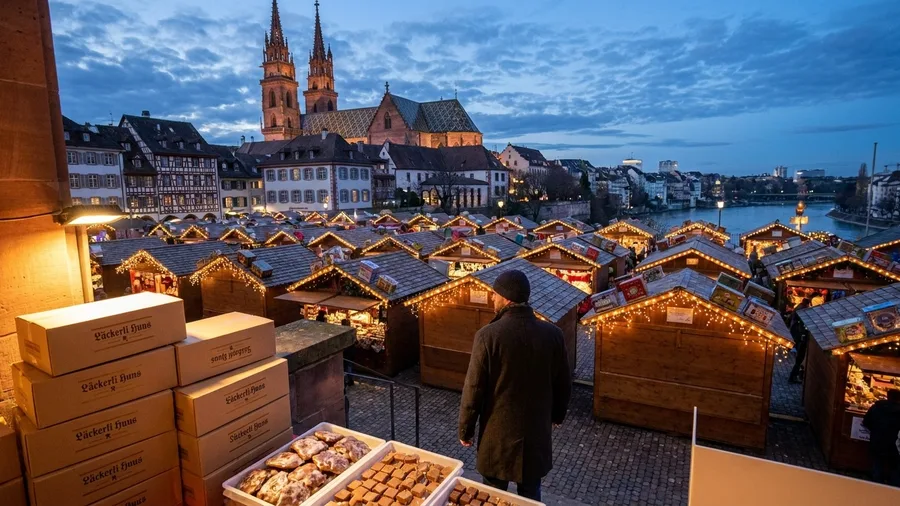
The smell at Münsterplatz is woodsmoke and hot sugar, and the light comes off the Rhine at dusk, low and flat, as the stalls switch on against the dark. It is a small square, maybe two dozen wooden huts, polished rather than sprawling. You can walk it end to end in fifteen minutes and then stand there for an hour, which is exactly what it is for.
Basel trades scale for precision. The market sits beside the red sandstone minster and the timbered lanes below it, entry is free, and the stalls lean toward Läckerli, the spiced biscuit the city has made for centuries, along with Swiss crafts that cost real money. Expect the usual €4-6 for mulled wine and €6-12 for food, but the goods are priced like the country they are in.
This is the mid-December stop, open late November through December 23, so it lands early in your window rather than on the final week. That matters if you have been holding out for the last days before Christmas. Basel closes the week you were planning to arrive.
The reason to cross an ocean for it is the border. Basel sits where Switzerland, France and Germany meet, and a train to Colmar or Freiburg runs $30-$100, so one hotel week gives you three countries and three different market traditions, Alsatian on one side of the border and German on the other.
Book it if you want quiet, small, expensive and precise, with a hotel at $150-$320 a night and no crowds to manage. Skip it if your idea of a Christmas market is a huge square full of noise and cheap gifts. It is not that, and it is not trying to be.
Basel vs Copenhagen: Which Splurge?
Basel
- Free entry
- Three-country rail pairing
- Quieter, polished square
- Highest hotel costs on this list
Copenhagen
- ~$22 admission
- Design-led stalls and rides
- Full evening attraction
- Two-country add-on via Malmö
12. Edinburgh East Princes Street Gardens, Scotland
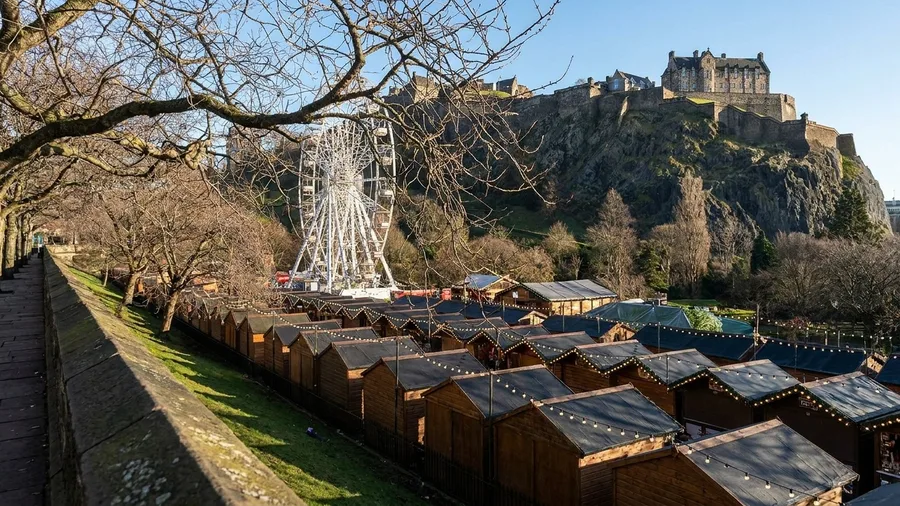
It is a Christmas market set in a sunken garden under Edinburgh Castle, and it is the one on this list that works best if there are children in the group. The gardens on Princes Street open from mid-November into early January, entry is free, and the Ferris wheel lifts you up until the castle is level with your eyes and the whole lit city is below you.
The stalls run to Scottish crafts, wool, whisky and mulled wine at €4-6, with food at €6-12, and the setting does half the work: you are in a garden, at night, in winter, with a floodlit fortress overhead. Pair it with Glasgow by rail at $30-$100 or push further into the Highlands, and the trip becomes scenery as well as stalls.
The catch is the crowds and the time of year. Princes Street fills in the evening, and Hogmanay is a separate ticket and a separate crush for New Year. It suits families and travelers who want a Christmas market as one strand of a longer UK trip, and it does not suit anyone who wants a long, dark, snowy continental square. If the lights themselves are the draw, a domestic city break may deliver the spectacle without the airfare, as with these US cities with standout Christmas lights. Scotland in December is cold, wet and bright with lights, which is a different thing.
💡 Tip: Ride the Ferris wheel at dusk, not in daylight; the castle lights come on while you are at the top.
Frequently Asked Questions
Is it worth flying to Europe just for a Christmas market?
Yes, if you pick one or two markets and build the trip around them rather than trying to see five. The flight is $650-$1,100 round trip; the setting, the dates and the rail pairing are what you are paying for. A closer market cannot replace a 300-chalet Alsatian old town or a cathedral square in Cologne.
When is the best time to go?
The final week before Christmas has the fullest schedules and the best atmosphere, but also the highest hotel prices. Book flights by September and expect $150-$320 a night for a central three- or four-star room.
How much spending money do I need per day?
Budget €30-50 a day for market food and drink: mulled wine is €4-6, food is €6-12, and mug deposits are €3-5 (refundable). Add museum entries, rail legs at $30-$100, and any ticketed attraction like Tivoli at about $22.
Do I need to book market tickets in advance?
Most markets are free and require no ticket. The exceptions are ticketed venues like Copenhagen's Tivoli Gardens, where you should buy admission online before you travel. Check current hours for the specific market before you book anything nonrefundable.
Can I combine two markets in one trip?
Yes, and you should. The rail pairings in this list are designed for it: Strasbourg-Colmar, Cologne-Düsseldorf-Aachen, Vienna-Budapest, Prague-Dresden, Copenhagen-Malmö, Tallinn-Helsinki, Brussels-Bruges, Zagreb-Ljubljana, Basel-Colmar-Freiburg, and Edinburgh-Glasgow. Expect $30-$100 each way.
Lock the Last Week, Then Build the Rail Route
Choose by who is going. First-timers and romantics: Strasbourg or Vienna. Families: Tivoli or Edinburgh. Budget travelers: Budapest, Zagreb or Tallinn. Craft buyers: Dresden. Food and drink: Brussels. Quiet luxury: Basel.
Then book in the right order. Lock the final week before Christmas first, because flights and hotels are the volatile cost: $650-$1,100 round trip from the East Coast, $150-$320 a night central. If that fare is the sticking point, consider American towns that feel like Europe and keep the Old World setting without the crossing. Build the $30-$100 rail leg around whichever city you chose, not the other way around.
That is how $650-$1,100 earns its keep: one anchor market, one rail add-on, entry mostly free, mulled wine at €4-6, food at €6-12 and Tivoli about $22. The market is the cheap part. The right week is the purchase.
Pick Your Market, Then Book the Train
Use the table above to match a market to your budget and travel style. Then check current dates and hours for your pick before you book the flight.