The mistake almost every first-timer makes is picking the cave tour with the best photos instead of reading the stair count, and that is how you end up 400 steps into a climb you did not sign up for. A spectacular cave does not require crawling, climbing gear or keeping up with a guide's pace. Every tour below runs 60 to 90 minutes over a quarter mile to 1.25 miles of pavement, costs $12 to $32 for adults and $7 to $16 for kids, and sits in air that holds 54 to 59 degrees, so bring a jacket and closed-toe shoes. Your real choice comes down to four numbers, not your resume: steps, distance, ticket and whether there is an elevator, a boat or a flat path.
The tours here are grouped by which beginner barrier each one clears, so match the cave to your knees, your wallet and whoever is in the back seat, then reserve a timed slot online before summer walk-up tickets vanish.
A first cave tour is not a test of experience. It is a match of stairs, distance, price and one access feature to the legs and the budget you are actually traveling with.
Quick Tips Before You Start
Bring a Real Layer
Cave air sits at 54–59°F year-round, so pack a fleece or hoodie even in July.
Closed-Toe or Nothing
Paved floors are damp and slick; sandals and flip-flops are a bad trade for a stone staircase.
Book the Timed Slot
Summer walk-up tickets vanish by mid-morning at the popular caves; reserve online a week ahead.
Skip the Lotion Line
Some caves restrict oils and sunscreen on skin before the tour; ask when you book.
Carry a Small Flashlight
Phone lights work, but a pocket torch helps on self-guided routes and in the parking lot after.
Leave the Backpack in the Car
Most guided tours bar large bags for ceiling clearance; a slim hip pack is fine.
1. Carlsbad Caverns' Big Room, New Mexico
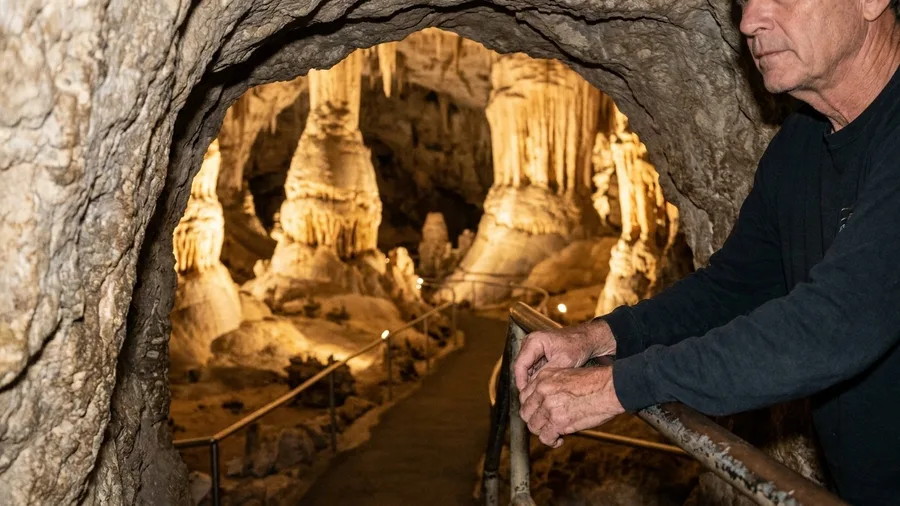
Carlsbad Caverns' Big Room is a cave that runs a light load on your patience and your legs at once: a 1.25-mile paved loop, self-guided, $15 an adult.
The elevator drops you to the floor of the Big Room and returns you to the surface, so the steep natural entrance is optional. You can walk that entrance down instead if you want the sweat, but nobody has to. The whole draw here is the missing guide: no group to keep up with, no clock but your own, which is why first-timers and families with small legs set the speed. Allow two hours if you stop to gawk at the ceiling, less if you power through.
💡 Tip: The natural entrance walk is 1.25 miles of steep switchbacks. Take the elevator down and walk the loop flat.
| Cave | State | Tour length | Walk | Adult ticket | Access |
|---|---|---|---|---|---|
| Carlsbad Caverns | NM | Self-guided | 1.25 mi paved | $15 | Elevator |
| Luray Caverns | VA | 1.25 hr | 1.25 mi paved | $32 | Handrails throughout |
| Mammoth, Frozen Niagara | KY | 1.25 hr | 0.25 mi | $20 | 60 stairs, handrails |
| Howe Caverns | NY | 90 min | Paved | $29 | Elevator + boat |
| Jewel Cave | SD | 1.25 hr | 0.25 mi | $16 | 723 stairs, wide treads |
| Wind Cave | SD | 1 hr | 0.5 mi | $14 | 300 stairs, same route |
| Lehman Caves | NV | 60 min | 0.5 mi paved | $12 | Handrails, no stairs |
| Blanchard Springs | AR | 1 hr | Paved | $15 | Elevator |
| Meramec Caverns | MO | 1.25 hr | Level | $26 | No stairs |
| The Lost Sea | TN | 1.25 hr | Paved | $24 | Boat ride |
| Cathedral Caverns | AL | 1.25 hr | 1 mi paved | $20 | No stairs, wide rooms |
| Ohio Caverns | OH | 1 hr | 0.5 mi | $20 | Handrails, some stairs |
2. Luray Caverns' Paved Cathedral, Virginia
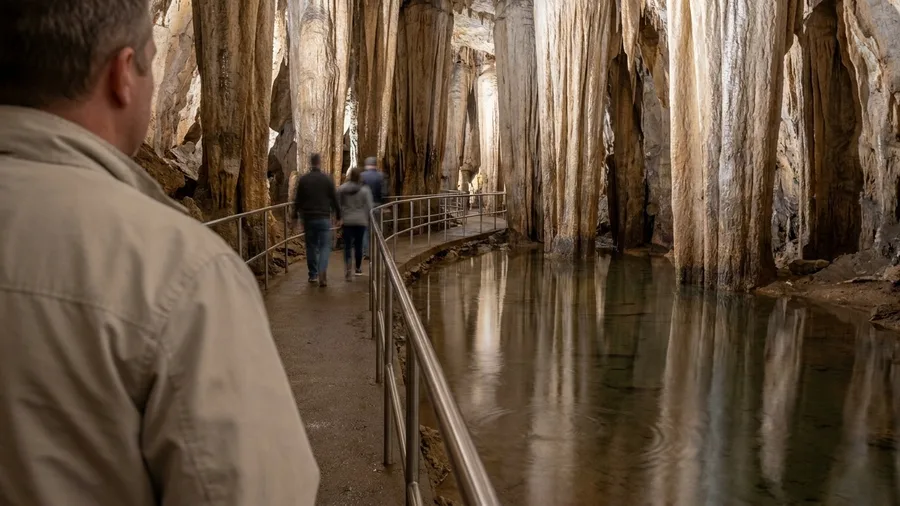
Go to Luray if you want the biggest show on the easiest footing, but know the tab: $32 an adult, the highest ticket you'll pay for any cave here.
What that buys is scale. Towering columns rise straight out of a paved, handrailed 1.25-mile path, so the route stays a walk and never turns into a workout, even when the room opens overhead like a cathedral nave. The guided loop runs about 1.25 hours. The rock holds 54 degrees year-round, so a light jacket is the one layer you will actually use down there.
Plenty of travelers weigh the price against a cave a few states west and pick the cheaper one. Locals and repeat visitors tend to say the columns earn it, that the Virginia cave keeps its cathedral feel while the path under your feet stays flat and railed. If drama without a stair count matters more than the $32, this is the beginner test to take.
💡 Tip: Luray sits 90 minutes west of Washington, D.C. Pair it with a Skyline Drive morning and do the cave in the afternoon heat.
3. Mammoth Cave's Frozen Niagara, Kentucky
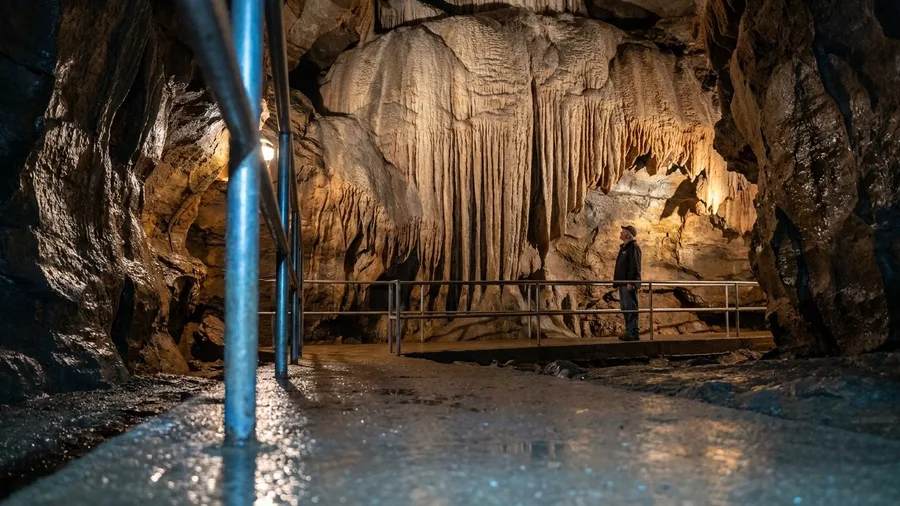
Sixty stairs. A quarter mile. One hour and fifteen minutes. And twenty dollars an adult.
Frozen Niagara is the short version of Mammoth Cave, the one for a road trip that has already spent its hours elsewhere. You walk a concrete path with handrails the whole way and climb 60 stairs, total, to stand under the flowstone that gives the tour its name.
The name is the whole point. Frozen Niagara looks like water caught mid-fall, a curtain of stone hung from a ledge, and it fills the view in a way the long, dry corridors of the upper cave simply do not. It is the single most photographed formation in the system, which tells you the cave's own guides know what the payoff is.
Now the honest part. This is the most famous cave in the country, and its most famous tour is not this one. The crowds queue for the long underground hikes; Frozen Niagara trades the epic for the short. On a busy summer day the tour sells out and the walk-up line is a gamble, so reserve the timed slot online before you drive out.
What you are really buying here is the cave's greatest hit without the mileage. If your schedule holds a morning and you want a wonder that fits inside it, the 60 stairs and the quarter mile are the answer. If you came to lose a half day underground, book a longer route and let this one go.
4. Howe Caverns' Boat Ride, New York
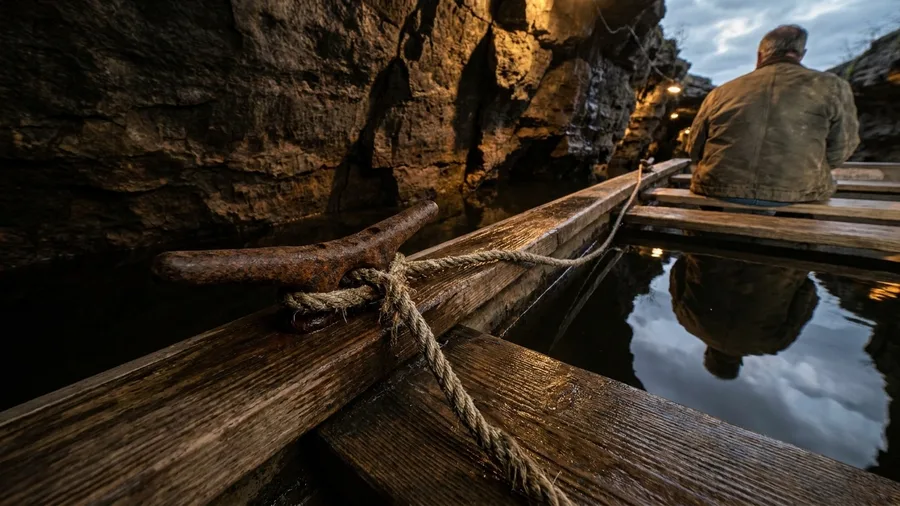
Add up the effort here and it barely moves past a short road-trip cave stop: Howe charges $29 adult for a 90-minute guided tour, walks you on paved walkways, and runs an elevator down so the main route asks for no stairs at all. That is one number away from the cheapest tours on this list, and it buys the one thing most cave tours cannot: a boat.
The boat ride is short and it is the memory. You board inside the cave, the engine note goes flat against the rock, and the passage walls slide by close enough to trail a hand. Kids who have been bored for an hour straighten up for it. Grandparents take the elevator down, the flat path, and the seat. The one reservation: this is a produced show of a cave, busy and lit for effect, and travelers hunting raw passages will find it more theater than wilderness.
💡 Tip: The boat seats fill from the front. Sit near the middle to hear the guide over the water.
Stairs vs. Access: Two Ways to Solve a Cave
What 723 steps means when the treads are wide
Figures reflect the Scenic Tour route as described by the park.
5. Jewel Cave's Scenic Tour, South Dakota
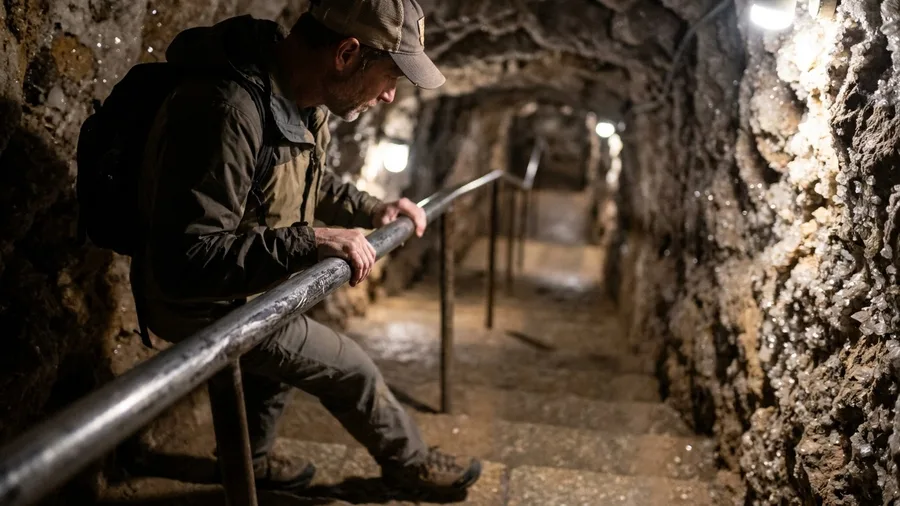
It depends less on the count than on the treads. The Scenic Tour at Jewel Cave runs 1.25 hours, costs $16 adult, and asks you to climb those stairs on wide steps with handrails on both sides. Nothing crawls, nothing squeezes.
Which hour matters more than most people expect. The tour leaves in groups, and the earlier slots tend to move with smaller crowds and less waiting at the stairwells where the line bunches. Book the first tour of the morning and you climb at your own unhurried pace instead of shuffling behind a full group. Walk-up spots in summer are the ones that go first.
Do the arithmetic on your legs before you book: 723 stairs over 75 minutes is roughly one step every six seconds, up and down, with pauses to look. If that sounds like a workout, it is one, and a good one. Active beginners who do not mind steps get the most cave per dollar on this list.
⚠️ COMMON MISTAKE
Do Not Judge a Cave by Stair Count Alone
A 300-stair tour with tight passages will rattle a nervous first-timer more than a 723-stair tour with wide treads and handrails. Read the access feature, not just the number.
6. Wind Cave's Natural Entrance, South Dakota
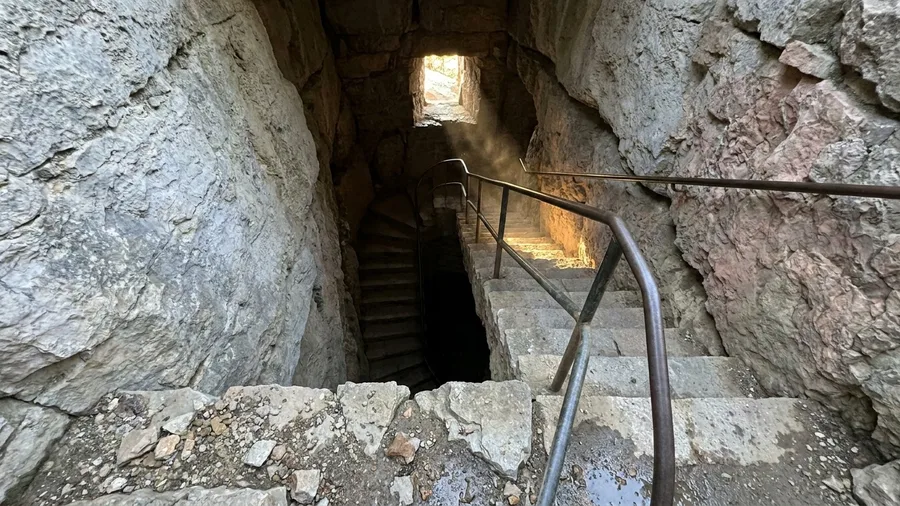
The air goes cool and still the moment the gate opens, and there is a faint mineral smell that stays with you for the hour. Wind Cave's Natural Entrance tour is the descent itself: 300 stairs down a half-mile route over 60 minutes, $14 adult, the same stairs back out.
Stand at the bottom landing and look back up the stairwell before you turn around, because that is the frame the trip is remembered by, the light from the entrance shrinking to a coin above you. Plan for the tour that leaves in the morning if you can; the climb out is cooler and the cave is quieter. Nothing crawls here, and the known route takes the navigation worry off the table.
Lehman Caves at a Glance
💵 Adult ticket
$12
⏱️ Tour length
60 minutes
🚶 Walk
0.5 mi paved
🦯 Handrails
Full route
📍 Nearest hub
Great Basin NP
Why it wins on price
The cheapest guided tour here still delivers shield formations and a fully handrailed path.
7. Lehman Caves' Half-Mile, Nevada
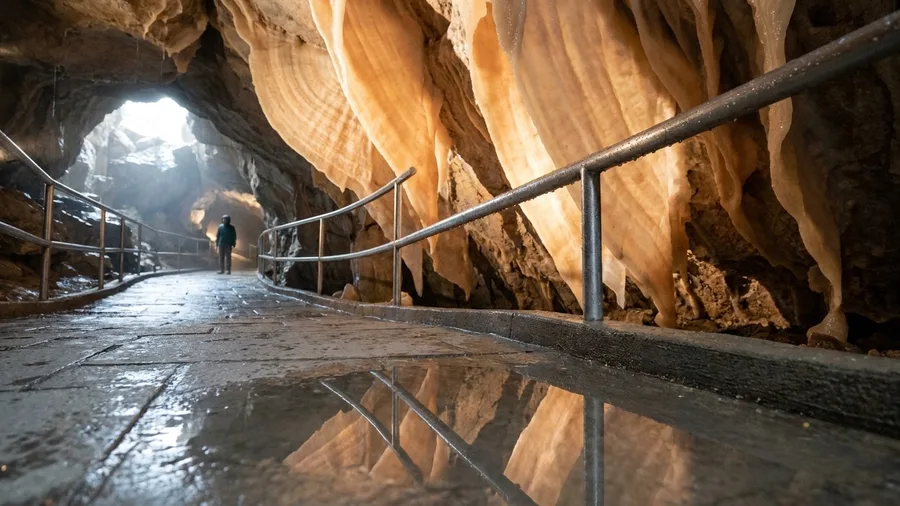
The air hits you at the door: 50 degrees, still, and slightly damp, the kind of cold that seeps through a t-shirt in the first ten seconds. A guided tour of Lehman Caves runs 60 minutes for $12 an adult, the cheapest entry on this list, and it keeps you on a half-mile paved path with handrails and no stairs on the main route.
Here is the catch, and it is worth knowing before you drive out. Lehman sits inside Great Basin National Park, which is a long way from almost anywhere – the nearest real town is a small strip of motels and gas pumps, and the park itself is dark, high and quiet at the end of a two-lane road. You are not passing through. You are going there on purpose.
The reward for the detour is shield formations – thin, curving plates of calcite that fan from the ceiling and walls in a way the bigger commercial caves rarely show – and a tour that asks a half-mile walk of your legs, nothing more. For a low-cost flat route near Great Basin, with handrails the whole way, it is the low bar to clear.
💡 PRO TIP
The Booking Window Nobody Uses
Most cave tours release slots 30 days out. Set a phone reminder for that morning and you will get the early entry time, which is the emptiest tour of the day.
8. Blanchard Springs' Dripstone Tour, Arkansas
Book the Dripstone Tour ahead if you have a stroller, a walker, or a grandparent in the group – the elevator is the whole reason this one works for you, and the tour slots are not unlimited.
At Blanchard Springs, $15 an adult buys an hour underground with an elevator entrance and a paved path, no stairs on the Dripstone route. That combination is rarer than it sounds. Plenty of caves offer oneor the other; few hand you both, which is what makes this the pick for families with young children or travelers whose knees have opinions.
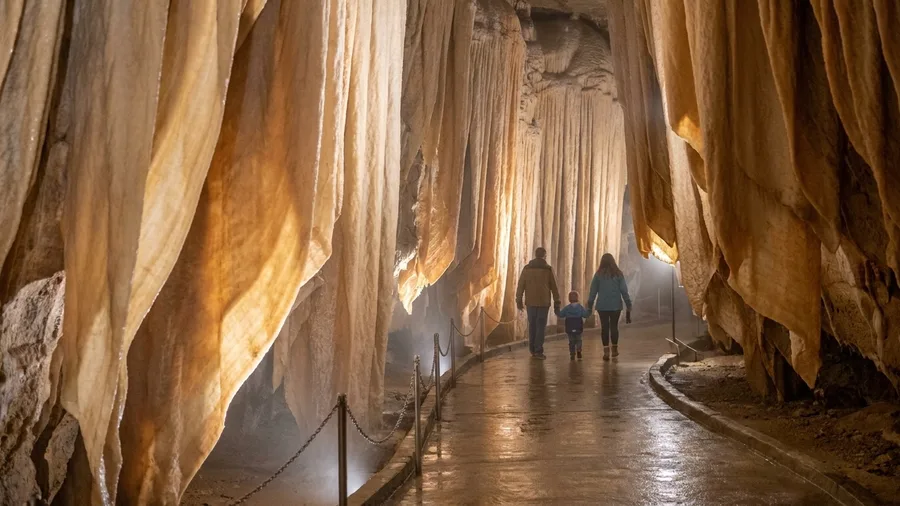
What you do for that hour is walk a loop under flowing draperies – sheets of stone that hang in folds and catch the light as you pass beneath them – with the guide stopping the group to point out formations and kill the lamps for a minute of total dark.
The elevator drops you straight from the visitor center into the cave, so the entrance climb that would otherwise be the hard part simply does not happen. Kids who would have burned out on a staircase are still upright and curious at the end, and the adults who came for the formations get to actually look at them.
One practical note: the cave holds steady in the mid-50s, so bring the jacket even in July, and closed-toe shoes for the wet patches on the pavement. The rest is easy.
💡 Tip: Pair the cave with the Blanchard Springs swimming hole in the same afternoon. Cave first, creek second, because the water is cold.
9. Meramec Caverns' Level Walk, Missouri
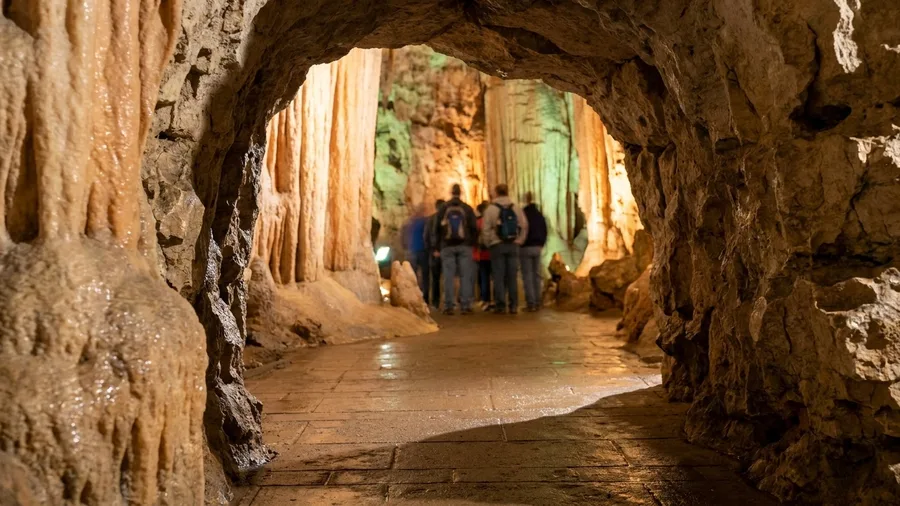
The lights come up on a wall of stone and the speakers start, and for the next minute the cave is a theater – a low hum of sound, colored lamps washing the formations, and the whole group standing still to watch. Meramec runs a light-and-sound show as part of its 1.25-hour guided tour, $26 an adult, and the floors are level paved walkways with no stairs on the main route.
That is what you are paying for here: spectacle on flat ground, with a story told through lamps and a soundtrack rather than a long walk. For a roadside stop off I-44, where the cave sits close enough to the interstate to fit between lunch and dinner, it is the flat, flashy option. Drivers who like their scenery from the seat can plan the rest of the trip around under-the-radar scenic byways.
The catch is that it is more show than cave. If you want to stand in a big quiet room and look, this is not that; if you want the kids wide-eyed for an hour with nobody climbing anything, it delivers. The concession stand outside sells fudge and cold drinks, which tells you most of what to expect.
🕳️ Your First Cave Tour, Start to Finish
Book the timed slot
Reserve online 2 to 4 weeks out; summer walk-up tickets disappear fast.
Layer up
Pack a fleece or hoodie for 54–59°F cave air, even in July.
Arrive 30 minutes early
Parking and the walk to the entrance take longer than the map suggests.
Take the elevator if offered
Skipping the natural entrance climb saves your legs for the loop.
Walk at your own pace
On self-guided routes, stop whenever you want. Nobody is behind you with a clock.
10. The Lost Sea's Underground Boat, Tennessee
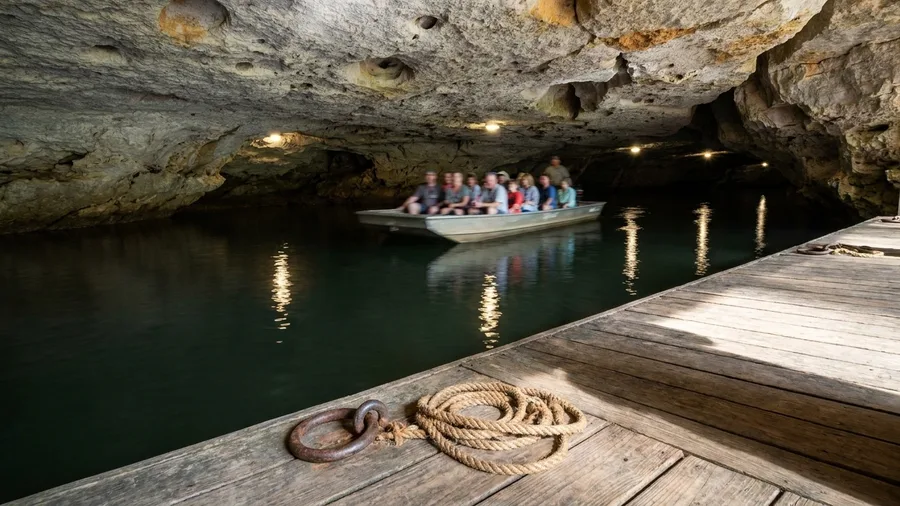
Twenty-four dollars buys you an hour and fifteen minutes underground, and the last stretch of it happens on water. The Lost Sea runs a paved walk through the caverns and then loads you into a flat-bottomed boat on a lake that sits entirely beneath the Tennessee hillside, no crawling involved, with only gentle slopes between you and the dock. Cave air holds at 54 to 59 degrees down there, so the jacket you brought earns its place on the water.
The lake is the reason to come, and the story attached to it is the reason to listen on the walk down: a thirteen-year-old boy named Ben Sands found the water in 1935 by squeezing through a passage with a ball of mud, and the room he crawled into was later mapped as the largest underground lake in the United States. Your route is far easier than his. The boat glides out over water so still it doubles the ceiling lights, trout drift past under the hull, and the guide cuts the motor so the dark and the quiet land at the same time. Photographs rarely hold what that moment feels like, but everyone tries. Slopes are the only grade, and the boat is the access feature that keeps a first-timer dry and upright.
Worth It vs. Skip It for a First-Timer
Book it
- Carlsbad's Big Room if you want self-guided freedom and an elevator
- Blanchard Springs if knees or young kids are a concern
- Lehman Caves if the budget is $15 or less per adult
- Cathedral Caverns if tight spaces are the fear
Skip it this trip
- Jewel Cave if 700-plus stairs sounds like a punishment, not a challenge
- Luray if you will not book ahead and hate crowds
- Wind Cave if you want big, wide, dramatic chambers
- Any tour you book the morning of, in July
11. Cathedral Caverns' Wide Walkways, Alabama
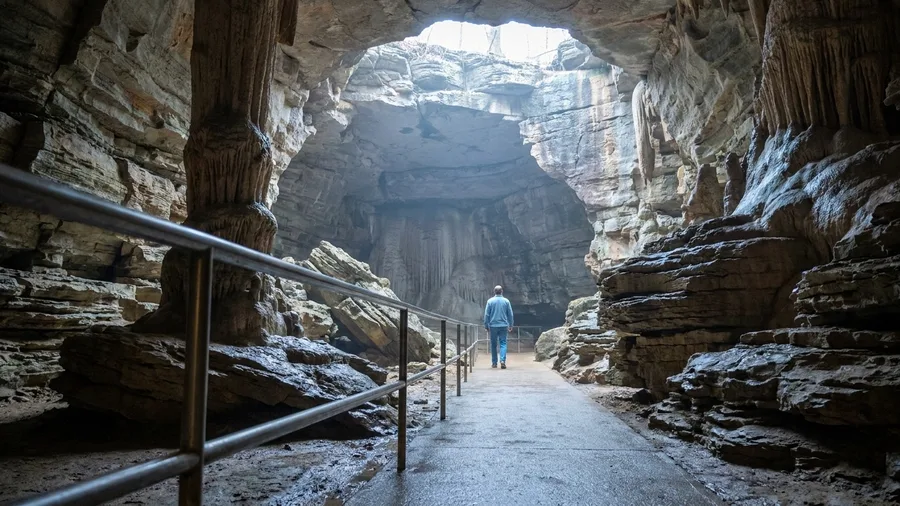
For effort per dollar, Alabama beats the boat ride: twenty dollars, a mile of pavement, and not a single stair on the main route. If small spaces are what has kept you above ground, Cathedral Caverns is the answer, because the rooms are so wide that the tight-space worry never gets a foothold. The guided tour runs about an hour and fifteen minutes, and the walk is a full mile, longer than most here, so budget your legs accordingly.
The scale does the work. A stalagmite called Goliath stands 45 feet tall at the entrance, and further in, a frozen waterfall of stone spreads 32 feet across a wall. The passage called the Big Room gives you elbow room in every direction, and the sheer width is the access feature: no ducking, no squeezing, no shuffling behind the person ahead.
As for wildlife, be honest with yourself. This is not a cave where you should expect bats in flight or blind fish in a pool; the draw is rock, not animals. The living things you will actually see are the ones walking the path beside you, and in summer that means a crowd. Arrive early, and the mile feels like a walk in a very large, very cool stone hall rather than a queue.
💡 Tip: The route is a full mile. Bring water for the walk back to the car, especially in an Alabama summer.
12. Ohio Caverns' Hour-Long Loop, Ohio
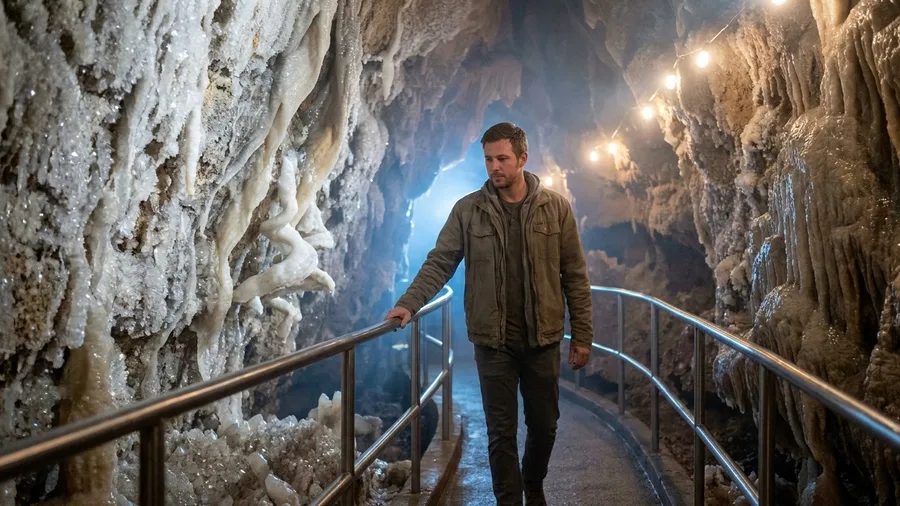
One thing to settle before you drive out: some stairs stand between you and the formations at Ohio Caverns, so this is not the stairless mile you just read about. Handrails run the entire way, which turns each flight into a handhold rather than a scramble, and the paved loop is only half a mile. At twenty dollars for an hour, it is the cheapest way to break up a longer drive.
The cave sits between Columbus and Dayton, close enough to Columbus that it works as a morning stop or a rainy afternoon. Inside, the draw is crystal, and the formations here are unusually pale and clean, with helictites that twist sideways against gravity and flowstone that looks wet even when it is bone dry. A guide leads the hour at a steady, unhurried pace, which suits anyone who wants the cave explained rather than simply walked through.
Treat it as the sit-down stop of the trip. An hour is short enough that nobody gets tired, the temperature holds near 54 degrees, and the loop returns you to where you started. Families with young kids do this one comfortably, though the stairs mean strollers stay in the car.
Frequently Asked Questions
Do I need any cave experience for these tours?
None. Every tour here is ranger- or guide-led or self-guided on paved ground, with handrails, and none requires crawling or headlamps. Read the stair count and distance before booking, then pick the one that matches your legs.
What should I wear inside a cave?
A fleece or hoodie and closed-toe shoes with grip. Cave air sits at 54°F to 59°F year-round and the paved floors are damp. Skip sandals, and leave the big backpack in the car.
How much do cave tours cost?
Adult tickets run roughly $12 to $32 across this list, and kids' tickets typically fall between $7 and $16. Lehman Caves is the cheapest at about $12; Luray is the priciest at about $32.
Are cave tours safe for someone afraid of tight spaces?
Cathedral Caverns in Alabama has the widest rooms and no stairs, and Blanchard Springs' elevator entrance removes the climb. Tell the guide when you book; they can point you to the roomiest route.
Can I do more than one cave tour in a day?
Yes, but not two long ones. Pair a 60-minute tour with a 1.25-hour tour at most, and give yourself at least two hours between them to eat and reset.
When is the best time to visit these caves?
Spring and fall for thinner crowds. Summer works if you book the first slot of the day, which is consistently the emptiest tour.
Match the Cave to Your Legs, Your Wallet and Your Back Seat
For a first cave tour, book Carlsbad Caverns' Big Room: self-guided, 1.25 miles of pavement, $15, with an elevator doing the descent. Tight budget? Lehman Caves costs $12 for a flat half mile with no stairs. Traveling with kids or grandparents? Blanchard Springs runs an elevator and a paved hour for $15.
Then do the one thing that decides the trip: reserve a timed tour online before you leave home. Walk-up slots disappear in summer, and a cave you cannot enter is a long drive to a parking lot.
The fear you walked in with, the crawling and the gear and the guide's pace, comes down to four numbers you can read off a page. Check the stairs, the distance, the ticket and the elevator, book the time, and the underground stop stops being the hard part of the road trip.
Book the Timed Slot First
Reserve your cave tour online two to four weeks before the trip and aim for the first entry time of the day. Everything else on the drive can stay flexible.