Can you build a winter city break around Europe's light festivals without it turning into a twelve-stop checklist? Yes, and the fix is choosing two or three cities by date, cost and crowd style before you book anything. The hard part is that the calendar runs from late November in Amsterdam and Riga to February in Copenhagen, Helsinki and Reykjavik, and the event listings blur into each other.
The turn is simpler than it looks. Most of these shows are free outdoor routes you walk in the dark; the paid part is a canal cruise or an indoor installation, running US$18-35 per person. So the decisions that matter are dates, crowds and how far you want to walk in the cold.
Pick two or three cities by those dates, costs and crowd tolerance, then build the trip around them, not around all twelve names. By the end you should know whether Amsterdam, Lyon, Copenhagen, Helsinki or Ghent fits your winter, and which bookings to make first.
Canal-scale ease, street spectacle, design-led calm or a medieval backdrop: choose the shape of your trip, and the shows follow from there.
Quick Tips Before You Start
Check official dates first
Most festivals run the same weeks each year, but check the official site before booking flights.
Link cities by short train rides
Stick to 1–3 hour connections; longer transfers eat your dark hours.
Dress for standing around
Outdoor routes mean 1.5–2.5 hours on your feet in the cold; thermal layers beat a thick coat.
Book paid cruises and hotels early
Amsterdam canal cruises and Lyon hotels fill fastest; reserve those before anything else.
Bring a pocket tripod or brace on a bridge
Night shots blur without support; a small tripod or a steady railing helps.
1. Glide Through Amsterdam's Canal Lights
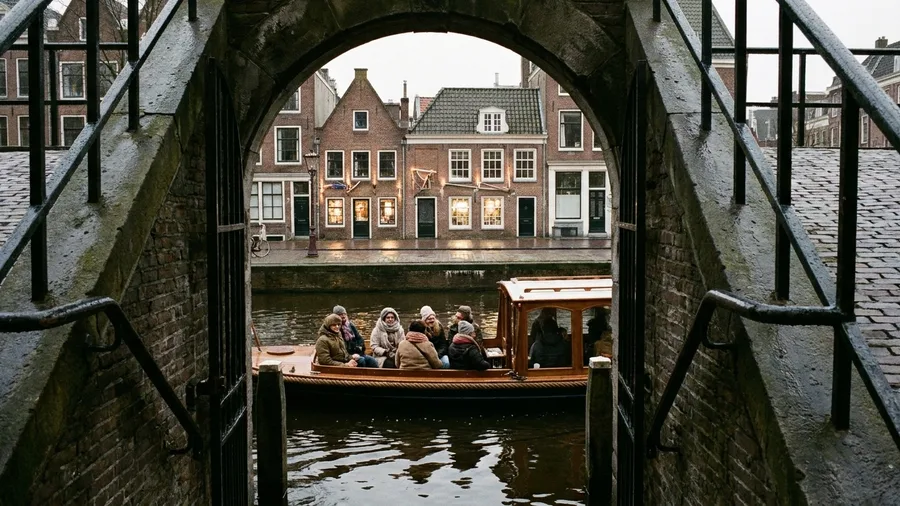
The Amsterdam Light Festival canal cruise is the seated version of a light festival, and it costs US$29 for 75 minutes on the water.
It runs from late November to late January, which is the earliest window on this list and the reason it anchors a trip planned before Christmas. Book a departure after 5 pm so the sky is properly dark and the sculptures actually read as light rather than paint. Take an open-deck boat if you want photographs, because shooting through wet glass at night gets you nothing.
The route floats the installations past you on the canals, so you never walk in the cold and never stand in a queue at a work. That makes it the low-effort pick for first-timers and for anyone with limited mobility, and the honest limit is that you cannot walk up to a piece and stand beside it. If close-up is the point, take the outdoor walking route instead. For a two- or three-city winter break, this is the anchor you build the dates around when the calendar lands between late November and late January.
💡 Tip: Book the first or last departure of the evening; mid-evening boats are fullest.
| Show | City | Typical dates | Cost | Best for |
|---|---|---|---|---|
| Amsterdam Light Festival | Amsterdam | Late Nov–late Jan | ~US$29 cruise | First-timers, low-effort water route |
| Fête des Lumières | Lyon | Early Dec (4 evenings) | Free | Spectacle-seekers, families |
| Copenhagen Light Festival | Copenhagen | 10 days in Feb | Free | Design-minded walkers |
| Helsinki Lux | Helsinki | 6 evenings in Jan | Free | Quiet, design-led travelers |
| Ghent Light Festival | Ghent | 5 evenings late Jan (biennial) | Free | Weekend city-breakers, photographers |
| Zagreb Festival of Lights | Zagreb | Mid-Dec–early Jan | Free | Budget travelers, families |
| Stockholm Nobel Week Lights | Stockholm | 1 week in Dec | Free | Nobel-curious city walkers |
| Durham Lumiere | Durham | Nov (biennial) | Free | Families, architecture lovers |
| Eindhoven GLOW | Eindhoven | Nov | Free | Tech and design fans |
| Reykjavik Winter Lights Festival | Reykjavik | Feb | Free | Travelers already in Iceland |
| Riga Staro Rīga | Riga | Nov | Free | Budget city-breakers, photographers |
| Vilnius Light Festival | Vilnius | Jan | Free | Baltic city-hoppers |
2. Stand in Lyon's Fête des Lumières Crowds
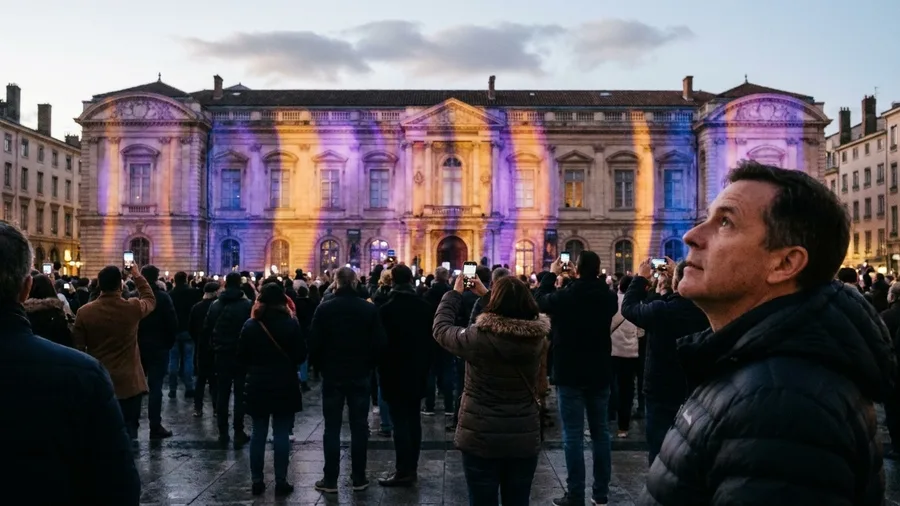
Before you book a Lyon hotel for the Fête des Lumières, know that the festival is free and the hotel is not: city-center rooms run US$180-260 across the four evenings in early December.
The whole city turns into an outdoor gallery, with projections thrown across squares and facades, and the densest press lands between 7 and 10 pm. Start in Croix-Rousse or Vieux Lyon before 6 pm to stay ahead of it. It rewards spectacle-seekers and families, and it is a poor fit if packed streets wear you down. The money question is not admission, which is nothing, but price and crowd tolerance, the opposite trade-off to a paid cruise where you sit still and let the city pass.
⚠️ COMMON MISTAKE
Don't book Lyon last-minute
Hotel prices spike for the four festival evenings. Reserve a room months ahead or stay outside the center and take the metro in.
3. Walk Copenhagen's Harbor Light Route
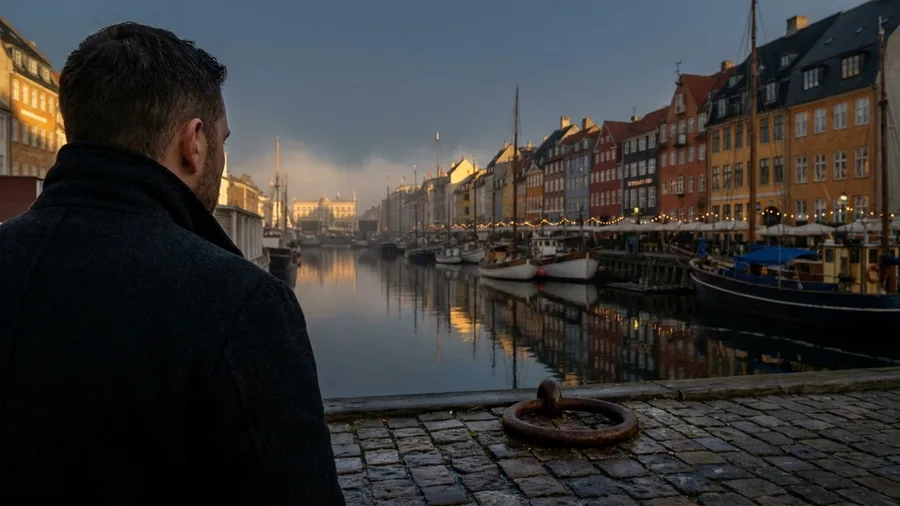
You hear the harbor before you see anything: water slapping against the quay wall, a bicycle bell somewhere behind you, and then a slow blue glow coming off an installation down by the water.
Copenhagen's Light Festival runs 10 days in February, free, along a 2.5-mile walking route that threads the harbor front and slips past Nyhavn, whose gabled facades and moored boats do half the work before any artist's piece is switched on. The harbor installations and that stretch make an easy evening circuit, and the whole thing is a calm, design-led stroll rather than a choreographed show. If big timed projections are what you came for, this is not that.
The culture here is the walk itself. Copenhagen winters are built for moving through the dark rather than hiding from it, and the festival fits that habit: you pull on layers, you go out, you look. Nothing is timed to a slot, so you set the pace and the route goes where you go.
That 2.5 miles is the real cost. In February cold you feel every extra loop, and the harbor wind finds the gaps in a coat you thought was warm enough. Wear what you would wear to stand at a bus stop for an hour, not what you would wear to walk briskly to one.
It suits design-minded walkers and couples who would rather stroll past ten quiet works than queue for one loud one, and it is the test of whether your winter break wants less crowd and more footpath. Allow the better part of an evening, and finish somewhere warm by the water.
💡 Tip: Start at Nyhavn before 6 pm; the reflections on the canal are best before the tour groups arrive.
4. Brave Helsinki Lux's January Cold
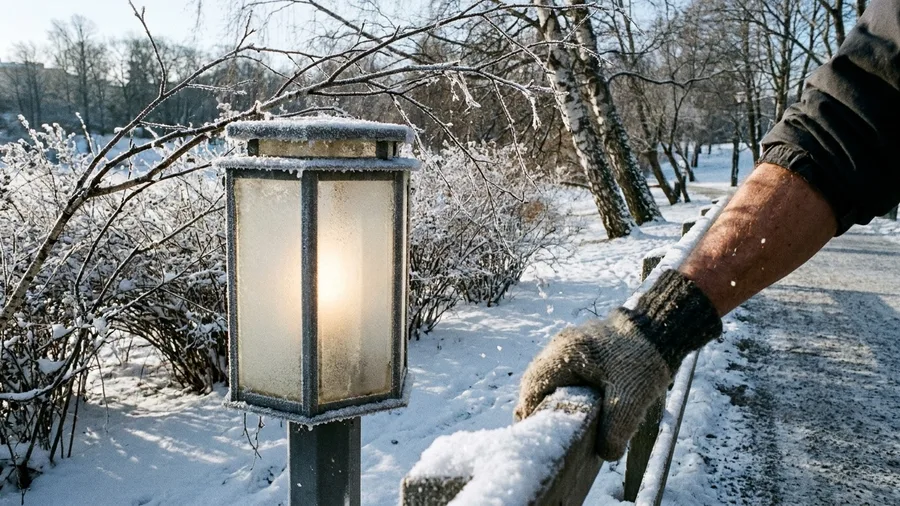
The cold arrives before the art does: minus ten at six in the evening, breath hanging in the lamplight, the squeak of packed snow underfoot on the path through Kaisaniemi park. Helsinki's Lux runs six evenings in January, costs nothing, and strings its works through parks and inner courtyards along a route of roughly 1.5 miles.
That below-freezing air is the filter. Crowds thin to something you can walk through at your own pace, and the pieces in the parks read as small, deliberate gestures rather than a choreographed wall of light. The price is dressing properly and warming up in tram stops between clusters, and if you want spectacle on Lyon's scale this is not the festival for you. It is the shortest cold-weather walk on this list, and it only exists in January, so the date is the commitment.
Light Festival Myths, Busted
5. Plan Ghent's Biennial Light Festival
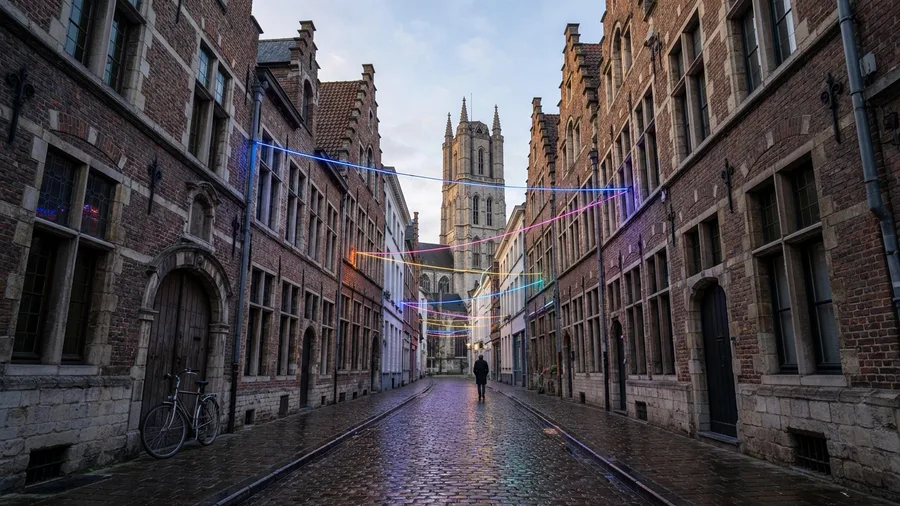
Plan Ghent only once you have checked which year it is on. The festival runs five evenings in late January and takes a year off between editions, costs nothing, and pours light art through one of the most compact medieval centres in Europe. If the calendar aligns, it is one of the best-value evenings on this list.
The city does the hard work. You cover the whole thing on foot inside a walkable core of canals, stepped gables and a cathedral tower, and photographers get facades and reflections in a single square. Trains from Brussels take about 35 minutes and cost roughly US$12, which makes it a straightforward add-on to a Belgian stop rather than a destination in its own right.
Confirm the official year before you book anything, then treat it as a weekend: a late-January Friday to Sunday, an evening or two on the route, the rest of the time eating and walking. It suits city-breakers and people who want a small, walkable setting after a demanding cold-weather route. It is a compact interlude, not the backbone of a long trip.
Lyon vs. Copenhagen: Pick Your Crowd Style
Lyon Fête des Lumières
- Free but extremely crowded
- Big projections on facades
- Four evenings in early December
- Hotels US$180–260 in the center
Copenhagen Light Festival
- Free and calm
- 2.5-mile harbor walking route
- 10 days in February
- Design-led installations, not spectacle
6. See Zagreb's Festival of Lights
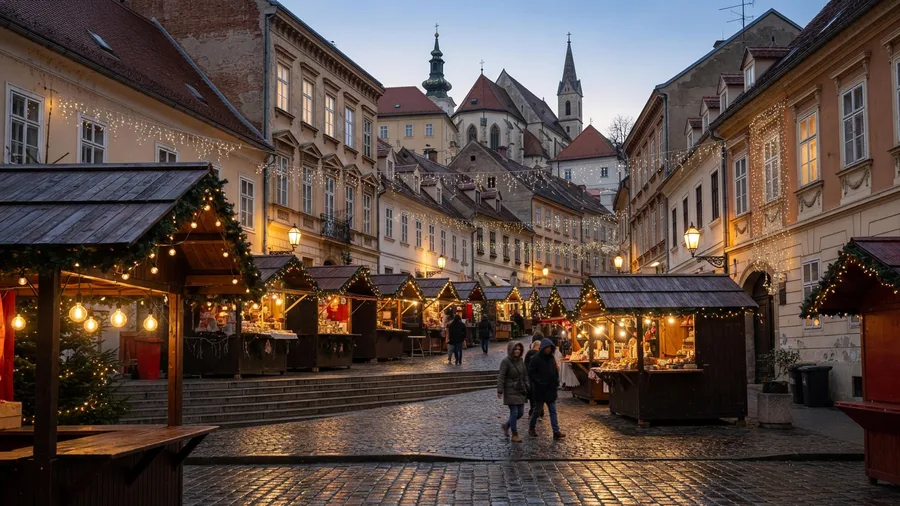
Zagreb asks less of your calendar than most of these festivals: the route runs from mid-December into early January, so the dates are loose and the timing is easier to slot in. Admission is free, and the walk through the old town takes 1.5 to 2.5 hours at an unhurried pace. Confirm the official dates before you build a trip around them.
The 1.5-mile circuit climbs through Upper Town and drops into the main squares, and the Christmas market is running in the same streets, so the light art comes with mulled wine, stalls and crowds of families rather than a single choreographed show. It is smaller than the headline festivals in Lyon or Amsterdam, and that is the honest trade: less spectacle, more of a winter evening out. Budget travelers and families get the most from it; anyone chasing a huge projection event should look elsewhere. When December dates matter, this is the low-cost market-season walk that fits.
7. Time Stockholm's Nobel Week Lights
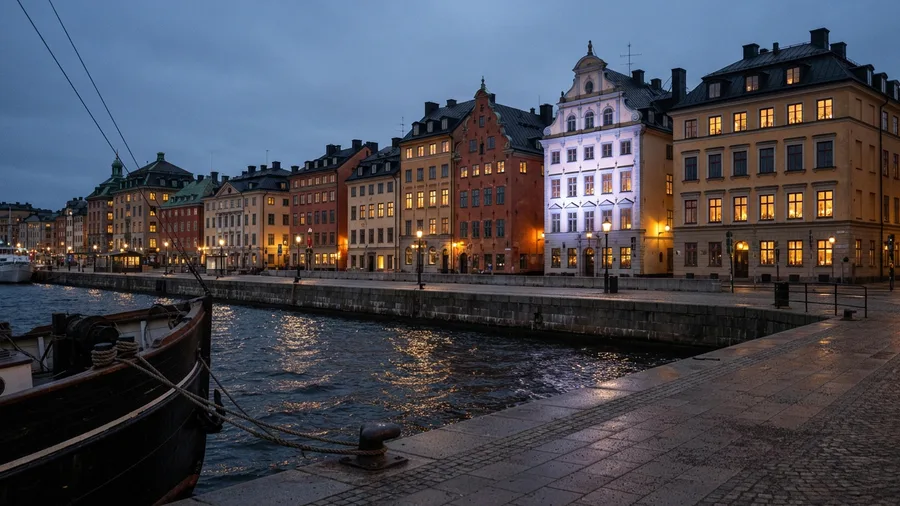
Only if you were already leaning toward Scandinavia, because this is a short addition, not a reason to cross a continent.
The Nobel Week Lights run for a single week in December, free, with temporary installations placed around the venues tied to the prizes. Allow 1.5 to 2.5 hours to walk it, and confirm the official dates before you commit, since the window is narrow and shifts year to year. The core of the route is the Gamla Stan waterfront, where the old facades and the dark water do most of the work for the light.
A metro day pass costs around US$13, and the sensible plan is to ride in, walk the city after dark, and ride back. It suits the Nobel-curious city walker rather than anyone chasing a giant projection show, and it slots cleanly into a December itinerary as one more free after-dark loop.
8. Catch Durham Lumiere's Cathedral Facade
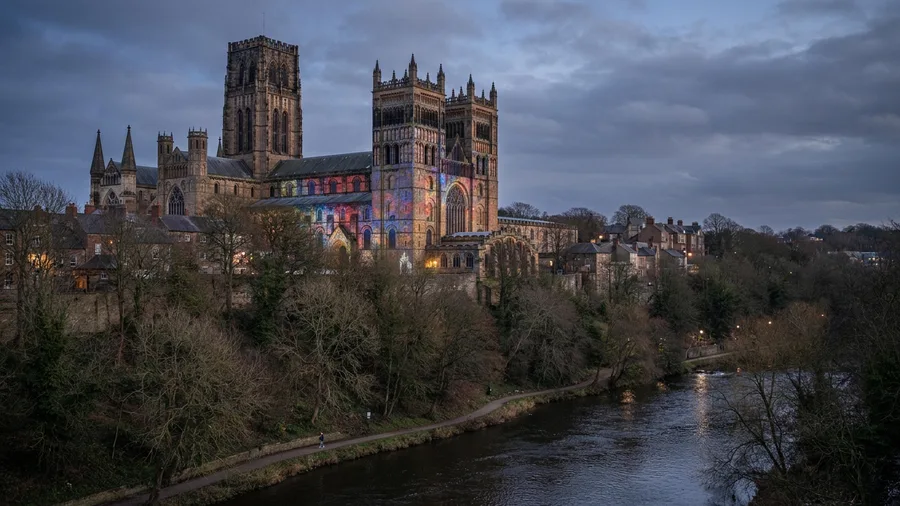
Two numbers decide whether this one is even on: it runs in November, and it only happens every other year. Check the official year before you book anything, because the festival will simply not be there if you get it wrong.
Admission is free, and the walk takes 1.5 to 2.5 hours. The anchors are the cathedral facade, lit as a vast screen against the dark, and the riverside route that threads the town below it. The cathedral is the image everyone comes for, and the riverside stretch is where locals tend to linger once the first surge has moved through.
That biennial timing is what makes it awkward to fold into a longer winter circuit. A late-January or February route built around the other shows on this list will not line up with a November event, so treat it as its own short city break rather than a stop you bolt on.
It suits families and anyone who cares about the architecture, since the setting does half the work. Book Durham lodging early, though – a small city with a free festival and a tight window fills its rooms fast, and the cheap beds go first.
Get the year right, book the room early, and it earns the trip on its own terms. Miss either check and you have planned a November weekend around a light show that isn't running.
💡 Tip: Book Durham accommodation as soon as the festival dates are announced; the city is small and fills fast.
Durham Lumiere — At a Glance
📅 Dates
Four evenings, mid-November
💷 Cost
Free entry, no ticket needed
⏱️ Time needed
Allow 2 hours on foot
🏰 Setting
Start at the cathedral, end by the river
👨👩👧 Best for
A standalone city break, not a circuit stop
Book early
Rooms go first for the Saturday; aim for a Thursday or Friday night.
9. Pair Eindhoven GLOW with Amsterdam
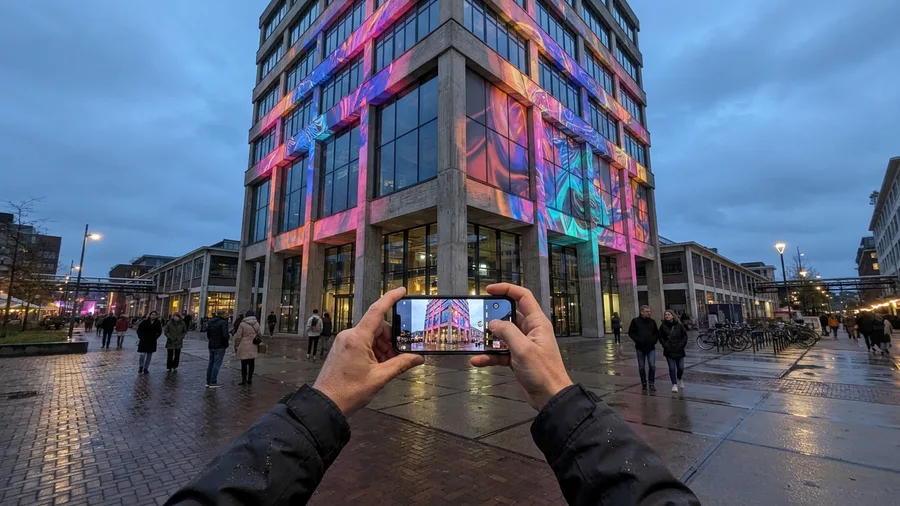
Where Durham asks you to commit to a biennial November date, Eindhoven's GLOW runs on November dates you can actually plan around – and the free outdoor route takes 1.5 to 2.5 hours, so it costs you nothing but the evening. Confirm the official dates, then slot it in.
The pull is the Philips and design-school installations, where student experiments sit alongside large projections on the buildings. It suits tech and design fans, and the real advantage is geography: a 1-hour-20-minute train links it to Amsterdam, making it the easiest second Dutch city to add once you have the capital's canal route booked.
10. Add Reykjavik's Winter Lights Festival
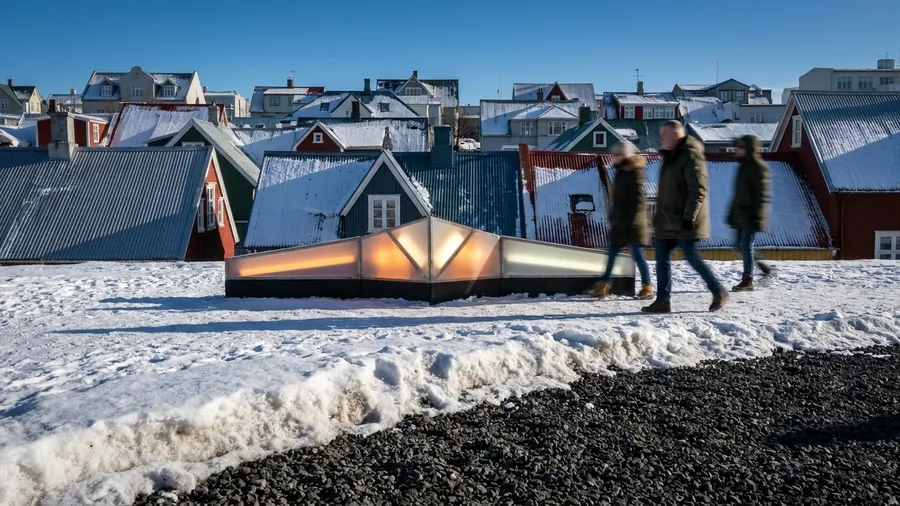
February in Reykjavik smells of sulphur and cold diesel, and the dark comes down early enough that a lit window twelve streets away reads like a beacon. Walk out into that and the festival's small installations do the work the flat winter light will not do for them.
Dates land in February, the route is free and outdoors, and you should budget 1.5 to 2.5 hours for it on foot. Confirm the official dates before you book anything, because this is an island with a short calendar and flights fill around events. The festival folds light art into Icelandic winter culture rather than just stringing bulbs along a harbor: the hook is the geothermal-pool night and the museum openings that run alongside the installations, so plan to swim in hot water under a black sky and to duck into a gallery while your coat dries.
Which Shows to Book First
11. Photograph Riga's Staro Rīga Facades
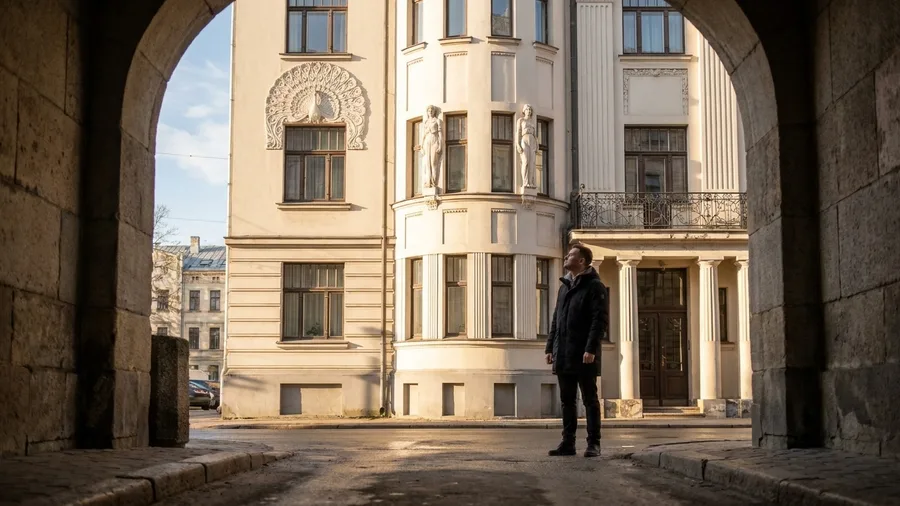
Yes, if you want a quiet, cheap weekend and you like photographing facades after dark, and no if you came for a choreographed spectacle. Staro Riga is free, runs in November, and the two walking zones are the Art Nouveau district and the Old Town, so allow 1.5 to 2.5 hours and confirm the official dates before booking.
12. Combine Vilnius with Riga or Tallinn
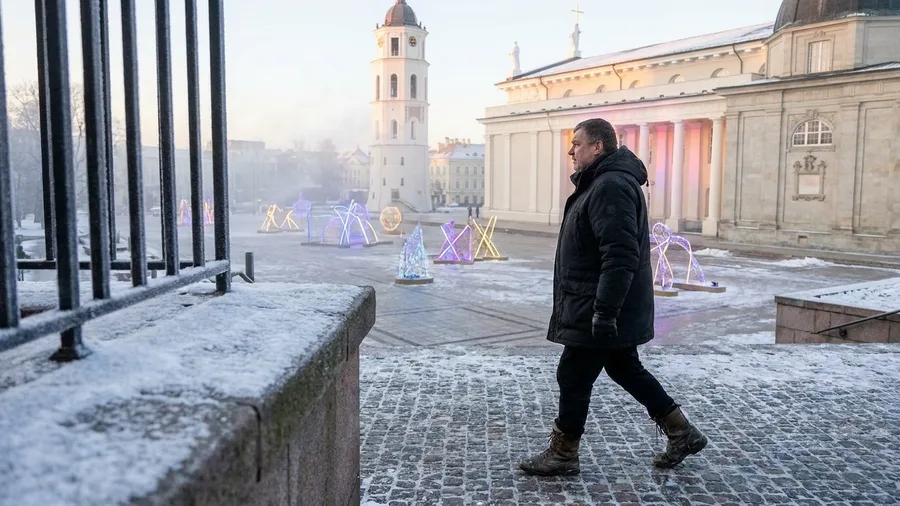
One free route, 1.5 to 2.5 hours on foot, January dates to check against the official calendar. That is the Vilnius light festival, and it spreads through the old town and the riverfront rather than collecting in a single square.
The easy evening loop runs from Cathedral Square out to Užupis, and it suits travellers stringing Baltic cities together by train or a short flight, especially anyone packing for snow and pairing the walk with the Christmas-market leftovers that linger into January. It genuinely does not suit a family with small children or anyone unsteady on ice: this is a cold, dark walk on uneven pavement, and the reward is atmosphere rather than rides or indoor warm-up stops.
For a two- or three-city Baltic trip, Vilnius is the January anchor when earlier dates elsewhere cannot align with your week off. Pair it with Tallinn or extend the same loop that started the Baltic stretch further north, and keep the plan to two cities rather than three if the snow is heavy.
🗺️ Build Your Two-City Winter Light Trip
Pick your dates
Match your travel window to the festivals that actually run then; November, December, January and February each have different options.
Choose two cities
Link them by a 1–3 hour train or flight; Amsterdam–Eindhoven and Brussels–Ghent are the shortest hops.
Book the paid bits first
Reserve the Amsterdam canal cruise and any Lyon hotel before anything else.
Plan one walking route
Add a free outdoor route like Copenhagen or Helsinki for a calmer second evening.
Check biennial years
Ghent and Durham only run every other year; confirm before you commit.
Frequently Asked Questions
Are these light festivals free?
Most are free outdoor routes. The main paid options are Amsterdam's canal cruise at around US$29 and indoor installations that typically cost US$18–35. Lyon, Copenhagen, Helsinki, Ghent, Zagreb, Stockholm, Durham, Eindhoven, Reykjavik, Riga and Vilnius are all free to walk.
How many cities can I realistically cover in one winter trip?
Two or three. A realistic winter trip links two or three cities by 1–3 hour flights or trains. Trying to cover all twelve in one week means you spend more time in transit than looking at the lights.
Do I need to book the Amsterdam canal cruise in advance?
Yes. Book weeks ahead for an after-5 pm departure, and choose an open-deck boat if you want photos. The best evening slots sell out, especially on weekends.
Which festival is best for families?
Zagreb's Festival of Lights overlaps with the Christmas market and is easy for kids. Durham Lumiere is also good for families, but book lodging early because the city is small.
Is Lyon's festival too crowded?
It is very crowded, especially 7–10 pm. Go before 6 pm or after 10 pm, and start in Croix-Rousse or Vieux Lyon. If dense crowds bother you, choose Copenhagen or Helsinki instead.
What should I pack for these festivals?
Thermal layers, a windproof outer layer, gloves and a hat. Most routes take 1.5–2.5 hours outdoors. Bring a pocket tripod for night photos, and wear boots for snow in Helsinki, Reykjavik or Vilnius.
Choose by Crowd Style, Then Book the Two Things That Fill Fastest
Treat the list as a fit test, not a count. Most shows are free outdoor routes you walk in the cold; the canal cruises and indoor installations at US$18-35 per person are optional extras you add or skip. A realistic winter trip links two or three cities on one- to three-hour flights or trains. All twelve in one week does not work, and you already knew that.
So pick by what you want the trip to feel like: Amsterdam for canal-scale ease, Lyon for sheer spectacle, Copenhagen or Helsinki for design-led calm, Ghent for a compact medieval backdrop. Book the Amsterdam canal cruise and the Lyon hotel first, because those fill fastest. Then pick one free walking route as your second city, and leave the other names for another winter.
Book the Cruise and the Lyon Hotel First
Those two fill fastest. Lock them in, then add a free walking route like Copenhagen or Helsinki as your second city.