The planning mistake is booking the flight for the markets and flying home before December 24. Most Americans assume a European Christmas Eve means midnight Mass, market stalls, and a restaurant dinner, so they leave on the 23rd and miss the one night these rituals actually happen.
Almost none of them are staged. They are family ceremonies that start at dusk or at 3 p.m., keyed to a first star or a television broadcast. What stays open to you is narrower and more useful: restaurant tables, hotel versions of the same dinner, municipal parades, public saunas, church services.
So the question is not which country has the most exotic custom. It is which single December 24 event you can book or attend in one city.
What follows gives each tradition a date, a start time, a way in, and a booking window – restaurant seats run four to six weeks ahead. Pick one city, one ritual. These customs are private, pinned to a star or a broadcast, but every one has a handle you can hold.
Quick Tips Before You Start
Book by early November
Restaurant seats for December 24 fill 4–6 weeks ahead in Kraków, Prague, Lisbon, and Copenhagen.
Check the start time
Several traditions begin at the first star or 3 p.m., not at a standard dinner hour. Confirm the exact time when you book.
Ask the hotel for the prop
Some hotels supply a Caga Tió log, a didukh sheaf, or a rice pudding with the almond. Email ahead and ask.
Carry cash
Market stalls selling carp, oak branches, and wafers often take cash only. Withdraw złoty, koruna, or dinars before December 24.
Eat before 6 p.m.
Most public Christmas Eve dinners start early. If you want a table after a parade or mass, book the late seating in advance.
1. Wigilia: Poland's Twelve-Dish Christmas Eve
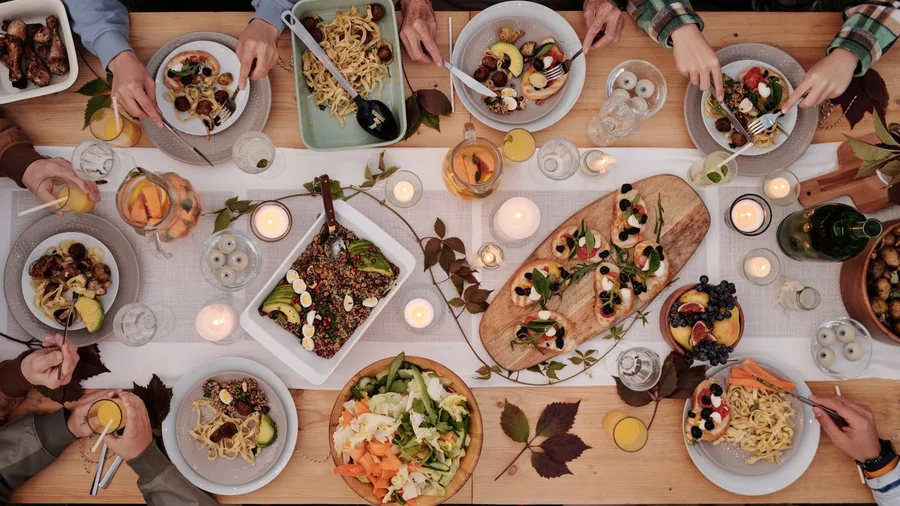
The damp smell of cabbage and mushrooms sits over the room before anyone lifts a fork.
Wigilia is the Polish Christmas Eve supper, and it does not begin on a clock. It begins at the first star, which means most tables sit down around 5 to 6 p.m. on Dec 24, in the blue hour with the curtains still open so the sky can be checked. Twelve meatless dishes arrive in sequence: carp fried or in jelly, herring, pierogi, barszcz, and more vegetables than you can count by the fifth plate. Under the tablecloth, a thin layer of hay is spread. Before anyone eats, family members break wafer-thin opłatek and share it with each other, wishing the person across the table luck for the year ahead.
You cannot join a family's Wigilia, but you can eat your way into the shape of it.
Kraków runs a public Wigilia in a municipal hall for around $30-$45 a head, with the dishes, an opłatek for the table, and the hay under the cloth. That is the most complete version available to a stranger. Restaurants in Kraków and Warsaw also serve a Christmas Eve dinner, typically $25-$55 per person, with the carp and barszcz but not always the wafers or the hay. Both sell out, and both are booked four to six weeks ahead.
The number to confirm at the moment of booking is the start time, because the first star sets the clock and not the restaurant. A dinner advertised as 7 p.m. has already drifted from the ritual; the public Wigilia, which follows the sunset loosely, is closer. December round-trip fares from New York to Kraków run roughly $780-$1,100, and if you are adding a hop from a bigger European hub, expect $60-$150 for the connection. A mid-range hotel in the city runs $100-$170 a night.
Book the room and the seat in the same week, four to six weeks before Dec 24, and you will be at the table at dusk rather than wandering a closed square at dusk.
💡 Tip: Ask whether the restaurant serves the full twelve dishes or a shortened menu. Many public Wigilias do eight or nine.
| Tradition | Country | Date | What You Do |
|---|---|---|---|
| Wigilia | Poland | Dec 24 | Book a public dinner or restaurant seat; share opłatek |
| Carp in the bathtub | Czech Republic | Dec 22–24 | Buy a live carp at a street barrel or order the fried plate |
| Jólabókaflóð | Iceland | Dec 24 | Buy a book before shops close; read it with hot chocolate |
| Kalle Anka | Sweden | Dec 24, 3 p.m. | Watch the Disney broadcast on SVT or at a hotel common room |
| Joulusauna | Finland | Dec 24 | Book a public sauna or hotel sauna; visit cemetery candles |
| Caga Tió | Catalonia | Dec 8–24 | Buy the log at Fira de Santa Llúcia; beat it on Dec 24 |
| Olentzero | Basque Country | Dec 24 | Watch the municipal parade; book dinner after |
| Consoada | Portugal | Dec 24 | Book a restaurant cod dinner; attend midnight Missa do Galo |
| Juleaften | Denmark | Dec 24 | Book a hotel dinner with rice pudding; ask about the tree dance |
| Oplatky blessing | Slovakia | Dec 24 | Buy wafers, honey, and garlic at a market; order the restaurant menu |
| Sviata Vecheria | Ukraine | Dec 24 | Book a restaurant dinner that includes the didukh sheaf |
| Badnjak burning | Serbia | Dec 24 | Buy an oak branch; watch a public burning; book the roast pig feast |
2. The Czech Carp in the Bathtub
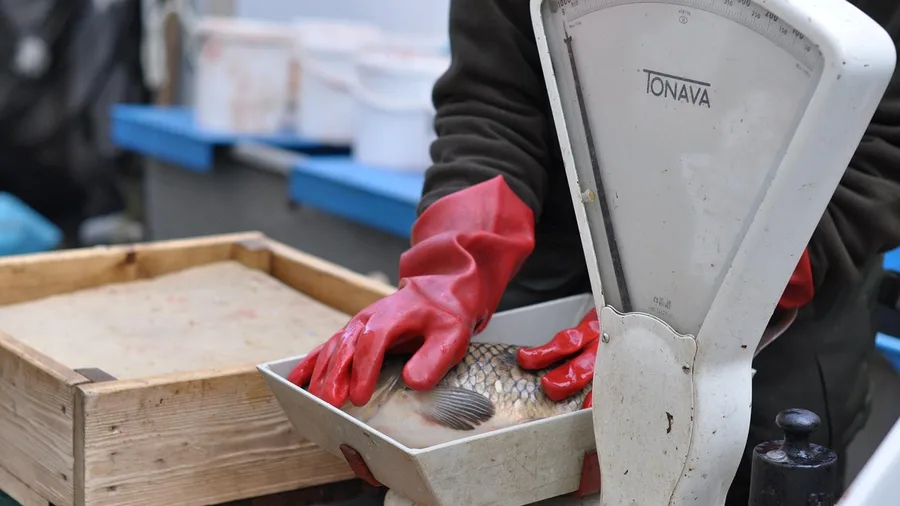
On Dec 22 and 23, the Czech street barrels appear: wooden tubs lined with water, each one churning with live carp that a vendor nets and weighs to order at 200-300 CZK, about $9-$13, per kilogram. Families buy the fish two or three days before Christmas Eve, haul it home in a bucket, and put it in the bathtub. It lives there until the morning of Dec 24, when it is killed in the kitchen and fried for that night's dinner alongside potato salad.
The bathtub and the kitchen are closed to you. What is open is a version of the meal: Prague restaurants put fried carp and the same potato salad on Dec 24 menus at $25-$55 per person, and the seats go four to six weeks ahead with a confirmed serving time, since most kitchens close the dining room earlier than usual on the holiday. Buying a fish and watching a vendor net one out of the barrel is free and worth twenty minutes; you just have nowhere to keep it. If the point is to slow down and sit still for an hour with a plate in front of you while the city shuts down around you, the booked table is the honest way in.
⚠️ COMMON MISTAKE
Don't assume Christmas Eve is a normal dining night
In Prague, Kraków, and Lisbon, many restaurants close early or serve a fixed holiday menu only. Book the Christmas Eve seating by early November, and confirm whether the kitchen is doing its regular menu or a set dinner.
3. Iceland's Jólabókaflóð Book Flood
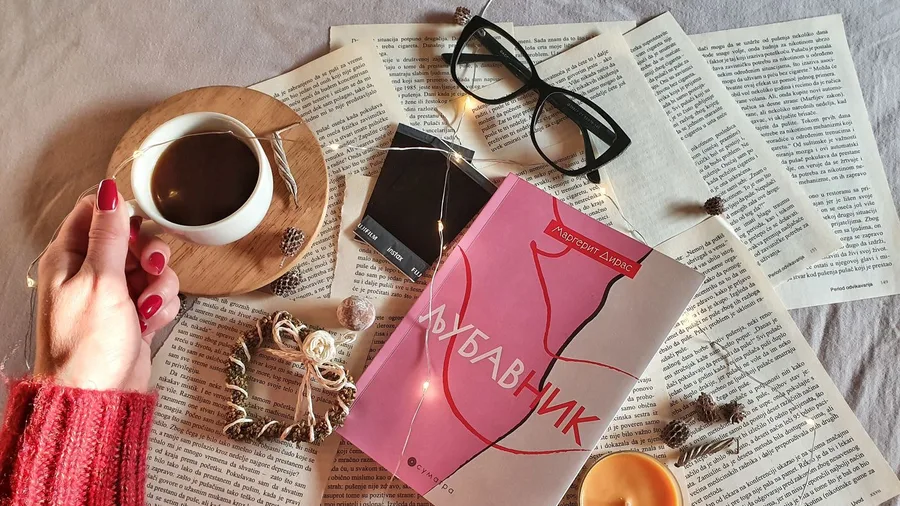
No, but this is the one custom on the list that fits in a suitcase, because it is powered by a book – a durable object – rather than a fresh fish that has to be dealt with before it spoils. Jólabókaflóð means the book flood: a title given as a gift on Dec 24, then read that same evening with hot chocolate or a glass of something festive, the wrapping paper still on the floor.
The flood is literal on the store shelves. Icelandic publishers release most of the year's books in a rush from November onward, and Reykjavík bookshops – Eymundsson and Mál og menning among the larger ones – stock English-language titles next to the Icelandic ones. Expect to pay $20-$35 for a hardcover. Buy it before Dec 24, because shops close early that day and often shut entirely on Dec 25. When you are weighing hotels, Reykjavík mid-range rooms sit at $180-$280 a night in December, so pair the gift with a chair you have already paid for. Confirm when the hotel bar or restaurant is pouring on the holiday, since a Christmas drink is part of the ritual and the bar hours are not.
This is a good fit if you want a quiet, self-run evening with no booking gymnastics and no language barrier; it is a poor fit if you came to watch something happen around you, because nothing does. The gift and the reading hour are yours to schedule. The family reading night stays inside the family.
💡 Tip: Shops close early on December 24. Buy the book by December 23 and confirm your hotel bar or restaurant hours for the holiday drink.
4. Sweden's Kalle Anka at 3 P.M.

Three o'clock on December 24, and the whole country sits down at once. Since 1959, the state broadcaster SVT has aired 'From All of Us to All of You', an hour of Disney clips, at that exact hour, and Swedish families build the afternoon around it. Dinner gets pushed to after four. Nothing else is scheduled against it.
The broadcast itself costs nothing. What you need is a screen and a seat claimed early: hotel common rooms and plenty of Stockholm and Gothenburg bars put the show on, and the trick is to ask at the front desk that morning, or walk into a bar before half past two and take a table with a view of the television. A family invitation is the version you cannot book. The public one is a room full of strangers who all know the running order.
The practical consequence is a start time you cannot negotiate. This is not a dusk ritual that slides with the light, and if you have booked a Christmas Eve dinner, make it a late seating, not a seven o'clock one, or you will be eating through the best part. Restaurant seats go four to six weeks ahead in December. Confirm the dinner time and the television time together, because only one of them is yours to move.
Public Access vs. Private Ritual
What you can book or join
- Public Wigilia dinner in Kraków ($30–$45)
- Restaurant Christmas Eve menus across Central Europe
- Municipal Olentzero parades in Basque cities
- Public sauna sessions in Helsinki (€12–€20)
- Midnight Missa do Galo in Lisbon and Porto
What stays inside the family
- The bathtub carp and the home killing
- The first-star timing in a private Polish home
- The almond gift and tree dance in a Danish home
- The straw on the floor and home badnjak fire
- The extra place setting for deceased relatives
5. Finland's Joulusauna Christmas Eve Sauna
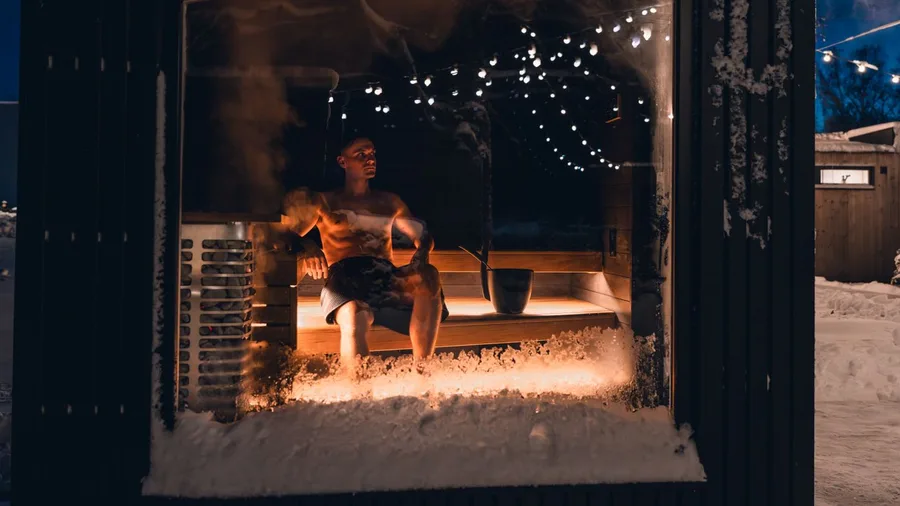
Book the sauna. A Finnish Christmas Eve without one is a Christmas Eve spent watching the clock, and the public and hotel versions are open to anyone who reserves in time. Joulusauna happens on December 24, usually at 80 to 90°C, and it comes second in the day rather than first: families go to the cemetery with candles in the afternoon, quiet and public and worth joining, then take the heat, then eat.
Public saunas in Helsinki run special holiday hours, with entry around €12 to €20, or $13 to $22, and the hotel sauna or a rented flat with its own is the version you can actually reserve, so tie it to the room booking and confirm the December 24 hours in writing before you pay. Family saunas are private and stay that way. Your access is the public bench, the candle-lit cemetery and an evening meal after, so the day needs both time slots nailed down, not just the sauna.
6. Catalonia's Caga Tió Pooping Log
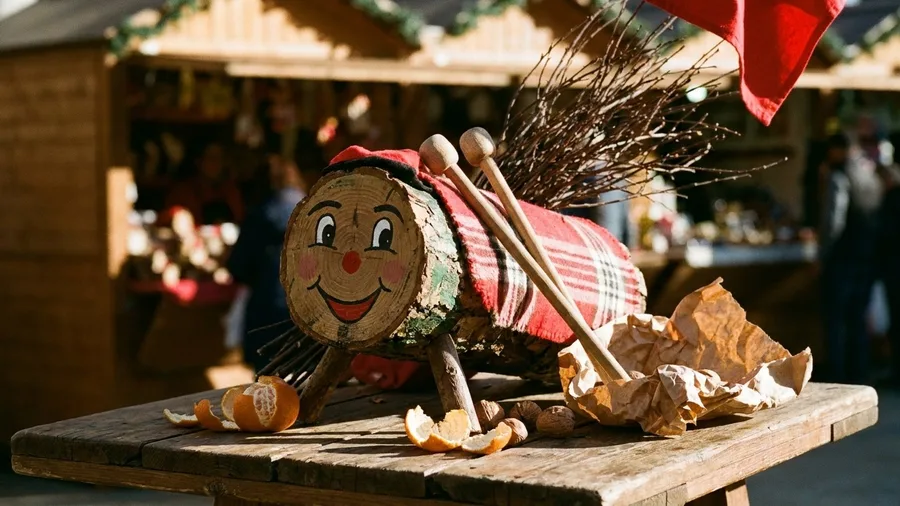
You will hear the song before you see the log: a table of children in a Barcelona market, whacking a painted piece of wood with sticks and chanting at it to give up its sweets. The log has a face, a little blanket over its back, and a stick for beating. From December 8 the children 'feed' it orange peels and nuts, and on the evening of December 24 the beating pays out in nougat, candy and small toys.
The place to buy the prop is the Fira de Santa Llúcia, the market in the plaza beside Barcelona Cathedral, where stalls sell the log, the blanket and the stick as a set. Market stalls shut early on December 24, so buy a day or two ahead rather than leaving it to the afternoon. Some hotels set up a Caga Tió for guests, and public market events stage the song, which is how you learn the words without a family to teach you.
The whole ritual fits in a suitcase. Feed it in the hotel room from the eighth, beat it on the night of the twenty-fourth, and you have run the private version on your own schedule. The family living room is closed to you, but the log is not, and the hour that matters is the one after dark on December 24, before dinner, when the beating happens.
💡 Tip: The Fira de Santa Llúcia runs through December 23. Buy the log and blanket there, not on December 24 when stalls pack up early.
Basque Olentzero — At a Glance
👨🏭 Who he is
A charcoal burner, not Santa
📅 Arrival date
December 24
🎁 What he brings
Small toys and sweets
📍 Where to see him
Bilbao, San Sebastián, Pamplona
🎫 Access
Free municipal parades
Book after the parade
Reserve a December 24 dinner four to six weeks ahead and confirm the parade time, since town schedules vary.
7. The Basque Olentzero's Christmas Eve Visit
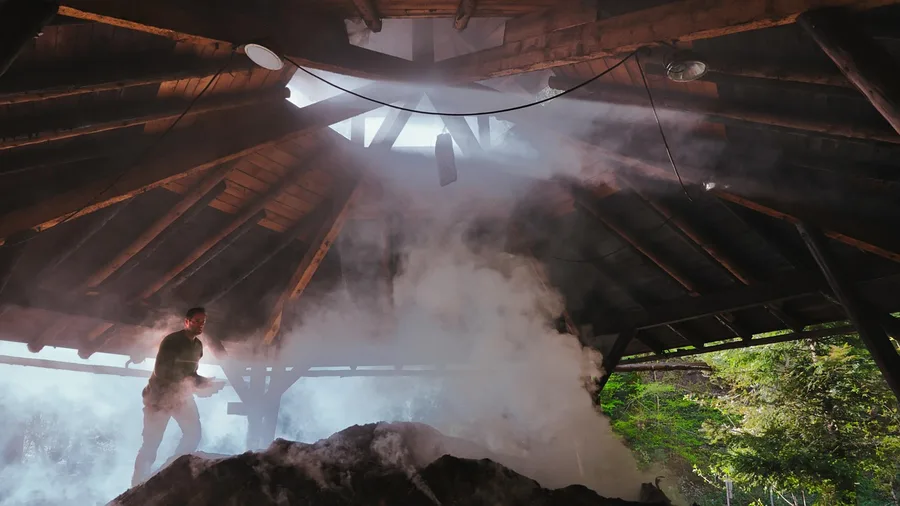
A log you beat at home costs nothing and asks nothing of the street; a charcoal burner who rides into town on Dec 24 asks you to stand on a curb and wait. Olentzero is the Basque gift-bringer, a soot-stained coal merchant in black with a beret and a pipe, not a red suit, and he makes his entrance in public, which means the same gift moment that Catalonia keeps in the living room happens here outdoors, in front of anyone who shows up.
The parades run in Bilbao, San Sebastián and Pamplona, organized by town halls and neighborhood groups, and the timing is the whole problem. Each town posts its own schedule, some processions start mid-afternoon, some not until dark, and the routes shift year to year, so the municipal website or the tourist office is the only place worth checking. There is nothing to buy and nothing to reserve: your access is a spot on the sidewalk, twenty minutes early, on the side of the street where the light falls. Families with children crowd the front; stand behind them and you still see the berets.
Small toys and sweets get handed out along the route, which is the part an American notices first: no queue for a photo with a costumed figure, just a parade that ends and disperses. If you want dinner afterward, book a Dec 24 table four to six weeks out in the same town as your parade, and confirm both times before you commit, because a 6 p.m. procession and an 8 p.m. seating do not always fit together. Get that pairing wrong and you watch the parade from a restaurant window.
The Christmas Eve Trip in Numbers
8. Portugal's Consoada Codfish and Midnight Mass
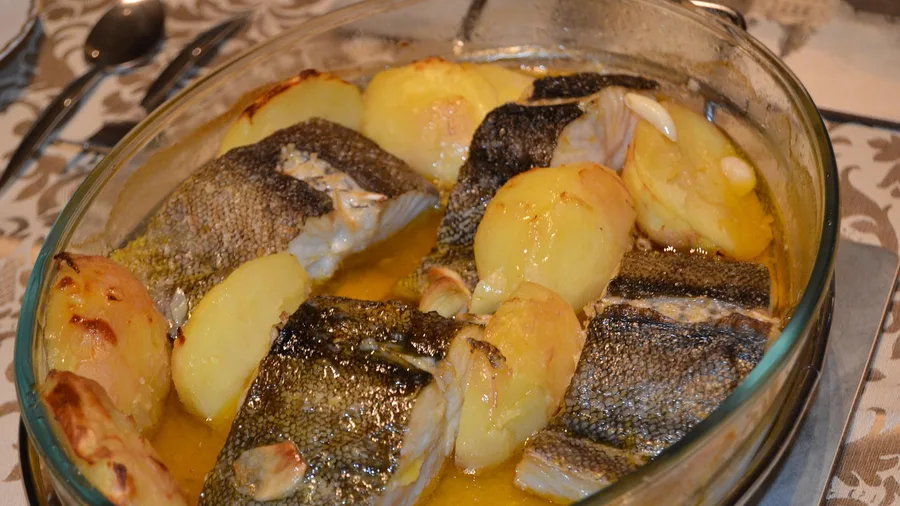
The thing to know before you book anything in Portugal is that this evening runs on two clocks, not one. Consoada is the Christmas Eve supper, salted cod with potatoes and greens, and it does not end the night, it starts it: the meal is timed so that families rise from the table and walk to Missa do Galo, the midnight Mass, together. Book the restaurant and assume you are done and you have paid for half the evening.
Salt cod is the dish, and it arrives in more variants than a visitor expects, baked in olive oil with garlic, layered with potatoes, sometimes with cabbage or kale alongside. Restaurant tables in Lisbon and Porto serve the traditional menu on Dec 24, typically $25 to $55 per person, and the good rooms in the old neighborhoods fill four to six weeks ahead. Mention when you reserve that you want to be finished by eleven, because the kitchen is not always pacing itself to the church schedule the way a family would.
The extra place setting is the part you cannot buy. Many families lay one more plate at the table for relatives who have died, and the chair stays empty through the meal. You will not see this in a restaurant dining room unless the house does it deliberately, and you should not expect it to.
What you can do is arrive at the church. Midnight Mass on Christmas Eve is open to the public, and the service is the photograph the trip is remembered for: a full nave lit for the holiday, the congregation standing, the hour itself doing half the work. Stand at the back if you come late and keep the phone in your pocket until the recessional.
Confirm both halves before Dec 24, the dinner seating time and the Mass time at the church nearest your table, since parish schedules vary and not every service actually begins at midnight. That one call, made four to six weeks out, is the difference between a good dinner and the whole evening.
9. Denmark's Juleaften Rice Pudding and Tree Dance
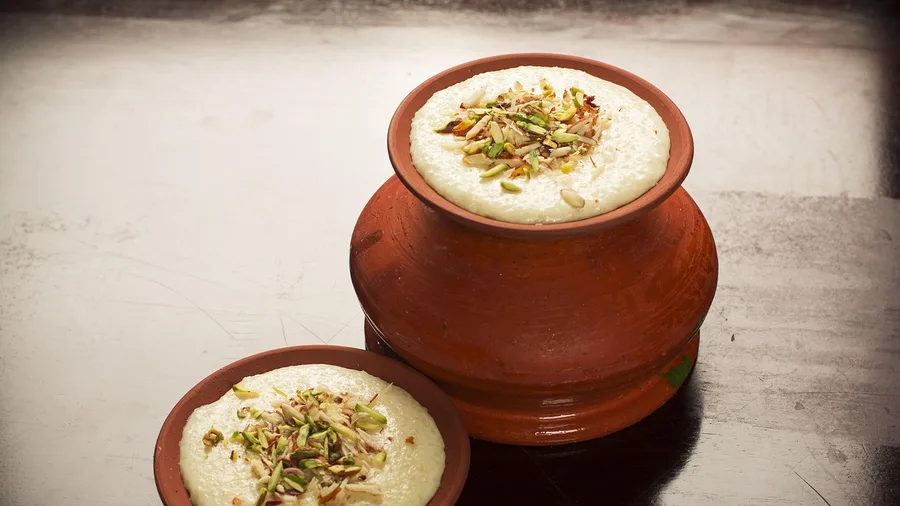
One whole almond hides in the rice pudding, and the person who finds it gets a prize, usually a marzipan pig. Denmark's Juleaften then moves to the tree: everyone joins hands and walks around it singing carols before a single gift is opened, and the whole sequence finishes at home, well before midnight.
The odds of getting the almond are about one in however many people sit at the table, so do not count on the pig. Copenhagen hotels and restaurants serve Christmas Eve dinners that include the pudding, bookable four to six weeks ahead, but ask specifically whether the tree dance is part of the evening; the food and the room come standard, the game usually does not.
💡 PRO TIP
Ask for the almond
If you book a hotel Christmas Eve dinner in Copenhagen, ask whether the rice pudding comes with the whole almond and the prize. Some hotel versions include it; some don't.
10. Slovakia's Honey, Garlic, and Wafer Blessing
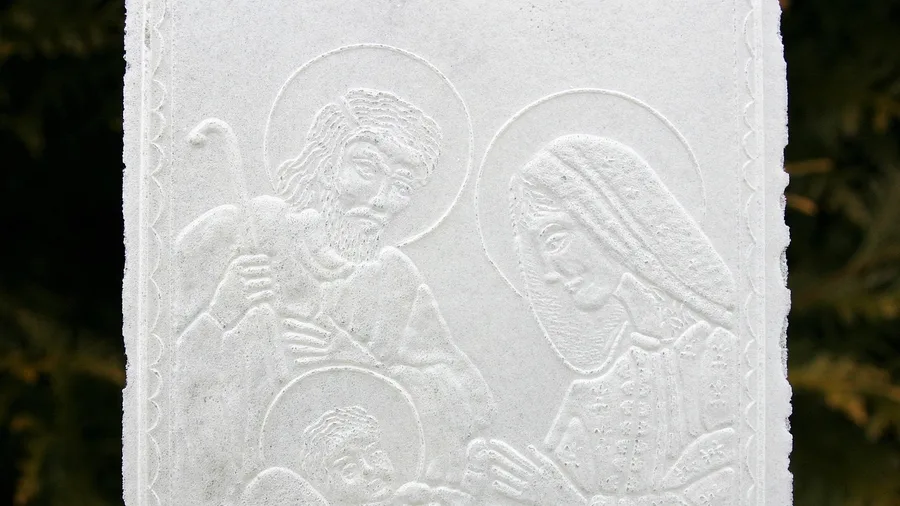
The wafer doesn't need a booking, so this one is a free add-on to any Bratislava Christmas Eve rather than a reason to build the trip around it.
Oplatky are thin, stamped wafers sold in packets at Slovak Christmas markets, and the ritual is to spread one with honey and another with raw garlic before the main dinner. Honey is the wish for sweetness and health in the year ahead; garlic is the wish for protection. It takes ninety seconds at the kitchen counter, which is why it survives.
A market stall will sell you the packet and the honey, and Bratislava restaurants serve Christmas Eve menus that end with sauerkraut soup and fried carp, the dishes that follow the wafer in a Slovak home. Book those seats four to six weeks out and call to confirm Dec 24 hours, since some kitchens close after the midday service. The blessing that turns two spreads into a family act stays at the table you aren't at. The flavors travel fine without it.
11. Ukraine's Sviata Vecheria with Didukh
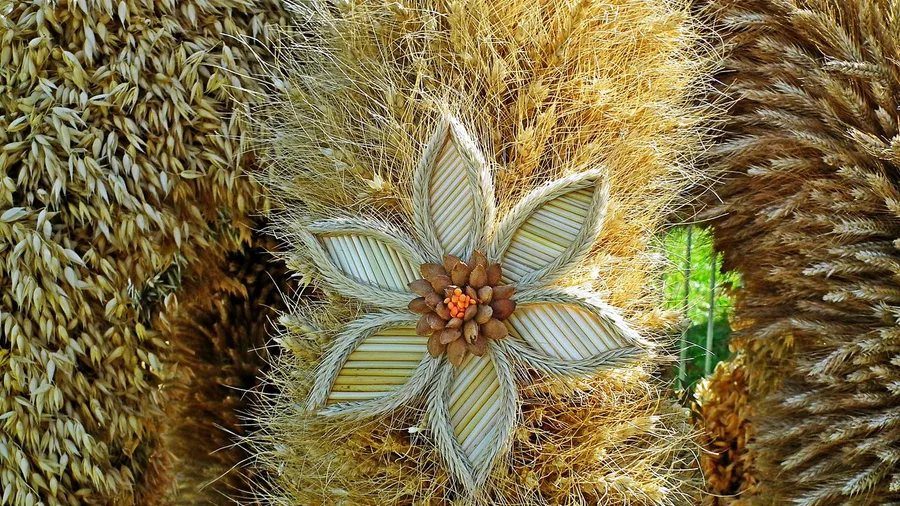
Sviata Vecheria is a twelve-dish meatless dinner that begins when the first star is visible on Dec 24, and the catch is that the clock is not yours to set.
If the sky is overcast over Lviv or Kyiv, the start slips, and some households wait until the children spot the star themselves. Restaurants running a set dinner will post a fixed hour and mean it, but a private table may not sit down until well after six. Confirm the start time when you reserve, and treat the posted hour as the version you're buying.
The table carries two objects you won't see anywhere else in quite this form. A didukh, a sheaf of wheat, stands in the corner of the room, and a kolach, a braided ring of bread, sits in the center of the table. The food is twelve meatless plates; kutia, a sweet wheat and poppy-seed pudding, usually opens the meal, and borscht follows the way it does in every Ukrainian home.
The didukh is the traveler's handle. Ukrainian restaurant dinners often include one in the room, which puts a private harvest symbol into a public space you can walk into, and several houses in Lviv and Kyiv take Christmas Eve bookings for exactly this. Reserve four to six weeks ahead, and ask whether the kolach and didukh come as part of the set menu rather than something the kitchen adds for show.
One caution worth the price of the reservation. The twelve dishes are a lineage, not a production, and a restaurant version can flatten the sequence into a buffet line of small plates. Ask what order they serve in before you book, and if the answer is vague, book for the late seating so the room is slower and the plates come one at a time.
💡 Tip: Ask whether the didukh is part of the set menu or just decoration. Some restaurants display one but don't include it in the dinner.
12. Serbia's Badnjak Oak Branch Burning
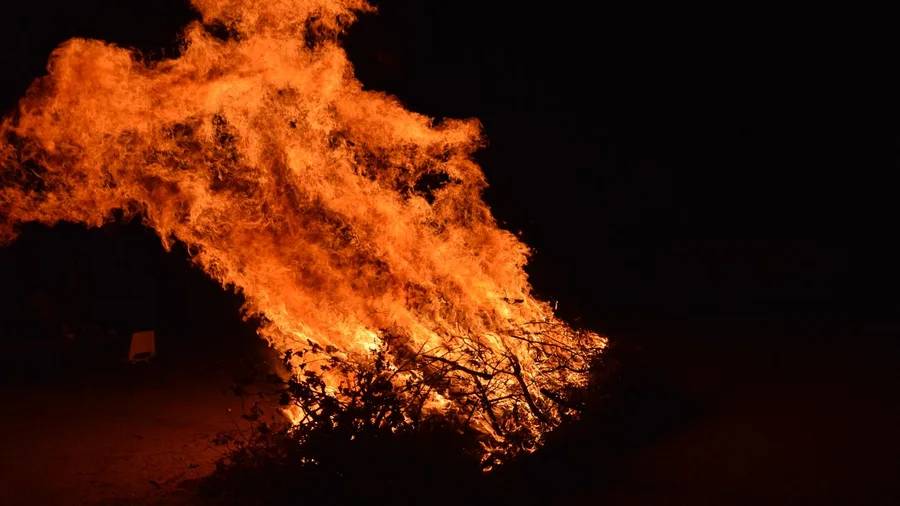
The badnjak is an oak branch brought into a Serbian home on Dec 24 and burned, and the outdoor half of that ritual costs nothing to watch.
Oak branches sell at markets for 200 to 400 dinars, roughly $2 to $4, and parishes and town squares across Serbia hold public burnings in the evening where the same branches go onto a bonfire you can stand near. That is the visible half. The straw scattered across the living-room floor and the fire in the yard are things families do for each other, so the traveler's access is: buy a branch, find the posted burn time, and stand outside with everyone else.
Then book the feast, because roast pig and česnica, the round bread baked for the day, are what restaurants and hotels serve on Christmas Eve. Reserve four to six weeks ahead and confirm the burn time as well as the table, since municipal schedules vary by town and the fire usually goes up before the dinner service starts.
📆 How to Book a Christmas Eve Tradition
Pick one city and one ritual
Choose from the twelve above based on the country you want to visit and the access point you can actually book.
Check the start time
Several traditions begin at the first star, 3 p.m., or midnight mass — confirm the exact time before booking.
Reserve the table or event
Book restaurant seats or public events four to six weeks ahead, ideally by early November.
Confirm holiday hours
Call or email a week before to verify the restaurant, sauna, or market is open on December 24.
Buy the prop or market item
Pick up the book, carp, wafer, or oak branch by December 23, since market stalls close early on Christmas Eve.
Frequently Asked Questions
Do I need to speak the local language to join these traditions?
No. Restaurant and hotel bookings can be made in English in Kraków, Prague, Lisbon, Copenhagen, and Reykjavík. For smaller municipal events, ask your hotel desk to confirm the time and location.
Is December 24 a good day to arrive in Europe?
It's tight. Shops close by mid-afternoon, and many restaurants serve a fixed holiday menu. Arrive by December 22 or 23 so you can buy market items and confirm bookings before Christmas Eve.
How far ahead should I book a Christmas Eve dinner?
Four to six weeks ahead — early November for a December 24 seat. In Kraków, Prague, and Lisbon, popular restaurants fill by then, and some require a deposit.
Can I join a family's private Christmas Eve ritual?
Not usually. The bathtub carp, the almond gift, and the straw on the floor are family rituals. Your access is the public or bookable version: a restaurant menu, a municipal dinner, a market stall, or a hotel that supplies the prop.
What if I'm traveling solo?
The book flood in Iceland and the Finnish sauna are the easiest solo traditions. Restaurant Christmas Eve dinners also work — book a table for one and expect a set menu rather than à la carte.
Are these traditions expensive?
The rituals themselves are cheap: $2–$4 for a Serbian oak branch, $9–$13 for a Czech carp, $20–$35 for an Icelandic book. The expense is the trip: $780–$1,100 round-trip from New York to Kraków, and $100–$170 a night for a mid-range hotel.
Book December 24 Before You Book the Flight
Pick one city and one December 24 tradition: Wigilia in Kraków, carp from the barrel in Prague, Kalle Anka in Stockholm, Joulusauna in Helsinki, Consoada in Lisbon, Juleaften in Copenhagen. Do not country-hop. Then book the dinner or event four to six weeks ahead and confirm the start time, because several begin at dusk or at 3 p.m. sharp.
The first star over Poland and the 3 p.m. television in Sweden are not ambience. They are appointments, and the trip gets built around them.
The family ritual happens with or without you. The booking is the only thing that makes you a guest instead of a spectator.
Book the table, then check the clock
Reserve your Christmas Eve dinner or event four to six weeks ahead, and confirm the start time before you pay. The first star doesn't take reservations.