Charleston and Savannah get weighed against each other constantly, and the difference that decides this list is plain: Savannah puts its quiet stops out past the city limits, while Charleston puts them on a side street you have already walked past. You have done the historic districts, paid for the house tours and the bundle tickets, and you assume what is left is either shut to you or not worth the detour.
It is neither. Most of these twelve are skipped for reasons with nothing to do with quality: one gate hides on Archdale with no sign, a reading room two floors up sounds private when it is not, a fossil collection sits quietly inside a college building, a blacksmith's yard runs on volunteers who show up Friday and Saturday afternoons, and a rice-field boardwalk asks for a ten-dollar ticket and a drive off the peninsula.
Each of those is a scheduling problem, not a closed door. Solve them and three or four days split between the two cities becomes two quiet half-days that share no stop with the tour buses.
That is the whole thesis: these places go unvisited because of mundane logistics, not secrecy, and once you have the gate, the address and the hours written down, the trip builds itself.
Quick Tips Before You Start
Call the small places
The Library Society tour and both volunteer-run museums have limited hours; a quick call saves a wasted trip.
Rent the car for one day
Caw Caw and the Savannah refuge both need wheels; book a single day rather than paying for a week.
Pack bug spray
The outdoor stops are wetland; repellent and sunscreen are not optional at Caw Caw or the refuge.
Go early or go Friday
Cemeteries and refuges are quietest at opening; the paid house tours cluster on Tue/Thu/Sat.
Bring small bills
Two stops run on suggested donations; cash keeps the volunteer at the desk happy.
1. Unitarian Church Cemetery's Overgrown Garden
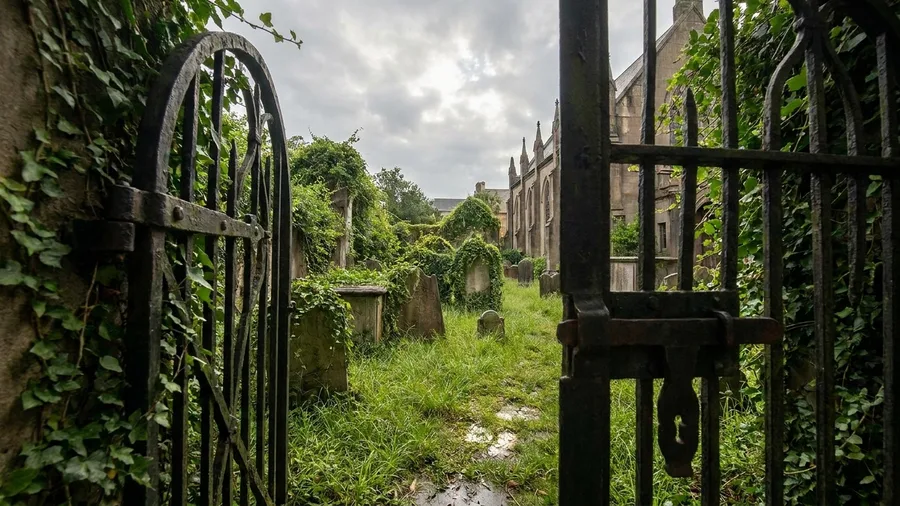
Walk through the Archdale St gate anyway. Most people glance at it from the sidewalk, see the vines spilling over the stones, and keep moving toward whatever they were already headed to, because nothing marks this as a place you're allowed to enter. It is: free, open daily 9 to 5, no ticket, no queue, no sign pointing you in.
The Gothic church behind the gate went up in 1817, and the graveyard it fronts has gone half-wild, vines strung across headstones, markers leaning at angles, the overgrowth said to be left on purpose. It's an active burial ground, so keep your voice low and stay off the stones. Come at the 9am opening for the quiet hour, before the block wakes up and the sun turns the light hard. And it sits 0.6 mi from the Charleston Library Society, close enough that the two make one afternoon instead of two trips. The only thing keeping this from you is a missing sign, which is to say the cost of getting in is zero dollars and one side street.
💡 Tip: Arrive before 9:30 and the light through the trees is still soft enough for photographs.
2. Charleston Library Society's Second-Floor Reading Room
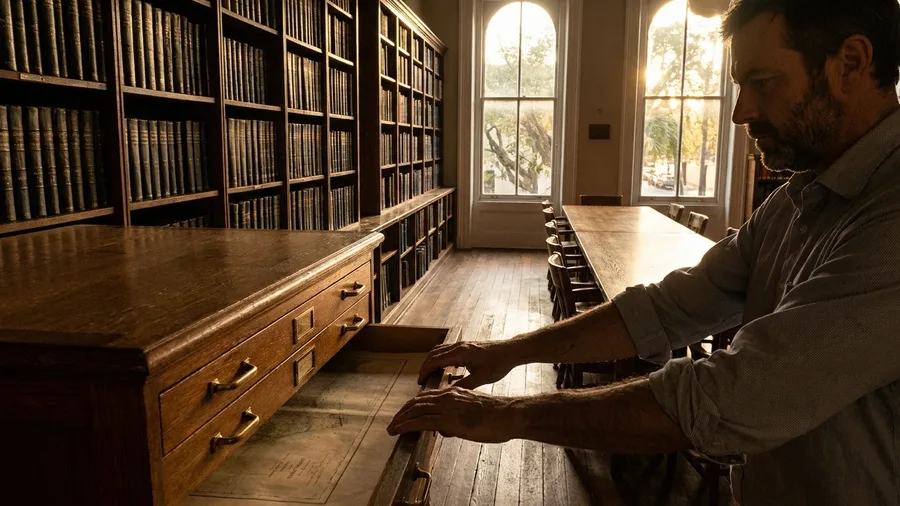
The floorboards give a low creak, then the room goes quiet enough that you hear yourself swallow. You're standing in the second-floor reading room at 1640 King St, and everyone around you has dropped their voice without being told to, an instinct the room seems to pull out of people.
It's a members' library, which is exactly why travelers assume the door is closed to them and never call. It isn't, or not on the schedule that matters: a 30-minute tour runs Tuesday and Thursday at 2pm, open to anyone who asks, though a reservation is suggested. Around you are map cabinets and 18th-century volumes, the kind of collection that makes an hour pass without a single exhibit label. Because the slot is fixed, it's best used as the anchor of a whole afternoon rather than a stop you squeeze in, and the cemetery 0.6 mi away sits nicely on the same Tuesday or Thursday. The only real obstacle here is reputation, and one phone call clears it.
💡 Tip: Reserve the tour by phone a day ahead; walk-ins are sometimes squeezed in but not guaranteed.
| City | Spot | Why tourists miss it | Best time | Cost/access |
|---|---|---|---|---|
| Charleston | Unitarian Church Cemetery | No sign, easy to walk past | Daily 9–5; go at opening | Free |
| Charleston | Library Society Reading Room | Members-only assumption | Tue/Thu 2pm tour | Free; reserve |
| Charleston | Caw Caw Interpretive Center | Off the peninsula, needs a car | Tue–Sun 8:30–4; morning | $10 adult |
| Charleston | Philip Simmons House | Volunteer hours, two afternoons | Fri–Sat 1–4 | $5 suggested |
| Charleston | Mace Brown Museum | Entrance inside a college building | Mon–Fri 11–4 | Free |
| Charleston | Citadel Museum | 1.8 mi past the walking loop | Mon–Sat 10–4 | Free |
| Savannah | Beach Institute | Eastside, off the square route | Tue–Sat 12–5 | $8 adult |
| Savannah | Pin Point Heritage Museum | Car-dependent, limited docent days | Thu–Sat 9–5 | $8 adult |
| Savannah | SCAD Museum Courtyard Wall | Assumed to be students-only | Tue–Sun 10–5 | $10 adult; wall free |
| Savannah | Ralph Mark Gilbert Civil Rights Museum | MLK corridor gets little foot traffic | Tue–Sat 10–5 | $10 adult |
| Savannah | Savannah NWR | Outside the city, needs a car | Sunrise–sunset daily | Free |
| Savannah | Green-Meldrim House | Only three days a week | Tue/Thu/Sat 10–4 | $10 adult |
3. Caw Caw Interpretive Center's Rice-Field Boardwalk
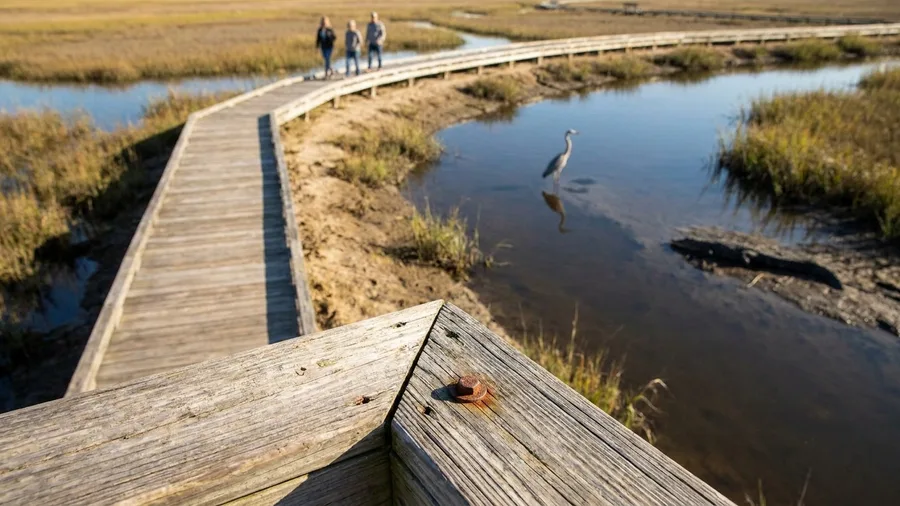
$10 for adults, a genuinely off-peninsula drive, and a boardwalk that puts you over open water. This is the one Charleston stop worth a car and a half-day, and the fee and the distance are precisely why it holds its rank over a longer walking list.
The land was worked as rice fields by enslaved labor, and what you walk now is wetland instead, a wooden boardwalk and dike paths threading between the old impoundments. Herons stand in the shallows; alligators lie out on the banks. You're moving through the shape those fields left behind, which is a way of reading the place no house tour will give you.
💡 Tip: The gate closes at 4 sharp; arriving after 2:30 gives you less than two hours on the boardwalk.
Caw Caw Interpretive Center — At a Glance
💵 Admission
$10 adult
📅 Days
Tue–Sun
🕗 Hours
8:30–4
🚗 Access
Car required
👟 Terrain
Boardwalk + dike paths
Best window
Arrive at 8:30 for active wildlife and cooler air; the boardwalk has no shade.
4. Philip Simmons House's Tiny Forge Yard
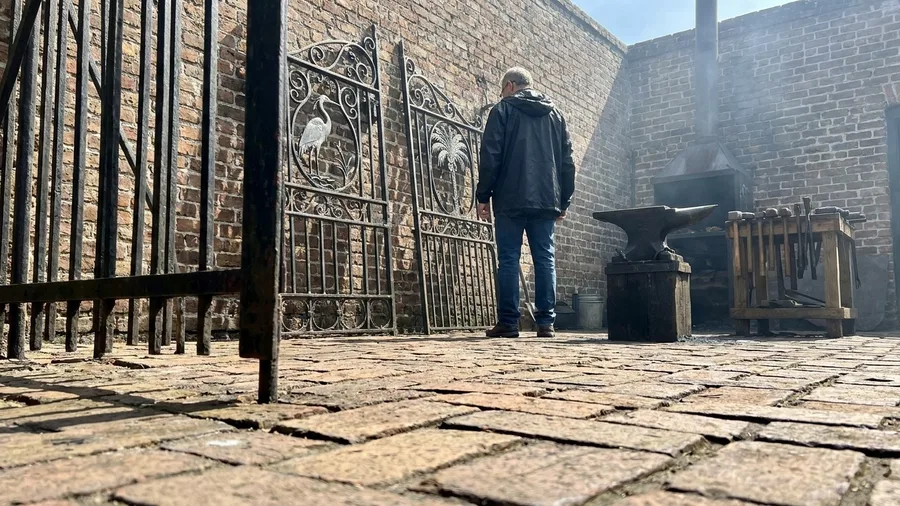
After a half-day and a ten-dollar ticket out at the rice fields, this one asks for one afternoon hour and five dollars you drop in a box. The yard on St. Philip Street is where Philip Simmons worked the forge: the decorative gates and scrollwork you have been walking past all week on Charleston doorways and churchyards came out of this small plot, and the tools that bent them are still sitting there.
It is small. Really small. You can see the forge, the anvil, the racks of finished iron and the wall of photographs in the first two minutes, and then spend another twenty-five reading the tags on the gates he made for the city, the ones with the egrets and the palmetto fronds worked into them.
The reason it slips past people is the hours: Friday and Saturday, 1 to 4, staffed by volunteers rather than a paid desk. Two afternoons a week is easy to talk yourself out of, and the people who keep it open are not always the same people, so call before you build a plan around it. Treat it as a gap-filler between bigger stops on a Friday or Saturday, allow half an hour, and if it is closed you have lost a five-dollar suggestion and a short walk.
💡 PRO TIP
Build the day around the fixed slot
The Library Society tour and the Philip Simmons House both have narrow windows. Put the 2pm Tuesday or Thursday tour at the center, then walk to the cemetery before it and drive to the forge after.
5. Mace Brown Museum's Fossil Drawers
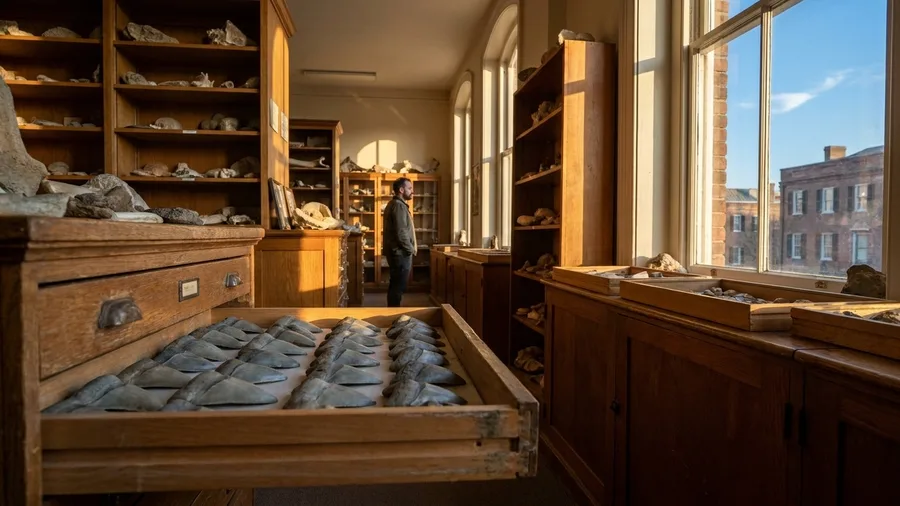
Weekends are out. The museum at 202 Calhoun Street opens Monday through Friday, 11 to 4, and that closed Saturday is the whole reason travelers miss it, so build it into a weekday when the weather has already killed the walking plan.
The draws are not arranged for a quick look. Ask at the desk and the drawers of fossils come out for you, and the ones worth your time are the local megalodon teeth pulled from Lowcountry ground, big as a hand, gray and worn smooth. Around them, cases of shells and bones tell the story of the coast before the city existed, and none of it is behind glass the way a natural history hall would have it.
There is no storefront on Calhoun, nothing that reads as a museum from the sidewalk; the collection sits inside a College of Charleston building, which is why people walk past it without guessing what is in there. Free, indoors, and 45 minutes if you take the teeth slowly. That is the reliable version of a stop like the blacksmith's yard: a schedule you can count on, minus the volunteers.
💡 Tip: Ask the student at the desk which drawer holds the local finds; they will pull it out for you.
The Charleston Half in Numbers
What the six stops actually cost you
6. Citadel Museum's Regimental Silver Room
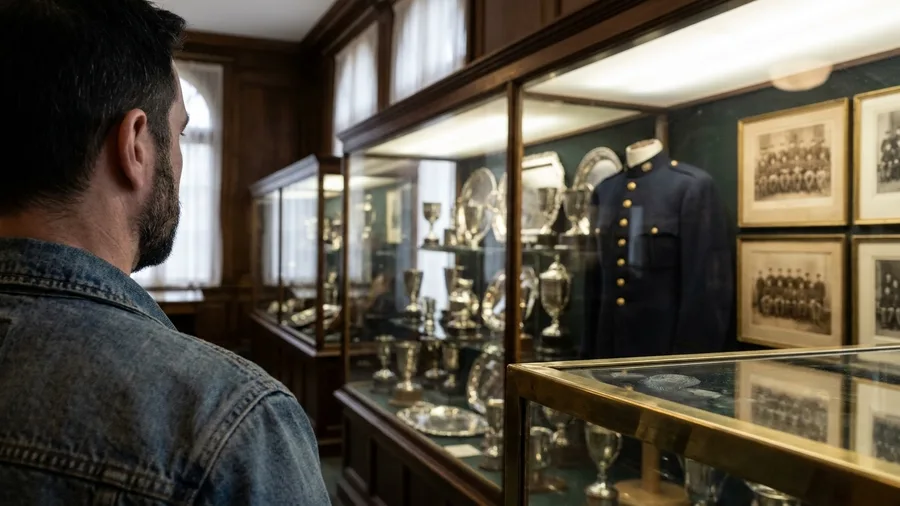
The silver room has a hush to it. Cases of trophies and presentation pieces stand along the wall, brass and silver catching the light from windows, and the effect is a regimental archive rather than the polished displays of a general museum.
It is free, Monday through Saturday from 10 to 4, and it is the one stop on this Charleston list you can walk into on a Saturday morning without spending a cent. The silver is the centerpiece, but around it the cases hold cadet uniforms, old photographs and the school's history laid out in the order it happened.
The walk to it is the reason most people never go. At 171 Moultrie Street, 1.8 miles past the last square on the historic-district loop, it sits out where nothing else on a downtown itinerary points you, and the distance alone is enough for a traveler to skip it.
If you have already made it to one free indoor collection on the peninsula, the other is a 1.8-mile walk away on the same side of town, which makes the two a single outing rather than two separate trips. Check the campus events calendar before you set out: a ceremony or a game day can shut the doors even inside the posted hours, and a Saturday morning is exactly when that happens.
With a car the drive is short; on foot, give the walk its own time and pair the two stops, and you have a free half-day that ends in a room most visitors never see.
💡 Tip: Saturday mornings on campus are quiet; the parade ground is worth a five-minute walk after the silver room.
7. Beach Institute's Hidden Courtyard
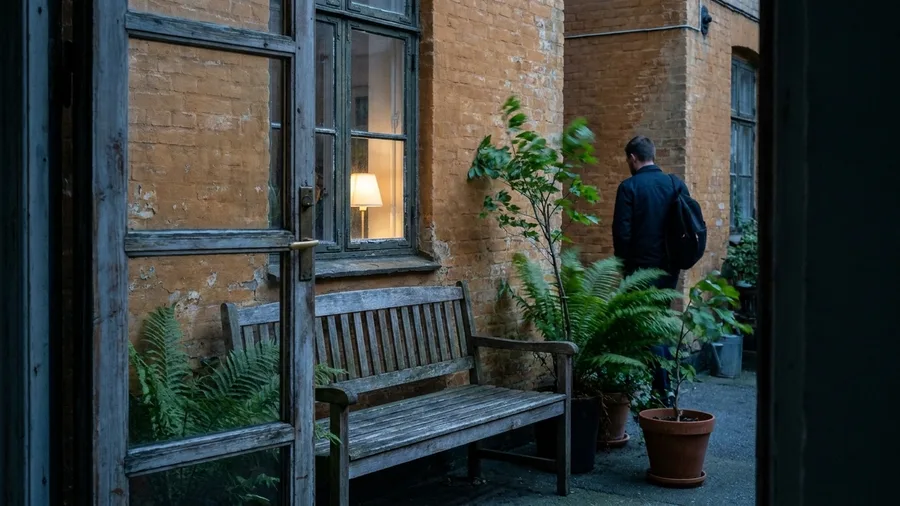
If you want one room where the day slows down, yes. The Beach Institute sits at 502 E Harris St, open Tue-Sat 12-5, and it holds a small, quiet courtyard and a rotating set of art exhibits. Forty-five minutes is the honest allowance, and the yard is why you linger there instead of moving straight through to the next gallery. The building is residential-scaled and easy to mistake for a house, and the walk from the historic district drops you out of the tour-bus current by the second block, which is the moment the stop earns its price.
The eastside placement is the entire obstacle. The institute falls in the gap between the squares and nothing on the usual route pulls a walker east, so people cross the district without ever seeing it. The fix costs no car and no phone call: it's 1.1 mi on foot to Green-Meldrim House, which turns the eastern push into a purposeful afternoon rather than a detour. Go on a Tue, Thu or Sat and the two line up inside their shared hours; any other day, the institute still stands on its own.
Booking Your Eastside Afternoon
Walk-up, no planning
- Green-Meldrim needs a docent on duty
- Limited hours mean a locked door
- No re-entry after 4pm Tuesday
- Check the day before you commit
Booked, hours aligned
- Call ahead for Green-Meldrim (14 W Macon)
- Both open Tue/Thu/Sat, overlapping midday
- Allow 30 min inside, 1.1 mi between
- Skip if rain: courtyard is the draw
8. Pin Point Heritage Museum's Oyster-Shucking Shed
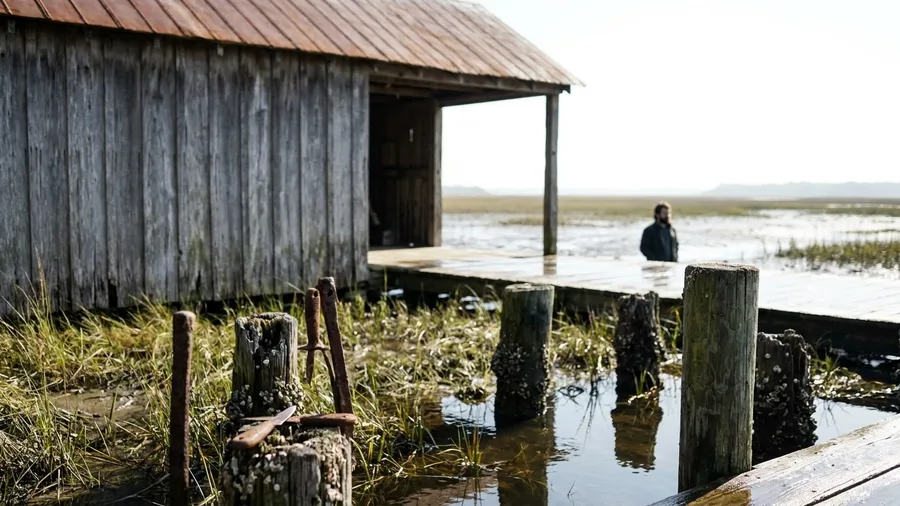
Pin Point is the site of the former A.S. Varn & Son oyster factory, now a community museum built around the work that sustained it.
The shucking shed and cannery buildings carry the Pin Point story through oyster work and family memory, and the marsh setting around them is part of the exhibit, not landscaping. Here is the catch, straight: it sits at 9924 Pin Point Ave, well outside the city and unreachable without a car, and it opens only Thu-Sat, 9-5, with the limited docent hours stacked inside that. Two real obstacles, not one.
For a reader who'd rather understand Gullah/Geechee history than walk another house tour, it is worth spending both the car and a morning: $8 adult, a marsh you can hear from the shed, and no crowd. Phone ahead to confirm the docents are on before you drive out.
💡 Tip: Call before driving out; docent hours can shift, and the drive is long enough to sting if it is closed.
9. SCAD Museum's Courtyard Wall
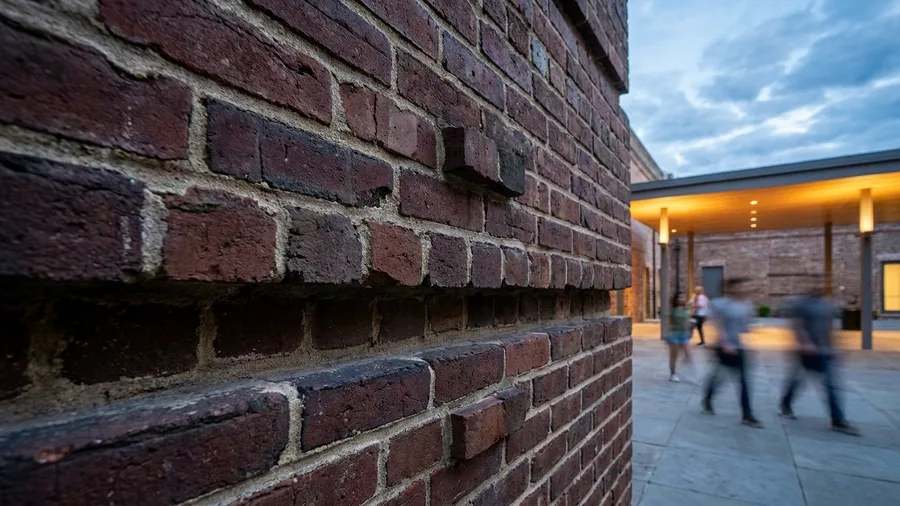
Don't let the campus address fool you into thinking the galleries are closed to anyone without a student ID. The SCAD Museum of Art at 601 Turner Blvd is open to the public Tue-Sun 10-5, $10 adult, and the old depot masonry built into the entrance wall is right there on the street for nothing. That's the thing to know before you go in: the exterior costs zero, so you can read the railroad fabric, the brick and the courtyard lines from the sidewalk even if the galleries are shut, and the admission is buying only the exhibitions when they're open.
The museum's story is a preservation one told through the building itself: the historic depot's walls were kept visible rather than smoothed over and the new galleries were fitted inside and around them. That's the room to stand in for a minute before you commit. The one-hour visit is worth $10, but check what's on first – the ticket is for changing contemporary shows, so a weak installation can leave the exterior as the better half of the stop. Plan around the street even if the galleries disappoint, and confirm current hours before you build a morning on them.
💡 Tip: Check the current exhibition before buying; the wall and masonry are legible from the street even if the show does not appeal.
Listen to the recordings before you tour another parlor. The voices tell you what the plaques leave out.
— What the oral-history room keeps proving
10. Ralph Mark Gilbert Civil Rights Museum's Oral-History Room
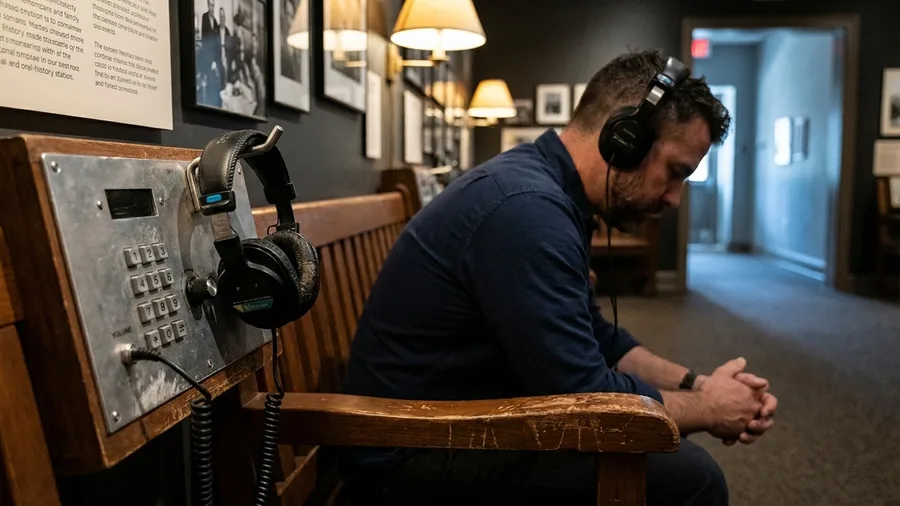
You lift a headset off the hook, press the button, and a woman's voice starts talking about a lunch counter she could not sit at in her own city. The room is dim and quiet, carpet deadening the echo, and the recording isn't a narrator reading a label – it's the person who was there, breathing between sentences, correcting herself on a date.
The Ralph Mark Gilbert Civil Rights Museum sits at 460 MLK Jr Blvd, $10 for adults, Tuesday through Saturday 10 to 5. The corridor gets a fraction of the foot traffic that the house-museum circuit does, which is the first reason people walk past it and the least interesting one. The listening stations are the argument: first-person testimony that turns Savannah's civil-rights history into voices instead of plaques, the one thing a carriage ride through the squares can never do for you.
So spend the same $10 and the same hour you'd spend on a gallery of objects, and get a subject instead – one city, one struggle, told by the people who lived it, and answering what the brass plaques leave out. Allow an hour, no more, and pair it with the Beach Institute on the eastside so the day stays on that side of town along the MLK corridor rather than circling the squares again. Check the current hours before you go; the schedule here is the kind that shifts with staffing.
11. Savannah Wildlife Refuge's Freshwater Impoundment
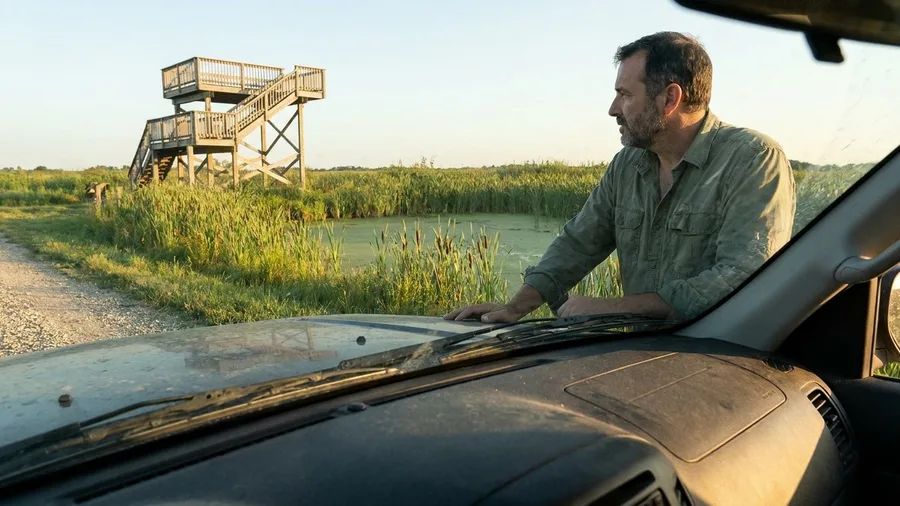
The first thing that hits you at the impoundment is the smell of the marsh at low tide, thick and green, and then the noise – red-winged blackbirds rattling from every reed, a heron lifting off the water with that slow, heavy wingbeat.
Savannah Wildlife Refuge sits at 694 Beech Hill Rd, free, open daily sunrise to sunset, a federal refuge with no ticket window and no guide waiting at the gate. You drive it yourself: a 4-mile loop through the old rice impoundments, birds and alligators working the shallows, plus a two-story observation tower that gives you a view over the marsh nothing downtown comes close to. You need a car – that, not obscurity, is why the refuge never turns up on a walking plan, and it's why locals with a free morning come out here instead of fighting for a parking space by the squares. Go early, the window when the wildlife is moving and the heat hasn't landed; bring bug spray, because the insects here are not a metaphor.
💡 Tip: Drive the loop first, then climb the tower on the way back for the widest light on the marsh.
🕘 Build the perfect Charleston half-day
Call ahead
Ring the Library Society to reserve the 2pm tour and confirm the Philip Simmons House is open.
Start at 9am
Enter the Unitarian cemetery at the Archdale St gate for the quiet window.
Walk 0.6 mi
Stroll to 1640 King St for the 30-minute reading-room tour.
Grab lunch
Eat in between; the forge opens at 1pm on Friday or Saturday only.
Finish at the forge
Spend 30 minutes in Philip Simmons's yard, then call it a day.
12. Green-Meldrim House's Gothic Parlor
Ten dollars, three days a week, four hours a day – Tuesday, Thursday and Saturday, 10 to 4 – and that schedule alone explains the empty parlor. The carriage tours roll past 14 W Macon St all afternoon and never stop, because a house that opens on three days is a house you have to plan around, and nobody plans a stroll around a Tuesday.
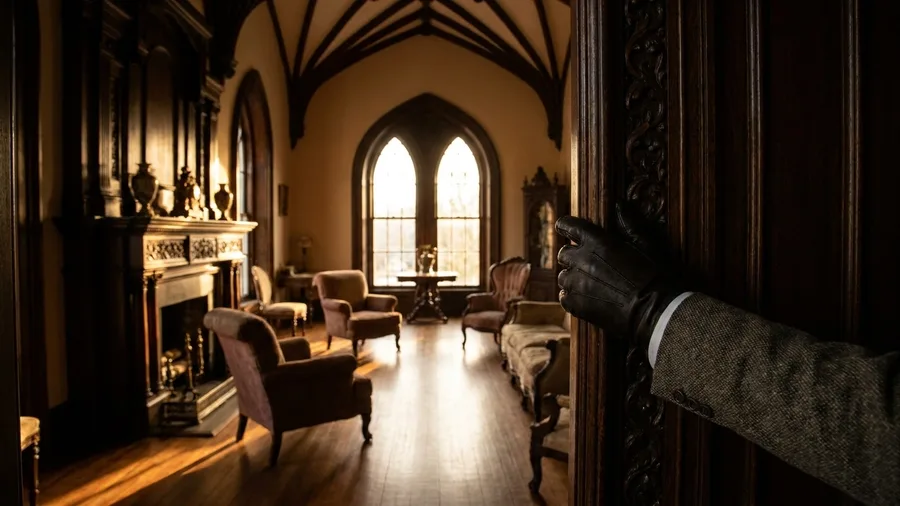
The room you're standing in when the docent stops talking is the Gothic Revival parlor, and it is the photograph: carved woodwork running to the ceiling, a space built to make an entrance feel like an audience, the kind of interior that makes every modern hotel lobby look embarrassed. Stand at the doorway rather than inside it and shoot back toward the windows in the late-morning light, before the sun climbs high enough to blow out the glass.
Then there's the history, which is why the house matters beyond the woodwork: Sherman stayed here in the winter of 1864, and the room you just photographed is the one the war's end was argued over in. You can walk it 1.1 mi from the Beach Institute, so the two make one afternoon on a Tuesday, Thursday or Saturday. Confirm the days before you go – a changed schedule here costs you the whole stop.
💡 Tip: It is 1.1 mi from the Beach Institute; walk the pair on a Tuesday, Thursday or Saturday and you have one afternoon covered.
Frequently Asked Questions
Can you visit any of these places without a car?
Eight of the twelve are walkable or on public transport. Caw Caw Interpretive Center, Pin Point Heritage Museum and Savannah NWR require a car; rent one for a single day rather than the whole trip.
Do I need to book ahead?
Only the Library Society tour really needs a reservation. A phone call to Philip Simmons House, Pin Point and Green-Meldrim is worth making because their hours are volunteer- or docent-dependent.
Are any of these open on Sundays?
Unitarian Church Cemetery (daily 9–5), SCAD Museum (Tue–Sun 10–5) and Savannah NWR (sunrise–sunset daily) are the options. Most others are closed Sunday.
Is it expensive?
Six are free. The paid stops run $5 to $10 per adult, so the whole list costs less than a single big house tour plus lunch. Pack a snack and the total stays under $50 for both cities.
What is the best time of day to go?
Cemeteries and refuges are quietest at opening. Indoor stops are fine any time, but check the fixed slots: Library Society 2pm Tue/Thu, Philip Simmons Fri–Sat 1–4.
Which one should I skip if I am short on time?
Philip Simmons House, unless it is a Friday or Saturday afternoon. The hours are narrow and the visit is short, so it is the easiest to drop without losing a key experience.
Go Midweek, Avoid July and January
With one day in each city, the pairs win: Charleston Library Society and the Unitarian cemetery 0.6 mi away on a Tuesday or Thursday, then Beach Institute and Green-Meldrim House 1.1 mi apart on a Tuesday, Thursday or Saturday.
With a car and a half-day to spare, drop the pairs and drive instead, early, to Caw Caw Interpretive Center or Savannah NWR. Both are weather-dependent and both are worth more than a fourth house tour.
Before you lock in any of it, pick up the phone and verify the limited docent and volunteer hours. Pin Point, Green-Meldrim and the Philip Simmons House are the ones that turn on staffing. The gate on Archdale St is still being walked past by everyone on that sidewalk. You now have checked hours and one side street on them, so make the call, then go.
Call one place before you book anything else
The Library Society's 2pm tour and the Philip Simmons House are the two hours most likely to move. Confirm them now and build the rest of your Charleston day around that slot.