So which of these eleven towns actually earns your week? Whichever one asks for a trade you can live with, because a week between November and March does not give you one desert. It gives you eleven climates.
You arrive with a free week and a booking page open, half believing desert means heat, and the same afternoon reads 75°F in Palm Springs and 45°F in Moab. Cold season is not the compromise season here. It is the one that works: the pool is usable, the trailhead is empty, the mine tour runs, and in Death Valley the walking is safe at all.
The eleven do not agree on what best means. For Palm Springs it is a warm afternoon beside a pool. For Moab it is a $70 motel room and an Arches lot with space in it. For Marfa it is a Wednesday to Sunday tour you book before the room.
By the last entry you can name your town, know whether it needs one night or four, and know to lock Thanksgiving or Christmas through New Year lodging before anything else. Then start the booking today.
Quick Tips Before You Start
Book the tour before the room
Marfa's Chinati Foundation runs $25, Wednesday to Sunday only. Lock the tour slot first, then pick a bed.
Layer for a 30-degree drop
Moab nights fall below 25°F and Santa Fe runs 15–25°F after dark. A noon T-shirt is not a night jacket.
Skip the car only twice
Old Town Scottsdale and downtown Palm Springs work on foot. Everywhere else, a rental is the trip.
Wait for mid-January
The cheapest stretch is mid-January to February. Moab motels drop to $70–110 versus $180+ in spring.
Match the town to the layer
Palm Springs 72–80°F, Sedona 55–65°F, Santa Fe 45–55°F. Pick your wardrobe before you pick the town.
1. Palm Springs: Pool Weather Without the Triple Digits
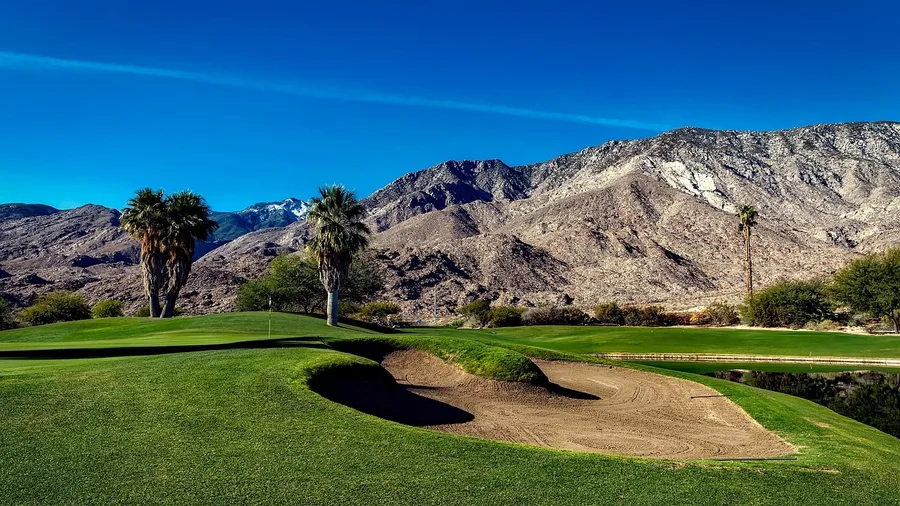
Book Palm Springs if your week is supposed to be a week off and not a week of activities. It is the easiest place on this list and it charges accordingly: you trade money for a slow day rather than effort for a good one.
From November through March the afternoon high runs 72-80F and the night drops to 45-55F. That split is the whole shape of a day here. You swim or lie by the pool in the afternoon sun in shorts, and by 6pm you are zipping a jacket and looking for a restaurant with a patio heater, because the temperature falls away the moment the light does.
The one non-pool thing worth putting in the calendar is the Aerial Tramway, around $30 a head, which hauls you from the desert floor up to a pine forest at 8,500 ft in roughly ten minutes. The floor is sand and the top is snow-dusted fir trees, and you feel the air change on the ride up. Go up late afternoon, eat at the top, come down to a warmer valley. Book it ahead; the car fills on weekends.
Midweek boutique hotels run $180-260, and the good news is that once you are checked in you park and forget it. Downtown is walkable, so the $45-70 a day rental is genuinely optional here, one of only two places on this list where that is true. That makes a four-night stay cheaper than the room rate suggests.
This is the wrong pick if your week is built around trails. The mountains above town are reached by tram, not trailhead, and there is no early-start desert hiking in Arizona worth the flight. Right for couples and friends who want a warm pool, a dinner reservation and nowhere to be at 7am.
💡 Tip: Book midweek and the $180–260 boutique rate holds; Friday and Saturday break it.
| Town | Nov–Mar highs | Nights | Best for |
|---|---|---|---|
| Palm Springs, CA | 72–80°F | 45–55°F | Pool days and walkable downtown |
| Scottsdale, AZ | 68–73°F | Cooler nights | Golf and restaurants on foot |
| Tucson, AZ | 68–76°F | Cold desert nights | Saguaro country on a city base |
| Sedona, AZ | 55–65°F | 28–35°F | Red rock trails and hot tubs |
| Bisbee, AZ | 58–66°F | Near freezing | One night of canyon mining history |
| Joshua Tree, CA | 60–68°F | 35–45°F | Stars and quiet trails |
| Death Valley, CA | 65–75°F | 40–50°F | The only safe hiking window |
| Borrego Springs, CA | 70–76°F | Cool nights | Free desert, warm days, no scene |
| Moab, UT | 40–55°F | Below 25°F | Empty trails at half-price rooms |
| Santa Fe, NM | 45–55°F | 15–25°F | Museums, galleries and green chile |
| Marfa, TX | 62–68°F | 25–35°F | Minimalist art and winter light |
2. Scottsdale: Peak-Season Golf and a Walkable Old Town

The residents' version of Scottsdale rarely touches the resort strip. Old Town is where they eat and drift through galleries, and it sits a five-to-ten minute walk from most hotels – inside that grid you leave the car in the garage, which puts this among only two spots on this list where that holds true for the whole stay.
It fits couples and groups who want a resort base and dinner on foot. It is the wrong call if you came for wide scenery and quiet, because the day here is pieced together from tee times and table reservations, one after the next.
Palm Springs and Scottsdale — At a Glance
🌡️ Daytime highs
72–80°F / 68–73°F
🌙 Nights
45–55°F / cooler
⛳ Golf round
$150–250 peak
🚠 Tramway
~$30
🛏️ Boutique hotel
$180–260 midweek
🚗 Car needed?
No, downtown
The shared catch
Both are the two most expensive bases on this list, and both are the only two where you can leave the rental parked.
3. Tucson: Two Saguaro Districts in One Long Weekend
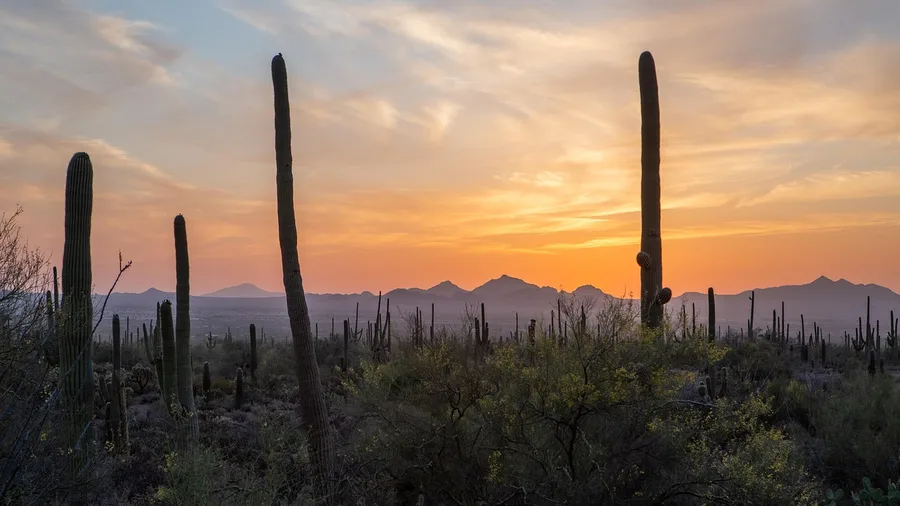
The light at four in the afternoon turns the saguaros copper and throws long shadows across the gravel, and the air has gone soft and cool after a warm day. That hour is the reason to be in Tucson rather than a resort town: it is a real city, working and spread out, with national-park cactus country attached to its edges.
The east and west districts of Saguaro sit about 30 minutes apart, and one $25 vehicle pass covers both for the week, which is two wholly different landscapes on a single ticket. The west side is the one for the hour above: sunset from the crest, the sun dropping behind the ranges and the whole valley going orange, and it costs nothing. Use a morning for the Arizona-Sonora Desert Museum near the west gate and the day is full. Two to three nights is enough here, the shortest stop that still feels complete.
The trade is what you came for and what you give up. There is no resort markup and no resort pool with it, so the trip is cheap and the evenings are your own rather than a cabana's. It suits hikers who want a city to eat and sleep in; it fails anyone whose holiday needs valet parking and a swim-up bar.
💡 PRO TIP
Buy the park ticket once
The $25 Saguaro vehicle pass is good for a week and covers both districts. Buy it at the first entrance and keep the receipt on the dash — you will be waved through at the second gate.
4. Sedona: Red Rock Trails Without the Summer Heat
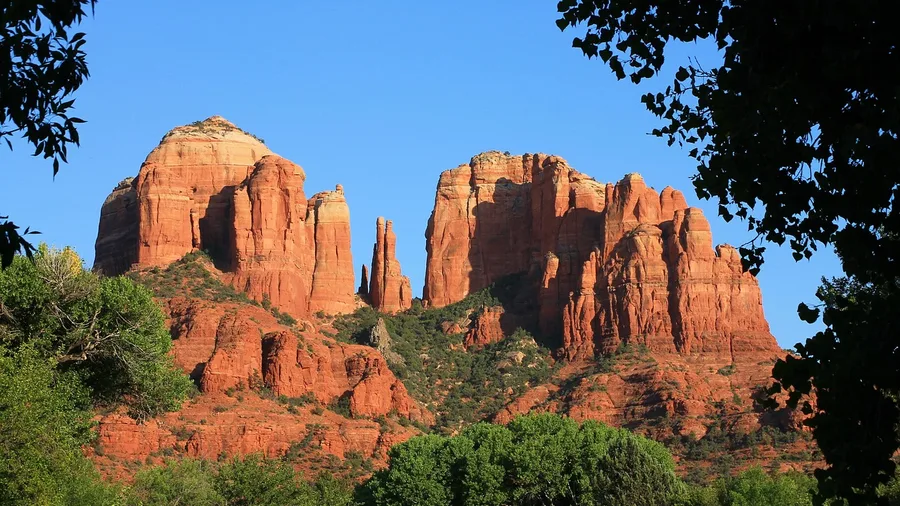
The honest answer is yes in the middle of the day and no after four, and that shape decides your packing. At 4,500 feet the numbers drop well below the cactus country below: highs run 55-65°F, nights 28-35°F, and shaded trails carry ice at dawn. Of the Arizona picks this is the prettiest and the coldest, which is the trade stated in one line: views and near-empty trails bought with cold nights.
The practical version is that trailhead lots fill by 8am, so either take the shuttle or spend around $130 on a jeep tour, which solves the parking and shows you the rock without the climb. A 30-degree swing between midday and morning means layers, not a single jacket, and that difference is a good day versus a cold retreat back to the room. It is not a swimming trip or an eat-outside-after-dark trip; it is a hot-tub-and-view trip, and that is how to decide whether it is your week. The same season that keeps cactus country mild turns into a hikeable, cold-nights stay here, and it asks for a coat, not a costume.
💡 Tip: Walk the sunny side of a canyon in the morning and the shaded side after lunch — the ice is where the sun has not reached.
5. Bisbee: A Mining Town Built Into a Canyon
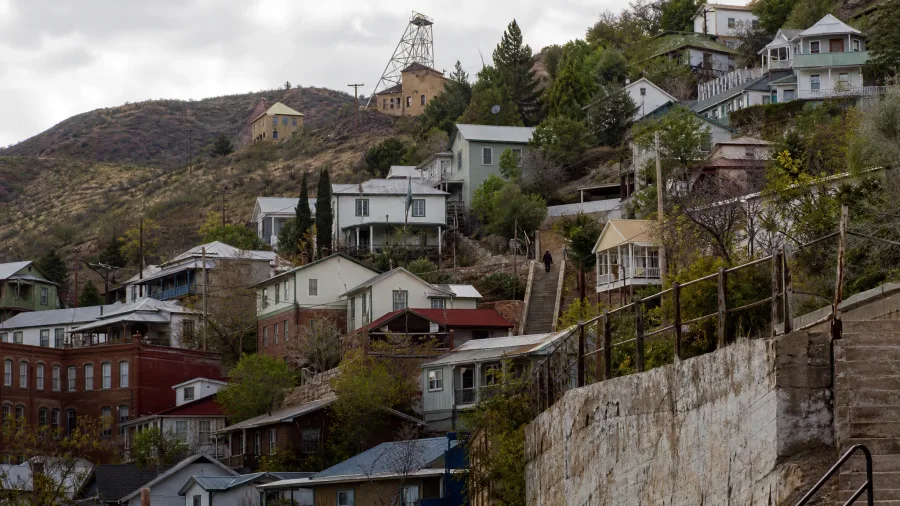
$18 buys the hour that explains Bisbee. The Queen Mine tour is led by retired miners who worked these shafts, and it is the reason to come rather than a stop you tick on the way through. At 5,300 feet, highs sit at 58-66°F with nights near freezing – warmer afternoons than the high red-rock town, colder dark, because the canyon holds the cold.
It is 90 minutes southeast of Tucson, which puts it in detour range rather than destination range, and that is the honest way to use it. One walkable historic district – a brewery, a hotel, a set of steep stairways between the streets – fills an afternoon and an evening; a second night has nothing left to give. So one night is right, and the itinerary should be built around that.
The trade is character per block at the cost of a full week. It is a stop to pair with Tombstone or a Tucson base, not a place to book as a base itself. The famous thing is small, the crowd is modest, and the queue happens twice a day at most – which for this town is the correct size.
6. Joshua Tree: Cold Nights, Empty Trails, Best Sky
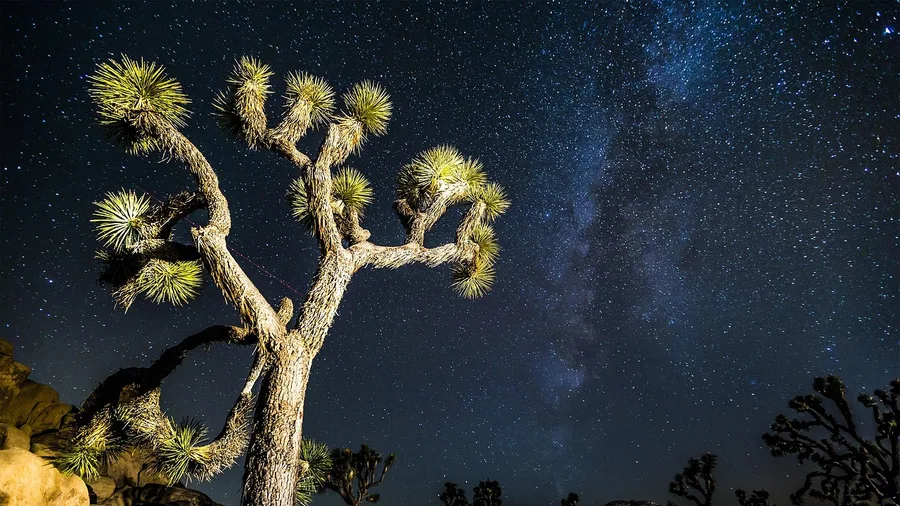
The thing to know before you book is the gap: highs run 60-68°F but nights drop to 35-45°F, so people pack for the afternoon and then sleep in it. Pack a real sleeping layer and a jacket for the evening, or spend the dark hours shivering in the car. Park entry is $30 per vehicle, and the cheaper motels cluster on the Twentynine Palms edge of the park.
Give it 3-4 nights, because the park and the Pioneertown-to-Palm Desert side make a loop rather than a single gate, and one entry station does not cover both. Book lodging 6-8 weeks out – the gateway towns hold fewer rooms than the demand implies, and the cheap ones go first. The reward is the best sky and the quietest trails on this list, paid for in that 25-degree swing between afternoon and midnight, which is the trade in a sentence.
Cool-Season Verdict by Town
- 🌴 Palm Springs, Scottsdale, Borrego Springs — Warm days, town life, no weather risk
- 🌵 Tucson, Joshua Tree — Trails and sun; cold nights only
- 🏜️ Death Valley, Marfa, Bisbee — Window has an end date or a drive attached
- 🧊 Moab, Sedona, Santa Fe — Below-freezing nights and a real coat needed
7. Death Valley: The Only Window It Is Safe to Hike
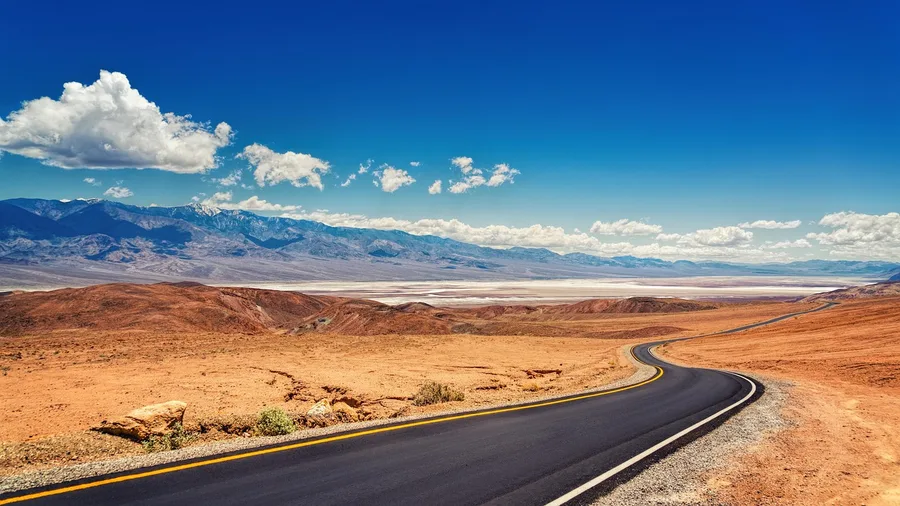
Joshua Tree's cold nights are a nuisance you pack for. Death Valley's heat is a line the calendar draws and then crosses, and no jacket fixes it. November through February, the highs sit between 65 and 75°F with lows in the 40s and 50s – the same comfortable band you get elsewhere, but here it decides whether you can leave the car at all.
By March the afternoons push into the 90s and Badwater Basin stops being a walk and starts being a hazard. That is the two walks the park is built around: Badwater's salt flat, 282 feet below sea level, and the rippled dunes at Mesquite Flat. Both are unbearable later in the year and both are easy now. Entry is $30 per vehicle, and Furnace Creek is the only place inside the park with real fuel, food and beds in one spot, so plan your driving around it.
Two nights is the floor. Stops inside the park run 30 to 50 miles apart, and a single night turns the whole visit into a drive between viewpoints with no time to stand still. Give it the two nights and the place slows down into what it should be: you park at Badwater in the morning cool, walk out onto the salt until the boardwalk crowd is a smudge behind you, and the light comes up the Panamint range on the far side.
For the photograph, be at the dunes an hour before sunset – the low sun rakes across the ridges and the sand goes from pale gold to orange in about twenty minutes. Stand on the second ridge back, not the first, and the footprints of everyone who stopped at the edge drop out of the frame. The salt flat at Badwater is the other one, and it wants early light, when the crust is still crisp and the reflection in the thin water is clean.
This is the one place on the list where the season is not a preference but a limit. Going outside it is not a worse trip – it is a dangerous one, and the park service will tell you so. Book it for the window, plan the days around the two long walks, and everything else in the valley is a bonus you drive past on the way.
8. Borrego Springs: Warm Days, Free Desert, No Lines
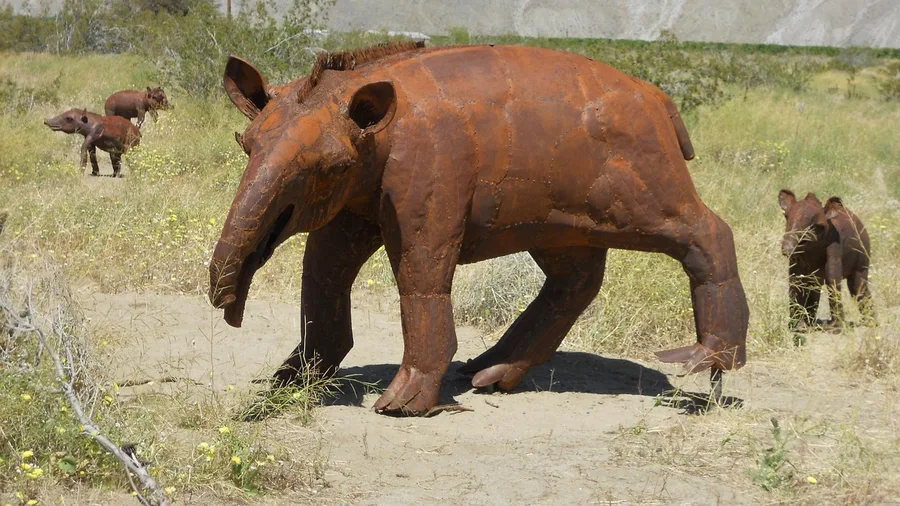
The first thing that hits you is the quiet – no gate, no booth, no line of cars ahead of you, just a wash of warm air at 9am and a desert that is already 70°F and holding. Borrego Springs posts highs of 70-76°F through the cool season, matching Palm Springs degree for degree and skipping the pool scene and the resort bill entirely, one of many warm US winter escapes. Anza-Borrego Desert State Park takes no admission at all, so the days cost nothing once you have a place to sleep, and the whole week's budget shrinks to one line: lodging.
You drive the sculptures yourself, a wide desert road loop out of town where the metal figures stand five metres tall and a hundred paces apart, no ticket and no queue between them. This is the wildlife-country stop by temperament: the draw is the scale and the quiet, not a guaranteed sighting of anything in particular. What you will probably see is the hour before sunset when the light rakes the metal and nobody is standing in your frame. Book 4-6 weeks out – there are small inns and vacation rentals and no chain hotels to fall back on, so there is no loyalty program to rescue a late call. The temperature without the swim-up bar, in other words; the right week for anyone who came for warmth rather than a scene, and a disappointment for anyone who needs a cabana and a cocktail waiter.
Warm Towns vs. Cold Towns: What You Give Up Either Way
Warm and towny
- Palm Springs, Scottsdale, Borrego Springs
- Highs 70–80°F, dinner outside
- Car optional, pool likely
- Lodging is the big bill
- Trails are short or absent
High and cold
- Moab, Sedona, Santa Fe
- Highs 40–65°F, coat at noon
- Empty trails and half-price rooms
- Free or cheap days out
- Nights below freezing
9. Moab: Canyon Country With the Crowds Gone
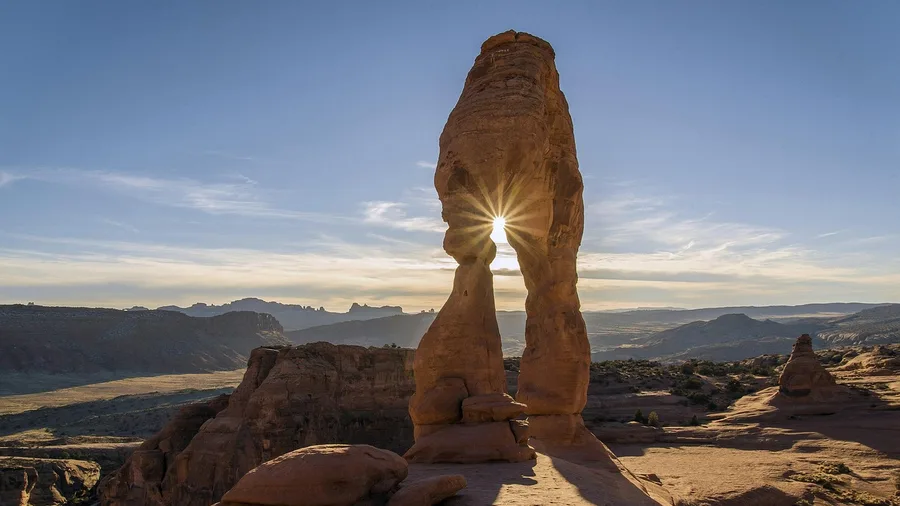
That is the question Moab asks, and the answer depends entirely on what you came for. Highs run 40-55°F with nights below 25°F, so this is a coat-and-short-hike week rather than a warm one – you pick your window, walk hard from about 10am to 2pm, then get inside before the temperature drops.
Arches entry is $30, and the product being sold is the lot: the same parking that is impossible in April sits open in January. Rooms roughly halve – motels go for $70 to $110 a night where spring charges $180 and up for the same bed in the same canyon. Budget accordingly and the week costs less than a long weekend in Palm Springs.
One caution: some tour operators close for the season, so check before you build a day around a guided trip. The trade is comfort for solitude, stated plainly – the best week on this list for anyone who does not need to be warm, and the wrong one for anyone who does.
10. Santa Fe: High-Desert Art and Green Chile in Winter
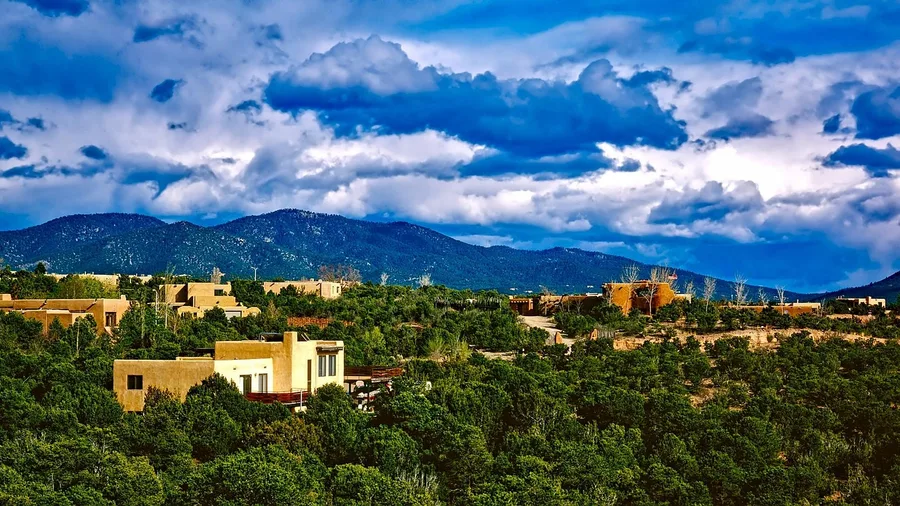
For a week that should pay off in galleries and green chile rather than trailheads, Santa Fe is the one to book. The cold here does not work against the scenery; it completes it.
At 7,200 feet, highs run 45-55 degrees and nights drop to 15-25, and the town gets enough snow that the adobe looks the way every photograph promised. That is the point of coming in this season, not a hardship tolerated to reach it. The Georgia O'Keeffe Museum is around $20, and Canyon Road's galleries cost nothing to walk through, so once the one ticket is bought the art day is nearly free after it.
Plaza, railyard and a margarita stop all sit inside a 15-minute walk, which keeps the rental car in its space and the day indoors. Order the green chile — a bowl at lunch runs $12-16 depending on where you sit — and let it be the reason the afternoon slows down. This suits the traveler who would honestly rather be cold inside a museum than hot outside one, and it fails anyone whose week is measured in miles hiked.
💡 Tip: Layer for the altitude, not the forecast — 7,200 ft makes a 45-degree afternoon feel colder than the number.
What the Cool Season Actually Gives You
How the season changes the deal in each group of towns
11. Marfa: Minimalist Art and Desert Light
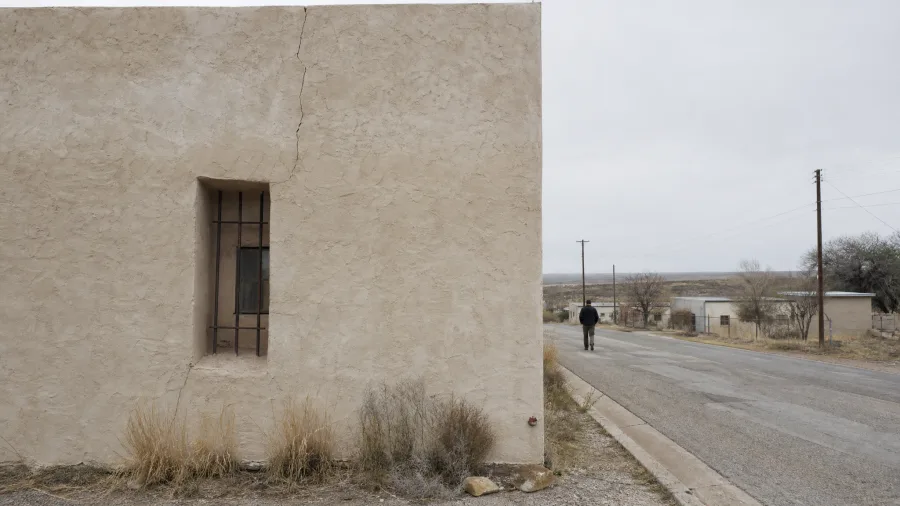
Santa Fe gives you a cold-weather art city with a whole plaza of restaurants and galleries behind it. Marfa hands you one foundation, one tour slot, and a main street that goes quiet by eight. That is not a downgrade, it is a narrowing, and it is exactly what some people are hunting for.
The town sits at 4,800 ft, where November through March runs 62-68°F by afternoon and drops to 25-35°F after dark. Photographers come for the light in these months: long, low, and so clear that the edges of a water tower look sharpened. If you want warm, this is not your town. If you want to see the high desert with the haze burned off it, this is the version worth driving for.
Getting here is the filter. The nearest airport with real service is El Paso, three hours of two-lane highway and open range away, and that drive is what decides how the trip is shaped rather than an inconvenience bolted onto it. You arrive in the afternoon, you leave two mornings later, and you do not try to squeeze a third day out of it. The Chinati Foundation charges $25 and opens Wednesday through Sunday only, and the tour is the piece that can fill, so book it before you book a bed. A room is replaceable. A sold-out Saturday tour means you drove three hours to look at the outside of the buildings.
Two nights is the number. The town is small enough to walk end to end in an evening, and in the cool season most kitchens close early, so a third night tends to arrive with nothing left to spend it on. The art carries the trip, the drive shapes it, and the schedule closes it.
So weigh it honestly: this is the most specific stop on the list, and it only works if the art is the reason you are going. Come for the collection and the light and the silence and two nights is right. Come wanting choices, a late table, and something open on a Monday, and the drive will feel like a tax you paid for a town that shut before you got comfortable.
Three Mistakes That Cost You the Season
Frequently Asked Questions
Is a week too long for one desert town?
For most of these, yes. Tucson needs two to three nights, Palm Springs and Joshua Tree three to four, Santa Fe and Marfa two. Only Palm Springs rewards a full week if you plan to do very little. Pair two towns instead: Tucson with Bisbee, or Joshua Tree with Palm Springs.
Do I need a rental car?
Yes, almost everywhere on this list. Cars run $45–70 a day. The only two places where you can leave one parked are Old Town Scottsdale and downtown Palm Springs — everywhere else, the drive is the trip.
When should I book?
Six to eight weeks out for Joshua Tree and Death Valley, four to six for Borrego Springs, and immediately for anything over Thanksgiving or Christmas through New Year. Mid-January to February is the cheapest stretch and needs the least lead time.
Is Death Valley actually safe in winter?
November through February, yes — highs of 65–75°F with lows of 40–50°F. By March afternoons reach the 90s and the window shuts. Carry more water than you think you need and stay with the car on the longer park roads.
Which town is best for hiking?
Tucson for cactus country on a city base, Joshua Tree for the quietest trails, and Death Valley for the walks you cannot do any other time of year. Sedona has the best scenery but the coldest mornings, with ice on shaded trails at dawn.
Is the cool season more expensive?
In Palm Springs and Scottsdale, yes — that is their peak, and Scottsdale green fees hit $150–250 a round. In Moab it is the opposite: motels run $70–110 against $180+ in spring. Borrego Springs and Anza-Borrego cost nothing to enter at all.
Match the Town to the Trade, Then Book the Dates
Decide on the shape of your week, not on a temperature. Pool and golf puts you in Palm Springs, Scottsdale or Borrego Springs. Trails puts you in Tucson, Joshua Tree or Death Valley. Cold-weather solitude is Moab or Sedona. Art and food is Santa Fe, Marfa or Bisbee.
Then make the first move before flights and before the rental car, which runs $45-70 a day everywhere except Old Town Scottsdale and downtown Palm Springs: book lodging for the Thanksgiving window or the Christmas to New Year window. Those two are the sell-outs, the only thing on this list that actually runs out. If your dates are loose, mid-January to February is the cheapest stretch of the season, the same towns and the same weather for less.
You came in thinking desert meant heat. You leave with eleven climates in one season and one question that picks between them, which is simply which trade you want to make. The booking page is still open.
Book the Room Before You Build the Itinerary
Open your calendar, pick the week between November and March, and lock the lodging in your chosen town today — especially if it touches a holiday. Everything else on this list can be decided after.