Mackinac Island measures eight square miles and contains zero cars, and you reach it on a passenger ferry that costs $28 to $32 round trip and takes 15 to 20 minutes from Mackinaw City or St. Ignace, leaving your car on the mainland. That is the whole idea in one figure.
Most people assume a US town break without a car means hunting parking, paying a rental, and missing the sights. Nine towns make the opposite explicit: the car-free link and the compact core are the point.
Pick your town on four checks: how you arrive, how far you can walk, which season suits you, and what a midweek room costs, from $180 to $450 a night depending on where you land. The car never enters the trip.
By the end you can match a town to your season, your budget, and your arrival style, then book inside the core and confirm the ferry, shuttle, or train before you pay.
Quick Tips Before You Start
Book the ferry first
On Mackinac and Provincetown, the ferry timetable and the return departure time belong in the booking before the lodging.
Check the season window
Mackinac and Provincetown run May–Oct; Key West runs Nov–Apr; Bar Harbor and Burlington run Jun–Sep; the rest peak Apr–Jun and Sep–Oct.
Stay inside the core
A room inside the walking district means you never need a taxi for dinner. Outside it, you do.
Midweek saves real money
The $180–$320 towns (Bar Harbor, Burlington, Saratoga Springs, Annapolis) can jump 40% on summer weekends; Tuesday–Thursday rates stay lower.
Pack one small bag
Ferries and shuttles charge per bag or limit luggage; a single carry-on makes the car-free transfer painless.
1. Mackinac Island: The Island With No Cars
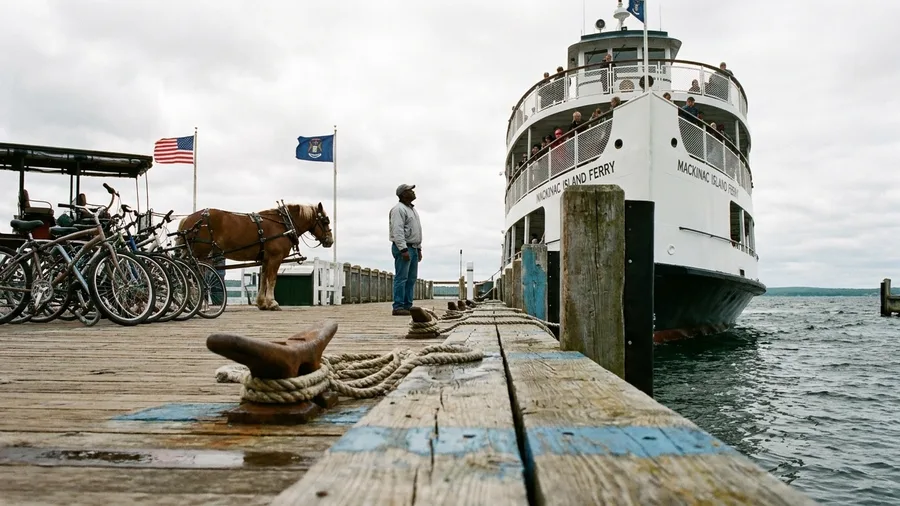
You can, and not just because the island bans them: the ferry that gets you there is a passenger boat, so the car has no way onto the island in the first place. Leave it in Mackinaw City or St. Ignace at a lot near the dock, walk on, and pay $28 to $32 round trip for a crossing that runs 15 to 20 minutes. The dock crew takes bags; you take a seat on the top deck and watch the bridge shrink.
The island is 8 square miles, but you are not booking 8 square miles. Your walking base is the 3 to 4 mile Main Street and Market Street cluster plus the shoreline path, which is where the fudge shops, the harbor, the forts and the horses all sit within a few blocks of the ferry landing. Bikes cover the longer runs, and renting one for the day typically costs less than a single restaurant dinner for a family.
the ferry timetable rules the day, and missing the last boat back is a real problem, so check the schedule before you book lodging.
May through October is the season, and summer lodging typically runs $240 to $450 a night, the highest range in this group. That is the price of the car-free rule, not a premium on charm. Book a room inside the Main Street cluster and the whole trip fits between the ferry dock and the shoreline path.
The order to plan it is backwards from instinct. Check the ferry timetable first, then the island's no-car rule, then the lodging, because the boat decides when you arrive and how long you can stay, and no hotel rate fixes a missed crossing.
💡 Tip: Book the first ferry of the day. The island is quiet before 10 a.m. and the Main Street cluster is yours.
| Town | Car-free arrival | Walkable core | Best for |
|---|---|---|---|
| Mackinac Island, MI | Passenger ferry from Mackinaw City or St. Ignace ($28–$32, 15–20 min) | 3–4 mi Main/Market streets plus shoreline path | No cars at all |
| Provincetown, MA | Boston fast ferry ($60–$95, 1 hr 35 min) | Commercial Street, about 1.2 mi | Ferry from a city |
| Key West, FL | Airport shuttle or taxi to Old Town ($15–$25, 10 min) | Old Town, about 2 sq mi | Warm-weather history |
| Bar Harbor, ME | Bus or airport shuttle to Village Green (5–10 min) | Village center, about 1 sq mi | Coastal village base |
| Burlington, VT | Taxi or bus from airport to Church Street (15–20 min) | Church Street Marketplace, 4 blocks | Small-city break |
| Saratoga Springs, NY | Amtrak, then 10-min walk to Broadway | Broadway core, 6 blocks | Train-friendly downtown |
| Annapolis, MD | BWI shuttle to historic district (35–45 min) | Historic district, about 0.7 sq mi | Colonial streets by harbor |
| Charleston, SC | Airport shuttle to historic district (20 min) | Historic district, about 1.5 sq mi | Restaurant streets and harbor |
| Savannah, GA | Airport shuttle to historic district (20 min) | Historic district, about 2.5 sq mi | Long-weekend grid of squares |
2. Provincetown: Ferry In, Commercial Street Out
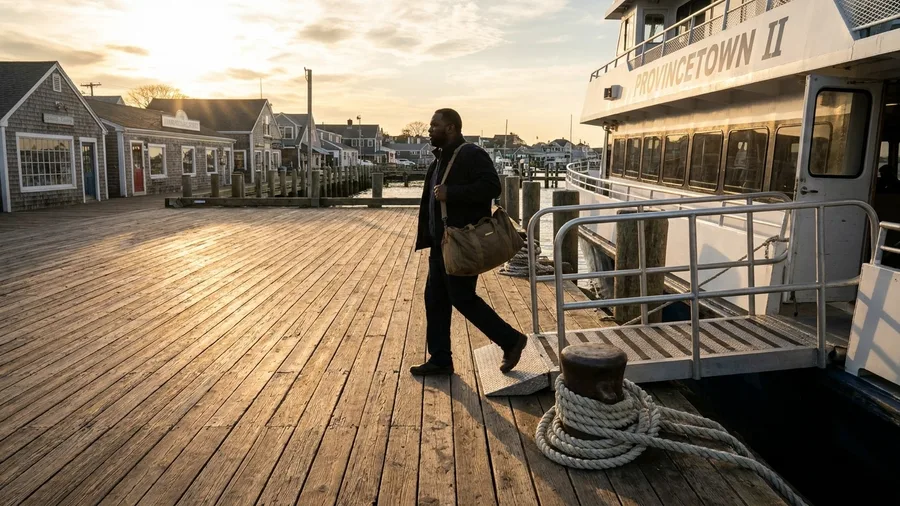
The engine cuts, the dock ropes go over, and you are standing on MacMillan Pier with salt on your lips and Commercial Street starting a two-minute walk away, no taxi line and no rental counter between you and it. That is the whole appeal of arriving by fast ferry from Boston: $60 to $95 round trip and about 1 hour 35 minutes, and the boat puts you inside the town instead of on its edge.
Then you walk. Commercial Street runs roughly 1.2 miles from the pier along the harbor, packed with galleries, bakeries and bike rentals, and the pier itself is the river-town waterfront view where the fishing boats and the ferry both tie up. Do not think of it as a grid, because it is not; it is one long street with the water on one side and the town on the other, so you walk out in the morning and back in the afternoon with a lobster roll somewhere in the middle.
May through October is the season, and midweek lodging typically runs $220 to $420, less than the island summer rates and more than the smaller downtowns. The departure time of the return ferry is the thing that shapes your day, so put it in the booking check before you pay for the room.
💡 Tip: The return ferry departure time constrains your whole day. Check it before you book the room.
3. Key West Old Town: Walk to the Water
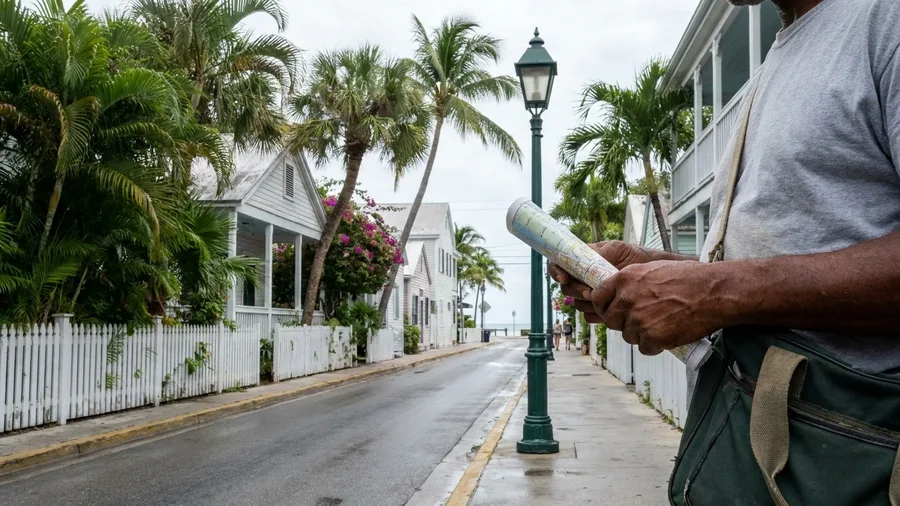
Know this before you land: Key West is not a place to rent a car, and you do not need one from the moment you clear the airport. A shuttle or taxi to Old Town takes about 10 minutes and costs $15 to $25, and that is the entire transport problem solved; the historic core is about 2 square miles and you walk it.
The route runs Duval and Whitehead streets down to Mallory Square, with the water always at the edge of the walk, and the odd little stops along the way, the roosters in the street, the tiny bars, the old wooden houses, are the reason to go slow. November through April is the season, midweek lodging typically runs $220 to $420, and the arrival cost is so low that your budget decision is where you stay, not how you get there.
Worth It, Only If, or Skip
- 🚫 Mackinac Island — No cars at all, ferry arrival, shoreline path. The purest car-free stay on the list.
- 🚢 Provincetown — Ferry from Boston drops you two minutes from the main street. Book the return before the room.
- 🚕 Key West Old Town — Short shuttle ride, compact core, winter season. Warm-weather history without a car.
- 🅿️ Annapolis — The BWI shuttle is 35–45 minutes each way. A very compact district, but the transfer is the trade-off.
- 🚗 Savannah — 2.5 square miles of grid is walkable, but if you split your stay outside the district you will need a car.
- 🏨 Charleston — Bigger district means more walking and higher lodging ($220–$420). Stay inside the core or the budget climbs.
4. Bar Harbor: Village Green and the Shore Path
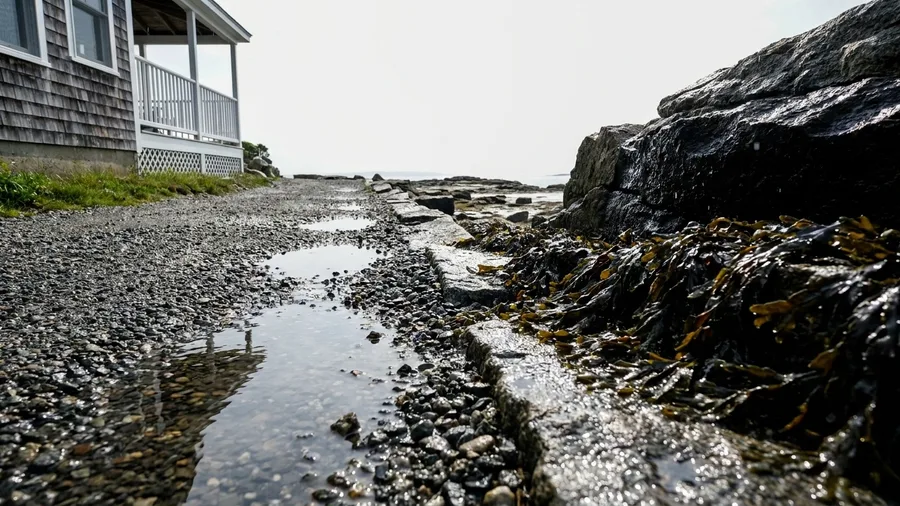
Fog sits on Frenchman Bay most mornings until nine, and you hear the bell buoy before you see anyone.
Bar Harbor is what the warm-weather island cannot give you: cool air, granite underfoot, a harbor that stays grey and quiet until the sun burns it off. The bus or airport shuttle from the Hancock County terminal drops you at the Village Green in five to ten minutes, and that green is both your arrival point and your base for the whole stay. No cab, no rental, no parking meter to feed.
The village itself covers roughly one square mile, and the walk most people end up repeating is Main Street down past the green and out onto the Shore Path, a flat gravel track that follows the water along the back of the big old cottages. You will pass the porch of a shingled house on your left and a rockweed-covered ledge on your right, and the whole loop gives you maybe forty minutes at an easy pace. That is the point. A no-car day here is short by design, which means you can do it twice, once in the morning light and once after dinner when the tide is out and the path smells like salt and wet stone.
June through September is when everything is open and the shuttles run without a hitch, and midweek rooms typically land between $180 and $320 a night, meaningfully under the coastal towns where harbor-front lodging pushes past $400. Book inside the village rather than out on the access road. The one thing you cannot do on foot is Cadillac Mountain, and the summit road is the reason most people rent a car; if the sunrise summit matters to you, price the Island Explorer loop before you commit to the no-car plan.
💡 Tip: The Shore Path starts near the town pier and runs about a mile along the water. Walk it early before the day-trippers arrive.
💡 PRO TIP
The core-first booking rule
In every town on this list, book the room inside the compact core before anything else. A hotel two miles out saves $40 a night and costs you two taxi rides a day. The core is the reason you came.
5. Burlington: Church Street and the Waterfront
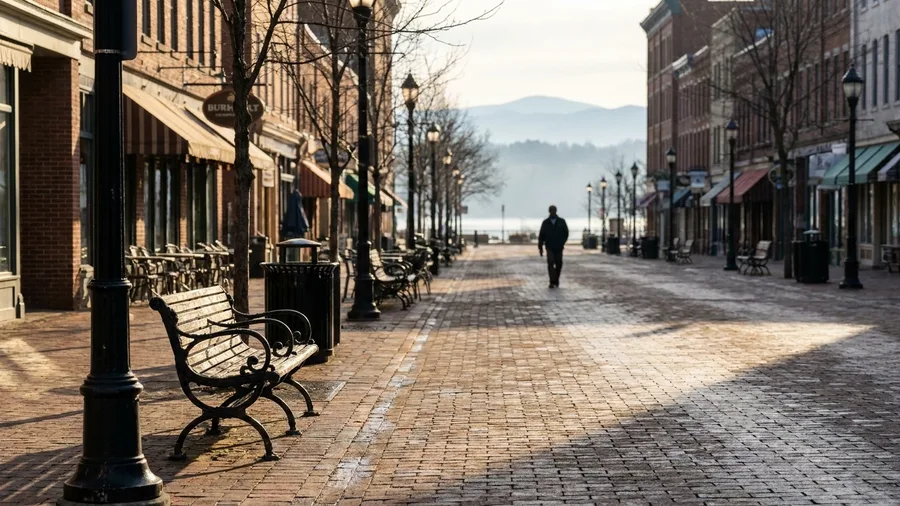
Burlington is a small city you can cross on foot from a four-block pedestrian street to a lakefront park. The airport transfer is a 15-minute taxi or a 20-minute bus to Church Street, and the walkable core starts right at the drop-off, so a short haul is the whole point. The splurge sits in the summer lodging: typical midweek rooms run $180-$320 from June through September, and a lake-view room or a waterfront evening pushes toward the top of that band. Worth it once, if the view is what you came for.
Church Street Marketplace runs four blocks of shops, cafes and street performers, and the waterfront park extends the day's walk from there. Those two anchors are enough for a compact city break, and the short transfer from the airport or train station makes it feasible without a car. This suits anyone wanting a pedestrian street, lakefront time and an easy arrival.
6. Saratoga Springs: Broadway, Park, and Track
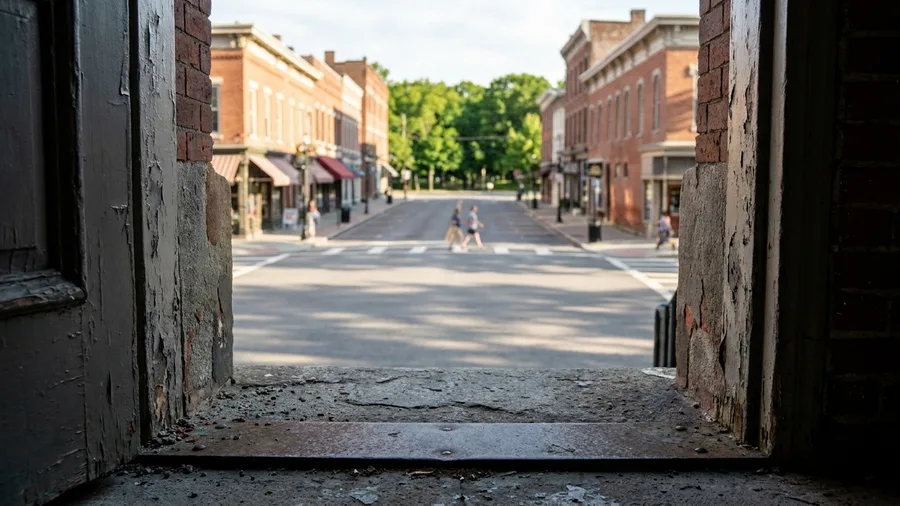
Take the train and go late in the afternoon, in the two hours before the light drops and the backstretch goes gold.
Saratoga Springs is the rare US town where Amtrak delivers you almost to the doorstep. Step off at the station on Station Lane and Broadway begins a ten-minute walk south, which means rail removes the airport transfer entirely: no shuttle, no rideshare, no parking garage to find.
The core is six blocks of Broadway stores and restaurants, and Congress Park sits just east of it, which is where the walking route goes once you tire of shopfronts. In race season the park becomes the sit-down spot between events, with the old canopied springs still flowing and the paddock crowd drifting up from the track. The track itself sits north of the station, an easy walk or a short ride depending on which entrance you use; the historic clubhouse side draws the crowds early, and the backstretch rail is quieter and gets the better light as the afternoon wears on.
April through June and September through October are the honest windows, and midweek rooms typically run $180 to $320. The track season sits inside the summer months, so if you want the racing and the trains you are booking the busiest and priciest weeks of the year; if you want the town without the crowds, aim for the shoulders and treat the track as the reason to come back.
💡 Tip: Track season runs roughly July through early September. Book well ahead if those dates matter to you.
Train vs. Shuttle Arrival
Train arrival
- Rail only works here: no other town on this list has a station walkable to its core
- Best for a two-night shoulder-season trip: no transfer to book, nothing to queue for
- Book the shoulder months if you want the track as a day trip, not the reason for the trip
Shuttle arrival
- Every other town needs one: budget 20–45 minutes and $15–$25 each way on top of lodging
- Annapolis is the longest transfer at 35–45 minutes, so it eats a half-day round trip
- Key West, Charleston and Savannah are 10–20 minutes; Bar Harbor is 5–10
- Skip the shuttle-only plan if you are staying under two nights: the transfer time outweighs the walk
7. Annapolis: Historic Streets by the Harbor

Thirty-five to forty-five minutes on a BWI shuttle is the price of admission to a historic district that measures about 0.7 square miles. That is the whole trade: one long sitting on a bus, and then you never touch a car again. Pay the shuttle fare once, get dropped inside the district, and let the airport recede.
The district drop-off is the point. Nothing here needs a rental, and nothing needs parking, which is the usual hidden cost of a harbor town with colonial bones. From Main Street you walk downhill to City Dock, the water opening ahead of you at the bottom of the street, boats knocking against the dock railings. The statehouse dome sits behind you, the harbor in front, and the distance between them is a stroll of some minutes, not a drive.
Go in April through June or September through October, when the streets carry their best weather and the harbor looks like the postcard without the summer crush. Typical midweek lodging lands somewhere around $180-$320 a night, the lower tier, so the budget is not the obstacle. The small, flat core is the reward for the crawl up from the airport: few visitors ever complain about the walking, and that is exactly the point.
Annapolis: What to Know Before You Book
📍 Shuttle drop-off
Inside the district, not at a lot
🧭 Car-free route
Main St to City Dock to Waterfront Park
⏱️ Walk time
Main St to City Dock: about 10 min downhill
⚠️ Skip if
You want beach or nightlife; this is a daytime walking town
The one booking step
Confirm the shuttle drops at the historic district, not the airport lot. That single detail decides whether the trip is car-free.
8. Charleston: King Street to the Battery
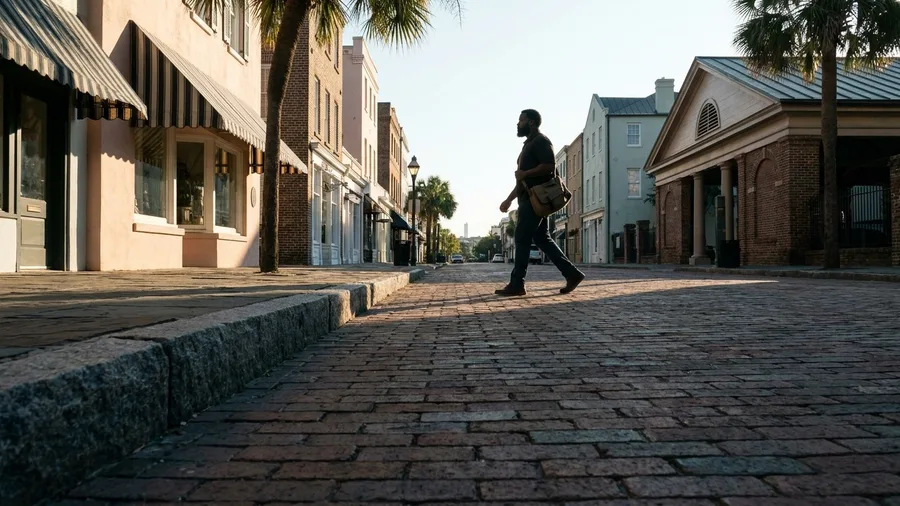
Charleston costs about twenty minutes from the airport versus that longer BWI shuttle, but the district you land in is nearly twice the size, about 1.5 square miles with a restaurant scene that pulls you further than you planned. No rental needed for a district stay; the shuttle drops you inside and the walking takes over from there.
King Street, City Market and Waterfront Park make the spine. Order a bowl of she-crab soup somewhere along the route, roughly $10-$16 depending on the table, and eat it slowly because you are on foot and going nowhere fast. April through June or September through October is the window, and midweek lodging runs about $220-$420, so plan for a bigger budget in exchange for more square miles of walking and a longer list of places to eat.
The Car-Free Trip Pyramid
What to sort before you book any of these towns
9. Savannah: Squares, River Street, Forsyth
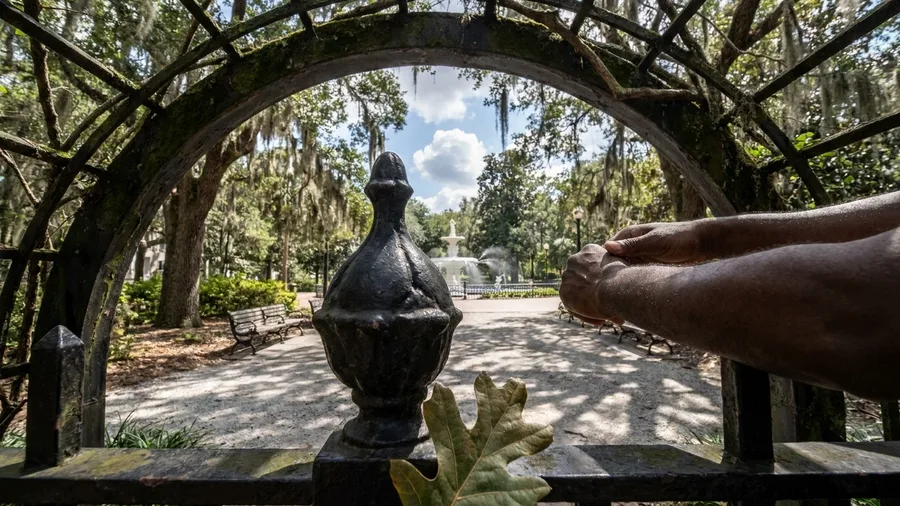
Savannah is a grid of squares with a river at one end and a park at the other, and you can walk the whole thing.
Twenty minutes from the airport by shuttle and the historic district drop-off puts you inside the grid, no rental required. At about 2.5 square miles it is the largest core here, and the sensible route strings together River Street, Broughton Street and Forsyth Park, with the squares breaking up the blocks so the walking never feels like a forced march. April through June and September through October are the seasons worth booking, and midweek lodging lands around $220-$420. Those numbers reward staying inside the district and walking the whole stay rather than splitting your nights across town and driving between pieces of the trip.
Somewhere in the middle of all that, Forsyth Park is the place to sit and do nothing for an hour. The fountain is at one end, oaks draped over the paths, benches for anyone who wants to stop moving. Sit there long enough and the trip stops feeling like a checklist. The squares do the same thing one at a time: you stop, you look, you go on when you are ready.
📋 Your Car-Free Booking Sequence
Pick the town by season
Match the month to the window: May–Oct for Mackinac and Provincetown, Nov–Apr for Key West, Jun–Sep for Bar Harbor and Burlington, Apr–Jun and Sep–Oct for the rest.
Lock the arrival link
Book the ferry, shuttle, or train before the room so the timetable sets your day.
Book inside the core
Choose lodging walkable to the district. The whole point is not driving to dinner.
Check the midweek rate
Tuesday–Thursday rates stay lower. Confirm the nightly price against the $180–$320 or $220–$420 range for that town.
Pack one small bag
Ferries and shuttles limit luggage. A single carry-on makes every transfer simpler.
Frequently Asked Questions
Can you really visit these towns without a car?
Yes. Each town on this list has a car-free arrival link (ferry, shuttle, or train) and a compact walking core. Mackinac Island bans cars entirely. The others have historic districts small enough to cross on foot, with the arrival link dropping you inside or within a short walk of the core.
Which town is best if I want no cars at all?
Mackinac Island. Cars have been banned there since the 1890s, and the only way in is the passenger ferry from Mackinaw City or St. Ignace ($28–$32 round trip, 15–20 minutes). Bikes cover the longer island distances.
How much should I budget for midweek lodging?
Expect $180–$320 a night in Bar Harbor, Burlington, Saratoga Springs, and Annapolis. Provincetown, Key West, Charleston, and Savannah run $220–$420. Mackinac Island in summer is $240–$450. Midweek rates are consistently lower than weekend rates.
What is the best season for each town?
Mackinac and Provincetown: May–October. Key West: November–April. Bar Harbor and Burlington: June–September. Saratoga Springs, Annapolis, Charleston, and Savannah: April–June and September–October.
Do I need to book the ferry or shuttle in advance?
Yes, especially for Mackinac and Provincetown. The ferry timetable constrains your arrival and return, so book it before the room. Airport shuttles to Key West, Charleston, Savannah, and Annapolis can often be arranged on arrival, but reserving ahead avoids waiting.
Which town works best for a train traveler?
Saratoga Springs. Amtrak puts Broadway a 10-minute walk from the station, and the six-block core means you never need a taxi. It is the only town on this list with a true train-to-downtown arrival.
Pick Your Town by Traveler Type, Then Book the Core
The verdict is plain: these nine towns work without a car because each pairs a fixed arrival link, a compact core, and a season and budget that match. Parking is not a cost you plan for.
Choose by traveler: no cars at all means Mackinac Island; a ferry from a city means Provincetown; warm-weather history means Key West Old Town; a train-friendly downtown means Saratoga Springs.
The car stays at the airport, the train station, or the mainland dock, because the ferry, shuttle, or train is the fixed part of the trip. Book lodging inside the compact core and verify that link before you pay.
Book the Core, Verify the Link
Pick your town, book lodging inside the walking district, and confirm the ferry, shuttle, or train before you pay. That is the whole car-free check.