Is the village worth the detour, or does it just photograph well? Eleven of them are worth it, and each charges a different price for the look.
The pull-in is Civita di Bagnoregio, where you walk 10 to 15 minutes across a void on a footbridge, and no car follows you onto the far side. Your instinct says the crossing is the obstacle standing between you and the village. It is not.
Every village here is preserved by something that also makes it inconvenient: a bridge, a coach timetable, a road that never straightens, a long drive north. The effort is the reason the look survives.
So you get eleven entries, each with the one detail that earns the detour, a best season, and the honest access reality, judged by whether you would pay that particular price. Inn doubles run $70 to $180, dinner $15 to $35, local transport $5 to $20, parking $8 to $15 a day, and two villages maximum per day if you drive.
You do not have to take all eleven. Sort them by the price you will happily pay, and book the one that runs out of beds first.
Quick Tips Before You Start
Arrive at opening
The first hour after a village opens is the only reliably empty one; Hallstatt and Vernazza both flip by mid-morning.
Carry cash
Small cafés and guesthouses in Viscri, Monsanto and Piódão may not take cards, and the nearest ATM can be 30 minutes away.
Two villages a day, maximum
Mountain and rural drives take longer than the map says, so a third stop usually means arriving at dusk.
Plan around lunch
Markets and small museums commonly close 12:30 to 14:00, so eat then or carry something.
Grippy shoes are equipment
Civita's stone, Monsanto's lanes and Piódão's terraces are uneven; trainers with tread, not sandals.
Keep drones off
These are residential cores, not attractions. Stay on marked lanes and treat doorways as private.
1. Civita di Bagnoregio, Italy
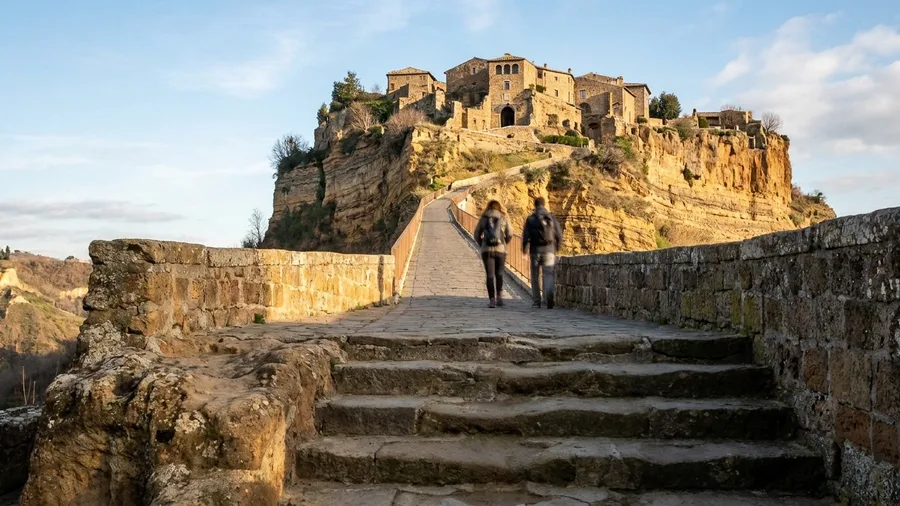
Yes, and 2 to 3 hours on the far side. What you are walking into is a tufa plateau that rises out of the valley with exactly one long footbridge as its approach from Bagnoregio, which means every car in the region stops at the bridge head and the lanes beyond are car-free because the geography says so, not because a sign does.
The bridge itself runs 10 to 15 minutes each way, exposed to the sun with a stepped, climbing surface underfoot, and the village on the other side is stairs and uneven stone laid centuries before anyone thought about a handrail. Count stroller-heavy groups out of this one. What lives up there is worth the climb in a quieter register than architecture: swifts cutting the air over the lanes in the late afternoon, swallows working the cliff face below the belvedere, lizards scattering off warm tufa the moment your shadow crosses them. It is honest wildlife rather than a guaranteed sighting, which is the correct expectation to carry in.
Beds inside the plateau number very few, so the practical base is Bagnoregio below or Orvieto up the line, and both let you reach the bridge for opening, when early risers and photographers get lanes close to empty. Take the train to Orvieto, then a local bus or taxi for $5 to $20, budget $70 to $180 for a small inn double and $15 to $35 for a simple dinner, and carry cash for the cafes on the Bagnoregio side. The most dramatic arrival anywhere on this list is bought with legwork and a bed somewhere else, and the detour pays off in the first ten minutes or it does not pay off at all.
💡 Tip: Carry cash for the cafés on the Bagnoregio side of the bridge; the ones on the plateau keep shorter hours.
⚠️ COMMON MISTAKE
The Bed Is in the Next Town
Civita has almost no rooms, and booking one for late afternoon leaves you walking back over the bridge in the dark. Sleep in Bagnoregio or Orvieto, arrive at opening, and the detour pays off in the first ten minutes.
2. Hallstatt, Austria's Lakeside Village
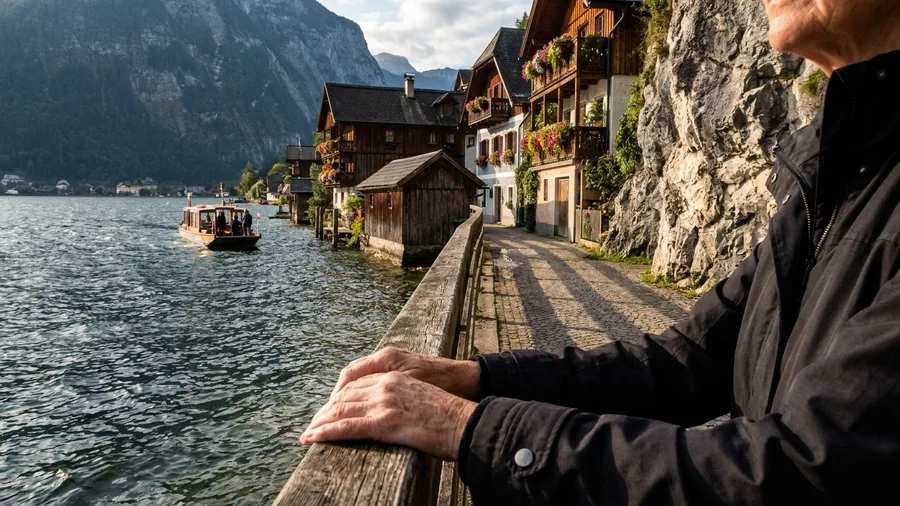
The lake gives you the village before you have paid a thing: from the far shore the houses show themselves as a brown stripe under the rock, and the ferry has barely left the dock when the whole picture resolves. That is the difference from a place that bills you in stairs. Here the ground is flat and the fare is a timetable, and the fare comes due on the hour.
The lane between water and cliff is about ten feet wide at its tightest, and by eleven in the morning it stops being a lane and becomes a line. You can walk it in twenty minutes. At that hour you cannot walk it in twenty minutes. Coaches unload at the ferry dock through the middle of the day, and the church side and the lakefront get the worst of it. Step off the main lane into the upper alleys, where the salt miners' houses stand shoulder to shoulder and nobody photographs them, or climb the path to the salt-mine viewpoint above the roofs and look down the cliff at the crowd that is looking at each other. Locals in this village walk the world's most photographed lane daily and have no reason to do it at noon. The clock is the whole trick: before nine, the same street is a street, with a baker's light on and a dog asleep in the sun. After five it empties again, and on a July evening the water holds the light long past eight. A small inn double runs $70-$180, and if you look at that number and see a room rate, note that it also buys the two windows the day-trippers cannot reach. Sleeping there is not luxury; it is scheduling.
💡 Tip: One night at $70 to $180 is what buys you the 5 p.m. to 9 a.m. window. The view is free; the quiet is not.
3. Eguisheim, France's Circular Wine Village
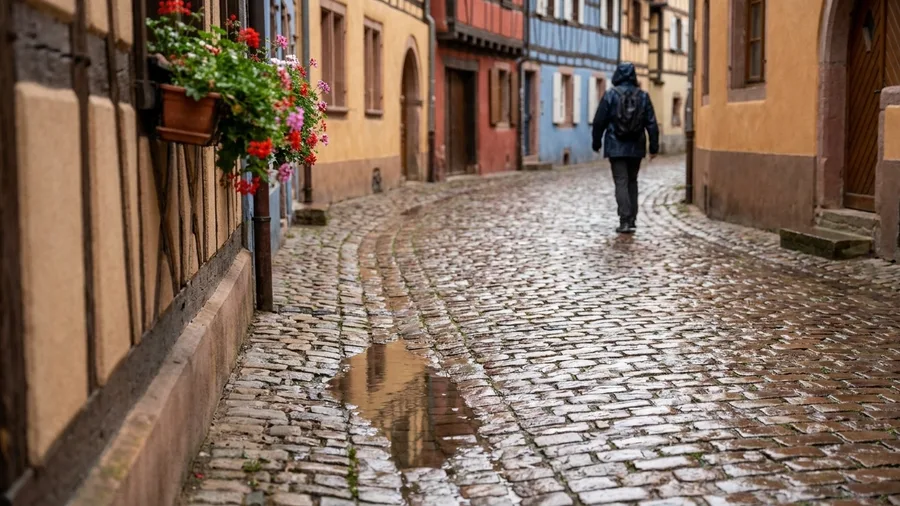
Hallstatt rations the look by the clock; Eguisheim solves the same problem with a floor plan, concentric cobbled rings that keep walkers moving in circles instead of stacking into one bottleneck street. That geometry is why the village absorbs a crowd without ever feeling like a queue, and it is also why the place has a second life as a working wine town rather than a backdrop. Follow the rue du Rempart round the core and the half-timbered courtyards come at you painted in the colours of a specific trade: the vintners who built this place were growing grapes on the slopes above long before anyone arrived to photograph the shutters.
The story worth carrying out is the one about the ring. Alsace vineyard villages were laid out so that the best land went to vines and the village closed in tight around a church to save every metre of arable ground, which is how you end up with a tidy concentric plan rather than the sprawling streets of a market town. The vineyards still start at the edge of the ring, so the wine trade is not a theme for visitors, it is the reason the buildings exist. That is your answer to whether it is more than a pretty square.
It is a base. Sleep here and the Alsace wine road runs out from your door in both directions, which is a different trip from the one where you park, circle a square, take the photograph and drive on to somewhere else. Allow May and June or September for vineyard weather and thinner crowds. The core walks end to end in under 30 minutes, but the rings repay a slow second lap, especially when lunch has emptied the streets.
Park outside the old ring at $8 to $15 for the day and walk in, and plan your visit around lunch rather than around a sight. Markets and small museums commonly close from 12:30 to 14:00, so the meal is the fixed point the day arranges itself around.
The trade is the reverse of a hard climb: these streets come buffed, comfortable and well fed. You pay wine-country prices for it, $15 to $35 for dinner and $70 to $180 for a small inn double, plus a short walk in from the car park, and for a lot of travellers that is a price worth paying twice.
💡 Tip: Walk the rue du Rempart clockwise in the late afternoon; the light lands on the east side courtyards as the buses leave.
4. Monsanto, Portugal's Boulder-Built Village
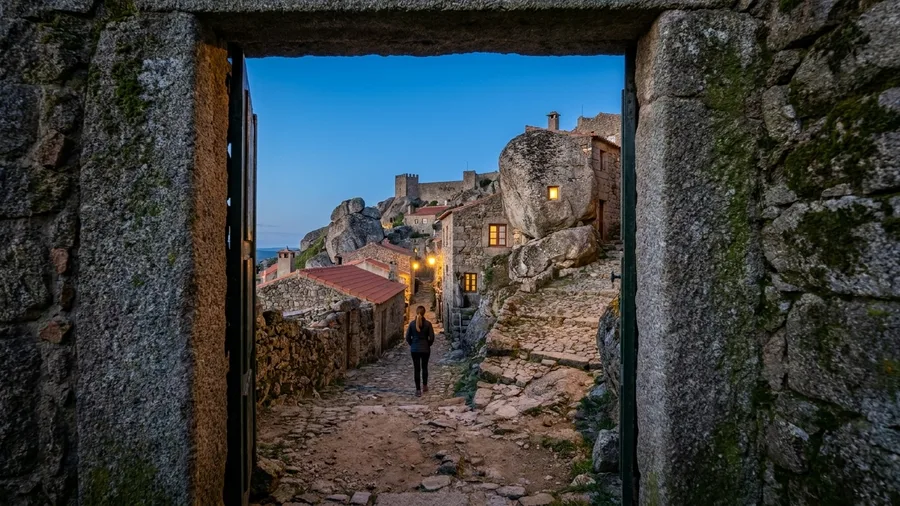
Monsanto is a granite village built around boulders it never moved. What you see from the approach road is a slope of grey rock with roofs growing out of it, and that is close to the truth: several houses have a boulder for an outside wall, one or two use a slab as a ceiling, and the castle path above the lanes climbs past the same stone in its raw state. The geology and the building are the same material, which is why the place reads as old rather than restored. It is not a polished film set either. Eguisheim's cobbles are the product of wine money and long upkeep; here the surface is dirt, broken granite and stairs that tilt underfoot.
Grippy shoes are equipment, not advice. The lanes climb and drop on worn rock that stays slick after rain, and anyone unsteady on stairs will spend the visit watching their feet instead of the village. Access is bought in car miles: drive or take a taxi from Castelo Branco, because the local bus runs too few times a day to build a plan around, and the detour assumes a flexible timetable, much like Deep South road trip stops. Bring cash for the small cafés that do exist, since there is no café on every corner, and give it one or two nights at $70-$180 for an inn double rather than stacking a second village behind it. Two by car in a day is the ceiling, and the last arrival should not be at dusk.
So who is this for? Independent travellers with their own car, a tolerance for uneven ground and no fixed lunch hour will find the rawness is the point rather than a flaw. It is the wrong call for anyone who needs a coffee within sight of where they parked, or who measures a village by how quickly the photographs are done. The honest version: Monsanto charges you in surface and services, and if you will not pay that, the same age of stone is available somewhere smoother.
Villages You Can Reach Without a Car vs Villages You Cannot
Train and bus will do it
- Civita di Bagnoregio — train to Orvieto, then bus or taxi
- Hallstatt — train plus a short lake ferry
- Giethoorn — bus from Steenwijk station
- Vernazza — the Cinque Terre rail line is the point
- Perast — bus from Kotor, easier than summer parking
Book the car or skip it
- Reine — fly to Leknes, then drive the Lofoten chain
- Viscri — slow roads from Brasov or Sighisoara
- Piódão — winding mountain road from Coimbra
- Monsanto — limited local bus from Castelo Branco
- Besalú — reachable by bus, far easier with a car
5. Giethoorn, Netherlands' Canal-Only Village
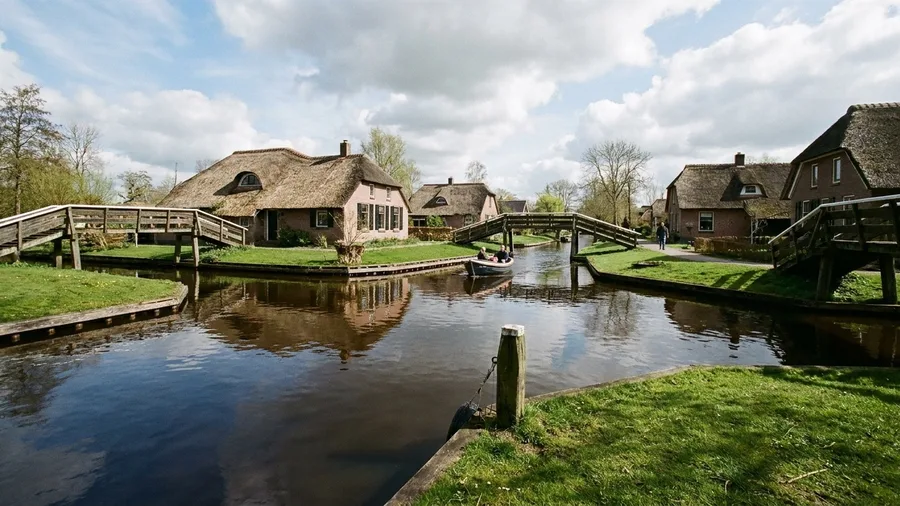
The thing to know before you go is that Giethoorn has no streets, so the car you needed in the last village is simply unwanted here. You reach it by bus from Steenwijk station, which drops you in the centre, or you drive and park outside at $8-$15 a day, then walk. Everything after that is on foot along canal-side paths and over small footbridges, with a rented electric boat as the only way to see the water side properly. Families and slow travellers do well on ground this flat: the distances are short, dinner is $15-$35, and there is no nightlife at all.
The crowd is the whole question, and the answer is to sleep there. Day visitors thin out through the late afternoon, and the village after they leave – quiet water, bridges empty, kitchens closing early – is the version worth the trip. Come as a day-tripper in July and you get a queue on a footpath. Come for a night and you get the reason the place was built for boats instead of cars: calm for some, plain boredom for others.
💡 Tip: Book the boat in the morning. By noon the hire queues at the busiest jetties run 30 minutes or more.
6. Reine, Norway's Fjord-Edge Hamlet
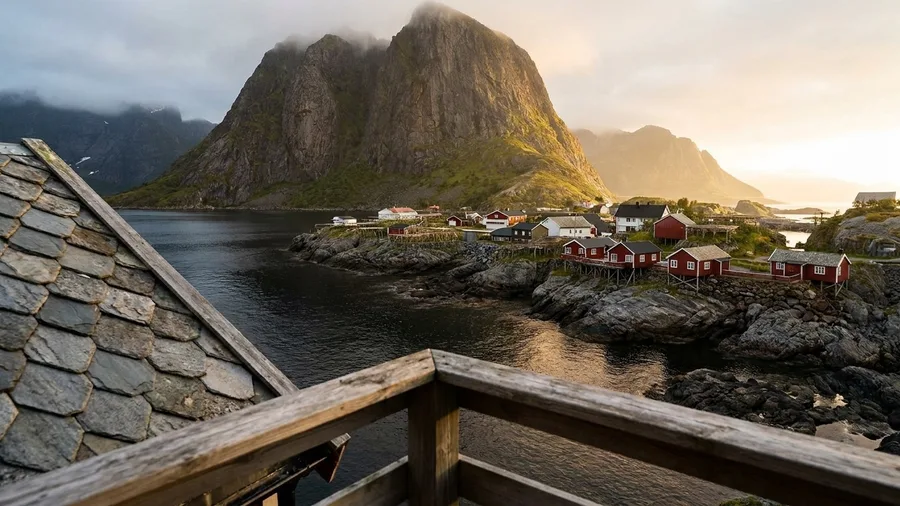
Reine is worth the detour only if you go between June and August, and only if you are already paying to be in Lofoten. In those weeks the light barely leaves, the red harbour cabins sit below the fjord peaks well into the evening, and the services are open. In winter the aurora may show, but guesthouses and restaurants thin out, so the same hamlet becomes a different and much harder trip. Pick your season first and treat the village as the reward.
The hour that matters is late. Reinebringen, the stepped climb above the village, is the price of the aerial photograph everyone recognises, and it is steep enough that you want to start it in the long evening light rather than at midday. Come down, eat, and walk the harbour edge as the peaks go flat and blue; that is the hour the place is worth the airfare. Small inn doubles run $70-$180, and dinner at $15-$35 is the exception here rather than the rule, so the room is the cheaper half of the stay.
Getting there sets the budget: fly to Leknes, then drive, because a car is what the whole Lofoten chain requires. On this stop the transport costs more than the bed, which tells you who it suits – hikers and photographers who came for the landscape, not anyone treating it as a cheap add-on. Keep drones off the residential core and stay on the marked lanes.
💡 Tip: The Reinebringen steps are steep and can be closed or unsafe when wet or icy. Check locally before committing.
Five Numbers That Decide the Detour
7. Viscri, Romania's Saxon Fortified Village
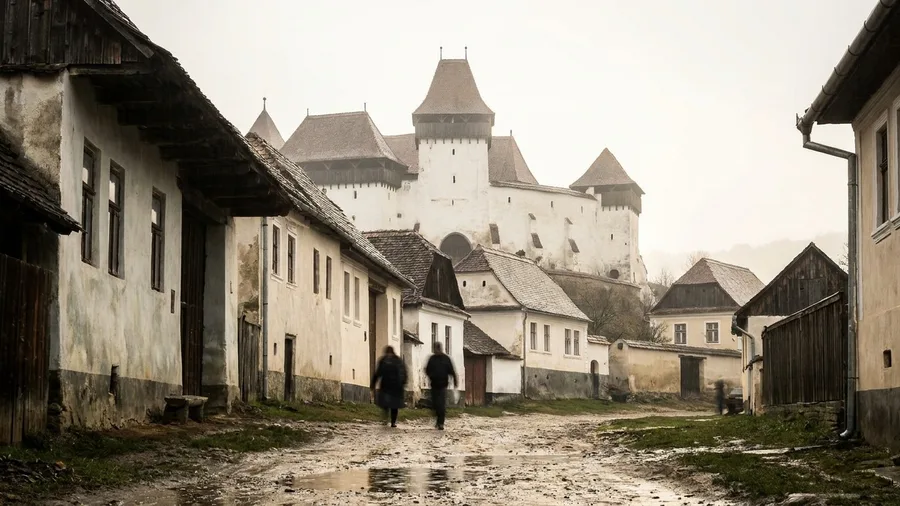
The road from Brasov to Viscri is a little over 60 miles, and it takes two hours, sometimes more. That is the whole deal here. No motorway, no shortcut, just a narrow surface that loosens into dirt at the village edge and reminds you the Saxon church above the lanes was built for defence, not for tour buses.
You climb. That is the active part: a walk up to the white fortified church, a hauled tower, and the dirt lanes it looks down on, never paved over because nobody ever needed to. Go May through September for open guesthouses and walking weather, or look to underrated New England towns; outside those months the village still stands but the services fall away fast. Sleep 1-2 nights at $70-$180, carry cash for the small cafes and guesthouses, and eat before nine. One rough-road village a day, two maximum by car, and the quiet you get in return is worth the jolts on the way in, at a fraction of what that quiet usually costs.
💡 PRO TIP
Book the Church Key Locally
Viscri's fortified church is not always staffed. Ask at your guesthouse on arrival about access, and do not plan the day around a locked door.
8. Besalu, Spain's Romanesque Bridge Town
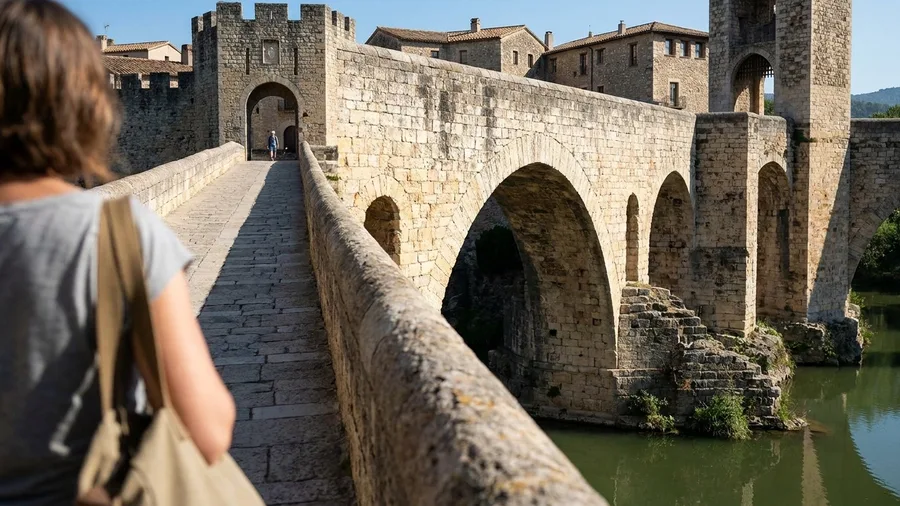
The stone of the bridge is still cold at eight in the morning, even in June, and the only sound is the river below and a shutter going up somewhere in the lanes. You cross it on foot because the old town on the far side has no room for a car, and the bridge doubles as the doorway: the Romanesque arches, the stone lanes behind them, the old Jewish quarter folded inside the walls. Park outside them for $8-$15 a day, walk in, and you are through the whole core in under half an hour if you push.
That is the honest shape of it. Pair Besalu with Girona or Figueres on one driving day and it slots in for almost nothing beyond the parking; go in May, June or September and the lanes stay walkable. A half-day covers it for most people. The one argument for sleeping over is the bridge at first light, before the day cars arrive, and if the Jewish quarter is why you came, an extra hour with the information panels repays more than a fast lap ever will. Cheap to reach, quick to absorb, and it earns its place by fitting around the rest of your plan rather than by demanding its own.
9. Vernazza, Italy's Harbor Village
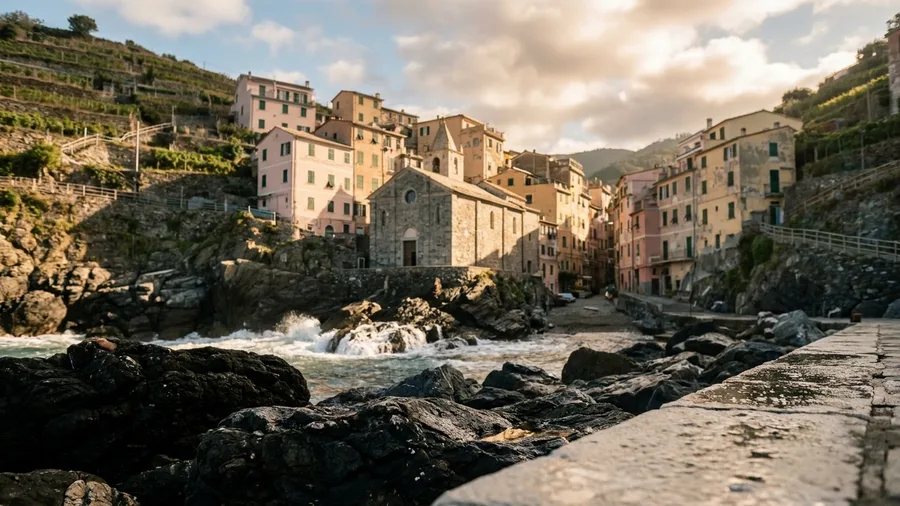
You step off the train and the heat hits first, then the noise of the harbour, then the smell of salt and fried anchovies from the row of kitchens along the quay. The Santa Margherita church sits out on the rocks with the water breaking under it, pastel houses stack up the ravine behind, and terraced vine paths climb out of the village on both sides. It is the most photographed stretch of this coast, and it knows it.
The math is simple: arrive on an early train, because by eleven the lane between the station and the harbour is shoulder to shoulder. Never drive in; the car has nowhere to go, and the rail line plus the footpaths, at $5-$20 a ride or a walk, are the transport system. Stay one or two nights at $70-$180 for a small double, eat dinner for $15-$35, and hike the terraces in May, June or September. July and August are the hottest and busiest, and midday is the wrong hour anywhere near the water.
So the splurge is not the room or the meal. It is buying the early morning and the shoulder month, which together are the only discount the place offers on its crowd. Right for hikers and train travellers, wrong for anyone chasing quiet. Stay on the marked lanes on the vineyard paths.
💡 Tip: The vineyard paths charge an access fee and close in bad weather. Check before you set out, and stay on marked lanes.
Vernazza and the Cinque Terre — At a Glance
🚆 Getting in
Train only
🌅 Best hour
Before 9 a.m.
🥾 Paths
Paid, weather-dependent
🛏️ Room
$70–$180
📅 Best months
May, Jun, Sep
The trade
The classic scene still reads; you pay in company, and the only discount is early morning and the shoulder months.
10. Perast, Montenegro's Baroque Waterfront
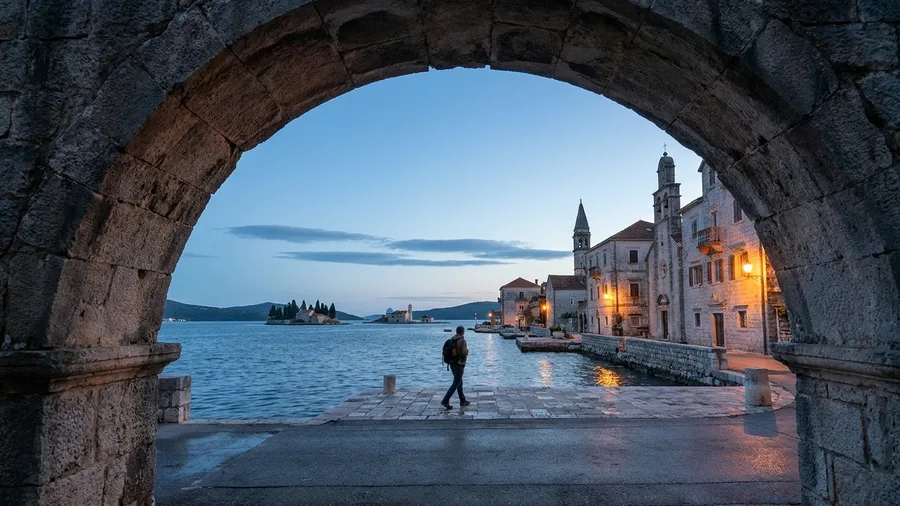
The harbour-and-vineyard scene on the Italian coast is worth seeing once, but it is paid for in crowds, and the early train is the only discount. Perast charges almost nothing in effort: a bus from Kotor drops you at the waterfront, and the whole of it is a flat stone promenade you can walk in twenty minutes. No climb, no ferry, no parking gamble in the high season. If the last coastal stop asked you to buy your morning back with an alarm, this one hands the same water-and-stone appeal to you in a smaller, easier package.
The look is a baroque line of old palaces and church towers facing the water, built in the centuries when this bay was a Venetian port. Two islets sit offshore; one of them, Our Lady of the Rocks, is the thing you genuinely cannot see from the quay, which is why a boat out to it is not optional scenery but the part of the visit you came for. Boats run from the waterfront through the day, typically ten to fifteen euros a head for the crossing, and the little church on the islet asks a small entry on top of that. Check the fare and the timetable at the dock rather than trusting a number from a website.
Reaching it is the opposite of a hard detour. The bus from Kotor is the lower-risk choice in July and August, when the waterfront road fills and parking gets tight enough that you can spend half your visit circling. From Kotor the ride is short, and the bus puts you at the edge of the old waterfront with no walk to plan. If you drive, come early and expect to pay roughly $8 to $15 for a day space outside the core. The village itself is car-free in any practical sense; you are on foot from the moment you arrive.
Half a day plus the boat is enough to see the place, and that is the honest minimum: you can walk the whole promenade, take the crossing, and be gone before lunch. But a night buys the waterfront after the day coaches pull out, when the lamps come on and the stone takes on the colour that made you stop scrolling. A small inn double runs $70 to $180, and a simple dinner $15 to $35, which keeps this cheap against the scenery you are getting for it.
The season is May and June or September, when the waterfront is quieter and the bay is warm enough to sit by. Eat what the coast does well: grilled fish or a plate of black risotto with a glass of local white, with the water a few steps away, and budget under $35 for a full dinner. Order the seafood and the house white, sit facing the islets, and watch the light change on the stone.
That is the trade here, and it is a fair one. You get the Bay of Kotor drama without a resort wrapped around it, and you pay in a bus timetable and a boat ticket rather than in a climb or an alarm. For couples and photographers it is close to a no-effort look. If you are chasing the hardest, most remote village on this list, this is not that trip; if you want the water and the stone without the crowd tax, this is the one to slot into a Kotor day.
Score Your Montenegro Stop Before You Commit
11. Piodao, Portugal's Schist Mountain Village
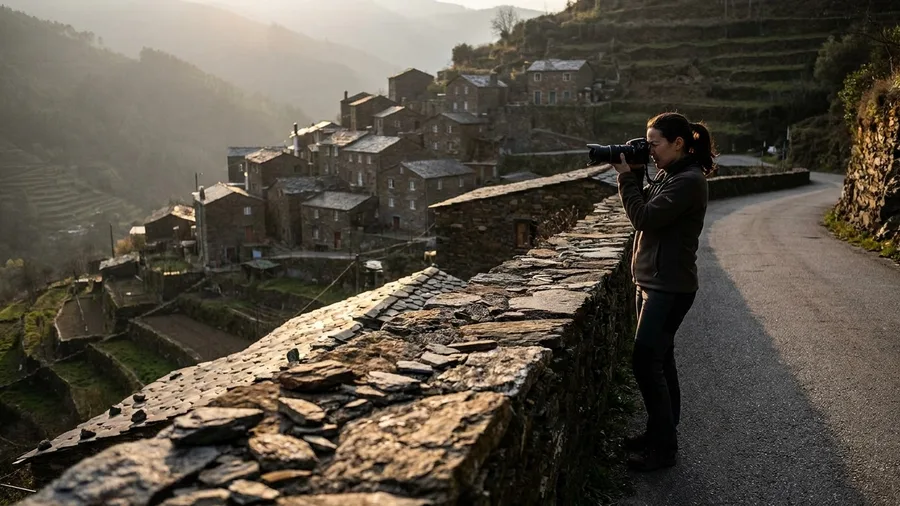
The road into Piódão unwinds in long curves above the valley, and the light goes flat and grey across the schist as you come down the last grade – houses of dark stone stacked on a slope, terraced fields stepping away below them, a place that seems to have been built out of the mountain it is standing on. You earn that view in driving hours. A village you can finish in a bus-timetable afternoon and a village that only pays off if you drive there and sleep there are the two ends of this whole question.
The drive from Coimbra or down from Serra da Estrela is winding, and the road itself filters people out – no car means no visit, and that is simply the price. Spring and autumn are the seasons to go: mild weather, clear views down the terraces, and the mountain not shut in by fog. Winter can close in, and a detour made in cloud is a detour spent. The village museum holds the history the stones do not tell, and it is the modest, cheapskate kind of stop that makes a long day worth breaking.
Stay a night or two, and the small inn double runs $70-$180, dinner in the same range of $15-$35 you pay elsewhere. Carry cash for the small cafés, stay on the marked lanes, and treat private doorways as private. This is for road-trippers and photographers who have already committed to the car and the night. If you are touring by train and bus, it is the wrong stop, and there is no version of it that works.
💡 Tip: The last stretch of road is narrow and unsuited to large vehicles. Arrive in daylight the first time.
🗺️ How to Build Two Village Days Around One Base
Pick the base
Choose the town with the station or the road junction, not the village itself — most cores have very few beds.
Book one night, minimum
An overnight at $70 to $180 is what buys you the hours before the coaches and after them.
Arrive at opening
Be at the bridge, the ferry or the car park before 9 a.m.; midday is the crush everywhere on this list.
Eat at 12:30
Markets and small museums close 12:30 to 14:00, so lunch is the thing you plan around.
Move once, not twice
Two villages maximum per day by car, and check the last bus before you commit to the second.
Keep the evening free
Return to the village after 5 p.m. for the empty lanes and the light; that is the part you remember.
Frequently Asked Questions
How many of these villages can you realistically see in one trip?
Three or four, unless you are doing a dedicated road trip. Each one wants one or two nights, and two villages a day by car is the practical ceiling once the roads turn winding. Pick by the cost you will pay, not by the photograph.
Do you need a car for these villages?
No for Civita di Bagnoregio, Hallstatt, Giethoorn and Vernazza, which all work on trains and buses. Yes for Reine, Viscri, Piodao, Monsanto and Besalu, where the local service is thin or the drive is the point. Perast is easiest by bus from Kotor.
What do the rooms and dinners actually cost?
A small inn double runs roughly $70 to $180, a simple dinner $15 to $35, local transport $5 to $20 and parking outside the core $8 to $15 a day. Norway sits at the top of those ranges and Portugal and Romania at the bottom.
When should you avoid these villages?
Midday in July and August at Hallstatt and Vernazza, and any winter day at Piodao, where fog and road closures can cancel the reason you came. May, June and September are the safe months for most of the list; June to August for Norway.
Are these villages accessible for people with limited mobility?
Mostly not, and it is worth knowing before you book. Civita is stairs and a stepped footbridge, Monsanto and Piodao are uneven stone, and Viscri is unpaved. Giethoorn is the flattest and easiest by a wide margin.
Is there anything you should not do in these places?
Do not fly a drone over the residential cores, do not photograph through open doorways, and stay on marked lanes on the vineyard and mountain paths. Carry cash; several of the smaller cafes and guesthouses may not take cards.
Three Trip Styles, and the One Village to Book First
Sort the eleven by the price they charge and the choice resolves. Without a car, there is Civita di Bagnoregio, Hallstatt, Giethoorn, Vernazza and Perast. For May, June and September quiet, take Eguisheim, Monsanto, Viscri and Piódão, with Reine in early September. Building a first Europe trip, Hallstatt, Vernazza, Besalú and Eguisheim slot straight onto Rome to Florence, the Cinque Terre line, Girona to Figueres and the Alsace wine road. A few sit in two lists because they charge in two currencies.
If you can add only one detour, book Civita di Bagnoregio. It is the most dramatic arrival here, it needs no car, and 2 to 3 hours on the plateau is yours, but beds inside the village are very few, so that is the reservation that runs out before the others. Sleep in Bagnoregio or Orvieto and walk over early.
The 10 to 15 minutes across the void is not the toll before the village. It is the first room of it, and the price and the sight are the same thing. Every place on this list is still lived in, which is why the kitchens close at 12:30 and the shutters are painted. Stay on the marked lanes, keep off private doorways, carry cash, leave the drone in the bag, and the detour keeps paying for the look you came for.
Pick Your Village and Check the Bridge
Choose the one whose cost you will actually pay, then look up the current footbridge, ferry or bus times before you book the room. Those details change, and they decide the whole day.