At half past six in the morning, a single boat engine echoes off the shore of Lake Orta and there is no one on the landing stage to hear it.
That is the whole pitch in one moment, and it is why these eight lakes are on this list instead of the one you already know. Lake Como is 145 km squared with 146 km of shoreline, a ferry day pass around 15 euros, and a peak season in July and August when the boats to Bellagio fill before nine. You can match its water, its mountains and its lake days for less money and a lot less elbow.
Here is the trade you are making up front. Como throws everything at you at once: grand villas, celebrity history, a ferry network that hops between a dozen waterfront towns, restaurants until midnight. None of these eight does all of that. Each does one thing better than Como and accepts a real loss somewhere else.
So this is not a list of lakes that are secretly just as good. It is a sorting tool. For each one you get what it beats Como at, what the on-water day actually costs, and what Como pleasure you give up.
What you can do on these lakes is the reason to go: row a wooden boat past a basilica on a one-island lake, cycle the flat path of a mountain lake that never has a crowd, drink a red from the vineyards above the ferry dock, swim in water so pale it looks lit from below.
If you only have four days, do not try to do all eight. Pick one, take the train or the car in, and give it the whole time.
Quick Tips Before You Start
Book May-June or September
Every lake on this list is at its best before mid-June and after the first week of September, when the water is warm and the shore is empty.
Check the ferry schedule first
Small lakes run few crossings a day and some shut entirely out of season, so confirm times with the local operator before you build a day around a boat.
Base in the village, not the outskirts
All eight have one obvious walkable village or town; staying 20 minutes outside it costs you the evening, which is the best part of every one of these lakes.
Pack for cold water
Alpine and sub-alpine lakes are bracing even in August. A short wetsuit or a rash vest turns a five-minute dip into a forty-minute swim.
Carry small cash
Boat rentals, parking meters and the little lakeside kiosks on the Italian and Macedonian lakes often take cash only.
1. Lake Orta, Italy: The Quiet Villa Lake
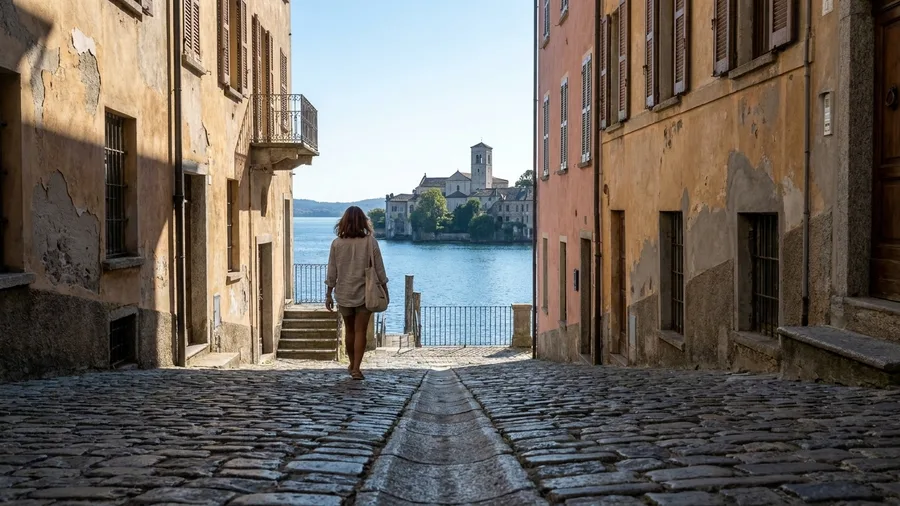
Before you book Orta San Giulio, know that you are buying one island, not an archipelago. Lake Orta is 18 km² against Como's 145, and the whole villa-and-island picture compresses into a single 400-metre crossing to Isola San Giulio. Come expecting a miniature and it delivers. Come expecting Como at half price and you will spend the afternoon counting what is missing.
The base is Orta San Giulio itself, and, like Midwest lakeside towns, it is the only base you need. You park outside the old centre, walk in past the frescoed facades on Piazza Motta, and reach the boat landing in under ten minutes, which means the car stays put for the length of your stay. That is not true of Bellagio in July.
The story worth having is the one the island tells on its own. Isola San Giulio holds a Romanesque basilica rebuilt over centuries and a convent whose nuns still keep to a cloistered rule, so the silence on the paved loop around the island is not staged for visitors. Walk it slowly, clockwise, with the lake on your right and the stone wall on your left, and you hear almost nothing but water against the boats.
A ferry day pass runs about €8 against Como's roughly €15, and the saving sits entirely on the water day. There is no network of routes to hop and no villa gardens to queue for; you cross to the island, you come back, you walk the shore. May, June and September are the months when the piazza stays half-empty and the boat has room on the rail. July and August bring the season you are trying to leave behind.
The honest trade-off is scope: fewer grand gardens, fewer crossings, a thinner choice of restaurants and bars after ten. Orta is the closest quiet stand-in for the Como villa feeling, and that is exactly what it is, a stand-in, not the full article. If your trip needs two islands and a villa circuit, this lake will feel small by the second afternoon.
💡 Tip: The island's small boats run from the Orta San Giulio landing stage; go before 10am and you will likely have the crossing to yourself.
Lake Orta against Lake Como
Same view, smaller numbers
Pass prices are typical, not fixed. Confirm with the operator.
2. Lake Iseo, Italy: Wine Country and Monte Isola
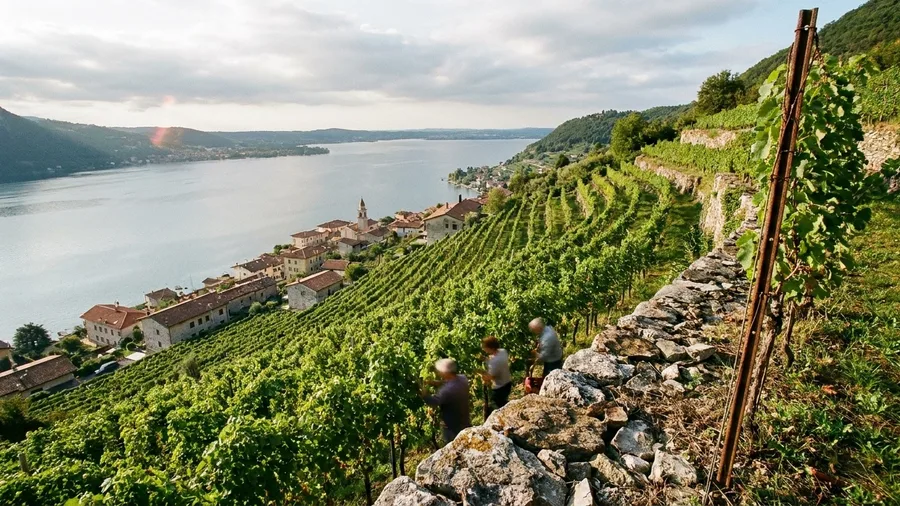
The smell on the Sulzano shore in late morning is warm stone and cut grass, with diesel from the ferry ramp underneath it, and the water stays glassy until the first boat wakes cross it. Shrinking the villa formula works, as the little lake up the road proves, but Iseo adds something that formula never had: vineyards running down to the shore. Lake Iseo is 60 km², and the draw is the land around it as much as the water.
Monte Isola is the anchor, the largest lake island in Europe by most measures, and the boat from Iseo or Sulzano gets you there on a day pass of about €10, under Como's roughly €15. The realistic wildlife sighting is not dramatic: herons working the shallows, grebes, the occasional falcon over the ridge, and swifts stitching the water at dusk. You will see birds. You will not see anything that requires a guide, and nobody should sell you one.
Up on the island, vineyards are worked by hand because the slopes are too steep for machines, and the paths between them are walking routes rather than roads. Back on the mainland, trattorias along the waterfront set your food and drink budget, and that budget, not admission, is where the money goes. Fewer tour groups than Como pass through here, and the waterfront shows it, less polished, less villa-lined. The gain is food and local life, not grand architecture; Como's villa-lined shore is still the benchmark you are measuring against.
💡 Tip: Monte Isola is quietest early morning, before the day-trippers arrive on the first boats.
⚠️ COMMON MISTAKE
Do not plan a Como-style ferry circuit
On Orta, Mergozzo and Weissensee the boat is a single crossing or an hourly rental, not a hop-on network. Build your day around a fixed departure time or you will spend the afternoon on a jetty.
3. Lake Mergozzo, Italy: The Tiny Slow Lake
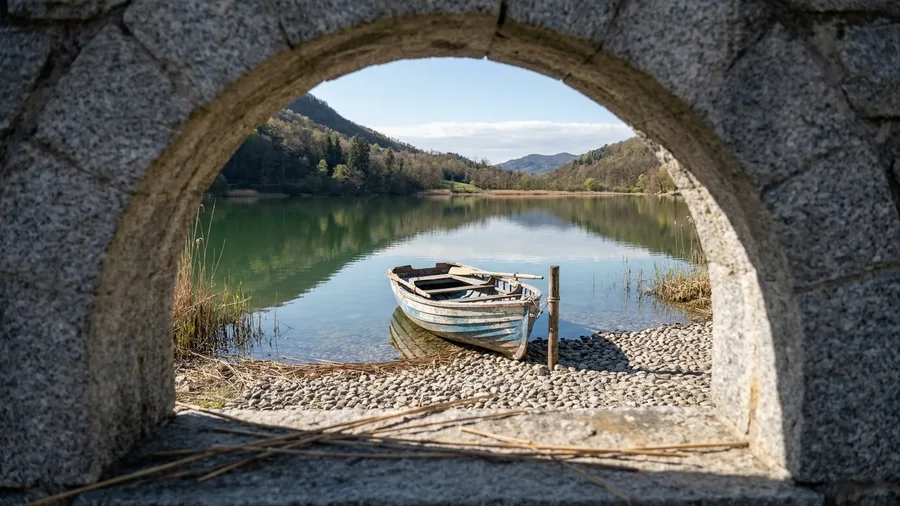
Yes, if you use it as a half-day and stop expecting a resort. Lake Mergozzo sits a short hop west of Lake Maggiore, and it gives you what the ferry-and-island lakes cannot: a swim, a flat walk and nothing to organise.
Base yourself in Mergozzo village and take the lakeside path, which runs level along the shore and asks nothing of your legs. The photograph is from the northern end in the early morning, when the water is flat and the hills come down on both sides without a ripple to break the reflection; by eleven the wind picks up and the mirror is gone. Small-boat rental runs about €5 per hour, which matches the scale of the visit, and there is no ferry circuit to buy into, no grand villas to tour and no serious restaurant choice once you have eaten. Two hours of swimming and a walk is the whole lake, and that is the honest reason to come.
| Lake | Country | Best for | Typical on-water cost | Trade-off vs Como |
|---|---|---|---|---|
| Lake Orta | Italy | Quiet villa-and-island scenery | Ferry day pass about 8 euros | Fewer gardens, ferries and nightlife |
| Lake Iseo | Italy | Wine country and island villages | Ferry day pass about 10 euros | Less polished waterfront, less grand architecture |
| Lake Mergozzo | Italy | A cheap half-day of swimming | Small boat about 5 euros per hour | No ferry circuit, no villas |
| Lac du Bourget | France | Spa town and abbey culture | Ferry day pass about 12 euros | Less Italian village charm, fewer villas |
| Lac d'Aiguebelette | France | Turquoise water, small beaches | Boat about 8 euros per hour | Few hotels and restaurants, book ahead |
| Lake Bohinj | Slovenia | Hiking in Triglav National Park | Ferry day pass about 10 euros | Fewer restaurants, shops and villas |
| Lake Weissensee | Austria | Easy swim-and-cycle family days | Boat about 12 euros per hour | Limited big sights, short season |
| Lake Ohrid | North Macedonia | Old-town life at low cost | Ferry about 8 euros | No alpine setting, no villa circuit |
4. Lac du Bourget, France: Spa Town and Abbey
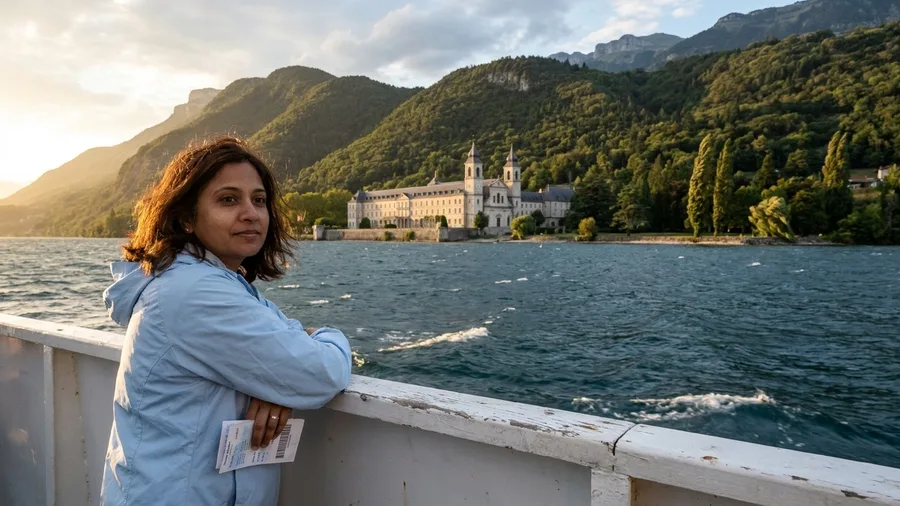
The easy version of a lake day asks nothing of you but a lounger and a path. Lac du Bourget asks a little more effort and hands back a town. At 44 km², it sets a spa town, a working abbey and an alpine wall on the same shoreline, and the bill usually comes in under Como's.
Base yourself in Aix-les-Bains, where the Belle Époque bath houses still anchor the town centre and you can walk from a morning of thermal soaking to a lakeside lunch. The boat to Hautecombe Abbey is the hour that makes the trip: go on the first departure, because by late morning the abbey's own small quay is busy with coach groups and the cloister turns into a queue. The alpine backdrop is not an attraction you buy a ticket for. It appears from the water, so sit on the open deck on the crossing out. A ferry day pass runs about €12, spring to autumn is the workable window, and the honest trade is that the villages here feel French and municipal, not Italian and painted.
You get a bath, a boat and a view for roughly the price of a Como ferry pass, and you give up the villa-lined waterfront that makes Como look like Como. Book Aix-les-Bains for a couples' trip where the town matters as much as the water.
💡 Tip: The abbey is a working monastic community; check visiting hours and keep voices down inside.
5. Lac d'Aiguebelette, France: Turquoise and Small-Scale
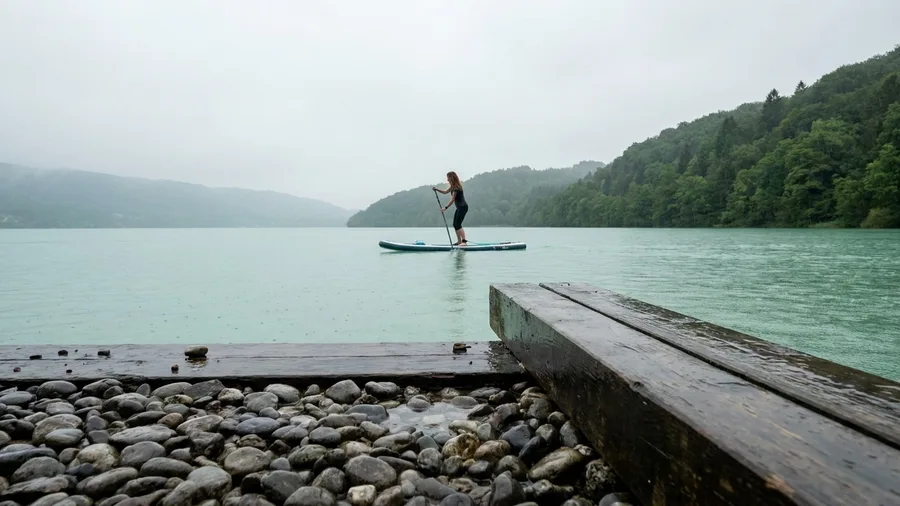
You step off the path at Aiguebelette-le-Lac and the first thing that hits is colour: a turquoise so dense it looks painted on, the kind of green-blue that makes people stop mid-sentence. Nothing about the approach announces a resort. There is no promenade of cafés chasing the water, no villa row, no ferry queue.
At 5.5 km² this is a swim-and-cycle lake, and the lake itself is the attraction. Rent a small boat for about €8 an hour and the water becomes the whole afternoon; on land, the mountain cycle path loops you past viewpoints without ever selling you anything. The splurge is the boat, and it stays reasonable: an afternoon costs less than a single Como lunch. The catch is the base at Aiguebelette-le-Lac is small, with few hotels and restaurants, so book ahead in season and treat the shop as a planning stop rather than an afterthought.
This is the lake for the traveller who wants the water and not the scene, and it rewards anyone willing to trade town amenities for a shoreline that goes quiet by evening.
6. Lake Bohinj, Slovenia: The Hikers' Lake
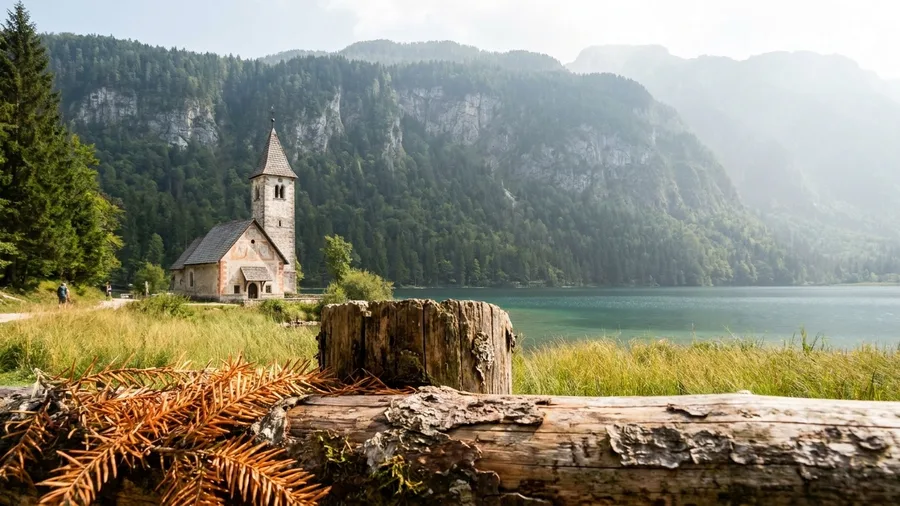
Lake Bohinj is the hikers' lake: same alpine walls as Como, but the waterfront villas give way to Triglav National Park trailheads and one medieval church. The aquamarine surface sits under a mountain ridge that makes half of Como's shoreline look tame, and the trade is services, not scenery.
Base at Ribčev Laz, the village where the park trails actually start. From there you walk to the Church of St John the Baptist, a small stone tower with a painted bell gable that stands a few minutes from the shoreline, and beyond it the path climbs into the park without a single ticket booth. A ferry day pass runs about €10, which buys you the far shore and the quieter beaches, not the walking – the trails are free and start from the main car park. Trailheads on the south side fill by mid-morning in season, and the lake is quieter than Bled next door as well as quieter than Como, so the crowd you are avoiding mostly exists elsewhere.
The honest reservation: few restaurants, fewer shops and no grand villas. If your lake day needs a long lunch menu and a terrace with a view, this is not that lake – but if you came to hike, the trails are the reason to be here, and they cost nothing at all.
Como Pleasures: Worth Trading or Not
You keep this
- Lake swimming on water as clean as Como's
- A short boat crossing with mountains on both sides
- A walkable village base where the car stays parked
- Evening meals at half the peak-season Como price
- Trailheads or cycle paths straight from the shore
You lose this
- A multi-town ferry network you can hop all day
- Villa gardens open to the public
- Celebrity architecture along the waterfront
- Restaurants open past eleven in most bases
- A season that runs from April to October
7. Lake Weissensee, Austria: Swimming and Cycling
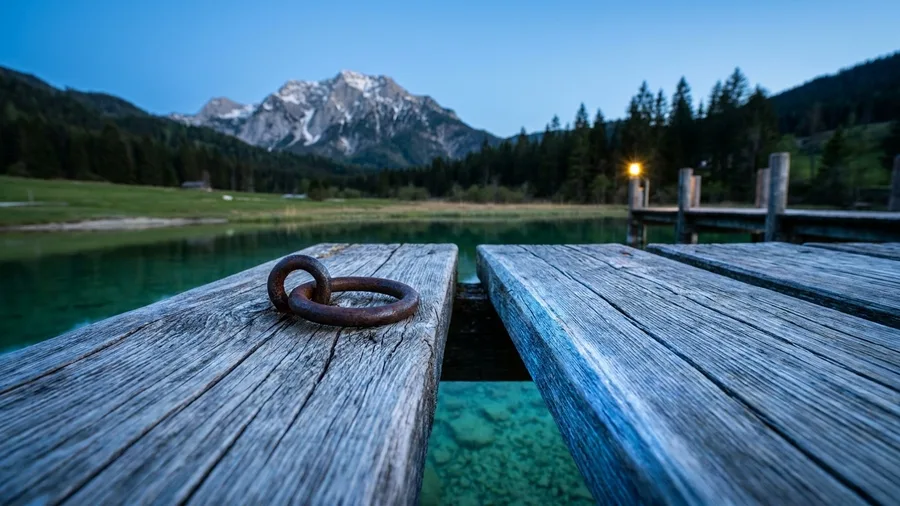
For a family swim-and-cycle day with alpine peaks over your shoulder and no timetable to keep, Weissensee beats anything Como offers on a small lake. It is 6.5 km2, the whole shoreline is a short ride, and nobody is standing at a ferry dock checking a departure board. Not a single ferry runs, and that is the point.
Techendorf is the base. From there the lakeside cycle path runs flat and easy most of the way around, the kind of ride where a nine-year-old can drop behind and catch up again, and the water stays on one side the whole time. The path is the ride. You will not need a map, a route plan or a car to reach it.
Swimming areas are the main draw. In July the water warms enough to stay in for an hour, and the beaches are grass and gravel rather than sand, so bring shoes for the water's edge. Boat rental runs about 12 euros an hour, several times what a Como ferry day costs, but you are paying for an hour on a small lake, not a passage between villas.
The trade-off is honest: a handful of big sights and a short season. The lake works from roughly June to early September, and by October the swimming is over and the cycle path is quiet. There are no grand gardens, no island palace, no evening ferry and no real restaurant scene to explore, so a week here would start to feel thin.
Residents from the valleys around come up for a swim and a loop of the path, not for a grand tour, and treating it the same way is how to enjoy it. Give it a day, maybe two, and let it be a day.
8. Lake Ohrid, North Macedonia: Old-Town Value
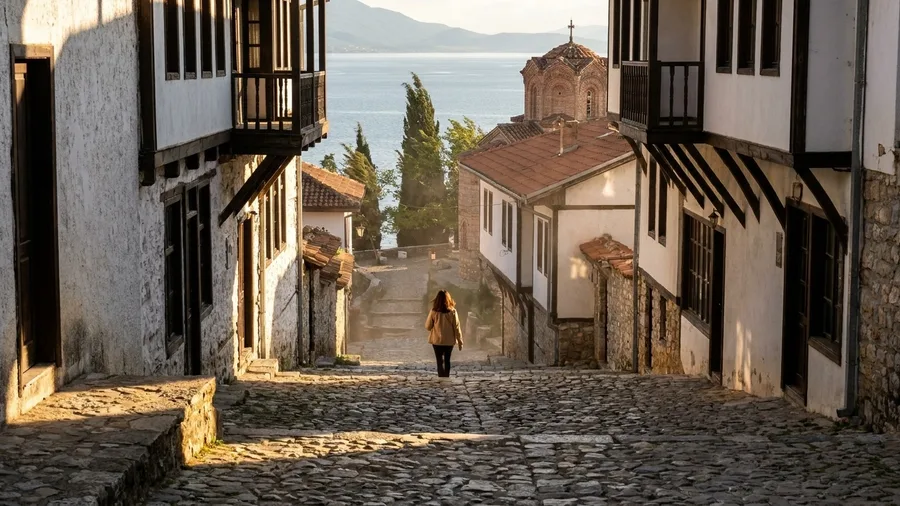
Ferries cross to Ohrid town for about 8 euros, and a bed and a plate of grilled fish for the evening cost less than a single night on Como's shore. It is also the opposite of an alpine lake: 358 km2 of open water at low altitude, a UNESCO old town stacked up the hillside, and no villa circuit anywhere along the shore. The appeal is not the mountains; it is the price and the lanes.
Ohrid town is the base, and the old-town lanes are your daily frame, with the water always one turn away. Swimming happens off rocky platforms and town beaches; boat trips run along the coast to the springs. The trade-off is simple: no alpine backdrop and no grand villas, just a cheaper lake town that still looks the part. Go in May or early October and you get the same water without the summer crush.
⛴️ Build a Lake Day in Four Steps
Check the boat first
Confirm the ferry or rental time with the local operator before you plan anything else.
Swim before eleven
Water is calmest and the shore emptiest in the early morning, on every lake here.
Eat a long lunch
The lakeside trattoria is the second activity of the day, not a break from it.
Walk the shore in the evening
Light drops, crowds thin, and the view you came for finally shows up.
Frequently Asked Questions
Is Lake Como actually worth skipping?
No. Como delivers a ferry network, villa gardens and waterfront towns that none of these eight match. Skip it only if July crowds and peak prices are the thing you are trying to avoid; otherwise give Como three days and one of these lakes the rest.
Which of these lakes is cheapest?
Lake Mergozzo, by a wide margin. A small boat at about 5 euros an hour and a free lakeside path make it a cheap half-day. Lake Ohrid is the best value for a full trip, because food and lodging are cheaper than anywhere else on the list.
Do I need a car?
Not strictly. Orta, Iseo, Bourget, Bohinj and Ohrid all have a walkable base with boats from the shore. A car helps on Aiguebelette and Weissensee, where the good swimming spots and cycle paths are spread around the lake.
How many days should I give one lake?
Three nights. One to arrive and walk the village, one full day on the water, and one for the thing that lake does best, whether that is hiking, cycling or a long lunch. Two nights feels rushed; a week is only right for Bohinj or Ohrid.
When should I book?
May, June or September, and book lodging two to three months ahead for the small bases like Aiguebelette-le-Lac and Techendorf, where a handful of rooms carry the whole summer.
Can I combine two of these in one trip?
Yes, if they share a country. Orta and Mergozzo are close enough for one itinerary, Iseo sits between them, and Aiguebelette and Bourget are both within reach of Lyon or Geneva. Pairing Italy with Slovenia means a long drive; do not try it in a week.
Orta, Bourget or Ohrid? Decide by Trip Type
Como stays the benchmark: 145 km squared, 146 km of shoreline, about 15 euros for a ferry day, a July and August crush, and three busy bases at Como, Bellagio and Varenna. The eight are not one-for-one replacements; each wins only on its named trip type and what it gives up.
So convert the July picture into an 8 to 12 euro ferry day at Orta, Iseo, Bourget, Bohinj or Ohrid, a 5 to 12 euro boat hour at Mergozzo, Aiguebelette or Weissensee, and a May to June or September season.
The rule is simple: Orta or Iseo for Como-like villas and ferries, Bourget for couples and culture, Aiguebelette or Mergozzo for a low-key swim, Bohinj or Weissensee for hiking and cycling, Ohrid for value and old-town life. Book May, June or September, confirm the current ferry times with the local operator, and take the lake whose trade-off you can live with. The right lake is not the one nearest Como – it is the one whose loss you will not notice, and at half past six on Orta, nobody will be there to argue.
Pick One Lake, Then Check the Boat
Go back to the table at the top, choose the single lake whose trade-off you can live with, and confirm its ferry or rental times before you book anything else.